
Key Takeaways
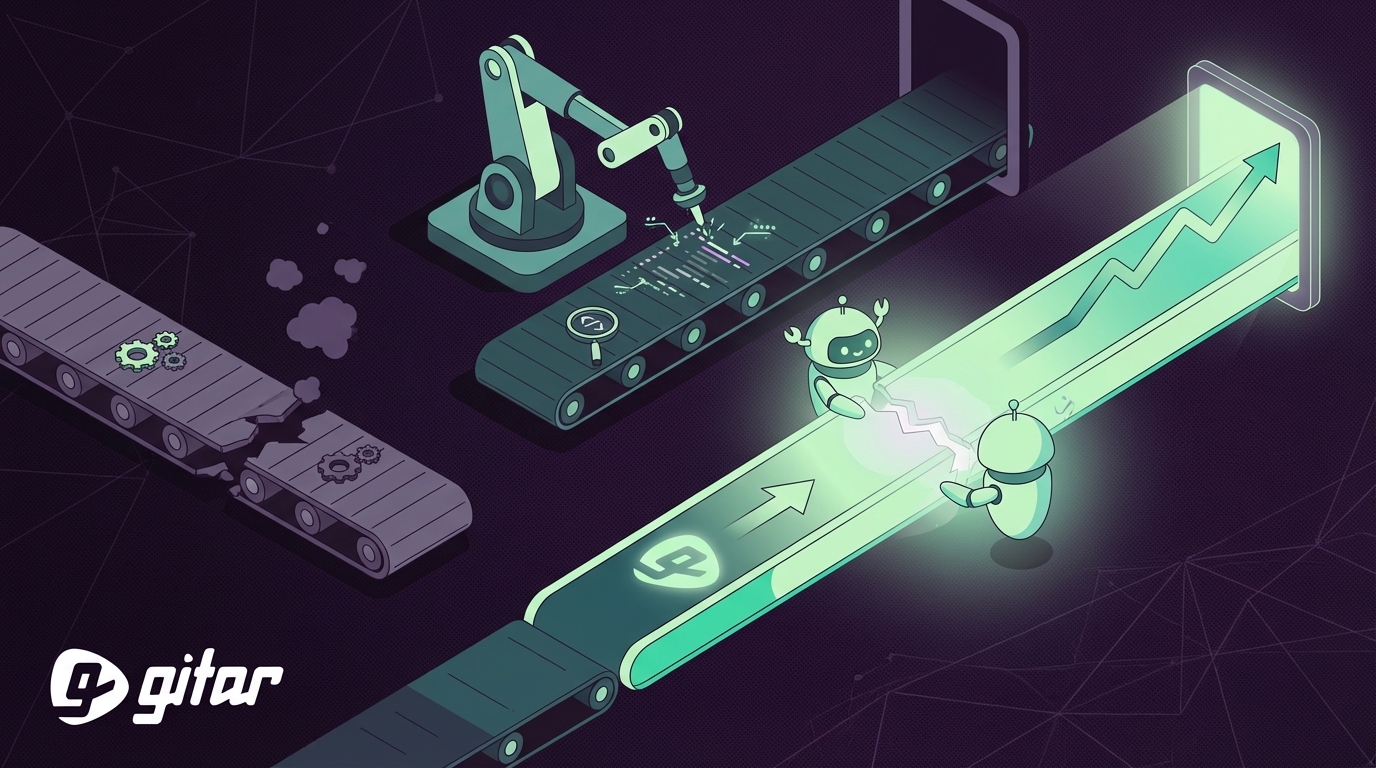
- CI failures and code review rework create a major hidden cost in deployment, often turning small fixes into long interruptions.
- Healing engines focus on autonomous fixes that validate against the full CI pipeline, while suggestion engines stop at recommendations.
- Traditional CI/CD and configuration tools remain essential, but they still rely on manual debugging when pipelines break.
- Gitar operates as a healing engine that applies, tests, and commits fixes, helping teams reduce context switching and speed up merges.
- Teams that want autonomous CI fixes and faster deployment cycles can use Gitar to automatically repair broken builds and resolve review feedback.
The Hidden Productivity Drain in Deployment Automation
Deployment pipelines often break on issues like missing dependencies, flaky tests, or strict linters. Each failure forces developers back into logs, local environments, and repeated CI runs for what may be a small change.
This pattern erodes deep work. A brief fix can stretch into an hour as developers bounce between tasks and tools. As AI coding tools generate more code and pull requests, the bottleneck has shifted from writing code to validating and merging it. For a team of 20 developers, this friction can add up to hundreds of thousands of dollars per year in lost productivity.
Install Gitar to reduce CI failure friction and keep deployment pipelines moving
Gitar: The Autonomous Healing Engine for Deployment
Gitar operates as an autonomous agent that fixes CI failures and addresses code review feedback inside deployment workflows. It focuses on completing the entire loop from failure to validated, merge-ready code.
- End-to-end autonomous fixing: Gitar applies code changes, runs the full CI workflow, and only surfaces fixes once all jobs pass.
- Full environment replication: It mirrors enterprise build setups, including language versions, multi-SDK stacks, and security or quality scans.
- Code review execution: Reviewers can leave instructions that Gitar turns into concrete code updates, which reduces time zone delays.
- Configurable trust modes: Teams can start with suggestion-only mode, then move toward auto-commits with rollback as confidence grows.
- Cross-platform compatibility: Gitar works with GitHub Actions, GitLab CI, CircleCI, BuildKite, and other major CI systems.

Book a demo to see how Gitar closes the loop from CI failure to green pull request
Types of Deployment Automation Tools
Deployment automation tools fall into three broad categories: autonomous healing engines, AI suggestion engines, and traditional CI/CD or configuration platforms. Each category affects developer productivity in different ways.
Category 1: Autonomous Healing Engines (for example, Gitar)
Healing engines do more than report errors. They diagnose failures, edit code, run the full pipeline, and commit fixes once everything passes. The goal is a self-correcting deployment pipeline that reduces manual effort on routine issues.
Key traits include validated fixes from detection through commit, accurate environment replication for complex setups, and fewer interruptions for developers. This approach aims to lower the cost of broken builds and repeated CI runs.
Category 2: AI Code Reviewers and Suggestion Engines (for example, CodeRabbit, Linear, Ellipsis, Claude for CI)
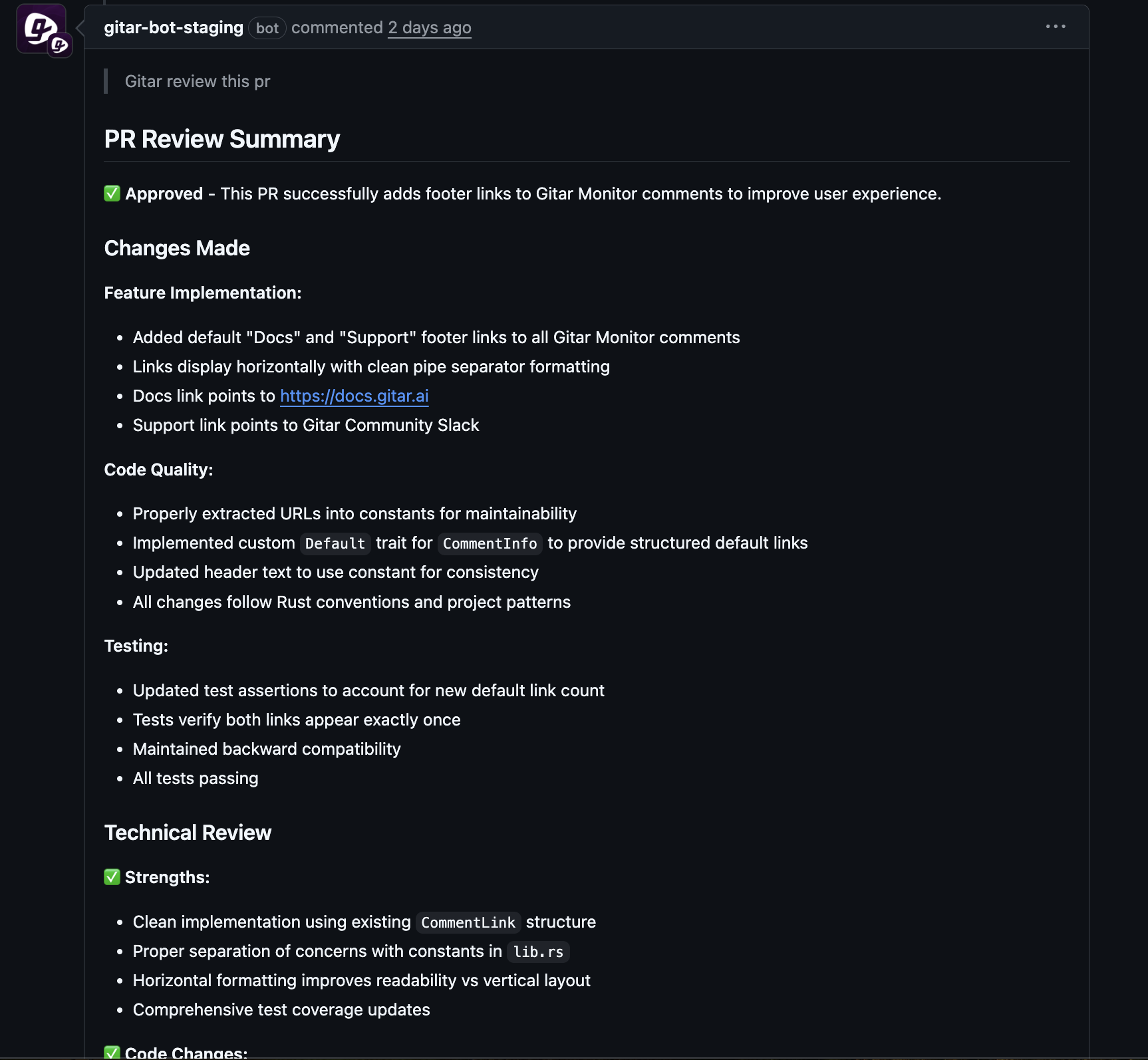
Suggestion engines provide summaries, annotations, and code recommendations on pull requests. They help spot issues earlier in the process and can improve code quality during review.
The main limitation is that these tools typically stop at the suggestion stage. Developers still implement changes, re-run CI, and debug pipeline failures. Some workflows support partial automation, but the human remains responsible for closing the loop.
Category 3: Traditional CI/CD and Configuration Management (for example, Jenkins, GitHub Actions, GitLab CI, Ansible)
Foundational tools like Jenkins give teams a flexible way to model builds, tests, and deployments, yet they depend on manual pipeline design and maintenance. Configuration tools such as Ansible use declarative files to coordinate deployments across servers and environments.
These platforms are essential for orchestration and infrastructure automation. They do not, however, resolve failing builds or broken tests by themselves. When CI fails, developers must still investigate, patch code, and trigger new runs, which increases context switching and delays.
Head-to-Head Comparison: Gitar vs. Leading Deployment Automation Alternatives
|
Feature/Capability |
Gitar (Healing Engine) |
CodeRabbit (AI Reviewer) |
Jenkins (Traditional CI/CD) |
|
Primary function |
Autonomous fixing of CI failures and review feedback in deployment pipelines |
AI-assisted code review suggestions |
Build, test, and deployment orchestration |
|
Deployment impact |
Works to keep builds green and shorten time-to-merge |
Highlights issues that require manual follow-through |
Runs pipelines but depends on manual failure handling |
|
Autonomous CI fixes |
Yes, with replication of the full build environment |
No, focuses on recommendations |
No, debugging stays manual |
|
Developer flow impact |
Designed to reduce interruptions from broken builds |
Can add extra steps to apply suggestions |
Interrupts flow when pipelines fail |
Why Choose Gitar for Self-Healing Deployment Automation?
Gitar focuses on autonomous resolution with strong awareness of the actual build and test environment. Many deployment-related tools flag problems or make recommendations. Gitar instead works to resolve those problems so developers can focus on higher-value work.
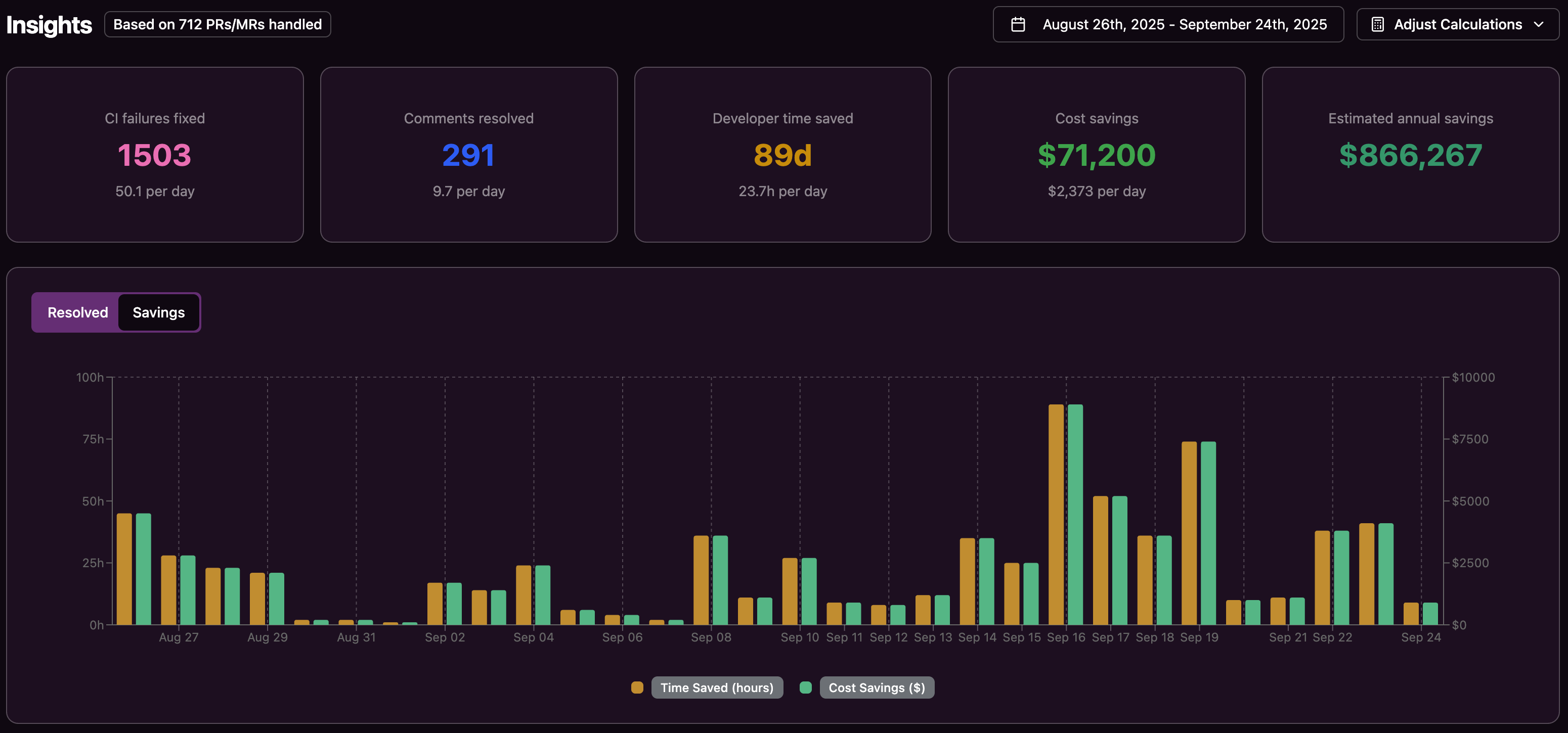
The potential return on investment comes from reclaimed engineering hours and fewer stalled pull requests. Traditional automation tools require teams to own and operate every automation step. Gitar layers onto existing pipelines and adds autonomous fixing rather than replacing core CI/CD systems.
Enterprise teams often run complex, multi-stage deployments. Tools like Octopus, Argo CD, and Chef focus on deployment releases and environment management. Gitar addresses issues earlier in the lifecycle by resolving CI failures and review feedback before code reaches those deployment stages.
Install Gitar to add self-healing behavior on top of your existing CI/CD stack
Frequently Asked Questions (FAQ)
Q: How does Gitar’s healing engine differ from AI tools that only provide suggestions in deployment workflows?
A: Suggestion engines surface problems and possible fixes, but they usually leave implementation, validation, and commits to the developer. Gitar analyzes CI failures and code review instructions, generates code changes, runs the full CI workflow, and presents a green, ready-to-merge pull request. This approach reduces manual toil on deployment blockers.
Q: Can Gitar work with complex CI/CD pipelines and specialized tooling?
A: Gitar is built for complex environments. It can emulate full build contexts, including specific language versions, multiple SDKs, and tools such as SonarQube or Snyk. It integrates with GitHub Actions, GitLab CI, CircleCI, BuildKite, and other CI platforms that support deployment workflows.
Q: How does Gitar address concerns about allowing an AI to change production-bound code?
A: Gitar uses configurable modes. Teams can begin with suggestion-only mode so every change requires a human click to accept. Over time, teams can enable auto-commit for lower-risk repositories or scenarios and still keep rollback options. This setup gives organizations control and gradual adoption.
Q: How can Gitar help distributed teams reduce code review delays that slow deployments?
A: Reviewers can leave instructions for Gitar when they finish a review. Gitar applies those changes and re-runs CI so that, by the time the original author returns, updates are already implemented and validated. This approach shortens feedback loops across time zones.
Q: How does Gitar relate to configuration management tools like Ansible?
A: Ansible handles infrastructure and application deployment execution. Gitar operates earlier in the pipeline, making sure code reaches deployment with passing tests and checks. Gitar removes many blockers before they reach tools like Ansible, which supports a smoother end-to-end deployment process.
Conclusion: Moving From Reactive Debugging to Autonomous Healing
Developer productivity automation for deployment is shifting from manual debugging toward autonomous remediation. Suggestion engines help identify issues, but healing engines like Gitar focus on resolving them inside the CI and review loop.
Organizations that adopt autonomous healing can reduce context switching, accelerate time-to-merge, and improve deployment reliability. Open source deployment tools will continue to play a central role in build and release orchestration, while healing engines add a complementary layer that closes the gap between failure detection and proven fixes.
Explore how Gitar can add autonomous healing to your deployment pipelines