
Key Takeaways
- CI failures and code review feedback create recurring context switching that reduces developer focus and slows delivery.
- Teams often lose hundreds of thousands of dollars in annual productivity when engineers manually resolve routine CI issues.
- Autonomous AI that applies and validates fixes can reduce the time developers spend on broken builds and repetitive review changes.
- Gitar integrates with common CI/CD tools, respects existing workflows, and offers configurable automation levels for different risk profiles.
- Teams can use Gitar to automatically fix CI failures and code review issues, reclaim developer time, and improve release consistency.
The Problem: The Hidden Costs of Developer Time on CI Failures and Code Review
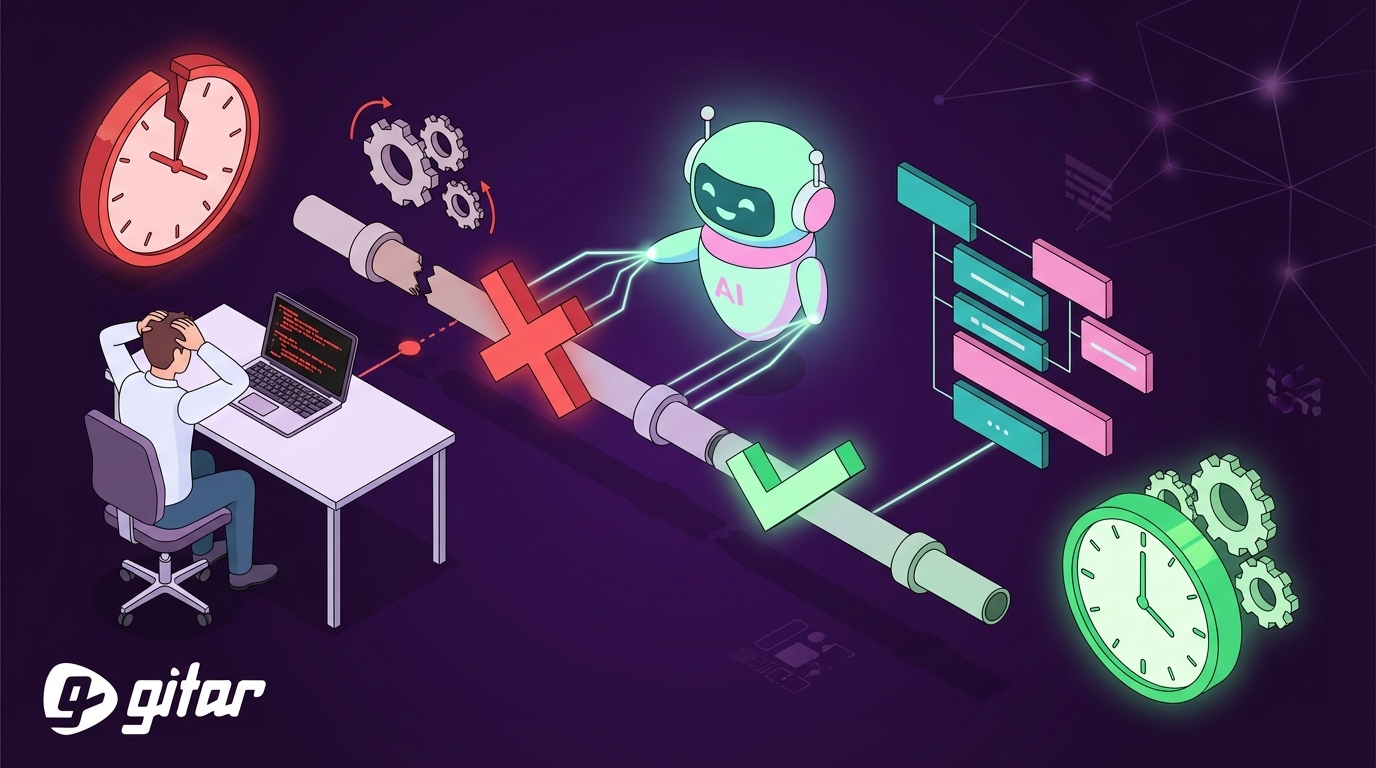
CI failures and code review comments interrupt deep work and extend delivery timelines. A pull request that looks ready to merge often triggers failing pipelines or lengthy feedback, which forces developers to leave their current task, inspect logs, and troubleshoot issues that feel routine but still consume significant time.
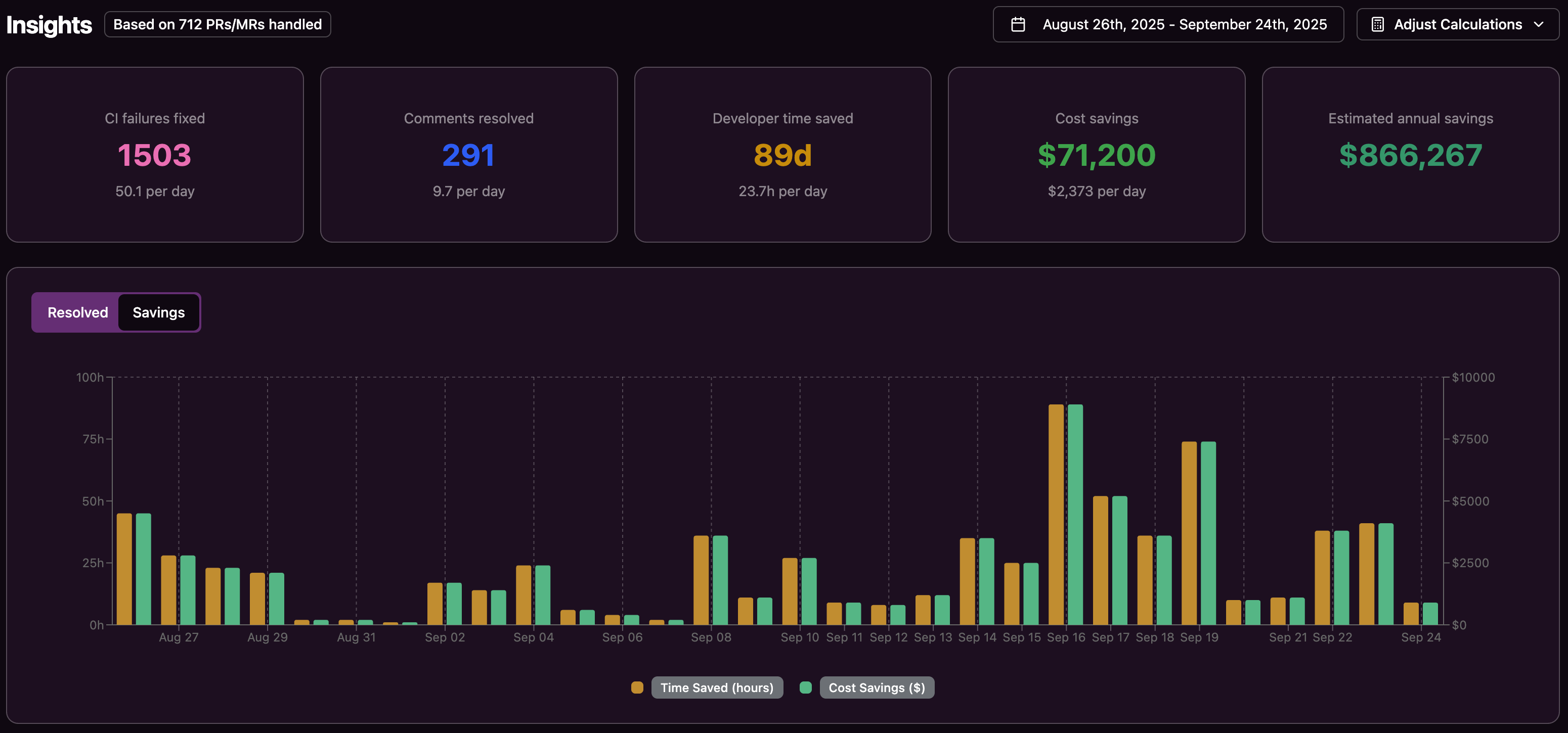
Research on developer productivity shows that engineers can spend up to 30% of their time on CI-related issues and code review cycles. For a 20-developer team, that loss can reach roughly $1 million per year in productivity. As pull request activity increases, teams see more failures, more retries, and more time spent on friction instead of feature work.
Context switching amplifies this cost. When developers stop feature work to debug a failing pipeline, they lose their mental model of the original task. Regaining that context can take longer than the actual fix, which turns a short interruption into an extended delay.
CI pipeline failures and slow code reviews also affect release schedules. Many companies report delayed launches, missed deadlines, and higher operational costs when broken builds and unresolved comments pile up. These delays ripple beyond engineering and affect product, sales, and customer commitments.
The Solution: Introducing Gitar – Autonomous AI to Reduce Developer Time
Gitar reduces this friction by moving from detection and suggestion to active, validated resolution. The platform operates as a healing engine that not only identifies CI failures and review issues but also fixes them, runs the necessary checks, and updates the pull request.
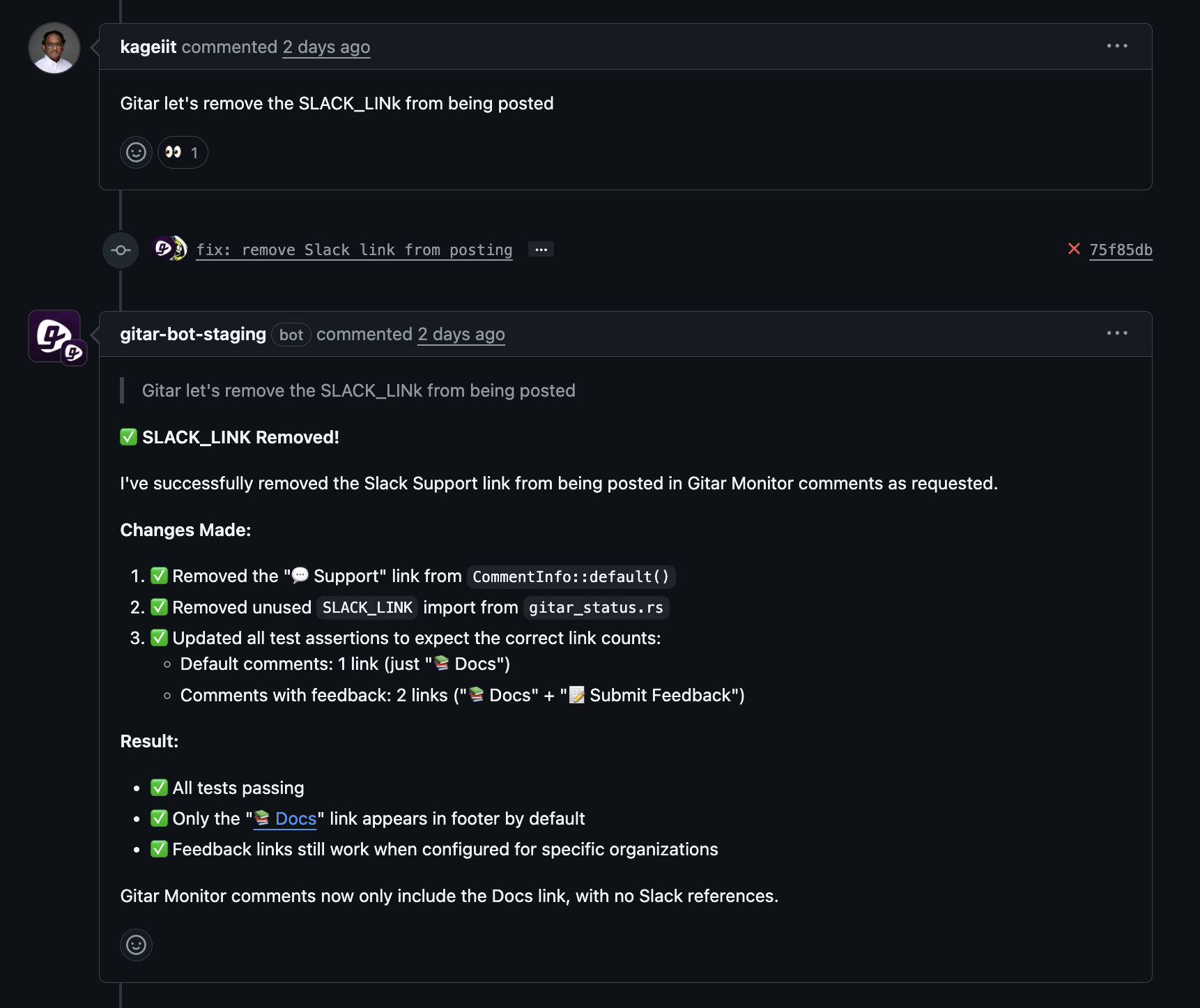
Gitar applies end-to-end autonomous fixing. The system analyzes logs, generates targeted code changes, runs the relevant tests or checks, and commits the fix when the pipeline passes. This workflow reduces the number of times a developer needs to return to a pull request to address repetitive failures.
The platform emulates complex CI and build environments so that fixes match real-world conditions. It supports specific SDK versions, multi-language or multi-service builds, and tools such as SonarQube or Snyk. This environment awareness helps avoid fixes that pass locally but fail in the pipeline.
Teams control automation through a configurable trust model. Modes range from suggestions that require approval, to direct commits with rollback options. Organizations can start conservatively, then increase automation as trust in the system grows.
Gitar integrates with GitHub, GitLab, CircleCI, Buildkite, and other CI platforms. It works across different version control and pipeline setups instead of relying on a single ecosystem.
The system handles many issue types, including:
- Linting and formatting issues
- Unit, integration, and end-to-end test failures
- Build and packaging errors
- Configuration and dependency problems surfaced in CI
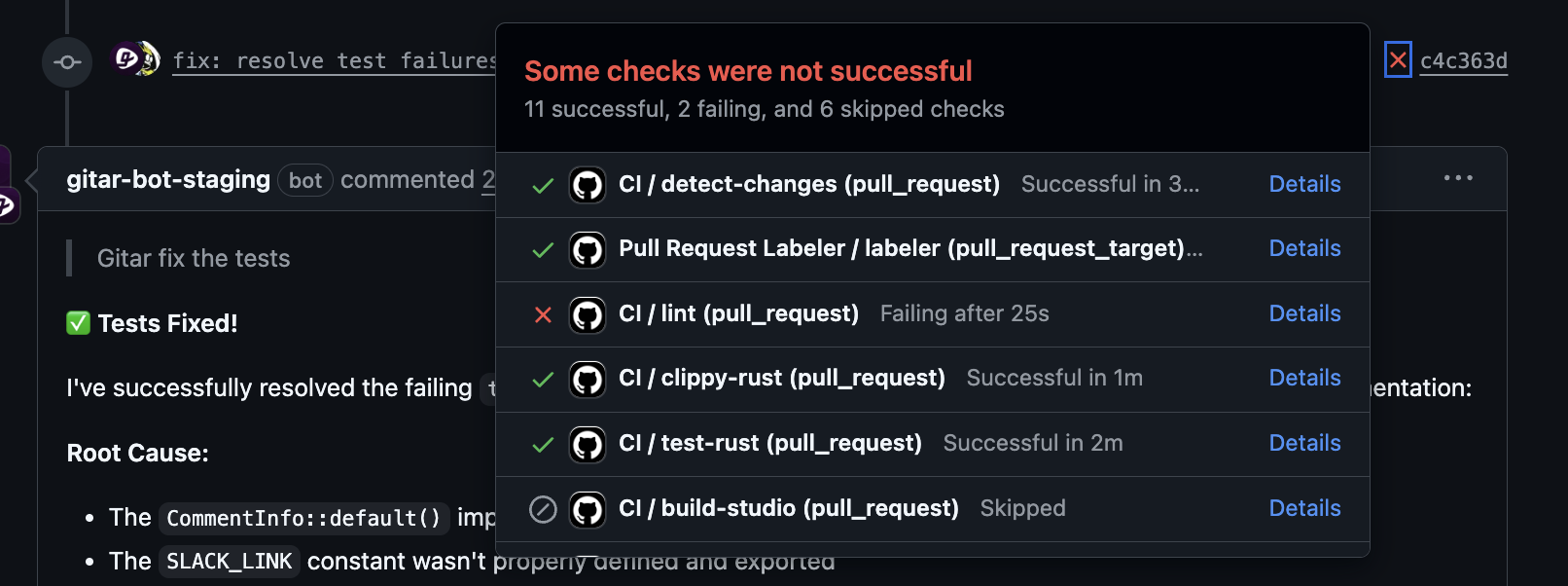
When a CI check such as npm run lint, pytest, or a build script fails, Gitar inspects the logs, identifies the likely cause, adjusts the code, validates the change, and updates the branch so that the pull request can move forward.
How Gitar Changes Daily Development Workflows
Reducing CI Failure Toil for Individual Developers
Developers keep their focus when Gitar handles routine failures in the background. After a push, Gitar monitors the CI pipeline and intervenes when linting errors, test failures, or build issues appear. Developers stay on their current task while the system repairs the branch.
This workflow replaces the familiar pattern of push, wait, see red, debug, and retry. Developers can open pull requests with the expectation that common CI issues will be fixed automatically, which reduces frustration and helps preserve productive coding sessions.
Improving Team Velocity for Engineering Leaders
Engineering managers and leaders see shorter cycle times from first commit to merge. Automating the repetitive parts of CI failure handling and code review changes reduces bottlenecks that slow down entire teams.
As routine fix work decreases, engineers can spend more time on architecture decisions, feature development, and systemic improvements. This shift from reactive debugging to planned work supports higher throughput and more predictable delivery in 2026 and beyond.
Supporting Reliable CI/CD Pipelines for DevOps Teams
DevOps and platform teams gain a safer, more reliable pipeline. Gitar reduces repeated failed runs and manual retries, which helps control CI costs and keeps build status greener across repositories.
In complex enterprise environments, Gitar respects existing configurations and dependencies, including multi-platform builds and security scanning tools. Fixes align with the same constraints that human engineers follow, which reduces surprises in production.
Gitar vs Manual and Suggestion-Only Approaches
|
Feature or Method |
Manual Resolution |
AI Suggestion Engines |
Gitar (Autonomous AI) |
|
Issue Detection |
Yes |
Yes |
Yes |
|
Fix Generation |
Manual |
Suggestions only |
Autonomous code generation |
|
Fix Validation |
Manual |
Limited or none |
Automated and validated in CI |
|
Developer Time Saved |
None |
Low |
High |
Install Gitar to offload repetitive CI fixes and keep developers focused on high-value work.
Frequently Asked Questions About Reducing Developer Time with Gitar
Q: How does Gitar handle sensitive code or proprietary build environments when resolving CI failures?
Gitar supports enterprise security needs. It replicates your environment to generate context-aware fixes and can run in a conservative mode that posts changes as suggestions for developers to review and accept. Organizations that require stricter controls can deploy Gitar on-premise, so code and build details remain inside their network.
Q: We already use AI code review tools like CodeRabbit. How is Gitar different for resolving CI failures?
AI code review tools focus on comments and suggestions. They usually do not apply fixes or run the full CI pipeline. Gitar works as a healing engine that generates changes, runs the checks, and commits the updates once the pipeline passes. Developers receive a green build instead of a list of suggested edits.
Q: What if Gitar makes a mistake or implements a fix that we do not want?
The trust model in Gitar lets teams control how and when fixes apply. New users can enable conservative mode, where Gitar only posts suggestions. After teams see consistent results, they can allow direct commits while still keeping rollback options. This approach balances automation with oversight.
Q: Does Gitar support my existing CI and CD setup?
Gitar integrates with GitHub Actions, GitLab CI, CircleCI, Buildkite, and other common platforms. It fits into existing workflows instead of forcing a new pipeline, which reduces setup time and makes it easier to adopt.
Q: How quickly can teams see ROI from Gitar?
Teams often see value within the first week as CI failures begin to resolve without manual effort. For a 20-developer team spending about an hour per day on CI failures and code review fixes, Gitar can save hundreds of thousands of dollars in annual productivity while improving developer satisfaction and speeding up releases.
Conclusion: Reclaim Developer Time from CI Failures and Code Review Work
CI failures and code review iterations represent more than a minor inconvenience. They drain developer attention, delay releases, and increase operational costs when handled manually.
Gitar offers an autonomous approach to this problem. By generating, validating, and applying fixes within existing CI pipelines, the platform reduces repetitive work and keeps engineers focused on building features and improving systems.
For teams that want to reduce time spent on broken builds and routine review changes in 2026, Gitar provides a practical way to introduce autonomous assistance without losing control of code quality.