
Key Takeaways
- CI/CD failures and manual code review create frequent interruptions, delayed releases, and higher engineering costs.
- Suggestion-only AI tools still depend on developers to apply, validate, and re-run fixes, which preserves most of the manual toil.
- Autonomous code review automation that applies and validates fixes can reduce context switching and keep pipelines moving.
- Gitar supports complex enterprise environments, integrates with common CI systems, and helps teams ship reliable changes more often.
- Teams that want to reduce CI toil and speed up reviews can use Gitar to automatically fix broken builds and code review feedback; install Gitar to start automating fixes.
The Problem: Why Current Deployment Automation Falls Short
Modern software teams still spend significant time unblocking CI/CD pipelines and resolving review comments by hand. This slows deployment, increases costs, and reduces time available for feature work.
The High Cost of Unreliable CI/CD Pipelines
Pipeline failures often delay project timelines for most companies and introduce hidden overhead. Each failed run forces engineers to stop feature work, investigate logs, and retry builds. These delays accumulate into missed release windows, frustrated stakeholders, and slower response to product opportunities.
The Developer Productivity Paradox: Context Switching and Toil
CI problems affect productivity less through the defect itself and more through interruption. When developers pause deep work to fix a lint error or broken test, they lose focus and need time to regain context. Teams can spend a large share of their week on CI and code review issues, which quickly adds up to hundreds of thousands of dollars in lost annual productivity for a mid-size engineering organization.
The Limitations of Suggestion-Based AI Code Review
Many AI tools act as suggestion engines rather than execution engines. These tools can flag errors and propose patches, yet developers still must apply changes, push commits, and wait for CI validation. This preserves much of the manual workflow that slows teams down. In complex environments with specific SDK versions, layered dependencies, or custom integrations, suggested fixes may not even produce a green build.
The Solution: Gitar – Autonomous AI Code Review Automation Software for Deployment
Autonomous AI code review automation addresses these gaps by not only proposing fixes but also implementing and validating them in the actual CI environment. Gitar focuses on this full loop so that developers receive ready-to-merge pull requests instead of long lists of suggestions.
Autonomous Fixes Instead of Suggestions
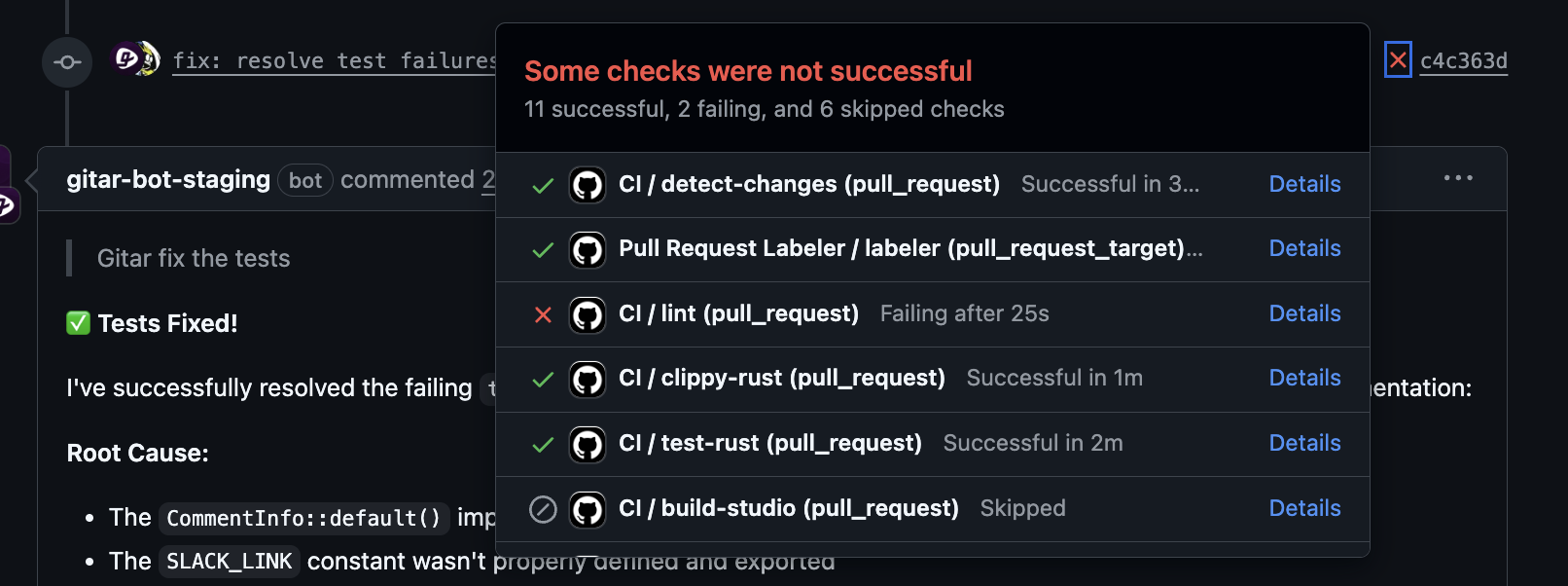
Gitar works as a CI healing engine that generates, applies, and validates fixes for common CI failures. When linting errors, test failures, or build issues occur, Gitar inspects the failure logs, prepares a patch, updates the pull request branch, and triggers validation. The system waits for the full workflow to pass so that teams see a green pull request instead of another broken run.

This approach removes many manual debugging loops and shortens the time from first failure to successful build.
Actionable Code Review Feedback
Gitar also interprets human reviewer comments and turns them into concrete code changes. When a reviewer asks to adjust logic, remove a feature from the pull request, or improve a test, Gitar can implement the requested edits, push commits, and post an explanation of the changes. Distributed teams benefit most because feedback can be applied while teammates are offline, so pull requests advance even across time zones.
Support for Complex Enterprise Environments
Enterprise CI often depends on specific JDK or SDK versions, multi-language monorepos, and tools such as SonarQube or Snyk. Gitar mirrors these workflows instead of relying on a generic sandbox. This environmental awareness helps ensure that generated fixes respect organization-specific rules, pass quality gates, and remain compatible with existing dependencies.
Teams that want to see Gitar in action can integrate it directly into their existing repositories and pipelines. Install Gitar to start automatically fixing broken builds and review feedback.
How Gitar Improves Deployment Automation
Gitar shifts CI/CD work from manual recovery to automated remediation, which helps teams ship on a more predictable schedule.
Reducing CI/CD Pipeline Bottlenecks with Self-Healing CI
Gitar targets the common causes of failing pipelines, including syntax and linting errors, flaky or failing tests, and straightforward build issues. Automated remediation reduces the number of failures that require human attention and cuts the volume of repeated CI runs. This keeps pipelines flowing and helps teams protect deployment windows.
Shortening Review Cycles Across Time Zones
Gitar implements reviewer feedback and pushes changes without waiting for the original author. When one time zone finishes a review, Gitar can process the requested edits so the next time zone sees an updated, closer-to-merge pull request. This pattern reduces idle time in review cycles and supports continuous progress on global teams.
Improving Reliability in Complex Environments
Gitar respects language versions, build tools, and integrations defined in the actual CI configuration. This reduces the risk of environment-specific failures that appear only after deployment. Teams gain more confidence that a green build reflects real production conditions.
Protecting Developer Focus and Morale
Gitar absorbs much of the repetitive debugging that can drain motivation. Developers spend more of their day on design, implementation, and collaboration instead of chasing minor CI issues. This shift supports higher job satisfaction and makes it easier to sustain deep work.
Comparison: Gitar vs. Traditional Methods and Suggestion Engines
This table highlights how autonomous remediation differs from suggestion-based tools and fully manual workflows.
|
Feature |
Gitar (Autonomous AI) |
AI Suggestion Engines |
Manual or Traditional Methods |
|
CI failure resolution |
Applies and validates fixes |
Suggests fixes only |
Fully manual debugging |
|
Code review feedback |
Implements reviewer comments |
May propose edits |
Manual edits |
|
Deployment readiness |
Targets green builds |
Often needs extra validation |
Depends on manual checks |
|
Context switching |
Lower interruption |
Moderate interruption |
High interruption |
Frequently Asked Questions about AI Code Review Automation
How does Gitar handle complex CI environments with unique dependencies?
Gitar runs fixes in the same environment that CI uses, including the configured language versions, dependency managers, and tools such as SonarQube and Snyk. This alignment helps ensure that patches compile, pass tests, and meet internal quality gates without extra manual tuning.
Can I trust an AI system to make changes directly to our codebase?
Gitar includes a configurable trust model so teams can adopt it gradually. Teams can begin with a conservative mode where Gitar proposes commits as suggestions for review. After observing consistent, high-quality fixes, teams can move to a mode where Gitar commits approved classes of fixes directly while keeping rollback options in place.
How is Gitar different from other AI code review tools or automation software?
Many tools focus on analysis and suggestions. Gitar focuses on execution. It applies changes, triggers CI, and aims to return a green pull request instead of leaving the final steps to developers. Gitar also supports multiple CI platforms, including GitHub Actions, GitLab CI, CircleCI, and Buildkite, which helps organizations standardize automation across projects.
What kind of ROI can an engineering team expect from Gitar?
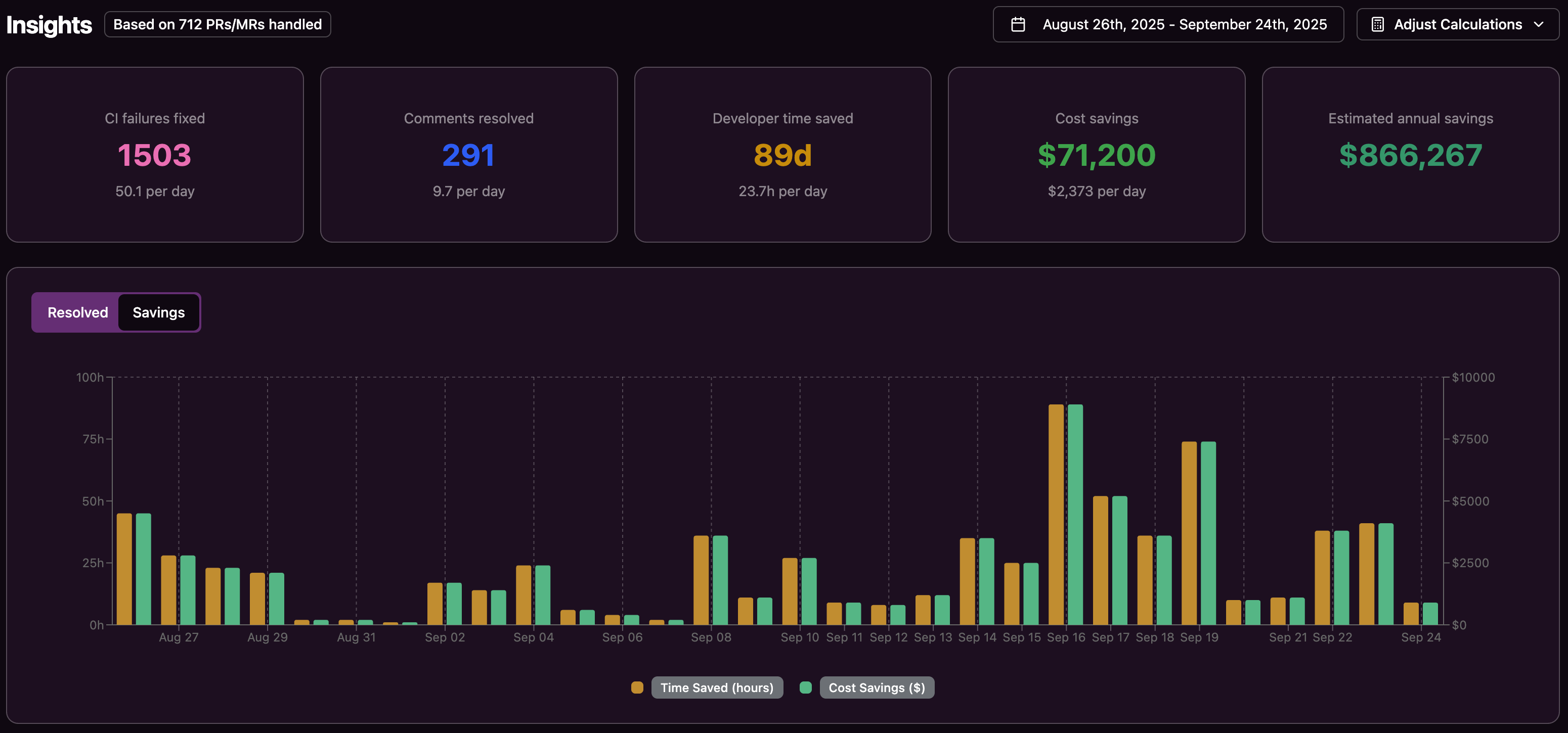
Engineering teams often lose a large amount of time each year to CI triage, debugging, and manual implementation of review feedback. By reducing this work and speeding up merges, Gitar can recover many hours per developer per month. The resulting savings scale quickly for teams with dozens of engineers.
Does Gitar work with existing CI/CD tools and workflows?
Gitar integrates with popular CI systems, languages such as Python, Go, JavaScript, TypeScript, Java, and Rust, and tools like Docker and Terraform. Installation typically involves authorizing Gitar as a GitHub or GitLab app on selected repositories and configuring basic settings in a web dashboard, so teams can keep their current workflows.
Conclusion: Empowering Your Engineering Team with Autonomous AI Code Review Automation
CI/CD bottlenecks and manual review work reduce engineering capacity and slow releases. Autonomous AI code review automation in 2026 gives teams another option: allow software to handle routine fixes while engineers focus on higher-value work.
Gitar helps shift CI/CD from reactive troubleshooting to proactive remediation. Automated fixes, validated in real pipelines, support more predictable deployments and reduce the need for constant human intervention. Teams that adopt this model can ship more often, control operational costs, and provide a better day-to-day experience for developers.
Teams that want to reduce deployment friction and protect engineering focus can start by adding Gitar to their CI workflows. Install Gitar to automatically fix CI failures and code review feedback.