
Key Takeaways
- CI failures and code review delays consume a significant share of developer time, so GitHub teams benefit from automation that shortens feedback loops and reduces manual firefighting.
- GitHub Actions, GitLab CI/CD, Devtron, and Argo CD cover core CI/CD and GitOps needs, but they still depend on humans to read logs, debug failures, and apply fixes.
- Context switching between coding, CI logs, and review tools creates heavy productivity loss, especially for teams with many pull requests and distributed contributors.
- Self-healing CI that applies and validates fixes on top of existing pipelines reduces toil, cuts time-to-merge, and helps teams ship more reliable code.
- Gitar adds this self-healing layer for GitHub workflows by automatically fixing CI failures and review comments; install Gitar to try automated CI fixes in your own repos.
The Challenge: Why Your GitHub Automation Needs an Upgrade Beyond Traditional CI
Most CI/CD platforms still expect developers to fix problems by hand. When builds fail, developers stop their current work, scan logs, recreate the issue locally, patch code, and rerun pipelines, which can stretch a five-minute fix into an hour of lost momentum.
The Context Switching Tax on Developer Flow
Developers often submit a pull request, start a new task, then get pulled back by a CI failure or review comment. This back-and-forth breaks concentration and extends the time required to complete even simple fixes. What looks like 30 minutes of actual work can consume an hour of productive capacity once mental overhead and interruptions are included.
The Rising Cost of Manual Debugging for Engineering Leaders
These interruptions add up quickly at team scale. A 20-developer team that spends one hour per day on CI and review issues can lose roughly $1M per year in productivity at typical loaded developer costs, before factoring in slower releases or burnout from repetitive debugging.
Teams that want to cut this cost can add automation that not only flags issues but also applies and validates fixes. Install Gitar to start automating CI fixes on your GitHub projects.
5 Progressive Alternatives to CircleCI for GitHub Automation
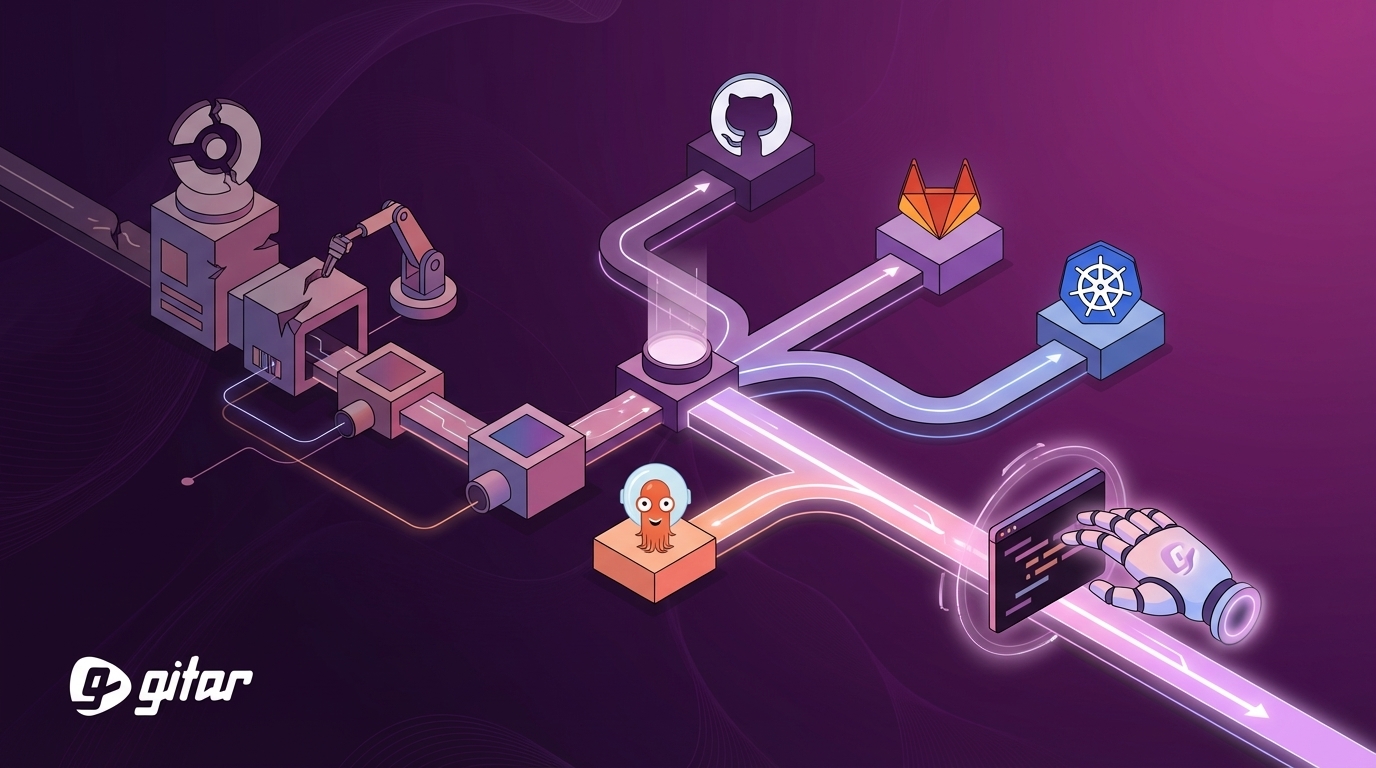
The tools below move from integrated CI options toward AI-assisted automation that targets the root causes of GitHub friction.
1. GitHub Actions: Native Integration for Swift Feedback Loops
GitHub Actions provides native integration with GitHub repositories and triggers workflows directly from Git events. A marketplace of reusable actions and support for matrix builds give teams flexibility without leaving the GitHub interface.
- Pain point addressed: Context switching between GitHub and external CI platforms.
- Best for: Teams already standardizing on GitHub that want tighter feedback loops with minimal platform sprawl.
2. GitLab CI/CD: End-to-End DevOps within a Single Platform
GitLab CI/CD offers YAML-based pipelines with parallelism, environment variables, and conditional stages across multiple runners. The same platform covers source control, security scanning, and deployment.
- Pain point addressed: Fragmented tools and complex integrations across the software lifecycle.
- Best for: Platform teams that prefer a consolidated DevOps stack with one vendor and one primary interface.
3. Devtron: Kubernetes-Native Automation for Cloud-Native Workloads
Devtron combines CI/CD, GitOps, security policies, and operational dashboards into a Kubernetes-focused platform. It supports container scanning, SBOMs, and automated promotion, rollout, and rollback strategies.
- Pain point addressed: Operational complexity and security in Kubernetes-heavy environments.
- Best for: DevOps and platform engineers building and operating cloud-native applications on Kubernetes.
4. Argo CD: Pure GitOps for Declarative Deployments
Argo CD manages deployments and state reconciliation through a GitOps model with drift detection and automated sync. Role-based access control and multi-cluster support help larger organizations keep microservices aligned with their desired state.
- Pain point addressed: Keeping desired state consistent across many services and clusters.
- Best for: Teams that already use Kubernetes and GitOps and want strong control over deployment state.
5. Gitar: Autonomous “Self-Healing CI” for Eliminating Developer Toil
Gitar acts as an autonomous AI agent that fixes failing CI pipelines and addresses code review feedback on GitHub. The system applies changes, validates them against your CI workflows, and aims to leave the pull request in a passing state, with configurable levels of automation and full environment replication for complex setups.
- Pain point addressed: Developer fatigue from manual CI debugging and slow time-to-merge caused by small, repetitive fixes.
- Best for: Engineering teams that want CI to not only detect failures but also repair them automatically inside existing pipelines.
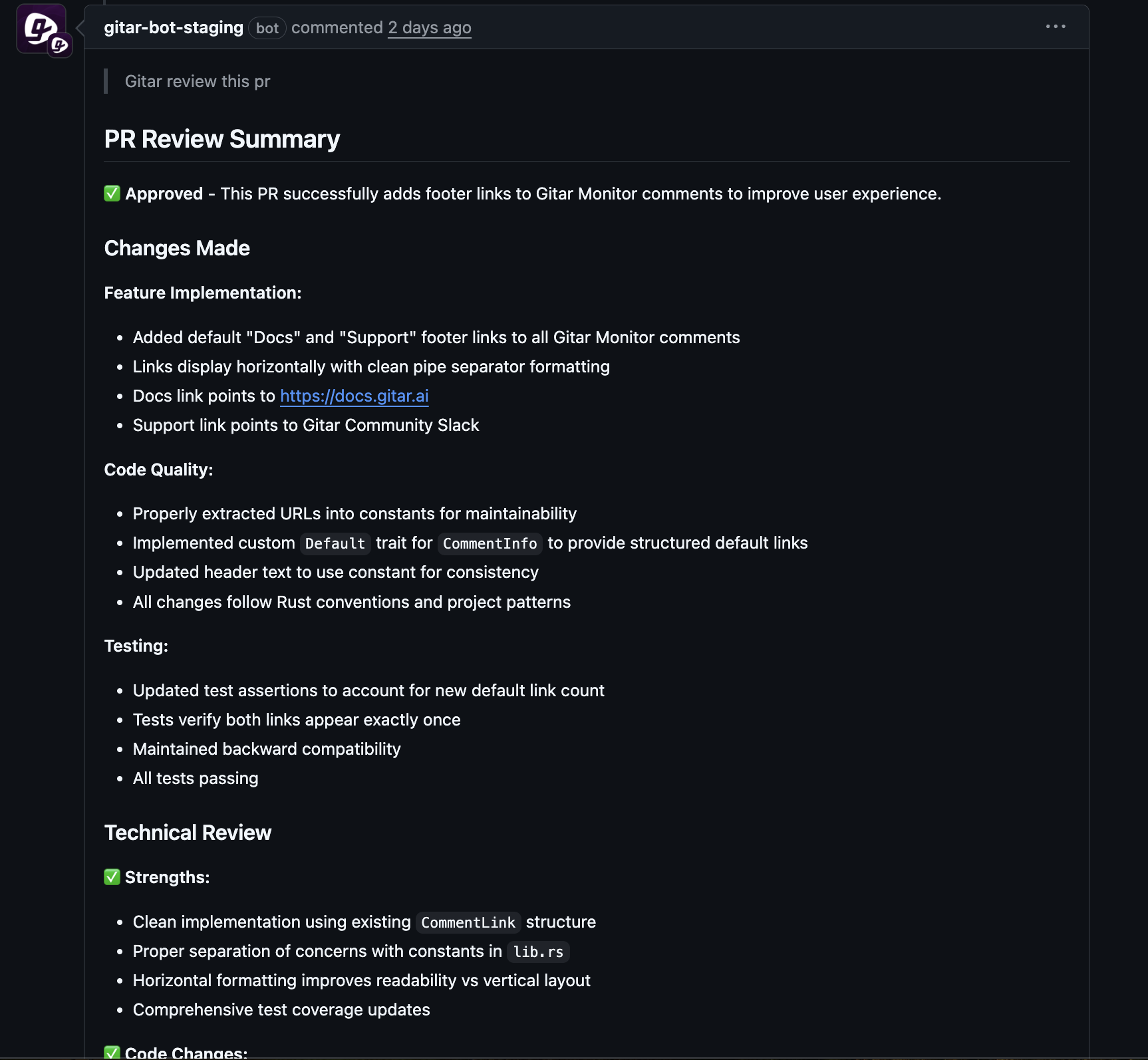
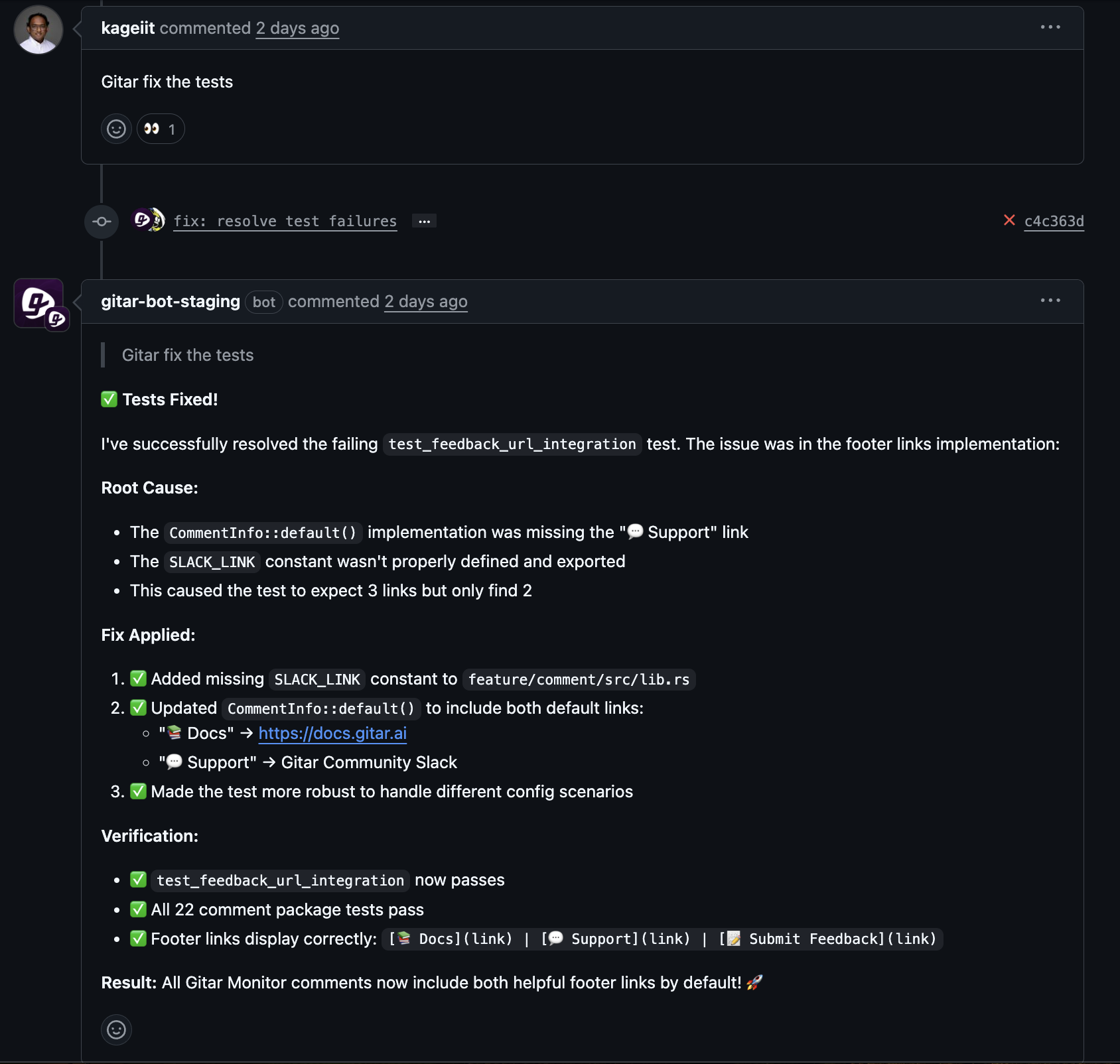
Teams that want to experience autonomous CI fixes within GitHub can install Gitar and automate CI resolutions on their current pipelines.
Comparing Top CircleCI Alternatives for GitHub Automation
|
Feature |
GitHub Actions |
GitLab CI/CD |
Devtron |
Argo CD |
|
Native GitHub integration |
Yes |
No |
No |
No |
|
End-to-end DevOps platform |
No |
Yes |
Yes |
No |
|
Kubernetes-native focus |
No |
No |
Yes |
Yes |
|
GitOps for CD |
Yes |
Yes |
Yes |
Yes |
These platforms improve automation for GitHub teams, yet they still expect developers to interpret failures and implement fixes manually. A self-healing layer such as Gitar sits on top of them and targets this remaining gap.
Why GitHub Automation Benefits from a Healing Engine, Not Just Suggestions
Most AI code assistants and CI tools behave as suggestion engines. They point out problems and sometimes propose code but still rely on developers to apply changes and re-run checks.
Gitar behaves as a healing engine that both proposes and applies fixes, then validates them against your existing workflows. When a CI failure appears, Gitar analyzes the issue, updates the pull request branch, and runs checks so the pipeline can return to a passing state with less human effort.
Consider a linting error that blocks a pipeline. Traditional tools leave the developer to inspect logs and patch code. Gitar instead works to change the code, push the update, and validate the fix inside your environment so the pull request moves forward with minimal interruption.
Teams that adopt this model shift more work from reactive debugging toward automated resolution. Install Gitar to explore self-healing CI on top of your current GitHub automation.
Frequently Asked Questions
How can I trust an AI to fix my code automatically?
Gitar uses configurable aggression modes so teams can ramp up gradually. Conservative mode posts proposed fixes as suggestions that developers accept with a click, while aggressive mode commits changes directly with clear audit trails and rollback options. This progression allows teams to build confidence while keeping full control over what reaches production.
Our CI setup is very complex and unique. Can Gitar handle it?
Gitar targets complex, enterprise-grade CI setups by replicating the relevant environment as closely as possible. The system accounts for specific dependency versions, multi-SDK builds, and integrations with tools such as SonarQube and Snyk so fixes align with real workloads instead of generic assumptions.
Does Gitar replace our existing CI/CD platform like GitHub Actions or GitLab CI?
Gitar augments existing CI/CD platforms rather than replacing them. The agent integrates with GitHub Actions, GitLab CI, CircleCI, BuildKite, and similar systems, monitors workflows for failures, then applies fixes inside the same pipelines so teams do not rebuild infrastructure.
How does Gitar handle distributed teams and time zone differences?
Gitar runs continuously, which helps distributed teams avoid overnight delays. A reviewer in one region can leave a comment, and Gitar can apply the requested change so the updated pull request is ready when the original author returns, shortening feedback cycles across time zones.
What is the ROI for implementing automated CI fixes?
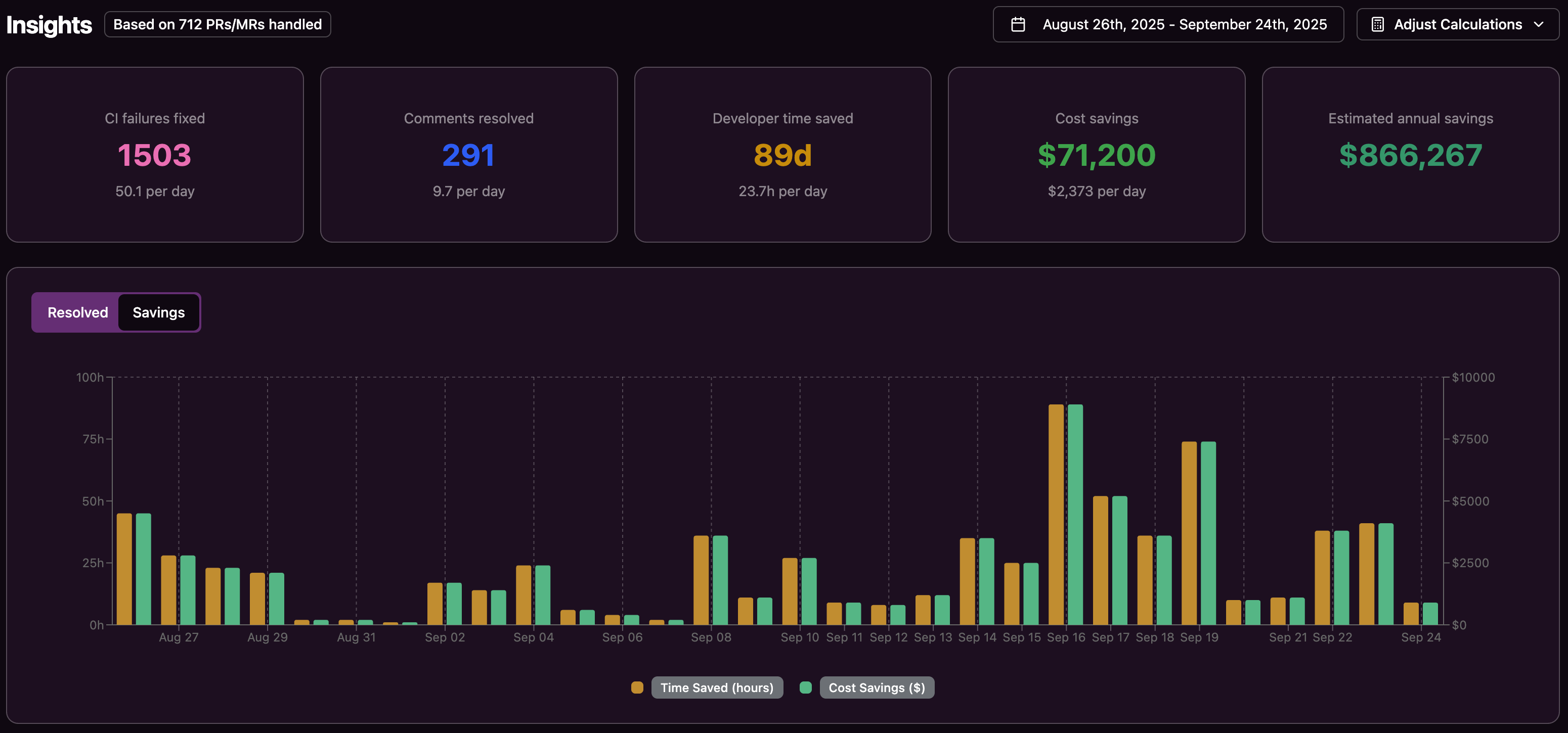
A 20-developer team that spends one hour per day on CI and review issues can lose around $1M per year in productivity. If automated CI fixing removes even half of that time, the recovered value can reach $500K annually while also improving developer satisfaction by reducing repetitive debugging work.
Conclusion: Accelerate Your GitHub Automation with Self-Healing CI
GitHub-centric teams now have strong choices for CI, CD, and GitOps, yet most tools still stop at surfacing problems instead of fixing them. Self-healing CI adds a missing layer that turns red builds and review comments into automated actions, which reduces toil and speeds up merges.
Teams that adopt this model can maintain higher engineering velocity and spend more time on features instead of CI cleanup. Install Gitar to add self-healing CI on top of your current GitHub automation.