
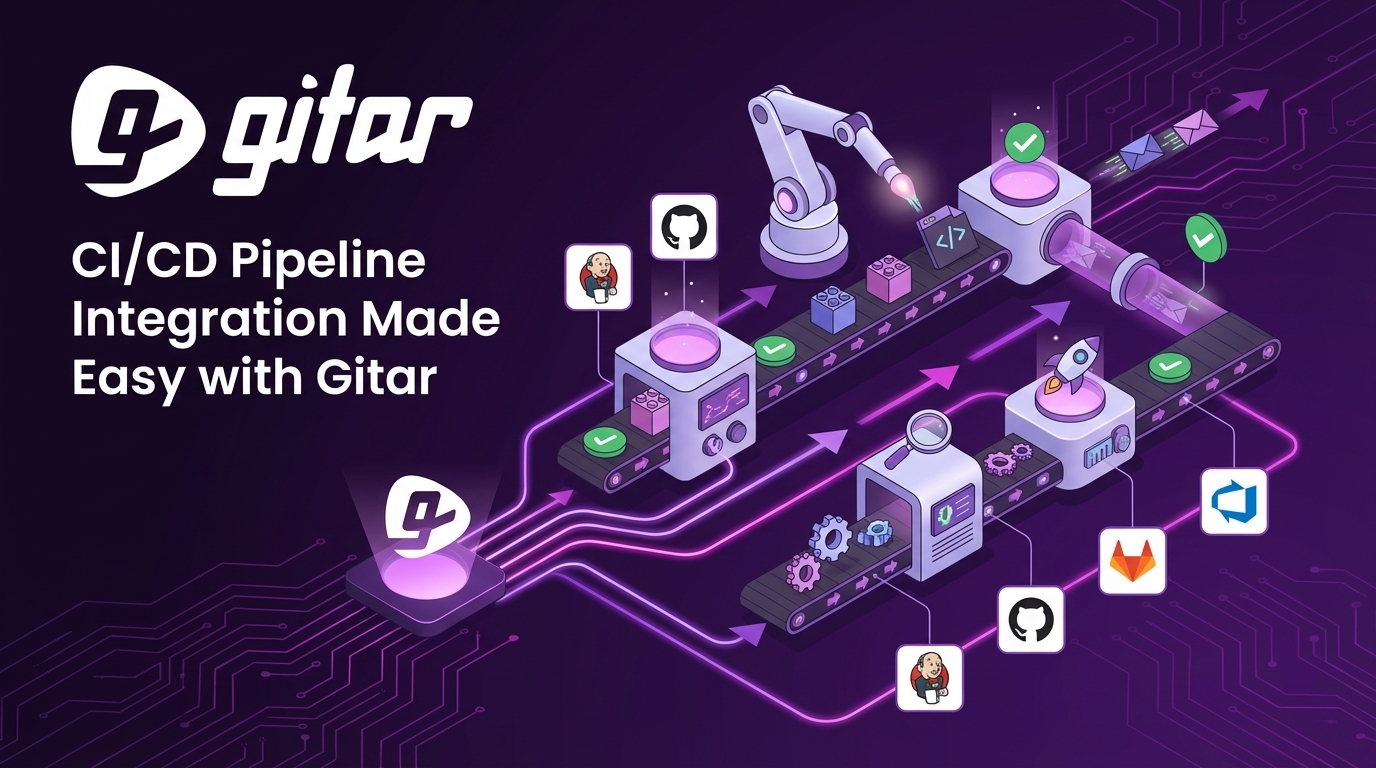
Engineering teams often struggle to integrate autonomous CI fixers into their existing CI/CD pipelines, facing compatibility issues and workflow disruptions. This article covers the common challenges of CI/CD integration and explains how Gitar provides a flexible, multi-platform solution to automate fixes and improve developer productivity.
Why CI/CD Pipeline Integration for Autonomous Fixes Feels So Challenging
Integrating autonomous CI fixing tools into your pipeline can seem promising, but it often turns into a complex task. What should be a quick upgrade can consume weeks of development time and introduce unexpected issues.
Compatibility Issues Slow Down Integration Efforts
Different CI/CD platforms like Jenkins, GitHub Actions, GitLab CI/CD, CircleCI, and Azure DevOps come with unique integration methods, such as webhooks and APIs. This variety creates configuration hurdles for autonomous fixing tools. DevOps engineers often face several obstacles during setup.
- Setup and ongoing tweaks demand significant time across platforms.
- Ensuring plugins work with existing pipeline setups adds complexity.
- Managing environment variables and secrets securely is a constant concern.
- Avoiding conflicts with pipeline dependencies or runtime versions takes extra care.
These hurdles can turn a simple integration into a draining project, sometimes leading teams to abandon useful tools after investing substantial effort.
Teams Hesitate to Adopt Tools Due to Workflow Risks
Introducing new tools to critical CI/CD pipelines makes engineering teams cautious. A small error can halt builds for everyone, delaying progress and releases. This fear often prevents teams from trying tools that could help.
- New integrations might cause unpredictable pipeline failures or resource issues.
- Unclear interactions with permission systems raise security concerns.
- Removing a problematic tool quickly feels uncertain in complex setups.
- Learning new processes or interfaces meets resistance from teams.
In regulated industries, strict change management rules add another layer of hesitation, pushing teams to stick with familiar systems despite inefficiencies.
Integration Problems Add to Context Switching for Developers
CI failures and code reviews already cut into developer focus. Poor integration of CI/CD tools worsens this by creating additional issues to troubleshoot, pulling developers away from their main work.
- Debugging integration failures, like webhook errors, takes extra effort.
- False CI failures from integration glitches waste time on fake issues.
- Navigating between CI interfaces and logs adds unnecessary steps.
- Sporadic integration bugs create doubt about tool reliability.
Tools meant to save time can instead drain it if integration isn’t smooth, making the solution feel like part of the problem.
Integration Delays Have a Real Business Cost
Integration challenges affect more than just engineering teams, they impact the bottom line. For a team of 20 developers, CI failures and review delays can cost around $1 million yearly in lost time. Poor tool integration makes this worse.
- Integration projects stretch from days to months, delaying benefits.
- Teams underuse tools due to setup limits, lowering return on investment.
- Time spent on integration could go to building features instead.
- Slow cycles let competitors release similar products faster.
Companies struggling with CI/CD integration fall behind, unable to adopt productivity tools efficiently while others gain ground.
Want to escape integration headaches? Install Gitar now to automate CI fixes and ship better software faster.
Gitar: Your Partner for Smooth CI/CD Pipeline Integration
Gitar tackles the typical struggles of CI/CD pipeline integration with an AI agent built specifically for easy compatibility with modern development workflows. Unlike generic tools needing heavy customization, Gitar works with the systems your team already uses.

How Gitar Simplifies Integration Across Platforms
Gitar offers practical features to fit into diverse environments without forcing teams to overhaul their setups.
- Works with GitHub Actions, GitLab CI, CircleCI, and BuildKite for flexibility in mixed setups.
- Connects directly to GitHub and GitLab for real-time pull request monitoring and commits.
- Supports SaaS or on-premise options to meet security and compliance needs.
- Simplifies setup via a web dashboard, starting with suggestion mode before full automation.
- Responds to CI events automatically, requiring little setup or custom code.
Ready to streamline your pipeline? Book a demo with Gitar today.
How Gitar Strengthens Your CI/CD Pipeline Without Disruption
Gitar’s integration strategy turns the often complicated process of adding autonomous fixes into a straightforward, confidence-building experience that enhances your current workflows.
Quick Setup with Tools You Already Use
Gitar uses standard methods to reduce setup friction, connecting to your systems with minimal effort so you can focus on results.
- Installs as a GitHub App with a simple authorization for chosen repositories.
- Connects automatically to platforms like GitHub Actions and GitLab CI with little configuration.
- Adapts to your build environment for consistent compatibility.
- Starts in a cautious mode to build trust before full automation.
This approach cuts down the usual time and hassle of custom integration, letting teams benefit from automated fixes fast.
Enhancing Workflows Without Changing Them
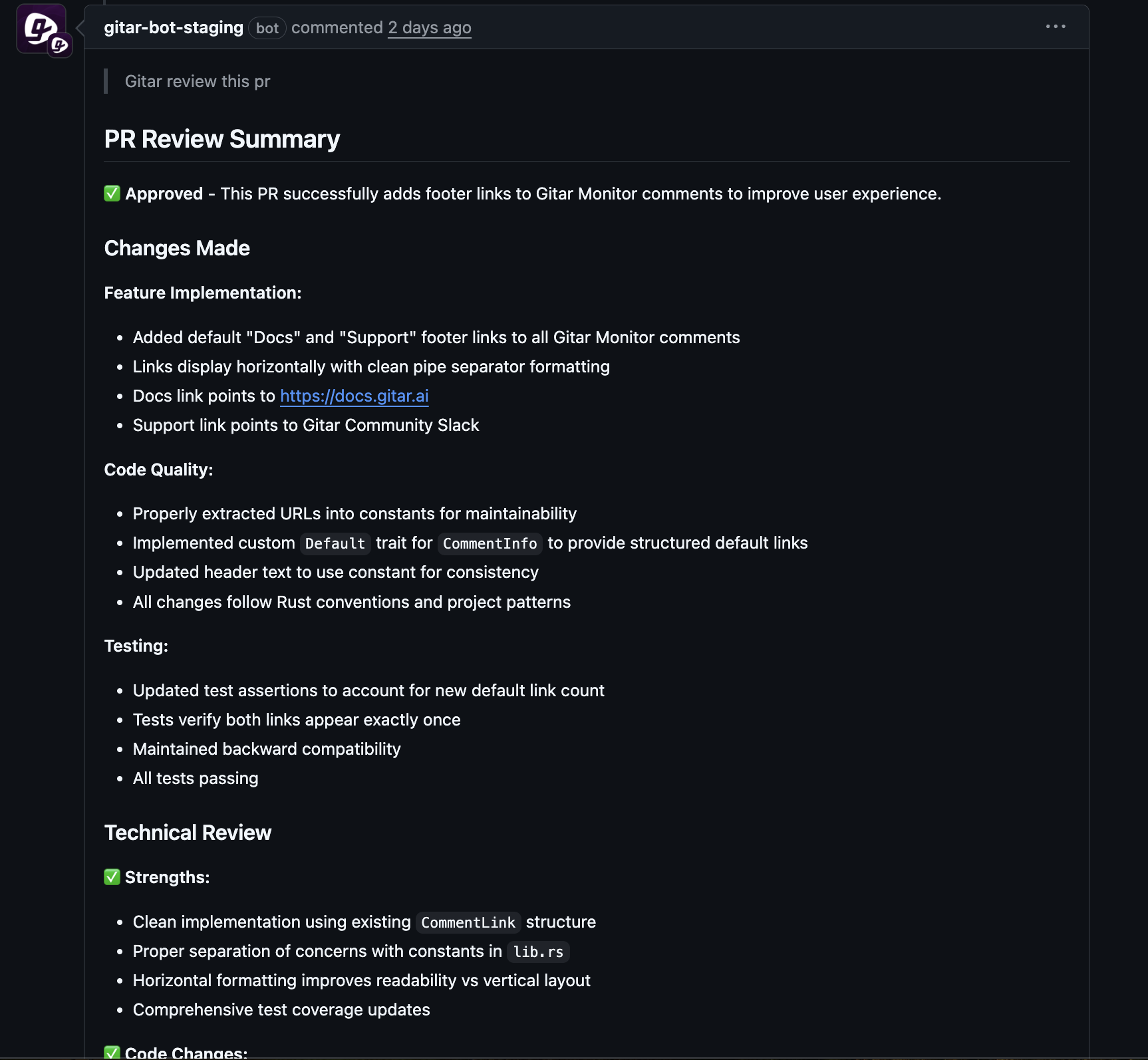
Gitar fits into your existing CI pipeline stages, reacting to events like failed tests and applying fixes within the same pull requests. This means no need to retrain staff or alter review processes.
- Monitors CI events in real time to catch failures early.
- Analyzes logs and code to pinpoint issues accurately.
- Replicates your build setup to ensure fixes work correctly.
- Commits fixes to PR branches with clear explanations of changes.
- Keeps your current review and approval steps intact.
This method adds smart automation quietly, reducing friction while respecting team control.
Supporting Diverse CI/CD Environments Effectively
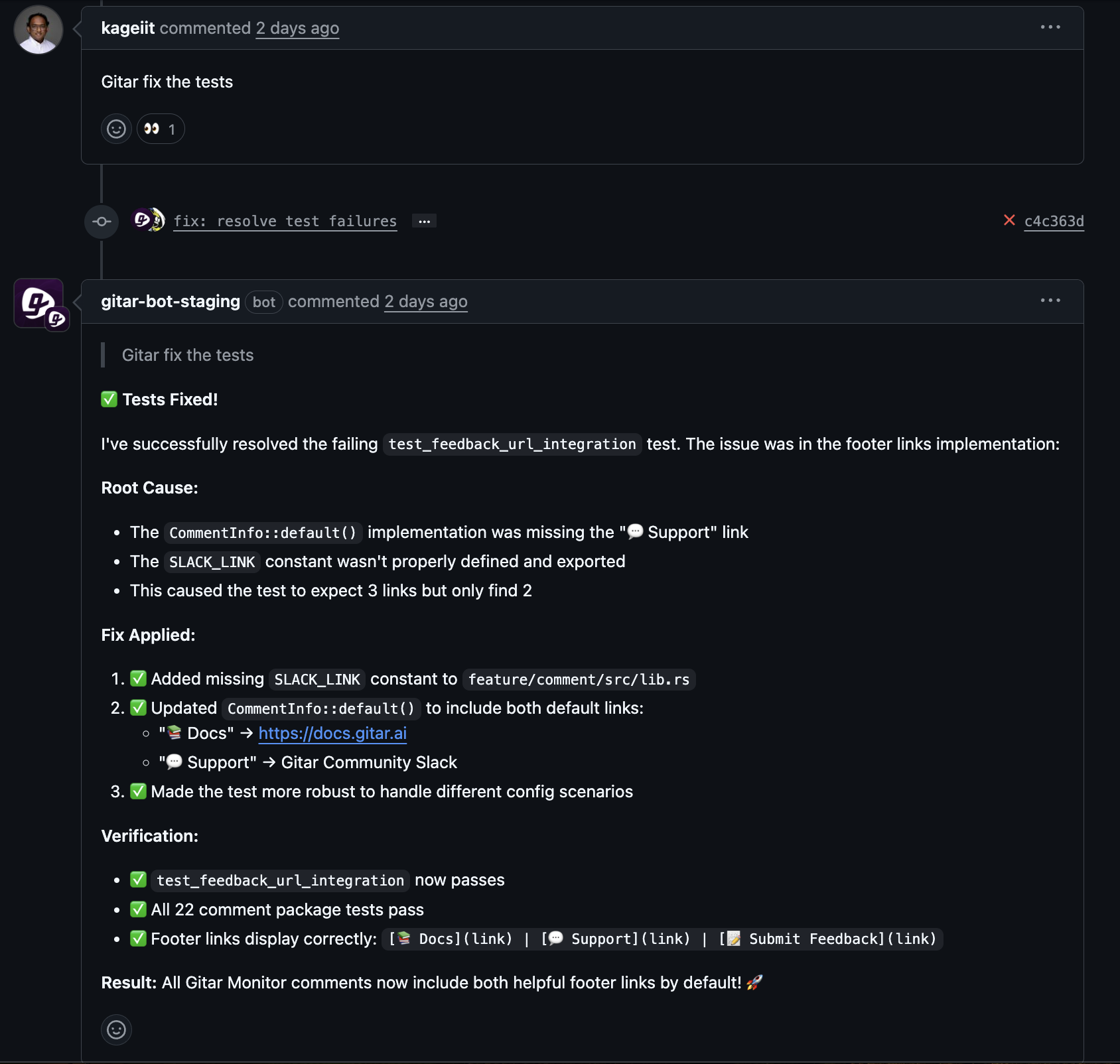
Many enterprises use varied CI/CD tools across teams. Gitar handles platforms like GitHub Actions, GitLab CI, CircleCI, and BuildKite, ensuring consistent automation in mixed setups.
- Delivers the same fixing capabilities across different platforms.
- Allows centralized policy management from one dashboard.
- Supports flexibility during platform migrations without losing features.
- Lets teams keep preferred tools while using organization-wide automation.
This adaptability suits complex tech stacks, avoiding the need for multiple fixing tools.
Building Trust with a Step-by-Step Automation Rollout
Gitar overcomes hesitation about autonomous tools by offering adjustable settings for gradual adoption, helping teams feel confident over time.
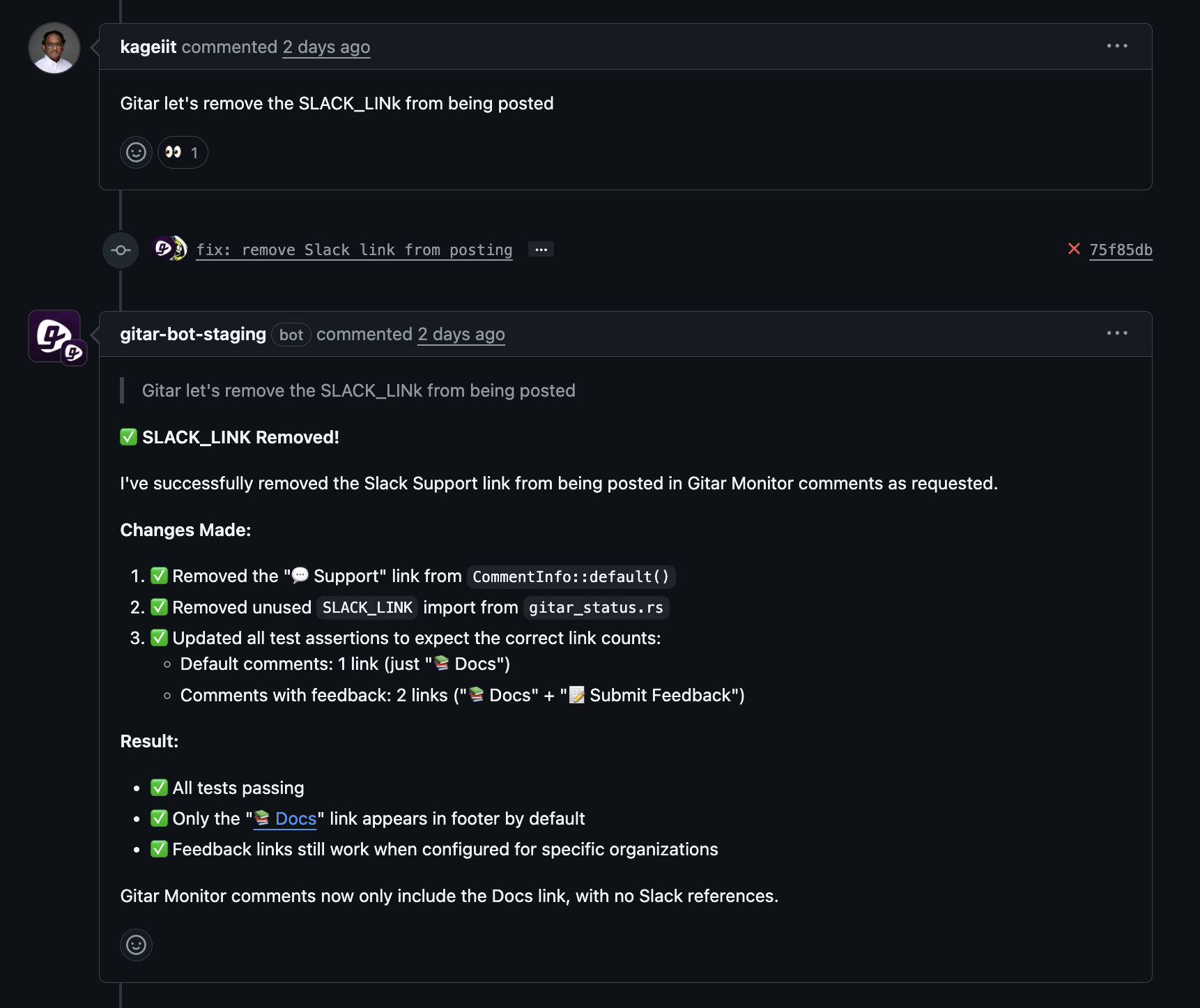
- Suggestion mode posts fixes for review and one-click approval.
- Selective automation handles minor issues while flagging bigger ones for review.
- Full automation commits fixes directly once trust is built, with rollback options.
- Custom rules let you decide which fixes need approval and which don’t.
This phased method ensures control over code while showcasing automation benefits.
How Gitar Compares to Other Integration Approaches
|
Feature |
Gitar Integration |
DIY Scripting/Manual |
Generic AI Models |
|
Setup & Configuration |
Minimal, web dashboard, easy setup |
High, custom scripts, ongoing maintenance |
High, custom prompt engineering, API coding |
|
Platform Compatibility |
Broad (GitHub Actions, GitLab CI, CircleCI, BuildKite) |
Varies per custom script/tool |
Limited by general-purpose models |
|
Real-time Response |
Event-driven, immediate fix application |
Requires custom hooks/polling mechanisms |
Often batch-processed or manual triggers |
|
Environmental Context |
Full replication for accurate fixes |
Manual context passing, brittle |
Limited, requires explicit context passing |
Discover the benefits of tailored CI/CD integration. Install Gitar now to automate fixes and deliver quality software faster.
Common Questions About Integrating Gitar with CI/CD Pipelines
How Does Gitar Connect to Our Specific CI/CD Platform?
Gitar links to platforms like GitHub Actions, GitLab CI, CircleCI, and BuildKite, syncing closely with version control events. This setup lets Gitar enhance your pipeline without replacing existing systems.
Will Gitar Interrupt Our Development or Release Processes?
Gitar integrates without disrupting workflows, working in the background to monitor CI failures and feedback. It applies fixes to pull request branches often before developers notice, keeping your team’s rhythm unchanged.
Can Gitar Manage Complex or Containerized CI Setups?
Gitar handles intricate environments by mirroring your build setup, including specific SDKs, languages like Python and Java, and Docker containers. This ensures fixes match your CI checks, even with tools like SonarQube.
How Can We Build Confidence in Gitar During Integration?
Gitar supports a gradual rollout to ease concerns. Start with suggestion mode for full control over fixes. As confidence builds, shift to automated commits, always with rollback options available.
What If Gitar Applies an Incorrect Fix?
Gitar uses safeguards like separate commits with clear notes for each fix, making reversals simple. Suggestion mode requires approval, while automated fixes are tested against your CI setup first. Your review process remains the final checkpoint.
Wrap-Up: Simplify Integration and Speed Up Delivery with Gitar
CI/CD pipeline integration challenges can slow down developer output and delay product releases. Traditional methods for adding autonomous fixes often demand heavy customization, offsetting potential gains with added effort.
Gitar cuts through these obstacles with a solution built for easy integration into your CI/CD setup. Supporting platforms like GitHub Actions and GitLab CI, it provides consistent automation across your infrastructure without complex setup.
With a gradual approach starting from suggestions to full automation, Gitar turns your pipeline into a self-correcting system. It fixes CI failures, speeds up reviews, and keeps developers focused on high-value tasks. The outcome is faster builds, quicker cycles, and better software.
Ready to enhance your CI/CD pipeline with automation? Request a demo with Gitar today.