
Key Takeaways
- Developer flow, or “vibe coding,” is a state of deep focus that improves performance, engagement, and well-being for software engineers.
- Physical, digital, social, and task environments all influence how easily developers can reach and maintain flow.
- Slow feedback loops and CI/CD failures are major sources of interruptions that break concentration and reduce team throughput.
- Leaders can improve flow with structured audits, gradual tooling changes, clear communication norms, and measurable success metrics.
- Gitar automatically fixes CI failures and updates pull requests, helping teams protect developer focus and reduce manual toil, and you can install it at https://gitar.ai/fix.
The Strategic Imperative: Why “Vibe Coding” Matters
Flow is positively associated with job performance, work engagement, and well-being for software developers. When engineers regularly reach this state, teams ship more reliably and retain talent more easily.
Many teams lose a large share of engineering time to CI/CD failures, review delays, and context switching. For a 20-person team, losing even 25 to 30 percent of time to interruptions can translate into hundreds of thousands of dollars in annual productivity loss. The shift toward AI-assisted coding increases code volume, so validation and merging now create the primary bottleneck.
Vibe coding describes an environment where that bottleneck shrinks and deep work becomes the default. Teams that design for flow see faster delivery, better code quality, and a more sustainable pace.
Pillars of Developer Flow: Physical, Digital, Social, and Task Design
Physical Environment: Supporting Comfortable, Quiet Focus
Physical workspace choices such as closed versus open offices can significantly influence how often developers reach flow. Open plans help spontaneous collaboration but often increase noise and interruptions.
Teams can support focus by:
- Providing quiet zones or private spaces for deep work
- Supplying ergonomic chairs, adjustable monitors, and comfortable keyboards
- Offering noise-canceling headphones for times when conversations or calls cannot move
Lighting, temperature, and air quality also matter. Most developers concentrate better with natural or high-quality artificial light and a stable temperature in the high 60s to low 70s Fahrenheit.
Digital Environment: Reducing Friction and Distractions
Slow feedback loops from tools, reviews, builds, and deployments are a major obstacle to developer flow. Long waits for builds or tests make it harder to stay engaged with a task.
Teams can improve the digital environment by:
- Turning off non-urgent notifications during focus blocks
- Keeping IDEs, compilers, and test suites fast and reliable
- Using clear folder, repo, and bookmark organization so information is easy to find
- Using focus tools that block distracting sites during core coding hours
These practices reduce cognitive load and keep the path from idea to feedback as short as possible.
Social Environment: Protecting Time and Psychological Safety
A safe, low-drama environment helps developers maintain focus and reach flow. Engineers think more clearly when they are not worried about blame or interpersonal tension.
Developers usually need at least 15 to 25 minutes of uninterrupted work to enter flow, and meeting schedules with less than two hours between sessions make that difficult.
Helpful social norms include:
- Shared focus blocks when meetings and pings are avoided
- Clear rules for when to use async channels versus urgent interruptions
- Agreement on signals that someone is in deep work, such as wearing headphones
Task and Challenge: Matching Work to Skills With Fast Feedback
Low-challenge work that is too easy or repetitive is a top barrier to flow. Work that is too hard creates anxiety instead of engagement.
Teams can improve this balance by breaking features into small, meaningful tasks, rotating responsibilities so that developers see both new challenges and familiar work, and maintaining fast feedback from tests, reviews, and deployments.
Gitar: Removing CI/CD Interruptions That Break Flow
Autonomous CI Fixes That Protect Focus Time
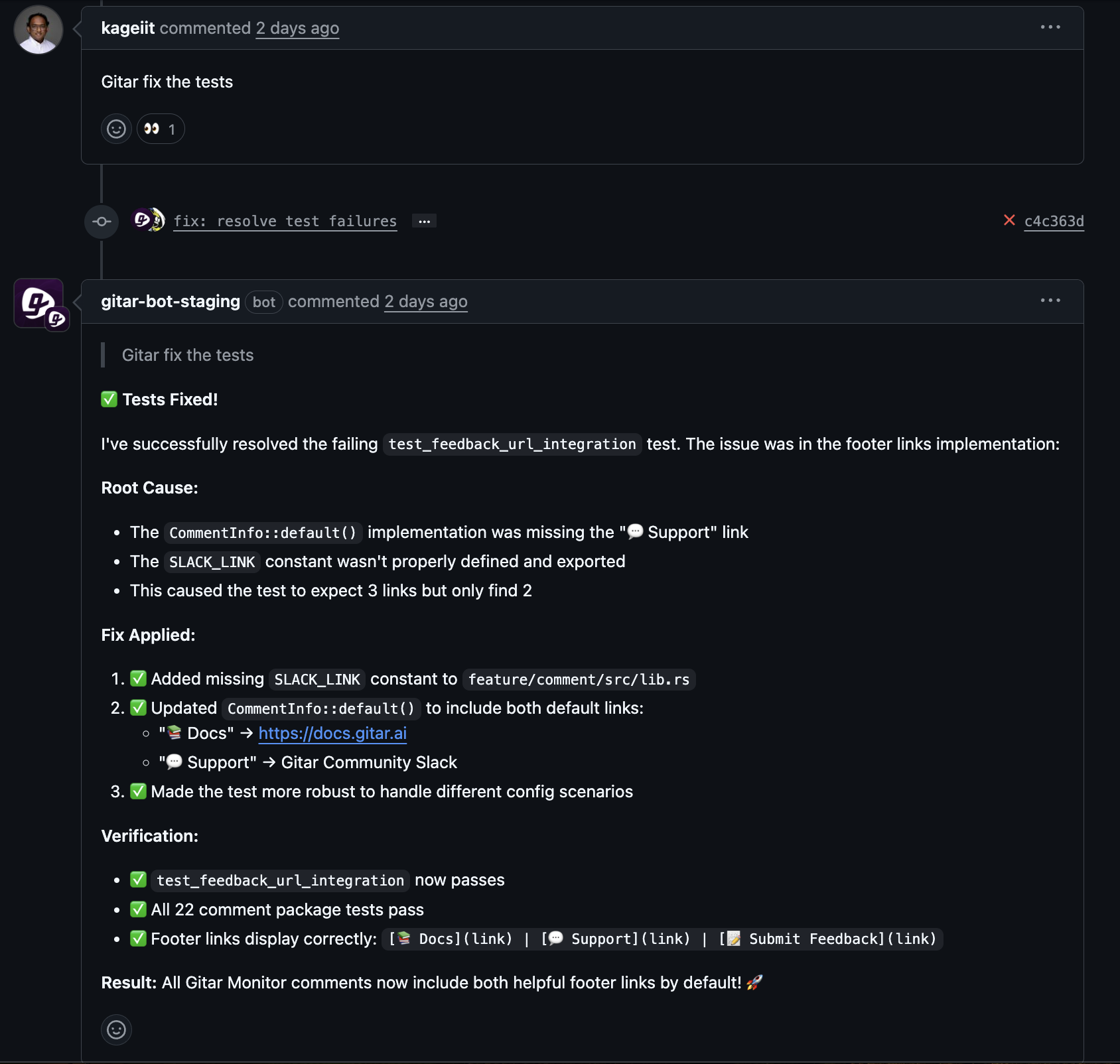
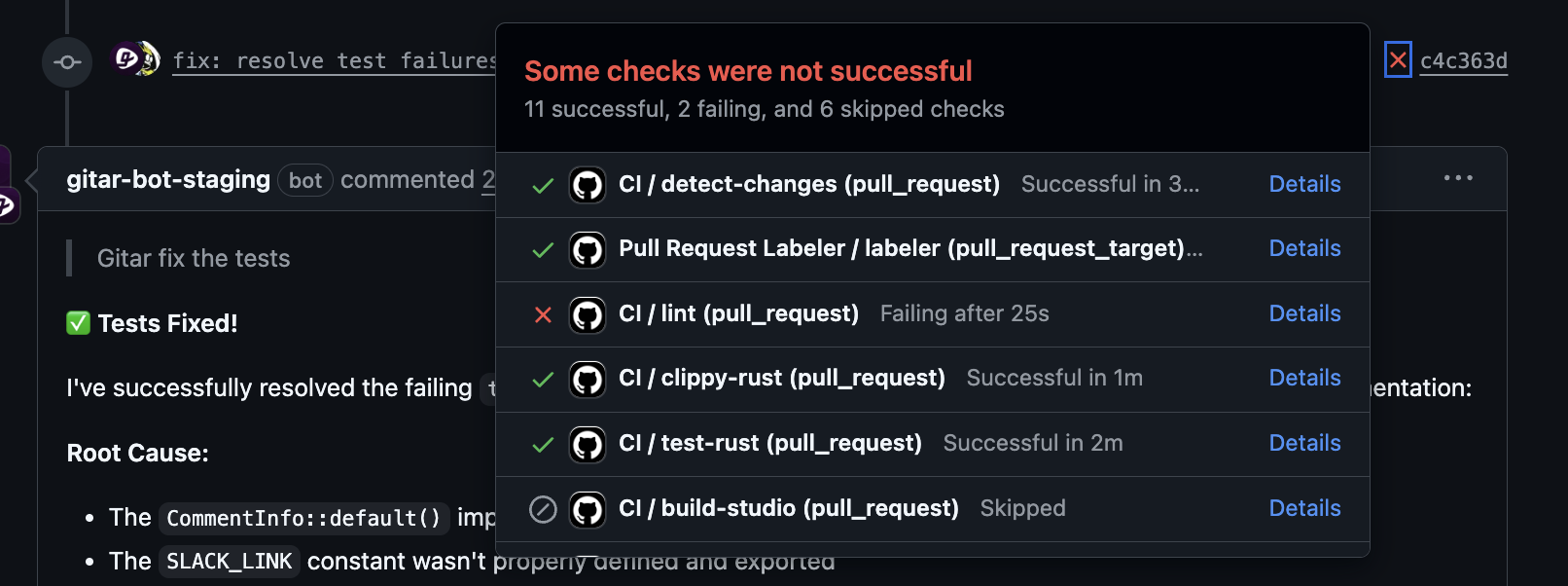
CI failures often arrive in the middle of other work. Developers must stop, read logs, debug, push fixes, and wait for pipelines to run again. A simple lint or test issue can stretch into an hour when context switching and re-entry into flow are included.
Gitar acts as an autonomous CI healing engine inside your pull requests. It analyzes failing jobs, proposes code changes, validates them against the full CI suite, and updates the pull request so it is ready to merge.
Gitar helps teams preserve flow by:
- Automatically generating fixes for lint, test, and other CI failures
- Reducing repetitive debugging and re-run cycles
- Producing pull requests that already pass CI checks
- Handling review feedback across time zones, so work keeps moving overnight
Teams can start in a conservative mode where Gitar posts suggestions that developers approve. As trust grows, they can move to more automated modes while keeping rollback options in place.
Autonomous Fixing Versus Suggestion-Only Tools
Many tools stop at review comments or suggested diffs. Gitar goes further by validating fixes against your actual CI and updating pull requests without extra manual work. The table below summarizes the difference.
|
Feature Attribute |
Gitar (Autonomous CI Healing Engine) |
Suggestion Engines |
Old Manual Way |
|
Impact on flow state |
Supports flow by resolving issues without extra steps |
Requires manual follow-up that can break focus |
Requires frequent context switching and debugging |
|
CI failure resolution |
Fixes and validates against full CI |
Suggests changes that developers must implement and re-run |
Developer debugs, fixes, pushes, and waits |
|
Code review feedback |
Implements requested changes and addresses time zone gaps |
Flags potential issues or improvements |
Developer manually interprets and applies feedback |
Install Gitar to automatically fix CI failures and maintain developer focus.
Implementing a Flow-Focused Environment
Assess Current Flow Blockers
Most significant barriers to flow are situational and come from the work environment. A structured audit helps reveal them.
Leaders can:
- Map typical developer days and note where interruptions occur
- Review physical space, tooling performance, meeting load, and task allocation
- Measure how often CI fails and how long fixes take
Introduce New Tools Gradually
Flow improves most when teams adopt changes in small, testable steps. With tools like Gitar, teams can start with low-automation modes, review the quality of fixes, and adjust policies over time.
Useful practices include:
- Defining opt-in teams or repos for pilot phases
- Tracking metrics such as time to merge and time spent on CI fixes
- Running retrospectives to capture developer feedback and concerns
- Documenting rollback steps so engineers stay confident
Measure Outcomes for Both Output and Well-Being
Teams benefit from measuring both throughput and developer experience. Relevant metrics include time to merge, number of CI failures per pull request, time spent resolving them, and frequency of evening or weekend work.
For a 20-developer team that spends roughly an hour each workday on CI and review friction, that time can exceed 5,000 hours per year. At a loaded rate of 200 dollars per hour, even a 50 percent reduction from automation can save around 500,000 dollars annually.
Surveys on focus time, stress, and perceived productivity help confirm that improvements support sustainable work rather than only pushing for more output.
Strategic Pitfalls to Avoid
High utilization targets often reduce flow by removing the slack needed to absorb variability in work. Overloading teams leaves no room for deep focus or unexpected issues.
Flow problems usually arise from several interacting factors, including process design, tools, and org structure. Focusing on one metric, such as meeting count, without addressing CI speed or task design rarely solves the underlying issue.
Positive emotions and a supportive atmosphere make it easier for developers to enter flow and produce high-quality work. Teams benefit when they pair technical optimizations with attention to recognition, fairness, and psychological safety.
Sustainable flow improvement works best as an ongoing practice that revisits multiple elements over time. Small, continuous adjustments beat sweeping one-time changes.
Install Gitar to reduce CI toil and give developers more uninterrupted time for deep work.
Frequently Asked Questions (FAQ) About Vibe Coding and Developer Flow
Q: What is “vibe coding” and why is it useful for engineering teams?
Vibe coding describes an environment that makes it easy for developers to reach flow, the state of deep focus where work feels both engaging and productive. It covers physical setup, digital tools, team norms, and task design. Teams that support vibe coding see higher job performance, stronger engagement, and better well-being, which show up as faster delivery, improved code quality, and lower turnover.
Q: How do CI/CD failures impact developer flow in practice?
CI/CD failures interrupt developers in the middle of other work. Engineers must stop, read logs, debug issues, edit code, and wait for pipelines to finish. Even quick fixes force a context switch, and it often takes 15 to 25 minutes to regain flow afterward. For distributed teams, failures that appear outside someone’s working hours can delay progress by a full day as comments, fixes, and reruns bounce between time zones.
Q: How can leaders estimate the ROI of tools like Gitar that aim to protect flow?
Leaders can estimate ROI by measuring how much time engineers currently spend on CI failures and review churn, then modeling savings from automation. For example, if 20 developers each spend about an hour per day on CI and related friction, that time totals around 5,000 hours per year. At 200 dollars per hour, that is roughly 1 million dollars in loaded cost. If Gitar removes even half of that work by autonomously fixing failures and reducing back-and-forth, the savings can approach 500,000 dollars annually, before accounting for the additional benefits of better focus and higher satisfaction.
Install Gitar to automatically fix CI failures and support sustained vibe coding for your team.