
Key Takeaways
- Modern engineering teams in “vibe coding” environments lose significant time to CI failures and code review rework, which interrupts deep focus and slows delivery.
- Autonomous CI healing engines diagnose failures, apply fixes, and validate builds with minimal human intervention, which reduces context switching and accelerates time-to-merge.
- Gitar provides end-to-end CI fixes, full environment replication, and AI-assisted code review across major CI platforms, which helps teams keep pipelines healthy.
- A phased, 12-month rollout of autonomous CI, combined with clear governance and metrics, helps organizations adopt this approach safely and measure ROI.
- Teams can start reducing CI toil immediately by using Gitar to automatically fix broken builds and implement code review feedback directly in pull and merge requests.
Why Traditional CI Slows Modern “Vibe Coding” Teams
Modern engineering teams face a growing productivity problem as developers spend up to 30% of their time debugging CI failures and implementing code review feedback by hand. Each failing build, flaky test, or style violation forces a context switch that turns minor fixes into long interruptions.
“Vibe coding” environments, with rapid iteration, distributed teams, and complex architectures, intensify this problem. Time zone gaps turn simple review comments into multi-day threads, and AI-assisted code generation increases the number of pull requests and potential CI failures.
For a 20-developer team, these delays can translate into roughly $1M per year in lost productivity. Using an autonomous CI solution like Gitar helps capture a meaningful share of that waste.
How Autonomous CI Healing Engines Reduce Manual Work
An autonomous CI healing engine shifts CI from a reactive diagnostic system into an active resolution system. Instead of only reporting failures, it identifies the root cause, generates a fix, validates the change, and updates the pull request.
This approach keeps CI pipelines running with minimal manual oversight while maintaining quality standards. Developers stay focused on feature work while the system handles routine failures in the background. Teams gain faster iteration cycles without lowering their quality bar.
How Gitar Delivers Autonomous CI for Engineering Teams
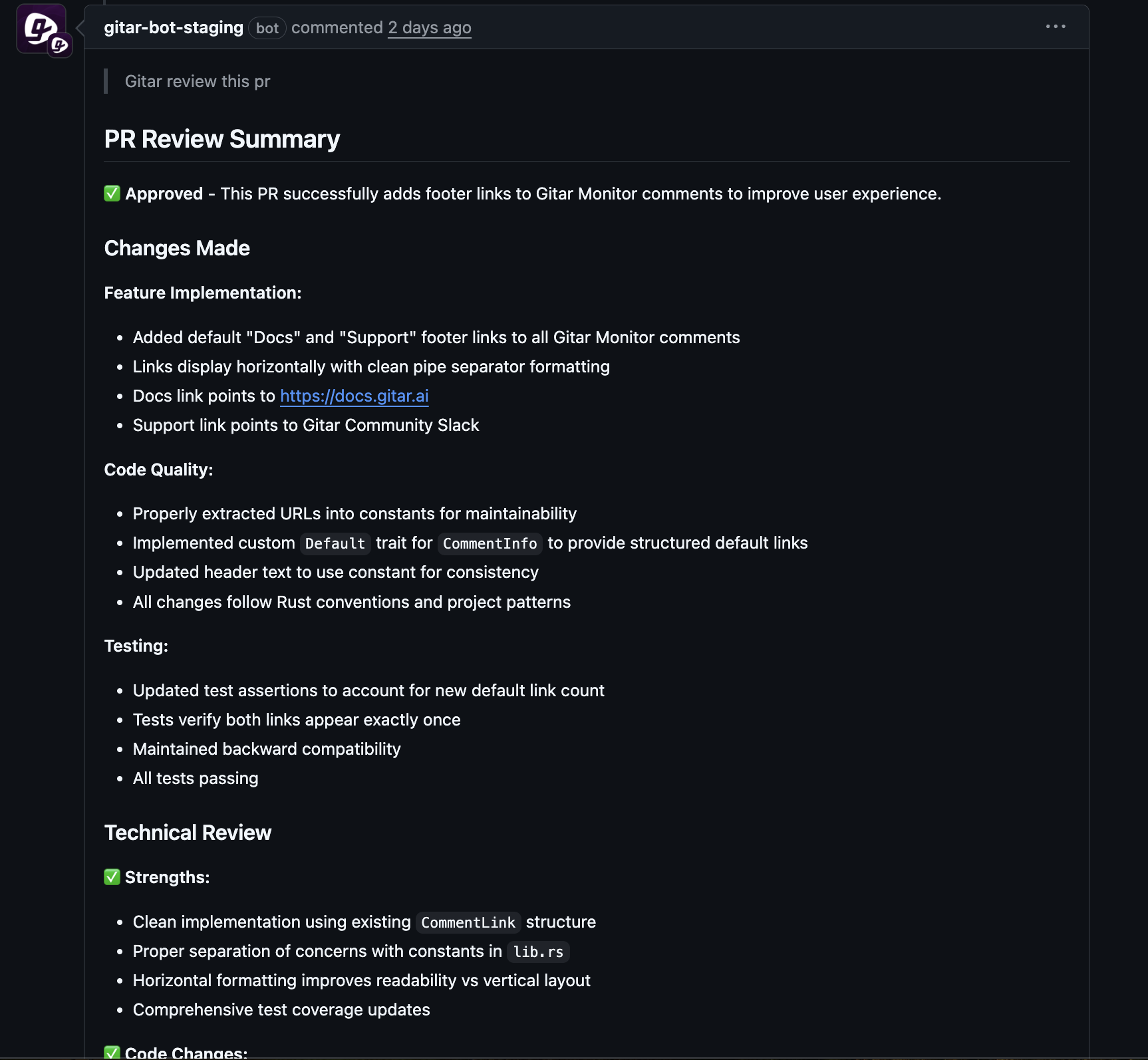
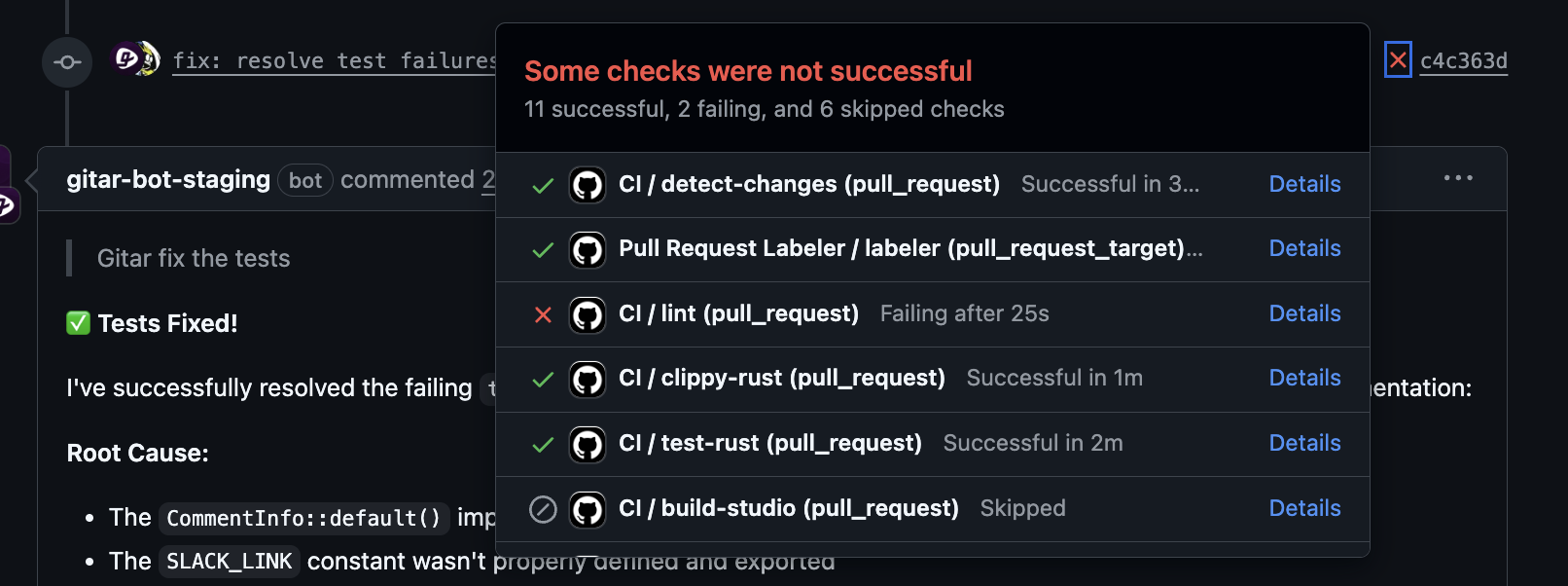
Gitar is an autonomous AI agent that removes much of the daily friction created by failing CI pipelines and repetitive code review changes. When CI fails or reviewers request updates, Gitar analyzes the issue, proposes or applies a fix, runs validation, and updates the pull request.
Key capabilities include:
- End-to-end fixing that not only suggests changes but also applies them, runs CI workflows, and presents pull requests with passing checks.
- Full environment replication that mirrors complex enterprise workflows, including specific language runtimes, multi-SDK dependencies, and tools such as SonarQube and Snyk, which keeps fixes accurate and robust.
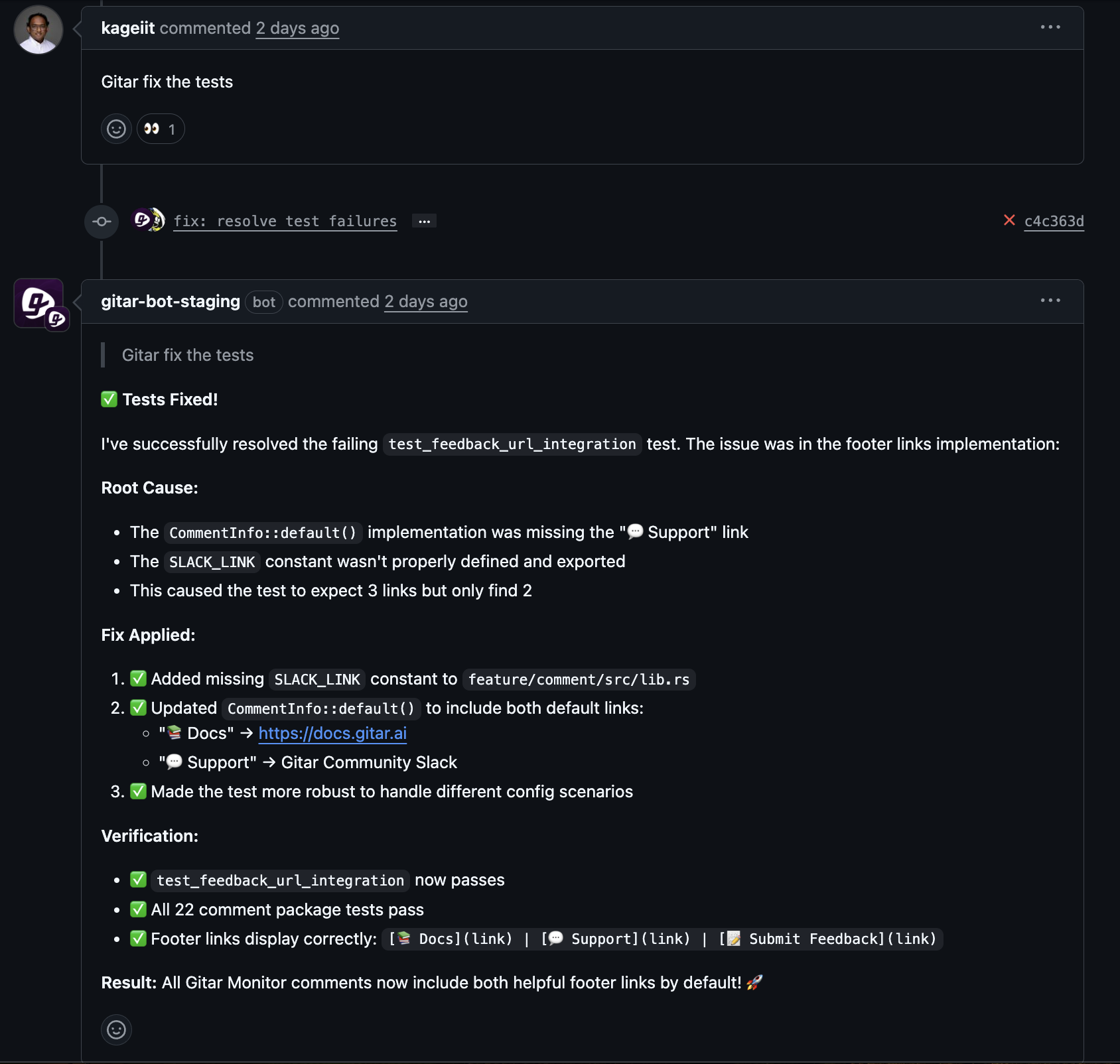
- Intelligent code review assistance that lets reviewers tag Gitar for an initial AI review or ask it to implement feedback from comments.
- A configurable trust model that supports both suggestion-only workflows and auto-commit workflows with rollback, so teams can raise autonomy as confidence grows.
- Cross-platform support that works with GitHub Actions, GitLab CI, CircleCI, BuildKite, and other major CI platforms.
A 12-Month Plan to Roll Out Autonomous CI Safely
Structured adoption helps teams capture the benefits of autonomous CI while managing risk and building trust.
Phase 1: Installation and Trust Building (Months 1–3)
Teams start by installing Gitar as a GitHub App on selected repositories and configuring initial settings through the web dashboard. Most organizations begin in suggestion-only mode so developers can review and approve every change.
Leaders define levels of autonomy that describe which tasks the agent can handle independently and where human approval is required. This shared language helps teams discuss risk and plan a gradual shift toward more automation.
Engineering, platform, and leadership stakeholders align on goals such as time-to-merge, failure recovery times, and developer satisfaction. Clear success metrics and early pilot projects help reduce skepticism.
Phase 2: Scaling and Workflow Optimization (Months 4–8)
Teams expand usage across more repositories and workflows. Senior reviewers can leave comments that instruct Gitar to apply specific fixes, which shortens feedback loops for distributed teams working across time zones.
Monitoring and evaluation tools track how often Gitar fixes issues successfully, how long resolutions take, and how frequently humans override changes. These signals feed into the tuning of both autonomy levels and CI configurations.
Organizations avoid common pitfalls by communicating value to each role, providing training, and highlighting early wins that show reduced CI toil and shorter review cycles.
Phase 3: Measuring Impact and Strengthening Governance (Months 9–12+)
Once Gitar handles a meaningful share of CI and review tasks, teams can measure financial impact. In a 20-developer group that spends an hour per day on CI and code review issues, even a 50% reduction can unlock hundreds of thousands of dollars in annual value and improve morale.
Governance models evolve based on data. Teams may shift certain projects or repositories to auto-commit mode while keeping stricter oversight for sensitive code paths. Dashboards that connect these decisions to business metrics, such as release frequency or defect rates, help leadership evaluate long-term impact.
Healing Engines vs Suggestion Engines for CI Automation
Engineering leaders benefit from understanding how autonomous healing engines differ from suggestion engines when evaluating CI automation strategies. The comparison below shows how Gitar reduces intervention while keeping teams in control.
|
Feature / Solution |
Gitar (Healing Engine) |
AI Code Reviewers (e.g., CodeRabbit) |
Manual Work (Status Quo) |
|
Intervention Level |
Autonomous fixing, validation, and committing of changes |
Assisted suggestions and partial automation |
Human diagnosis, fixing, and validation |
|
CI Integration |
Full CI system support across GitHub, GitLab, CircleCI, BuildKite, and more |
Focus on pull request context and limited CI awareness |
Manual interaction with CI dashboards and logs |
|
Context Awareness |
Deep environment and job-level context across the CI pipeline |
Primarily pull request files and comments |
Relies on human memory and context switching |
|
Developer Productivity |
Reduces context switching and preserves flow state |
Reduces some manual effort but still requires regular oversight |
High context switching and frequent interruptions |
|
Trust Model |
Configurable from suggestions to auto-commit with rollback |
Semi-autonomous workflows with required approval |
Direct human control for every change |
|
Target Pain Point |
Removes CI failures and feedback resolution as primary bottlenecks |
Improves feedback quality and provides partial fix support |
All CI and review friction stays manual |
Frequently Asked Questions About Autonomous CI
Building Trust in Autonomous Fixes With Gitar
Gitar builds trust through an adjustable aggression mode. Teams can begin with suggested fixes that require one-click approval, review commit messages that explain each change, and study results in CI. As patterns of successful fixes emerge, teams can enable auto-commit for specific repositories or workflows while keeping rollback options in place.
Why Autonomous CI Fits “Vibe Coding” Teams
“Vibe coding” teams rely on rapid iteration, distributed collaboration, and a strong focus on creative work. Traditional CI introduces frequent interruptions and time zone delays that conflict with this style. Gitar reduces these interruptions by handling many failures and feedback items autonomously, which helps code move through pipelines without repeated manual intervention.
Handling Complex Enterprise CI Environments
Gitar supports complex enterprise setups through full environment replication. The system emulates the CI environment, including language versions, dependency graphs, and integrations such as SonarQube and Snyk, so generated fixes run correctly in context rather than in a simplified sandbox.
Strategic Advantages for Engineering and Platform Leaders
Engineering leaders gain measurable cost savings, shorter time-to-merge, and better developer satisfaction when routine CI and review work becomes automated. Platform engineers see more reliable pipelines, fewer manual interventions to keep builds green, and easier onboarding for new team members who can rely on Gitar as a guide during early contributions.
Conclusion: Reclaim Engineering Hours With Autonomous CI in 2026
Autonomous CI now serves as a strategic capability for teams that want to maintain a competitive edge in 2026 “vibe coding” environments. Healing engines such as Gitar reduce the time engineers spend on routine CI failures and review-related rework, which frees more time for design, experimentation, and delivery.
Teams that continue to spend large portions of the day on manual CI debugging fall behind those that automate these tasks. Book a free demo of Gitar to see how autonomous CI fixes can help your organization cut bottlenecks, protect developer focus, and reclaim thousands of productive hours each year.