
Key Takeaways
- Traditional CI/CD failures create significant productivity loss, with developers spending a large share of their time on broken builds and review churn.
- Autonomous self-healing CI pipelines reduce context switching, shorten lead time, and keep builds green without constant manual intervention.
- Engineering leaders can improve resilience, MTTR, and security by adopting tools that understand full environments and apply safe, verifiable fixes.
- Careful rollout, clear trust models, and alignment with existing workflows help teams adopt autonomous CI systems with less resistance.
- Gitar provides autonomous CI healing that fixes broken builds and applies reviewer feedback automatically, which you can try by installing it at gitar.ai/fix.
The Critical Need for Autonomous CI: Solving Engineering’s Bottlenecks
The High Cost of Traditional CI/CD Failures
Traditional CI/CD pipelines often act as hidden cost centers. Developers may spend up to 30% of their time dealing with CI failures and code review cycles, which can reach roughly $1 million in annual lost productivity for a 20-person engineering team. This loss affects project timelines, staffing plans, and the ability to deliver on product commitments.
Context switching makes this cost even higher. A pull request that fails CI can interrupt a developer who has already moved on to another task. A simple fix that should take minutes can stretch into an hour once attention shifts and must then refocus on earlier work. For distributed teams working across time zones, these interruptions turn short review cycles into multi-day delays.
Why Self-Healing CI Is a Strategic Imperative
Self-healing CI pipelines shift teams from reactive troubleshooting to proactive automation. These systems reduce Mean Time to Recovery, increase deployment frequency, and cut the time engineers spend inspecting logs and re-running builds. The impact shows up both in daily developer experience and in how quickly teams can ship features safely.
Autonomous CI also supports organizational agility. When pipelines recover quickly and reliably from failures, leaders can plan releases with more confidence and keep engineering capacity focused on product work instead of routine maintenance.
Introducing Gitar: The AI-Powered Autonomous CI Healing Engine
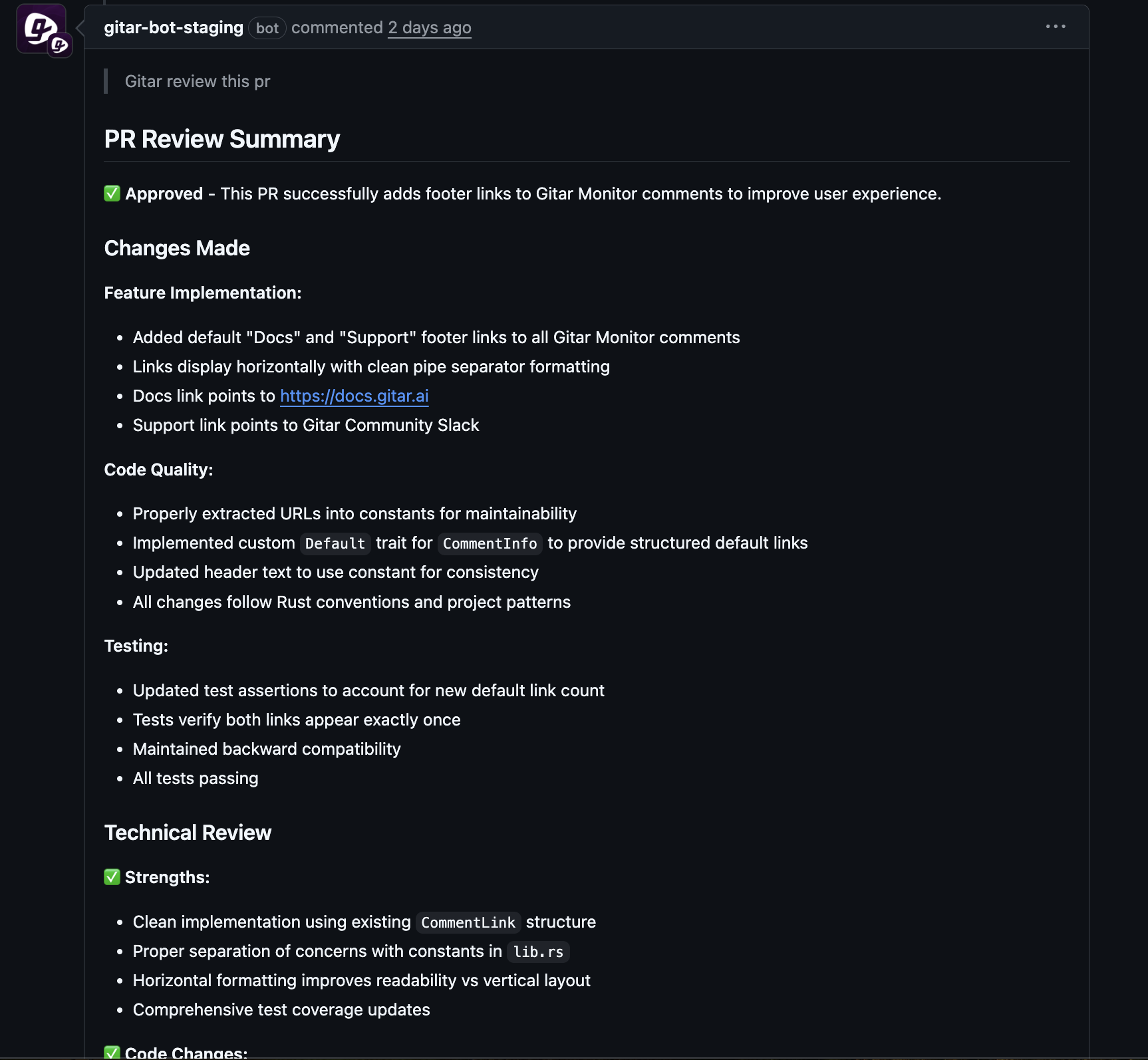
Gitar turns CI from a manual triage process into an autonomous healing workflow. The system does not stop at suggestions. It applies fixes, validates them in the full CI environment, and returns pull requests that are ready for review and merge.
Gitar focuses on working inside existing CI/CD platforms, so teams can adopt it without redesigning pipelines or workflows.
Gitar’s Core Capabilities for Engineering Leaders
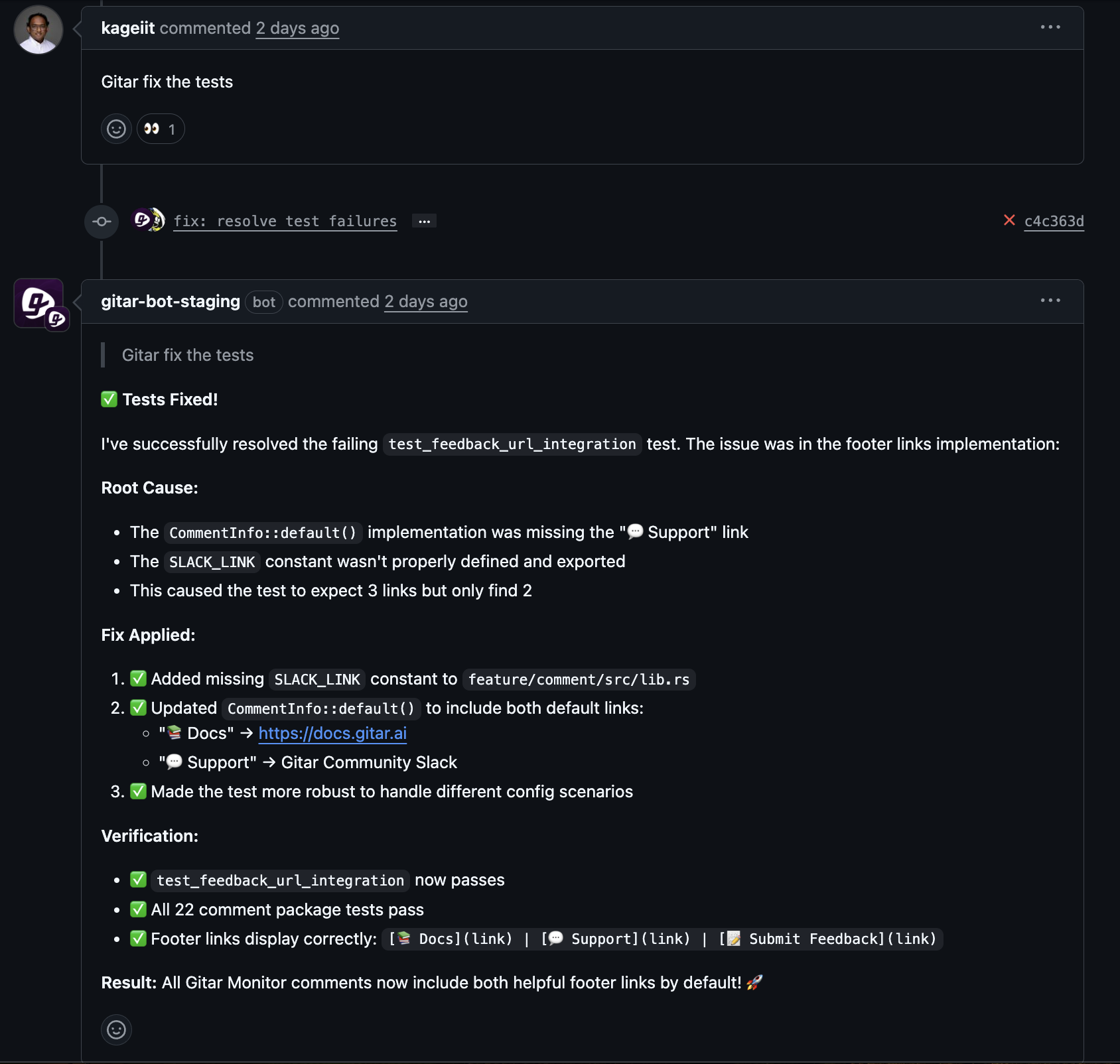
- End-to-end fixing: Gitar identifies CI failures, applies code changes, runs the full CI workflow, and only surfaces results when jobs pass. This includes lint issues, test failures, build errors, and many dependency problems.
- Full environment replication: The system emulates real CI environments, including specific JDK versions, multiple SDKs, and third-party integrations. This approach helps ensure fixes are correct for each organization’s setup.
- Configurable trust model: Teams can choose between suggestion-only mode, approval-based commits, or fully autonomous commits with rollback options. This flexibility lets organizations adopt automation at a pace that matches their comfort level.
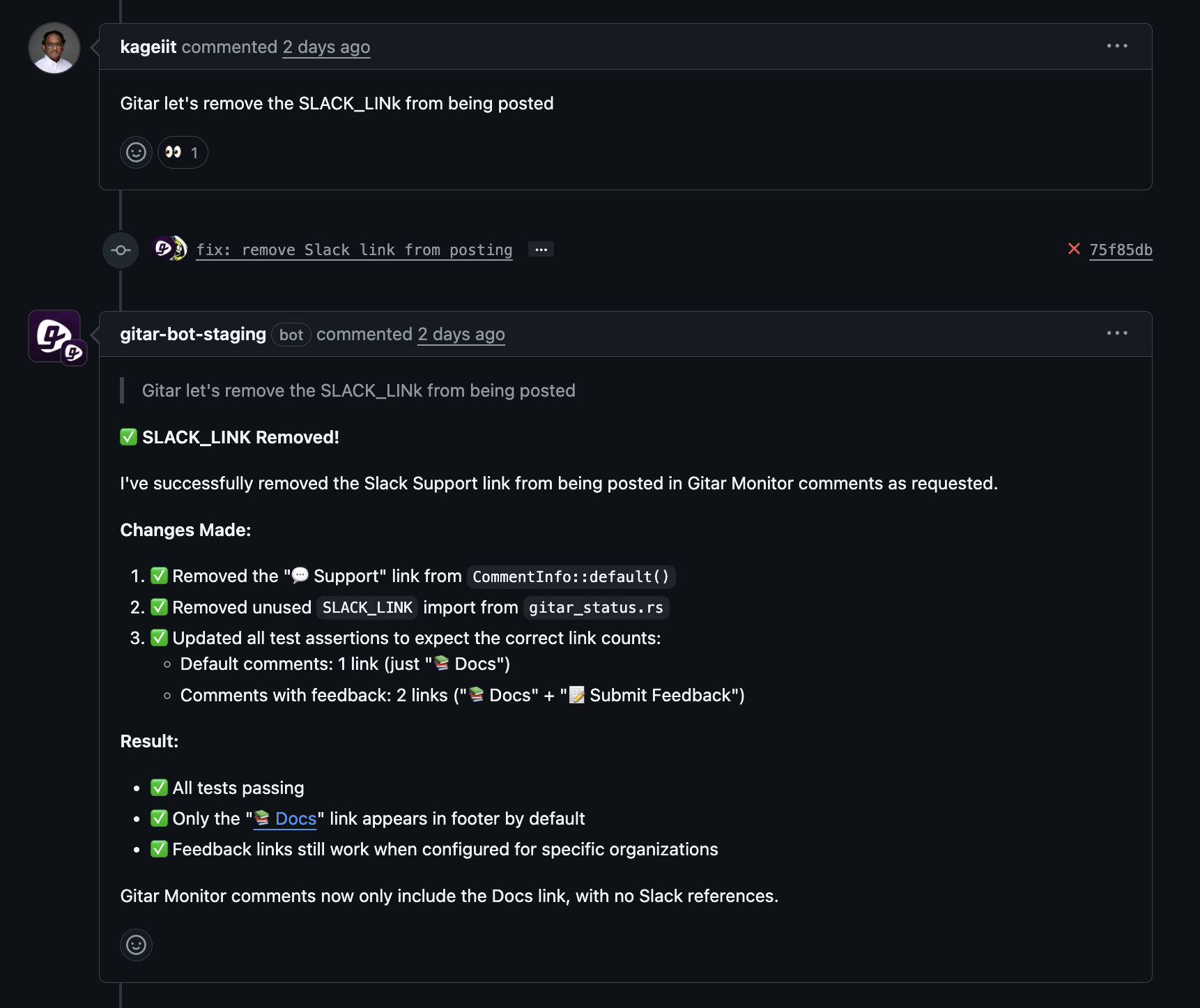
- Intelligent code review assistant: Reviewers can leave comments with clear instructions, and Gitar applies the requested changes, commits them, and posts an explanation of what changed and why.
- Cross-platform support: Gitar integrates with several major CI platforms so teams can use it alongside current tools and workflows.
Strategic Advantages: How Autonomous Pipelines Extend Traditional CI/CD
Accelerating Deployment and Reducing Lead Time
Autonomous CI pipelines help teams ship faster by keeping builds green and reducing manual handoffs. When CI can diagnose and fix common failures on its own, developers spend less time returning to old branches and more time delivering new work.
Gitar shortens lead time by removing many of the manual steps between commit and deploy. The system continuously validates changes throughout the development lifecycle, both for CI failures and for reviewer feedback that would otherwise require additional commits.
Enhancing Resilience and MTTR with Self-Healing
Resilient pipelines recover quickly from failure. Gitar reads CI logs, identifies the cause of the issue, proposes code edits, and commits verified fixes. This loop reduces downtime from broken builds and keeps teams from pausing work while waiting for someone to debug infrastructure or test errors.
Improving Security and Reliability Through Environment Awareness
Gitar emphasizes accurate environment replication, including third-party services and dependencies. This context makes it easier to catch misconfigurations, version conflicts, and other issues early in the CI workflow, which supports more reliable and secure releases.
Optimizing Cost Efficiency and Resource Utilization
Autonomous CI reduces the time engineers spend on low-leverage work. A 20-developer team that recovers even half of its CI-related losses can save hundreds of thousands of dollars in productivity each year. These gains come from fewer interruptions, shorter review cycles, and less time spent on repetitive fixes.
Teams that want to capture these savings can install Gitar at gitar.ai/fix and begin automating common CI and review issues.
Navigating Implementation: Readiness and Common Pitfalls
Assessing Organizational Readiness for Autonomous CI Adoption
Successful adoption starts with understanding current CI/CD maturity. Teams with consistent pipelines, clear ownership, and baseline metrics tend to see faster results from autonomous systems like Gitar. Historical build and test data also help AI models learn typical patterns and failure modes.
Readiness often shows up in three areas: technical stability of pipelines, cultural comfort with automation, and a clear process for reviewing and refining AI-driven changes.
Addressing Strategic Pitfalls in Autonomous Pipeline Integration
Most challenges in autonomous CI come from change management, not just technology. Gitar supports gradual rollout through its configurable trust model. Teams can start with suggestion-only mode, where Gitar proposes fixes that still require human approval, then expand to auto-commit modes after they see consistent, reliable results. This staged approach keeps teams in control while they build confidence.
Gitar vs. The Market: A Comparative View of Autonomous CI Solutions
The autonomous CI market ranges from basic AI code reviewers to systems that fully own the fix-and-verify loop. Understanding these differences helps leaders choose the level of autonomy that fits their risk profile and workflow.
Comparison Table: Gitar vs. Other CI/CD Tools
|
Feature |
Gitar (CI Healing Engine) |
AI Code Reviewers |
Manual Work (Status Quo) |
|
Core functionality |
Autonomous fixing and validation across full CI |
Suggestions on code changes |
Developer investigates, fixes, and retests |
|
Environmental context |
Full environment replication with deep CI awareness |
Focused on code diffs with limited CI context |
Developer context plus local environment |
|
Autonomy |
Configurable modes from suggestions to auto-commit |
Requires manual application of suggestions |
Fully manual |
|
CI integration |
Works across multiple CI platforms |
Often centered on Git hosting only |
Direct interaction with CI logs and tools |
Teams that want an autonomous healing engine rather than suggestion-only tooling can install Gitar at gitar.ai/fix and connect it to existing CI pipelines.
Conclusion: Reclaim Agility with Gitar’s Autonomous CI Integration
Autonomous self-healing CI pipelines mark a shift in how software teams handle failures. Instead of treating broken builds as recurring emergencies, organizations can rely on systems that repair common issues, keep pipelines healthy, and free engineers to focus on product work.
Gitar offers a practical path to this model by integrating with current CI/CD platforms, fixing failures automatically, and applying reviewer feedback directly in code. Engineering leaders who want to reduce toil and improve delivery speed can start by installing Gitar at gitar.ai/fix.
Frequently Asked Questions About Autonomous Self-Healing CI
Expected timeline for ROI from an autonomous self-healing CI pipeline
Many organizations see meaningful impact within the first weeks of using Gitar, as it begins resolving routine CI failures on active pull requests. For a 20-developer team, potential annual savings can approach seven figures when accounting for reduced time in CI triage and review churn. Additional benefits include better developer focus, faster feature delivery, and fewer long-running interruptions.
Gitar compatibility with complex and customized CI setups
Gitar is designed for complex environments with custom dependencies, SDK versions, and third-party integrations. The system replicates the CI environment and uses that context to generate fixes that match real conditions. Support for major CI platforms and enterprise configuration options helps it adapt to varied organizational setups.
Security impact of an autonomous CI pipeline
Autonomous CI pipelines that understand full environments can surface configuration issues, dependency problems, and integration risks earlier in the lifecycle. Gitar uses its environment model to verify fixes within CI, which supports more consistent, reliable, and compliant builds.
Managing team resistance to automated fixes
Teams that are cautious about automation can adopt Gitar in phases. Initial rollout can use suggestion-only mode, where Gitar proposes changes and developers approve or modify them. As the team gains confidence through successful fixes, they can enable more automated modes while still keeping rollback options and review gates where needed.
Support for distributed teams and time zone differences
Gitar helps distributed teams reduce idle time between review cycles. When a reviewer in one region leaves feedback or identifies an issue, Gitar can apply the requested changes so that the updated code is ready by the time another team member starts their day. This pattern shortens multi-time-zone review loops and supports near-continuous progress on shared branches.