
Key Takeaways
- Manual CI/CD debugging drains developer time, slows delivery, and creates avoidable context switching across teams.
- Self-healing pipelines use autonomous AI agents to detect, fix, and validate CI issues, which reduces downtime and protects velocity.
- Engineering leaders can phase in autonomous fixes with configurable trust models that match team comfort and compliance needs.
- Common pitfalls, such as suggestion-only tools and incomplete environment replication, limit the value of CI automation.
- Gitar provides an autonomous AI agent that fixes CI failures and review comments for real pull requests, and teams can start now with a simple installation workflow.
The Strategic Imperative: Why Traditional CI/CD Limits Velocity
Cultural Context: CI/CD Under Pressure
Modern software delivery in 2026 depends on frequent releases, distributed teams, and complex stacks. Many organizations still rely on manual intervention for CI/CD failures, which turns every broken pipeline into a coordination problem and slows feature delivery.
The Developer Productivity Crisis: Hidden Costs of Manual CI/CD
Developers often push a pull request that looks clean, then face failed builds from missing dependencies, flaky tests, or linter issues. Each failure forces a return to local context, log analysis, edits, new commits, and another wait for CI.
Developers can waste up to 30% of their time on CI and code review issues. Short fixes still break flow, and context switching turns minutes of actual work into long gaps in productive, focused time.
Business Impact: Slower Time-to-Market and Higher Costs
Pipeline failures lead to delayed projects for 60% of companies. Release delays affect time-to-market and increase operational stress as teams chase red builds under pressure.
For a typical engineering organization, a 20-developer team wastes $1M annually on productivity losses tied to CI failures and code review delays. That time could otherwise support roadmap delivery, quality improvements, or infrastructure upgrades.
Self-Healing CI/CD: How Autonomous AI Agents Speed Up Delivery
Definition: Self-Healing CI/CD Pipelines
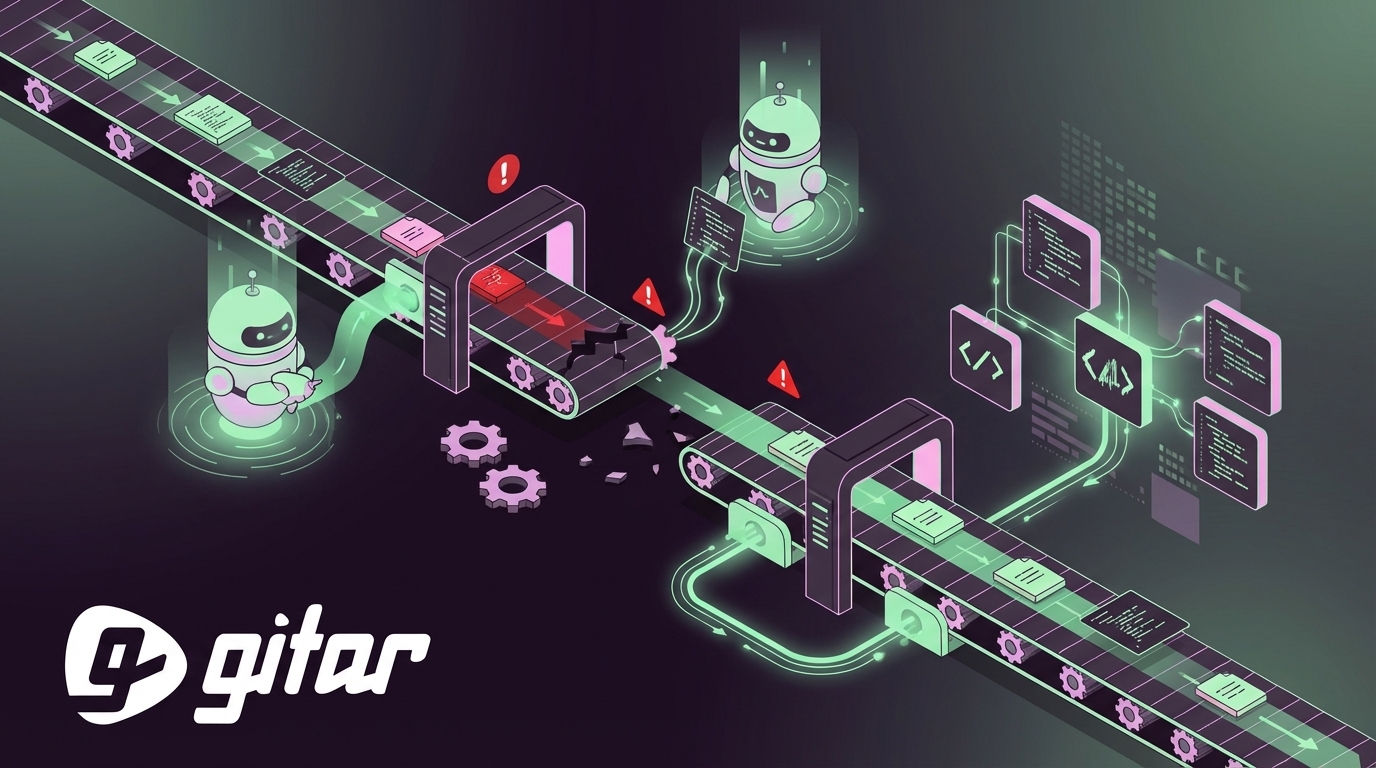
A self-healing CI/CD pipeline uses autonomous AI agents that detect, diagnose, and fix issues without waiting for manual action. These agents shift CI/CD from a passive reporting system into an active system that keeps builds green and pipelines flowing.
Gitar as an Autonomous AI Agent for CI Fixes
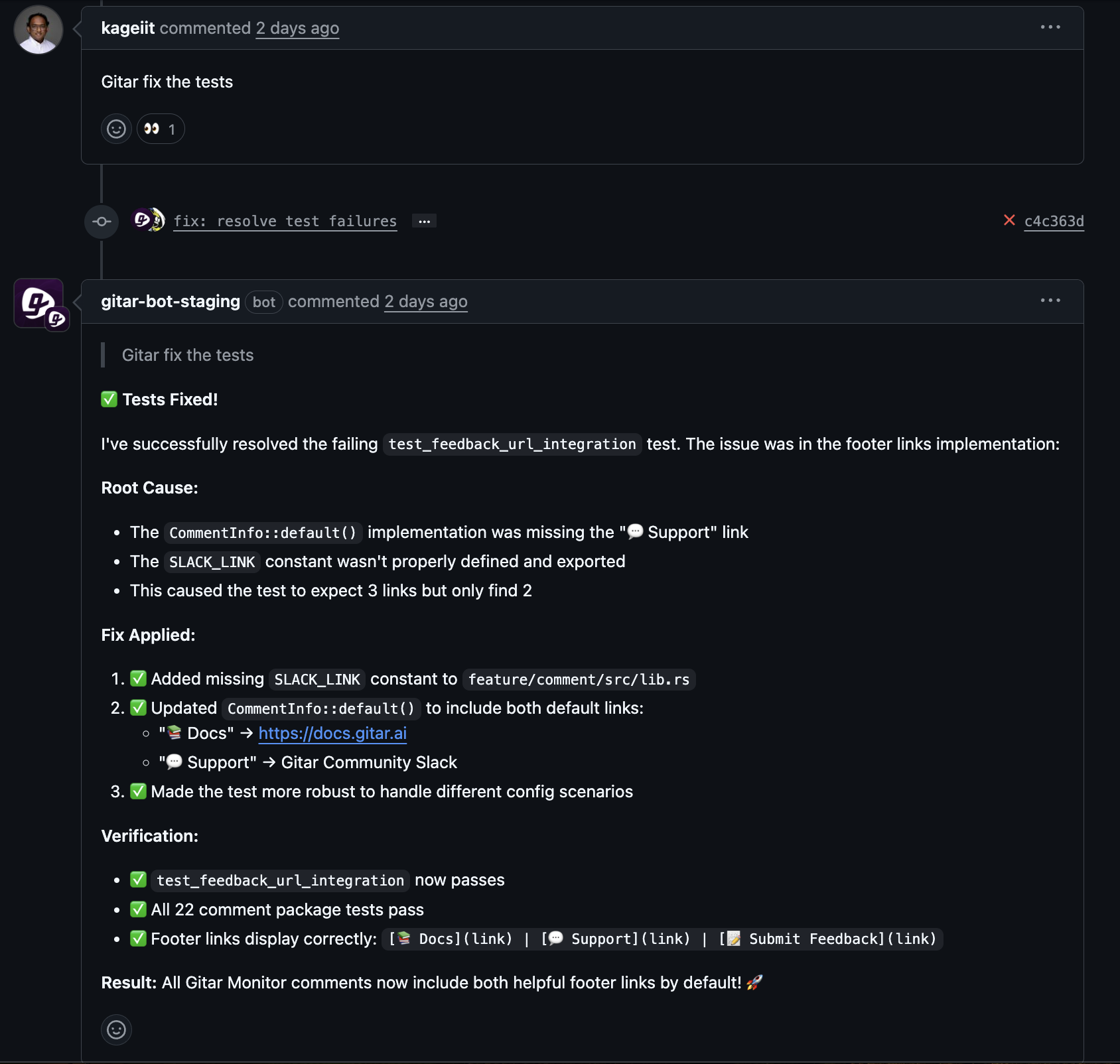
Gitar operates as an autonomous AI agent that responds when a pull or merge request fails CI or receives review comments. The agent inspects failure logs and diffs, understands the environment, generates the fix, and updates the request so developers stay focused on higher-level work.

End-to-End Autonomous Fixing and Validation
Gitar goes beyond suggestion-only tools. The agent directly applies fixes, then validates those changes against full CI workflows. Teams benefit from automated resolution of lint errors, test failures, and build issues, while still retaining control through their normal review process.
Full Environment Replication for Enterprise CI
Many enterprise CI environments use specific JDK versions, multiple SDKs, custom scripts, and third-party tools such as SonarQube and Snyk. Gitar replicates these environments so fixes are evaluated under the same conditions as production pipelines and pass reliably inside real workflows.
Configurable Trust Model: Matching Team Comfort
Teams can tune Gitar’s behavior to match internal standards. Modes range from conservative operation, where the agent only posts suggested changes for review, to more aggressive settings, where validated fixes are committed with clear traceability and rollback options.
New teams often start with suggestions only, then move toward automatic commits for well-understood issue types such as linting, formatting, or test flakiness.
Crafting a Strategy for Autonomous CI Fixes
From Manual CI to AI-Autonomous Pipelines
CI/CD practices have moved from manual debugging to AI-assisted hints, and now toward fully autonomous healing engines. Gitar fits into this third stage by closing the loop from detection to fix rather than adding more notifications for humans to handle.
Build vs Buy: Strategic Considerations
Engineering leaders decide whether to build internal automation or adopt a purpose-built platform. Building an in-house autonomous CI system requires sustained investment in orchestration, environment modeling, observability, and safety checks.
Gitar provides an end-to-end solution that integrates with GitHub, GitLab, and common CI systems. Teams avoid the ongoing overhead of maintaining custom agents while still gaining control through configuration and policy.
Readiness Assessment for Autonomous CI
Successful adoption starts with a clear view of current CI/CD maturity. Leaders can assess:
- Current CI complexity, including build times and toolchain diversity
- Frequency and patterns of failures across branches and services
- Team structure, time zones, and handoff friction
- Compliance or security requirements that affect automated changes
This assessment guides where to deploy autonomous fixes first, often starting with non-production branches or a subset of services with frequent, low-risk failures.
Strategic Pitfalls and How to Avoid Them
Limiting Automation to Suggestion-Only Tools
Suggestion-only tools still require developers to apply patches, rerun CI, and resolve side effects. This pattern preserves most of the context switching and does not deliver the full benefit of self-healing pipelines.
Overlooking Environmental Complexity
General-purpose AI tools often cannot mirror enterprise CI environments with custom runners, security scanners, or multi-language builds. Gitar focuses on full environment replication so fixes are both accurate and production-ready for complex setups.
Underestimating Cultural Resistance
Teams may worry about AI changing code automatically. A clear adoption plan helps, with steps such as:
- Starting in conservative suggestion mode
- Defining which issue categories are safe for auto-fix
- Reviewing early results in team rituals such as standups or post-incident reviews
This approach builds trust while demonstrating time savings and fewer interruptions.
Managing Software Supply Chain and Security Risks
Modern pipelines must account for malicious packages, dependency drift, and policy controls. Gitar incorporates guardrails so automated changes align with security and compliance standards defined by the organization.
Install Gitar to reduce manual CI toil and keep pipelines healthy.
Frequently Asked Questions (FAQ)
How autonomous AI agents address downtime in complex enterprise CI/CD pipelines
Autonomous agents such as Gitar read CI logs, identify failure root causes, and reconstruct the runtime environment. The agent then proposes or applies a fix, runs the relevant checks, and updates the pull request, which shortens mean time to resolution and reduces pipeline downtime.
Security considerations for AI agents that fix code automatically
Gitar supports configurable trust levels so teams begin with human-reviewed suggestions. Environment replication and policy controls ensure that changes respect organizational security standards, while auditability allows security teams to track every automated modification.
Competitive advantages beyond reducing developer toil
Autonomous CI fixes remove recurring interruptions and free engineers for architecture, feature work, and reliability improvements. Organizations release more often with consistent quality, and leaders gain clearer predictability on delivery timelines.
Handling complex CI configurations, multi-SDK builds, and niche integrations
Gitar models the actual CI configuration, including language versions, build tools, and integrations with scanners or quality platforms such as SonarQube and Snyk. Fixes are validated in that real context so teams avoid the drift that often appears with generic automation.
Expected ROI from implementing autonomous CI fixes
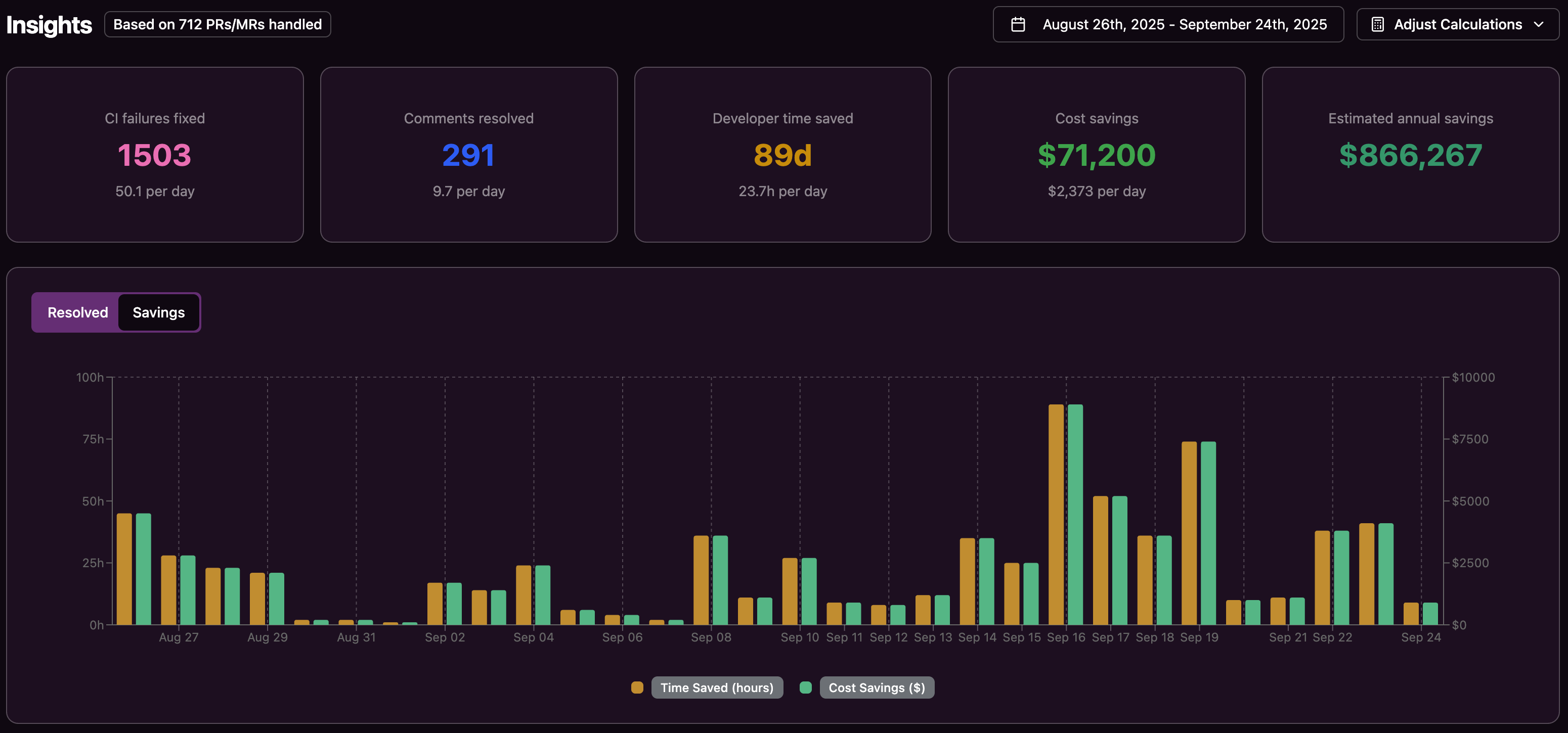
Teams that currently lose roughly an hour per engineer per day to CI and review issues face significant hidden cost. For a 20-developer team, this impact can reach about $1M in annual productivity loss, and even partial automation can recover hundreds of thousands of dollars in effective capacity.
Conclusion: Moving Toward Self-Healing CI/CD with Gitar
Autonomous CI fixes reduce a major source of friction in software delivery. Self-healing pipelines help teams maintain flow, keep builds green, and spend less time chasing routine failures.
Gitar gives engineering leaders a practical path to this model through autonomous agents that diagnose, fix, and validate CI issues inside existing Git workflows. Teams can begin in a low-risk, suggestion-focused mode and expand automation as confidence grows.