
Key Takeaways
- Lean, well-maintained test suites reduce CI runtime, improve build reliability, and speed up time-to-merge.
- Redundant tests often appear as overlapping coverage, obsolete scenarios, or tests that always pass without meaningful validation.
- A clear framework for prioritization, pruning, refactoring, and parallelization keeps coverage strong while cutting waste.
- Ongoing monitoring, stable environments, and structured feedback loops prevent redundant and flaky tests from creeping back in.
- Teams can use Gitar to automatically fix CI failures and streamline test suite maintenance; install Gitar to start improving CI speed and reliability.
The Strategic Imperative: Why Test Suite Optimization Matters
Inefficient test suites slow down CI/CD, drain budgets, and frustrate developers. Many teams see developers spend up to 30% of their time handling CI failures and redundant tests instead of building features.
Monolithic suites that run unit, integration, and end-to-end tests sequentially create major build bottlenecks. At the same time, over half of teams report flaky, unreliable tests that slow deployments. Optimized suites shorten feedback loops, lower infrastructure spend, and restore trust in CI results.
Understanding Redundancy: How Inefficient Tests Show Up
Redundant tests show up as overlapping coverage, obsolete scenarios, and high-maintenance cases that rarely catch real issues. Finding them requires both data and developer input.
Code Coverage Analysis That Focuses on Behavior
Effective analysis focuses on features and behaviors, not just line coverage. Multiple tests that exercise the same code paths with similar assertions usually add little value. Coverage tools can highlight clusters of tests that validate the same behavior instead of distinct paths or edge cases.
Execution History and Flakiness Patterns
Execution history highlights tests that always pass despite relevant code changes. These tests may not validate meaningful behavior. Flaky tests often stem from environmental issues, network instability, or poor isolation, so teams need to distinguish between true redundancy and environmental noise.
Static Analysis, Dependencies, and Developer Review
Static analysis and dependency mapping help uncover orphaned tests tied to deprecated features or unused code paths. Developer feedback then fills the gaps, surfacing tests that are painful to maintain yet rarely useful during real incidents.
The Optimization Framework: A Practical Path to Leaner Suites
Step 1: Classify Tests by Risk and Business Impact
Start with a simple classification:
- Critical paths that protect revenue or core user flows
- High-change areas that see frequent commits
- Low-risk or legacy areas with minimal impact
Risk-based prioritization ensures that optimization preserves coverage for critical areas while targeting low-value tests first.
Step 2: Remove Obvious Redundancy and Obsolete Tests
Next, safely prune:
- Tests for deprecated or removed features
- Duplicates that assert the same behavior in similar ways
- Flaky tests that no longer map to active requirements
Regular pruning cycles keep suites lean and prevent slow, noisy runs from becoming the norm.
Step 3: Refactor and Consolidate for Clarity
Refactoring focuses on fewer, clearer tests that cover more ground with less overlap. Consolidate similar scenarios into parameterized tests where it makes sense. Good isolation across tests limits interference and makes failures easier to debug.
Step 4: Parallelize and Stratify Test Execution
Parallel execution plays a central role in pipeline optimization. Organize suites into clear layers:
- Fast smoke and unit tests for immediate feedback
- Integration tests for critical service interactions
- End-to-end tests for full workflows on a slower cadence
This structure keeps pull requests moving while still validating end-to-end quality.
Keeping Suites Healthy: Practices That Prevent Test Bloat
Monitor Test Performance Over Time
Teams gain long-term stability by tracking execution times, flakiness rates, and failure patterns. Monitoring resource usage and response times on each build helps catch regressions early and highlight tests that no longer provide value.
Manage Test Data to Reduce Noise
Stable, realistic, and isolated test data reduces false positives and cross-test interference. Good data management lowers maintenance overhead and makes it easier to understand real failures.
Use Containerization for Stable Environments
Containerized environments keep dependencies and configurations consistent across runs. Consistent environments improve reliability and reduce environment-related failures that can look like flaky or redundant tests.
Shift Testing Earlier in the Lifecycle
Teams that run performance and security checks earlier in development catch problems before they expand test suites unnecessarily. Embedding these checks in regular sprints helps teams prevent late-breaking issues that often trigger reactive test additions.
How Gitar Uses AI to Streamline Test Suite Management
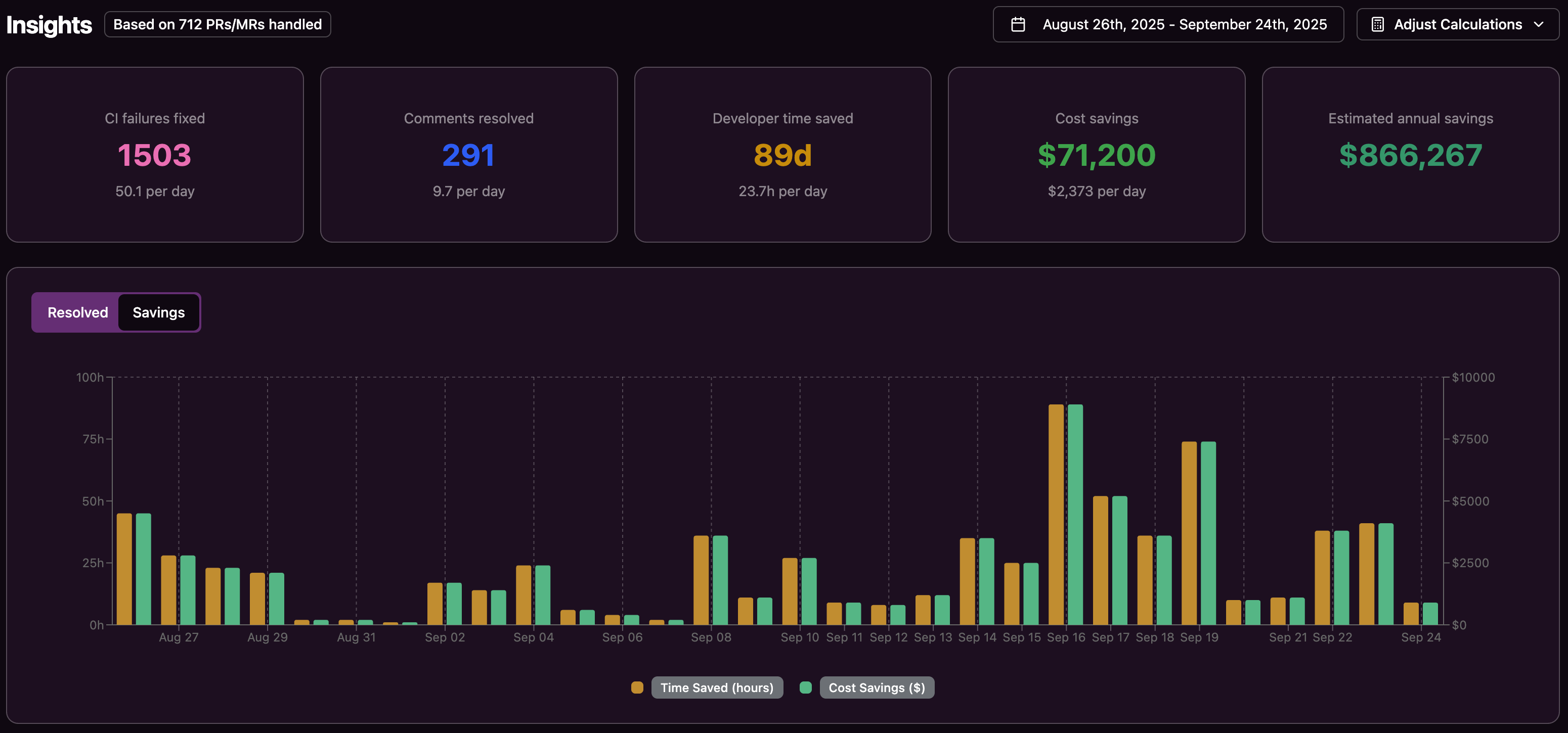
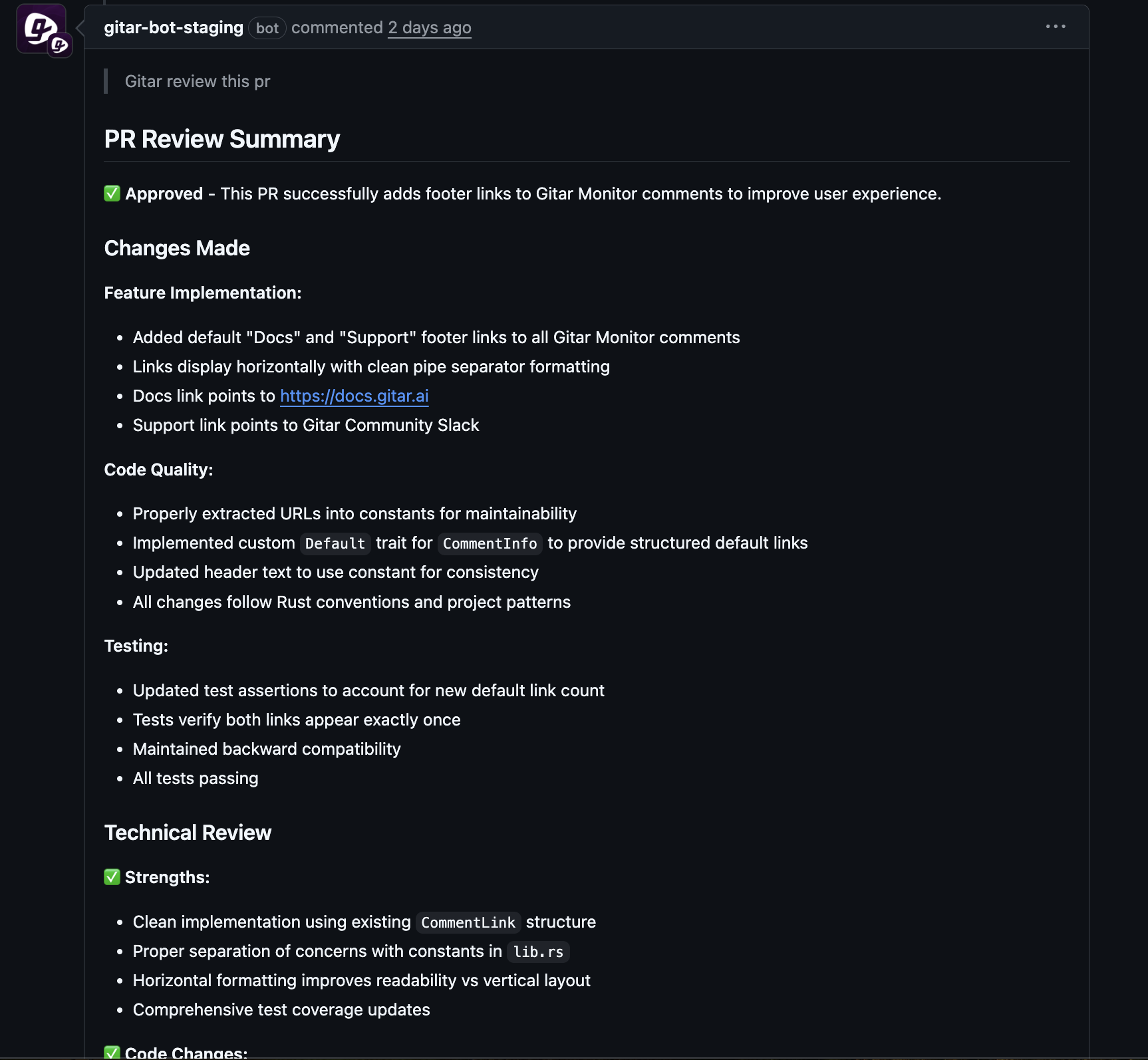
Manual optimization improves CI/CD performance, but it takes sustained effort. AI-driven tools like Gitar automate much of this work by operating as autonomous CI agents that understand your code, tests, and history.
Manual Approaches vs. Gitar
|
Area |
Manual / Traditional Approach |
Gitar Approach |
|
Identification |
Developers review logs, coverage reports, and feedback threads |
AI analyzes logs, code, and CI history to surface problem tests |
|
Redundant Test Handling |
Teams debate and remove or disable tests by hand |
AI flags redundant tests and suggests removal or refactor options |
|
Flaky Test Resolution |
Engineers debug, investigate infra, and often rely on retries to mask instability |
AI isolates root causes, applies targeted fixes, and validates changes |
|
Refactoring Effort |
Changes compete with feature work and backlog priorities |
AI proposes or applies refactors that shorten runs and cut overlap |
What Gitar Adds to CI/CD Optimization
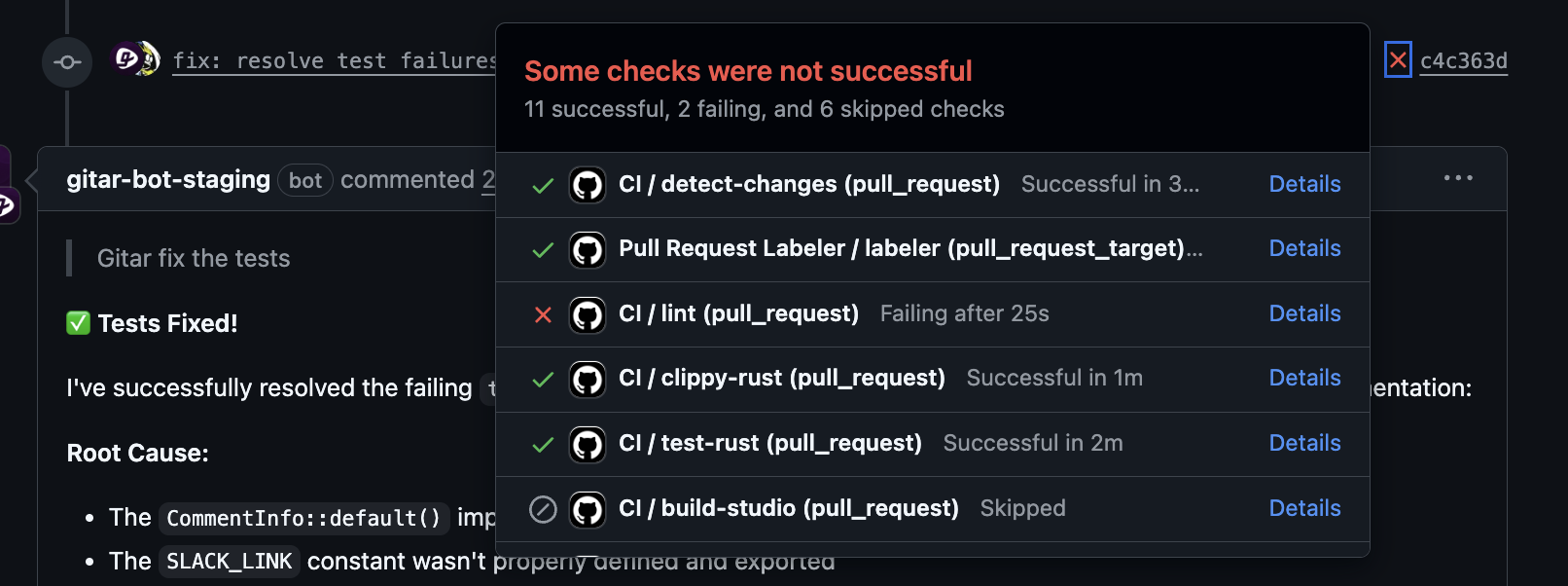
Gitar works inside your real CI environment with full context. The system applies autonomous fixes while replicating your workflows, SDK versions, and external integrations. This approach keeps test suites reliable while reducing the manual work needed to maintain them.
Teams can turn slow, manual troubleshooting tasks into quick, reviewable changes, so developers spend less time unblocking builds and more time on product work.
Strategic Pitfalls to Avoid During Test Suite Optimization
Skipping Root Cause Analysis for Flaky Tests
Simply disabling or retrying flaky tests hides real problems. Issues like unstable environments or poor test design need direct fixes, not just more retries or comments.
Treating Optimization as a One-Time Project
Test suites change as code changes. Routine review and pruning cycles keep CI performance stable and prevent slow creep back to long, fragile runs.
Overlooking Developer Feedback
Developers know which tests frequently block merges or fail without clear value. Teams that collect and act on this feedback make better decisions about what to refactor, remove, or improve.
Frequently Asked Questions
How can teams distinguish redundant tests from rare but important ones?
Teams should combine coverage reports, execution history, and developer judgment. Tests that always pass across many related code changes and duplicate existing coverage are likely redundant. Rarely failing tests that cover critical edge cases or high-impact flows still provide value and should stay, even if they run less frequently.
How does AI prevent new redundant tests from accumulating?
AI tools like Gitar review CI history, code changes, and new tests to spot overlap early. The system can flag when a new test covers the same behavior as existing ones, highlight tests that never catch real defects, and suggest consolidation. This ongoing analysis keeps suites from quietly growing in size and complexity.
How can teams maintain strong coverage while removing tests?
Teams maintain coverage by tracking which features and failure modes each test targets, not just which lines of code run. Consolidation should preserve unique assertions and edge cases while removing duplicate paths. Coverage tools and business impact mapping together provide enough context to remove redundant tests confidently.
Conclusion: Move Faster With Leaner Test Suites and AI Support
Optimized test suites shorten CI cycles, reduce infrastructure costs, and improve developer experience. A structured approach to identifying, pruning, refactoring, and parallelizing tests gives teams faster feedback without sacrificing quality.
AI-powered tools extend this foundation by reducing the manual work required to keep suites healthy. Gitar automates CI fixes with full environmental context, helping teams keep pipelines fast and reliable as systems grow in size and complexity.