

Written by: Ali-Reza Adl-Tabatabai, Founder and CEO, Gitar
Key Takeaways
- Qodo PR Agent (formerly PR-Agent) delivers AI-powered code reviews through a GitHub App, GitHub Actions, CLI, and IDE extensions, updated for the 2024 Qodo rebrand.
- The GitHub App provides a quick 5-step installation that activates PR reviews on open, reopen, or ready events, as long as you have organization admin access.
- GitHub Actions, CLI (pip or Homebrew), and IDE extensions such as VS Code give teams flexible ways to trigger commands like /review, /describe, and /improve.
- Typical setup problems involve API permissions, rebrand-related repository mix-ups, and model configuration issues, which you can resolve with token regeneration, correct repo selection, and dependency checks.
- Teams that outgrow Qodo’s suggestion-only workflow can move to Gitar’s auto-fixing engine for guaranteed green builds and faster delivery, and you can try Gitar’s Team Plan free for 14 days.
Install Qodo PR Agent GitHub App for Fast Organization-Wide Reviews
Qodo PR Agent supports four installation paths: GitHub App, GitHub Actions, CLI, and IDE extensions. The GitHub App method provides the fastest setup because it needs no workflow files or local configuration and activates automated reviews across your organization in a few clicks.
Prerequisites: You need GitHub organization admin access to install the app. After installation, the app automatically runs /review, /describe, and /improve commands on new pull requests.
- Log in to the Qodo Portal with your GitHub account.
- Open the dashboard and go to Git Plugin > Configure.
- Select the organization and repositories you want Qodo to analyze.
- Install the app from GitHub Marketplace by searching for “Qodo” in Apps.
- Confirm that the app triggers on pull request open, reopen, or ready for review events.
Try Gitar’s Team Plan free for 14 days to experience auto-fixing code reviews that deliver the green-build guarantee described above. See the Gitar documentation for setup details.
Configure Qodo PR Agent with GitHub Actions for Workflow Control
While the GitHub App offers the fastest setup, some teams need precise control over when and how reviews run, especially in monorepos or complex CI pipelines. In these cases, GitHub Actions provide workflow-based automation with explicit triggers.
For workflow-based automation, configure Qodo as a GitHub Action by creating .github/workflows/pr-agent.yml in your repository:
name: PR Agent on: pull_request: types: [opened, reopened, ready_for_review] jobs: pr_agent: runs-on: ubuntu-latest steps: - uses: qodo-ai/pr-agent@main env: OPENAI_KEY: ${{ secrets.OPENAI_KEY }} GITHUB_TOKEN: ${{ secrets.GITHUB_TOKEN }} Setup steps: Create the workflow file, add API secrets under Settings > Secrets and variables > Actions, and confirm the pull request trigger events. The Qodo v0.34 release also provides the Docker image codiumai/pr-agent:0.34, which you can use for stable, containerized deployments.
Install Qodo PR Agent CLI on macOS and Windows
macOS installation: Use pip or Homebrew to install the CLI. The CLI sends API requests to Qodo’s servers using curl, which macOS pre-installs, so verify curl before running pip.
Check curl installation by running curl --version. Confirm it works, then install the CLI:
# Install via pip pip install pr-agent # Or via Homebrew brew install pr-agent # Verify installation python -m pr_agent.cli --help Windows installation: Install the CLI with pip and then set the required environment variables:
pip install pr-agent export OPENAI_KEY=your_api_key export GITHUB_TOKEN=your_github_token Usage example: Run a review on a specific pull request:
python -m pr_agent.cli --pr_url https://github.com/org/repo/pull/123 review Configure advanced behavior through a .pr_agent.toml file in your project root, where you can define custom prompts and agent settings.
Use Qodo PR Agent IDE Extensions for In-Editor Reviews
The CLI works well for one-off PR analysis or CI integration. Developers who want real-time feedback as they write code can use IDE extensions instead, which bring Qodo’s agents directly into the editor.
VS Code: Press Ctrl+P, type Codium.codium, and press Enter. The Qodo VS Code extension with more than 850,000 installs enables AI-powered self-reviews on local code changes with one-click issue resolution.
Available commands: Use /review, /describe, /improve, and /ask in pull request comments for server-side analysis. For local analysis, you can also run the CLI as described in the AGENTS documentation with a command such as python -m pr_agent.cli --pr_url [URL] review.
JetBrains IDEs: Install the plugin from the JetBrains marketplace to access integrated AI agents that help enforce code quality directly in your editor.
Troubleshooting Common Qodo PR Agent Setup Errors
Most Qodo installations complete without issues, but teams occasionally run into authentication, configuration, or dependency problems, especially when moving from legacy Codium references to the new Qodo repositories. The list below covers the most frequent issues and how to resolve them.
- API token permissions: Authentication errors usually stem from expired or incorrectly scoped tokens. Regenerate tokens at
app.qodo.ai/account/api-keysand ensure they have full repository access. - Rebrand confusion: Many older tutorials still reference the
codiumai/pr-agentrepository. Always use theqodo-ai/pr-agentrepository to avoid version mismatches and missing features. - Model configuration bugs: GitHub Issue #2098 documents cases where Qodo ignores custom OpenAI endpoints in
.envfiles and falls back to hardcoded GPT models. This behavior comes from a configuration loading order bug in versions prior to 0.34. - Setup failures: If the agent fails during startup, verify
curl --version, confirm that API keys are exported correctly, and consider using the Docker image for controlled, air-gapped deployments. - Skills installation: When skills do not appear, run
npx skills add qodo-ai/qodo-skillsto attach the Qodo skills package to your environment. - GitHub CLI requirement: The
/qodo-pr-resolverfunctionality depends on the GitHub CLI. Install theghCLI and authenticate it with your GitHub account.
macOS-specific fixes: If curl --version fails, install missing dependencies with brew install curl. Also note that macOS shipped Python 2.7 by default up to version 12.3 and includes a /usr/bin/git wrapper that prompts you to install Command Line Tools, which you may need before running some Qodo commands.
Once you complete installation and troubleshooting, you will see that Qodo identifies issues effectively but still relies on developers to implement fixes. This manual step becomes expensive at scale, which is why many teams look for tools that can both detect and repair problems automatically.
Qodo’s Limitations vs. Gitar: Move from Suggestions to Auto-Fix Reviews
Qodo provides valuable PR suggestions but does not apply fixes on its own. The comparison below highlights the key capability gap: both tools surface issues inline, but only Gitar can automatically apply fixes and guarantee passing builds, which removes the manual implementation loop that consumes developer time.
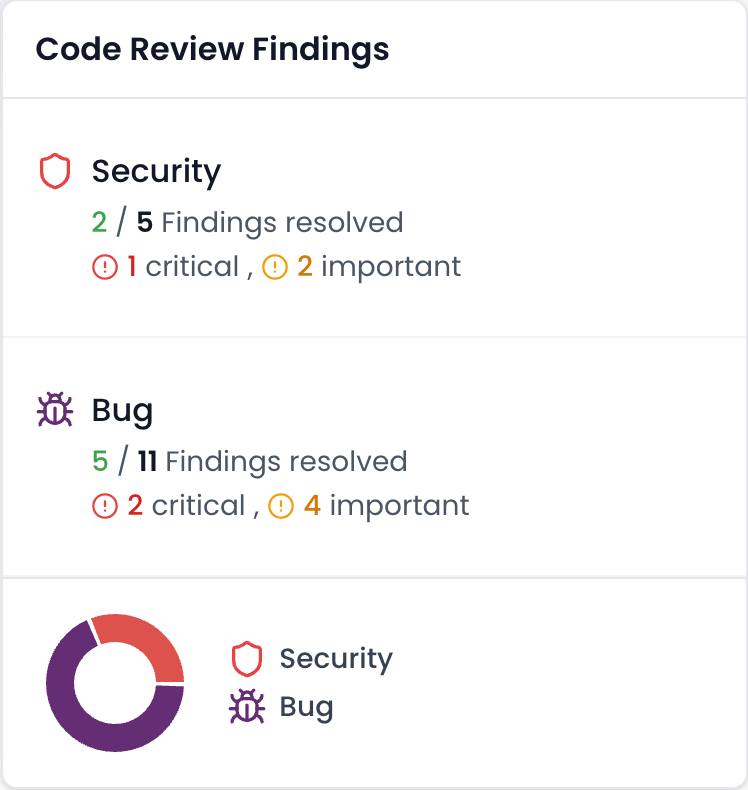
| Capability | Qodo | Gitar (Trial/Team) |
|---|---|---|
| Inline suggestions | Yes | Yes |
| Auto-apply fixes | No | Yes |
| CI failure auto-fix | No | Yes |
| Single-comment dashboard | No | Yes |
| Jira/Slack integration | Limited | Native |
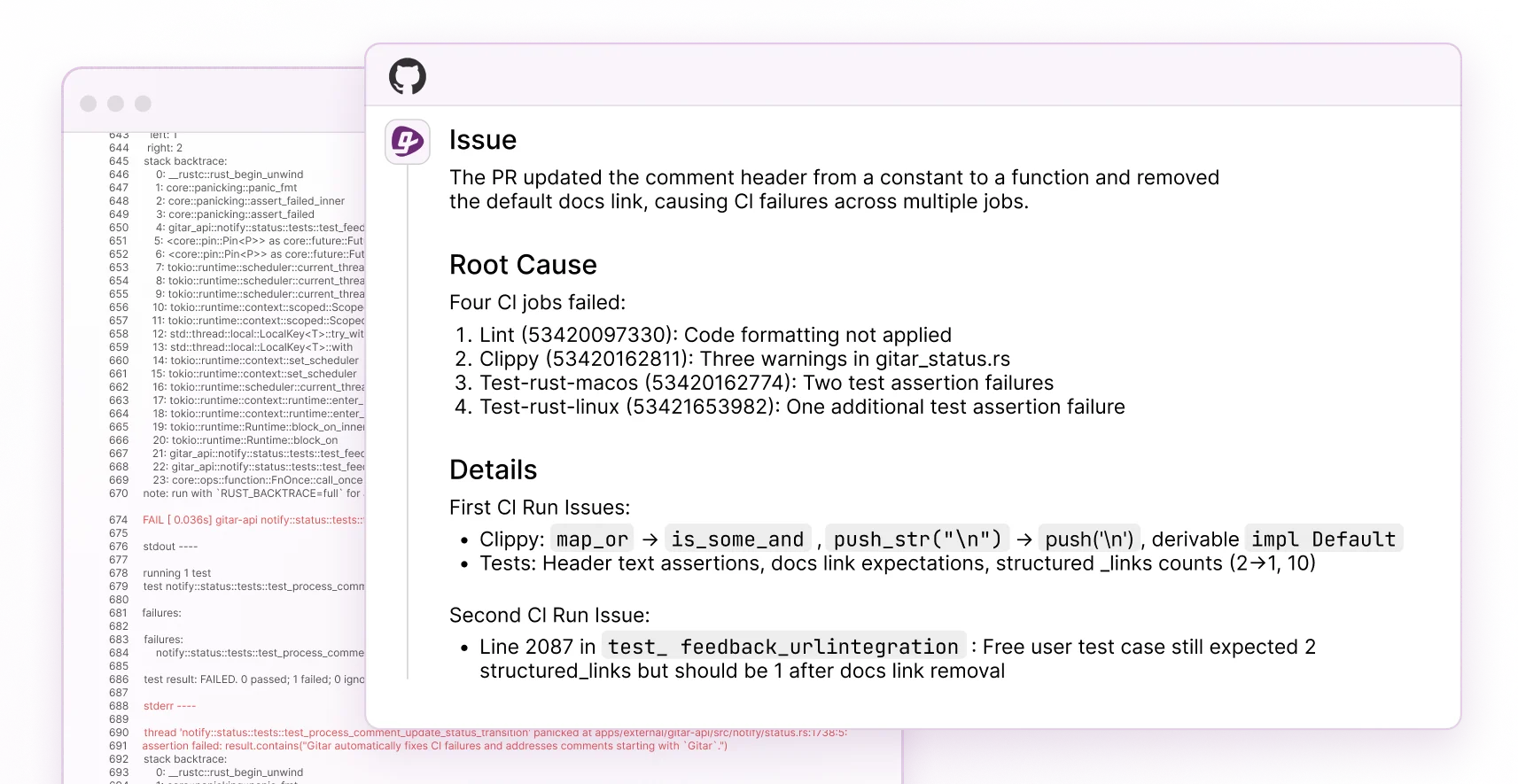
Gitar’s healing engine automatically analyzes CI failures, generates validated fixes, and commits them so the builds pass. This approach removes the manual implementation cycle that Qodo requires, where developers read suggestions in comments, write the code themselves, and hope the changes resolve the issue. To see how Gitar’s auto-fixing differs from Qodo’s suggestion-only workflow, review its capabilities in the Gitar documentation.
Ready to eliminate manual fix cycles? Install Gitar to automatically repair broken builds and ship higher quality software with less developer effort.
Gitar Trial Phases: How the 14-Day Trial Transforms Your Workflow
Gitar’s trial follows a three-phase journey that unlocks more automation as your team builds trust in the system. Each phase builds on the previous one and typically fits within a 14-day evaluation window.
Phase 1 (Day 1): Install the GitHub App to see Gitar’s PR dashboard and comprehensive analysis immediately. This phase mirrors Qodo’s suggestion-only mode, which lets you compare outputs side by side without changing your current workflow.
Phase 2 (Days 2–7): Enable auto-fix mode after you validate Gitar’s analysis quality. At this stage, Gitar starts committing verified fixes directly to pull requests instead of only commenting, which introduces the green-build guarantee in practice.
Phase 3 (Days 8–14): Configure custom workflows using natural language rules and connect Gitar with tools such as Jira and Slack. This phase embeds auto-fixing into your broader development process and incident response routines.
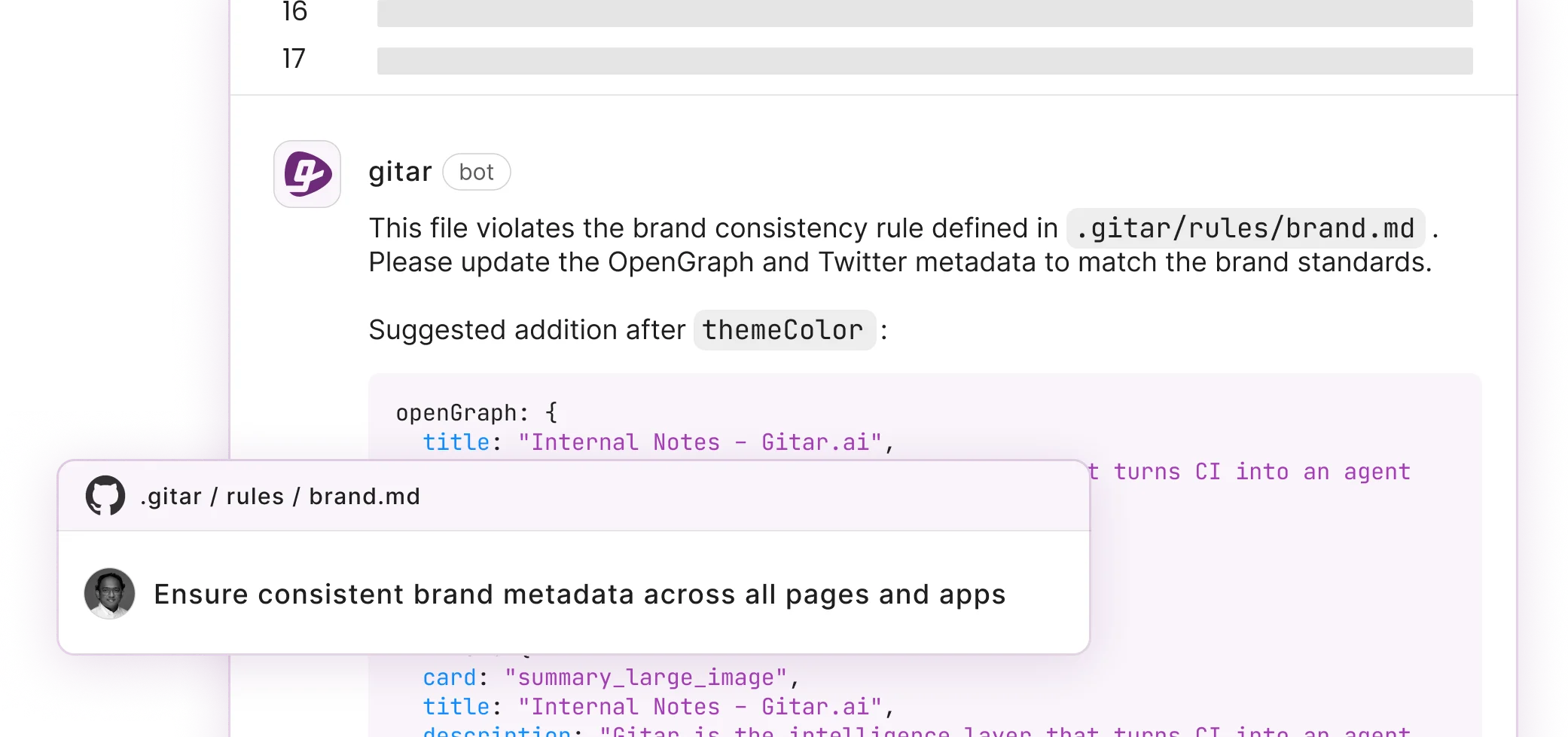
Full documentation is available in the Gitar documentation for advanced configuration and enterprise deployment patterns. Follow those guides to plan, evaluate, and roll out each phase across your team.
ROI: Cut CI and Review Time from 1 Hour to 15 Minutes per Developer
The productivity gains from auto-fixing become clear when you calculate time savings across the entire team. The table below shows how a 20-developer group can reclaim 45 minutes per developer each day, which translates to roughly $750K in annual productivity recovery.
| Metric | Before Auto-Fix | After Gitar |
|---|---|---|
| Daily CI/review time | 1 hour/developer | 15 minutes/developer |
| Annual cost (20-dev team) | $1M productivity loss | $250K |
| Context switching interrupts | Multiple daily | Near-zero |
As AI tool adoption grows and affects most developers, teams generate more pull requests than ever, which intensifies review bottlenecks. Suggestion-only tools such as Qodo still require manual implementation of every fix, so review capacity cannot keep pace with coding speed. Auto-fixing platforms commit working solutions automatically, which removes manual intervention cycles and lets review velocity match coding velocity.
Frequently Asked Questions
Does Qodo PR Agent auto-fix code?
Qodo PR Agent does not auto-fix code and only provides suggestions through comments. Developers must manually implement each recommended change and push new commits, which often adds 15 to 30 minutes per pull request. Gitar removes this manual loop by applying validated fixes and committing them directly to pull requests, so changes run successfully against CI without extra developer effort. This behavior underpins the daily time savings shown in the ROI analysis above.
Experience Gitar’s auto-fixing with a 14-day Team Plan trial, and explore configuration options in the Gitar docs.
How does Qodo compare to Gitar for CI failures?
As described in the comparison section above, Qodo identifies CI issues but requires developers to debug and implement fixes manually. Gitar’s healing engine analyzes CI failure logs, uses full codebase context to generate correct fixes, validates them against your environment, and commits working solutions. This approach removes the debug–fix–test cycle that slows teams during incidents.
Can I install Qodo on GitLab?
Qodo supports GitLab through webhooks and native integration options, so you can run its suggestion-based reviews outside GitHub. Gitar also works across platforms including GitHub, GitLab, CircleCI, and Buildkite, and it keeps auto-fixing behavior consistent regardless of your CI provider.
Is Qodo AI completely free?
Qodo’s core open-source PR Agent is available without cost but lacks some advanced capabilities and enterprise support. Gitar offers a comprehensive 14-day Team Plan trial with no seat limits, which lets teams experience full auto-fixing workflows before choosing a paid plan.
Learn how to set up your trial in the Gitar documentation.
What is the difference between suggestions and auto-fixes?
Suggestion-based tools such as Qodo identify problems and recommend solutions, but developers still need to implement and test changes themselves. Auto-fixing platforms such as Gitar both detect issues and generate, validate, and apply working solutions, which guarantees passing builds without manual intervention.
Conclusion: Use Qodo for Suggestions, Add Gitar for Real Fixes
Qodo PR Agent gives teams a strong starting point for AI-assisted code reviews through its GitHub App, Actions, CLI, and IDE integrations. As your team scales and pull request volume grows, the manual work required to implement and validate Qodo’s suggestions turns into a bottleneck, because every fix still needs a developer to read the comment, write the code, test it, and commit it.
This is where Gitar’s auto-fixing capabilities become essential. Start your 14-day Team Plan trial to experience the healing engine that automatically fixes broken builds and guarantees passing builds while increasing team velocity. See the Gitar documentation for implementation details.