
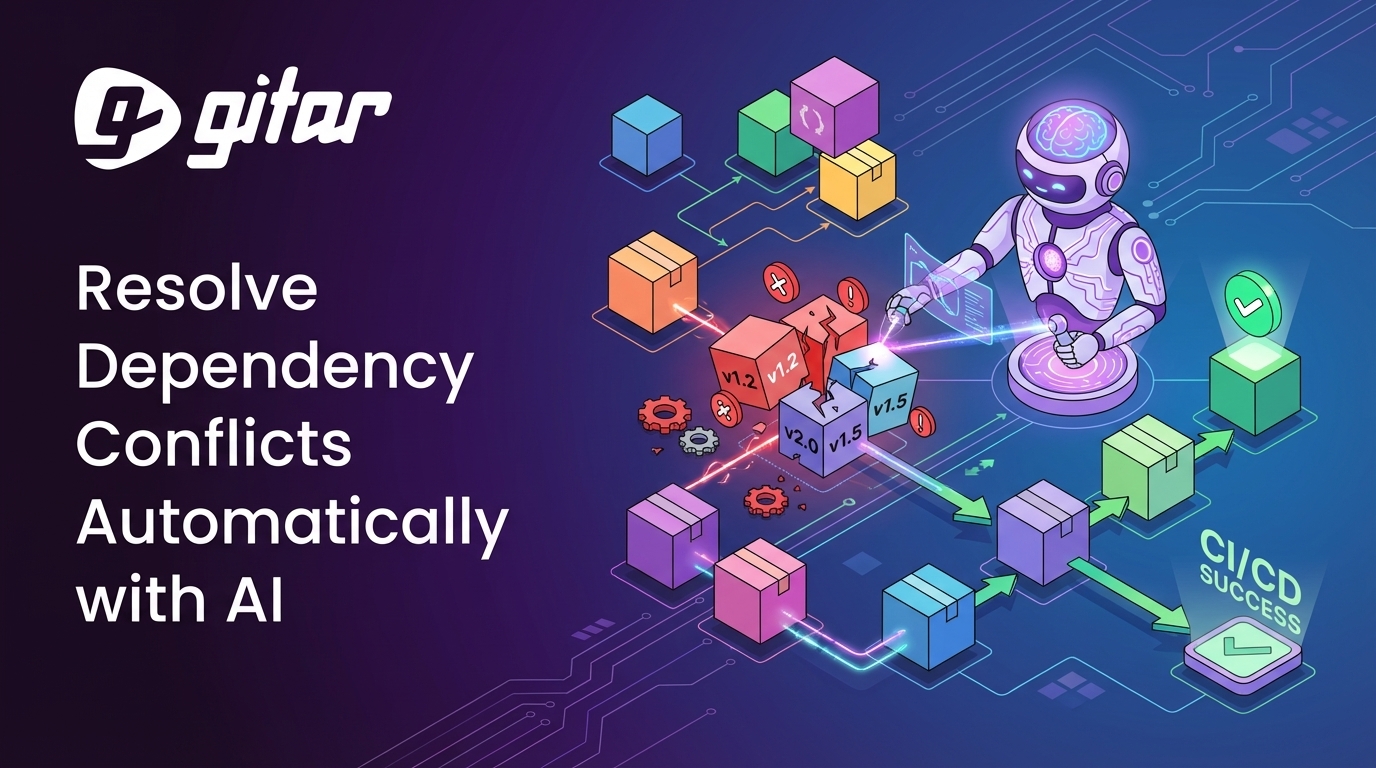
Dependency conflicts in CI/CD pipelines disrupt builds, slow down progress, and drain developer time. With the rapid pace of software development, amplified by AI-assisted coding, these issues have become a critical challenge. This article explains how autonomous AI agents tackle dependency conflicts effectively, paving the way for self-healing CI systems that save time and reduce costs.
Why Dependency Conflicts Stall CI/CD and Developer Output
Dependency conflicts remain a major obstacle in software development, often causing delays and frustration. Common issues include version mismatches between packages or environments and transitive dependency problems when libraries need different versions of the same package. These conflicts trigger a chain of issues beyond simple build failures.
Such conflicts frequently appear as build failures, test issues, or runtime errors in CI pipelines, often inconsistently due to differences between local setups and CI environments. This mismatch complicates troubleshooting since code that runs fine locally can fail unexpectedly in CI.
The cost to developer productivity is significant. Pre-merge CI checks, prone to higher failure rates, cause long wait times, lower output, and higher operational expenses. Developers often spend hours switching between tasks to fix dependency issues, breaking their focus and slowing down progress.
Manual troubleshooting adds to the burden. This process typically involves checking build logs, comparing lockfiles like package-lock.json, reviewing environment variables, and testing clean installs to pinpoint errors. Limited reporting and complex debugging in CI systems make resolving these conflicts even more time-consuming.
AI-assisted coding tools, while speeding up code creation, can worsen the situation by increasing the volume of changes in CI/CD pipelines. The real challenge now lies in validating and merging code quickly, turning dependency resolution into a key business priority rather than a minor technical hurdle.
For a team of 20 developers, CI failures, including dependency issues, can cost around $1 million yearly in lost productivity. This figure excludes delayed projects, frustrated teams, and missed opportunities when engineers debug instead of innovate.
How Gitar Solves CI Failures Like Dependency Conflicts with Automation
Gitar offers a fresh approach to handling CI pipeline issues, including dependency conflicts. As an autonomous AI agent, it identifies failures, creates fixes, and updates pull requests without manual effort, delivering a streamlined CI experience.

Here’s how Gitar stands out in resolving CI challenges:
- Complete Automation: Unlike tools that only suggest fixes, Gitar takes action. For a build error due to dependency issues, it reviews logs, applies the fix, and commits the change to the pull request, saving hours of manual work.
- Accurate Environment Matching: Gitar mirrors complex enterprise CI setups, including specific SDK versions and third-party integrations, ensuring fixes fit your exact system.
- Flexible Trust Options: Teams can choose how much control to give Gitar. Start with a cautious mode where fixes need approval, or opt for full automation with rollback options as confidence grows.
- Wide Platform Compatibility: Gitar works with GitHub Actions, GitLab CI, CircleCI, BuildKite, and other major CI/CD tools, adapting easily to varied setups.
Install Gitar now to fix broken builds automatically and deliver better software faster.
How Gitar Improves CI Failure Handling Beyond Simple Debugging
Instant Analysis and Fixes for Issues Like Dependency Conflicts
Traditional CI failure handling waits for builds to fail before teams react, pulling developers away from their work. Gitar shifts this by scanning CI logs on its own, finding the root cause of failures, and applying fixes without interruption.
When a build fails due to dependency issues, Gitar evaluates the error within the full CI context. This targeted approach differs from manual debugging, which often involves sifting through unclear error messages.
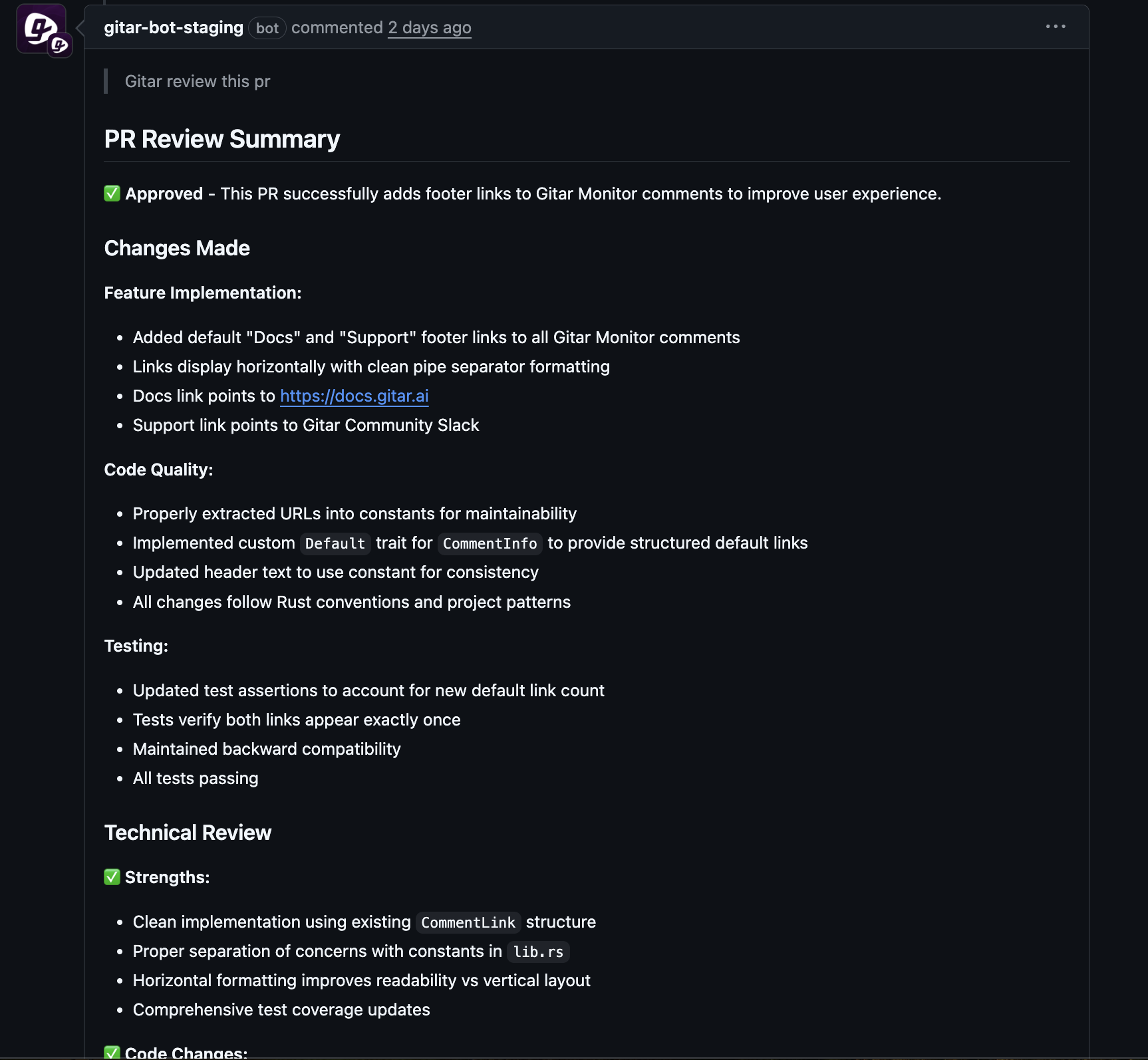
Turning Failing Builds into Success with Autonomous Fixes
After identifying a failure’s cause, Gitar creates precise code changes to resolve it, whether it’s a dependency conflict or another error. It ensures these updates don’t disrupt the wider codebase, maintaining overall stability.
This automated process prevents developers from losing focus on their main tasks. Instead of pausing to debug, they can keep working while Gitar resolves issues behind the scenes, moving beyond mere suggestions to active problem-solving.
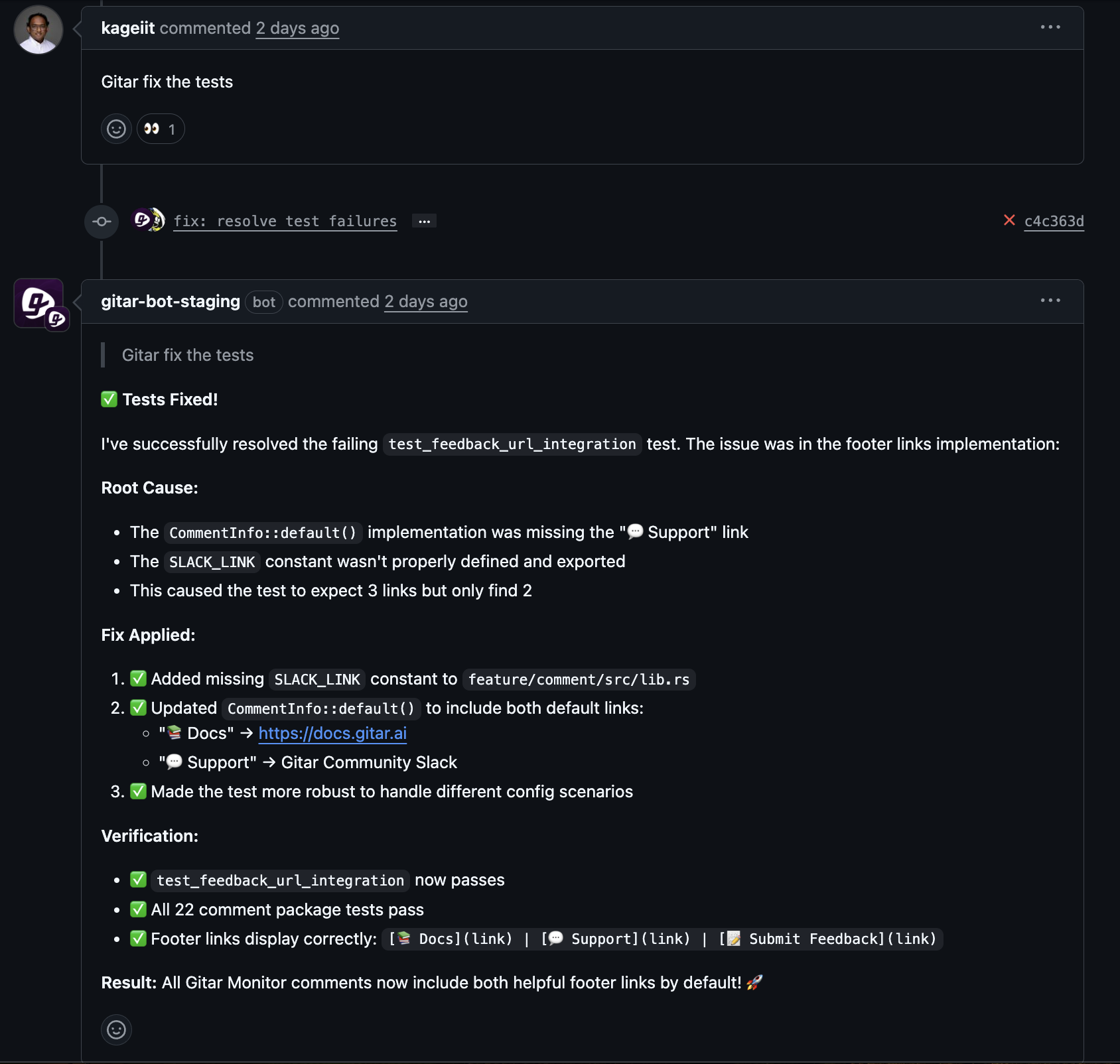
Ensuring Consistent Success with Self-Healing CI
Gitar aims not just to fix single issues but to ensure the entire CI pipeline runs smoothly. It applies fixes and tests them against all CI checks, confirming everything passes before updating the pull request.
This focus on consistent success speeds up development. Teams can merge code with confidence, knowing issues are resolved and verified. Faster merge times and release cycles let developers prioritize building new features over fixing pipeline problems.
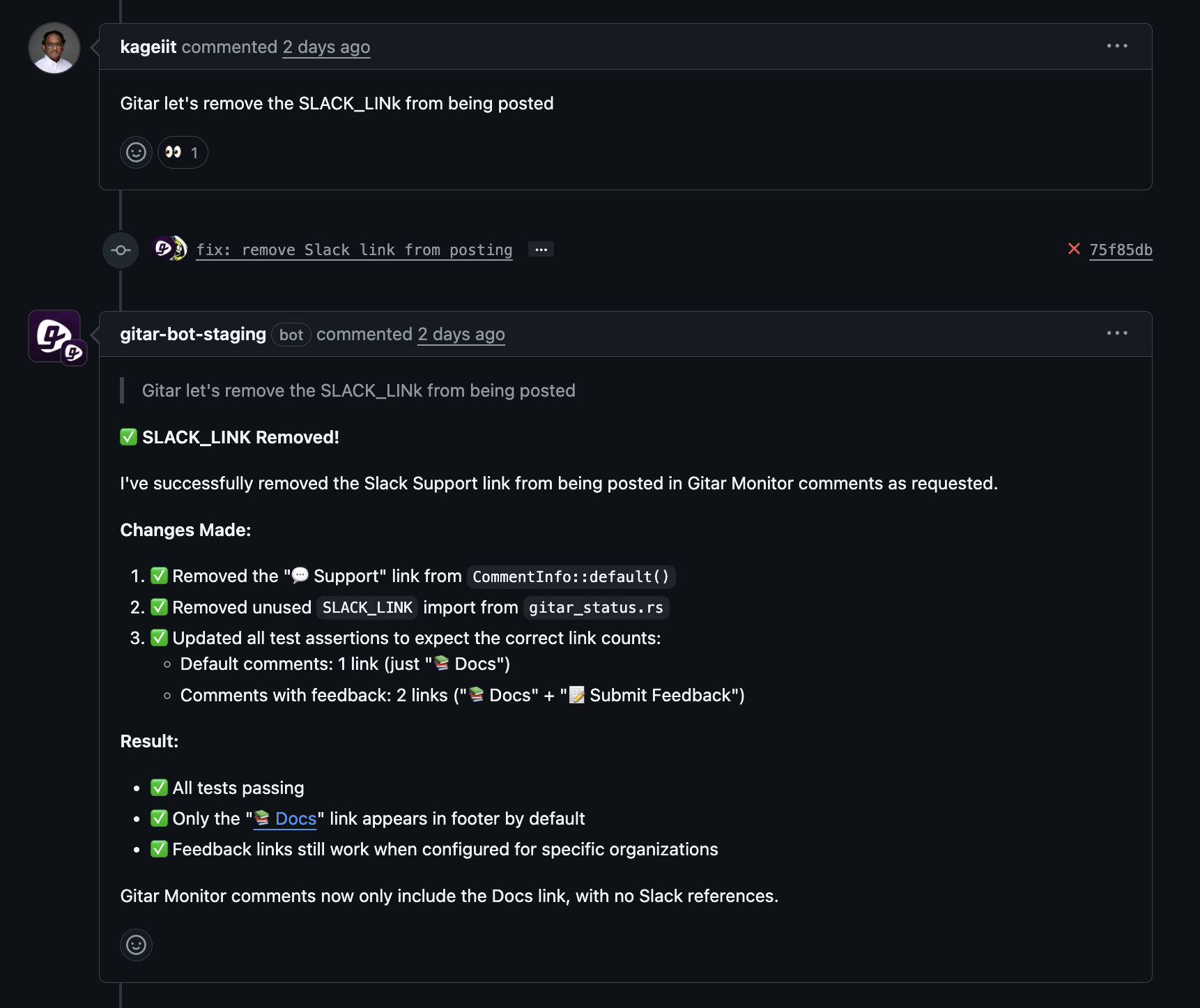
Request a demo of Gitar to see how autonomous AI can improve your CI/CD pipeline.
Why Gitar Outperforms Manual and Suggestion-Based CI Tools
|
Feature/Ability |
Gitar |
Manual Resolution |
AI Code Reviewers |
|
CI Failure Analysis |
Automatic with full environment context |
Manual log review and debugging |
Basic suggestions without environment context |
|
Fix Generation |
Context-aware fixes applied automatically |
Manual coding by developers |
Suggestions needing manual effort |
|
Fix Validation |
Full CI pipeline checks for successful builds |
Manual testing required |
No validation of suggestions |
|
Environment Matching |
Full enterprise setup emulation |
Local setups may differ from CI |
Limited environment insight |
|
Automation Level |
Fully independent with adjustable trust settings |
Entirely manual effort |
Suggestion-based, needing human input |
|
CI/CD Platform Support |
Works with GitHub Actions, GitLab CI, CircleCI, BuildKite, and more |
Works anywhere but requires manual work |
Restricted platform compatibility |
|
Developer Effort Saved |
Cuts out context switching and debugging time |
High time investment needed |
Some effort saved but still needs manual steps |
This comparison shows the limitations of older methods in today’s fast-paced development world. Manual fixes take too much time and cost, while suggestion-based AI tools still rely on developers for the heavy lifting. Gitar removes these barriers by managing the entire process from detection to validation, helping teams maintain speed and reliability.
Common Questions About Gitar and CI Failure Fixes
How Does Gitar Manage Complex CI Setups with Many Dependencies?
Gitar replicates your full CI environment, including custom SDK versions and third-party tool integrations. This ensures fixes, even for dependency issues, align with your specific setup and meet all quality standards.
What If Gitar’s Automated Fix Fails or Causes New Problems?
Gitar offers adjustable trust settings for safety. In a cautious mode, it suggests fixes for review. In a more automated mode, it commits changes directly but includes easy rollback options. If a fix creates issues, reverting to the prior state is simple with one click.
How Does Gitar Fit Into Existing CI/CD Workflows?
Gitar integrates smoothly with current workflows as a GitHub or GitLab app, monitoring pull requests and CI failures. Teams can begin with minimal automation, approving fixes manually, and shift to greater independence as trust builds.
Which CI Failures Can Gitar Fix Automatically?
Gitar handles various CI issues, including build failures from dependency conflicts, linting errors, and basic test failures. It applies relevant fixes tailored to the project’s environment for accurate results.
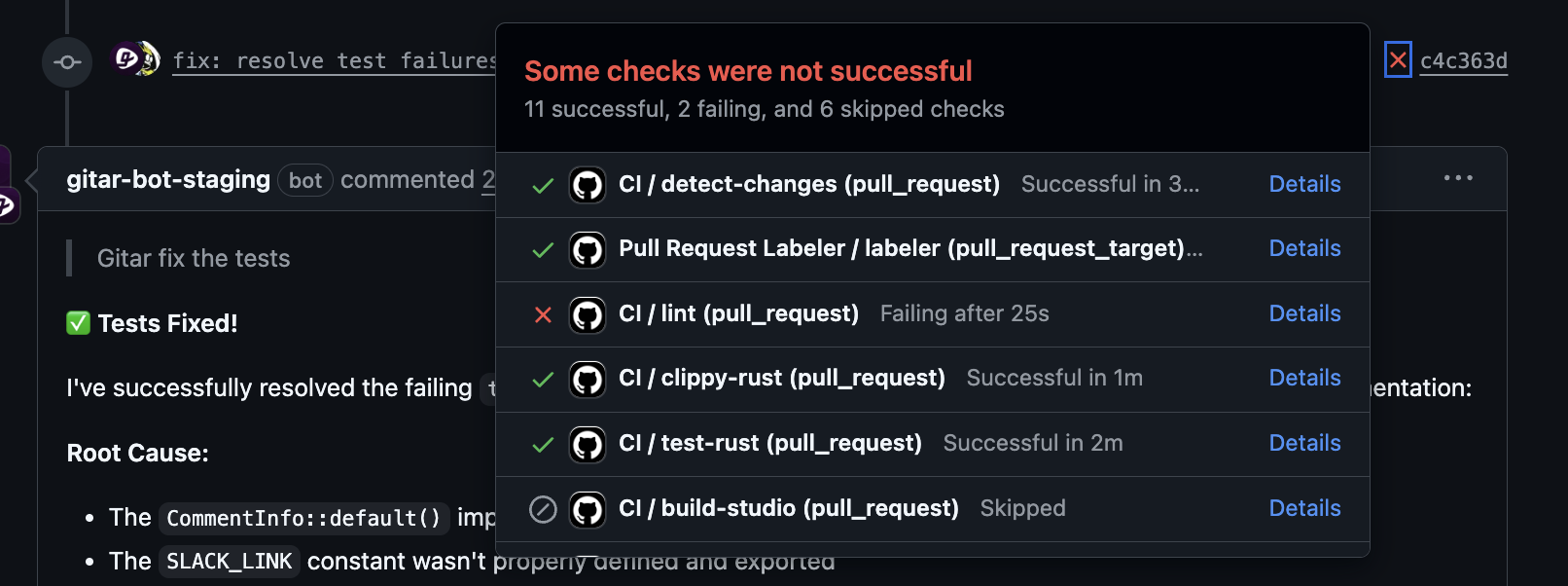
Install Gitar today to automate build fixes and ship quality software faster.
Speed Up Development with Gitar’s Automated CI Solutions
CI failures, especially from dependency conflicts, cost teams millions annually in lost productivity and pull focus away from innovation. Manual debugging and suggestion-based tools struggle to keep up with modern development demands, particularly as AI coding tools increase code volume in pipelines.
Gitar changes the game with autonomous CI failure resolution. By detecting, fixing, and validating issues to ensure successful builds, it frees developers from constant troubleshooting. Its ability to match complex environments and offer flexible trust settings makes it a practical choice for improving CI efficiency.
The benefits go beyond saving time. Faster merge cycles lead to quicker feature releases. Less repetitive debugging improves developer satisfaction. Greater team output supports bolder projects and drives innovation.
In a field where speed and reliability matter most, CI failures shouldn’t hold teams back. Gitar provides a way to move past manual fixes and adopt self-healing CI, letting developers focus on creating great software.
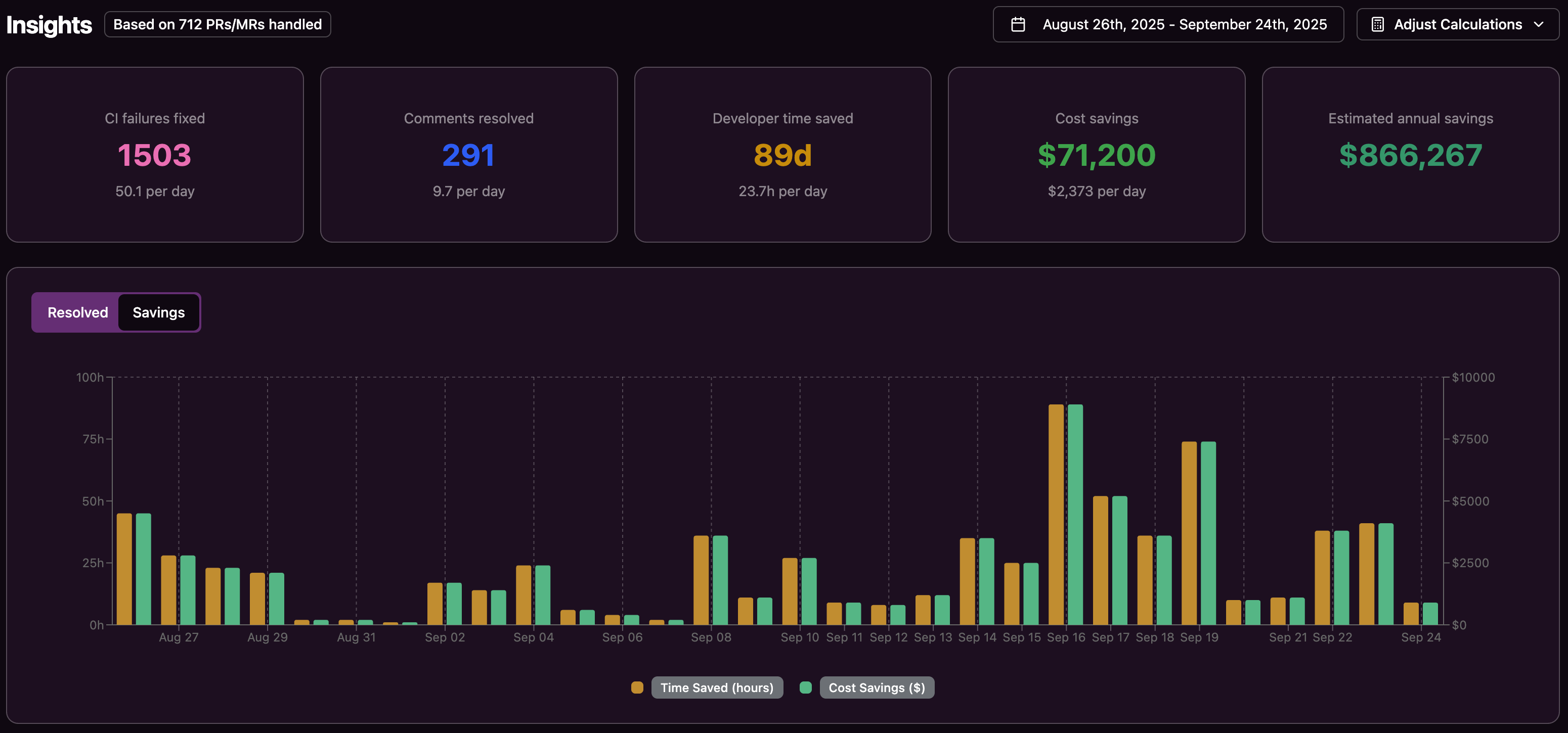
Ready to enhance your team’s speed with automated CI fixes? Request a demo of Gitar today and explore the future of self-healing CI.