Engineering teams using AI-assisted coding tools often struggle with CI/CD operations across different platforms. This article explains how effective CI integration creates self-healing pipelines, boosting developer productivity and speeding up code delivery. You’ll learn about common challenges with major CI platforms and how Gitar offers an independent solution to streamline workflows.
Why CI/CD Integration Issues Slow Down AI-Assisted Development
Development teams face a productivity challenge despite using AI tools like GitHub Copilot. These tools speed up code writing, but the CI/CD pipeline often becomes a barrier, delaying the delivery of that code to production.
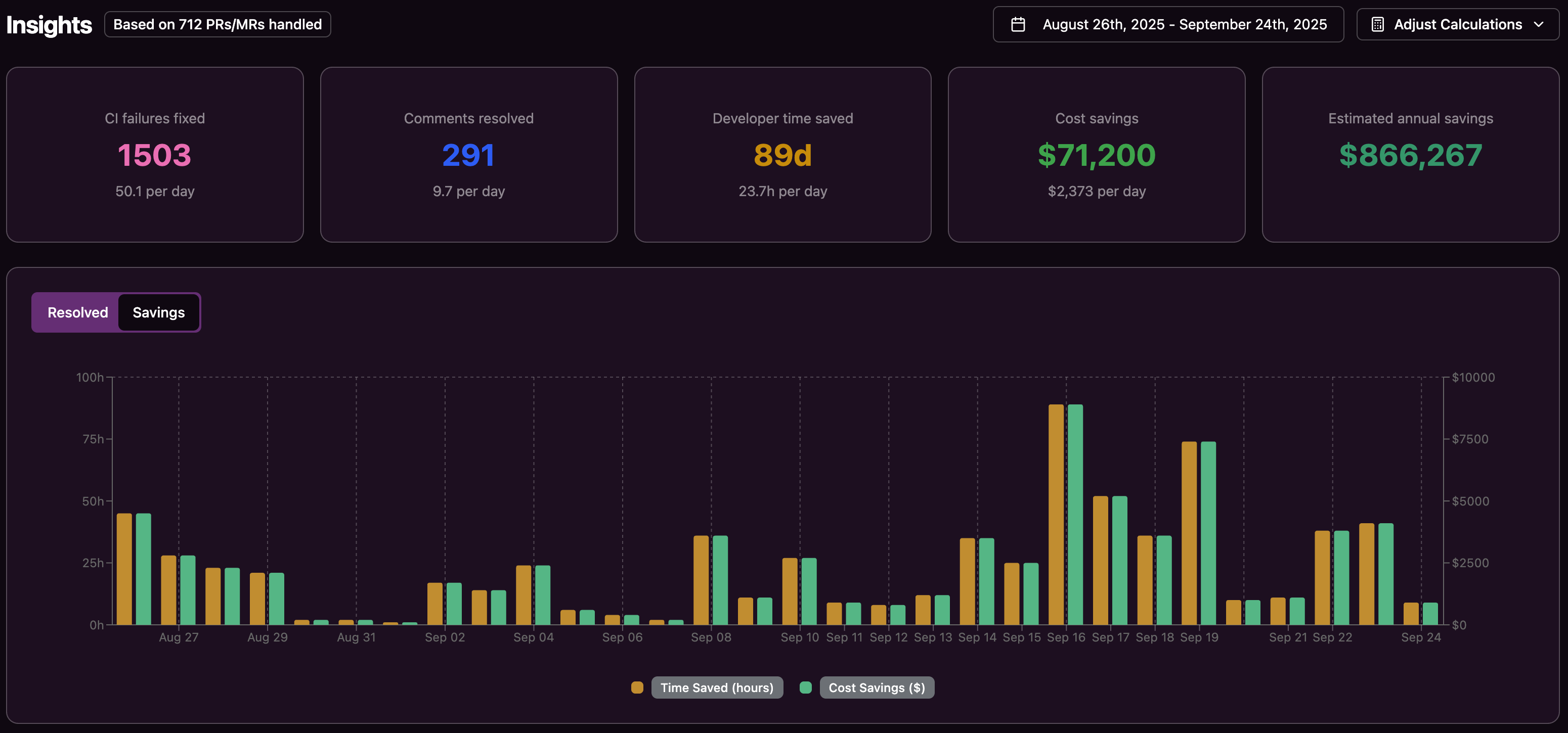
Developers can spend up to 30% of their time fixing CI failures, which disrupts focus and delays project timelines. For a team of 20 developers, this wasted time could cost around $1 million annually in lost productivity, factoring in total compensation.
Simple API connections fall short in complex enterprise settings. While AI coding tools help with initial code creation, they often don’t address the integration challenges across varied CI systems. GitHub Actions holds a 62% adoption rate for personal projects, but organizations often choose other platforms for their advanced features and scalability.
This mismatch creates a hidden cost, a mental burden from switching between coding and resolving CI issues. Delays grow worse in distributed teams across time zones, where waiting for fixes can stall progress for days.
CI tool preferences also vary by company size. Startups favor user-friendly options, while enterprises rely on robust systems for large workflows. Any effective integration solution needs to adapt to all these platforms and handle their unique requirements.
Ready to solve CI integration challenges? Install Gitar now to fix broken builds and ship quality software faster.
How Self-Healing CI Solves Pipeline Problems
Effective CI integration shifts from fixing problems after they occur to preventing them in the first place. It involves deep compatibility, real-time feedback, full environment replication, and automatic fixes across any CI platform. The goal is a self-healing pipeline that resolves issues independently, keeping builds in a passing state without manual effort.
This approach benefits different roles in engineering teams:
- Software Engineers stay focused on coding instead of deciphering error logs or applying manual fixes. Self-correcting pipelines reduce interruptions and repetitive work.
- Engineering Leaders see faster team output, lower costs, and better morale. Predictable timelines allow resources to focus on new features rather than maintenance.
- DevOps and Platform Engineers gain reliable pipelines with less effort. Support for complex builds, including multi-SDK setups and security scans, prevents platform teams from becoming bottlenecks.
A key factor in this integration is environmental awareness. Manual pipeline setups are being replaced by smart automation that adapts to specific contexts and standards, enabling systems to make accurate decisions on fixes.
Gitar: Your Independent AI Agent for Multi-Platform CI Integration
Gitar stands out as a solution for CI/CD automation, delivering self-healing pipelines across multiple platforms. Unlike tools that only suggest fixes, Gitar acts as a complete system that identifies and resolves issues from start to finish.

Here’s what makes Gitar effective for integration:
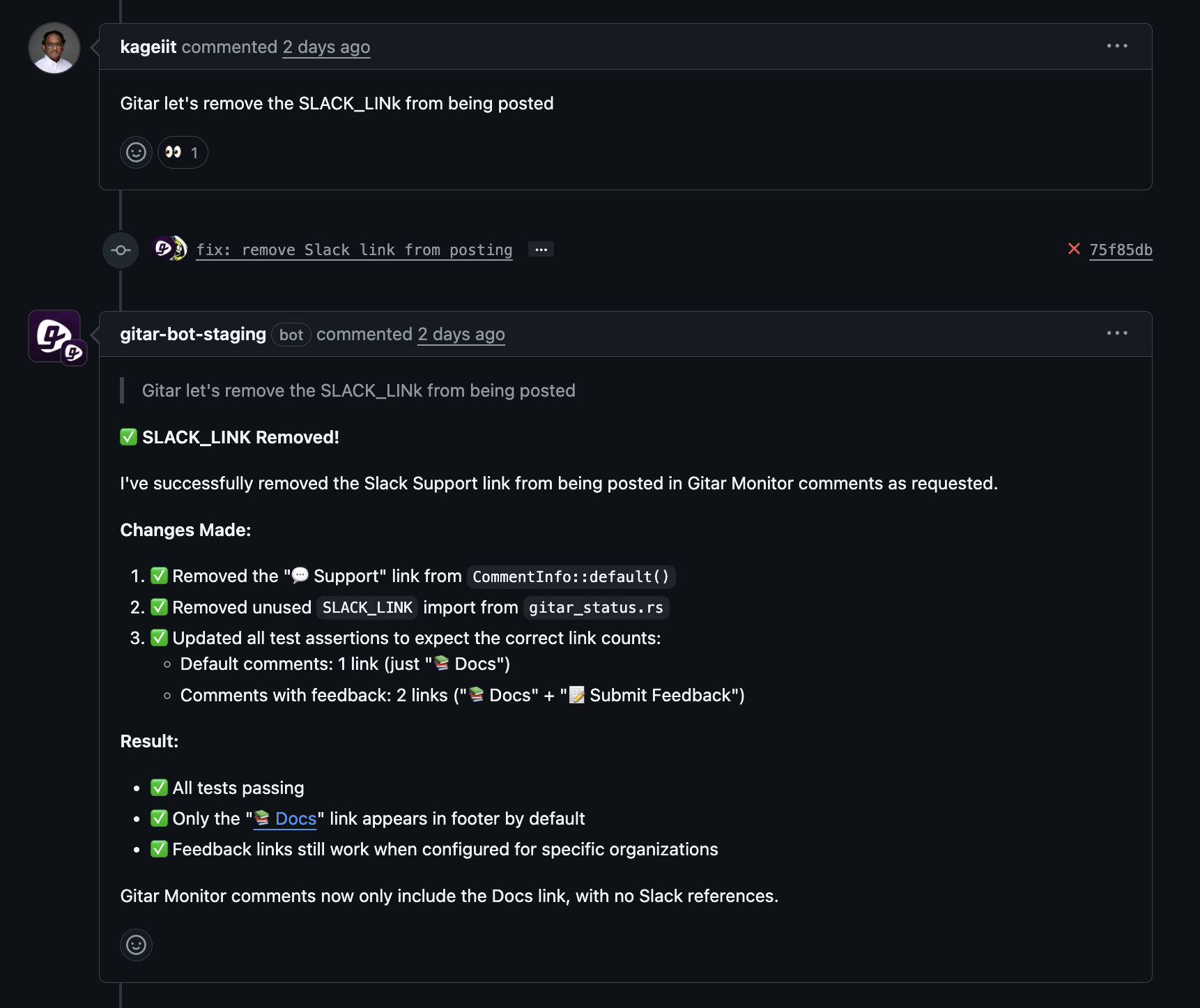
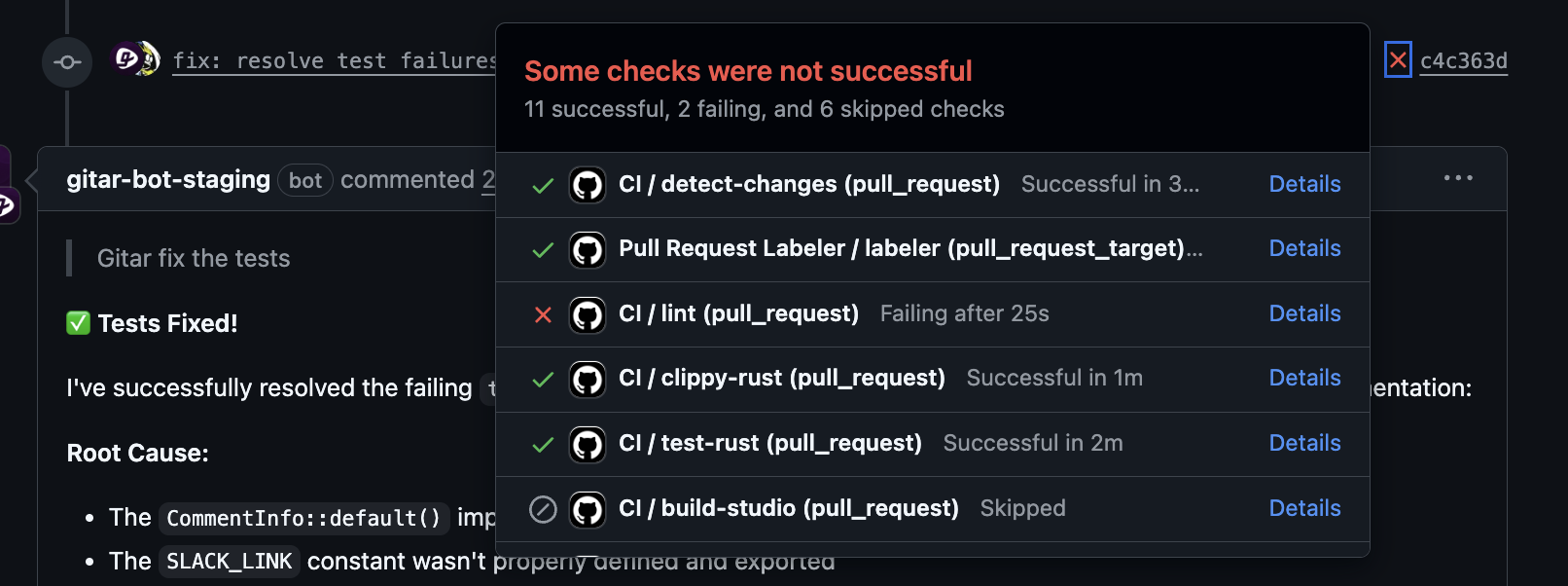
- Complete Fix Automation: Gitar doesn’t just suggest solutions. It applies, tests, and commits fixes for issues like failing tests or dependency conflicts across various CI platforms.
- Accurate Environment Replication: It mirrors complex enterprise setups, including specific software versions and third-party tools like SonarQube, ensuring fixes work in production.
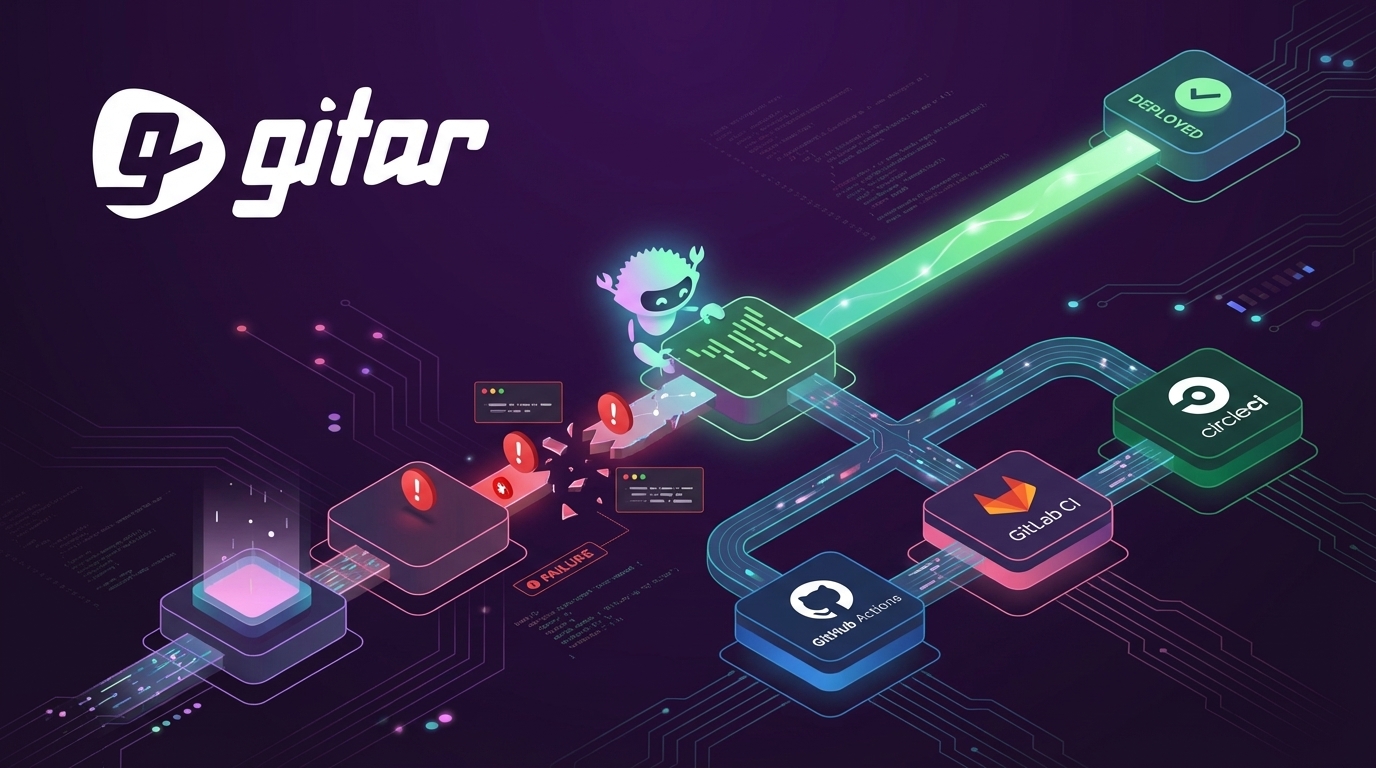
- Platform Compatibility: With native support for GitHub Actions, GitLab CI, CircleCI, and BuildKite, teams can keep their preferred tools while benefiting from automated fixes.
- Adjustable Trust Settings: Teams can choose between automatic commits or reviewable suggestions, building confidence over time as they shift to full automation.
- Context-Driven Fixes: By analyzing CI logs and integrating with local agents, Gitar provides fixes tailored to the specific platform and issue.
Want to experience self-healing CI pipelines? Request a Gitar demo today to improve your workflows.
How Gitar Connects With Different CI Platforms
Addressing Enterprise Needs With GitLab CI Support
Enterprise setups come with specific demands for CI integration. Gitar connects natively with platforms like GitLab CI, handling intricate pipeline setups and dependencies. This ensures automatic fixes work consistently, even in complex environments, allowing teams to maintain their current systems while boosting efficiency.
Enhancing Modern Tools Like GitHub Actions and CircleCI
Today’s CI platforms have distinct strengths. GitHub Actions offers tight repository integration, and Gitar builds on this by working within its event-driven setup for effective automation.
CircleCI appeals to teams needing flexible operations. Gitar aligns with its job structures, supporting reusable configurations for smoother pipeline management.
BuildKite suits teams with custom infrastructure needs through its agent-based design. Gitar adapts to this setup, coordinating with agents and handling tailored build environments.
Beyond basic connections, Gitar actively manages pipeline health by recognizing platform-specific patterns and working within custom setups or proprietary runners.
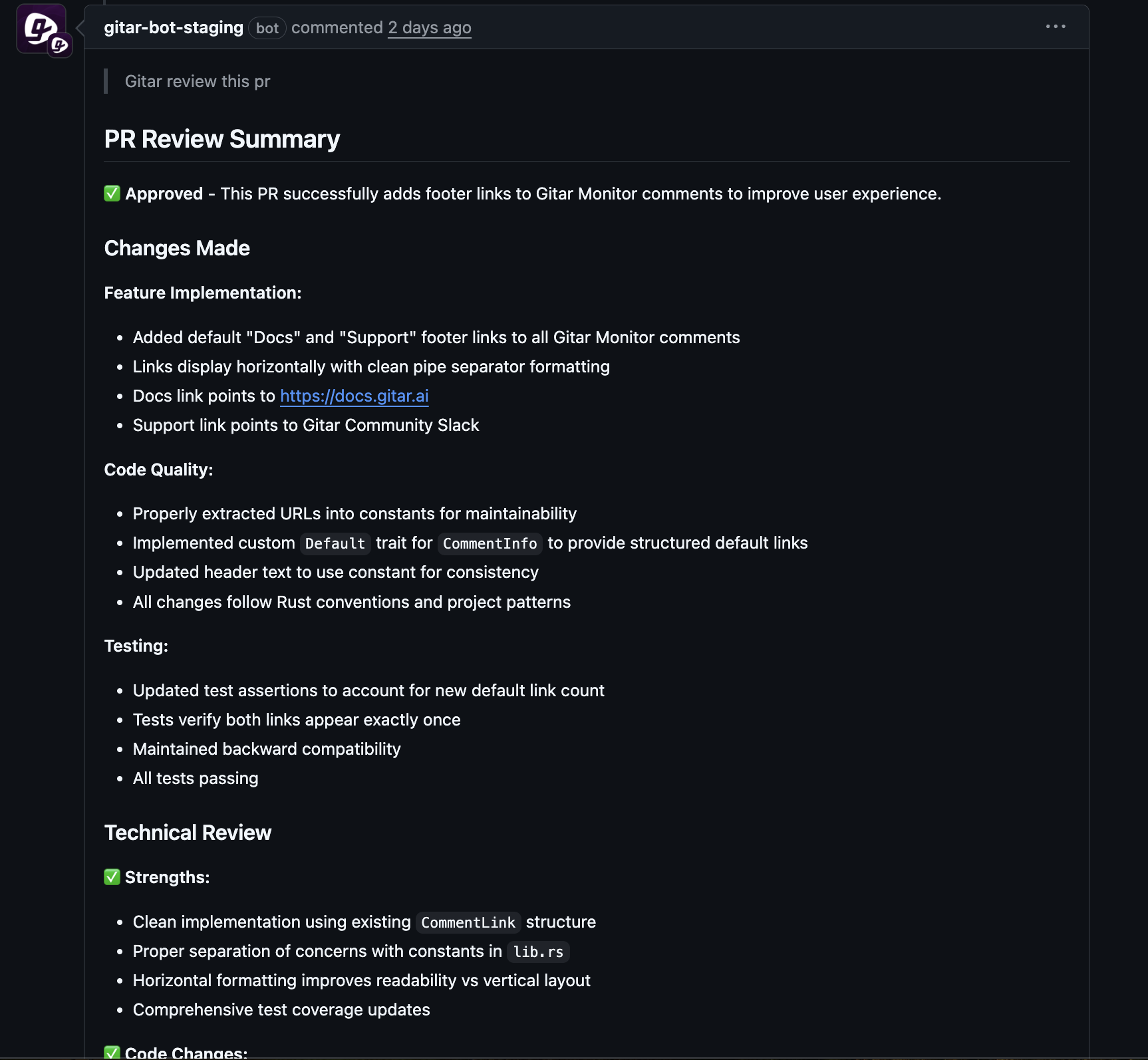
Why Full Environment Replication Matters
Effective CI integration goes beyond API access. It requires duplicating the entire build environment. Smart automation now adapts to context and standards, but it must reflect the real setup accurately.
Gitar replicates runtime conditions, exact dependency versions, multi-language builds, and third-party tools like Snyk. It accounts for differences between local and CI environments, ensuring fixes pass in the target setup. This detailed approach validates solutions before applying them, unlike tools that only offer untested suggestions.
How Gitar Compares to Other CI Tools
|
Feature / Tool |
Gitar (CI Healing Engine) |
AI Code Reviewers |
On-Demand AI Fixers |
Manual CI Debugging |
|
Integration Depth |
Full compatibility with GitHub Actions, GitLab CI, CircleCI, BuildKite, including environment replication |
Limited to one Git provider, minimal CI interaction |
Single Git provider focus, basic CI context |
No integration, fully manual effort |
|
Automation Level |
Independent fix creation, application, and testing across platforms |
Suggestions only, manual fixes needed |
On-demand ideas, manual application required |
Completely manual process for all steps |
|
Environmental Context |
Complete CI environment replication for reliable fixes |
Code-focused only, no CI pipeline insight |
Limited context from manual input |
Manual context gathering required |
|
Developer Impact |
Reduces interruptions, speeds up delivery, maintains focus |
Causes delays from manual work |
Disrupts focus with manual pipeline tasks |
High disruption, risks burnout |
Ready to fix builds automatically? Install Gitar now to ship quality software faster.
Common Questions About CI Integration With Gitar
How Does Gitar Work With Custom CI Setups?
Gitar handles complex, custom CI environments by replicating your specific build conditions and dependencies. This ensures any automatic fix aligns with your setup and passes in your environment.
Can Gitar Manage Multiple CI Platforms at Once?
Yes, Gitar supports simultaneous integration with GitHub Actions, GitLab CI, CircleCI, and BuildKite. It provides automatic fixes across all your projects, regardless of the platform used.
How Does Gitar Build Trust for Automatic Code Changes?
Gitar offers a flexible trust model. Start with a conservative mode where fixes are suggested for review. As confidence builds, switch to automatic commits with options for rollback if needed.
Does Gitar Support Security and Compliance Checks?
Gitar integrates with tools like SonarQube and Snyk, ensuring fixes meet your security and quality standards. It runs the same checks as your CI pipeline during the fix process.
What If a Gitar Fix Causes a New Issue?
Gitar validates fixes by replicating your CI environment before committing changes. If an issue arises, rollback options and detailed change logs are available to address it quickly.
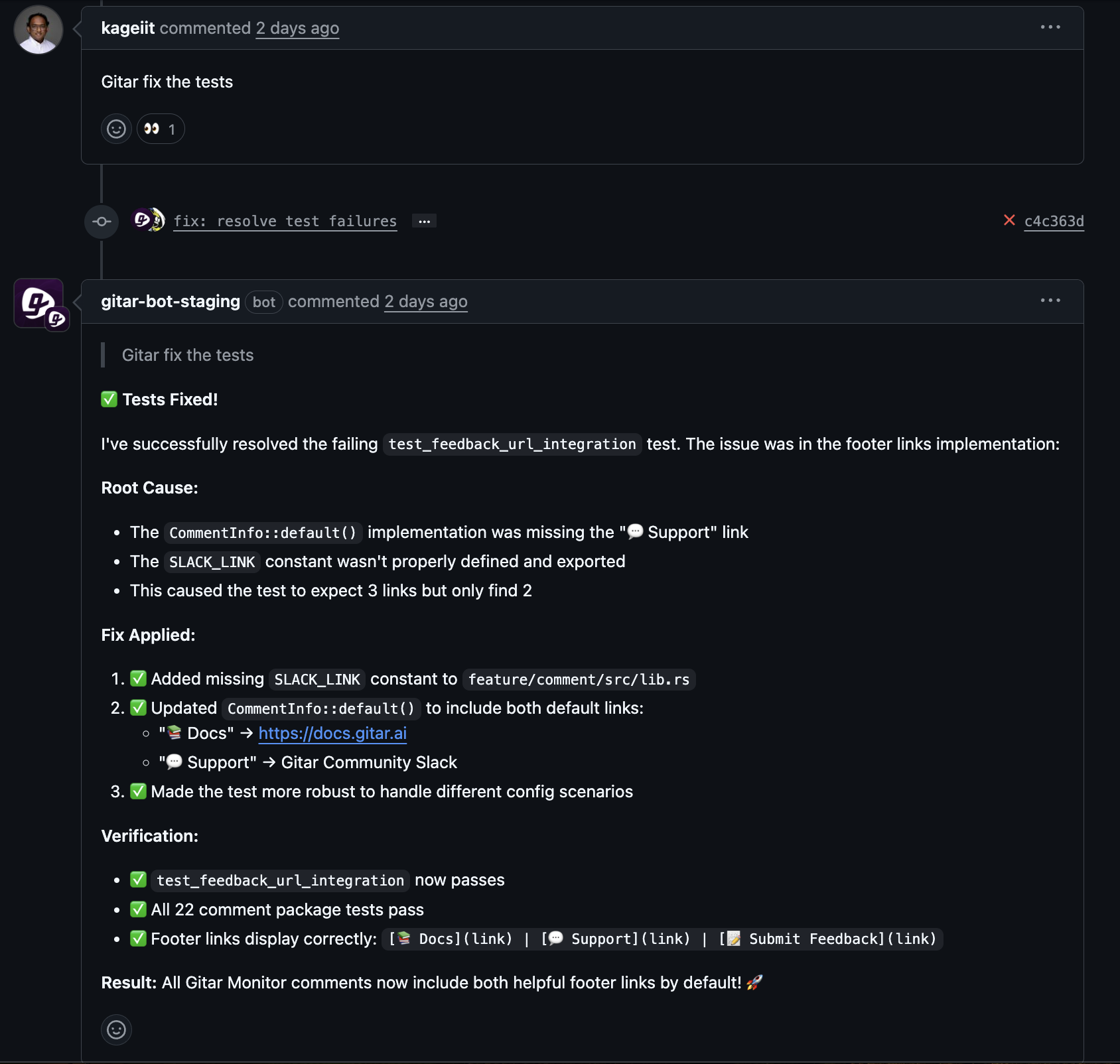
The Future of CI: Independent and Self-Healing Pipelines
With AI-assisted coding, CI integration must do more than connect systems. Teams need pipelines that maintain themselves. Gitar turns CI/CD into a productivity booster by supporting platforms like GitHub Actions, GitLab CI, CircleCI, and BuildKite. Its ability to mirror enterprise setups and manage dependencies fits organizations of any size.
Up to 30% of developer time is lost to CI failures. Gitar addresses this by enabling proactive pipeline management, allowing teams to focus on creating value through innovation.
Ready for efficient, self-healing CI? Request a Gitar demo today to enhance your pipelines.