
Written by: Ali-Reza Adl-Tabatabai, Founder and CEO, Gitar
Key Takeaways
-
AI-generated code contains 2.74x more vulnerabilities than human-written code, so automated scanners are essential for GitHub projects using Copilot and similar tools.
-
Gitar.ai leads with auto-fix capabilities through its healing engine, which validates fixes against CI to keep builds green across 30+ languages.
-
Most scanners such as Snyk Code and CodeAnt AI provide suggestions only and limit private repo trials, while Gitar offers a 14-day unlimited Team Plan trial.
-
Key evaluation criteria include GitHub integration depth, low false positive rates such as Semgrep’s benchmark, and setup under 5 minutes.
-
Teams can boost development speed and security by trying Gitar with automated vulnerability fixes instead of relying on suggestion-only tools.
How To Evaluate AI Code Vulnerability Scanners With Free Trials
Effective evaluation starts with clear criteria. Focus on trial generosity, GitHub integration depth, AI detection quality, auto-fix capabilities, setup time, and language coverage. Trial generosity means access to unlimited private repositories during the evaluation period, not just public projects. GitHub integration depth includes native App support, pull request comments, and CI awareness. AI detection quality covers vulnerability types, noise levels, and how often you trust the alerts.
False positive rates matter most when you compare detection quality. Cycode’s AI Exploitability Agent reports a 94% reduction in false positives, while Semgrep demonstrates the high reduction benchmark mentioned earlier for severe dependency issues. Lower noise means fewer wasted reviews and faster secure merges. Auto-fix capabilities range from simple suggestions to validated commits that run through CI before merging.
To measure these criteria in practice, install each scanner’s GitHub App on a sample repository with known vulnerabilities. Use the same repo for every tool so comparisons stay fair. Track detection coverage, false positives, fix quality, and time spent per pull request. The following comparison highlights how trial limits and auto-fix capabilities differ across leading tools.
|
Tool |
Trial Tier |
Auto-Fix |
Best For |
|---|---|---|---|
|
Gitar.ai |
14-day unlimited |
Yes (CI validated) |
Complete automation |
|
Snyk Code |
Limited scans |
Suggestions only |
Open source focus |
|
CodeAnt AI |
14-day trial |
Suggestions only |
Multi-language teams |
|
GitHub CodeQL |
Public repos only |
With Copilot license |
GitHub-native workflows |
The 7 Best AI Code Vulnerability Scanners With Free Trials for GitHub in 2026
1. Gitar.ai – AI Platform With Healing Engine
Gitar.ai stands apart as an AI code review platform that fixes code issues, including security vulnerabilities, instead of only flagging them. The 14-day Team Plan trial gives unlimited access to private repositories, full pull request analysis, security scanning, bug detection, performance review, and the healing engine. This engine validates fixes against your CI before committing changes. Gitar’s context-aware system learns your codebase patterns and applies validated fixes directly into pull requests.
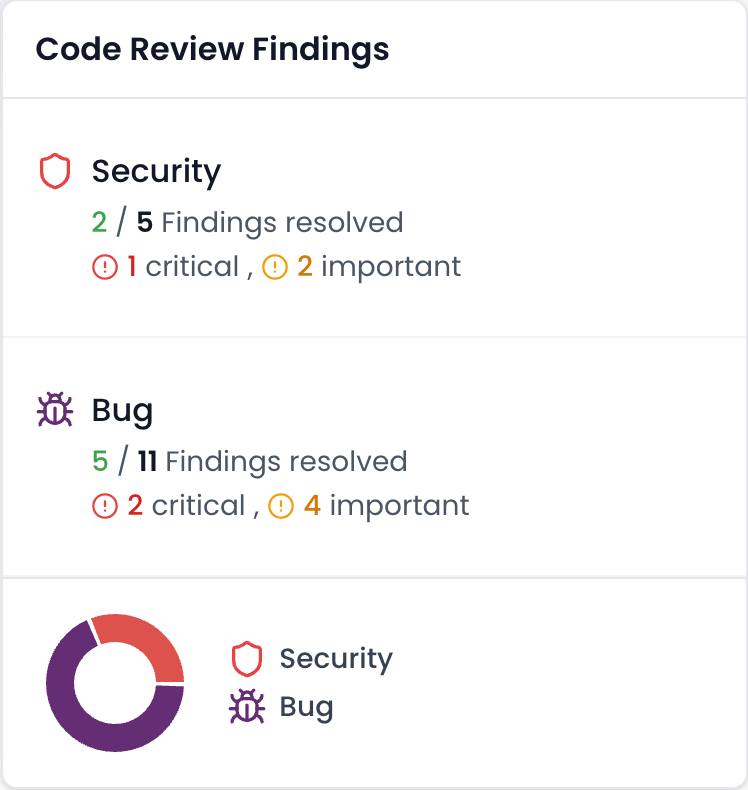
Setup takes under 30 seconds by installing the GitHub App. The platform supports Python, Go, JavaScript, TypeScript, Java, Rust, and many other languages. Natural language workflow rules replace complex YAML configuration. Key strengths include CI failure auto-resolution, a single consolidated dashboard comment instead of notification spam, and detailed analytics. The healing engine tests fixes in isolated environments first, then applies only those that keep builds green. This approach suits teams that value speed and automation over manual review cycles.
Pros: Automatic code fixes, CI validation, unlimited trial access, context memory, minimal notification noise
Experience automated code resolution with Gitar’s 14-day unlimited trial and see how validated fixes change your review workflow.
2. Snyk Code – AI-Powered SAST With DeepCode Engine
Snyk’s DeepCode AI combines symbolic and generative AI across millions of data flow cases to deliver context-aware static analysis. The platform surfaces vulnerabilities in IDEs and GitHub pull requests and provides AI-powered fix suggestions trained on real-world patches. Integration uses GitHub Apps and Actions, with prioritization based on exploitability and strong open-source dependency coverage across more than 15 million packages.
Setup involves installing the GitHub App and granting repository access. Strengths include mature detection algorithms, broad language support, and proven enterprise adoption. The trial tier limits scan volumes and focuses on detection rather than remediation. Snyk Code reports significantly fewer false positives than many traditional tools, which helps teams that care most about accurate alerts. This scanner fits teams that prioritize detection quality and already have capacity for manual fixes.
Pros: Mature AI detection, extensive language support, strong dependency scanning
Cons: Limited trial scans, manual fix implementation required
3. Aikido Security – Comprehensive Security Platform
Aikido Security delivers end-to-end application security scanning with AI-powered detection across SAST, SCA, and secrets. The platform connects to GitHub through webhooks and Actions, scanning pull requests and commits in near real time. Setup requires linking your GitHub organization and configuring scan triggers for the repositories you want covered.
Key features include vulnerability prioritization, compliance reporting, and integrations with common development tools. Aikido’s AutoFix feature can open pull requests with fixes for several vulnerability types. Strengths include a holistic security view, clear explanations for findings, and automated remediation options. This platform suits organizations that need broad security coverage beyond code vulnerabilities alone.
Pros: Comprehensive security coverage, clear explanations, compliance features, AutoFix options
Cons: Complex enterprise pricing
4. CodeAnt AI – Multi-Language Code Quality Platform
CodeAnt AI offers a 14-day trial with AI-driven line-by-line pull request reviews, SAST scanning, secrets detection, and support for 30+ languages through GitHub Marketplace integration. The platform enforces organization-specific standards and tracks code quality metrics such as complexity and duplication. Installation involves adding the GitHub App and configuring repository permissions.
Strengths include broad language coverage, detailed quality insights, and customizable review standards. The AI engine suggests fixes with contextual explanations. Limitations include manual fix implementation and paid plans that start at $10 per user monthly after the trial. CodeAnt works well for teams that want deep code quality analysis alongside security checks.
Pros: Extensive language support, detailed quality metrics, customizable standards
Cons: Suggestions only, paid plans required for ongoing use
See Gitar’s healing engine in action if you want broken builds and vulnerabilities resolved automatically instead of only flagged.
5. CodeRabbit – AI-Powered PR Review Assistant
CodeRabbit provides automated pull request summaries, line-by-line comments with full codebase context, and basic security scanning via a GitHub App. The platform offers a trial for open source repositories and requires paid plans for private repository access. Setup involves installing the GitHub App and granting the necessary permissions.
Key features include natural language queries, contextual understanding of large codebases, and smooth integration into existing review workflows. Strengths include thorough PR analysis and an intuitive interface. Major limitations include the lack of auto-fix capabilities and paywall restrictions for private repositories. CodeRabbit fits open source projects or teams that want to test AI-assisted reviews before investing in broader automation.
Pros: Comprehensive PR analysis, intuitive interface, strong open source support
Cons: No private repo access in trial tier, suggestion-only fixes
6. GitHub CodeQL – Native Security Analysis
GitHub Advanced Security’s CodeQL offers semantic code analysis and dataflow-driven vulnerability detection and uses a per-committer price for private repositories. The CodeQL Action enables automated scanning through GitHub Actions with a trial for public repositories. CodeQL integrates directly with GitHub workflows and surfaces alerts in pull requests and the repository security tab.
Setup requires enabling GitHub Advanced Security and configuring CodeQL workflows. Strengths include deep GitHub integration, wide language support, and enterprise-grade security controls. With Copilot licensing, CodeQL can suggest fixes for some issues, although it does not validate them through CI. High costs for private repositories and complex custom rule configuration are the main drawbacks. CodeQL suits teams already committed to GitHub’s security ecosystem.
Pros: Native GitHub integration, enterprise security features, broad language support
Cons: Expensive for private repos, complex custom rule setup
7. Semgrep – Lightweight SAST With Custom Rules
Semgrep delivers lightweight SAST, SCA, and secrets detection with AI-powered reachability analysis that supports the strong false positive reduction rates referenced earlier. Semgrep Community Edition integrates with GitHub and CI pipelines through standard workflows and supports custom pattern-based rules for OWASP Top 10 vulnerabilities across many languages.
Setup involves adding Semgrep to GitHub Actions or installing the CLI locally. Strengths include fast scans, flexible custom rules, and low-noise results. Semgrep’s AI platform reports high accuracy in identifying false positives across enterprise codebases. Limitations include ongoing rule maintenance and limited auto-fix features. Semgrep works best for teams with security expertise that want fine-grained control over rules.
Pros: Fast performance, custom rules, low false positives, strong open source option
Cons: Requires rule maintenance, limited auto-fix features
Why Gitar.ai’s Trial Actually Fixes Code Issues
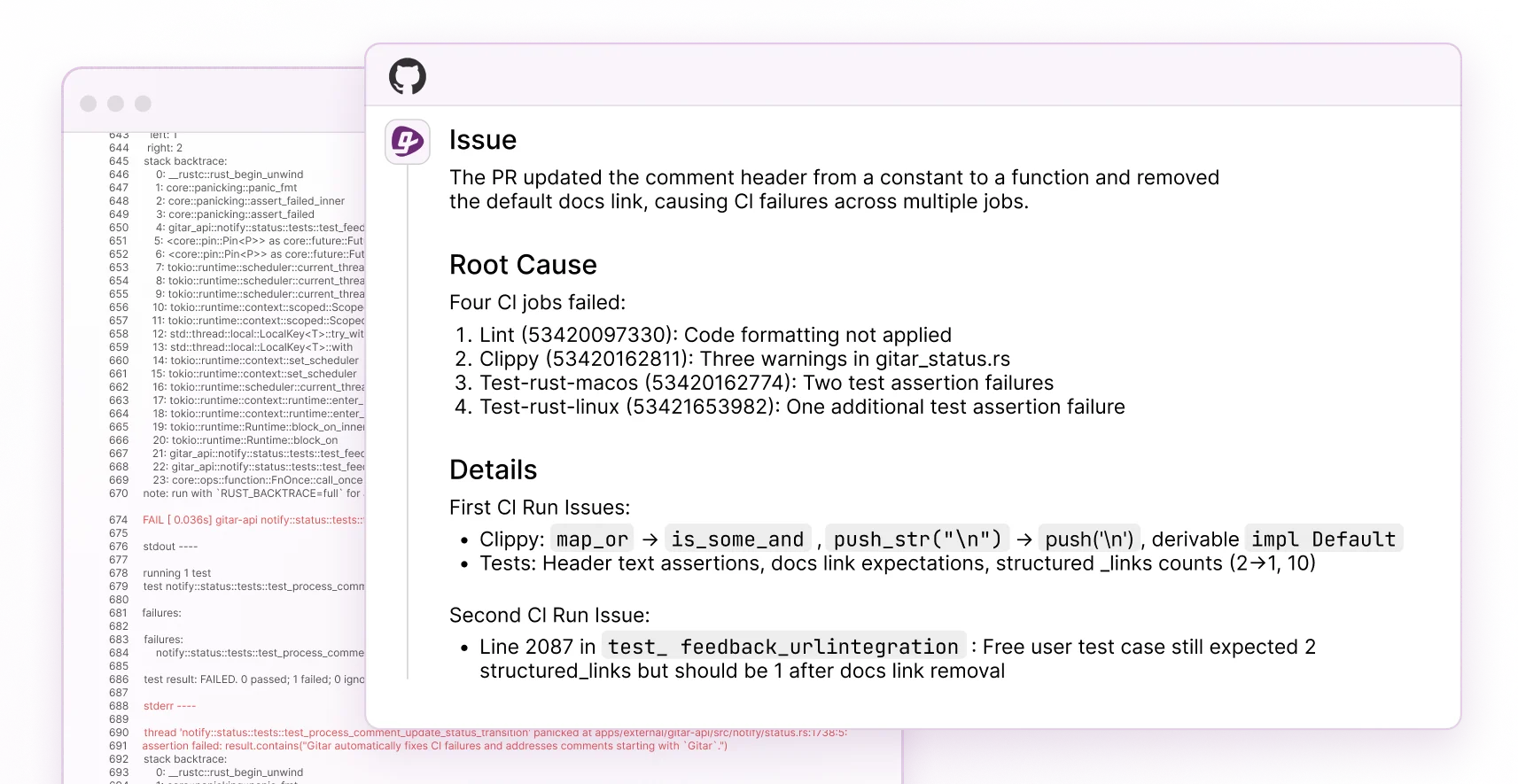
Gitar.ai’s 14-day Team Plan trial gives unlimited users and repositories plus a healing engine that fixes code issues and validates them against CI. This approach delivers green builds instead of leaving teams to hope that manual implementations work. The platform saves roughly 45 minutes per developer each day by removing the suggestion, implementation, and retest cycle that many tools create. This time savings stems from four key capability differences shown below.
|
Capability |
Gitar.ai |
CodeRabbit/Others |
|---|---|---|
|
Auto-apply fixes |
Yes |
No |
|
CI validation |
Yes |
No |
|
Context memory |
Yes |
Limited |
|
Notification management |
Single comment |
Multiple alerts |
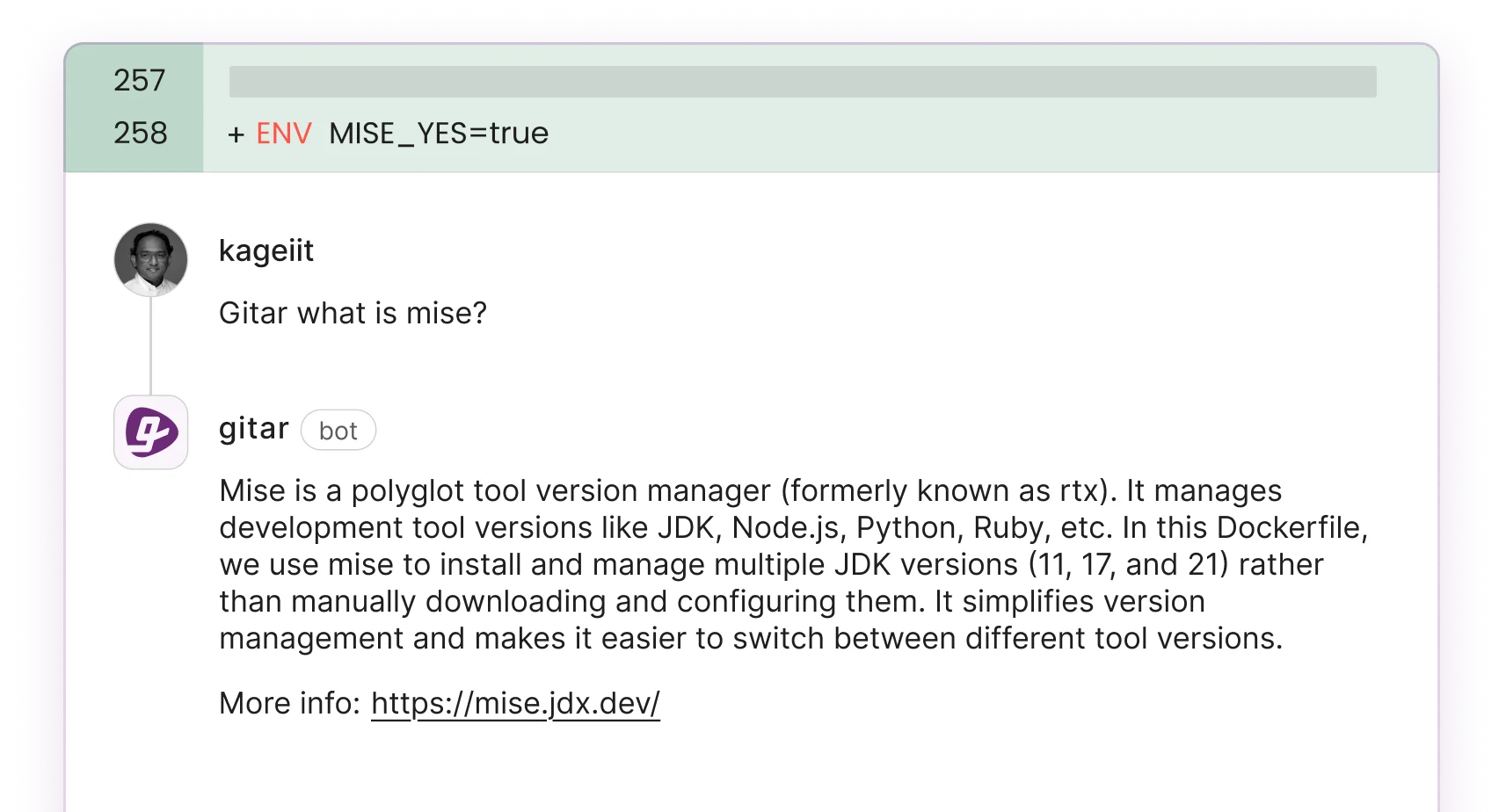
One development team reported that “Gitar fixed Copilot-missed vulnerabilities automatically while we focused on feature development instead of security cleanup.” The healing engine validates fixes in your environment so they match your dependencies and CI configuration, not a generic template. This reduces broken builds and rework.
Start shipping higher quality software faster by letting validated fixes handle routine vulnerabilities.
Key Considerations When Choosing Your Scanner
Solo developers should focus on quick setup and generous trial access, while teams need scalable auto-fix capabilities and smooth workflow integration. Private repository support varies widely, and many trial tiers cover only public repositories. False positive rates directly affect productivity because noisy tools with high error rates create more work than they remove.
Migration complexity also matters for long-term decisions. Consider how hard it will feel to switch tools later if pricing, accuracy, or language support changes. Test two or three scanners on real pull requests in your GitHub organization and compare detection coverage, fix quality, and time to merge before you commit to a paid plan.
Frequently Asked Questions
Which AI vulnerability scanner offers the strongest trial tier for private GitHub repositories?
Gitar.ai offers a 14-day Team Plan trial with unlimited private repositories, full auto-fix capabilities for code issues including security findings, and CI validation. Most competitors either restrict private repository access during trials or limit scan counts. CodeAnt AI provides a 14-day trial with suggestions only. Snyk Code caps scan volumes during trial periods, and GitHub CodeQL requires paid Advanced Security licensing for private repository scanning.
Do AI vulnerability scanners actually fix issues or mainly suggest fixes?
Most AI vulnerability scanners focus on suggestions that developers must implement manually. Gitar.ai provides validated auto-fixes through its healing engine, which tests changes in your CI environment before committing them. GitHub CodeQL can suggest fixes with Copilot licensing but does not validate them. Snyk Code, CodeAnt AI, and CodeRabbit generate suggestions that still require manual implementation and testing.
What are Snyk Code’s main limitations in the trial tier?
Snyk Code’s trial tier limits the number of scans and centers on detection instead of remediation. The platform offers strong vulnerability detection with relatively low false positive rates, but fixes remain manual. The trial includes dependency scanning across millions of packages while restricting monthly scan counts. Teams that exceed those limits need to upgrade to paid plans that carry a significant per-developer cost.
How do these scanners connect to GitHub Actions and CI workflows?
Integration patterns differ by tool. Gitar.ai uses a native GitHub App with automatic CI validation and a single consolidated comment per pull request. Semgrep connects through GitHub Actions workflows and supports lightweight scanning in CI. CodeQL relies on GitHub Actions configuration and Advanced Security licensing for private repositories. Most tools support webhook-based integration, but setup time ranges from about 30 seconds for Gitar.ai to several hours for complex custom pipelines.
Which scanner supports the widest range of programming languages?
CodeAnt AI and Gitar.ai both support more than 30 programming languages with broad coverage. Semgrep offers strong polyglot support through its pattern-based rules across Python, TypeScript, Java, Go, and many other languages. GitHub CodeQL also supports multiple languages but requires Advanced Security licensing for full capabilities. SonarQube Community Edition covers over 25 languages yet lacks native merge request support for complete review workflows.
Conclusion
Gitar.ai leads this group with a healing engine that fixes code issues instead of only detecting them. Its 14-day unlimited Team Plan trial gives teams a complete view of advanced AI code review and security scanning in real workflows. Other tools often charge premium prices for suggestion engines, while Gitar.ai demonstrates value through validated automation that keeps builds green.
Move beyond manual fix implementation and let Gitar’s healing engine resolve vulnerabilities while your team focuses on shipping features.