

Written by: Ali-Reza Adl-Tabatabai, Founder and CEO, Gitar
Key Takeaways for Codeium Users in 2026
- Codeium remains 100% free for individual developers in 2026, with unlimited autocompletes, chat, and VS Code integration and no credit card required.
- The free tier supports 70+ languages and 40+ IDEs, giving broader access than GitHub Copilot while maintaining a strict zero data retention privacy model.
- New 2026 pricing introduces daily and weekly quotas on the free tier, but core features stay available, funded by team and enterprise contracts.
- AI-generated code from Codeium speeds up coding by roughly 20–25%, yet it can create review bottlenecks and CI failures that still need manual fixes.
- Pair Codeium with Gitar to automatically fix build-breaking bugs, keep CI pipelines green, and ship software faster.
How Codeium Stays Free for Individual Developers in 2026
Codeium’s “Forever Free” individual tier uses a simple email signup and skips credit card verification. Account setup for Codeium’s free individual tier requires only a basic email sign-up with no payment details. GitHub Copilot charges $10 per month, while Codeium earns revenue from team and enterprise plans, which keeps the individual tier completely free.
This comparison shows how Codeium’s free tier stacks up against GitHub Copilot’s paid model across core features:
| Feature | Codeium Free | GitHub Copilot |
|---|---|---|
| Autocomplete | Unlimited | $10/month |
| Languages | 70+ | 30+ |
| IDEs | 40+ | 30+ (approx.) |
| Credit Card | Not Required | Required |
The business model difference keeps the free tier sustainable. Over 1,000 businesses, including Zillow, Dell, and Anduril, use Codeium through paid contracts. These enterprise deals subsidize the free tier and turn individual developers into a pipeline for future enterprise adoption.
Codeium Free Tier Limits, Privacy, and Hidden Tradeoffs
Codeium’s free individual tier uses the Codeium Base chat model, a standard context window scoped to local files, and a strict zero-retention security policy. The platform discards code snippets immediately after generating predictions. Processing runs in the cloud, so you lose offline support, but privacy protections exceed many competitors.
Codeium enables Zero Data Retention (ZDR) by default on enterprise plans, and the same zero-retention behavior applies to individual accounts. This design protects intellectual property while still delivering fast completions.
The metrics below highlight how Codeium’s free tier compares to GitHub Copilot on performance, productivity, and security:
| Metric | Codeium Free | GitHub Copilot |
|---|---|---|
| Acceptance Rate | 35-40% | 42-48% |
| Time Savings | 20-25% | 30-35% |
| Data Retention | Zero | 30 days |
| SOC 2 Compliance | Yes | Yes |
LocalAimaster Research Team testing in March 2026 measured GitHub Copilot’s autocomplete acceptance at 42–48% versus Codeium’s 35–40% across Python, JavaScript/TypeScript, Java, and Go. Test both tools on your usual and edge-case patterns to see how this accuracy gap affects your own projects.
Where Codeium Is Free Inside VS Code and Other IDEs
Codeium’s free individual tier supports more than 40 editors, including VS Code, JetBrains IDEs, Neovim, Vim, Emacs, Eclipse, and Jupyter Notebooks. You install it by adding the Codeium extension from your IDE’s marketplace, so you keep your existing editor.
This table shows how IDE coverage compares between Codeium and GitHub Copilot:
| IDE Support | Codeium | GitHub Copilot |
|---|---|---|
| VS Code | Yes | Yes |
| JetBrains | All IDEs | Supported |
| Vim/Neovim | Yes | Yes |
| Jupyter | Yes | No |
This breadth helps polyglot developers who switch tools often. The Codeium Individual plan offers free and unlimited autocompletion, making it a strong Copilot alternative for students and independent developers. Try both tools in your main IDE and compare suggestion speed, since Codeium can respond more slowly in some setups.
Real-World Dev Pain Points With Codeium’s Free Tier
Developer forums surface tradeoffs that do not appear in feature lists. CoderFile.io’s 2026 review notes that Codeium’s AI chat quality trails GitHub Copilot and Cursor for complex reasoning, nuanced debugging, and architecture discussions. For many developers, Codeium excels at autocomplete but feels weaker for deep, back-and-forth AI conversations.
Codeium now serves over 3.6 million developers worldwide in 2026, up from under 2 million in early 2023, reflecting more than 80% user growth driven largely by the free tier. Safety concerns around data usage have eased over time. As mentioned earlier, Codeium’s zero-retention policy means it never trains on user code or stores snippets, which reassures security-conscious teams.
Codeium Pricing in 2026 and What Quotas Mean for You
Recent pricing changes show how Codeium is adjusting its model. Windsurf (formerly Codeium) overhauled pricing on March 19, 2026, moving from a credit system to daily and weekly quotas across free and paid plans. The individual tier now uses quotas instead of truly unlimited access, although the price remains $0.
The table below summarizes the current plans, prices, and quota structure:
| Plan | Price | Quotas | Models |
|---|---|---|---|
| Free | $0 | Daily/Weekly Limits | Base |
| Pro | $20/month | Higher Quotas | Premium |
| Teams | $40/seat/month | Team Features | Premium |
Quotas cap how many requests you can send within a day or week, which affects heavy users more than casual ones. Monitor Codeium’s FAQ for updates, since details can shift. The FAQ still confirms the Individual plan as “free forever,” with revenue coming mainly from Enterprise contracts. Track your own usage against these limits so you can spot any impact on your workflow early.
Beyond Free Generation: How Gitar Fixes the Review Bottleneck
Codeium accelerates code generation, but AI output still needs review and validation. Developers using Codeium save 20–25% of coding time per week on average in 2026. Despite this gain, sprint velocities often stall because reviewers cannot keep up with the increased pull request volume. As AI coding tools reach 84% adoption, teams ship more changes while review capacity stays flat.
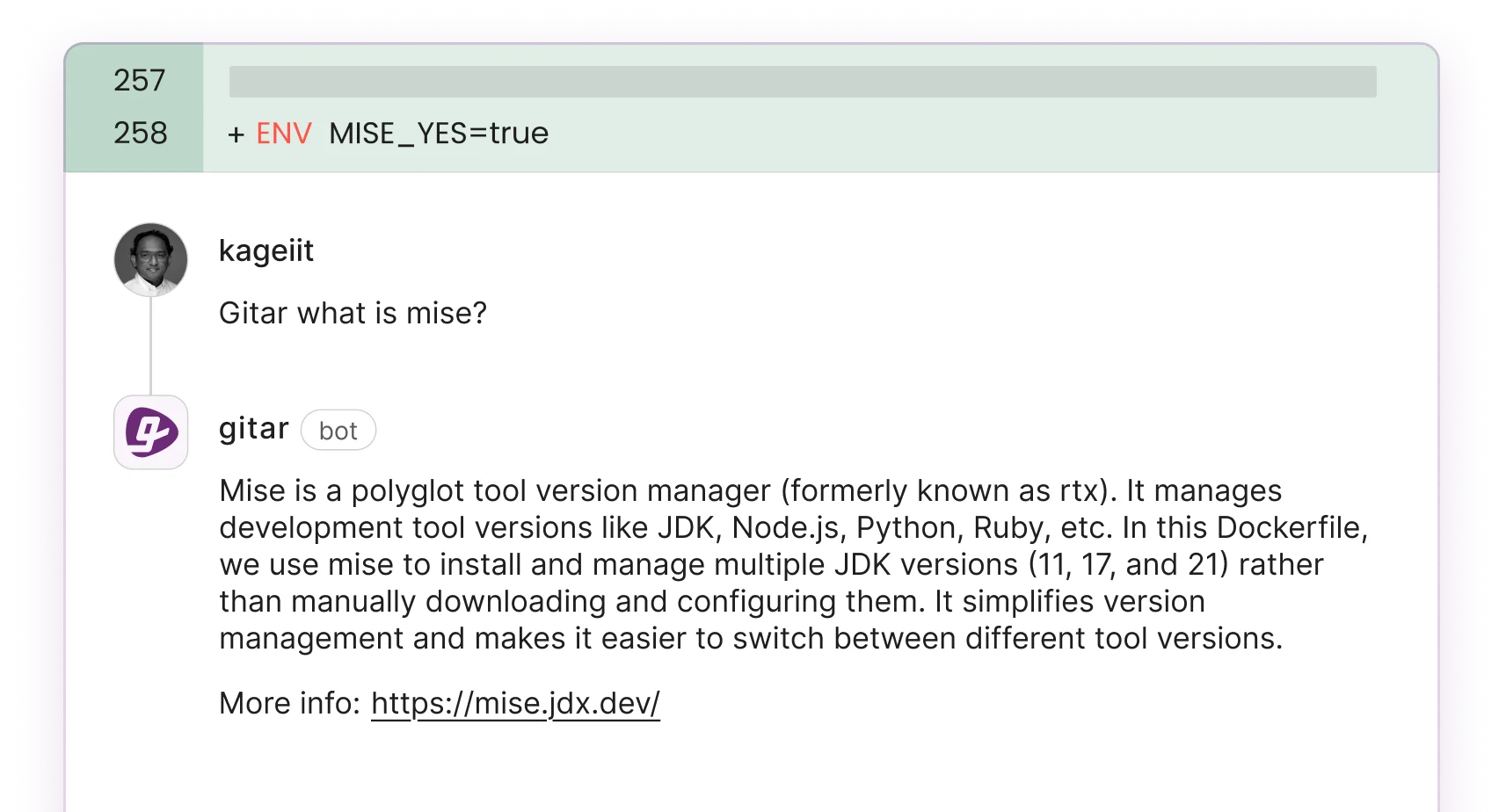
Traditional code review tools suggest fixes but do not apply them. Developers still implement suggestions, push commits, and hope the fixes pass CI. This manual step is where much of Codeium’s speed advantage disappears, since faster generation does not help if you spend hours debugging. Gitar automatically fixes broken builds to ship higher quality software faster, removing the manual debugging loop that slows AI-generated code.
The comparison below shows how Gitar’s capabilities differ from common AI review tools:
| Capability | CodeRabbit/Greptile | GitHub Copilot | Gitar Trial |
|---|---|---|---|
| PR Summaries | Yes | Yes | Yes |
| Auto-apply Fixes | No | No | Yes |
| CI Auto-fix | No | No | Yes |
| Green Build Guarantee | No | No | Yes |
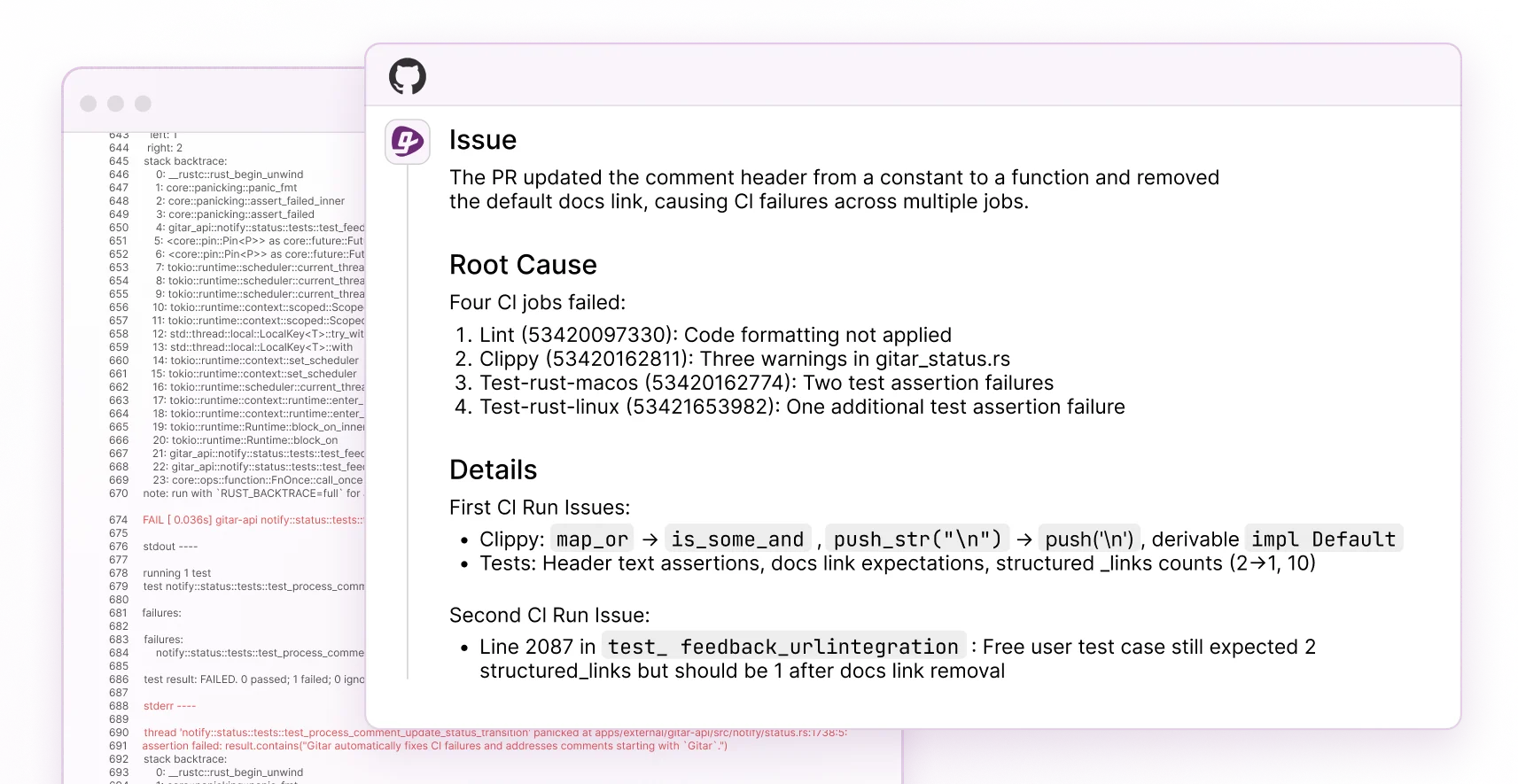
Gitar’s 14-day free trial of the Team Plan provides AI code review with automatic fix implementation, full PR analysis, security scanning, bug detection, performance review, and auto-fix for your entire team with no seat limits during the trial. When CI fails, Gitar analyzes failure logs, generates validated fixes, and commits them automatically, which removes the usual post-generation firefighting.
Frequently Asked Questions
Is Codeium safe for developers?
Yes, Codeium applies enterprise-grade security to individual accounts. The platform enforces the zero-data retention policy described earlier, discarding snippets right after prediction. Codeium holds SOC 2 Type II compliance and never trains models on user code. Unlike competitors that store code for 30 or more days, this privacy-first approach protects intellectual property while keeping features intact.
Does Codeium work offline?
No, Codeium’s free individual tier requires an internet connection because models run in the cloud. The platform processes code remotely, which delivers unlimited completions without demanding strong local hardware. Enterprise customers can choose air-gapped self-hosting, but individual users must stay connected to api.codeium.com for autocomplete and chat.
How does Codeium compare to GitHub Copilot for solo developers?
Codeium offers unlimited free autocomplete, while GitHub Copilot charges $10 per month, which helps budget-conscious developers. GitHub Copilot typically delivers higher acceptance rates and faster suggestions, based on the earlier metrics. Codeium stands out for IDE variety and strict privacy, while GitHub Copilot wins on accuracy and tight integration with the Microsoft ecosystem.
What happens when Codeium generates buggy code?
Codeium’s free tier focuses on generating code and does not validate or repair resulting bugs. Developers still debug AI-generated changes, which can create review backlogs and CI failures. Complementary tools such as Gitar detect and fix bugs in AI-generated pull requests automatically, so you keep the benefits of free generation while reducing manual debugging work.
Will Codeium’s free tier remain unlimited forever?
Codeium’s model relies on free individual adoption feeding enterprise sales, which supports long-term access for solo developers. Recent pricing updates added daily and weekly quotas, so future restrictions remain possible. The company’s FAQ still promises a “free forever” individual plan, but you should watch how quotas and terms evolve. Enterprise revenue currently covers the cost of individual usage effectively.
Codeium delivers on its core promise for 2026: free, high-volume code generation for individual developers without credit card traps or feature downgrades. The generous tier, strong privacy stance, and broad IDE coverage make it one of the most accessible AI coding assistants available. The main bottleneck now sits in review and CI, not in writing code. Try Gitar free for 14 days to see how automated code fixing pairs with Codeium’s generation, giving your team end-to-end development speed instead of just faster typing.