
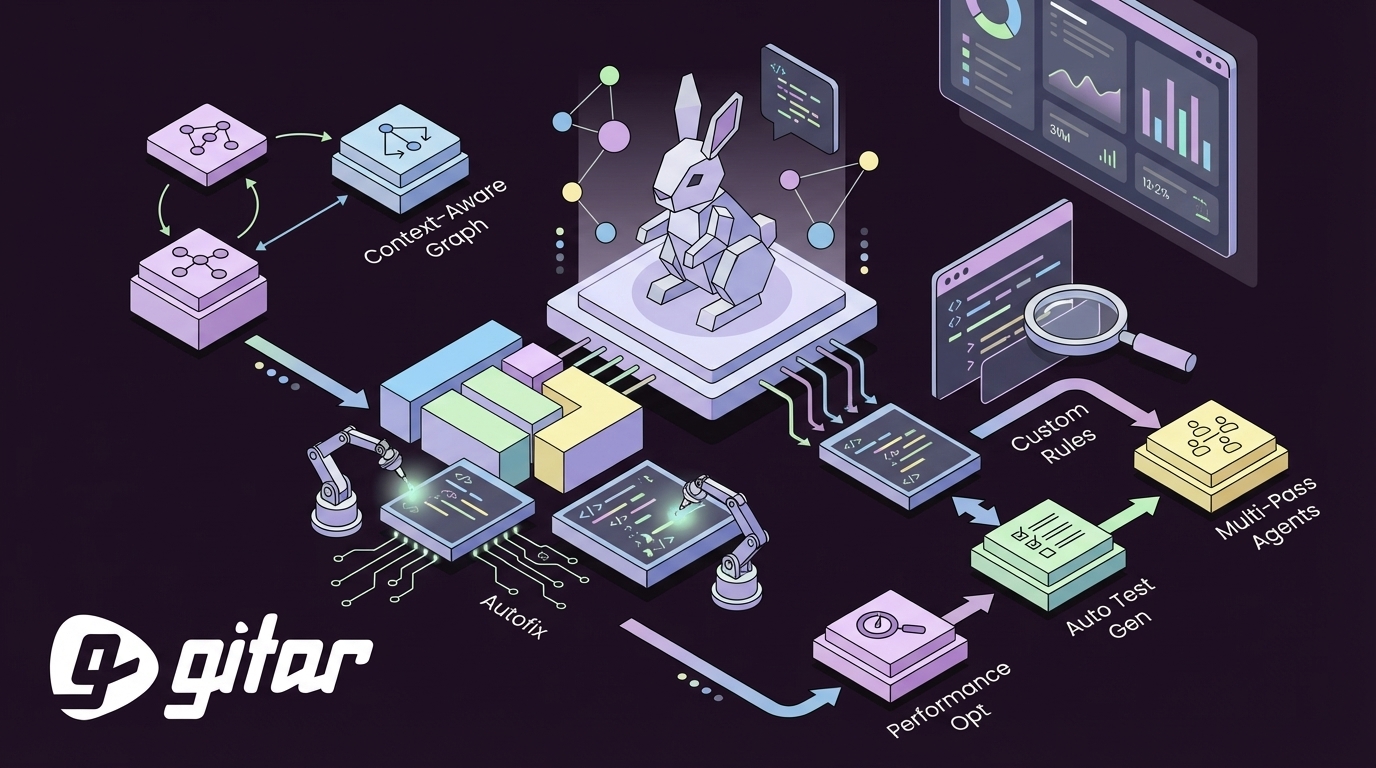
Written by: Ali-Reza Adl-Tabatabai, Founder and CEO, Gitar
Key Takeaways
- CodeRabbit’s advanced features like Code Graph Analysis and multi-pass agents provide sophisticated PR reviews but still require manual fix implementation, which prevents full autonomy.
- Autofix Finishing Touch enables one-click fixes for simple issues yet lacks CI validation and automatic handling for complex changes.
- Custom rules, test generation, and security scans improve review quality, but teams still need manual validation and deployment steps.
- Despite 46% bug detection accuracy, CodeRabbit cannot match platforms that apply fixes automatically, validate in CI, and guarantee green builds.
- Gitar’s Healing Engine automatically applies fixes, validates them in CI, and ships only green builds, delivering true autonomous AI code review.
Industry Context: How Code Review Is Moving Toward Autonomy
AI code review has shifted from basic static analysis to more capable agentic systems. Traditional tools like ESLint provide rule-based feedback, while modern AI reviewers such as CodeRabbit ($15-30 per developer) combine LLM reasoning with static analysis. The next stage focuses on true autonomy, where platforms not only suggest fixes but also apply and validate them without manual effort.
Current market trends show growing demand for multi-pass agent reviews, context-aware code graph analysis, and autonomous fix application. Code review tools reach 79% adoption with about 45% review efficiency gains, yet manual fix application remains the main bottleneck. The table below shows how autonomous platforms differ from traditional and AI suggestion tools in fix application, validation, and context awareness.
| Feature | Traditional Tools | AI Suggestions | Autonomous Platforms |
|---|---|---|---|
| Fix Application | Manual | Manual | Automatic |
| CI Validation | None | None | Automatic |
| Context Awareness | Limited | Moderate | Full Codebase |
1. Context-Aware Code Graph Analysis for Safer Changes
CodeRabbit’s Codegraph technology builds a complete map of the codebase, including past changes, to show how files connect and where cross-file breaking changes may appear. This capability helps teams understand complex dependencies across files and see the impact of each change.
Benefits: Detects breaking API changes, identifies unused imports, and flags dependency drift across modules.
Setup: Dashboard > Settings > Enable Code Graph Analysis > Configure repository linking.
Pros: Comprehensive dependency tracking and fewer false positives. Cons: Suggestions still need manual review and do not include automatic fix application.
Example: Fixed a React logic leak in component state management.
2. Multi-Pass Agent Reviews for More Reliable Feedback
CodeRabbit’s agentic code validation lets AI decide which tools to run, interpret results, and act like a senior engineer. Verification agents run multiple analysis passes to check and ground review feedback.
Benefits: Reduces hallucinations, improves accuracy through verification, and selects tools based on context.
Setup: Pro Plan > Enable Agentic Reviews > Configure validation thresholds.
Pros: Higher accuracy than single-pass reviews and stronger technical grounding. Cons: Complex issues still require manual fix implementation.
Example: Detected a security vulnerability in an authentication flow that single-pass analysis missed.
3. Autofix Finishing Touch for Simple One-Click Fixes
CodeRabbit’s Autofix Finishing Touch, released February 26, 2026 for GitHub Pro Plan, applies fixes for unresolved review findings directly to the PR branch using the @coderabbitai autofix command or interactive checkboxes. This feature represents CodeRabbit’s closest step toward autonomous behavior.
Benefits: Applies one-click fixes, reduces manual implementation time, and keeps changes within the PR context.
Setup: Pro Plan > Enable Autofix > Configure auto-application rules > Use the @coderabbitai autofix command.
Pros: Streamlined fix workflow and contextual understanding. Cons: Handles only simple fixes, lacks CI validation, and still needs manual verification.
Example: Automatically fixed import ordering and removed unused variables across TypeScript files.
4. Continuous Incremental Reviews to Reduce Noise
CodeRabbit introduced auto-pause for continuous incremental reviews on February 12, 2026, pausing after 5 reviewed commits by default on active feature branches to reduce noisy feedback. This feature helps teams avoid review fatigue on long-running branches.
Benefits: Cuts notification spam, focuses feedback on meaningful changes, and supports configurable thresholds.
Setup: Settings > Incremental Reviews > Set commit threshold > Configure via .coderabbit.yaml.
Pros: Intelligent pause logic and customizable triggers. Cons: May skip important changes and often needs manual re-enabling.
Example: Paused reviews after five commits on a feature branch, then resumed when explicitly requested.
5. Custom Rules and Learning with .coderabbit.yaml
CodeRabbit learns from team feedback on its suggestions and supports custom review instructions in a YAML file so reviews match project standards. The Learnings Dashboard stores developer feedback and adapts AI behavior to team-specific expectations.
Benefits: Team-specific customization, less stylistic noise, and continuous learning from feedback.
Setup: Create .coderabbit.yaml > Define custom rules > Configure learning preferences.
Pros: Highly customizable and improves over time. Cons: Requires YAML knowledge and ongoing manual rule maintenance.
Example: Custom rule that flags React components without PropTypes and learns the team’s naming conventions.
6. Auto Test Generation for Better Coverage
CodeRabbit released Unit Test Generation in beta on July 23, 2025, generating unit tests for code changes under Finishing Touches while following project patterns. This feature helps fill gaps in test coverage within pull requests.
Benefits: Improves test coverage, respects project patterns, and reduces manual test writing.
Setup: Pro Plan > Enable Test Generation > Set coverage thresholds > Use Finishing Touches.
Pros: Context-aware test generation and pattern recognition. Cons: May create brittle tests and still needs manual review.
Example: Generated Jest tests for a React component with proper mocking and edge case coverage.
CodeRabbit’s test generation improves coverage but still depends on engineers to review and validate the generated tests. Teams that want a more autonomous approach need systems that validate fixes automatically in CI and ship only passing builds. To see this level of autonomy in practice, try Gitar’s autonomous testing and validation and explore the Gitar documentation.
7. IDE and CLI Integrations with VS Code v1.0
CodeRabbit’s VS Code extension v1.0, released August 13, 2025, gives Pro accounts full context awareness, including learnings, code quality tools, security checks, and agent guidelines. The extension also connects with AI coding tools such as Cline, Roo, Kilo Code, and Augment Code.
Benefits: In-IDE reviews, real-time feedback, and multi-tool integration.
Setup: Install the VS Code extension > Connect a Pro account > Enable context awareness.
Pros: Seamless workflow integration and real-time analysis. Cons: Full context awareness requires a Pro subscription.
Example: Ran real-time security scanning while editing authentication middleware in VS Code.
8. Enterprise Security Scans with Trivy and SOC2 Support
CodeRabbit added Trivy for IaC security scanning in config mode for Terraform and Kubernetes, plus TruffleHog for secret scanning with verification, on February 4, 2026. These integrations support deeper security analysis for enterprise environments.
Benefits: Multi-scanner security coverage, IaC analysis, and secret detection with verification.
Setup: Enterprise Plan > Enable Security Scanners > Configure Trivy and TruffleHog settings.
Pros: Broad security coverage and support for enterprise compliance. Cons: Some false positives from style preferences and frequent need for manual remediation.
Example: Detected hardcoded API keys in Terraform configurations and Kubernetes manifests.
9. Performance Optimization Agents for Safer Refactoring
CodeRabbit’s Simplify code feature, released March 13, 2026, reviews files changed in a pull request and applies targeted improvements such as extracting reusable functions, simplifying conditionals, and removing redundant code while preserving behavior.
Benefits: Automated refactoring, performance improvements, and behavior preservation.
Setup: Pro Plan > Enable Simplify Code > Use the @coderabbitai simplify command.
Pros: Intelligent refactoring that maintains functionality. Cons: Conservative approach that may miss optimization opportunities.
Example: Extracted common validation logic into reusable utility functions across React components.
10. Event-Driven Workflows with Multi-Repo and Slop Detection
CodeRabbit’s Multi-Repo Analysis feature, introduced February 18, 2026, explores linked repositories during pull request reviews to detect cross-repository issues. In addition, Slop Detection, released March 24, 2026, flags low-quality AI-generated pull requests automatically.
Benefits: Cross-repo dependency tracking, AI-generated code quality control, and automated workflow triggers.
Setup: Pro Plan > Link repositories > Enable Multi-Repo Analysis > Configure Slop Detection.
Pros: Broad analysis scope and stronger quality control. Cons: Limited to two linked repositories and requires manual workflow configuration.
Example: Detected breaking API changes across microservices and flagged low-quality AI-generated code.
How to Enable Autonomous Features in CodeRabbit
Teams unlock CodeRabbit’s advanced capabilities through a short but ordered setup process.
1. Install GitHub App: Navigate to GitHub Marketplace > Install CodeRabbit > Grant repository permissions. This step creates the core integration between CodeRabbit and your repositories.
2. Configure .coderabbit.yaml: After installation, create a configuration file in the repository root with custom rules and preferences. This file tells CodeRabbit how to align reviews with your team’s standards.
3. Test PR Integration: Before rolling out broadly, create a test pull request to confirm that review automation and fix suggestions behave as expected.
4. Enable Pro Features: Once the basic flow works, upgrade to the Pro Plan to access capabilities such as Multi-Repo Analysis and Autofix that extend beyond simple suggestions.
Example Configuration:
reviews: auto_pause: 5 enable_autofix: true custom_rules: - "Flag React components without PropTypes" - "Require async/await over Promises"
After configuration, you can evaluate how well these features support real-world autonomy instead of stopping at suggestion quality.
Limitations and How to Evaluate Autonomy
CodeRabbit’s autonomous features still face clear limits. AI-generated pull requests contain 1.7x more issues than human-generated PRs, which forces teams to perform extensive manual validation. The main gap appears in fix handling, because CodeRabbit suggests fixes but does not reliably apply or validate them against CI systems.
To evaluate autonomous AI code review tools, focus on how they handle fixes, CI, and validation, not just how smart their comments look. The table below highlights where CodeRabbit falls short compared with fully autonomous alternatives.
| Capability | CodeRabbit | Autonomous Alternative | Impact Score |
|---|---|---|---|
| Auto-apply Fixes | Partial | Full | High |
| CI Auto-Fix | No | Yes | Critical |
| Validation | Manual | Automatic | High |
Evaluate tools based on fix application rates, CI integration depth, and validation coverage instead of suggestion quality alone.
Why Gitar Beats CodeRabbit for True Autonomy
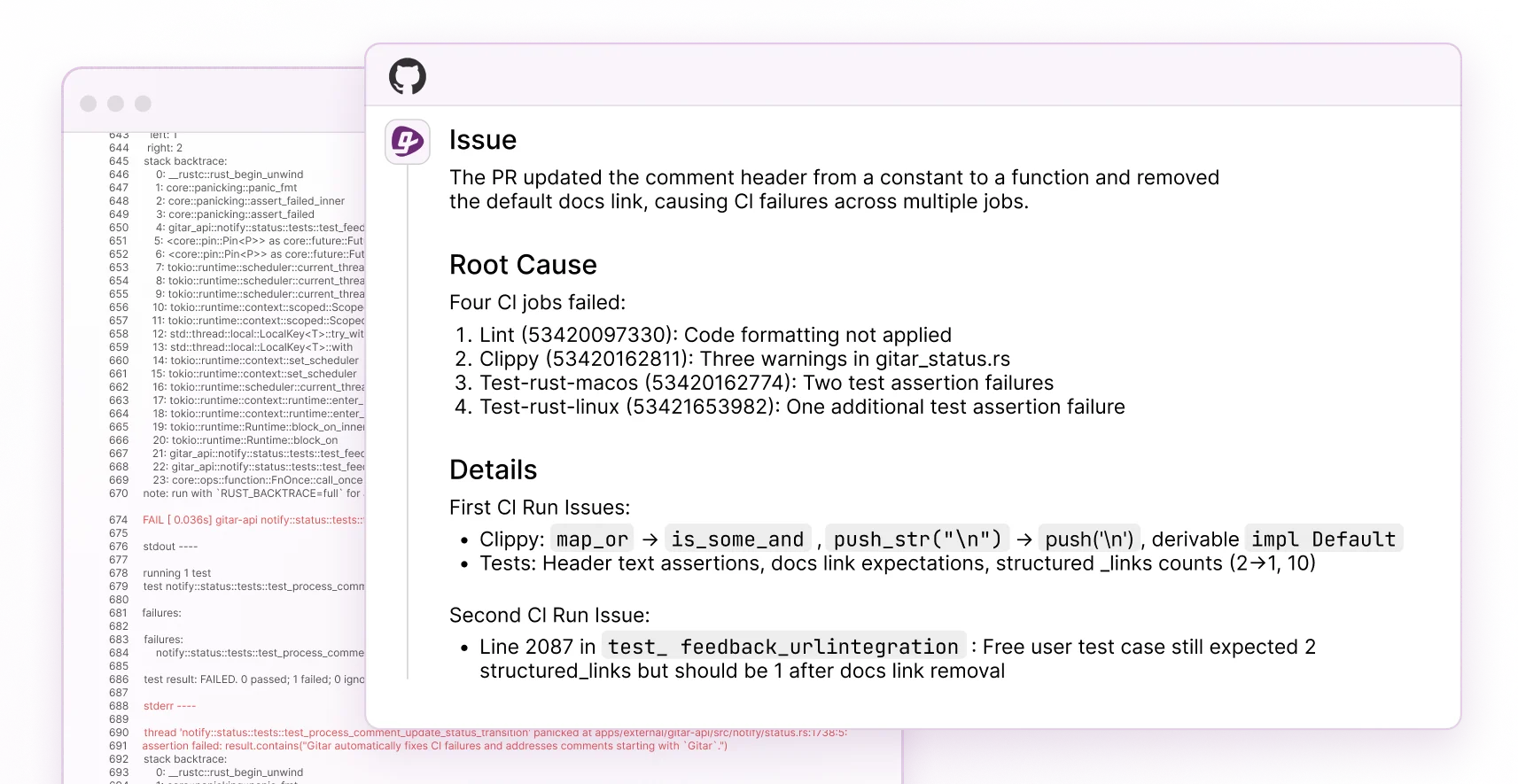
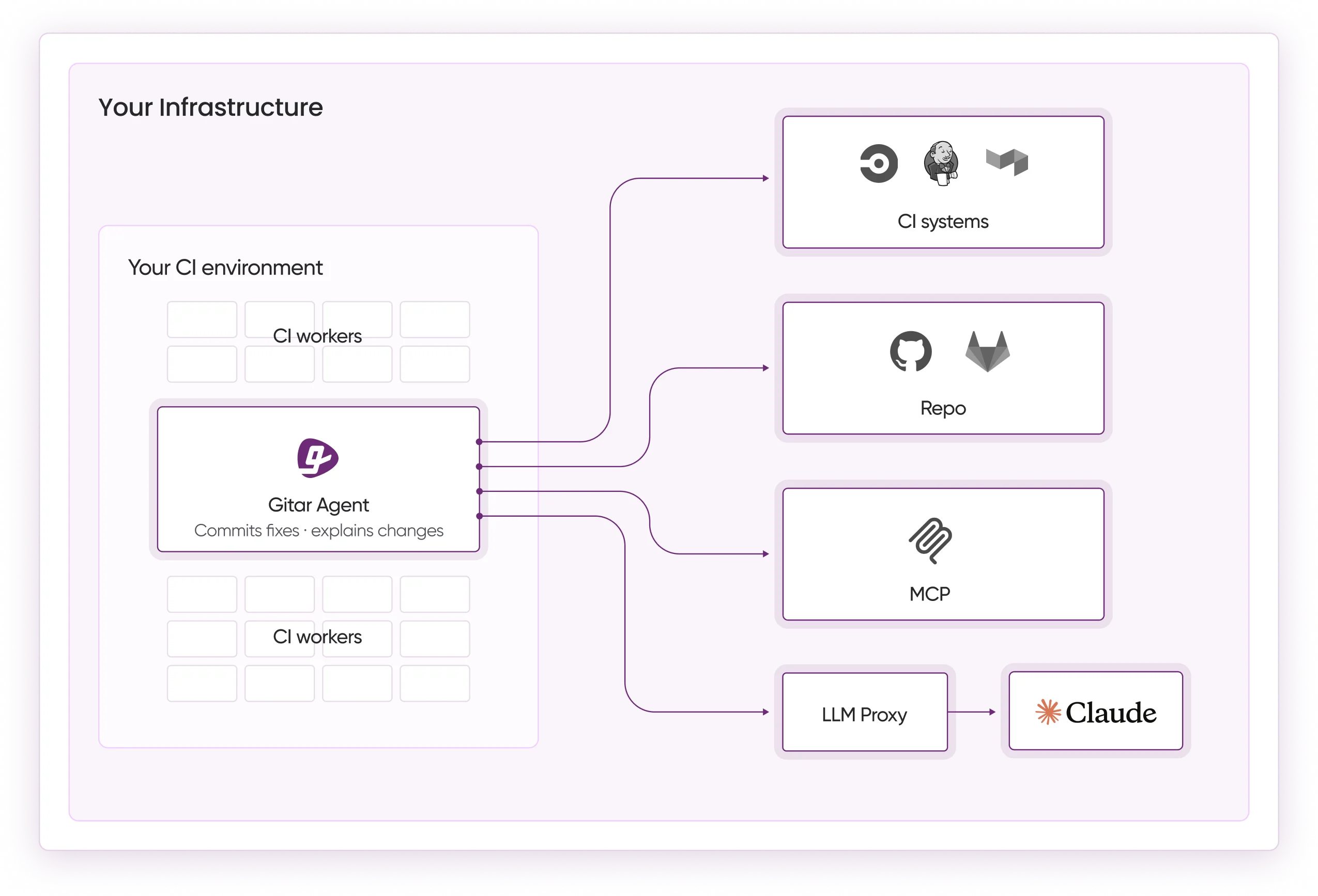
CodeRabbit delivers strong analysis but stops at suggestions. Gitar’s Healing Engine applies fixes automatically, validates changes in CI, and guarantees green builds. When CI fails, Gitar analyzes failure logs, generates corrected fixes, and commits them automatically, saving an average of 45 minutes per developer per day.
The capability comparison below shows how this difference plays out in daily workflows.
| Capability | CodeRabbit | Gitar |
|---|---|---|
| Auto-apply Fixes | Limited | Yes |
| CI Auto-Fix | No | Yes |
| Green Build Guarantee | No | Yes |
| Manual Validation | Required | Optional |
The ROI gap is clear. CodeRabbit expects developers to read suggestions, implement fixes manually, and then hope tests pass. Gitar removes that manual loop through autonomous fix application and CI-validated results.
See how autonomy changes your workflow. Experience true autonomous code review with Gitar and explore the Gitar documentation for implementation details.
FAQ
Does CodeRabbit apply fixes on its own?
CodeRabbit offers limited auto-fix through Autofix Finishing Touch for simple changes such as import ordering and variable cleanup. It does not apply complex fixes automatically or validate changes against CI systems. Most suggestions still require manual implementation and testing.
Which advanced CodeRabbit features help enterprise teams most?
Enterprise teams gain the most from Code Graph Analysis for dependency tracking, Multi-Repo Analysis for cross-repository change detection, and integrated security scanning with Trivy and TruffleHog. The custom rules system and learning capabilities also help align reviews with internal standards over time.
How does CodeRabbit compare to Gitar for autonomous code review?
CodeRabbit focuses on analysis and suggestions but leaves fix implementation to developers. Gitar delivers autonomy by applying fixes automatically, validating them in CI, and guaranteeing green builds. Teams using Gitar benefit from the 45-minute daily time savings mentioned earlier through reduced manual work.
Can CodeRabbit handle domain-specific logic and custom requirements?
CodeRabbit often struggles with domain-specific requirements and team conventions despite its learning features. The platform frequently produces technically valid but practically unusable suggestions that demand extensive human validation and rework, especially for complex business logic.
What accuracy can teams expect from CodeRabbit’s autonomous features?
CodeRabbit reports 46% bug detection accuracy across its user base and favors high recall over precision to avoid missing critical issues. However, the 1.7x higher issue rate discussed earlier for AI-generated code shows that teams still need consistent human oversight.
Conclusion
Advanced CodeRabbit features move code review closer to autonomy through deeper analysis, multi-pass validation, and limited auto-fix support. The platform still relies on manual fix implementation and lacks CI validation, which restricts how autonomous it can become.
True autonomous code review requires platforms that fix issues, validate them in CI, and guarantee reliable outcomes. CodeRabbit excels at analysis, but teams that want genuine autonomy need solutions that remove manual work from the loop.
Move from suggestions to guaranteed fixes. Start your 14-day Team Plan trial with Gitar and see auto-fixes validated against your CI with guaranteed green builds. For deeper guidance, review the Gitar documentation.