
Written by: Ali-Reza Adl-Tabatabai, Founder and CEO, Gitar
Key Takeaways for Cursor AI Replacements
- Cursor AI limits its trial users to 50 premium requests monthly, so many developers look at Cline and Continue.dev with bring-your-own-key (BYOK) support.
- Leading options include Cline with 5M+ installs, Aider with strong community adoption, and Codeium with unlimited autocomplete on its trial tier.
- Most tools plug into VS Code in under 5 minutes and support Claude 3.5, GPT-4o, and offline models through Ollama for privacy.
- AI coding tools speed up development but still produce code that often fails CI checks and needs follow-up fixes before production.
- Pair any Cursor alternative with Gitar’s auto-fixing so broken builds get healed automatically and your team ships stable releases faster.
How To Test Cursor AI Alternatives for Real Projects
Evaluate Cursor alternatives by checking VS Code setup time, BYOK model support, and how well they handle multi-file edits in real repositories. Aim for extensions that install in under 5 minutes, connect to Claude 3.5 or 4.6 and GPT-4o, and support agent-style workflows across monorepos. Compare API costs of roughly $0.50 to $2 per coding session, privacy options such as self-hosting, and measurable accuracy on real tasks. MorphLLM’s SWE-bench testing highlights tools like Cline as top performers, while Aider’s usage metrics show strong adoption and heavy real-world traffic.
Top Alternatives to Cursor AI for 2026
The strongest Cursor AI alternatives for 2026 include:
- Cline: Agent-style VS Code extension with Plan and Act modes and 5M+ installations
- Continue.dev: Flexible LLM support in VS Code with 20,000+ GitHub stars and offline Ollama support
- Codeium: Zero-setup autocomplete with Windsurf Cascade agent features
- Aider: CLI agent with tens of thousands of stars and git-native commit automation
- Tabby ML: Self-hosted, privacy-focused coding assistant
- Zed: High-performance Rust-based editor with GPU acceleration
Pair any of these tools with Gitar’s healing engine so their generated code passes CI consistently instead of stalling your pipeline.
1. Cline: Agentic VS Code Coding Without Cursor
Cline has over 5M installs across VS Code, Cursor, JetBrains, Zed, and Neovim with 58.2K GitHub stars. This open-source autonomous coding assistant uses Plan and Act modes so you describe tasks in natural language, then approve step-by-step plans before execution. Cline can run terminal commands, drive a browser, and stay aware of large codebases.
Setup involves installing the VS Code extension and adding API keys for Claude 3.7 Sonnet, DeepSeek Chat, or Google Gemini 2.0 Flash. Once configured with Claude Opus 4.6, Cline reaches top-tier SWE-bench Verified scores among coding agents, which supports its role as a serious Cursor replacement. Typical sessions cost about $0.50 to $2.00 for 50,000 to 200,000 tokens with Claude Sonnet 4, which fits many professional workflows.
| Pros | Cons | Benchmark |
|---|---|---|
| Autonomous operation with approval steps | Requires API key setup | High SWE-bench Verified accuracy |
| Multi-file coordination | Can be expensive with heavy usage | Roughly 90% of Cursor speed |
| Browser and terminal automation | Learning curve for Plan and Act modes | 5M+ installations |
2. Continue.dev: VS Code Assistant with Custom and Local Models
Continue.dev is an open-source IDE platform with over 20,000 GitHub stars and plugins for VS Code and JetBrains. It supports code chat and completion using local or remote models. Developers can create and share custom assistants through configurable blocks tailored to specific domains. Continue.dev also runs fully offline with Ollama or LM Studio and ships with privacy-first defaults and no telemetry.
Installation starts with adding the VS Code extension and pointing it to your chosen model endpoints. The tool supports autocomplete, chat panels, and natural language edits across multiple LLM backends. Continue keeps your existing IDE workflow and works with any LLM backend, including Ollama for offline use. Early enterprise users include Siemens and Morningstar, which signals maturity for team environments.
3. Codeium vs Cursor: Zero-Setup Autocomplete and Windsurf
Codeium delivers fast AI-powered code completion with inline suggestions in VS Code. It supports many languages and suits beginners who want quick suggestions. Its Windsurf environment adds a Cascade agent for whole-codebase understanding, multifile edits, AI flows for collaboration, and Memories for persistent project context.
The platform offers unlimited autocomplete on its trial tier and requires almost no setup. Windsurf includes 25 Cascade credits per month on its trial plan, with Cascade memory storing context across sessions. However, Codeium’s suggestions are less aggressive than GitHub Copilot and its advanced features are more limited, so it suits incremental coding more than large-scale generation.
Use Gitar alongside Codeium so its fast suggestions do not slip bugs into your main branch without automated checks and fixes.
4. Aider AI Coder: Terminal Workflow for Monorepos
Aider has tens of thousands of GitHub stars, millions of installs, and handles billions of tokens weekly. This git-native terminal tool supports more than 100 programming languages and automatically commits changes with meaningful messages. Aider connects to user-provided LLM API keys and can edit or create files through natural language conversations with write access to your repository.
The tool includes architect mode, which uses one model to propose changes and another to implement them. It also offers watch mode for file monitoring and voice-to-code input. Aider supports models such as Claude, GPT, and DeepSeek with typical BYOK costs of about $5 to $30 per month. Its lead developer even reports using Aider to write most of the project’s own code, which shows strong dogfooding.
5. Tabby ML Coding: Self-Hosted Privacy for Regulated Teams
Tabby ML gives teams a self-hosted coding assistant that runs on their own infrastructure, which protects sensitive codebases. It supports multiple languages and integrates with VS Code through extensions. Unlike cloud tools, Tabby ML avoids external API calls, so it fits air-gapped environments and organizations with strict compliance rules.
Setup involves deploying Tabby ML on local servers or controlled cloud resources. The assistant provides code completion and basic chat while keeping full data ownership inside your environment. Self-hosting introduces extra work for deployment, maintenance, and model updates, so teams need internal expertise compared to managed cloud tools.
Combine Tabby ML with Gitar to add automated CI-aware fixing on top of your private, self-hosted coding stack.
6. Zed AI: High-Speed Editor Upgrade from Cursor
Zed is a high-performance native editor written in Rust with GPU acceleration. It opens files instantly and removes typing latency that often appears in Electron-based editors like Cursor. Zed is open-source under the GPL license and focuses on Rust-powered, GPU-accelerated performance with very fast startup.
The editor supports local models such as Llama 4 or Mistral, but users must bring their own AI models. Zed can host external agents like Claude Code and Codex through the open Agent Client Protocol. Its agent workflows still trail Cursor’s Composer features, so teams that rely heavily on complex agents may need to supplement it.
7. Bito and Open-Source Forks: Extra Trial-Friendly Cursor Alternatives
Additional trial-friendly options include Bito, which offers AI-powered code assistance with VS Code integration, and several open-source forks of popular coding tools. Void, an open-source fork of VS Code, mirrors many Cursor features such as inline diffs and chat-with-repo while running locally or with user-provided API keys.
These projects help developers avoid vendor lock-in and keep control over their tooling. They often demand more technical setup and may feel rougher than commercial products. Community support and documentation quality vary widely, so teams should test each option on a small project first.
Use Gitar with these community tools to add a consistent, automated quality layer on top of mixed or experimental AI setups.
Cursor AI Alternatives Compared: VS Code Support and Limits
| Tool | VS Code Support | Free Limits/Models | Speed/Agentic/API Cost vs Cursor |
|---|---|---|---|
| Cline | Native extension | Unlimited with BYOK | About 90% speed, full agentic, roughly $0.50 to $2 per session |
| Continue.dev | Native extension | Unlimited with BYOK | Variable speed, lighter agentic features, API costs only |
| Codeium | Native extension | Unlimited autocomplete, 25 Cascade credits | Fast autocomplete, moderate agentic features, mostly trial-based usage |
| Aider | Terminal integration | Unlimited with BYOK | Terminal-first, full agentic, about $5 to $30 per month |
| Tabby ML | Extension available | Unlimited self-hosted | Local speed, basic features, infrastructure costs |
| Zed | Separate editor | Unlimited with BYOK | Very fast performance, developing agentic features, API costs |
| Cursor | VS Code fork | 50 premium, 2000 trial completions | Baseline speed, full agentic, about $20 or more per month |
None of these tools include automatic code healing like Gitar’s engine, which validates changes against CI and applies fixes until builds pass.
Choosing the Right Trial-Friendly Cursor Alternative
Developers who want zero API spend should start with Codeium’s unlimited autocomplete. Teams working in large monorepos can test Continue.dev or Cline with Claude 3.5 for deeper codebase understanding. A trial-friendly setup uses Continue in VS Code plus Ollama with local DeepSeek-Coder models, which usually needs at least 16GB of RAM.
Migration from Cursor involves exporting settings, installing your chosen tools, and configuring API keys. Total cost of ownership analysis shows heavy users often spend $98 to $200 monthly on APIs compared to Cursor’s flat subscription. AI-generated code still needs fixes for CI failures and review feedback, so quality checks remain essential. Gitar automates those fixes so your team spends less time chasing red builds.
Best Cursor AI Alternatives FAQs
What is the best Cursor AI alternative for VS Code?
Cline and Continue.dev stand out for VS Code integration. Cline focuses on autonomous agent workflows with strong benchmark performance, while Continue.dev offers flexible model support, including offline use with Ollama. Both rely on API key setup but allow far more usage than Cursor’s 50 monthly premium requests.
How does Codeium compare to Cursor?
Codeium offers unlimited autocomplete and 25 Cascade agent credits monthly on its trial tier, while Cursor caps premium requests. Codeium excels at zero-setup completion but provides less aggressive suggestions and fewer advanced features for large-scale generation than Cursor’s full IDE experience.
Do trial-friendly Cursor alternatives require API keys?
Most options such as Cline, Continue.dev, and Aider use BYOK setups with providers like Anthropic or OpenAI. Many providers include trial tiers, and Anthropic offers trial Claude access. Local models through Ollama remove API costs but demand enough RAM and local compute.
How do you migrate from Cursor to other tools?
Export your Cursor settings and extensions, then install your chosen alternative in VS Code. Configure API keys for your preferred models, import existing projects, and test on a small codebase before switching your full workflow. Most tools support similar keybindings and editing patterns.
Why pair AI coding tools with automated code review and fixing?
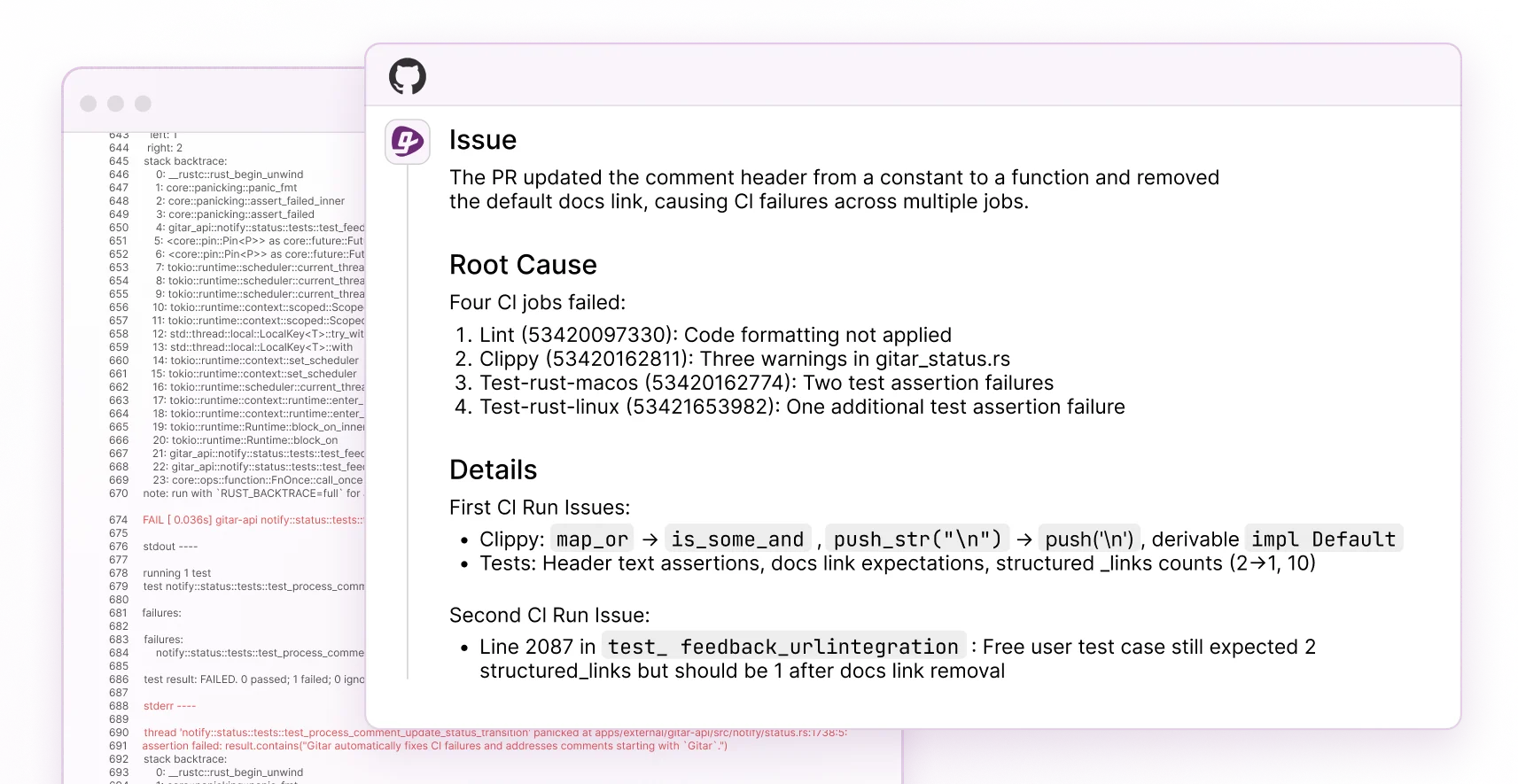
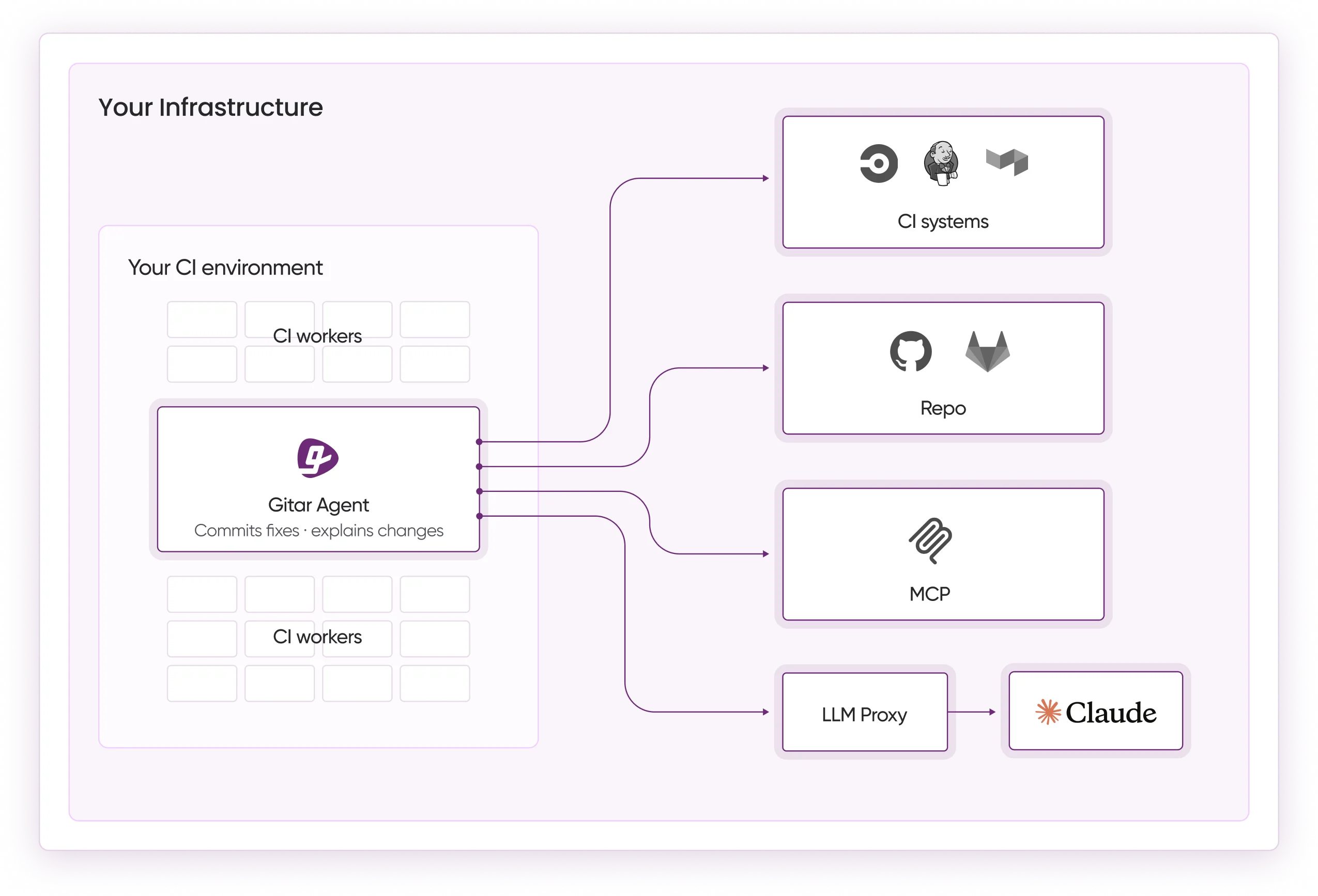
AI coding tools generate code quickly but often introduce bugs that fail CI and slow releases. Gitar’s healing engine analyzes CI failures, generates validated fixes, and commits corrections so builds stay green without constant manual intervention. The 14-day Team Plan trial shows how this automated fixing works in real pipelines.
Pick Your Cursor Alternative and Add Gitar for Stable Builds
The strongest Cursor alternatives for 2026 include Cline for autonomous agentic coding and Continue.dev for flexible model choices. Test two or three tools against your main repositories to see which one fits your stack and team habits. These assistants accelerate coding but still produce mistakes that need cleanup.
Try Gitar’s 14-day Team Plan trial alongside your chosen alternative so its automatic code healing keeps AI-generated changes production-ready instead of stuck behind failing CI.