
Written by: Ali-Reza Adl-Tabatabai, Founder and CEO, Gitar
Key Takeaways for Choosing AI Code Analysis Tools
- 84% of developers use AI coding tools, yet PR review time increased 91% because AI-generated code introduces 1.7× more issues.
- Gitar ranks #1 with comprehensive PR analysis, security scanning, auto-fixes for CI failures, and a 14-day unlimited trial.
- Specialized tools like CodeScene, SonarQube, and TimeComplexity.ai provide focused metrics ranging from behavioral trends to Big O complexity.
- Evaluate tools by metric depth, analysis speed, trial limits, auto-fix capabilities, and CI integrations such as GitHub Actions and GitLab.
- Teams shipping AI-generated code should install Gitar now for automatic CI fixes and higher quality software delivery.
How To Evaluate and Rank AI Code Complexity Tools
Focus on clear criteria when you evaluate AI code complexity tools. Prioritize metric depth such as cyclomatic complexity, maintainability index, and code duplication detection. Add analysis speed and accuracy based on 2026 benchmarks, trial limitations, auto-fix capabilities, CI and CD integrations, setup complexity, and data privacy options.
Test each tool with a sample repository that reflects your real-world mix of clean and problematic code. Track false positive rates, scoring consistency, and how well each platform handles AI-generated code. The most valuable tools combine traditional metrics with AI-enhanced analysis. Gitar leads with CI failure analysis and automatic fixes for CI failures, which separates it from suggestion-only competitors. With these criteria in mind, you can compare the top tools by their impact on review workload and release speed.
Top 8 AI Tools Ranked by Developer Impact
#1 Gitar: AI Code Review with CI Failure Auto-Fixes
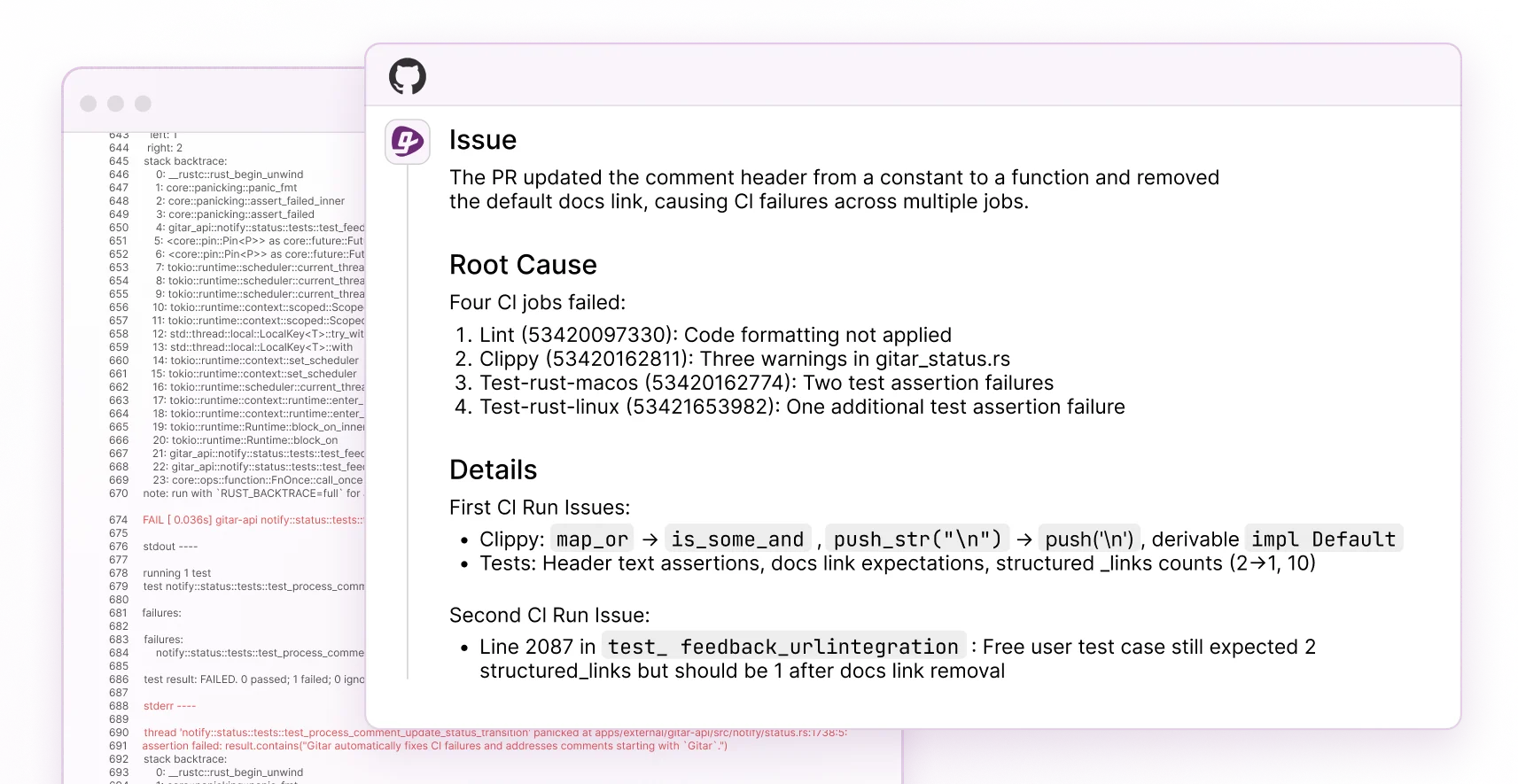
Gitar functions as an AI code review platform that delivers comprehensive PR analysis, security scanning, bug detection, performance review, and auto-fixes for CI failures. Gitar’s CI Failure Analysis deduplicates failures across multiple jobs, surfaces root causes without log diving, and updates information in real time.
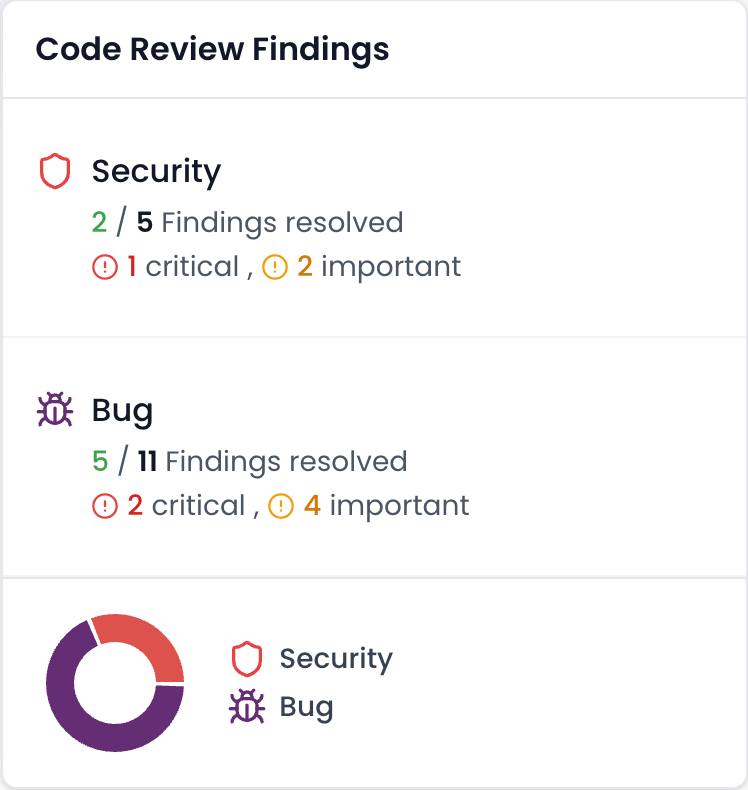
Setup takes 30 seconds via GitHub app installation, which gives teams immediate access to the 14-day Team Plan trial mentioned earlier with unlimited repositories, auto-fix capabilities, and full CI integration across GitHub Actions, GitLab Pipelines, CircleCI, and Buildkite. This quick setup pairs with a streamlined review experience, because Gitar uses a single dashboard comment that consolidates all findings and updates dynamically instead of flooding PRs with many separate comments. Gitar works especially well for teams dealing with AI-generated code that need automated remediation, not just suggestions.
#2 CodeScene: Behavioral Code Health and Hotspot Detection
CodeScene focuses on “Code Health” through behavioral analysis and highlights technical debt hotspots by tracking code evolution patterns over time. The platform predicts defect-prone areas and monitors maintainability trends across releases. CodeScene’s trial access for open-source repositories supports ongoing analysis without additional licensing costs.
The tool also provides insights into developer productivity and code ownership patterns, with AI-powered auto-refactoring available through its ACE add-on. Setup requires repository integration and processing of historical data before insights stabilize. CodeScene fits teams that want long-term code health tracking with workflow integration rather than only per-PR checks.
#3 SonarQube Community Edition with AI Plugins
SonarQube Community Edition (v26.2.0) provides self-hosted static analysis with maintainability metrics across 21 languages, delivering near-zero false positives for code smells and OWASP Top 10 vulnerabilities. The platform assigns A–F maintainability ratings based on cyclomatic complexity, cognitive complexity, and technical debt ratios.
Recent updates include 29 new Python async rules and 85 Rust rules. Setup requires self-hosting infrastructure, which gives complete data sovereignty at the cost of extra operations work. The community edition lacks the advanced AI features and auto-fixes that appear in commercial tiers. SonarQube suits teams with DevOps capacity that prioritize data control and broad language coverage.
#4 TimeComplexity.ai: Big O Runtime and Algorithmic Bottlenecks
TimeComplexity.ai specializes in Big O notation analysis and automatically determines runtime complexity for algorithms. The tool identifies performance bottlenecks and inefficient algorithms that can damage maintainability at scale. The platform supports unlimited analysis for code snippets through a simple paste-based interface.
Its focus stays on algorithmic complexity rather than general maintainability, yet it still provides strong value for performance-critical code. GitHub repository support and GitLab CI and CD integration extend its use into automated complexity monitoring within review workflows.
#5 CodeRabbit: AI Line-by-Line Review Across Multiple Platforms
CodeRabbit delivers AI-driven code review that targets logic errors, readability issues, and maintainability concerns. The platform integrates with GitHub, GitLab, Bitbucket, and Azure DevOps and connects to more than 40 linters and SAST scanners. CodeRabbit offers a free trial with basic PR summaries and Pro plans at $24–30 per user per month.
The tool focuses on surface-level diff-based analysis and shows medium false positive rates in independent tests. It covers many languages but lacks deep codebase understanding and does not provide auto-fix capabilities. CodeRabbit works best for teams that want broad platform support and basic AI review rather than full CI failure remediation.
#6 DeepSource: Static Analysis with Limited Auto-Fixes
DeepSource combines static analysis with targeted auto-fix capabilities for common code smells and security issues. The platform reports quality metrics aligned with industry standards and supports popular languages including Python, JavaScript, and Go. The trial tier includes one private repository and unlimited analysis for public repositories.
Auto-fixes handle straightforward issues such as unused imports and formatting problems but do not address complex maintainability challenges. CI integration provides quality gates, although it lacks the comprehensive failure analysis and remediation that more advanced tools deliver.
#7 PR-Agent: Open-Source Self-Hosted AI Reviewer
PR-Agent (v0.32) offers open-source self-hosted AI code review under AGPL-3.0 with Ollama support for data sovereignty, compatible with GitHub and GitLab. The tool generates PR summaries and maintainability analysis using configurable LLM backends.
Unresolved configuration issues can cause the tool to default to external models despite local endpoint settings, which limits its privacy benefits. Setup complexity and ongoing maintenance requirements make PR-Agent a better fit for teams with dedicated DevOps resources. Unlike PR-Agent’s self-hosted overhead, you can get started with Gitar’s automated CI fixes in about 30 seconds.
#8 Greptile: Context-Aware Repository Analysis
Greptile provides deep full codebase analysis at $30 per developer per month with discounts for annual commitments, but has the highest false positive rate in independent benchmarks. The platform understands repository context and architectural patterns but struggles with accuracy in many real projects.
This context-aware approach shows promise, yet the high false positive rate increases review workload instead of reducing it. Greptile currently supports GitHub and GitLab but does not offer auto-fix capabilities.
Side-by-Side Comparison of AI Code Analysis Tools
The table below highlights how each tool balances metric coverage, trial access, auto-fix depth, and CI integration. Use it to quickly see which platforms reduce review effort and which ones only add more suggestions to your pipeline.
| Tool | Key Metrics | Free Tier Limit | Auto-Fix | CI Integration |
|---|---|---|---|---|
| Gitar | PR analysis, security, bugs, performance | 14-day unlimited trial | Yes | Full (Actions, GitLab, CircleCI) |
| CodeScene | Code Health, hotspots | OSS repositories only | Yes (ACE) | Partial |
| SonarQube | Maintainability Index, cognitive complexity | Community edition | No | Yes |
| TimeComplexity | Big O runtime analysis | Unlimited snippets | No | Yes (GitHub/GitLab) |
| CodeRabbit | Logic, readability | OSS/trial | No | Partial |
Gitar leads in both auto-fix capabilities and comprehensive CI integration, with the quick setup time mentioned earlier standing in stark contrast to the hours required for many self-hosted alternatives.
Key Considerations for Your Development Workflow
Individual developers and small teams often benefit from lightweight tools like TimeComplexity.ai or CodeScene’s open-source tier, which provide basic complexity insights without infrastructure overhead. Larger teams gain more value from platforms like Gitar that combine deep analysis with automated fixes and broad CI integration.
Consider total cost of ownership instead of only subscription pricing. Tools that require self-hosting add infrastructure and maintenance costs, while suggestion-only platforms create ongoing manual work for engineers. Platforms like Gitar reduce this manual effort by automatically fixing CI failures as they occur.
Frequently Asked Questions
What is the difference between AI-powered and traditional static analysis tools?
AI-powered tools such as Gitar use advanced AI for code review and CI analysis, while traditional static analyzers rely on pattern matching and rule-based detection. Modern AI tools understand context, correlate signals across files, and provide actionable insights that static tools often miss.
How should I test code complexity analysis tools before committing?
Start with a representative sample repository that includes both clean and problematic code sections. Evaluate each tool’s ability to identify genuine issues versus false positives, measure analysis speed, and review how actionable the recommendations feel to your team. Pay close attention to how tools handle AI-generated code, which frequently contains subtle complexity issues that traditional metrics overlook.
Which tool offers the strongest trial for AI code review?
Gitar’s 14-day Team Plan trial provides the most comprehensive trial access, including unlimited repositories, auto-fix capabilities, and full CI integration. Competing platforms often restrict trials to open-source projects or limited features, while Gitar’s trial exposes the complete platform so teams can evaluate real impact before purchasing.
How does Gitar compare to CodeRabbit for code complexity analysis?
Gitar delivers both analysis and automatic fixes with comprehensive CI integration, while CodeRabbit focuses on suggestions and comments without implementing fixes. Gitar’s consolidated dashboard approach, described earlier, reduces notification noise, whereas CodeRabbit creates multiple inline comments that can overwhelm reviewers. For teams dealing with AI-generated code complexity, Gitar’s auto-fix capabilities provide immediate value instead of extra review overhead.
Which AI tools work best with GitLab CI pipelines?
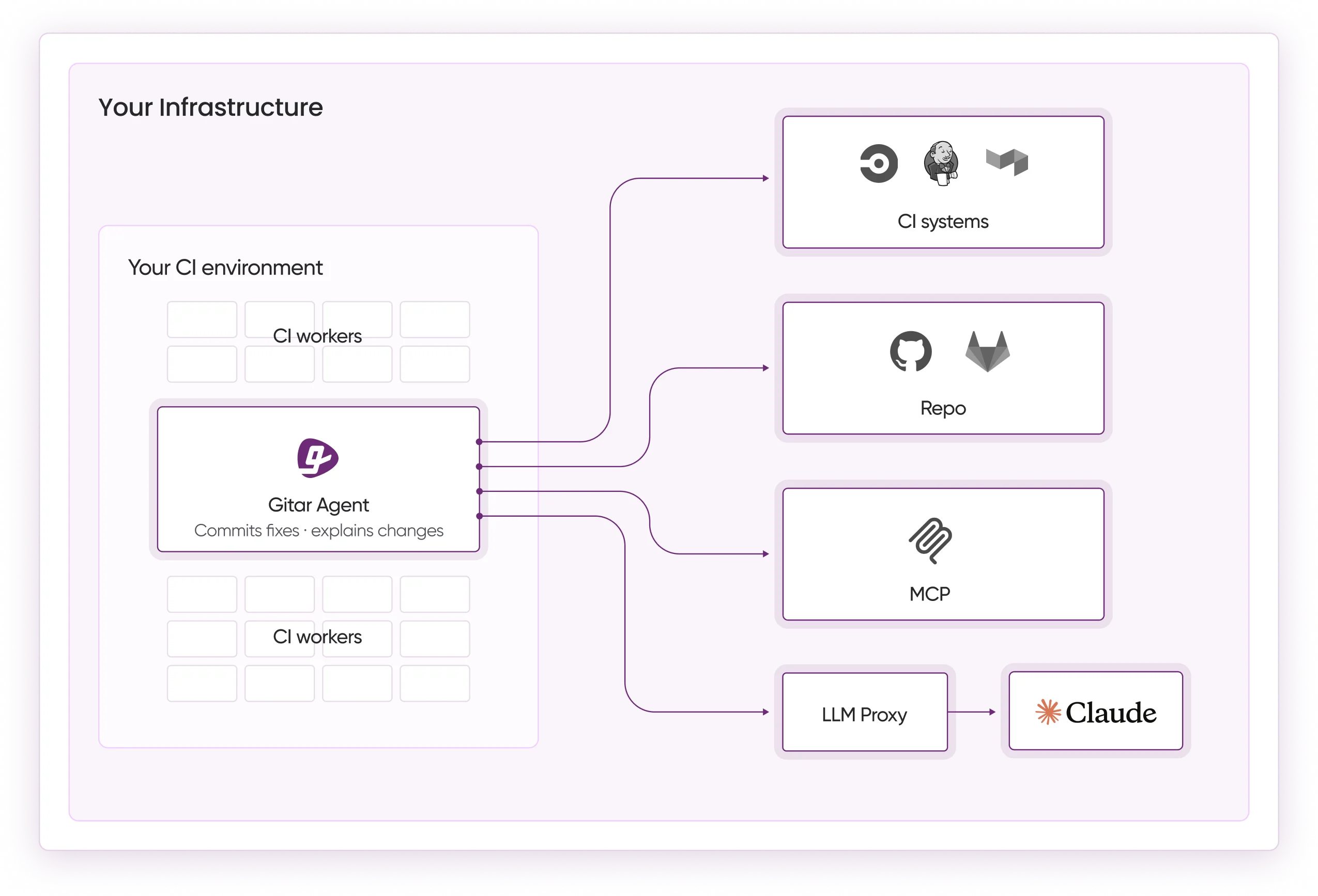
Gitar, SonarQube Community Edition, and PR-Agent all offer native GitLab integration. Gitar provides the most comprehensive GitLab support with automatic CI failure analysis and fixes. SonarQube requires more setup but offers complete self-hosted control, while PR-Agent supplies basic integration at the cost of significant configuration effort.
Conclusion and Practical Next Steps
Modern AI coding practices require tools that move beyond traditional static analysis and address the complexity of AI-generated code. Suggestion-only tools often increase review burden, while platforms with auto-fix capabilities such as Gitar directly relieve the bottlenecks teams face in 2026.
Test shortlisted tools against your actual codebase so you can judge accuracy, noise levels, and integration fit. Prioritize platforms that provide both analysis and remediation, because those tools deliver the strongest return on your code quality investment. Start a 14-day trial of Gitar to experience automated CI fixes across your entire codebase.