
Written by: Ali-Reza Adl-Tabatabai, Founder and CEO, Gitar
Key Takeaways
-
AI coding tools have increased PR review time by 91% because teams must validate large volumes of generated code.
-
Top extensions like Windsurf, Continue.dev, and Cline provide strong context awareness and suggestions but still rely on manual fixes.
-
Gitar stands out with automatic CI healing, direct PR commits, and zero-setup installation that goes beyond traditional extensions.
-
Free tiers introduce manual implementation overhead, limited credits, and shallow analysis that rarely supports production-scale reviews.
-
Teams facing PR bottlenecks can start a 14-day Gitar Team Plan trial for autonomous code review that consistently delivers green builds.
How To Evaluate AI Code Review Extensions for Your Team
Test each extension on a real PR with failing CI checks to measure practical value in production conditions. This approach reveals whether the tool handles real-world complexity or only works on clean demo examples. Focus your accuracy checks on actual lint failures, test breaks, and security issues, since these represent the daily friction your team feels. Keep setup under 5 minutes, because tools that take longer often never reach full adoption. Prioritize repository-level context awareness over file-level analysis, as cross-file understanding separates simple linters from serious review tools. Finally, compare speed for local models versus API calls when your codebase contains sensitive data that must stay inside your infrastructure.
Use 2026 benchmarks as a reference point. DevToolReviews found Continue’s context retrieval 25% more accurate than competitors for architecture questions in large repositories. Always test auto-fix capabilities, because the gap between suggesting and implementing separates real productivity gains from notification spam. Review Gitar’s release notes to see concrete examples of autonomous healing compared to manual suggestion workflows.
9 AI Code Editor Extensions for Code Review in 2026 (Real PRs, Trial Access)
1. Gitar (14-Day Team Plan Trial)
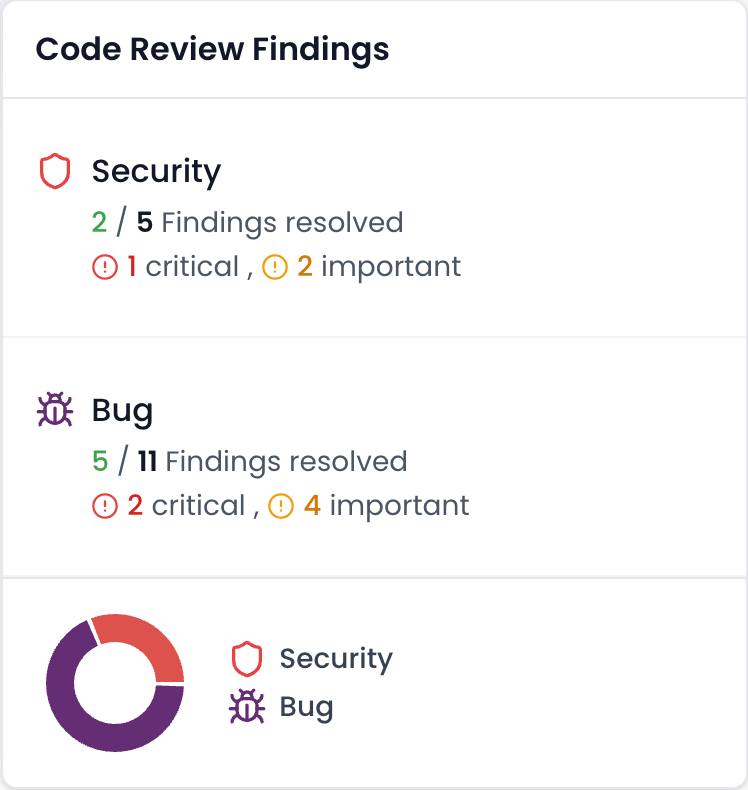
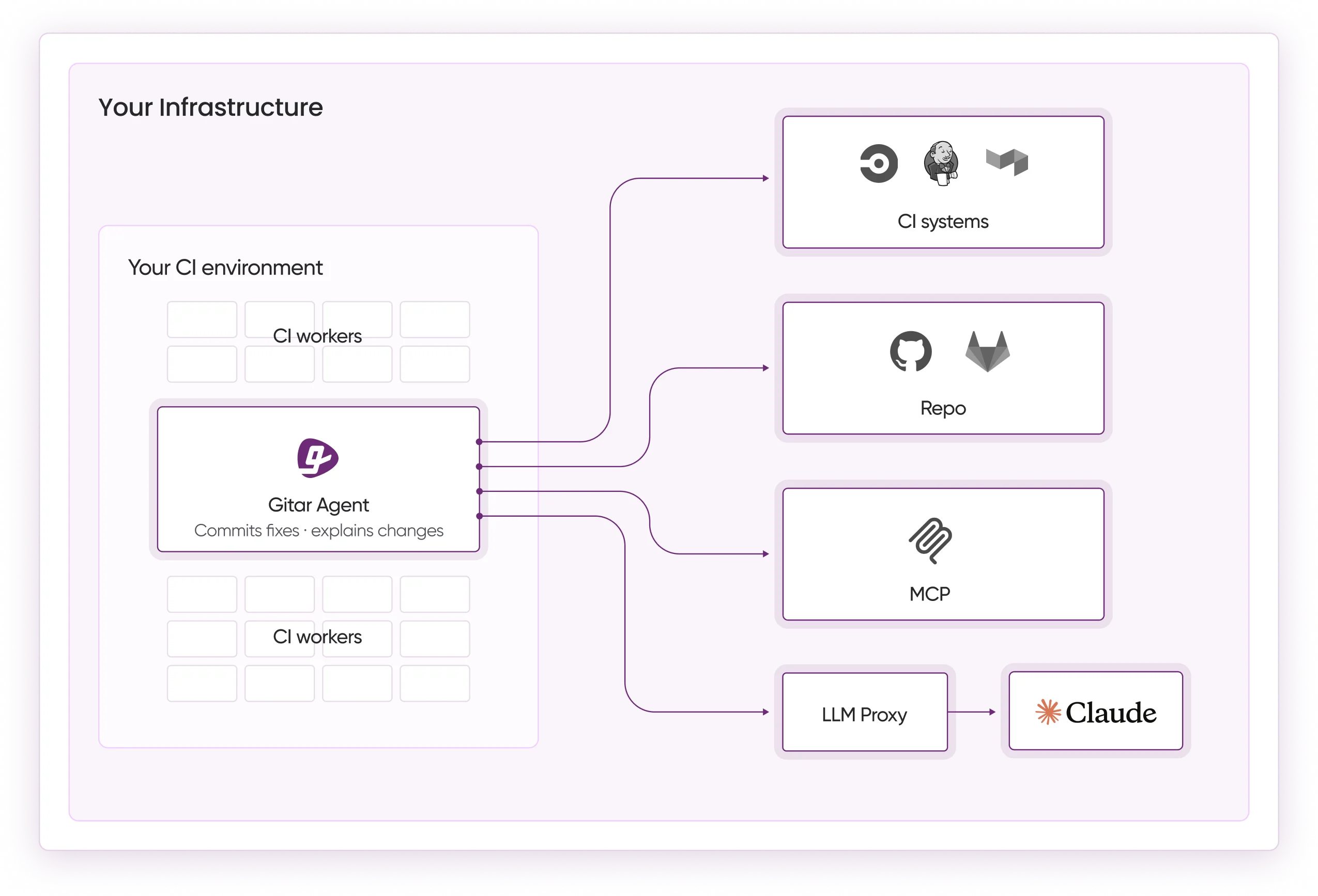
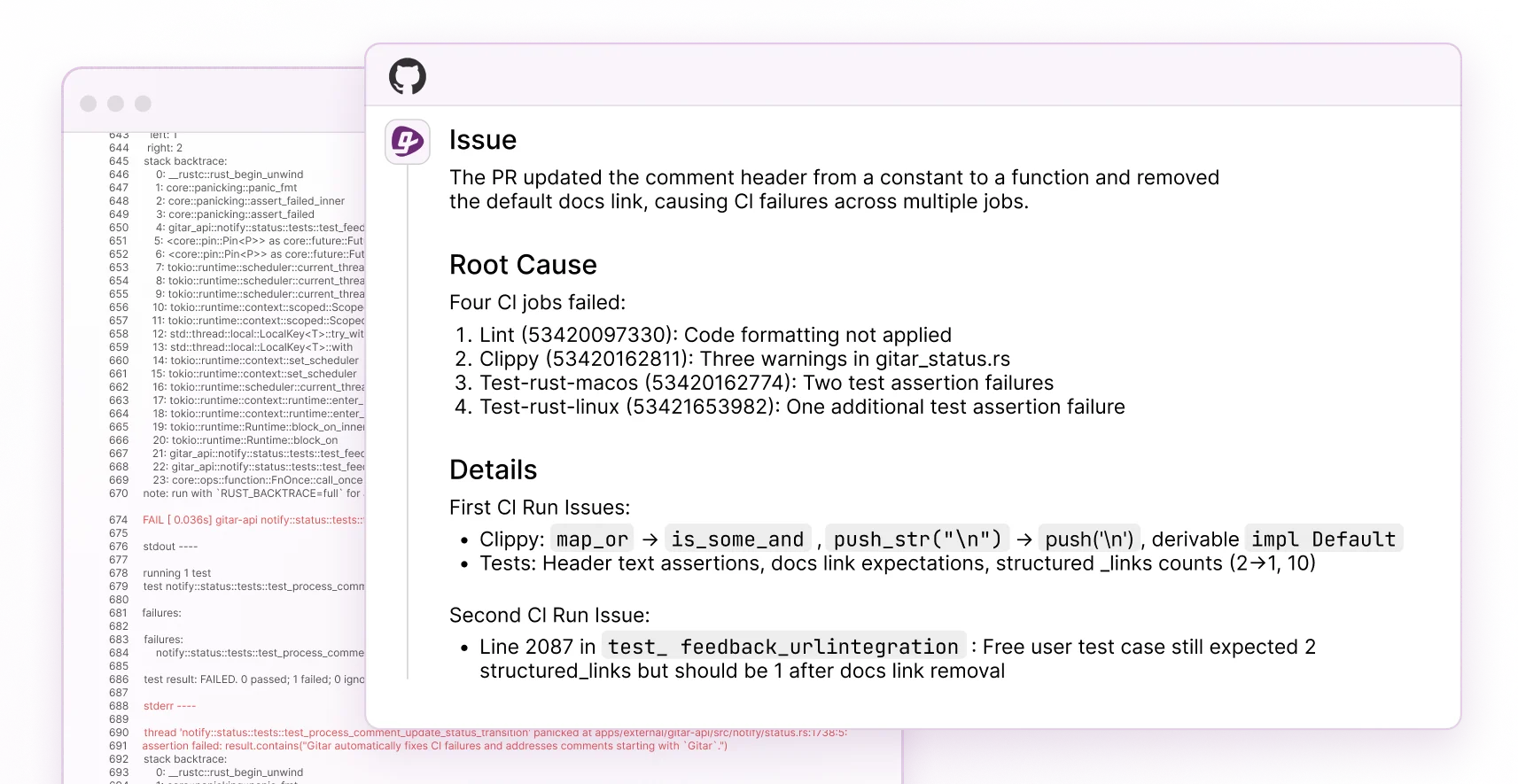
Gitar replaces the extension-only model with a healing engine that automatically fixes CI failures, implements review feedback, and targets green builds. Instead of leaving suggestions in comments, Gitar analyzes failure logs, generates validated fixes, and commits them directly to your PR. The single dashboard comment consolidates all findings and reduces notification spam. Setup uses a one-click GitHub app installation, with no API keys or configuration files. The platform supports GitHub, GitLab, CircleCI, and Buildkite and lets you define natural language workflow rules.
Pros: Autonomous fixes, CI healing, single clean interface, near-zero setup
Best for: Teams drowning in PR bottlenecks that need shipped fixes instead of more comments
Install Gitar now for automatic CI healing and start shipping higher quality software faster.
2. Windsurf (Codeium)
Windsurf provides Cascade memory that retains project context across sessions and multi-file-aware completions that understand entire workspaces. The VS Code-based tool offers 25 Cascade credits monthly alongside unlimited autocomplete and chat. Cascade’s persistent memory supports architectural reviews and cross-file refactoring suggestions. Developers still need to implement every suggested fix manually.
Pros: Persistent context, multi-file awareness, generous trial access
Cons: Suggestions only, no auto-apply, limited monthly Cascade credits
Best for: Architectural reviews that require workspace-wide context
3. Continue.dev
Continue achieves 380ms chat latency and uses local indexing with the Lancet protocol for semantic codebase search. NxCode rated it highly as a customizable option with support for both VS Code and JetBrains. The Apache 2.0 licensed extension can run fully offline with Ollama, which supports privacy-first code review without telemetry.
Pros: Privacy-first, highly customizable, fast local operation
Cons: Requires technical setup and configuration effort
Best for: Privacy-conscious teams with strong internal tooling expertise
4. Cline
Cline has 3.04 million installs and 57.6k GitHub stars, making it the most popular agentic extension. DevToolReviews rated it 8.7/10 for plan-and-act architecture with terminal execution and browser automation. It supports any LLM provider with BYOK and includes a bundled Kimi K2.5 model scoring 76.8% on SWE-bench Verified.
Pros: Agentic capabilities, model flexibility, large community
Cons: Requires more configuration than many paid tools, API costs for premium models
Best for: Developers who want autonomous agents with flexible model choices
5. Claude Code Integration
Claude Code delivers whole-repo context through a 1M token window that maps codebases and traces data flow for comprehensive reviews. It uses CLAUDE.md files for automatic project context and style guide integration. The VS Code plugin provides step-by-step reasoning for refactoring tasks. Access comes through Max or Pro subscriptions or through the API for advanced models.
Pros: Massive context window, architectural understanding, transparent reasoning
Cons: Limited trial access, often requires subscription for full capabilities
Best for: Complex architectural reviews that demand deep codebase understanding
Skip token limits and API math with a trial that includes unlimited analysis during evaluation.
6. Tabnine (Trial Tier)
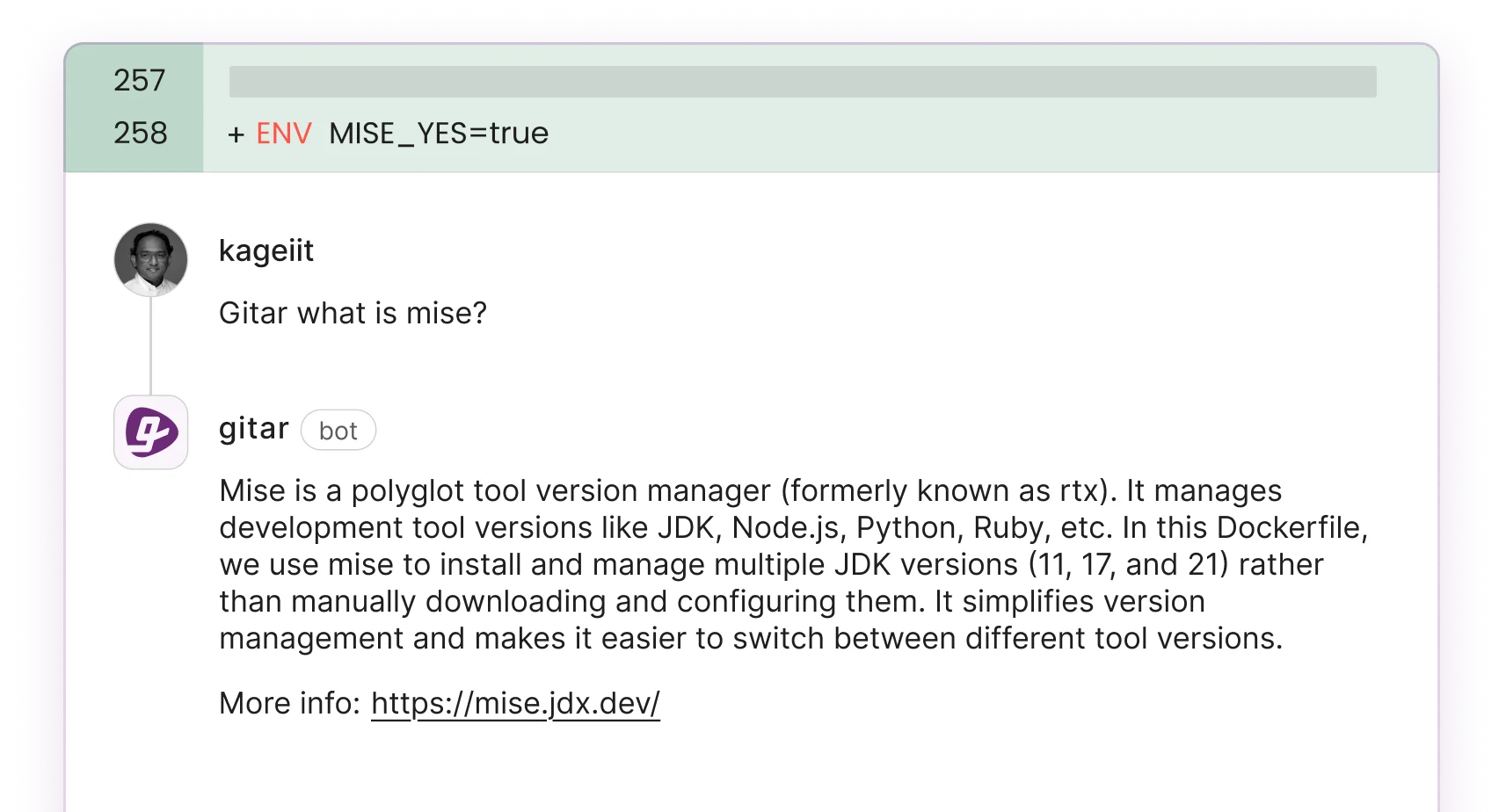
Tabnine’s trial tier focuses on autocomplete with code suggestions, conversational chat, and support for multiple LLMs. The VS Code extension provides local model inference for privacy. It offers only basic contextual review compared to specialized code review platforms. Teams often use it as a coding assistant with light review features.
Pros: Local inference, privacy-focused, simple setup
Cons: Trial tier limits, shallow review analysis
Best for: Basic autocomplete needs with privacy requirements
7. Bito AI
Bito provides chat-based code assistance through VS Code with a constrained trial tier. It offers code explanation and basic review suggestions but lacks the depth required for comprehensive PR analysis. The extension focuses more on learning support and explanation than on production-grade code review.
Pros: Educational focus, chat interface, beginner-friendly experience
Cons: Limited review depth, basic analysis, restricted trial usage
Best for: Learning-focused developers who need code explanations
8. GitHub Copilot (Trial Tier)
GitHub Copilot’s trial tier provides 2,000 completions and 50 chat requests monthly with VS Code integration. These limits can constrain heavy code review workflows. Copilot Code Review features sit behind paid subscriptions.
Pros: Tight VS Code integration, familiar interface, Microsoft ecosystem
Cons: Trial limits, advanced review features require payment
Best for: Occasional autocomplete and light review within Microsoft tooling
9. Aider (Terminal-Based)
Aider operates as an open-source terminal tool supporting Claude 3.5 Sonnet with git-native workflows that make edits and commits automatically. It does not run as a VS Code extension but connects to any editor through the command line. Many developers treat it as an AI pair programmer inside their existing git workflows.
Pros: Git-native workflow, model flexibility, terminal efficiency
Cons: Command-line only, no GUI integration, learning curve for non-CLI users
Best for: Terminal-focused developers comfortable with CLI workflows
Get git-native automation with a visual dashboard and see how autonomous healing removes manual review bottlenecks.
Real Developer Pain Points from Community Discussions
Developer communities consistently report setup failures, privacy concerns, and the ongoing “suggestions not fixes” problem. METR’s 2025 study found AI tools made experienced developers 19% slower because of prompting overhead and cleanup work. Uplevel’s survey of 800 developers reported 41% more bugs in AI-generated code, which demands extensive manual review and rework.
Reddit threads highlight notification spam from chatty extensions and context window limits that trigger constant “summarizing conversation” notices. Gitar’s trial addresses these issues with zero-setup installation, auto-commit configurations, and SOC2 compliance that satisfies enterprise security requirements.
Free AI Code Review Extensions Compared (2026 Benchmarks)
The table below shows the gap between suggestion-based extensions and autonomous platforms, with Gitar as the only option combining auto-fix, CI healing, and one-click setup.
|
Tool |
Auto-Fix |
CI Integration |
Setup Time |
Best For |
|---|---|---|---|---|
|
Gitar (Trial) |
Yes |
Full healing |
1-click |
Autonomous fixes |
|
Windsurf |
No |
None |
5 min |
Context retention |
|
Continue.dev |
No |
None |
15 min |
Privacy/customization |
|
Cline |
Limited |
Terminal only |
10 min |
Agentic workflows |
Limits of Trial Extensions and Scaling to Production Reviews
Trial extensions often create a 30% time waste through manual implementation overhead. LinearB’s analysis of 8.1 million PRs found AI-generated PRs have only 32.7% acceptance rates compared to 84.4% for manual code, which highlights quality issues that extensions fail to catch.
Extensions lack organizational rules, Jira integration, and CI healing capabilities. Gitar’s platform approach, including the one-click setup described earlier, provides natural language rules, Slack notifications, and green build guarantees. You can test the difference by running your team’s most problematic PR through the trial and measuring velocity improvements. Review Gitar’s approach to eliminating comment spam for production-ready review workflows.
Let Gitar handle implementation; the same 14-day trial includes full auto-fix capabilities for real-world testing.
Frequently Asked Questions
What is the best AI extension for VS Code code review in 2026?
Gitar’s 14-day Team Plan trial offers the most complete solution, with autonomous fixes, CI healing, and zero setup. For teams that prefer traditional extensions, Windsurf balances context awareness with accessible trial access, while Continue.dev serves privacy-focused teams willing to invest setup time.
How do 2026 AI models improve code review capabilities?
Claude 3.5 Sonnet and newer models deliver stronger architectural understanding and better context retention than 2025 versions. The major leap comes from platforms like Gitar that validate fixes against real CI environments instead of only generating more sophisticated suggestions.
Can trial extensions handle the 2026 AI-generated code flood?
Most trial extensions struggle with the volume and quality issues created by AI-generated code. They lack organizational rules and automated workflows for high-volume PR processing. Gitar’s trial provides enterprise-grade automation specifically designed for AI-era development workflows.
How do I test auto-fix capabilities safely?
Begin with suggestion mode where you approve each fix manually. Gitar offers configurable automation levels, so you can start with lint fixes and then expand to test failures as trust grows. The platform validates all fixes against your actual CI environment before applying changes.
What are the limits of trial access for these tools?
Gitar’s 14-day Team Plan trial includes full access to auto-fix, custom rules, and all integrations without seat limits. This window lets you evaluate autonomous review capabilities across your real workflow before committing to paid plans. Most extensions provide permanently available trial tiers with significant feature restrictions.
Conclusion and Next Steps for Your Code Reviews
The leading AI code review tools in 2026 range from basic autocomplete helpers like Tabnine to sophisticated agentic systems like Cline. Only Gitar’s trial platform currently delivers autonomous fixes that remove manual bottlenecks instead of adding more comments. Extensions suggest, while platforms heal.
Transform suggestions into shipped code by starting your 14-day Gitar Team Plan trial and modernizing your review workflow with autonomous healing.