
Static analysis tools often slow down developers by requiring manual fixes for identified issues, causing context switching and delayed merges. This article highlights the challenges of traditional static analysis and AI suggestion tools, then introduces Gitar, a solution that autonomously resolves CI failures and streamlines code reviews for a smoother development process.
Why Static Analysis Slows Down Development
Static analysis tools are critical for maintaining code quality, but they often hinder productivity. While effective at detecting issues, they leave the time-consuming task of fixing problems to developers, creating inefficiencies across teams.
Facing Alert Overload and False Positives
One major issue with static analysis is the high number of false positives developers must address. Many alerts are irrelevant, wasting time and leading to alert fatigue where important issues might be overlooked. Developers often face vague alerts like ‘Possible SQL Injection,’ causing decision fatigue and difficulty prioritizing critical findings.
These tools struggle to grasp complex business logic or data flows, resulting in either too many alerts or missed problems. Resolving issues tied to intricate logic or context-specific bugs becomes a persistent challenge. This creates a frustrating cycle of wasted effort or overlooked risks.
Struggling with Manual Fixes and Hidden Work
Traditional static analysis tools focus on spotting issues but offer no solutions, placing the burden of research and fixes on developers. Developers must manually investigate and address each reported issue. This process often takes 30 to 60 minutes per fix, pulling them away from focused, creative work.
Switching tasks to handle these fixes disrupts flow state, a productive mental zone that takes time to rebuild after interruptions. Rushed fixes under pressure can also introduce errors or technical debt, compounding the problem over time.
Dealing with CI/CD Delays from Static Analysis
CI/CD pipelines are essential for speed, yet static analysis often slows them down. Excessive false positives in CI lead to lengthy manual reviews. Scans for large projects increase wait times and delay feedback.
For distributed teams, a CI failure discovered overnight can stall progress for an entire day. Multiple iterations to resolve issues further consume time and resources, blocking team workflows.
Overcoming Limitations Beyond Compilable Code
Static analysis has notable gaps in effectiveness. It misses runtime issues like memory leaks or race conditions. Non-compilable code or missing dependencies limit its usefulness in large or legacy systems.
Complex codebases with intricate dependencies or hardware interactions are especially challenging. Static-only approaches fall short in these environments. The need for compilable code adds friction in projects with incomplete setups. A more comprehensive solution is needed to address these gaps.
Install Gitar now to automatically fix broken builds and ship quality software faster
Meet Gitar: Your Solution for Autonomous CI Fixes
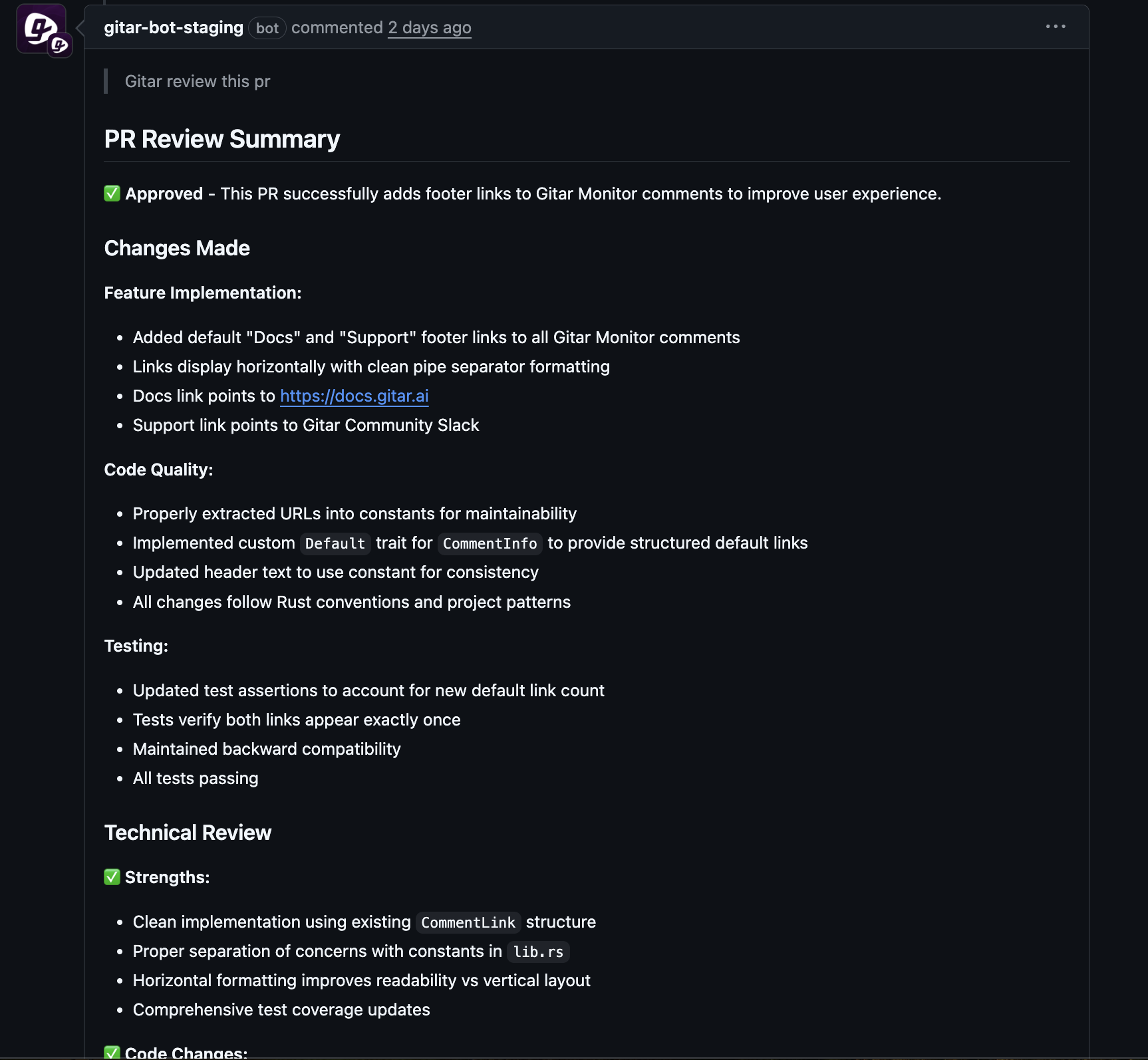
Gitar shifts static analysis from a manual burden to an automated process. Unlike tools that only flag issues, Gitar acts as a healing engine, diagnosing and fixing CI failures and code review feedback without developer input.

When a CI pipeline fails due to errors like linting or test issues, Gitar steps in to analyze the problem, apply a fix, commit the change, and update the pull request, all in the background. Here’s what makes Gitar stand out:
- Complete Automation: Fixes issues, validates against CI workflows, and ensures pull requests pass all checks, ready for merge.
- Environment Accuracy: Mirrors complex setups with specific JDK versions and dependencies for reliable fixes.
- Code Review Support: Handles reviewer feedback by implementing changes directly from comments, speeding up cycles.
- Flexible Trust Options: Offers a cautious mode with developer approval for fixes or a direct mode with rollback options.
- Wide CI Compatibility: Works with GitHub Actions, GitLab CI, CircleCI, BuildKite, and more for easy integration.
Gitar focuses on delivering ready-to-use solutions, not just pointing out problems. This ensures builds pass and pull requests move forward without delays.
See Gitar in action. Book a demo today
How Gitar Turns Static Analysis into Automatic Fixes
Gitar redefines static analysis by not just detecting issues but resolving them fully. This approach tackles the core frustrations developers face with traditional tools.
Eliminating Context Switching with Automated Fixes
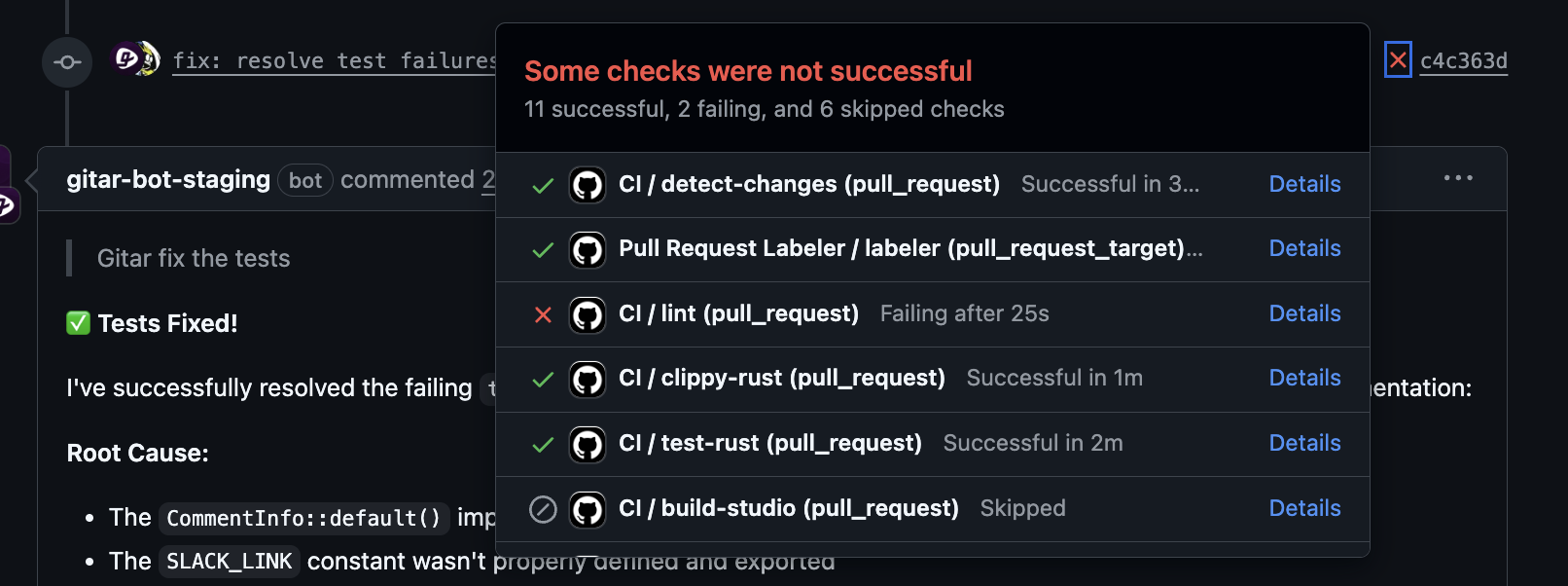
Gitar stops the constant interruptions caused by CI failures and feedback. Enforcing code consistency and preventing bugs often requires manual effort at inconvenient times. With Gitar, a failing lint error is fixed and committed automatically, notifying developers only when the pull request is ready.
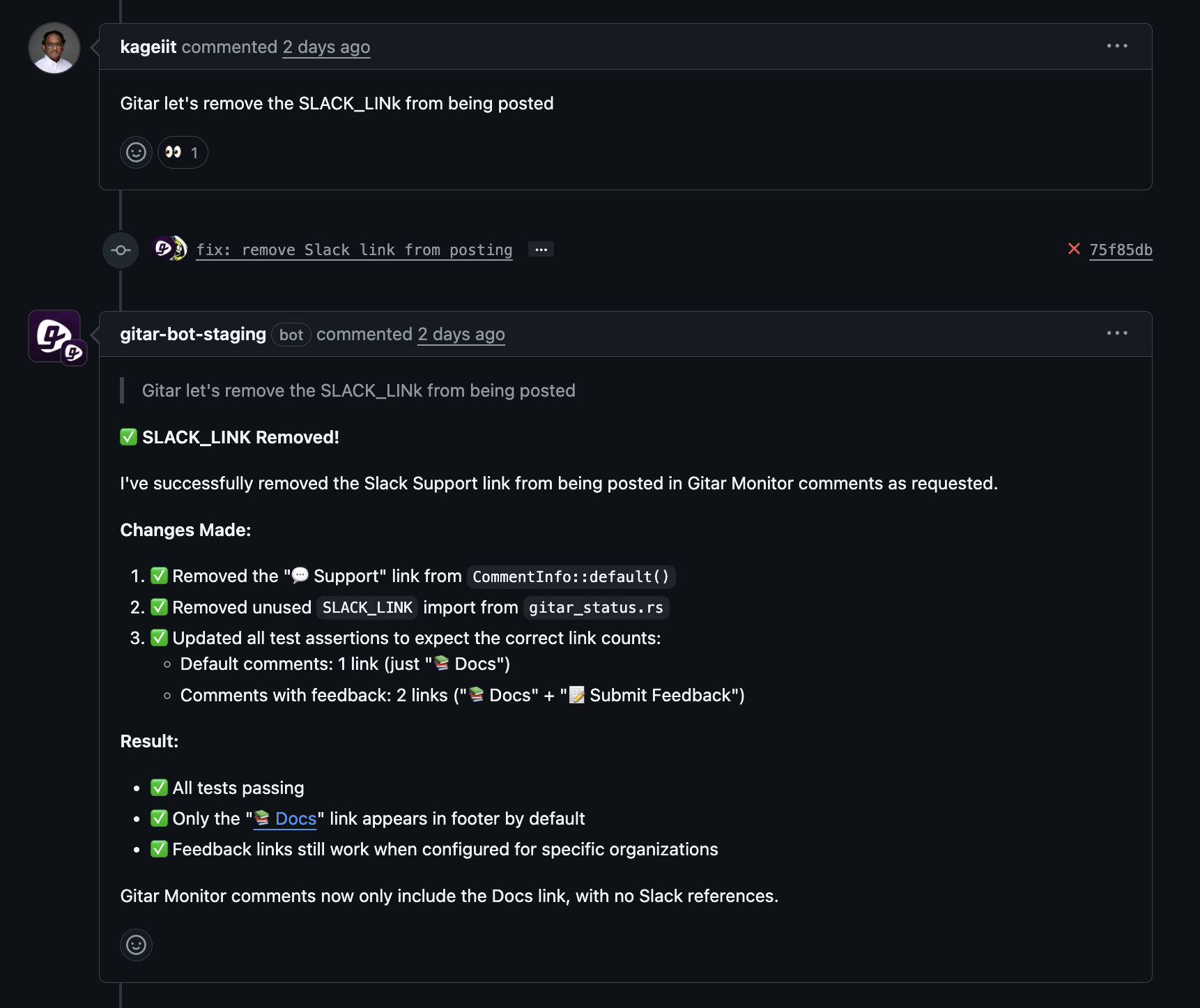
This extends to code reviews as well. Reviewers can leave instructions, and Gitar applies the changes with clear explanations, reducing back-and-forth. Maintaining focus becomes easier when routine fixes don’t disrupt deep work.
Ensuring Passing CI Builds Every Time
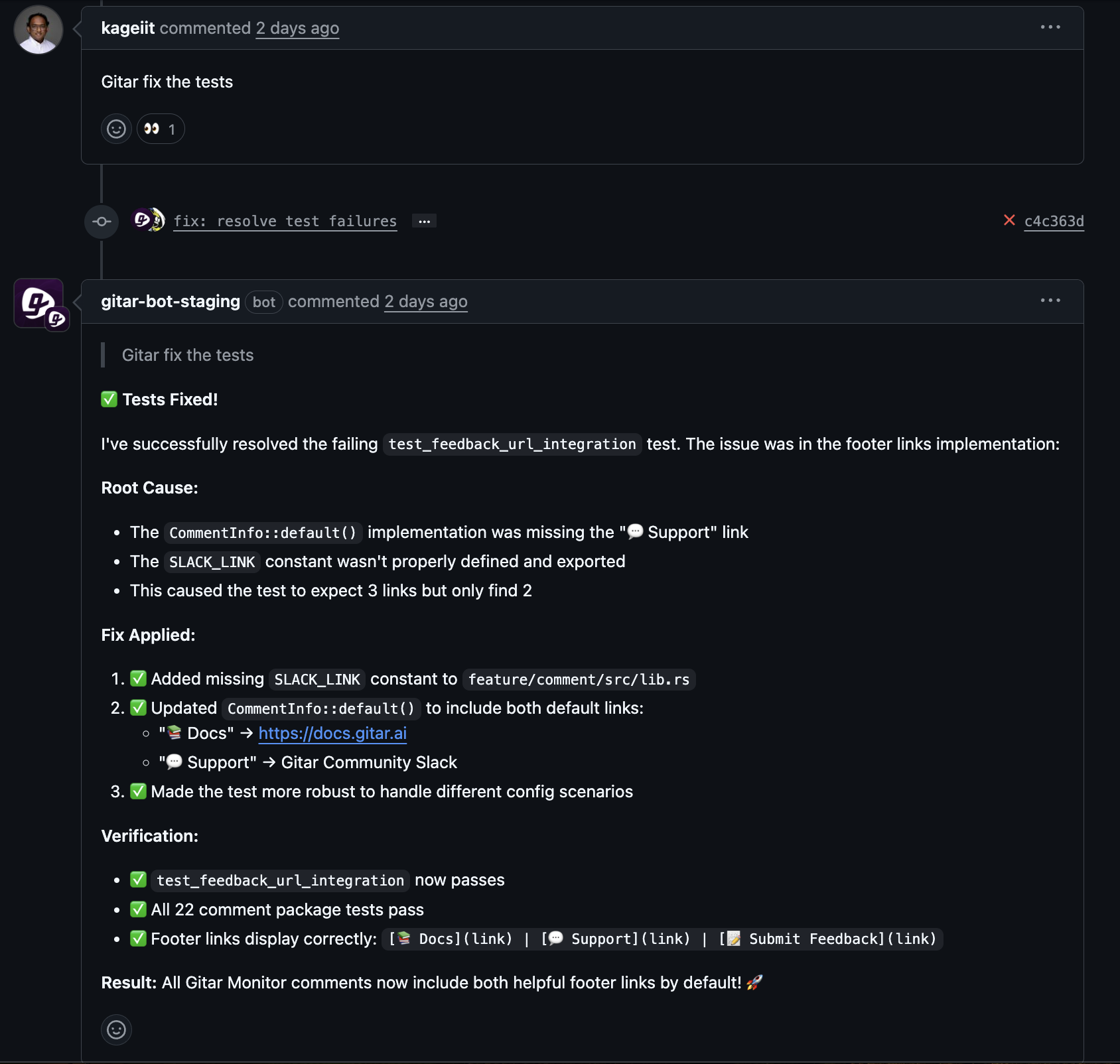
With traditional tools, a fix might create new issues, leading to repeated CI failures. Gitar avoids this by replicating the full build environment, testing fixes, and confirming all checks pass before committing. This creates a self-healing CI process where failures are corrected automatically.
Developers gain confidence pushing code, knowing Gitar will handle any issues. For platform engineers, this means less time troubleshooting and more focus on improving systems.
Speeding Up Merges and Team Progress
Gitar cuts delays at every stage, from initial CI checks to final merges. By passing automated checks early, reviews focus on logic, not formatting. For distributed teams, changes can be applied instantly, avoiding overnight delays.
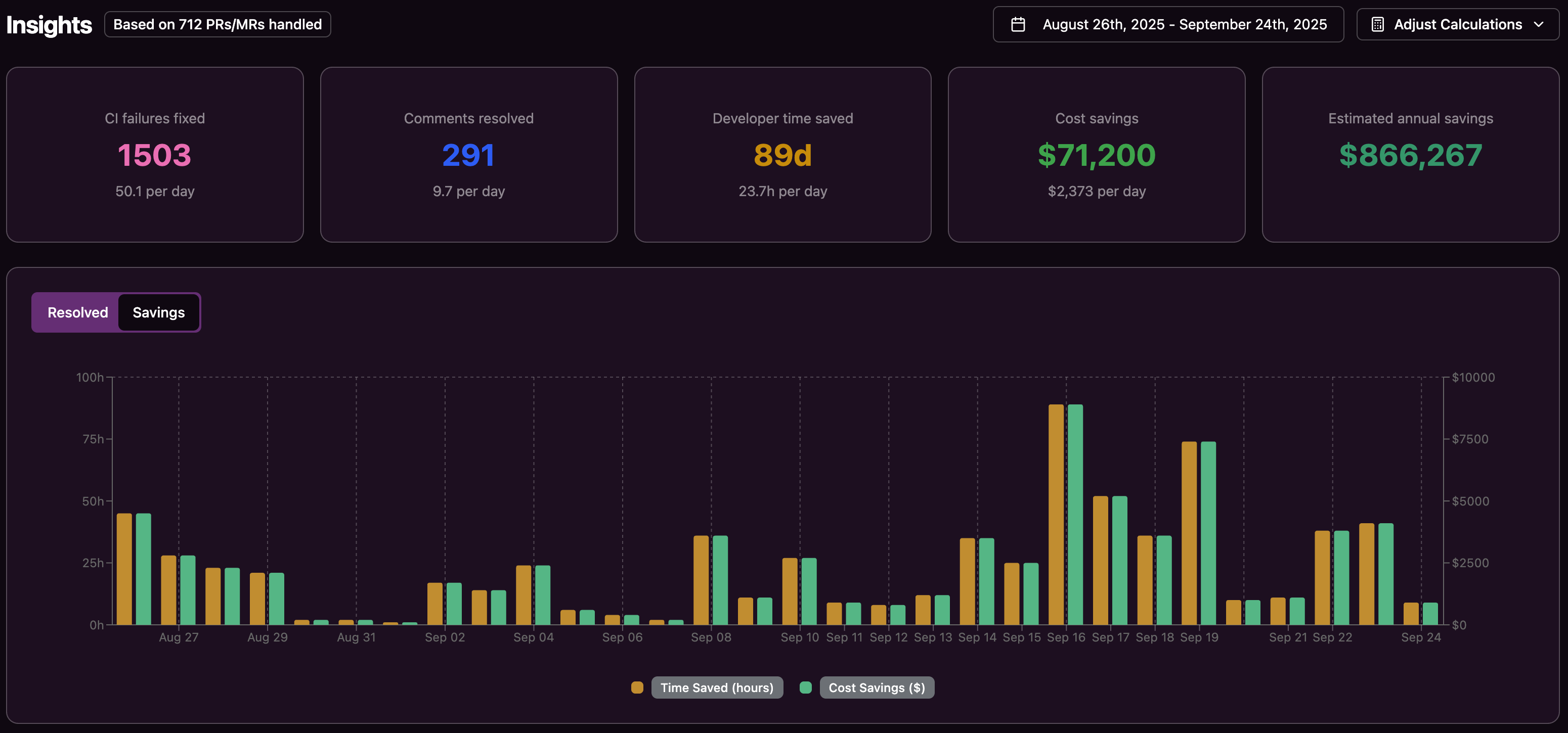
For leaders, the impact on metrics like cycle time and deployment frequency is clear. A mid-sized team could save thousands of hours yearly on CI and review tasks, translating to significant cost savings and better morale.
Building Confidence in Automated Fixes
Gitar offers a gradual approach to automation. Start with a mode where fixes need approval, allowing teams to verify changes. As trust grows, switch to full automation with rollback options if needed.
Detailed logs and analytics show what Gitar fixes and its impact on speed, helping teams understand and rely on its capabilities over time.
Healing vs. Suggesting: A Better Fix for CI Issues
Gitar’s healing engine goes beyond suggestion tools. While others recommend fixes for developers to apply, Gitar handles everything from fix to validation. For a lint error, it applies the change, tests it in the full CI setup, and commits, unlike tools that leave the work to you.
Here’s how Gitar compares:
|
Feature |
Gitar (Healing Engine) |
AI Code Reviewers |
On-Demand AI Fixers |
|
Action |
Fixes, validates, commits automatically |
Suggests changes |
Suggests fixes on demand |
|
CI Validation |
Ensures passing CI builds |
No CI validation |
No CI validation |
|
Environment Context |
Replicates full enterprise setups |
Limited context |
Limited context |
|
Autonomy |
High, with configurable options |
Low, needs human input |
Low, manually triggered |
This complete approach removes the gap between spotting an issue and fixing it, letting developers focus on meaningful tasks.
Ready for autonomous CI fixes? Install Gitar now to ship quality software faster
Common Questions About Autonomous CI Fixes
How Does Gitar Manage False Positives?
Gitar focuses on delivering tested fixes for CI issues, applying minimal changes to meet requirements without altering functionality. This keeps pipelines passing and reduces manual workload.
Why Choose Gitar Over Existing AI Review Tools?
Tools like CodeRabbit or Claude offer suggestions, but Gitar goes further by applying and validating fixes across your CI workflow, ensuring builds pass without extra effort.
Can Gitar Handle Complex CI Setups?
Gitar is built to match unique environments, including specific dependencies and SDK versions, ensuring fixes fit your exact workflow.
How Do We Trust Gitar’s Automated Fixes?
Gitar offers control with configurable settings. Start with approval for each fix, maintaining full oversight until you’re ready for more automation.
What If Gitar Can’t Fix an Issue?
If an issue is outside Gitar’s scope, it provides detailed context and logs of attempted fixes. This gives developers a clear starting point for manual resolution, avoiding wasted effort.
Conclusion: Step Into Autonomous CI Fixes
Manual static analysis fixes are becoming outdated. These tools highlight issues but burden developers with resolution, breaking focus and slowing teams down.
Gitar moves beyond suggestions to deliver full fixes automatically. This shift boosts developer focus, improves CI reliability, and accelerates delivery, benefiting entire teams with measurable gains in speed and satisfaction.
Adopting autonomous fixes now positions your team ahead. The capability to streamline CI and reviews exists today with Gitar.
Ready to boost your development speed with autonomous CI fixes? Request a demo with Gitar today and keep your pipelines running smoothly.