
Repetitive code patterns, CI/CD failures, and manual fixes for code review feedback drain countless hours from engineering teams. These issues slow down deliveries, pile up technical debt, and frustrate developers. This article dives into how AI-driven automation, specifically with Gitar, tackles these pain points by streamlining workflows and cutting down on mundane tasks. Learn how this tool can help your team ship better software faster.
Why Repetitive Code and Manual Fixes Hurt Your Team
Software development today faces a hidden efficiency crisis. Even with tools that speed up code writing, new hurdles emerge in testing, reviewing, and merging code. These delays add up, eating into productivity and focus.
Developer Frustration from Constant Interruptions
Picture this: you submit a pull request, expecting smooth sailing, only to face a flood of CI failures. A missing dependency breaks the build, a test fails over outdated data, or a linter flags minor style issues. Fixing these involves poring over error logs, switching back to your local setup, applying small changes, and waiting for the pipeline to rerun.
This process doesn’t just take time. It disrupts your focus, turning quick fixes into hour-long distractions. Studies show that developers lose up to 30% of their workday on CI and review issues. Constant interruptions kill the mental flow needed for complex coding tasks.
Delays from Faster Code Generation
AI tools have sped up coding, but they’ve shifted the bottleneck to validation and merging. As developers produce more code, pull requests pile up, tests multiply, and CI failures become more frequent. Repetitive patterns in AI-generated code often add to this complexity, with boilerplate structures hiding long-term maintenance challenges. The result is a growing backlog of fixes and reviews.
Challenges for Distributed Teams
Time zone differences make code reviews even tougher for global teams. A developer in one region might wait days for feedback from a teammate halfway across the world. Traditional AI tools that only suggest fixes add extra steps, requiring manual work that prolongs the cycle. This delay forces developers to revisit old code, wasting time regaining context for minor updates.
Financial Strain on Organizations
These inefficiencies carry a steep cost. For a 20-person team losing just one hour daily to CI and review issues, that’s 5,000 hours a year. At $200 per hour, it adds up to $1 million in lost productivity. This doesn’t include delayed releases, growing technical debt, or team burnout. Code duplication further raises costs by complicating maintenance, with higher risks of bugs in CI/CD pipelines. Try Gitar now to automate these repetitive tasks and recover lost time.
Meet Gitar: Your Solution for Automated CI Fixes
Gitar changes the game by moving past mere suggestions to fully automated fixes. Unlike other tools, it resolves CI issues, validates solutions in your workflow, and delivers ready-to-merge pull requests, saving developers from tedious manual work.

What Gitar Offers for Streamlined Workflows
Gitar’s capabilities focus on saving time and reducing frustration. Here’s how it helps:
- Complete Fix Automation: When CI fails, Gitar analyzes errors, identifies causes, applies fixes, and validates them across your pipeline, covering linting errors, test issues, and more.
- Accurate Environment Matching: It mirrors complex enterprise setups, including specific software versions and third-party scans, ensuring fixes work in your real workflow.
- Smart Code Review Support: Reviewers can prompt Gitar to handle feedback or initial reviews, turning comments into direct code updates without manual effort.
- Flexible Trust Options: Start with fixes as suggestions for approval, then shift to automatic commits with rollback options as you gain confidence in the tool.
- Wide Platform Compatibility: Gitar works across GitHub Actions, GitLab CI, CircleCI, and others, fitting into your existing systems with ease.
See how Gitar can improve your workflow with a quick demo.
How Gitar Builds a Hands-Off Development Process
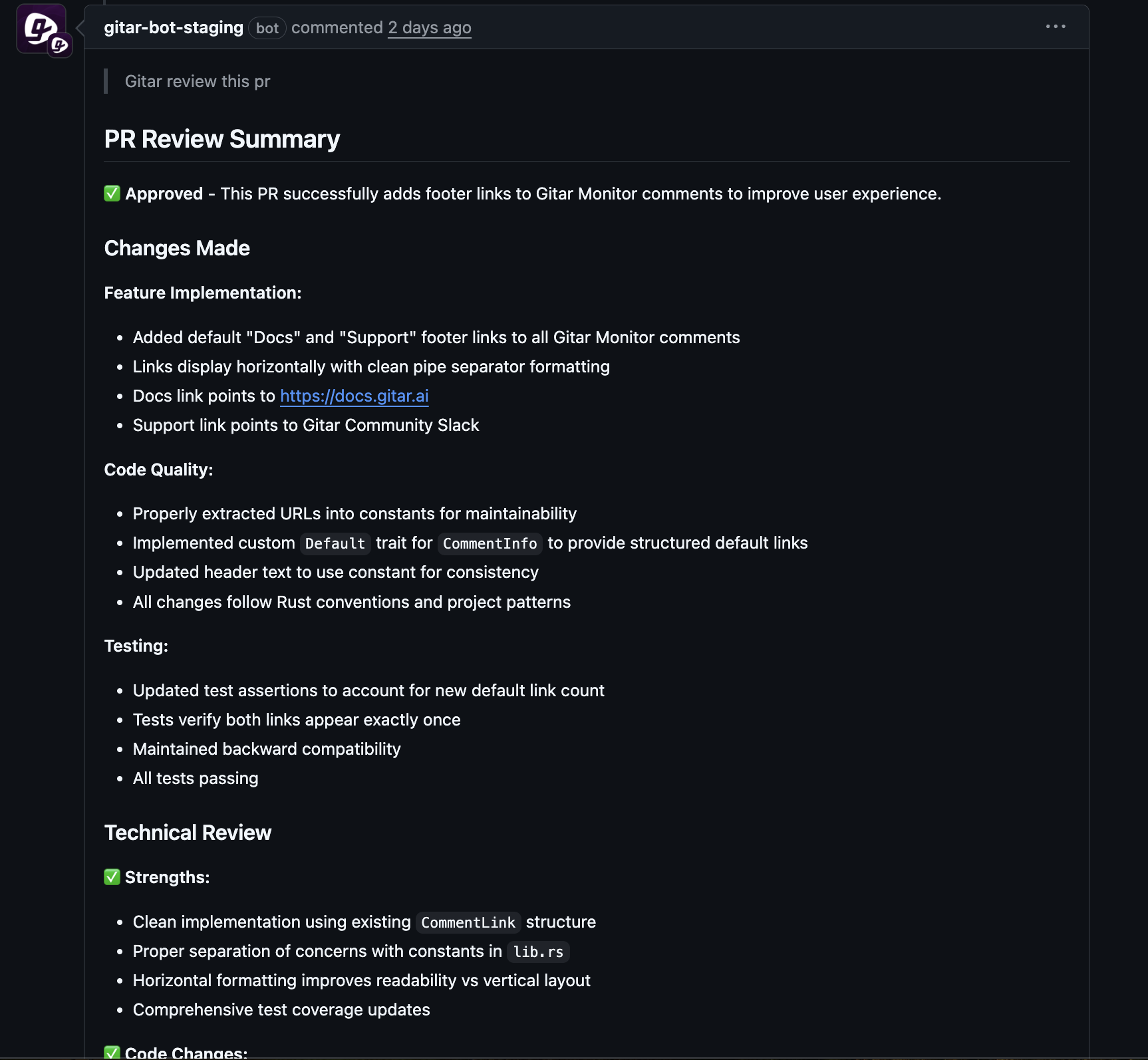
Manual fixes for CI failures and review feedback slow teams down. Gitar automates these tasks, letting developers focus on building features instead of debugging.
Fixing CI/CD Issues Automatically
Many CI failures follow common patterns ideal for automation. Gitar handles these efficiently:
- Style and Linting Errors: It corrects formatting issues instantly to clear build failures.
- Build and Dependency Glitches: Gitar updates configurations to resolve missing packages or version conflicts.
- Test Problems: It fixes failing tests, like outdated snapshots, while preserving coverage.
Unlike basic tools, Gitar tests fixes in your full CI setup, ensuring they hold up under real conditions with all dependencies in place.
Handling Code Review Feedback Without Delay
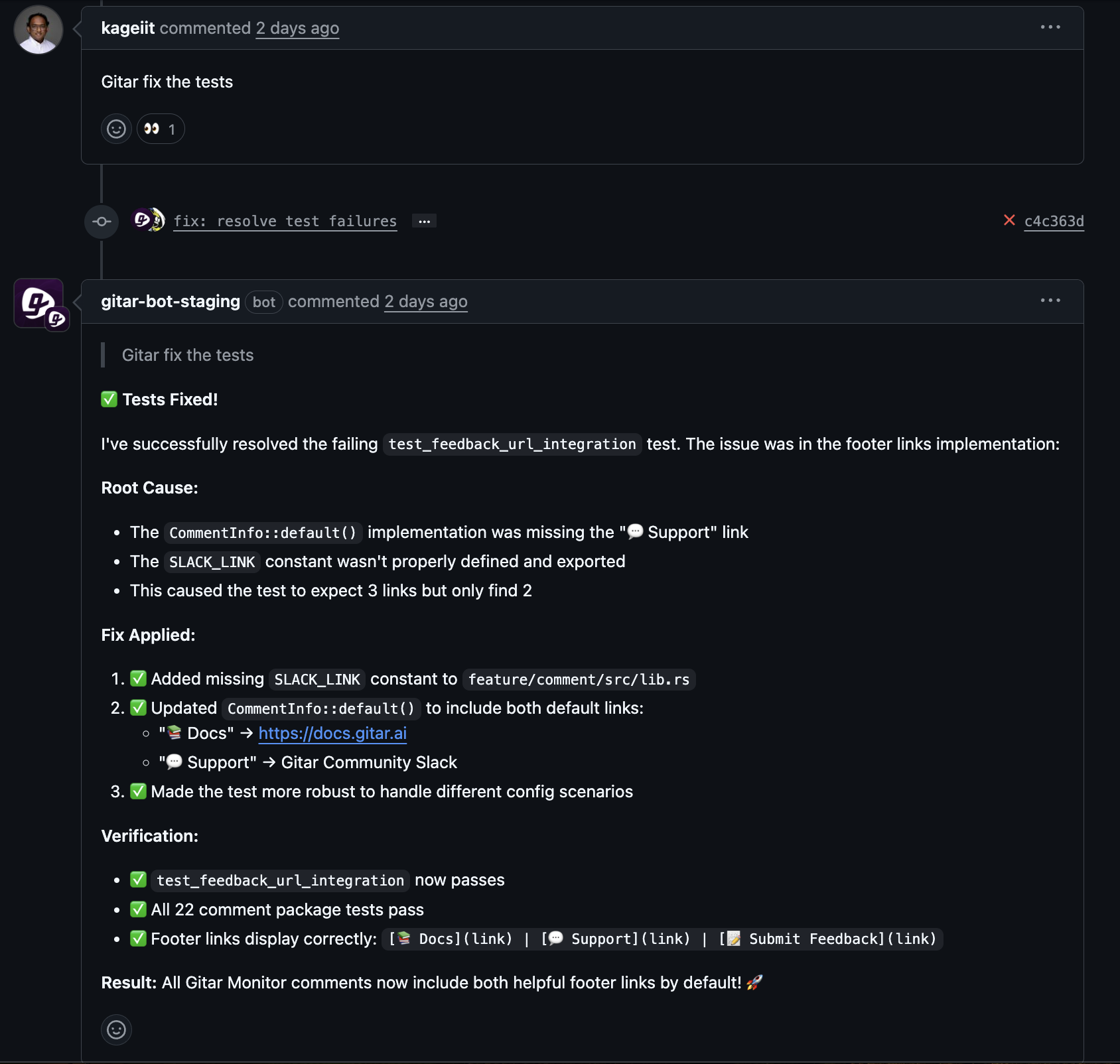
Implementing feedback manually creates unnecessary bottlenecks. Gitar interprets reviewer comments and applies changes directly. For example, if a reviewer requests a feature removal, Gitar deletes the code and explains the update in a commit. This cuts out context switches for the original developer. For distributed teams, it’s a game-changer, resolving feedback overnight so PRs are ready by the next workday.
Addressing Delays in Code Validation
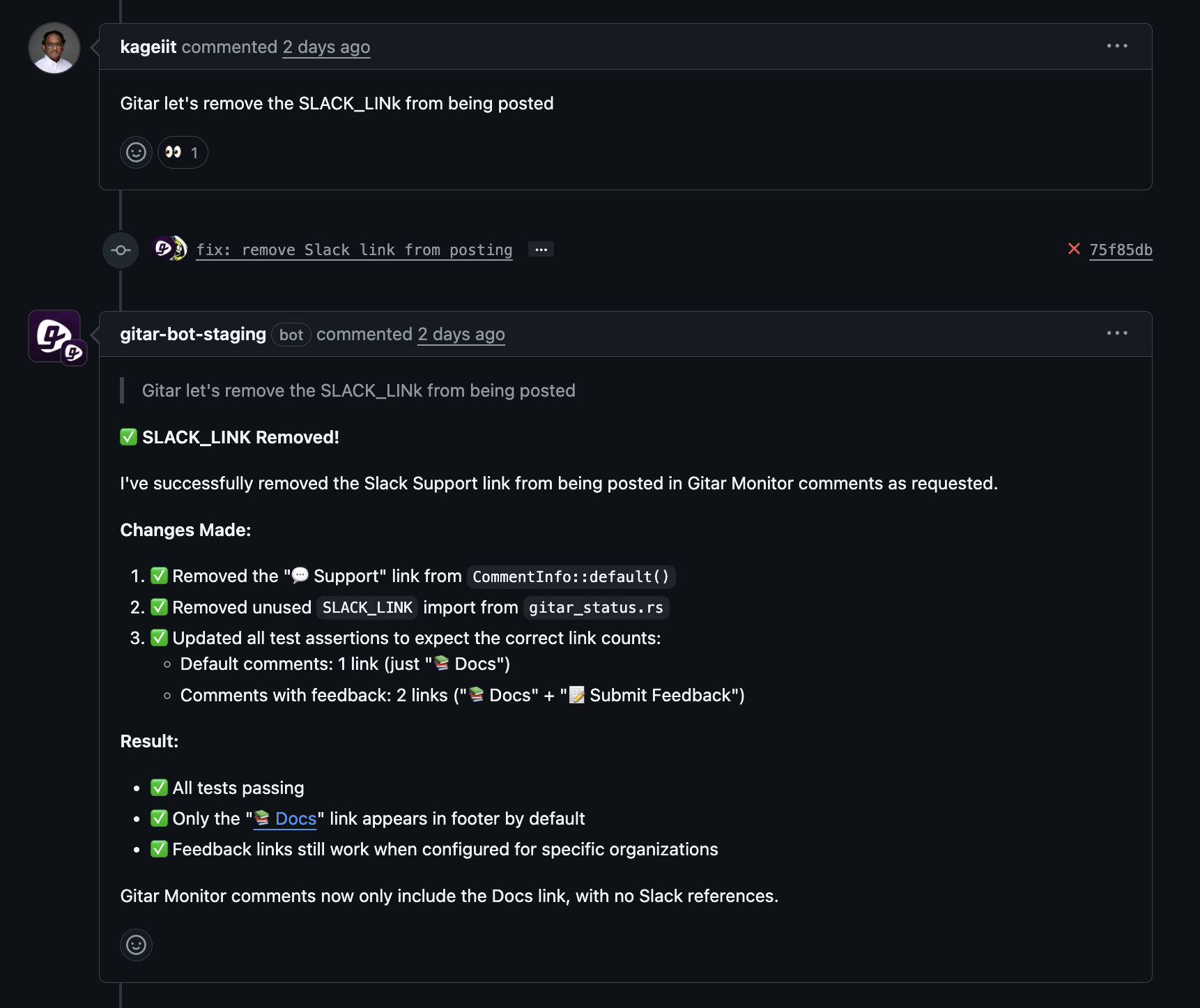
AI coding tools generate more code, but validating it remains a hurdle. Gitar automates this step, ensuring CI checks pass without developer intervention. This speeds up integration and keeps projects moving forward.
Why Gitar Outshines Suggestion-Only Tools
Most AI tools suggest fixes but leave the hard work to developers. Gitar goes further by applying and testing solutions itself, acting as a true fix engine rather than just an advisor.
Standard tools stop at recommendations, requiring manual effort to implement and verify changes. Gitar cuts this step out, handling integration in complex CI setups so developers stay focused on their primary tasks.
|
Feature |
Gitar (Automated Fixes) |
AI Code Reviewers (e.g., CodeRabbit) |
On-Demand AI Fixers (e.g., Claude GitHub Action) |
|
Fix Application |
Automatic, Tested Commits |
Suggestions Only |
Suggestions Only |
|
Environment Context |
Full Enterprise Setup |
Not Specified |
Limited Context |
|
CI/CD Integration |
Works Across Platforms |
Not Specified |
Mainly GitHub |
|
Automation Level |
Fully Hands-Off (Adjustable) |
Suggestion-Based |
Suggestion-Based |
|
Saves Developer Time |
Cuts Down Repetitive Work |
Needs Manual Effort |
Needs Manual Effort |
Install Gitar today to move from suggestions to real solutions and speed up your workflow.
Real Impact: Simplifying Enterprise Development
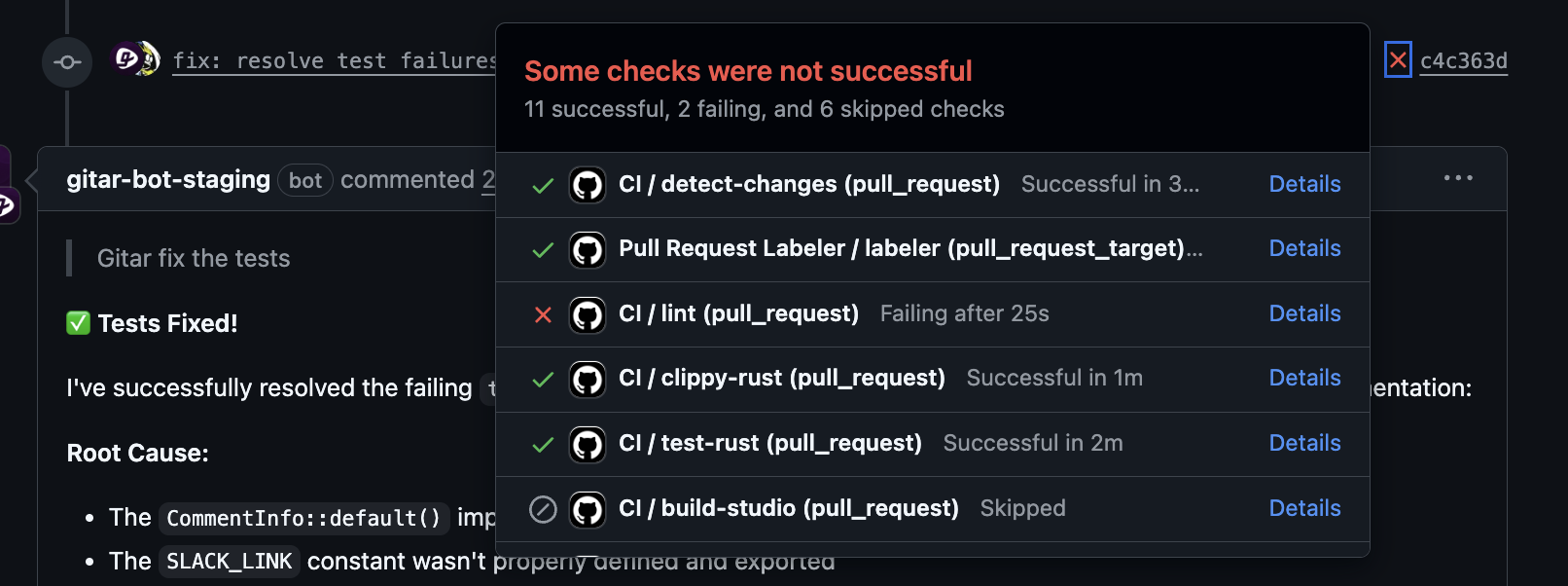
Enterprise environments come with unique challenges like legacy systems, custom builds, and strict security rules. Generic AI tools often fall short here, but Gitar adapts to these complexities. It generates fixes that respect intricate dependencies and validates them against full CI pipelines, ensuring reliability even in demanding setups. For leaders, this means faster progress, less downtime, and clear cost savings as manual debugging drops.
How to Adopt Gitar with Confidence
Embracing automation takes trust, and Gitar eases the transition. Start with a cautious setup where fixes need approval before applying. As you see consistent results, move to automatic commits for simpler tasks. Built-in rollback options add a safety net, letting teams experiment without worry. This gradual approach builds reliance on automation while keeping control in your hands.
Track Your Gains: Measuring Time and Cost Savings
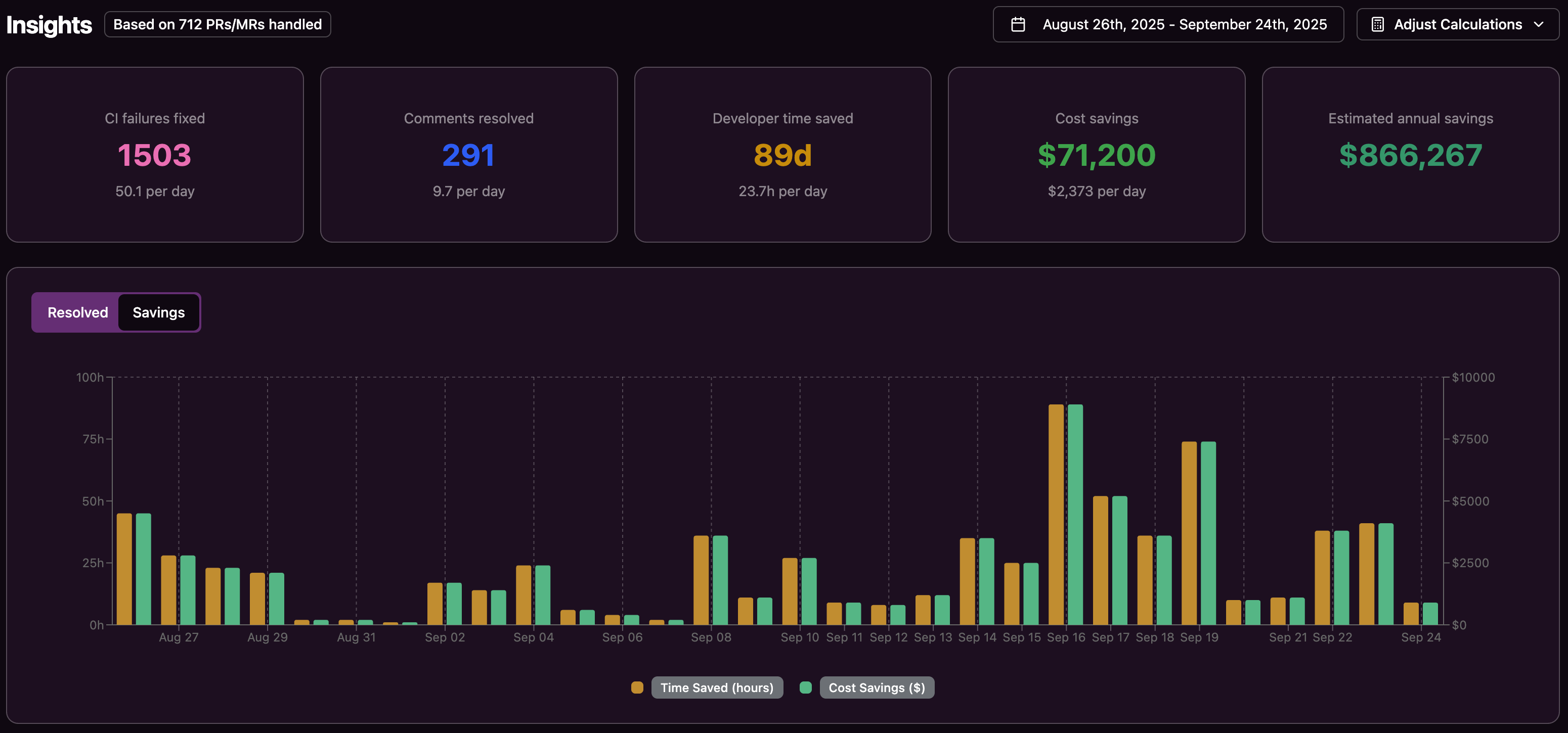
Gitar delivers clear wins in speed, satisfaction, and expenses. Teams see faster merge times, less frustration, and better code quality. For global teams, automated feedback handling slashes multi-day delays into same-day resolutions. Developers also report higher job satisfaction, focusing on innovation over grunt work. Financially, even partial automation can save a 20-person team $500,000 yearly by halving CI-related losses.
Prepare for Tomorrow’s Development Needs
Software demands keep growing, with more complexity and tighter deadlines. Gitar’s automation helps teams scale now and stay ready for future challenges. As AI coding tools produce even more code, automated validation will be key. Adopting Gitar today sets your team up to handle increased output without getting bogged down by bottlenecks.
Wrapping Up: Unlock Efficiency with AI Automation
Software teams can’t afford to lose time on repetitive CI issues and manual fixes. Gitar offers a practical way forward by automating these tasks, letting developers focus on meaningful work. With proven gains in speed, quality, and morale, it’s a tool that pays off from day one. Request a demo of Gitar now to see how automated fixes can elevate your team’s productivity.
Common Questions About Gitar and AI Automation
How Does Gitar Differ from Other AI Review Tools?
Many AI tools provide useful suggestions, but they stop there, leaving implementation to developers. Gitar takes full responsibility by applying fixes and validating them in your CI setup, ensuring builds pass without extra manual steps.
Can Gitar Work with Our Custom CI Environment?
Yes, Gitar is built for complex setups. It replicates your exact environment, including specific dependencies and integrations like SonarQube, ensuring fixes match your real workflow.
How Does Gitar Lower Costs of CI Failures?
CI failures waste time and delay projects, costing teams millions in lost hours. Gitar cuts these expenses by automating fixes before they reach developers, reducing manual debugging and keeping timelines on track.
How Does Gitar Ensure Secure and Reliable Automation?
Gitar prioritizes security with adjustable settings, starting with approval-based fixes. Each change is tested in your full CI environment, and rollback options allow quick fixes if anything goes wrong, maintaining trust and stability.