
Written by: Ali-Reza Adl-Tabatabai, Founder and CEO, Gitar
Key Takeaways for Automated Code Reviews
- AI coding tools have increased pull request volumes by 20%+, overwhelming traditional reviews and keeping test coverage stuck at 60–70%, with $1M annual costs for 20-developer teams.
- Teams can automate code reviews using CI gates, static analysis, and AI auto-fixes to enforce 80%+ coverage on new code and PR diffs, while cutting review time by 50%.
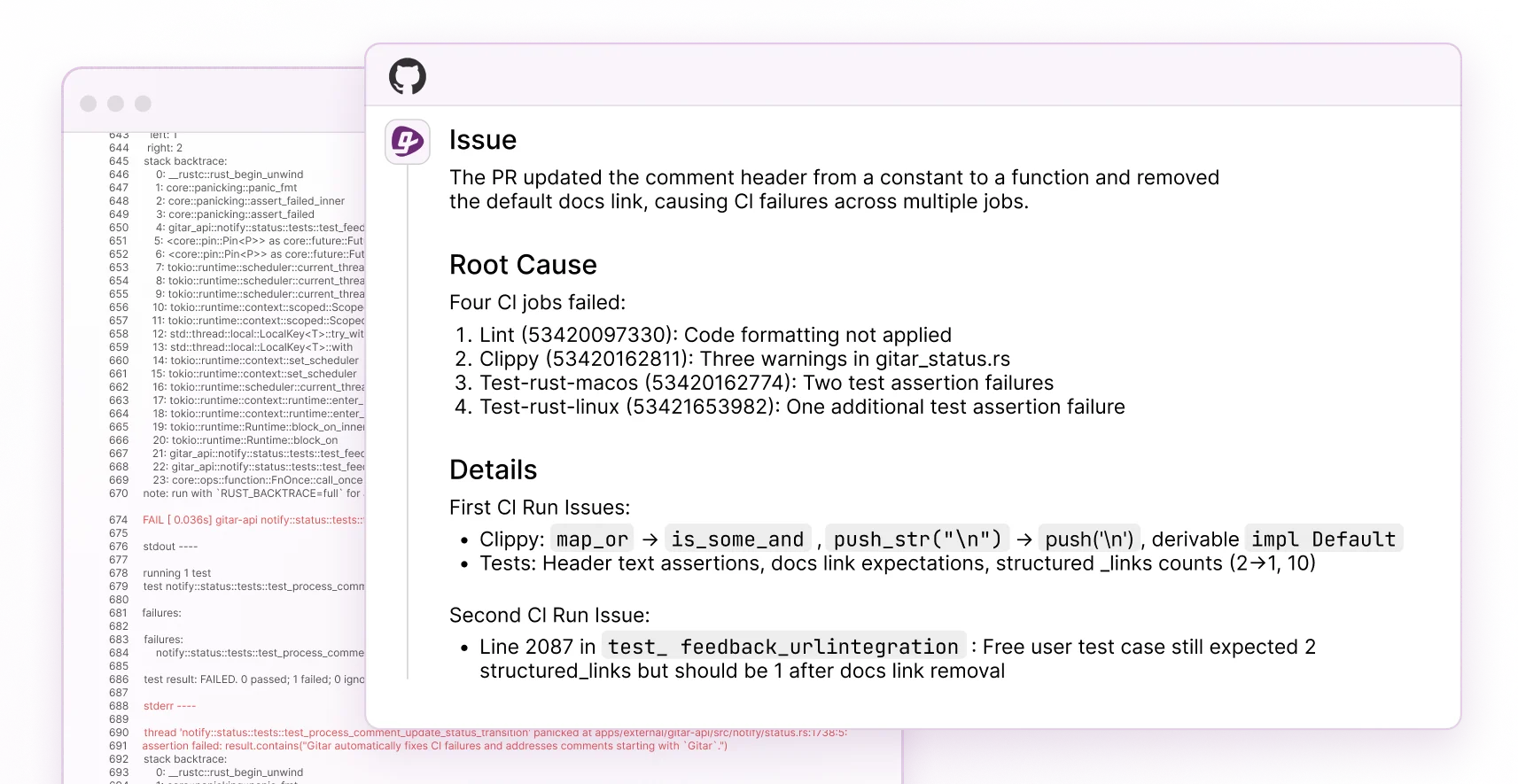
- Gitar goes beyond suggestions by automatically analyzing CI failures, generating validated fixes, and committing them directly to PRs for reliably green builds.
- Follow 7 steps: set coverage goals, integrate CI reporting, enforce PR gates, add static analysis, use AI auto-fixes, shift humans to high-risk review, and monitor with dashboards.
- Start automating with Gitar’s 14-day Team Plan trial to achieve 80%+ coverage and save $750K annually: Start your 14-day trial.
The Problem: AI-Driven PR Flood Hurts Test Coverage
AI coding assistants have fundamentally altered the development landscape. Salesforce experienced approximately a 30% increase in code volume due to AI-assisted tools, with pull requests regularly expanding beyond 20 files and 1,000 lines of change. This volume surge creates cascading problems for review quality and test coverage.
Logic and correctness issues are 75% more common in AI-generated PRs, while 96% of developers do not fully trust that AI-generated code is functionally correct. The productivity cost for a 20-developer team reaches $1 million annually when factoring in CI failures, review delays, and coverage gaps.
These costs stem from several persistent barriers to achieving high test coverage. Teams face manual test writing toil, flaky CI environments, and suggestion-only tools that require developers to implement fixes manually. The distinction between global coverage metrics and PR-specific coverage diffs further complicates enforcement. Teams struggle to maintain quality gates without blocking legitimate changes.
The Solution: Gitar as an Autonomous Fixing Engine
Gitar shifts code review from suggestion-based tooling to autonomous fixing. Competitors like CodeRabbit and Greptile charge $15–30 per developer for comments that still require manual implementation. Gitar instead automatically analyzes CI failures, generates validated fixes, and commits them directly to pull requests. See the Gitar documentation for details.
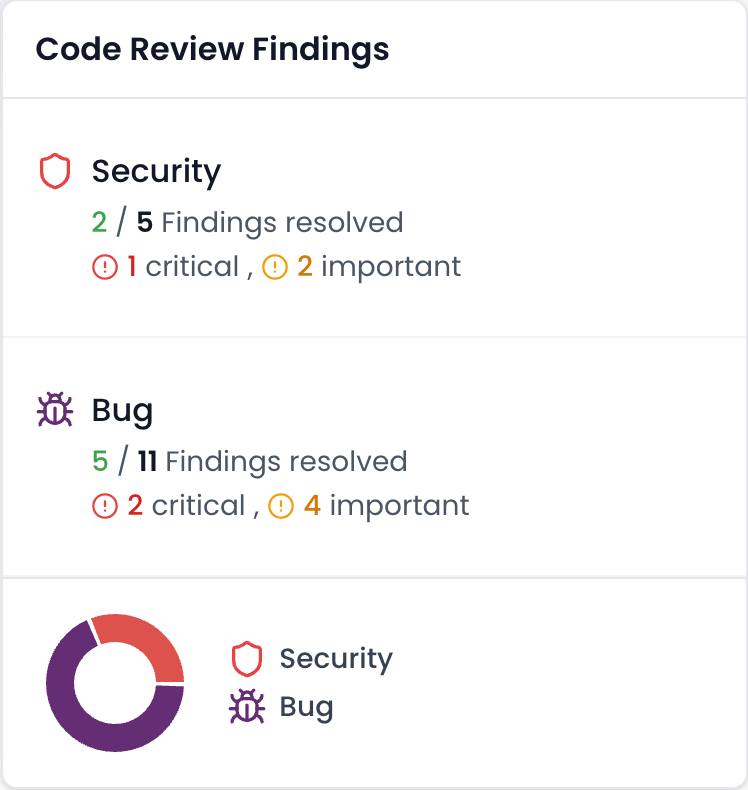
Gitar’s key differentiators work together to streamline the review process. It auto-applies fixes with CI validation to remove manual implementation work. It lets teams configure enforcement through natural language rules in .gitar/rules instead of complex configuration code. It also consolidates all findings into a single dashboard comment, which prevents the notification fatigue that many other tools create.
|
Capability |
CodeRabbit/Greptile |
Gitar |
|
Inline suggestions |
Yes |
Yes |
|
Auto-fix & commit |
No |
Yes |
|
No |
Yes |
|
|
Green build guarantee |
No |
Yes |
The ROI impact is substantial for most teams.
|
Metric |
Before Gitar |
After Gitar |
|
Time on CI/review issues |
1 hour/day/dev |
15 min/day/dev |
|
Annual productivity cost |
$1M |
$250K |
Customer validation demonstrates real-world effectiveness. Tigris engineering noted Gitar’s PR summaries are “more concise than Greptile/Bugbot.” Collate highlighted the “unrelated PR failure detection” capability that saves significant time by distinguishing infrastructure flakiness from code bugs. Automated testing frameworks increase code coverage by 32.8% when teams implement them correctly, which aligns with Gitar’s automation-first approach.
See these results in your own workflow: Try Gitar free for 14 days.
7 Steps to Automate Code Reviews for 80%+ Test Coverage
1. Set Clear Coverage Goals for New Code
Set 80%+ coverage requirements specifically for new code and PR diffs rather than global metrics. This focus keeps legacy code from blocking progress while still raising the bar on every new change. Use patch coverage tools like Codecov to enforce these goals on the lines touched in each pull request.
2. Integrate Coverage Reporting into CI
Configure your CI pipeline to generate and report coverage data in a consistent format. The following example shows a simple Codecov integration in a GitHub Actions workflow:
This configuration ensures coverage data is always available for gates and dashboards.
3. Enforce Pull Request Coverage Gates
Use GitHub Actions or GitLab CI rules that fail builds when coverage falls below your threshold. The snippet below illustrates a basic coverage gate:
This pattern enforces your coverage policy consistently across all pull requests.
4. Add Static Analysis for Early Feedback
Integrate SonarQube or similar tools to catch coverage gaps and code quality issues before they reach human reviewers. Static analysis highlights untested branches, complex methods, and code smells. This early feedback reduces review churn and keeps reviewers focused on design and correctness.
5. Use AI Auto-Fixes for CI Failures
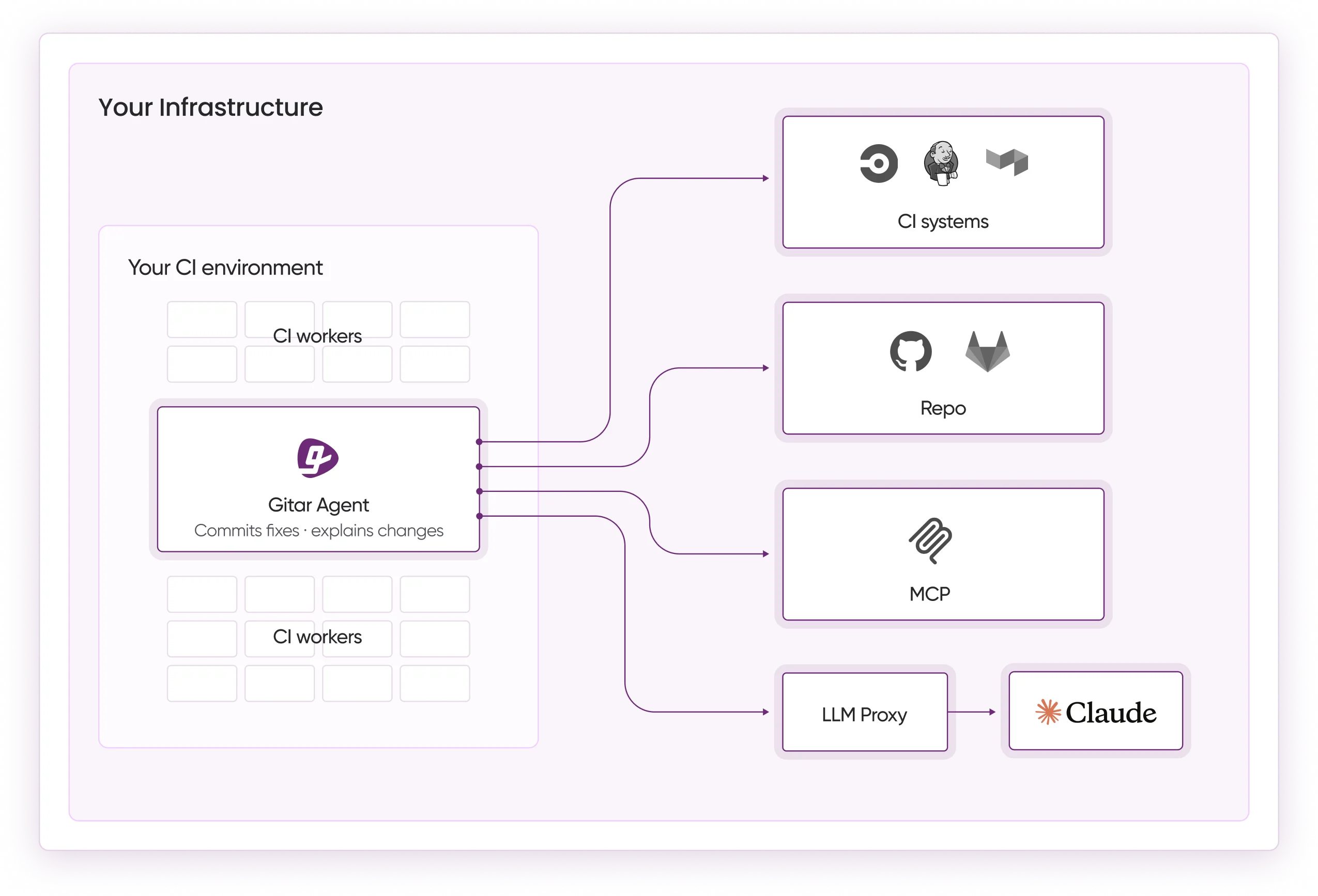
Gitar’s CI failure analysis (detailed in the documentation linked above) automatically detects test failures and generates fixes, then validates them against your CI environment before committing. You can configure natural language rules like the following example:
These rules let you express policies in plain language while Gitar handles the enforcement details.
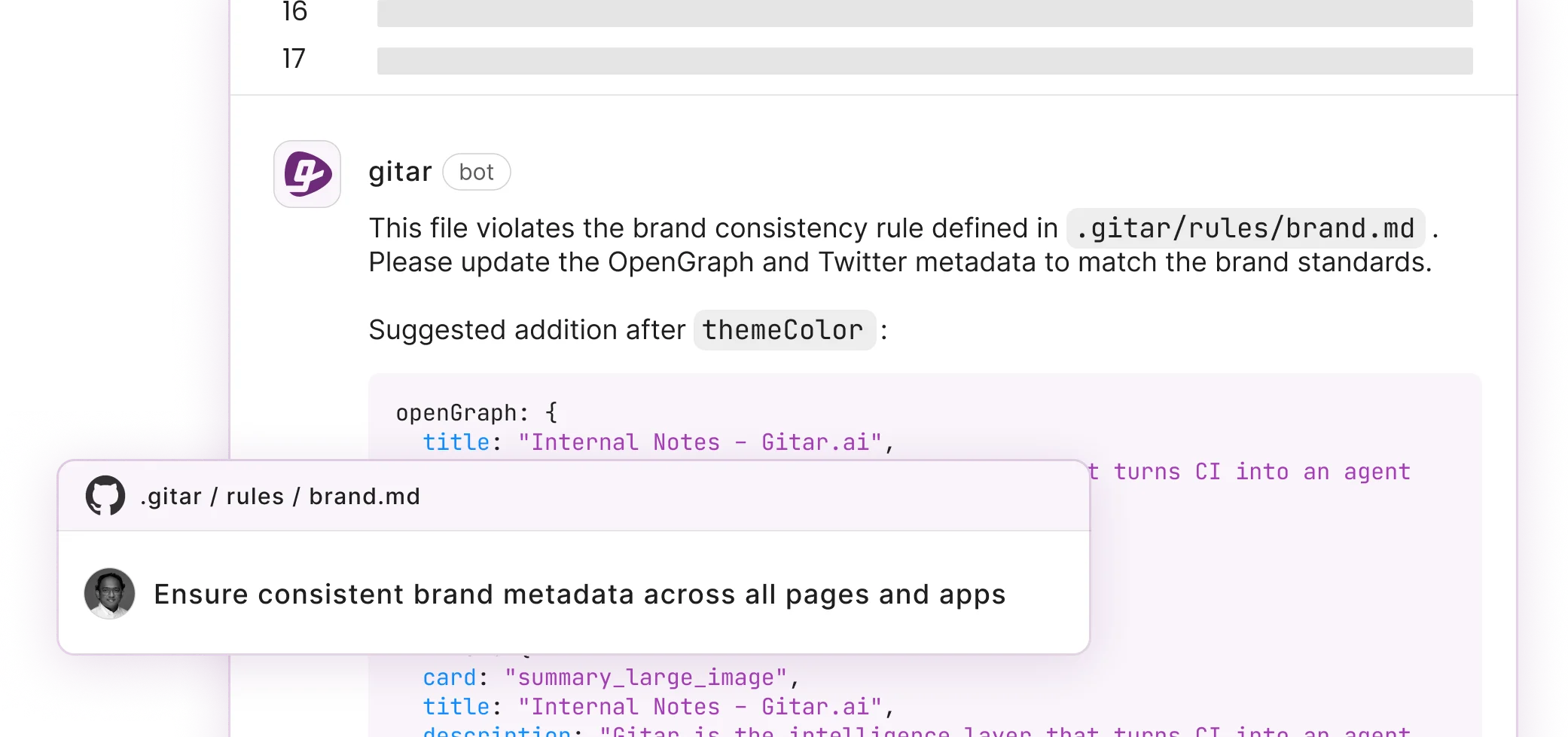
6. Shift Human Reviewers to High-Risk Changes
Use Gitar’s consolidated summaries to direct human attention to the 20% of changes that carry architectural or business risk. Automated fixes handle mechanical issues such as missing tests, style problems, and simple logic corrections. Reviewers then spend their time on design tradeoffs, data flows, and edge cases that automation cannot safely resolve.
7. Monitor Coverage and Refine Rules
Gitar’s dashboard provides CI failure categorization and pattern recognition to highlight systematic issues. Teams can spot recurring flaky tests, fragile modules, and rules that need adjustment. Over time, these insights help refine automation rules and steadily raise effective coverage.
Track your coverage improvements in real-time: Start monitoring with Gitar.
Frequently Asked Questions
How does Gitar guarantee that fixes work?
Gitar validates every generated fix against your actual CI environment before committing changes. The system runs tests, checks builds, and confirms that the fix resolves the original failure without introducing new issues. This validation process separates Gitar from suggestion-only tools that leave implementation risk with developers.
What is included in the 14-day trial?
The Team Plan trial provides full access to auto-fix capabilities, custom repository rules, CI failure analysis, and integrations with GitHub, GitLab, Jira, and Slack. No seat limits apply during the trial period. Entire teams can experience the impact on review velocity and coverage enforcement.
How does automation reduce code review time while improving test coverage?
Automation removes the manual cycle of identifying issues, implementing solutions, and re-running CI. Instead of developers spending hours debugging test failures and coverage gaps, Gitar handles these tasks automatically. The 50% reduction in review time comes from shifting human attention to architectural decisions and complex logic rather than mechanical fixes.
Does Gitar handle test gaps specific to AI-generated code?
Yes, Gitar specifically addresses the higher defect rates in AI-generated code. The system detects logic errors, missing edge case coverage, and security vulnerabilities that are statistically more common in AI PRs. Gitar mitigates the elevated logic error rates typical of AI code contributions mentioned earlier.
Conclusion: Automate for Green PRs and 80%+ Coverage
The AI coding revolution has shifted the bottleneck from code generation to code validation. Teams that rely on manual review processes and suggestion-only tools face escalating costs and declining quality as PR volumes increase. The seven-step automation approach outlined here, from CI gates to AI auto-fixes, provides a proven path to 80%+ test coverage while reducing review time by 50%.
Gitar’s healing engine represents the next evolution beyond suggestion-based tools. It delivers reliably green builds through validated fixes rather than hopeful recommendations. The substantial annual savings demonstrated above justify immediate implementation, especially given the risk-free 14-day trial that demonstrates ROI before any financial commitment.
Measure your 50% review time reduction: Start your risk-free trial.