AI-powered tools have reshaped software development by speeding up code creation. Yet, they’ve also introduced a costly bottleneck: validating and merging code now takes more time than writing it. Developers lose hours to repetitive CI failures and manual feedback fixes, slowing down productivity.
While tools like GitHub Copilot and Cursor help generate code faster, the focus has shifted to testing, reviews, and fixes. This creates delays, red builds, and constant interruptions that disrupt focus and raise costs for engineering teams.
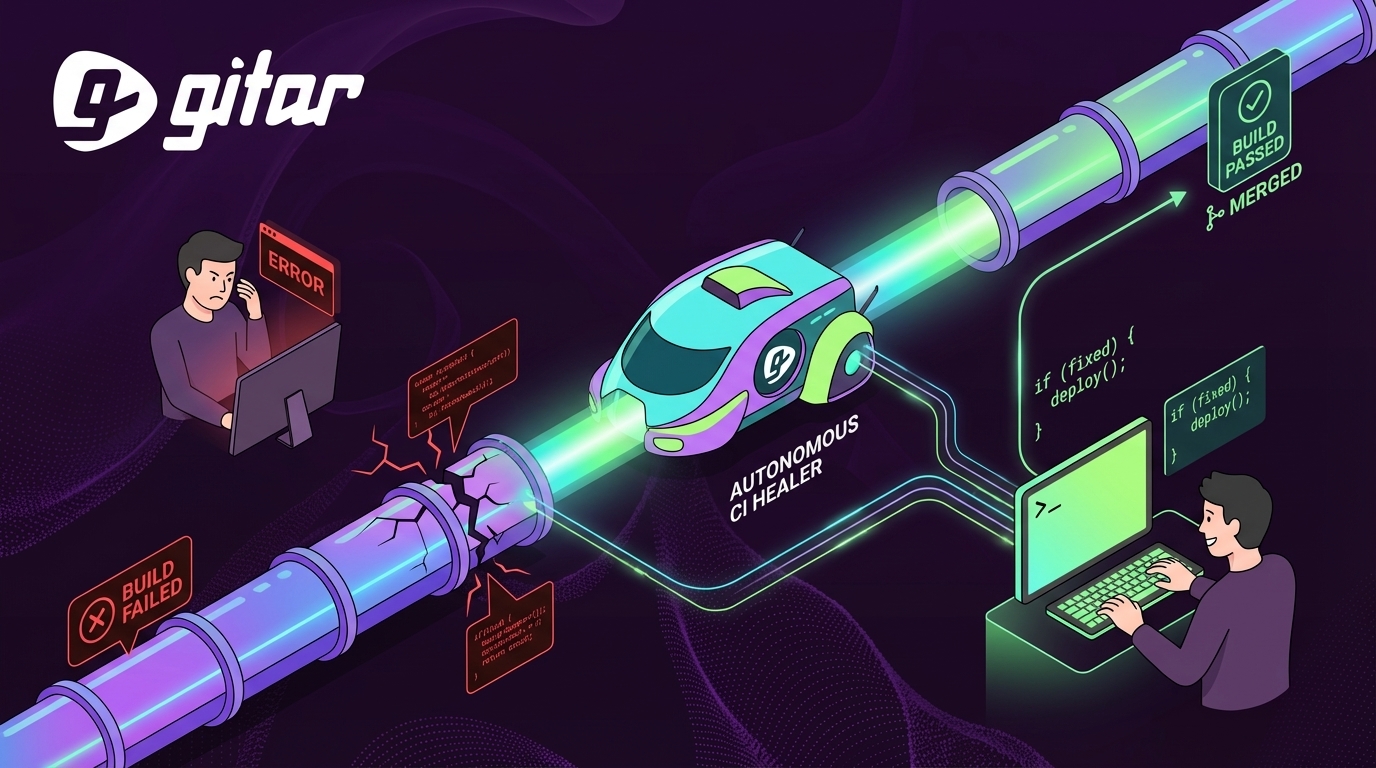
Gitar offers a different approach with autonomous AI agents that don’t just suggest fixes but apply and validate them. Unlike traditional suggestion tools, Gitar acts as a CI healing engine to resolve issues and ensure successful builds. Install Gitar now to fix broken builds automatically and deliver quality software faster.
Why AI Code Suggestions Don’t Solve CI Bottlenecks
Productivity Loss from New Validation Challenges
AI code generation tools promised faster development and quicker feature delivery. However, they’ve moved the bottleneck from writing code to validating it. Generating code at high speed often leads to more errors during the testing and review phases.
This shift, sometimes called the ‘right-shift’ issue, means build failures and CI errors pile up as code output increases. Developers get pulled away from their work to fix minor issues, losing focus with every interruption.
A simple build failure can turn into a major delay. After submitting a pull request, a developer might move to another task, only to be dragged back by a failed build. Deciphering logs and switching contexts wastes valuable time on preventable problems.
Financial Impact of CI Failures and Manual Fixes
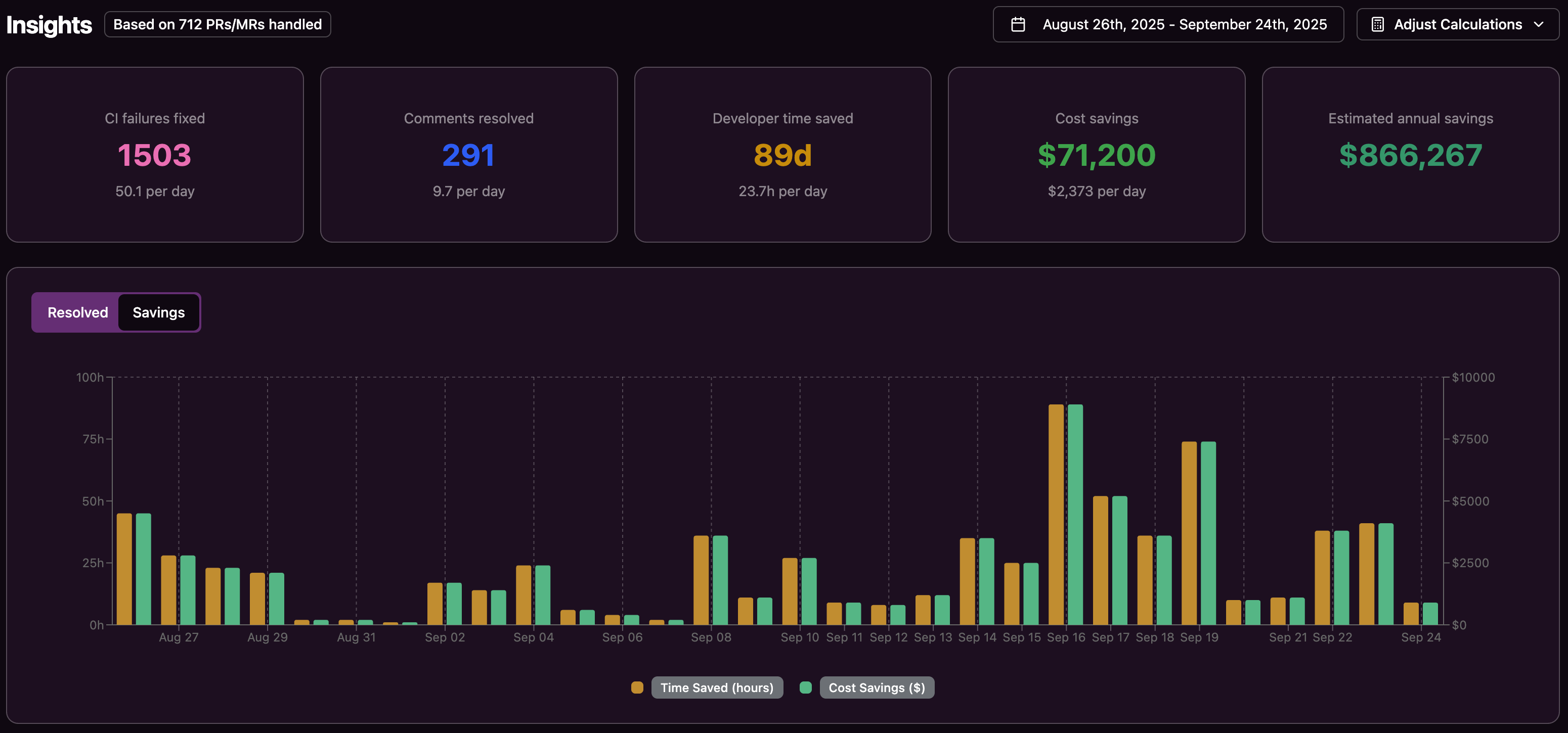
CI failures cost more than just debugging time. For a team of 20 developers, spending even one hour daily on CI issues can add up to $1 million in lost productivity each year. This estimate excludes wider impacts like delayed releases.
Complex enterprise setups, with specific SDKs, mixed languages, and security scans, face even higher failure rates. Resolution times stretch longer in these environments, adding to the burden.
Distributed teams suffer most when time zones turn quick fixes into multi-day delays. Suggestion-based AI tools often fall short here, leaving developers to handle intricate debugging manually.
Gitar: Your Autonomous CI Healing Solution
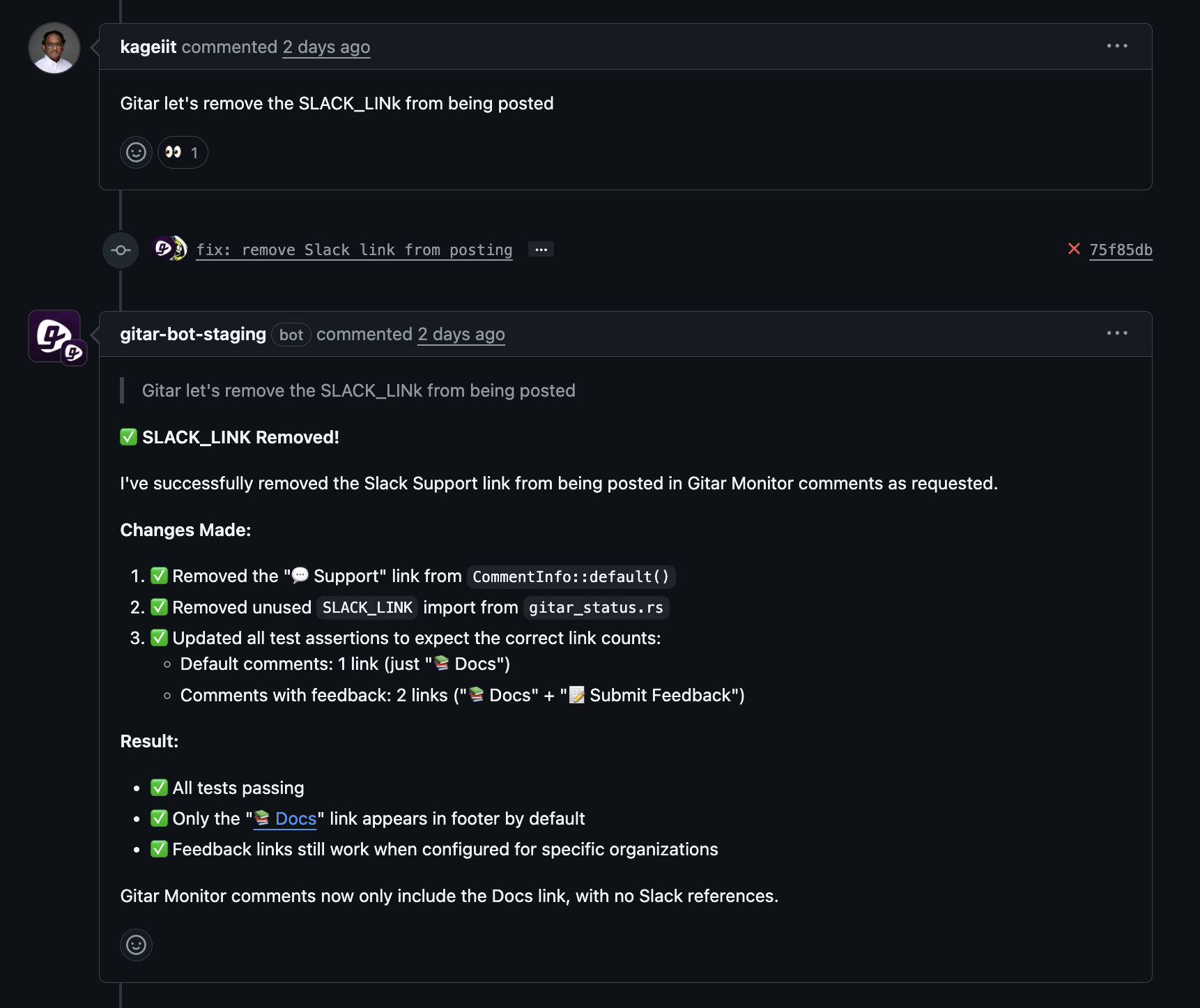
Gitar moves past AI suggestions to deliver automated fixes for failing CI pipelines and code review feedback. It acts as an intelligent agent, applying validated solutions without developer intervention.
Key features that make Gitar stand out include:
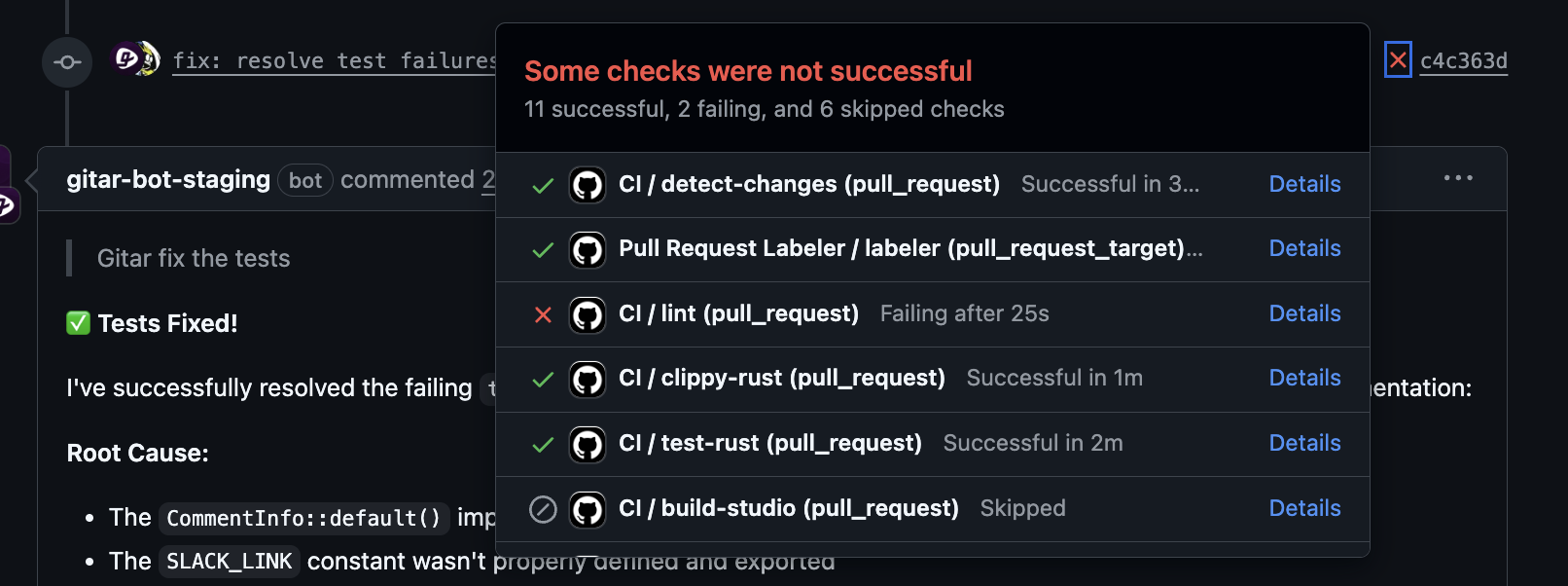
- Complete Fix Automation: Gitar resolves issues and validates them across full CI workflows, ensuring successful builds. It handles lint errors or broken tests and confirms all checks pass.
- Environment Matching: Gitar mirrors complex setups, including specific JDK versions, multi-SDK dependencies, and security tools like SonarQube, for reliable fixes in real conditions.
- Flexible Trust Settings: Teams can choose from suggestion-only mode to full auto-commit with rollback options, adjusting based on comfort level with automation.
- Review Feedback Handling: Gitar understands reviewer instructions and applies changes directly, cutting delays for distributed teams.
- Broad Platform Compatibility: Gitar works with GitHub Actions, GitLab CI, CircleCI, BuildKite, and more, fitting into varied workflows.
Book a demo with Gitar to experience autonomous CI fixes.

How Gitar Improves Developer Workflow
Maintaining Focus by Reducing Interruptions
Deep focus is crucial for solving complex coding problems. CI failures and review cycles, however, often break this state, leading to significant productivity drops.
Gitar handles issues automatically in the background. After a developer submits a pull request and shifts to another task, Gitar watches the CI pipeline. If a failure occurs, it identifies the problem, applies a fix, and commits the change without pulling the developer away.
This approach keeps developers focused on meaningful work, reduces repetitive debugging, and helps prevent burnout by minimizing frustration.
Speeding Up Code Merging Without Delays
In software development, the time from initial commit to merged code matters most. This time-to-merge metric reflects engineering efficiency and affects how quickly value reaches customers.
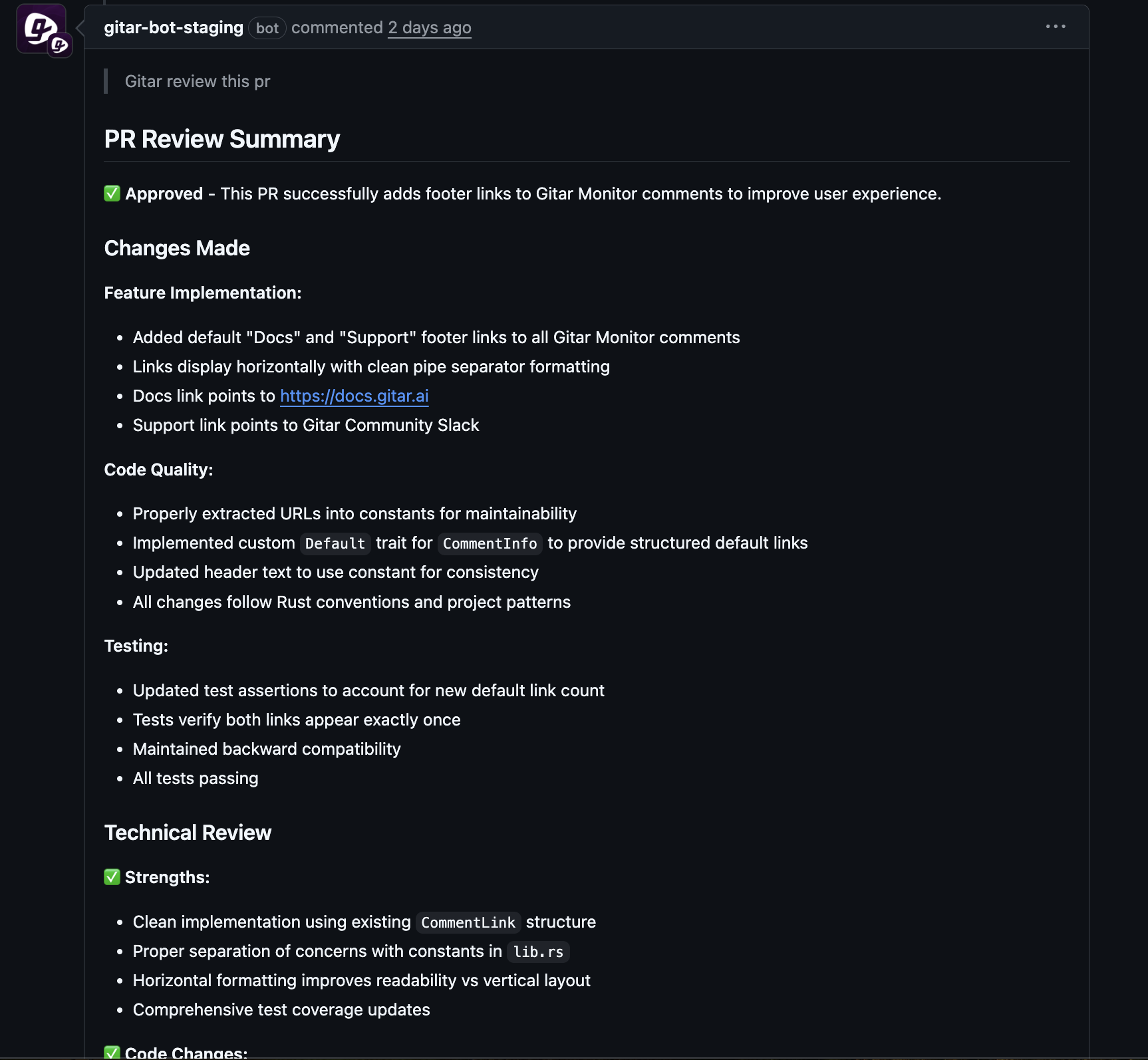
Gitar cuts down this time by ensuring pull requests pass CI checks after fixes. Instead of repeated cycles of failure and manual debugging, issues get resolved automatically, often before developers notice a problem.
For distributed teams, Gitar eliminates delays caused by time zone differences. It applies changes and ensures builds succeed, keeping projects on track.
Handling Complex Enterprise Setups with Precision
Enterprise environments come with unique hurdles like intricate dependencies, specific SDK versions, and security scan requirements. Generic AI tools often struggle to adapt to these conditions.
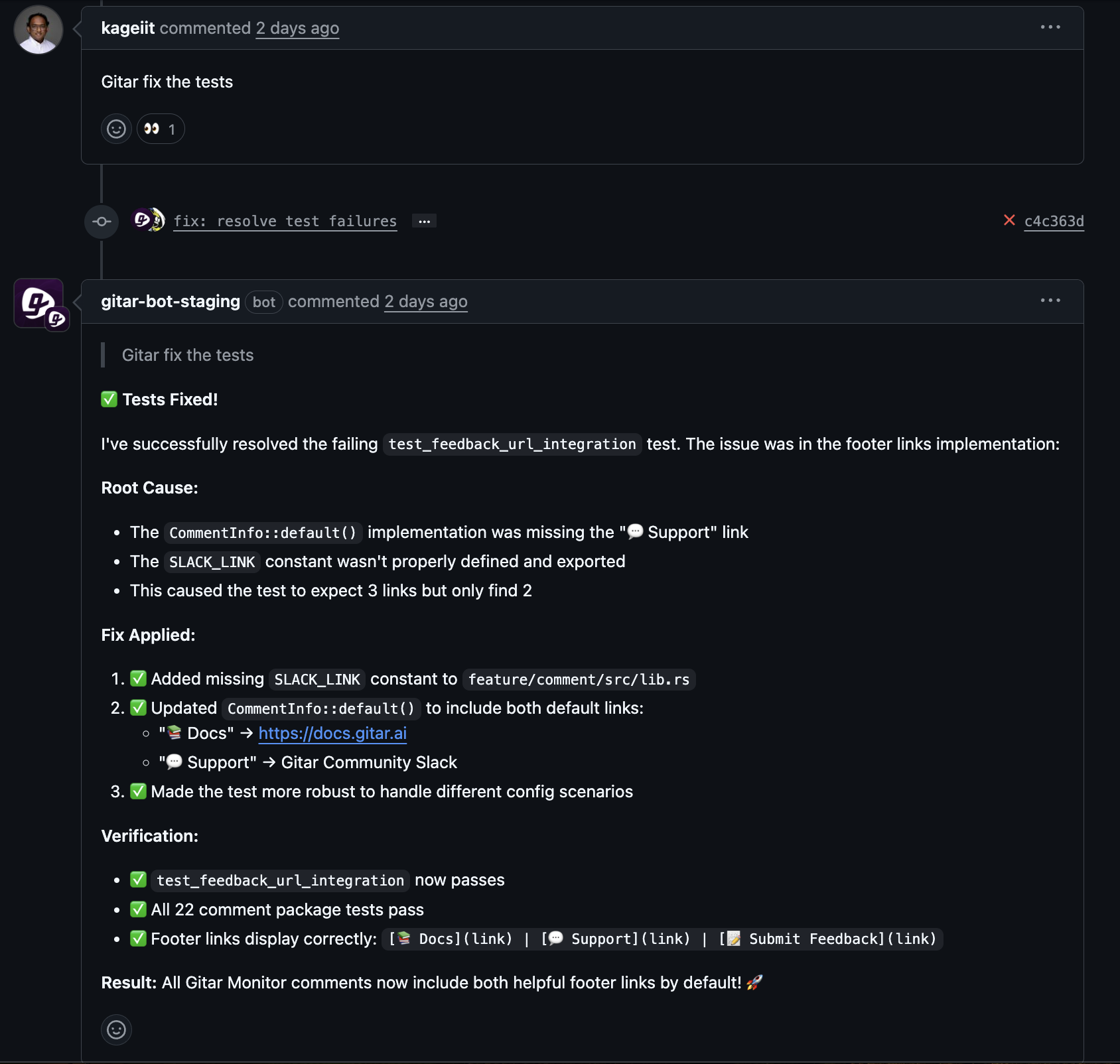
Gitar replicates the full CI environment, including all configurations and integrations. This ensures fixes work under the exact conditions of production, avoiding mismatches or new errors.
Gitar vs. Traditional AI Suggestion Tools
|
Feature |
Gitar (Autonomous CI Healing) |
AI Code Reviewers (e.g., CodeRabbit) |
On-Demand AI Fixers (e.g., Claude for CI) |
|
Resolution Method |
Full Automation and Validation |
Suggestions Only |
On-Demand Fixes, No Validation |
|
CI Validation |
Ensures Builds Pass Checks |
Needs Manual Validation |
Needs Manual Validation |
|
Environment Context |
Full Replication for Enterprises |
Varies by Tool |
Varies by Tool |
|
Integration Effort |
Direct CI/CD Platform Support |
Varies by Tool |
Varies by Tool |
Install Gitar now to fix broken builds and ship quality software faster.
Common Questions About Gitar’s Automated Fixes
How Does Gitar Build Trust for Automation?
Gitar offers configurable settings to ease teams into automation. Start with a cautious mode where fixes appear as comments for approval with one click. As trust grows through consistent results, switch to a mode where Gitar commits fixes directly with rollback options.
Every action comes with clear explanations, so teams understand the logic behind fixes and maintain full control over the process.
Can Gitar Manage Complex Enterprise CI Systems?
Gitar is built for intricate enterprise setups. It replicates specific JDK versions, multi-SDK dependencies, and tools like SonarQube or Snyk. Fixes are tested to match production conditions and meet compliance needs.
How Is Gitar Different from Other AI Code Tools?
Gitar stands out through its focus on autonomy and validation. Unlike suggestion-based tools or IDE assistants, it applies fixes and confirms they pass CI checks. It targets post-commit validation to ensure code meets quality standards.
What Happens If Gitar’s Fix Causes an Issue?
Gitar includes safeguards for errors. Fixes are validated in the CI pipeline before commitment, and every change has a rollback option with detailed commit notes. Teams can opt for manual approval until confident in the system. Feedback helps Gitar improve over time.
Does Gitar Support Diverse Programming Languages?
Gitar handles numerous languages and frameworks, including Python, Go, JavaScript, TypeScript, Java, Rust, Docker, and Terraform. It adapts to language-specific patterns and testing tools, ensuring fixes align with best practices in mixed-language projects.
Speed Up Delivery with Gitar’s Autonomous CI Fixes
AI has accelerated code writing, but validation and merging remain major hurdles. Suggestion tools leave developers stuck with manual fixes and debugging, costing teams millions in lost time each year.
Gitar changes this by autonomously fixing CI failures and applying review feedback with validated results. Teams see faster merge times, lower costs, and happier developers. Ready for automated solutions? Request a demo with Gitar today to tackle CI bottlenecks and speed up delivery.