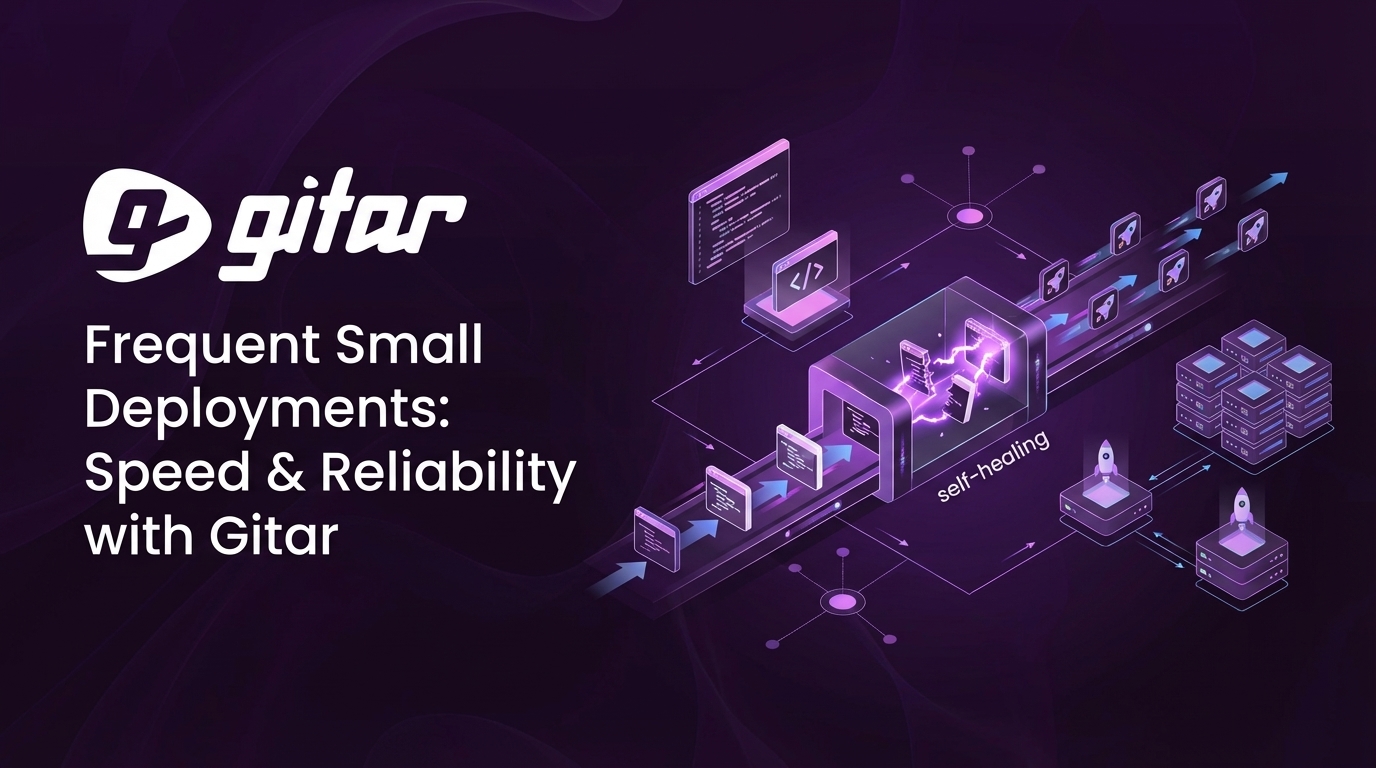
Frequent small deployments help software teams deliver faster and more reliable updates, but CI/CD challenges often slow progress. Many teams struggle with pipeline issues that disrupt their workflow. This article dives into why small, regular deployments matter and shows how autonomous CI fixes with tools like Gitar can remove those obstacles for better results. Try Gitar today to fix broken builds automatically and ship quality software faster.
Why Frequent Small Deployments Are Tough Without Automation
Small deployments offer clear advantages, like lower risk and quicker feedback, but putting this into practice isn’t always easy. Deploying smaller changes reduces risk by limiting potential failure points. Still, teams often face delays from unstable pipelines and manual fixes that hinder consistent delivery.
How Deployment Delays Hurt Progress
Manually debugging CI failures and handling repetitive code reviews slow teams down. Developers lose focus when they switch between writing code and fixing builds, often wasting hours each day. Research suggests nearly 30 percent of a developer’s time can go to resolving CI and review issues instead of creating new features.
Picture this: a developer submits a pull request, only to see a failing build due to a small error, like a linting issue or missing dependency. They then spend time decoding logs, making a fix, and waiting for the pipeline to rerun. What should be a quick task turns into a major distraction, breaking their workflow.
More Deployments, More Potential Issues
Increasing deployment frequency can heighten the chance of pipeline failures, making teams wary without automated solutions. Small deployments cut risk by narrowing the scope of changes, which makes problems easier to spot and fix. Yet, the extra effort to keep pipelines running smoothly often feels like more trouble than it’s worth.
Teams worry that frequent deployments mean more interruptions and manual fixes. This concern holds true when handling issues by hand, but it fades when automated systems take over routine problems without extra effort.
Impact on Developer Focus
Without automation, minor issues in frequent deployments eat up time, canceling out the speed teams aim for. Less context switching boosts productivity and satisfaction, but typical CI/CD setups force developers to jump between tasks constantly.
For distributed teams, delays grow worse. A developer in one time zone might wait days for feedback from a teammate halfway across the world. Adding manual CI fixes to this mix stretches a simple process into a long, drawn-out cycle.
Fixing the Gap: Self-Healing CI with Gitar for Better Deployments
Unlocking the power of frequent small deployments starts with automating fixes for CI failures and review feedback. Instead of tolerating manual debugging as unavoidable, teams can use autonomous tools to clear these hurdles entirely.
What Gitar Offers for CI Challenges
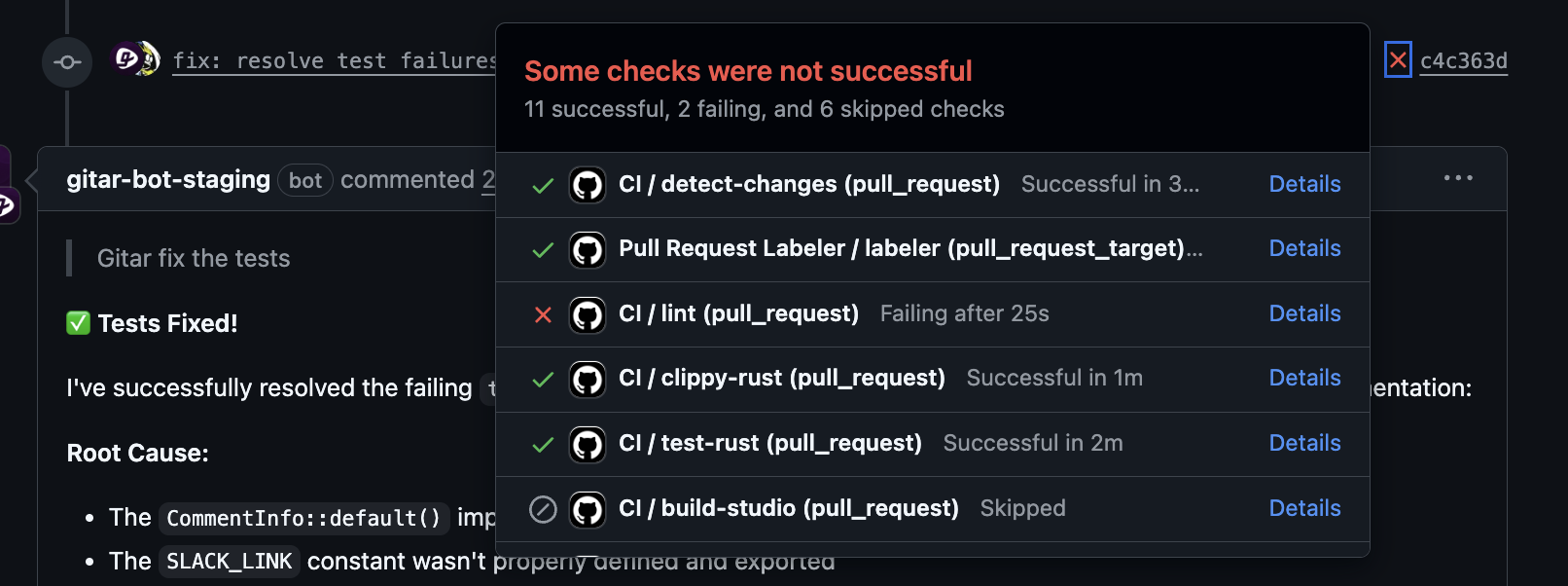
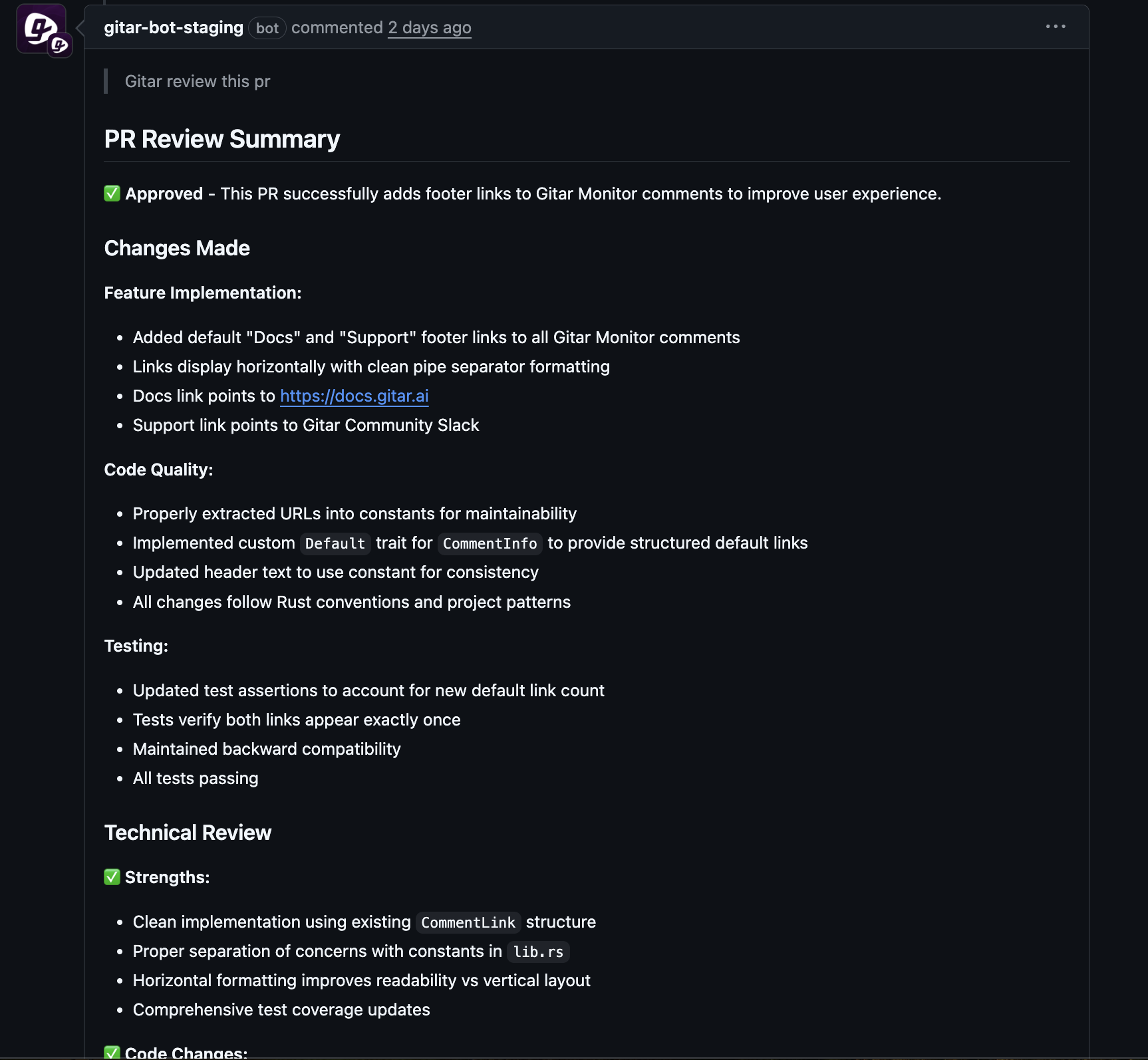
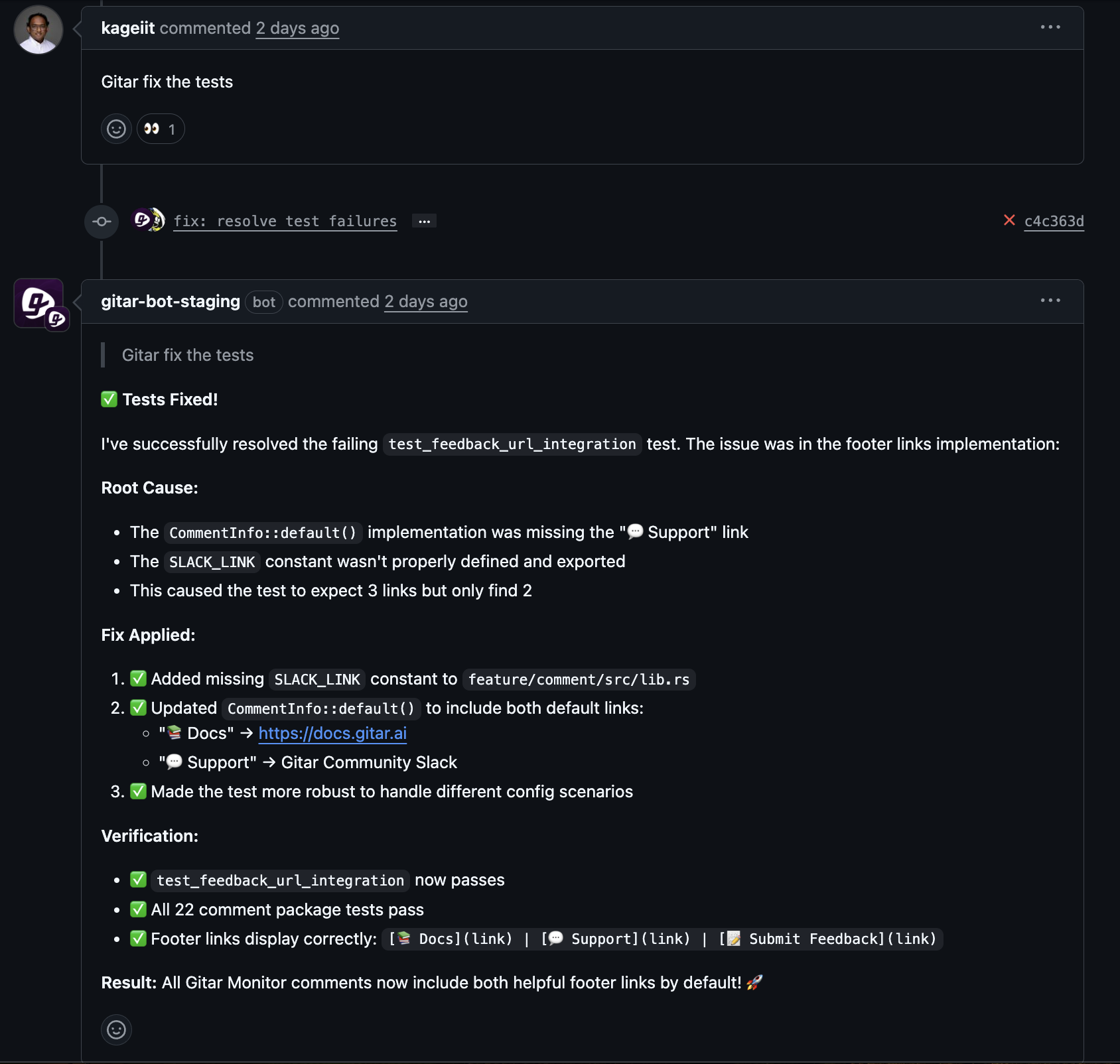
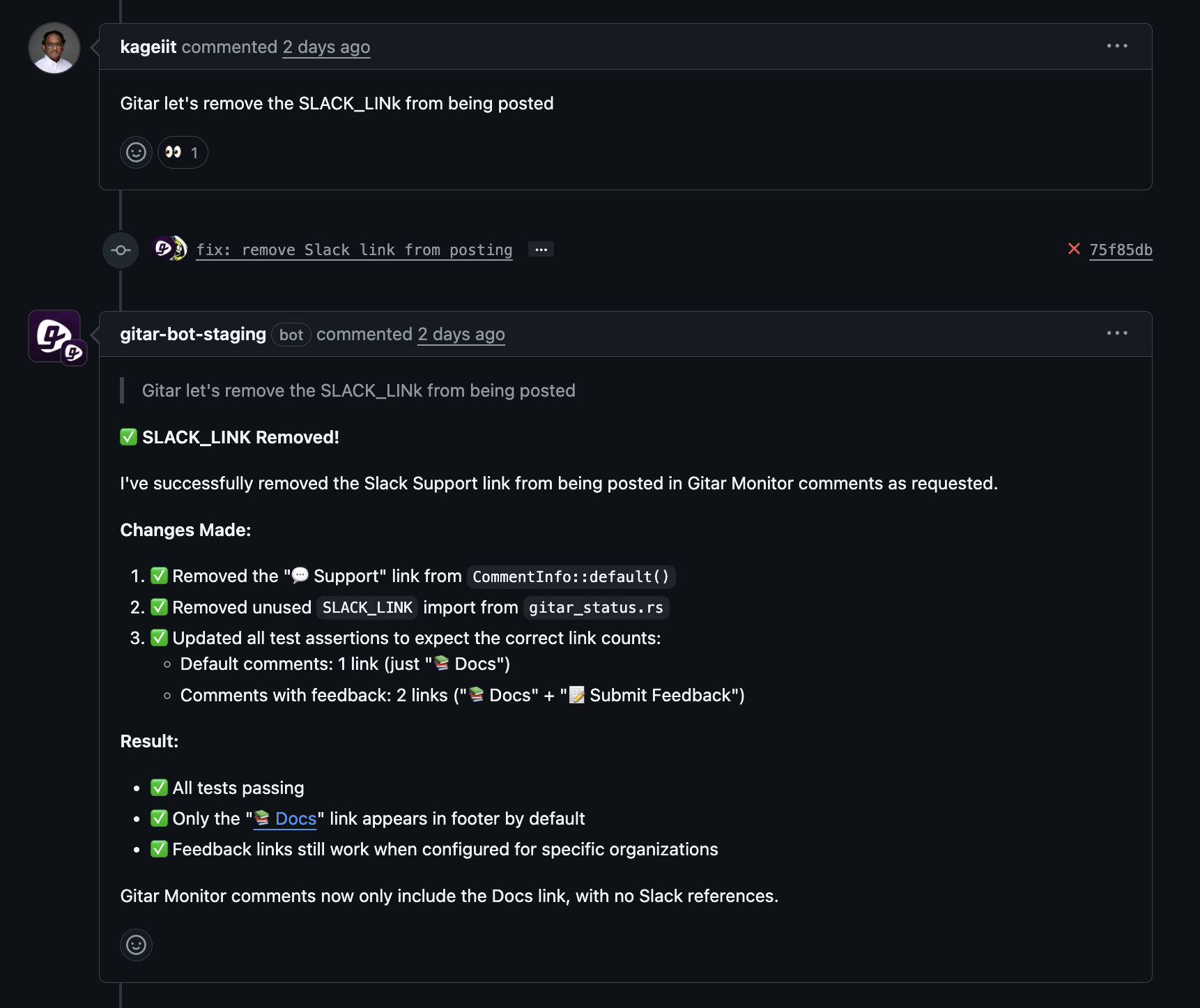
Gitar turns your CI/CD pipeline into a self-healing system. Its AI agent detects, analyzes, and fixes CI failures and code review issues on its own. Unlike tools that only point out problems, Gitar applies solutions directly, keeping pipelines running without needing developer input.

When a pull request fails or gets feedback, Gitar steps in. It reviews the issue, creates a fix, and updates the request automatically. This cuts out hours of manual work, making the process hands-free for developers.
Easy Setup with Your Current Tools
Gitar connects smoothly with platforms like GitHub, GitLab, and CI/CD systems such as CircleCI or BuildKite. It fits into complex enterprise setups, handling specific SDK versions, multi-language projects, and tools like SonarQube without hassle.
Setting up is simple. Authorize Gitar as a GitHub App for your repositories, adjust settings in a web dashboard, and link it to your CI system with custom rules. Once active, Gitar works quietly in the background, fixing issues without interrupting your team.
Core Features That Support Frequent Deployments
Gitar offers practical tools to keep deployments moving:
- Complete Fix Automation: Applies fixes, runs them through CI checks, and ensures all jobs pass before finalizing pull requests. It tackles linting errors, failing tests, and build issues like dependency conflicts.
- Environment Matching: Mirrors your setup, including SDK versions and third-party tools, for accurate fixes that fit your specific needs.
- Flexible Control: Start with a cautious approach where Gitar suggests fixes for review. As trust grows, switch to automatic commits with rollback options for safety.
Gitar vs. Traditional CI/CD Methods
|
Feature/Benefit |
Manual Process |
AI Review Tools |
Gitar (Autonomous Fixer) |
|
Supports Frequent Deployments |
High effort, slow progress |
Still needs manual steps |
Automated, smooth operation |
|
CI Failure Handling |
Manual debugging, repeated builds |
Suggestions, manual fixes |
Automatic fix and commit |
|
Impact on Developer Focus |
Constant interruptions |
Some delays remain |
No disruption, full focus |
|
Risk Reduction |
Higher with more frequency |
moderate, needs oversight |
Strong, self-fixing pipeline |
Gitar’s Value: Faster and More Reliable Small Deployments
Cut Time-to-Market with Quicker Cycles
Smaller batches and faster feedback help teams adapt to market demands quickly. This approach speeds up response to customer needs. With Gitar handling CI fixes, developers focus on new features instead of pipeline issues, shortening delivery timelines.
Teams see deployment speed improve as they avoid stopping work to fix CI failures. This keeps their attention on building value, not troubleshooting.
Boost Stability and Lower Risks
Small deployments naturally reduce risk by limiting change scope. This makes issues simpler to test and confirm. Gitar keeps pipelines stable by fixing problems on its own, supporting consistent delivery.
Its self-healing approach stops small issues from growing into major setbacks. This builds a habit of steady improvement over time.
Enhance Developer Focus and Satisfaction
Automating repetitive fixes cuts down on task switching, helping developers stay in their flow. Gitar’s self-healing CI system ensures the pipeline aids progress instead of blocking it, creating a better work environment.
Handling routine CI tasks automatically frees up developers from frustrating debugging. They can spend more time on meaningful work like coding new features.
Save Costs and Improve Returns
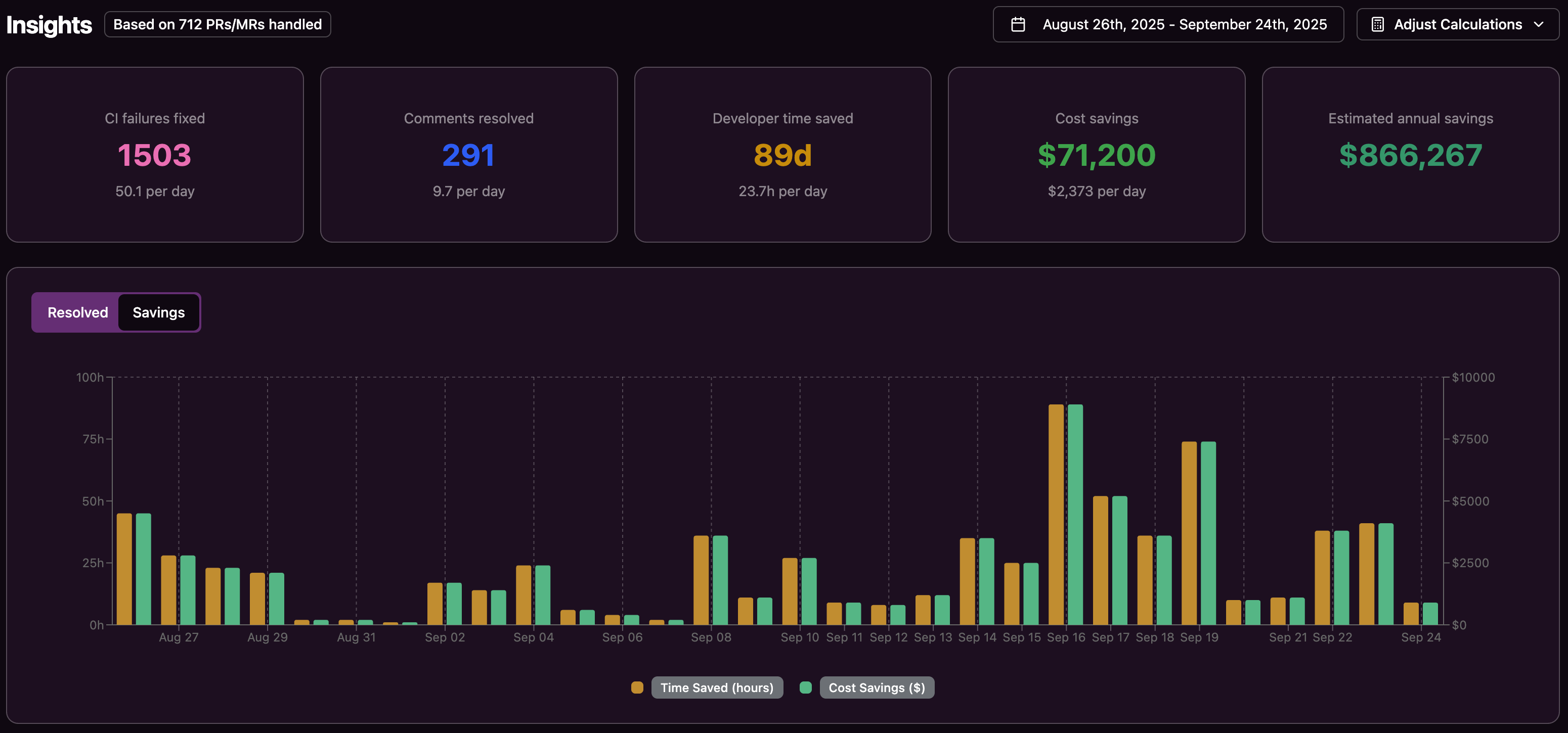
Cutting time spent on CI issues lowers expenses. A team of 20 developers could save around $1 million yearly by reducing debugging hours. Faster, reliable deployments also improve overall efficiency.
The financial benefit grows clear with less debugging time. This supports more frequent deployments confidently, speeding up market delivery and feedback cycles.
Common Questions About Autonomous CI Fixes
How Does Gitar Improve Frequent Deployments Over Standard Tools?
Gitar automates fixes for CI failures, clearing delays in deployment cycles. Unlike traditional tools that just highlight errors for manual repair, Gitar resolves them independently, keeping deployments moving without pauses.
Can Gitar Work with Complex Enterprise Systems?
Yes, Gitar handles intricate setups. It matches your full build environment, including specific SDK versions and tools like SonarQube, ensuring fixes fit your unique tech stack. It supports languages like Python, Java, Rust, and platforms like Docker and Terraform.
What If We Hesitate to Trust Automated Fixes Fully?
Gitar provides a adjustable trust setting. Start with a careful mode where fixes are suggestions for review and easy approval. As you gain confidence, move to a setting where Gitar commits fixes directly, with rollback options for security.
How Does Gitar Reduce CI/CD Costs?
By automating CI failure fixes, Gitar cuts down on debugging time and pipeline reruns. This saves developer hours and CI resources, lowering operational costs and boosting project speed.
How Fast Can Teams See Results with Gitar?
Most teams notice benefits within a week. Setup is quick: authorize Gitar as a GitHub App, adjust settings in the dashboard, and connect to your CI system. Developers often see CI issues fixed automatically during their first few pull requests.
Conclusion: Turn Frequent Deployments into Your Strength with Gitar
Frequent small deployments are essential for staying competitive in software delivery. Smaller changes enable quicker releases and simpler validation. Testing and finding bugs also become easier with limited batch sizes. However, manual CI/CD processes often block teams from gaining these advantages.
Gitar fills this gap with a self-healing CI pipeline. It helps teams deploy more often and with greater confidence by cutting down on manual fixes. This lets developers focus on creating value instead of solving pipeline problems.
With Gitar, deployment frequency becomes a strategic edge. Teams can tackle CI issues and review delays automatically, freeing up time for innovation. Don’t let pipeline friction slow your progress or limit your delivery speed and reliability.