
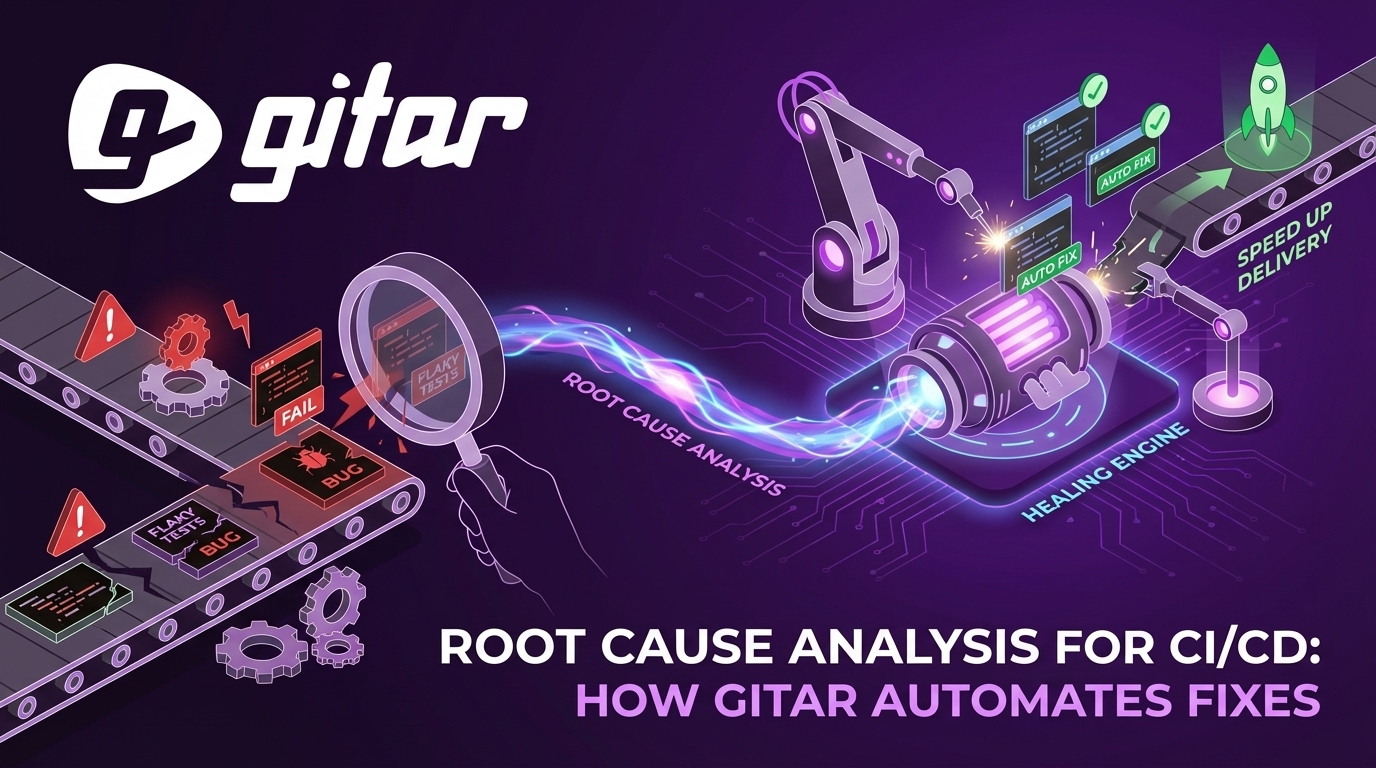
CI/CD pipeline failures slow down software delivery and drain developer productivity, costing organizations significant time and money each year. Developers often spend up to 30% of their day debugging issues, switching tasks, and fixing broken builds. This article dives into how Gitar’s Root Cause Analysis capability offers an automated solution, identifying and resolving pipeline issues to keep builds green and let developers focus on coding.
Why Manual CI/CD Debugging Hurts Productivity
Constant Failures Disrupt Developer Focus
Submitting a pull request often feels like a gamble. A missing dependency, flaky test, or minor style issue can turn a quick task into a frustrating wait. Developers must dig through logs, switch back to their local setup, make fixes, commit changes, and hope the pipeline runs clean, only to face another issue sometimes.
This cycle kills momentum. A small fix that should take minutes stretches into hours as developers lose focus. Moving on to other tasks after a PR submission becomes risky, as failures or feedback pull them back, adding mental strain and breaking deep work.
The cost adds up fast. For a team of 20 developers losing one hour daily to CI issues, that’s 5,000 hours lost yearly. At $200 per hour, this equals $1 million in wasted resources, funds better spent on new features or growth instead of fixing routine failures.
Detecting and resolving incidents can take up to 15 hours when root causes aren’t clear, delaying projects and affecting team morale across organizations.
Key Triggers Behind CI/CD Failures
CI/CD pipelines often fail due to structural and setup issues. Monolithic pipelines and sequential processes create bottlenecks where one failure stalls everything.
Other common problems include:
- Inconsistent environments between local, test, and production setups.
- Dependency conflicts or outdated packages causing unexpected errors.
- Misconfigured pipelines that don’t align with project needs.
These issues lead to failures that work locally but break in CI, forcing developers to spend more time troubleshooting than coding. Poor configuration and mismatched dependencies are frequent culprits behind pipeline issues.
Security flaws also play a role. Vulnerabilities in runners or privilege bugs can disrupt pipelines and risk unauthorized access, adding urgency and complexity to fixes.
Flaky Tests Undermine Trust and Delay Progress
Flaky tests, which pass or fail randomly without code changes, frustrate developers the most. In large pipelines, these tests can halt entire releases and waste hours.
They erode confidence in CI systems. Developers may ignore real issues or skip checks, risking bugs slipping through. Diagnosing whether a failure is a genuine problem or just flakiness adds extra effort.
For distributed teams across time zones, a flaky test failure overnight can delay a release by a full day. This turns small glitches into major roadblocks, slowing down delivery.
Ready to stop wasting time on CI failures? Install Gitar to automate fixes and ship better software faster.
How Root Cause Analysis Fixes CI/CD Automatically
Understanding Root Cause Analysis in CI/CD
Root Cause Analysis in CI/CD moves beyond just spotting failures. It pinpoints why issues happen and creates targeted fixes based on the full context of the environment, saving developers from manual debugging.
This approach considers the entire setup, from dependency versions to test patterns. It doesn’t just flag a failed test, it figures out the underlying problem and resolves it without disrupting workflows.
A deep grasp of the CI/CD ecosystem is key. With multiple services, APIs, and configurations at play, effective analysis must account for all interactions to ensure fixes stick.
From Suggestions to Real Fixes with Healing Engines
Many AI tools suggest fixes but leave the work to developers. They identify issues and offer ideas, yet developers must still apply changes, commit them, and verify results, keeping the cycle of interruption alive.
Healing engines take it further. They don’t just suggest, they fix issues automatically, test the solutions in the full CI environment, and confirm the problem is solved. This cuts out manual steps.
Validation is a big difference. Healing engines apply fixes in the real setup and run full tests to ensure everything works, unlike suggestions that might not fit the broader context. Machine learning in pipelines predicts failures using past data, reducing build issues over time.
Meet Gitar: Your Automated CI/CD Fix Tool
Gitar shifts CI/CD from manual fixes to fully automated solutions. It acts as a healing engine, addressing failures and feedback without developer input, speeding up workflows.

Here’s what Gitar offers:
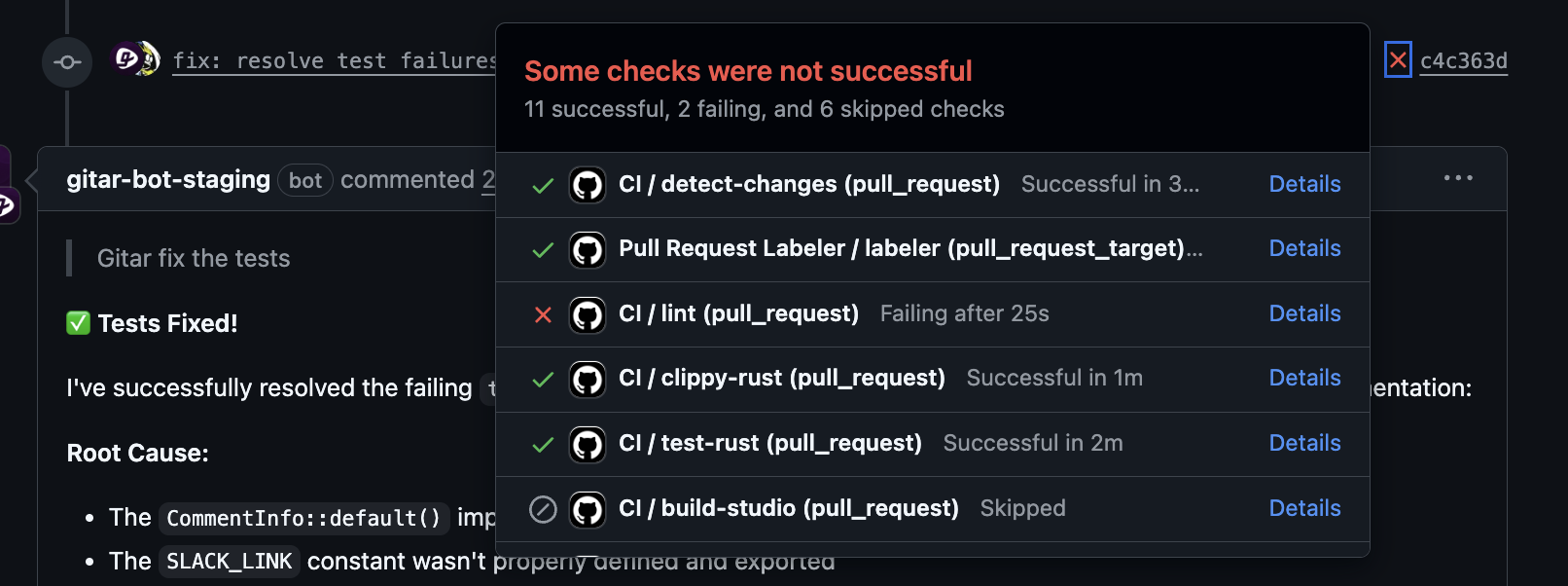
- Complete Fixes: It analyzes failures like linting errors or test issues, applies solutions, and commits them to the branch.
- Environment Matching: It mirrors complex setups, including specific software versions and security scans, for reliable fixes.
- Smart Context: It uses local data for precise changes that fit team coding styles.
- Wide Compatibility: Works with GitHub Actions, GitLab CI, CircleCI, and more.
- Trust Options: Start with suggestions needing approval, then move to full automation with rollback safety.
Experience automated CI fixes today. Install Gitar to eliminate broken builds and deliver software faster.
Gitar’s Approach to Root Cause Analysis
Detailed Log Parsing for Faster Fixes
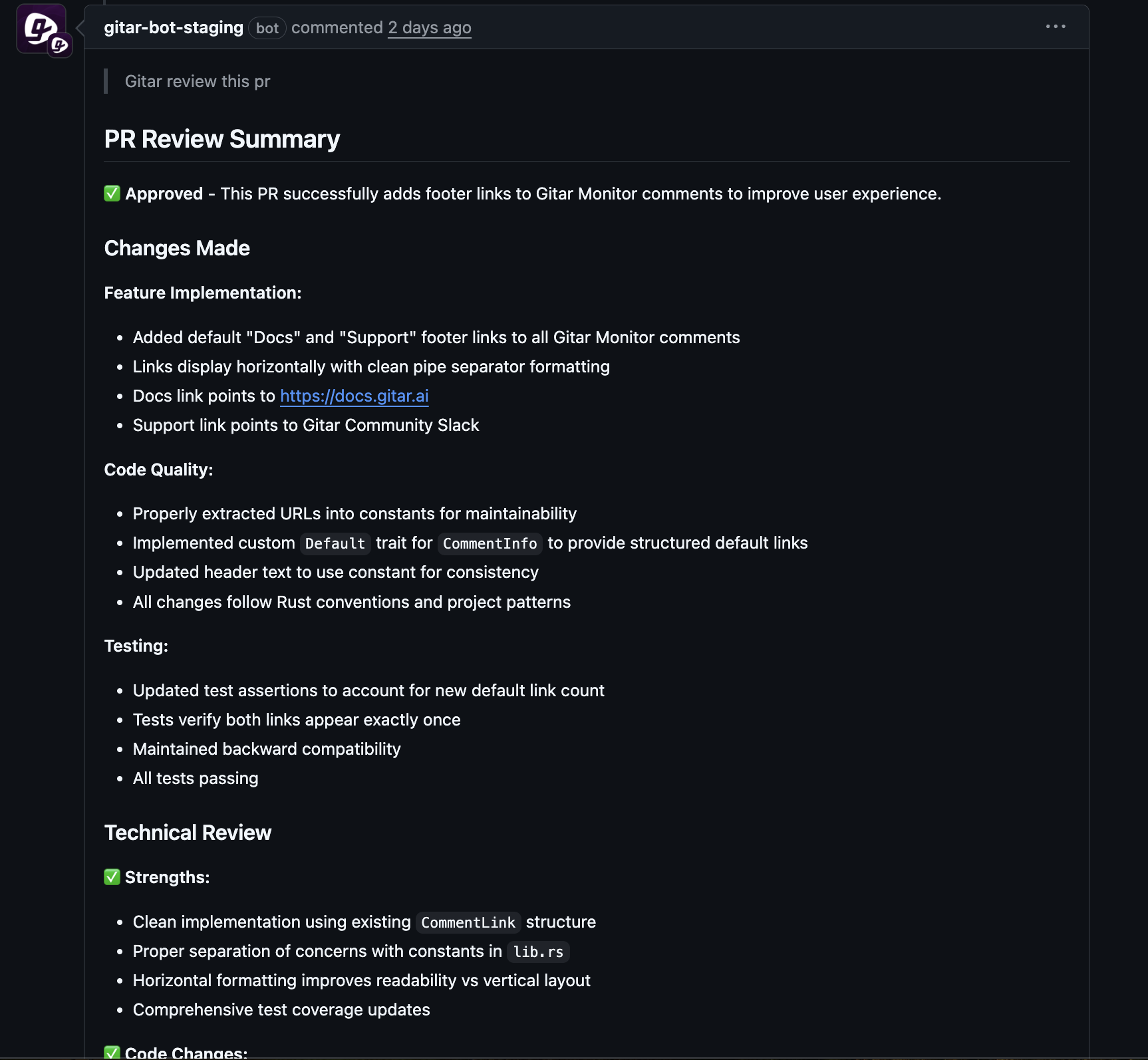
Gitar starts by digging into CI logs to grasp failure contexts. It sorts issues like linting errors, test failures, or build problems, then applies specific fixes for each.
It targets error patterns across categories, ensuring solutions match the problem type. Faster failure analysis cuts down development delays and boosts productivity. Gitar reduces manual log review by automating this step.
Mapping Dependencies and Environments
Gitar excels in handling complex setups. It mirrors enterprise environments with multiple SDKs, tools, and rules, ensuring fixes fit the full context.
It tracks direct and indirect dependencies, versions, and compatibility to avoid new issues. Incompatible dependencies and inconsistent environments often cause failures, and Gitar counters this with thorough mapping.
Generating and Testing Fixes Automatically
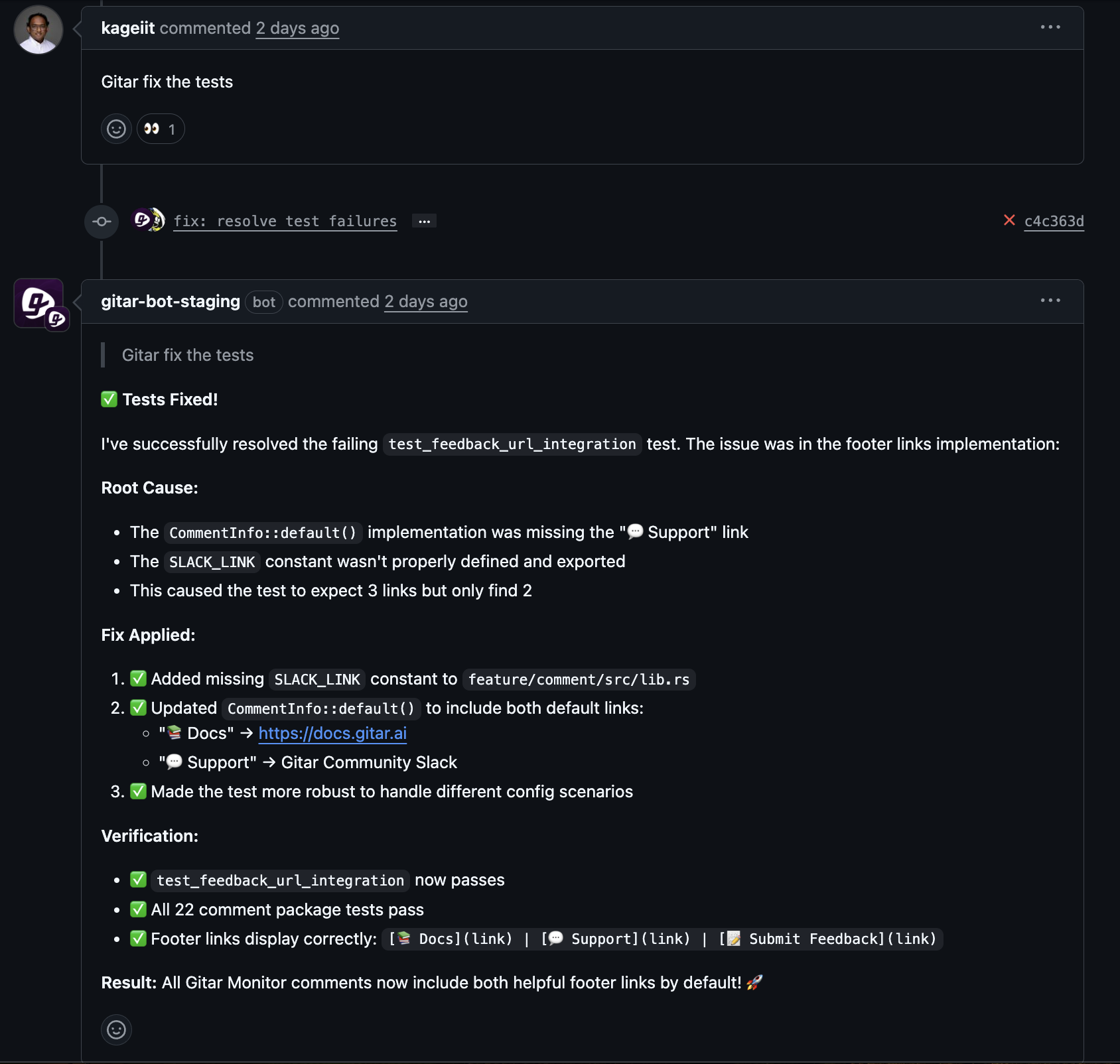
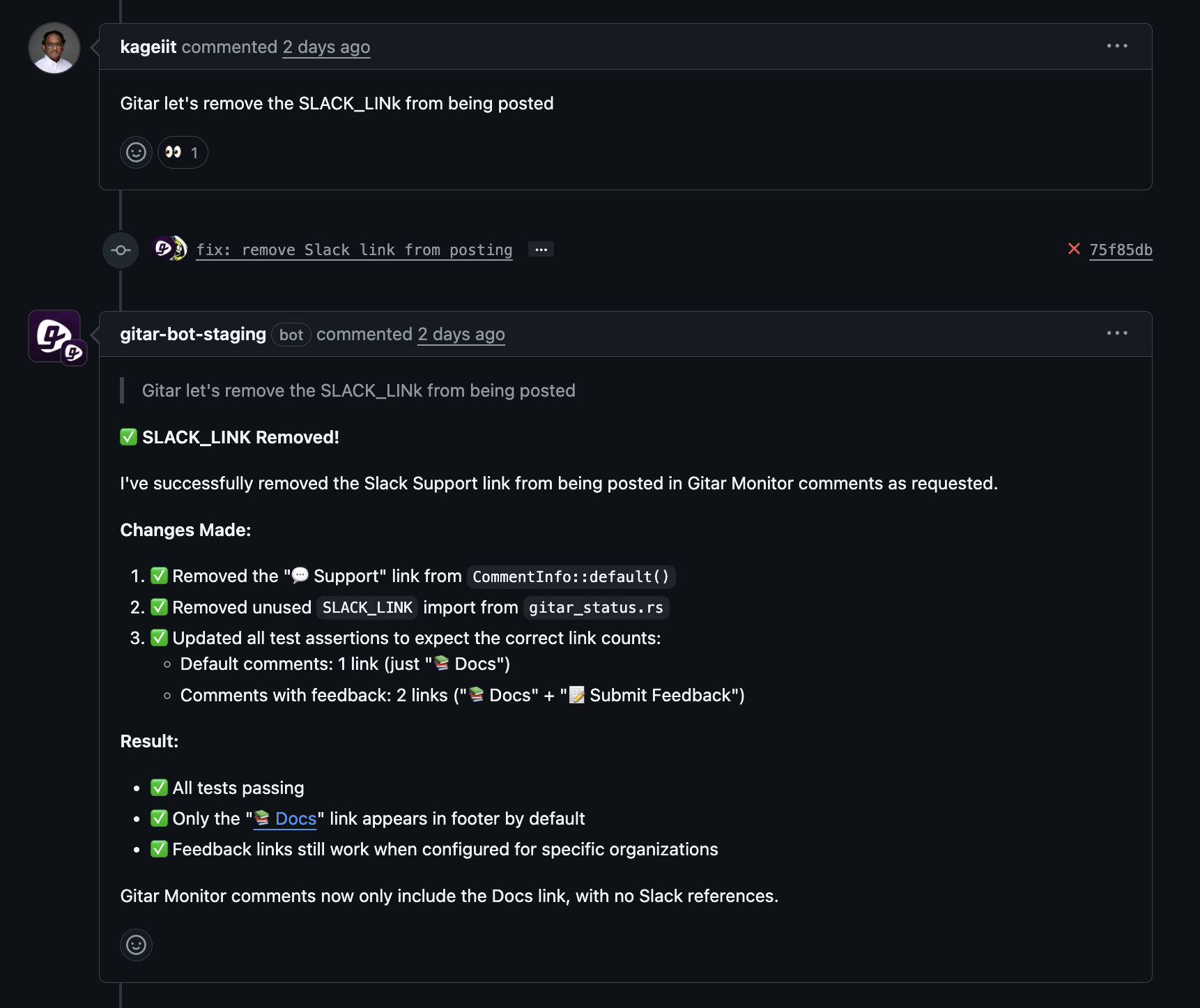
After identifying causes, Gitar creates code or dependency updates to fix issues. It tests these in the full CI setup to confirm they work without side effects.
Fixes match existing code patterns for consistency. If something goes wrong, rollback options let teams undo changes quickly, keeping automation safe.
Monitoring for Ongoing Improvement
Gitar tracks pipeline performance, spotting recurring issues for teams to address. It offers suggestions to improve reliability long-term.
It also watches for security risks. Runner vulnerabilities and access bugs can disrupt pipelines, and Gitar helps flag these for attention.
Healing Engine vs. Suggestion Engine: Key Differences
Comparing CI/CD Fix Approaches
|
Feature |
Gitar (Healing Engine) |
AI Code Reviewers (Suggestion Engine) |
Manual Debugging |
|
Analysis Depth |
Full environment context |
Code-focused, limited scope |
Relies on human log review |
|
Fix Action |
Auto-generates and validates fixes |
Offers ideas, needs manual work |
Manual fixes and CI reruns |
|
Context Switching |
None, fully automated |
High, requires developer input |
Very high, disrupts focus |
|
Resolution Time |
Minutes with automation |
Hours to days with manual steps |
Hours to days with investigation |
Healing engines like Gitar close the gap between spotting a problem and solving it. Suggestion tools leave implementation and testing to developers, while Gitar handles everything, validating fixes in the real environment.
Resolution speed shows the impact. Gitar cuts workflows to minutes by automating fixes, unlike suggestion tools or manual debugging that stretch over hours. Install Gitar to automate builds and ship software faster.
Common Questions About Gitar and Root Cause Analysis
How Does Gitar Handle Complex Enterprise Setups?
Gitar manages intricate environments by mirroring specific software versions, dependencies, security tools, and custom setups. This ensures fixes account for all factors, fitting enterprise needs with strict rules.
Can Gitar Tell Real Bugs from Flaky Tests?
Yes, Gitar uses AI to analyze test patterns and environment data, distinguishing genuine code issues from flaky failures and applying the right fixes.
What If I’m Not Ready for Fully Automated Fixes?
Gitar offers adjustable settings. Start with suggestions for review, approving fixes manually. As trust grows, shift to full automation with rollback options for safety.
How Does This Speed Up Delivery and Cut Costs?
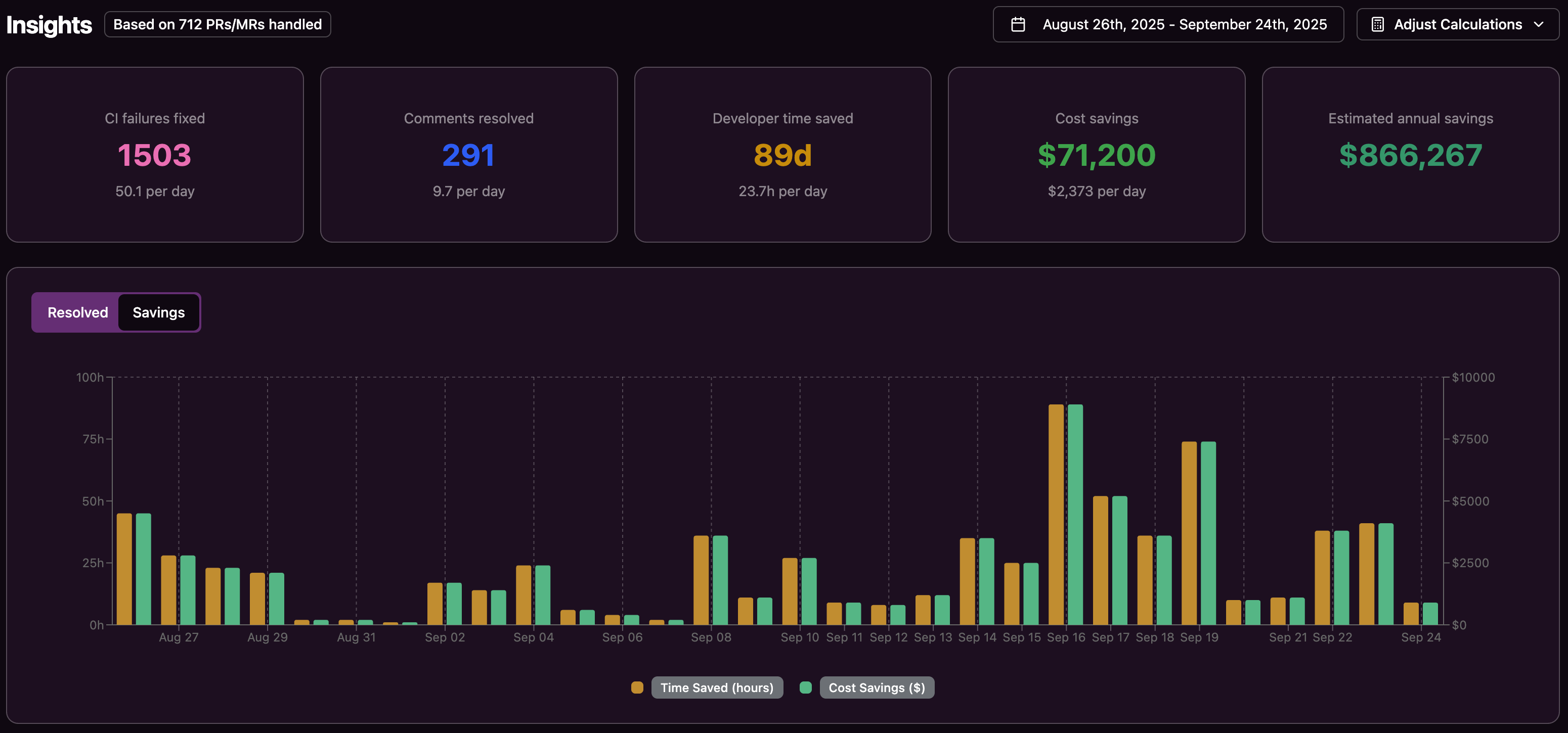
Automated analysis reduces debugging time, speeding up PR merges and feature releases. For a team of 20, CI issues might cost $1 million yearly. Gitar slashes this expense, delivering clear savings.
Does Gitar Work with My Current Tools?
Gitar integrates easily with GitHub, GitLab, and CI platforms like CircleCI or BuildKite. It fits into pull request flows as a smart agent, requiring little setup.
Speed Up Delivery with Gitar’s Automated Fixes
Manual CI/CD debugging wastes up to 30% of developer time, slowing releases and raising costs. Suggestion tools help spot issues but still require hands-on work, keeping interruptions frequent.
Gitar changes this with automated root cause analysis. It understands environments, identifies issues, applies fixes, and verifies results, letting developers focus on core tasks while pipelines run smoothly.
Teams using automated CI fixes see faster delivery, lower costs, and happier developers. The value is clear for any organization aiming to improve software output. Ready to streamline your pipelines? Install Gitar to fix builds automatically and ship better software now.