
CI/CD pipeline failures can disrupt a developer’s workflow, turning a promising pull request into a frustrating debugging session. These issues pull engineers away from core development tasks, costing teams significant time and money. Autonomous AI offers a practical solution by detecting and resolving errors automatically, helping teams maintain momentum and deliver software more efficiently.
Why Manual CI/CD Error Handling Slows You Down
Context Switching Costs Valuable Developer Time
Manual CI error handling disrupts productivity in a big way. When a build fails, developers must stop their current work to analyze confusing logs and fix issues. This context switch isn’t quick. It often means revisiting code written days ago, which can take substantial time and mental effort to address.
Data shows developers may lose up to 30% of their workday to CI failures and code review feedback. For a 20-person team, this can add up to about $1 million in lost productivity each year when considering full compensation costs. Beyond hours, these interruptions break the flow state, a critical mindset for high-quality coding.
A single failed build creates a chain of delays. After submitting a pull request and moving to the next task, a failure notification forces a return to the issue. Fixing a small error, like a linting problem, might take just minutes, but regaining focus on the original task can stretch the impact to an hour or more.
Release Delays and Rising Financial Impact
CI/CD failures affect more than individual developers; they slow down entire organizations. About 60% of companies face project delays due to pipeline issues, blocking timely software releases and impacting business goals.
These delays have real financial consequences. When features launch late, companies miss market windows and struggle to meet customer demands, giving competitors an edge. Time-to-merge becomes a key indicator of agility. The longer it takes from commit to merge, the slower an organization can respond to market needs.
For a 20-developer team, just one hour of daily CI delays per person amounts to 5,000 lost hours annually. At a loaded cost of $200 per hour, that’s a direct loss of $1 million, not counting indirect costs like missed deadlines or reduced customer satisfaction.
Complex Systems Challenge Traditional Error Detection
Today’s software projects are intricate, making manual error detection harder than ever. Large projects with multiple teams often struggle to pinpoint error sources across commit, compile, build, test, and deploy stages, leading to inefficient debugging.
Common CI/CD errors include environment mismatches, version control problems, automation flaws, build failures from misconfigurations, and dependency conflicts. Each type demands specific expertise, which can overwhelm individual developers handling diverse issues.
Enterprise setups add layers of difficulty with complex dependencies, multi-SDK builds, and tools like SonarQube or Snyk. A pipeline might involve specific JDK versions, Node.js setups, or Docker containers. Debugging failures in such environments takes far longer with traditional methods.
Inconsistencies between development, staging, and production further complicate things. Code that runs fine locally might fail in CI due to small configuration differences. This “works on my machine” issue leads to extended investigation, which could be reduced with smarter, context-aware detection.
Ready to cut down on manual CI debugging time? Install Gitar to automate fixes and ship software faster.
How Gitar’s Autonomous AI Solves CI/CD Challenges
Gitar changes the game by moving from reactive debugging to proactive pipeline healing. This AI agent doesn’t just point out issues; it identifies, diagnoses, and fixes CI failures on its own. The goal is to minimize the manual effort spent on debugging, letting developers focus on building features.
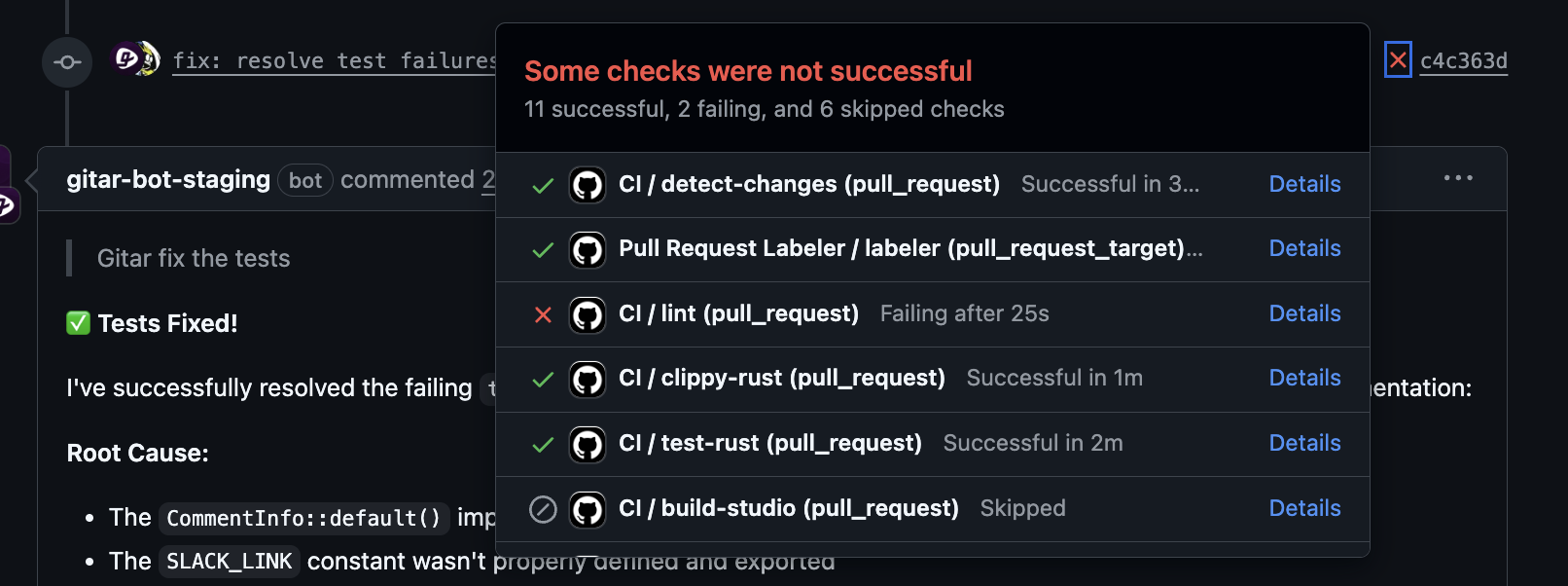
When a CI check fails, Gitar reviews build logs, finds the root cause, creates a fix, applies it to your branch, and commits the change to the pull request. This streamlined process ensures builds turn green with little to no developer involvement.

Here are the core strengths of Gitar in action:
- Complete Resolution: Gitar applies fixes and validates them against your CI pipeline, ensuring builds pass before finalizing pull requests.
- Environment Matching: It replicates complex setups, including specific JDK versions, multi-SDK dependencies, and tools like SonarQube, for accurate fixes.
- Flexible Control: Offers options from suggestion-only mode, needing developer approval, to automatic commits with rollback capabilities as confidence grows.
- Wide Compatibility: Supports platforms like GitHub Actions, GitLab CI, CircleCI, and BuildKite for versatile integration.
- Code Review Support: Automatically handles reviewer feedback, reducing delays for teams across time zones.
Want to improve your CI/CD workflow? Book a demo to see Gitar’s automated fixes firsthand.
Key Advantages of Using Gitar for CI/CD Error Detection
Improved Pipeline Reliability with AI Automation
Gitar boosts reliability through detailed AI analysis of logs and environment replication. When a pipeline fails, it assesses the build context, including dependencies and configurations, to create fixes that hold up across complex systems.
This self-healing method cuts down on guesswork. Gitar tests fixes against your CI workflow before committing, ensuring they resolve issues effectively, unlike manual interpretation of error messages.
It tackles common problems like linting errors, test failures such as snapshot updates, and build issues from dependency mismatches. Its understanding of various languages and platforms delivers consistent results, no matter the tech stack.
Faster Merges with Less Downtime
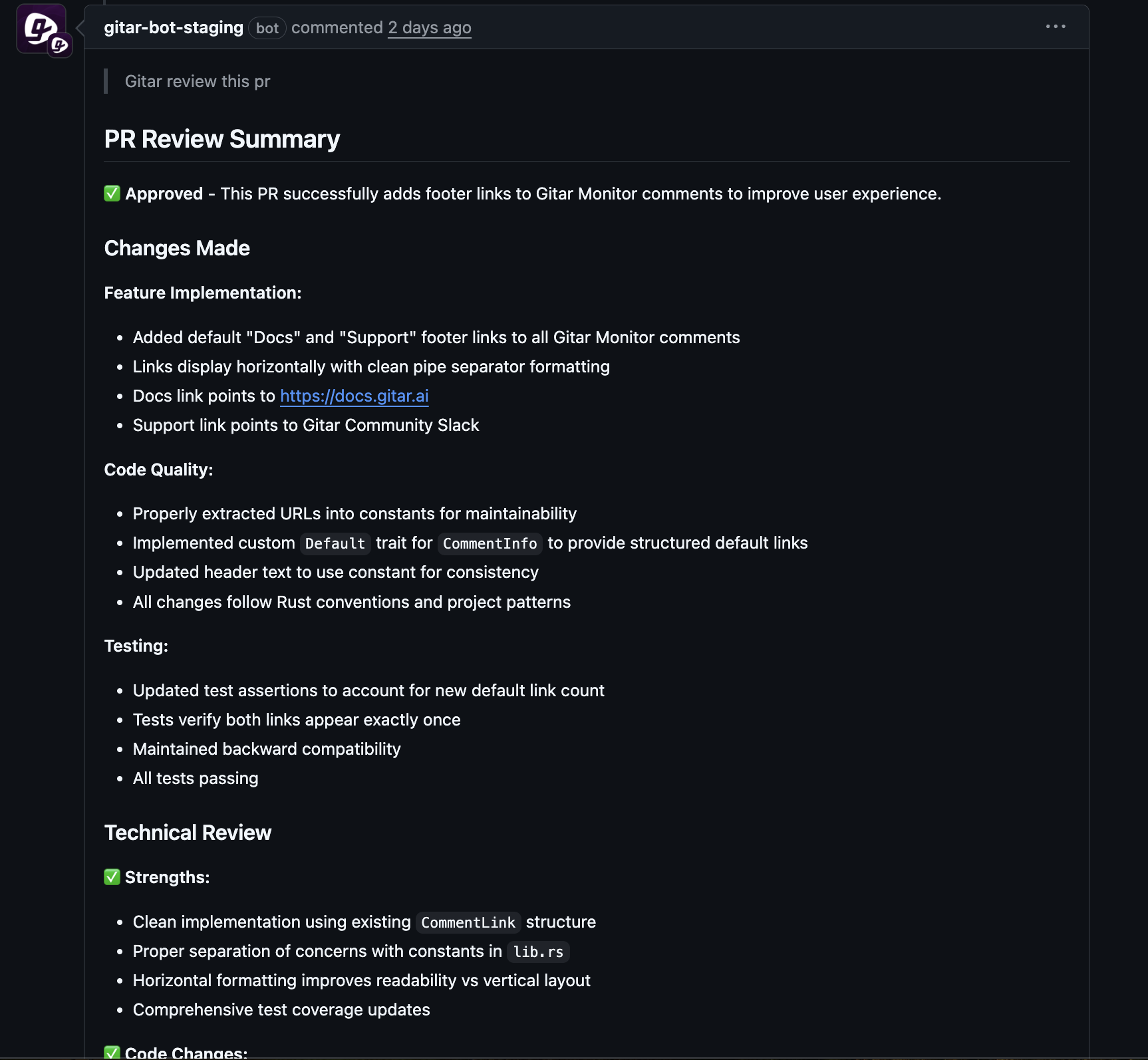
Fixing CI failures manually creates delays as developers investigate and rerun builds. Gitar reduces this downtime by addressing issues as soon as they appear, often before developers are even aware of a problem.
This speed directly shortens time-to-merge. Gitar often resolves issues in one automated step, a significant benefit for distributed teams where time zone differences can prolong fix cycles.
Consistent green builds mean more predictable release schedules. Engineering leaders can plan with assurance, knowing pipeline issues won’t derail timelines, making CI/CD a reliable part of the process.
More Developer Focus and Better Team Morale
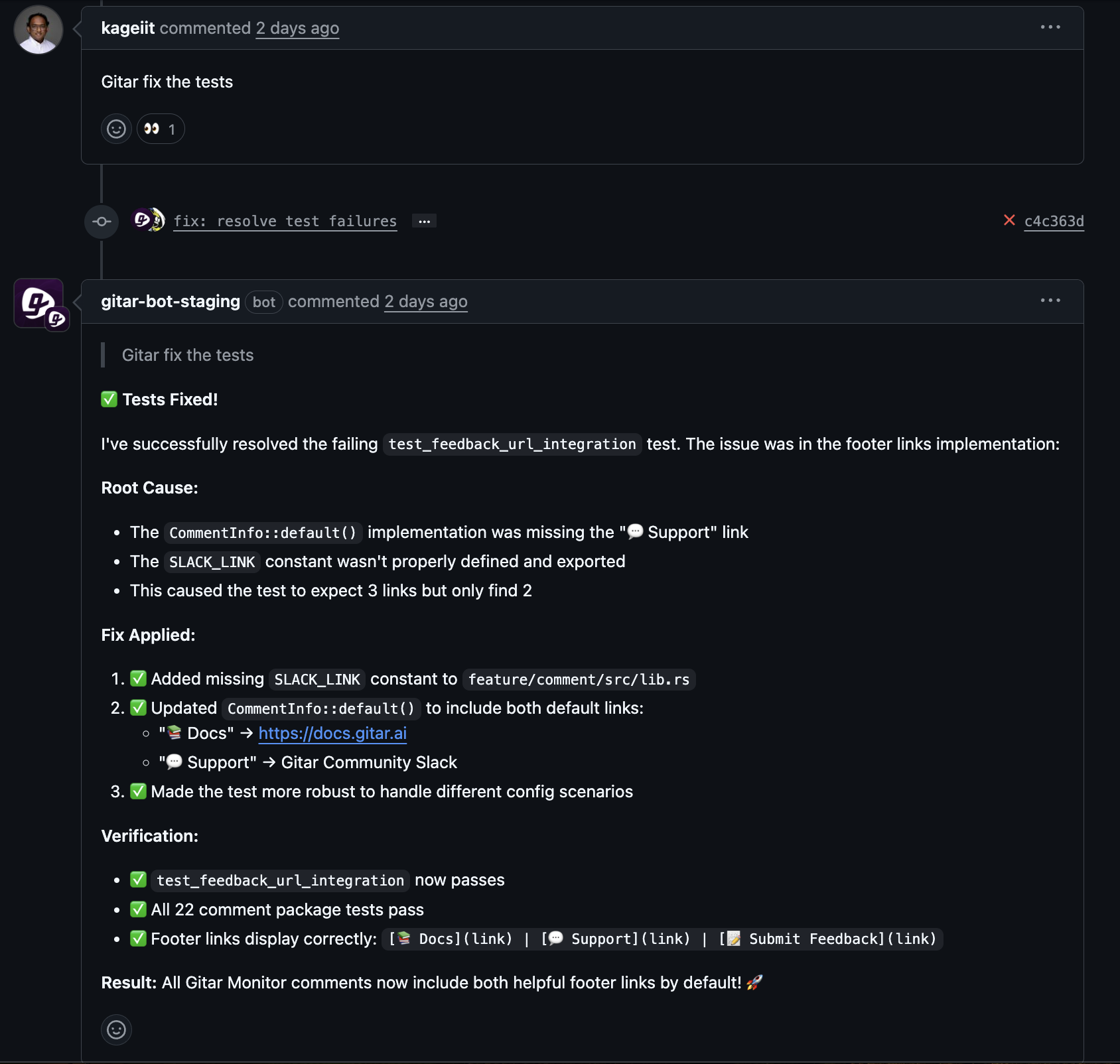
Automated CI fixes do more than save time; they reduce frustration. Developers often feel bogged down by pipeline failures that interrupt their focus. Gitar eases this burden by handling routine issues automatically.
When developers know common CI problems will be fixed without their input, they can concentrate on creative coding tasks. Avoiding constant debugging helps maintain focus, leading to better work quality. Teams feel more satisfied when repetitive tasks are off their plates.
The productivity boost is clear. With Gitar, teams regain hours for feature development and high-value work that drives business goals forward.
Lower Costs by Optimizing CI Resources
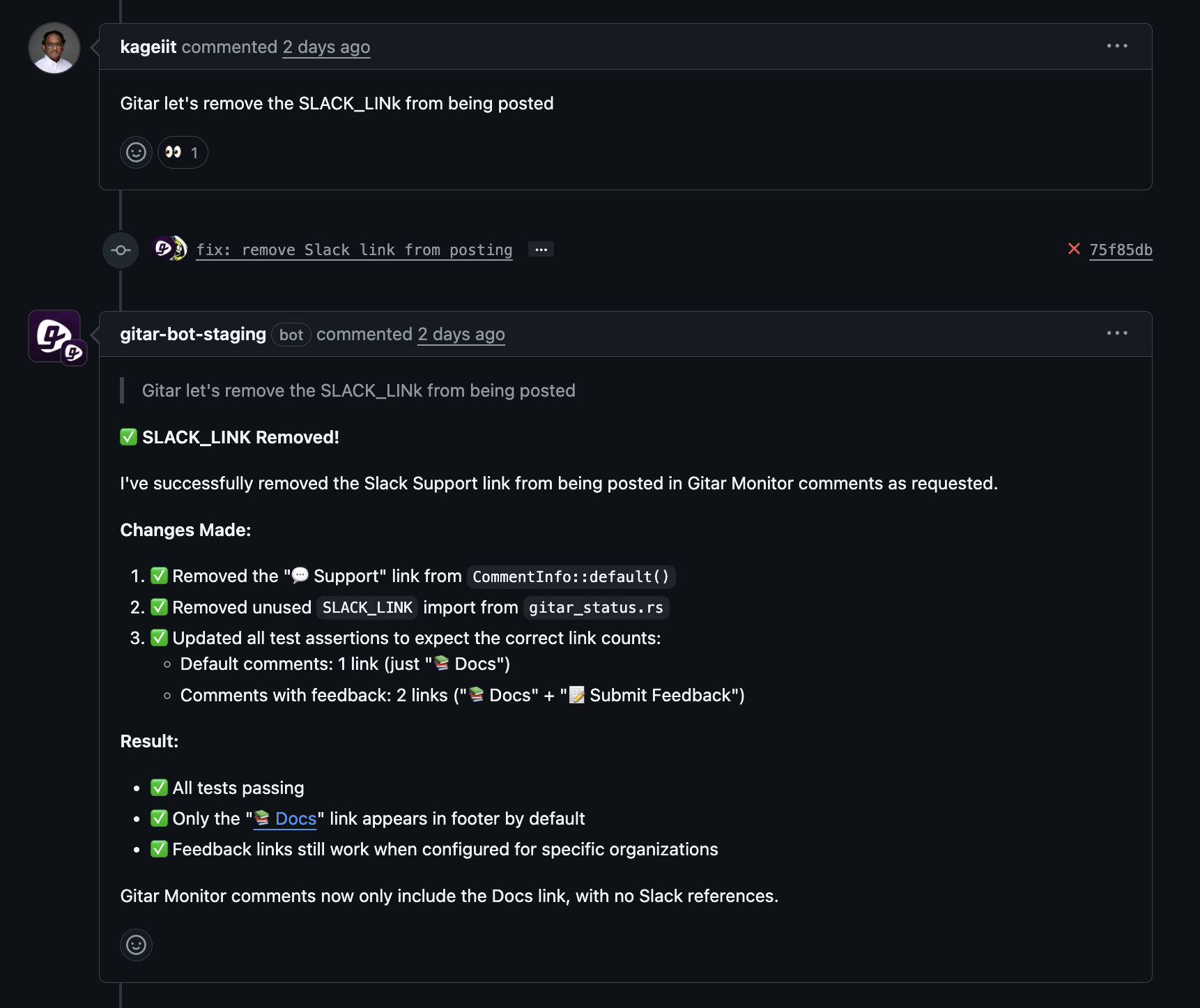
Pipeline failures drive up expenses through wasted CI minutes. Each failed run and retry cycle adds to resource use. Gitar fixes issues on the first try, cutting down on repeated runs and saving costs, especially for cloud-based CI services.
Cost savings extend to reduced engineering workload. A 20-developer team losing $1 million yearly to productivity delays makes a strong case for automation. Even with partial implementation, Gitar offers notable financial benefits while increasing team speed and morale.
How Gitar Stands Out from Other CI/CD Tools
Gitar differs from typical tools by acting as a healing engine, not just a suggestion provider. While many solutions offer recommendations, Gitar automatically applies and validates fixes for full resolution.
|
Feature |
Gitar (Healing Engine) |
Manual Work (Status Quo) |
AI Code Reviewers (e.g., CodeRabbit) |
On-Demand AI Fixers (e.g., Claude) |
|
Error Detection |
Full environment context & validation |
Human interpretation & experience |
Context-aware suggestions |
Context-aware analysis |
|
Fixing Mechanism |
Autonomous application & commit |
Manual investigation & commit |
Committable suggestions |
Advanced suggestions & workflows |
|
Validation Against CI |
Yes, ensures green builds |
Manual re-run |
Limited direct validation |
Limited direct validation |
|
Environmental Context |
Full replication (SDKs, dependencies) |
Human knowledge & setup |
Advanced context management |
Multi-file & repo-level context |
|
Automation Level |
Highly automated |
None |
Partially automated |
Workflow automation |
|
Developer Interruption |
Minimal (background fixes) |
High (context switching) |
Reduced (one-click fixes) |
Moderate (some manual input) |
|
Cross-Platform CI Support |
Yes (GitHub, GitLab, CircleCI, etc.) |
N/A |
Supports multiple platforms |
Supports multiple platforms |
Gitar’s strength lies in complete resolution. Unlike AI reviewers that suggest fixes, Gitar ensures solutions work with your CI workflow before committing them.
While on-demand AI tools provide detailed analysis, Gitar operates without manual prompts, detecting and resolving failures automatically to keep your workflow uninterrupted.
Its environment replication is a key advantage. Gitar mirrors specific build setups, including SDK versions and dependencies, to ensure fixes are effective in your unique context.
Ready to experience automated pipeline healing? Install Gitar to fix broken builds and ship faster.
Common Questions About Autonomous Pipeline Error Detection
How Does Gitar Manage Complex Enterprise CI/CD Pipelines?
Gitar replicates intricate enterprise setups, including specific JDK versions, multi-SDK dependencies, and tools like SonarQube. This ensures fixes are tailored to your environment and validated against actual CI workflows before being applied.
How Is Gitar Different from AI Code Review Tools?
Many AI code reviewers provide suggestions without full CI validation. Gitar acts as a healing engine, automatically applying and testing fixes within your CI pipeline to ensure builds pass, all without manual prompting.
Which CI/CD Errors Can Gitar Fix Automatically?
Gitar resolves common issues like linting errors, test failures such as snapshot updates, and build problems from dependency issues. Its environment replication supports complex setups involving various SDK versions and enterprise tools.
How Does Gitar Address Trust and Compliance Needs?
Gitar provides a customizable trust model, offering modes from suggestion-only, requiring developer approval, to full automation with rollback options. This flexibility lets teams maintain control while building confidence in the system.
How Does Gitar Help Distributed Teams Across Time Zones?
Gitar minimizes delays for distributed teams by applying fixes immediately after detecting failures or receiving feedback. A reviewer in one time zone can leave comments, and Gitar ensures fixes are ready for the developer in another time zone, reducing wait times.
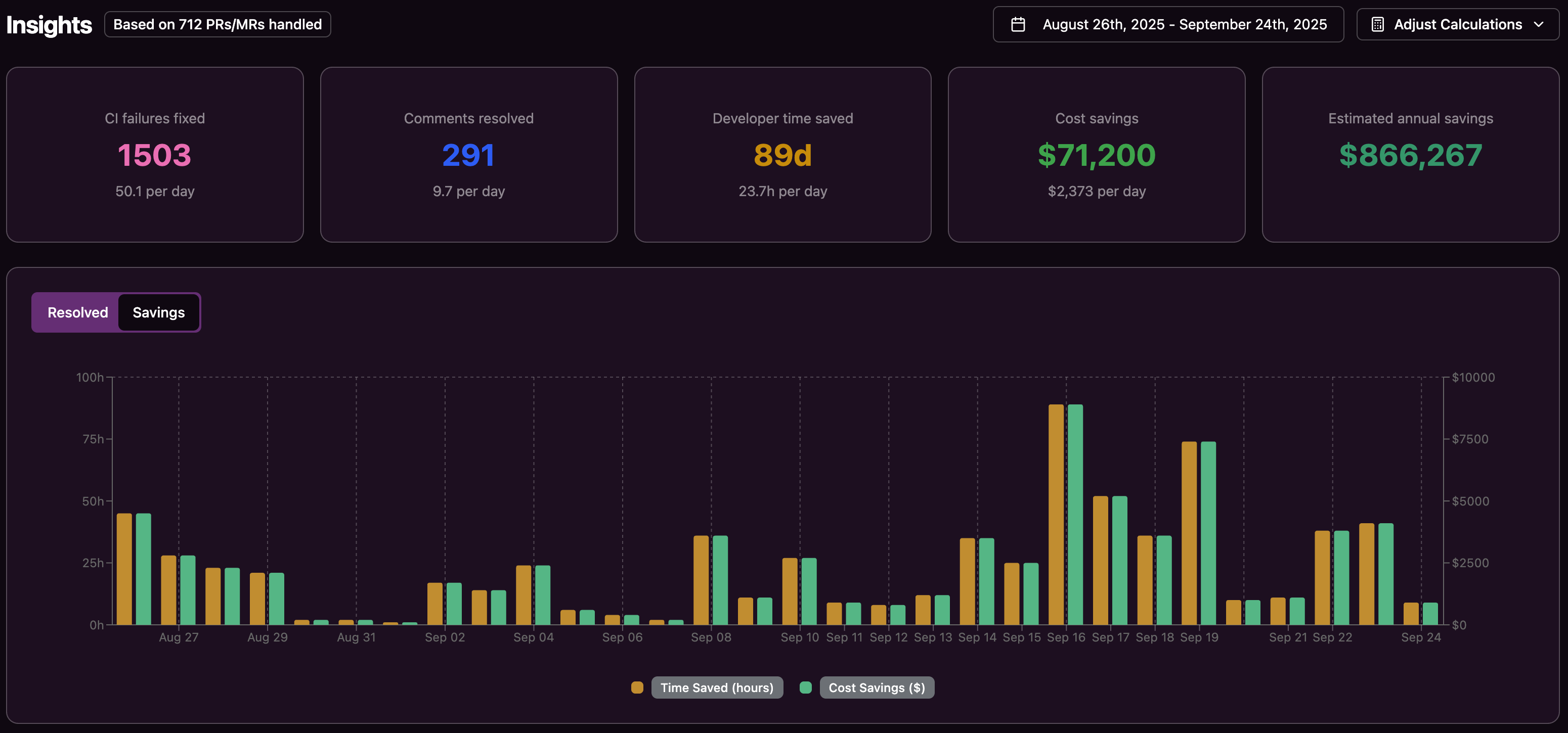
Why Autonomous CI/CD with Gitar Is the Future
Manual pipeline error fixing struggles to keep up with modern software demands. As AI coding tools grow, CI/CD issues remain a key bottleneck. Traditional methods limit the productivity gains teams need to stay competitive.
Gitar shifts the focus to proactive resolution. By automating fixes with full environment awareness, it turns CI/CD into a dependable automation layer. Moving from mere suggestions to active healing marks a meaningful advancement.
Teams using autonomous CI tools gain back valuable time, speed up merges, and improve overall development processes. Adopting this approach can provide a clear edge in delivery speed and efficiency.
Ready to streamline pipeline fixes and speed up releases? Request a demo to see Gitar’s automated CI solutions in action.