Written by: Ali-Reza Adl-Tabatabai, Founder and CEO, Gitar
CI pipeline failures slow down engineering teams, pulling developers away from coding to fix issues. Even with Azure DevOps providing solid tools for automation, these disruptions can hurt productivity. Gitar offers a solution with an AI agent that detects and resolves CI pipeline issues on its own, creating self-healing pipelines that keep developers focused and speed up delivery.
Why CI/CD Failures Hurt Productivity
CI/CD promises automation so developers can focus on building features. Yet, many teams still deal with failed builds that interrupt their work. A developer submits a pull request, only to face a broken pipeline requiring immediate attention, breaking their momentum.
Time Lost to Manual Fixes
Developers spend an average of one hour daily debugging CI failures. Beyond just fixing errors, the real cost comes from switching focus. Leaving a complex task to handle a pipeline issue means losing mental clarity, often turning a quick fix into a prolonged distraction.
Delays and Costs for Businesses
These individual delays add up to major losses. For a 20-person engineering team, time spent on CI issues can cost around $1 million annually in lost productivity. This doesn’t even include the impact of delayed features or missed market opportunities. Product managers struggle to plan timelines, sales teams face unmet promises, and customer support deals with delayed functionality.
Challenges in CI/CD Setups
CI/CD environments vary widely, with failures arising from dependency issues, misconfigurations, or failing tests. Standard fixes, like manual debugging or basic AI suggestions, often fall short. They lack the detailed understanding needed to resolve problems without developer input.
Install Gitar to fix broken CI builds automatically and ship quality software faster.
Gitar: AI-Driven Self-Healing for CI Pipelines
Gitar changes the game by moving from manual fixes to automated pipeline recovery. Unlike tools that only flag issues or suggest solutions, Gitar acts as a full fix engine. It turns pipeline failures into background tasks that resolve without interrupting developers.
At its heart, Gitar grasps CI environments, creates fixes, applies them, and confirms everything works for successful builds. It tackles common issues like linting errors, test failures, and build problems directly.

Core Benefits of Gitar for CI Pipelines
- Complete Pipeline Fixes: Gitar applies and validates solutions, ensuring all CI jobs pass, covering issues like linting and test failures.
- Environment Matching: It mirrors complex CI setups, including specific SDKs, dependencies, and integrations, so fixes work in real conditions.
- Smart Issue Analysis: Gitar reviews logs to pinpoint root causes and deliver accurate fixes without needing developer help.
- Customizable Automation: Teams can adjust Gitar’s automation level, starting with suggestions and moving to full fixes as confidence grows.
- Wide Platform Support: Gitar integrates with GitHub Actions, GitLab CI, CircleCI, BuildKite, and more, providing consistent fixes across tools.
See how Gitar improves CI reliability with a demo on automated pipeline fixes.
How Gitar Improves CI/CD Workflows
Keeping Developers Focused
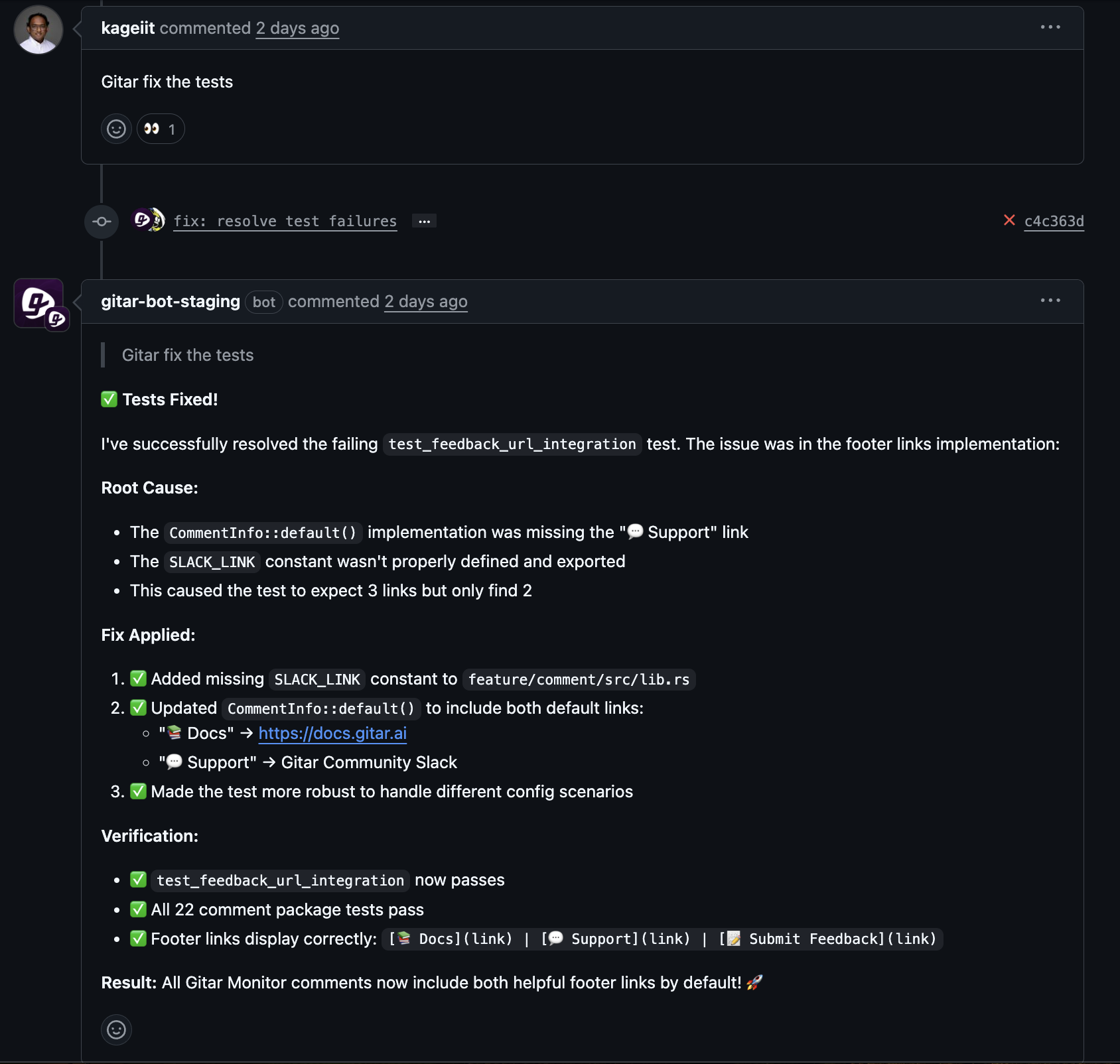
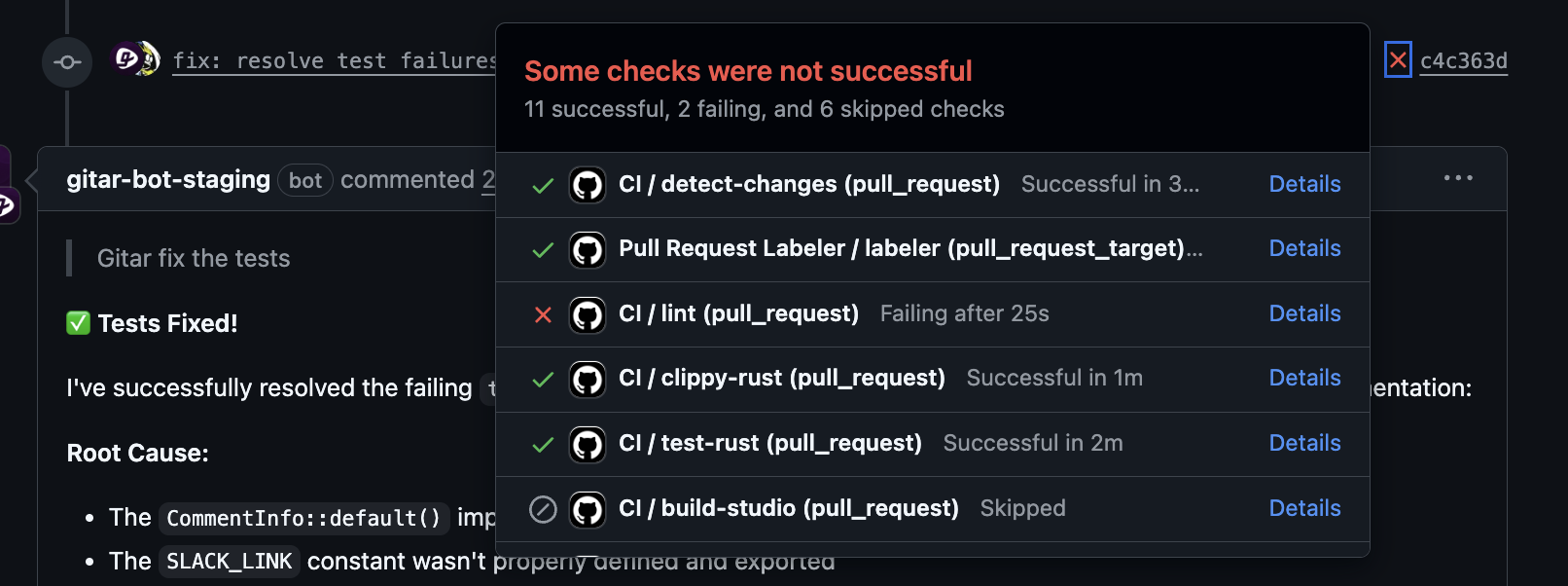
Developers work best when fully immersed in their tasks. CI failures pull them out of this focus to handle fixes, slowing progress. Gitar prevents these interruptions by managing failures automatically. For instance, if a linting error breaks a build, Gitar detects it, fixes the code, and commits the change. The developer stays focused, later seeing a successful build with a note on what was fixed.
Speeding Up Delivery
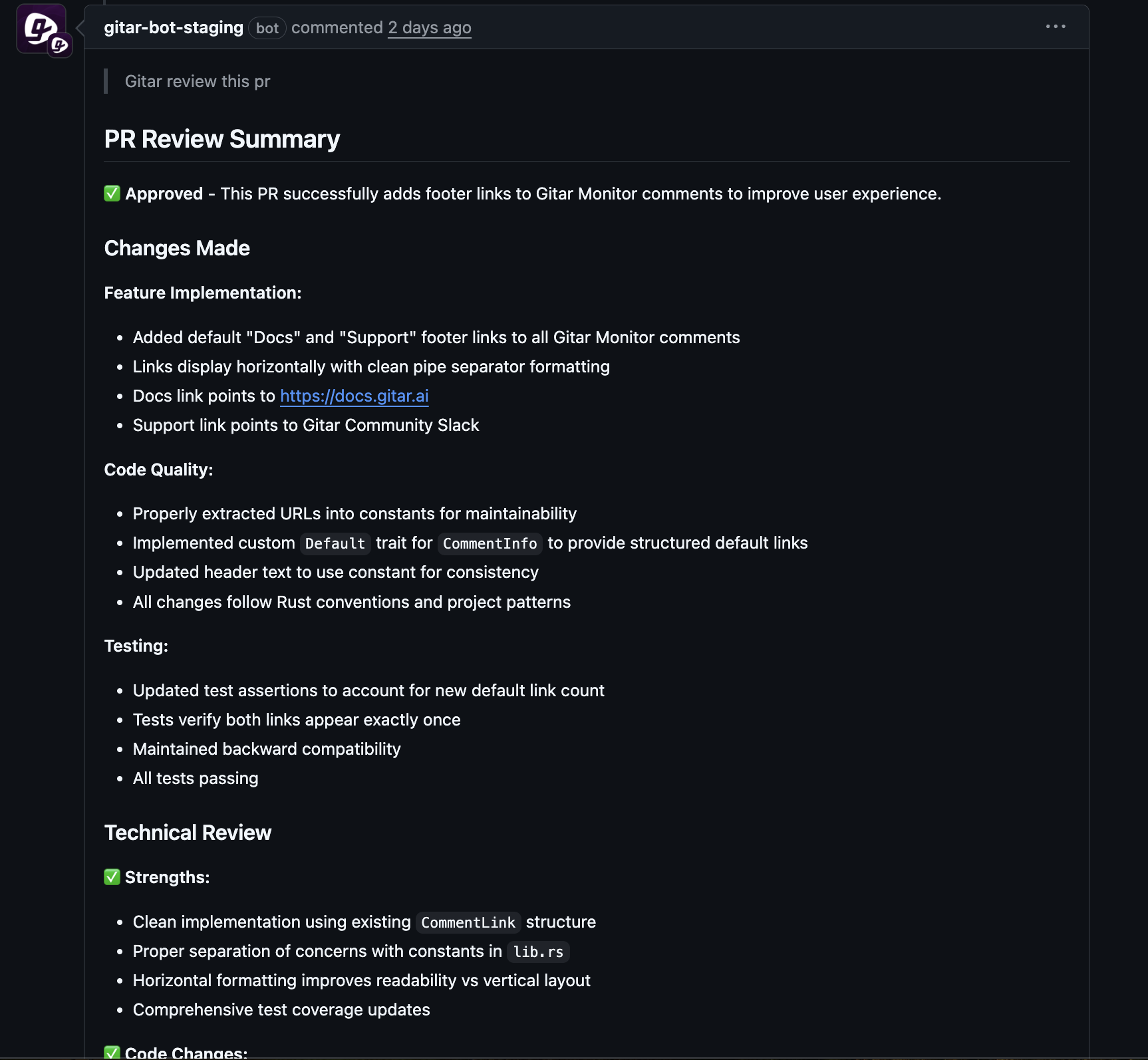
In fast-moving markets, getting features out quickly matters. Gitar cuts delays between coding and merging by fixing pipeline issues on its own. Instead of repeated cycles of failure and manual correction, Gitar resolves many problems instantly. This lets developers tackle bigger challenges while builds stay on track.
Cutting Operational Expenses
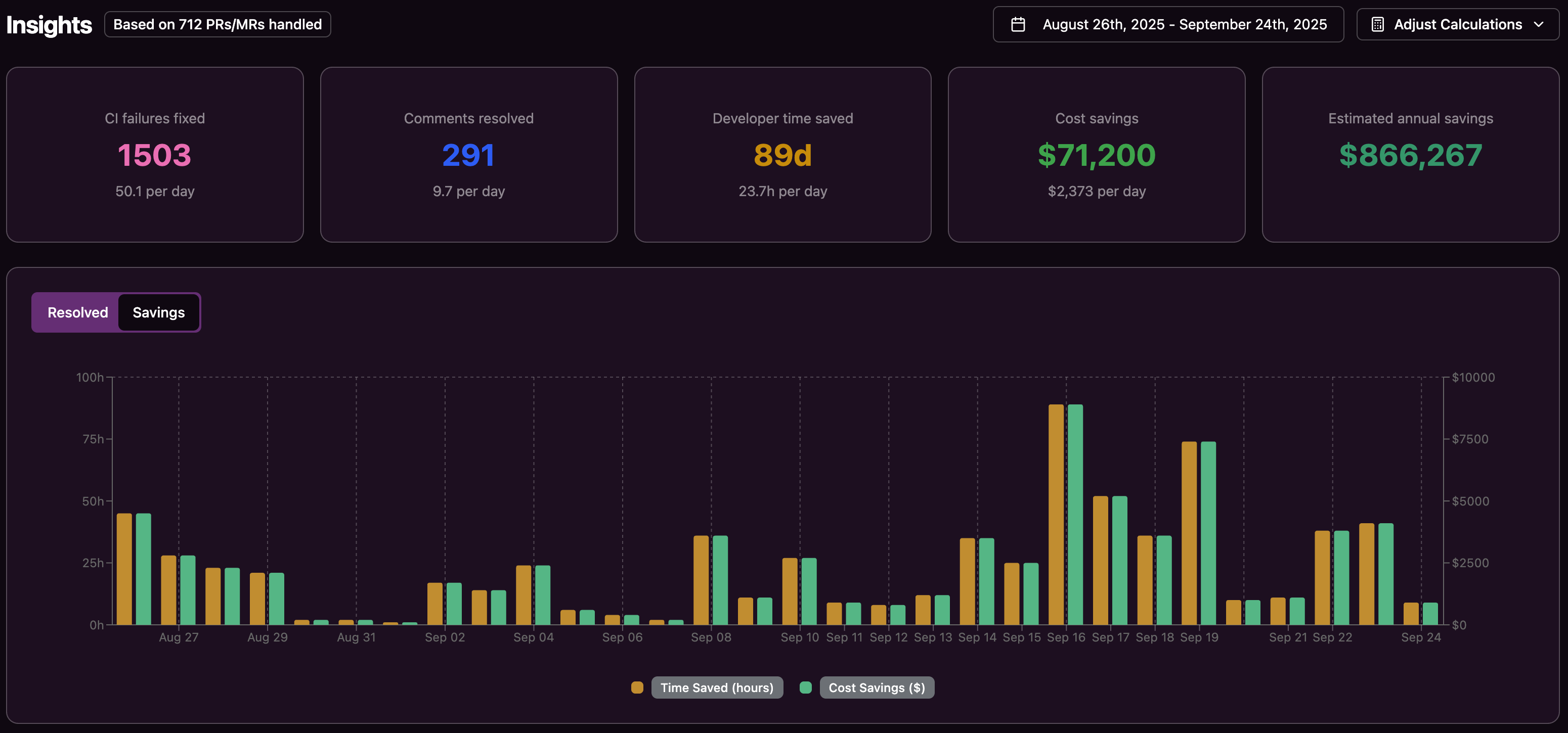
For leaders tracking budgets, automated CI fixes offer clear savings. Failed builds waste compute resources and developer time, costs that grow with team size. Gitar reduces these by handling fixes efficiently. A 20-developer team could save over $500,000 yearly by halving time lost to CI issues. Key cost areas include:
- Developer Hours: Senior staff no longer spend hours on fixes Gitar can handle.
- Opportunity Loss: Time saved goes to features or tech debt instead.
- Resource Waste: Fewer failed runs mean less spent on unused infrastructure.
- Mental Overhead: Less task-switching boosts overall output.
Gitar Compared to Suggestion Tools
CI/CD support tools differ in how they handle issues. Gitar stands out by fully automating fixes, unlike suggestion tools that still need developer action. Here’s how it compares:
|
Feature / Tool |
Gitar (Automated Fixes) |
Suggestion Tool (e.g., CodeRabbit) |
Manual Fixes (Current Standard) |
|
Core Function |
Automatic CI Fixes, Code Feedback |
AI Suggestions for Code |
Manual Issue Resolution |
|
CI Response |
Applies and commits fixes for successful builds |
Offers ideas, needs manual action |
Developer fixes and reruns builds |
|
Developer Effect |
Removes interruptions, keeps focus |
Still needs developer time |
Causes major focus loss |
|
Scalability |
Built for complex enterprise setups |
Limited to suggestion range |
Relies on personal skill |
Gitar takes on the full fix process, from creation to validation, ensuring builds succeed without extra effort. Suggestion tools leave the heavy lifting to developers.
Try Gitar’s automated CI fixes and stop pipeline disruptions today.
Real Impact: Gitar in Action
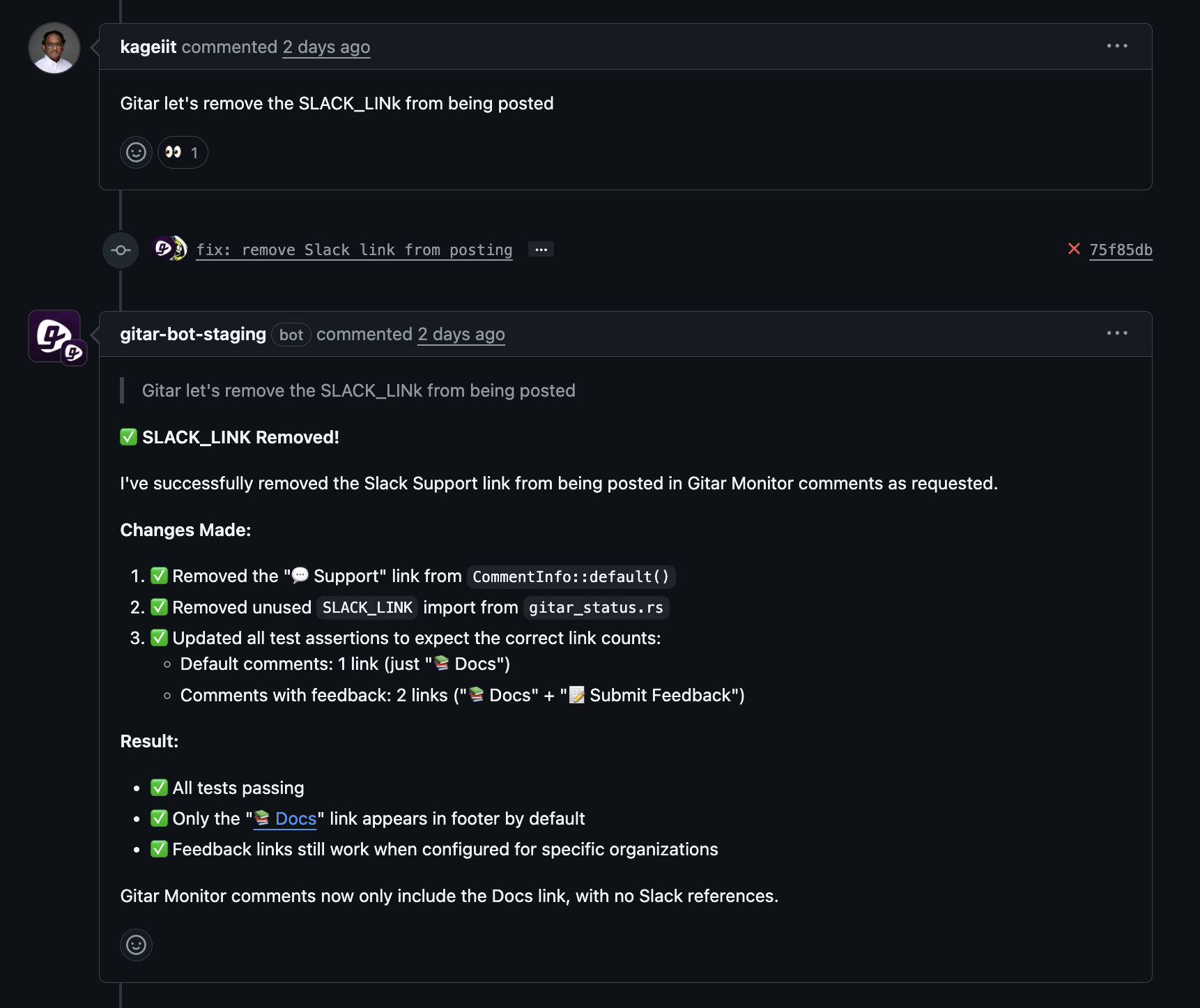
Moving from manual debugging to automated fixes changes how teams work with CI systems. Practical cases show Gitar’s value. For distributed teams, reviewers can comment on pull requests with specific requests, like removing a feature. Gitar processes it, makes the change, and commits with an explanation, ready for approval by the next day.
Starting with Gitar: Setup and Use
Adopting automated CI fixes with Gitar follows a clear path to build trust while delivering quick benefits.
Step 1: Easy Setup
Integrating Gitar causes little disruption. Authorize it for specific repositories and use a web dashboard to set it up with CI tools like GitHub Actions or GitLab CI. Start with minimal automation to test the fit.
Step 2: Building Confidence
Gitar kicks in when a pipeline fails after a pull request. It comments on the issue, analyzes it, and suggests a fix quickly. As teams see reliable small fixes, they can increase automation levels for selected projects.
Step 3: Full Automation
With trust established, Gitar handles more complex tasks. Reviewers can request specific changes in comments, like refactoring code. Gitar completes these autonomously, streamlining workflows, especially for global teams.
Common Questions About Gitar
Can Gitar Handle Typical CI Issues?
Gitar resolves many standard CI problems, such as linting errors and test failures. It uses a deep understanding of environments to apply fixes and commit changes with clear notes.
Does Gitar Work with Complex CI Systems?
Gitar is built for intricate setups with multiple pipelines. It analyzes the full context to ensure fixes don’t disrupt other system parts.
Will Gitar Overlap with Other AI Review Tools?
Gitar works alongside AI reviewers. While those tools suggest code improvements, Gitar focuses on fixing and validating CI issues to ensure builds pass.
How Does Gitar Address Security?
Teams control Gitar’s automation scope through settings. All changes are logged in commit history with detailed explanations for full transparency.
What if Gitar Can’t Fix an Issue?
For rare, complex failures beyond its scope, Gitar offers detailed insights and suggestions to cut down on manual troubleshooting time.
Gitar: The Future of Reliable CI/CD
Pipeline failures disrupt teams, delay projects, and drain productivity. Gitar solves this by automating fixes, turning CI/CD into a dependable base for software delivery. Developers stay focused, leaders see faster output and lower costs, and businesses ship sooner. This goes beyond fixing builds. It frees teams to create without friction.