Third-party dependencies are a critical part of modern software, but they bring significant security risks if not managed well. Many applications rely on countless external libraries and packages, each a potential weak point. This article covers the downsides of manual dependency checks and explains why automation is vital for software security. You’ll see how Gitar, an AI-driven agent, fits into CI pipelines to fix dependency issues efficiently while keeping developer workflows uninterrupted.
Why Manual Dependency Management Falls Short
Hidden Dangers in Third-Party Dependencies
Third-party libraries and packages often carry vulnerabilities that can compromise an application’s security. As software development increasingly depends on these external components, the complexity of managing potential risks grows.
These vulnerabilities can remain undetected until they cause major issues. For organizations using third-party tools, unaddressed flaws might lead to unauthorized access or other security breaches if not handled quickly.
The problem scales as reliance on external tech increases. Development teams use these libraries to speed up releases, but this adds layers of risk that demand constant oversight.
Legacy systems or outdated frameworks make things even tougher. Over time, unpatched issues and conflicts pile up, creating a growing security challenge.
Dependency flaws are particularly risky because they can evade routine checks without consistent monitoring. Regular updates and proactive strategies are essential to protect software integrity.
High Costs of Manual Dependency Handling
Even with early issue detection in the development process, manual fixes create bottlenecks. Modern apps often have numerous dependencies, each with distinct update cycles and failure points.
Handling dependencies manually slows down more than just security teams. Developers spend hours reviewing reports, evaluating impacts, and applying fixes, which pulls them away from core tasks and disrupts focus.
Tracking dependencies by hand is challenging due to their complexity. A single app might include hundreds of direct dependencies, plus countless indirect ones, forming a tangled web of potential problems.
Delays between spotting an issue and fixing it can leave systems exposed for too long. Even dedicated teams struggle to stay on top of new vulnerabilities, putting applications at risk during these gaps.
Install Gitar to resolve dependency issues faster and deliver better software.
How Automated Dependency Management Solves These Issues
Shifting to Proactive Risk Prevention
Automated dependency management changes the game by catching and fixing issues before they hit production. Integrating checks into CI/CD pipelines lets teams address problems early, at the least costly point in development.
This approach shortens the time between finding and fixing issues. Manual methods often leave systems exposed while teams work through backlogs, but automation cuts this window down, reducing risk.
Constant monitoring picks up new vulnerabilities as they appear. Unlike sporadic manual audits, automated tools provide real-time insight into dependency health, which is critical in a fast-changing threat environment.
Automation also covers more ground than manual reviews. While humans might prioritize major dependencies, automated systems check every component, including indirect dependencies often overlooked but vital to stability.
Meeting Compliance and Operational Needs
Regulatory standards and business demands highlight the need for automated dependency oversight. Many guidelines stress diligent management of third-party components to minimize risks.
Automated tools generate the records and audit trails required for compliance. Frameworks often call for up-to-date component lists and proof of quick issue resolution, areas where manual efforts frequently fall short.
Building trust with stakeholders relies on clear, effective practices. With growing focus on software security, organizations need to show active measures. Automation provides the evidence and rapid response needed.
Different compliance standards can have unique requirements for issue handling and documentation. Automated systems adapt to these varied rules, ensuring consistency across multiple setups.
Gitar: An AI Agent for Effortless CI Fixes
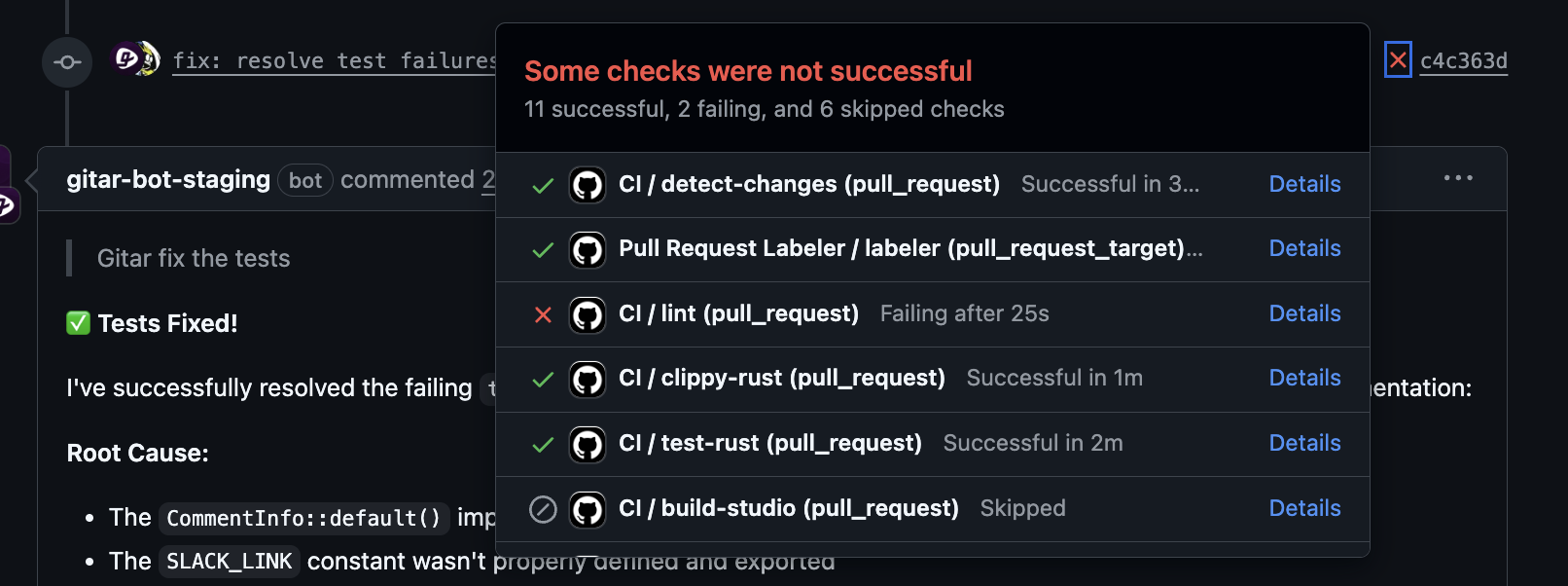
Gitar delivers a fresh way to tackle CI pipeline issues with autonomous AI that resolves problems within your existing setup. Unlike tools that only flag issues, Gitar directly applies fixes, creating a smooth process without constant human input.

Autonomous Fixes Directly in Your CI/CD Pipeline
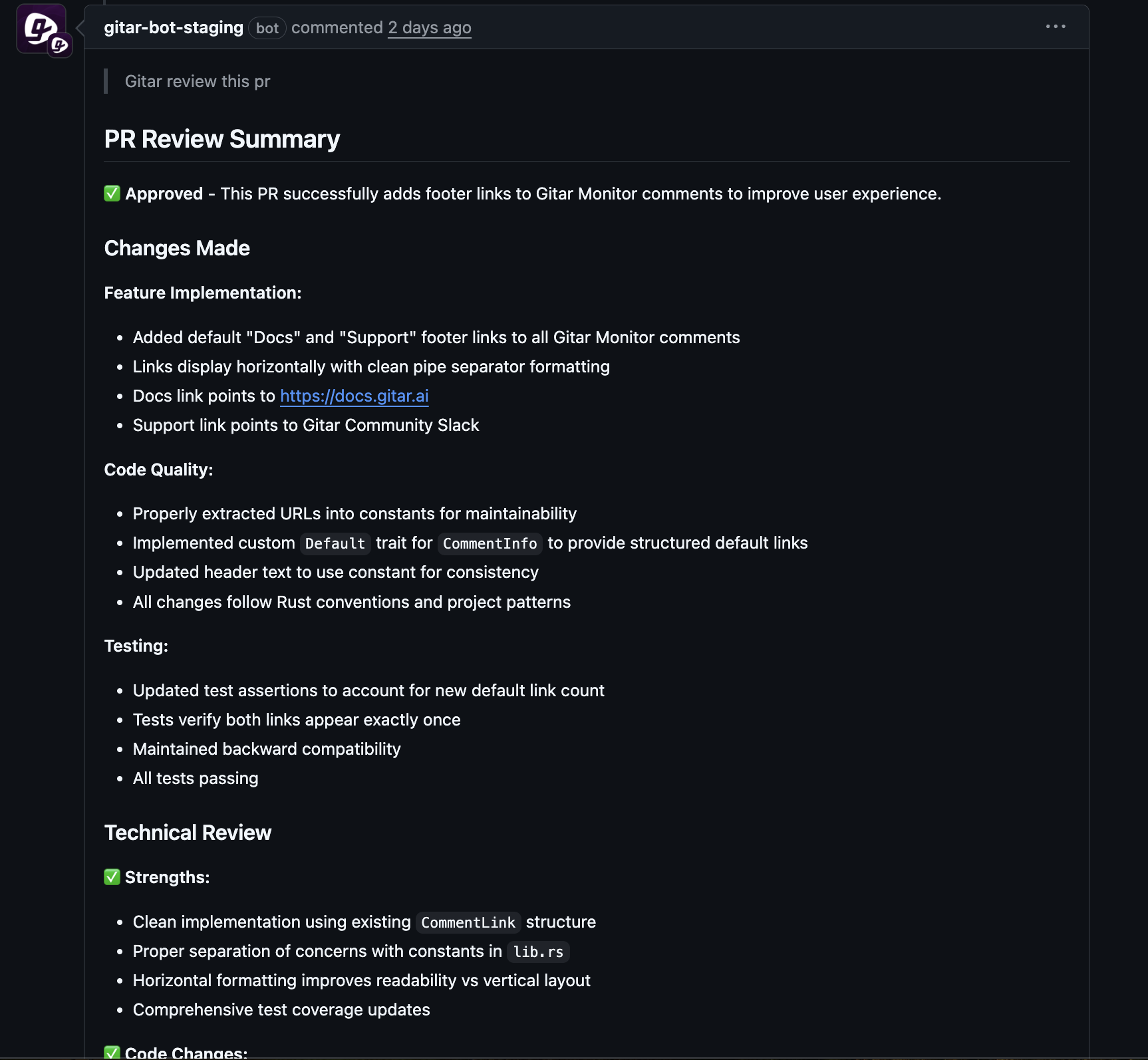
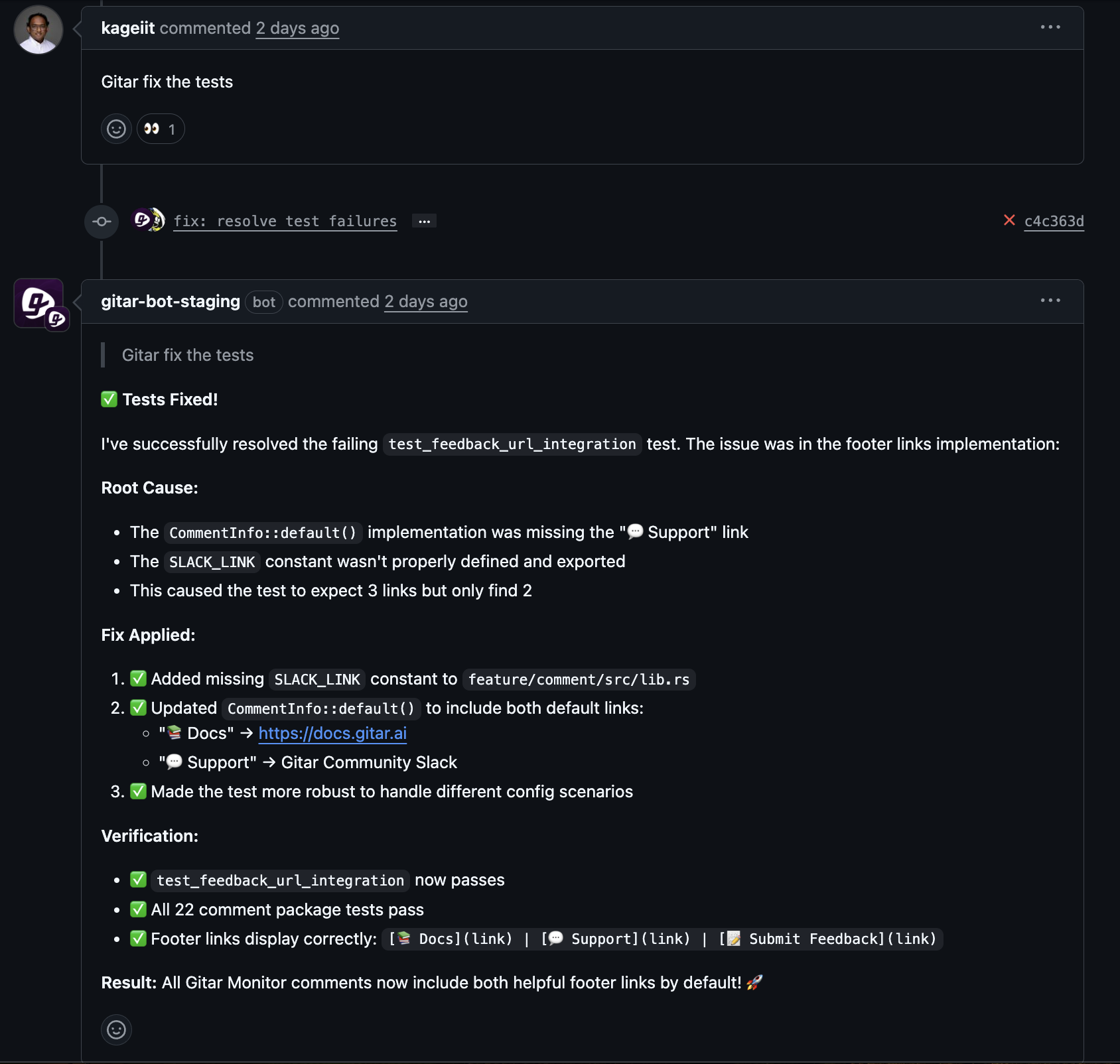
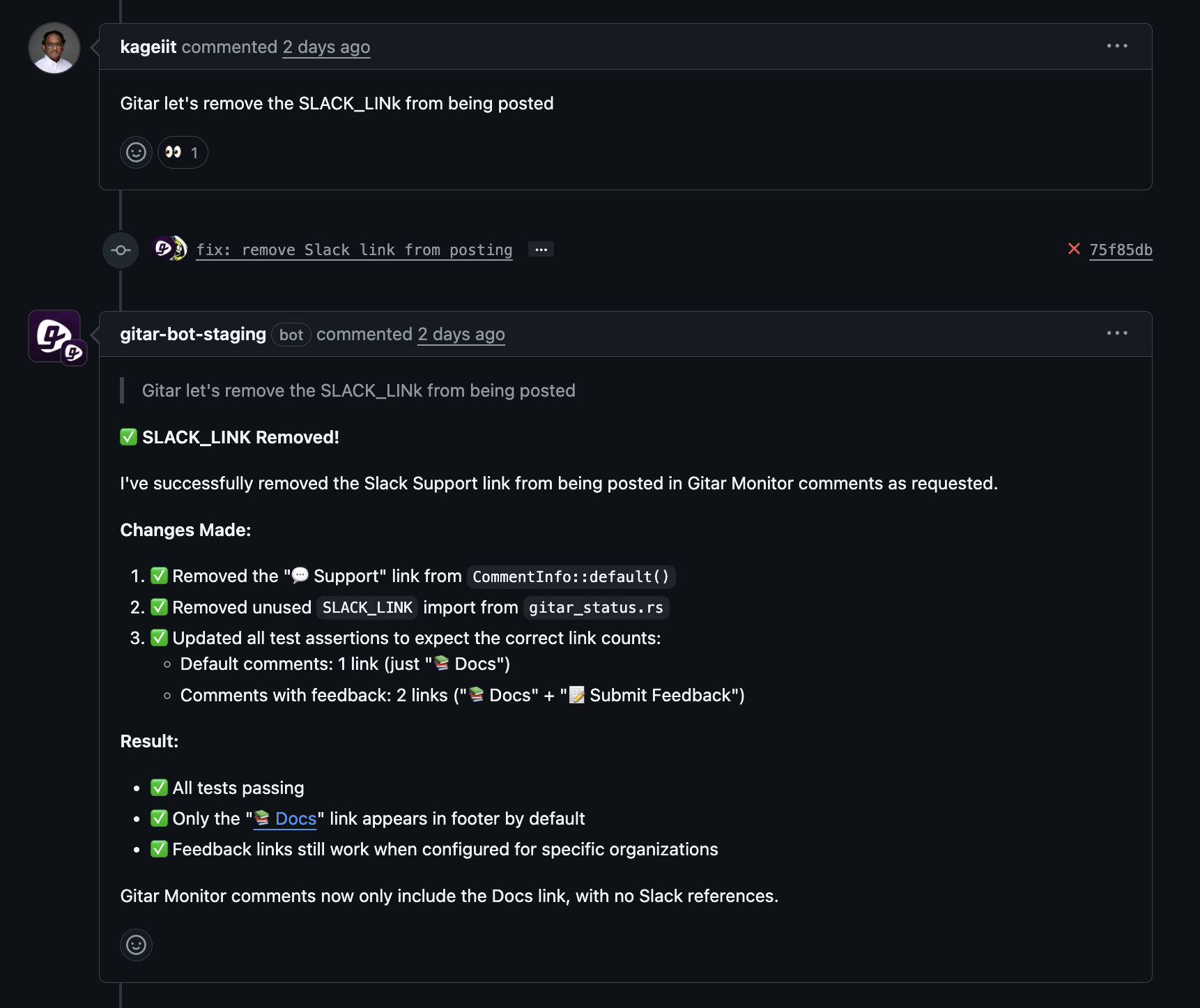
Gitar stands out by not just identifying issues but fixing them on its own. When a dependency failure or build error occurs, Gitar pinpoints the cause, creates a solution, and updates the codebase, turning a tedious task into a streamlined process.
Integration into CI pipelines ensures fixes go through your full testing workflow before deployment. This keeps reliability intact by running automated solutions through unit tests, integration checks, and any custom validations in place.
Gitar handles various CI failures, from dependency conflicts to script errors. Its ability to manage these issues reduces interruptions for development teams, keeping pipelines running smoothly.
Protecting Developer Focus and Pipeline Reliability
Gitar helps developers stay focused by handling CI fixes automatically. Manual troubleshooting often pulls developers away from coding, breaking their concentration. Gitar takes care of these distractions in the background.
A flexible trust model lets teams ease into automation. Start with cautious settings, reviewing Gitar’s suggestions before applying them, then shift to full automation as confidence builds. This adaptability matches team preferences and needs.
For teams spread across time zones, Gitar cuts coordination delays. Fixes are applied quickly, so issues are often resolved before team members log in for the day.
Key benefits for CI pipeline management include:
- Complete issue resolution: Gitar applies and tests fixes across your CI/CD pipeline.
- Accurate environment setup: Matches complex setups with specific SDKs and third-party tools.
- Adjustable trust levels: Choose between reviewed suggestions or automatic commits.
- Wide platform compatibility: Supports GitHub Actions, GitLab CI, CircleCI, BuildKite, and more.
- Context-aware AI: Fixes are precise and relevant to your codebase.
Improve your CI pipeline with Gitar’s automated fixes. Request a demo now.
Seeing Gitar in Action: Boosting Team Productivity
Cutting Out Manual Work for Developers
Gitar changes how developers work by removing repetitive manual tasks. Normally, fixing pipeline issues means stopping work to analyze logs, find solutions, apply changes, and test them, a process that can take hours per issue.
With Gitar automating fixes, developers avoid context switching. Solutions are handled without input, boosting productivity and reducing frustration from constant problem-solving.
Gitar also eases the need for deep pipeline expertise. Not every developer knows CI diagnostics well, and manual fixes can cause delays or mistakes. Gitar ensures reliable solutions without requiring specialized skills.
By managing dependencies automatically, Gitar lowers mental strain. Teams can focus on coding goals while Gitar handles the full issue resolution process.
Speeding Up Code Releases
Gitar accelerates code delivery by clearing CI pipeline obstacles. Manual fixes often delay progress, but Gitar automates solutions to keep development moving forward.
Fixing issues early prevents backlogs from building. Maintenance becomes ongoing and automatic, ensuring pipelines stay clear without affecting schedules.
Integration with CI/CD means fixes are tested and deployed consistently alongside other updates. This lowers deployment risks and maintains the same quality checks for fixes as for new features.
In continuous deployment setups, Gitar supports steady issue resolution. Problems are fixed as they occur, keeping systems stable without needing scheduled maintenance breaks.
Gitar Compared to Traditional Tools and Suggestion Systems
|
Feature |
Gitar (Autonomous AI Agent) |
Traditional Tools |
AI Suggestion Engines |
|
Issue Detection |
Thorough analysis |
Thorough analysis |
Limited to specific CI issues |
|
Issue Remediation |
Automatic fix creation and application in CI |
Flags issues, needs manual fixes |
Offers suggestions, needs manual action |
|
CI/CD Integration |
Full integration, applies fixes in CI |
Integrates, reports issues, often stops builds |
Basic integration, gives feedback |
|
Developer Flow Impact |
Maintains focus, fixes issues automatically |
Disrupts focus, requires context switching |
Disrupts focus, requires manual effort |
Install Gitar to automate CI issue fixes and remove manual workload.
Common Questions About Automated CI Fixes
How Does Gitar Work in Complex Enterprise CI Setups?
Gitar adapts to enterprise CI environments by mirroring your exact setup, including specific SDK versions and tools like SonarQube or Snyk. Fixes are tested against your configuration to ensure compatibility and workflow stability.
How Is Gitar Different from Existing CI Tools?
Most CI tools point out issues and offer suggestions, leaving the fixes to developers. Gitar acts as a self-healing system, automatically analyzing, creating, testing, and applying fixes in your pipeline without workflow interruptions.
What If I’m Hesitant to Let AI Fix Issues Automatically?
Gitar offers adjustable trust settings. Begin with a cautious mode where fixes are suggested for approval. As you gain confidence, switch to automatic mode with full tracking and rollback options for oversight.
How Does Gitar Avoid Breaking Existing Features with Fixes?
Gitar tests all fixes through your CI/CD pipeline, including unit tests, integration checks, and custom validations. This ensures fixes don’t affect functionality, with detailed change logs for clarity.
Conclusion: Set Automated CI Fixes as Your Default
Growing software complexity and CI pipeline demands make manual issue handling unsustainable. Relying on reactive methods slows teams down with repetitive work and delays.
Gitar shifts this to autonomous, proactive fixes. By addressing CI issues within your setup, it improves reliability and turns pipelines into self-managing systems that don’t need constant oversight.
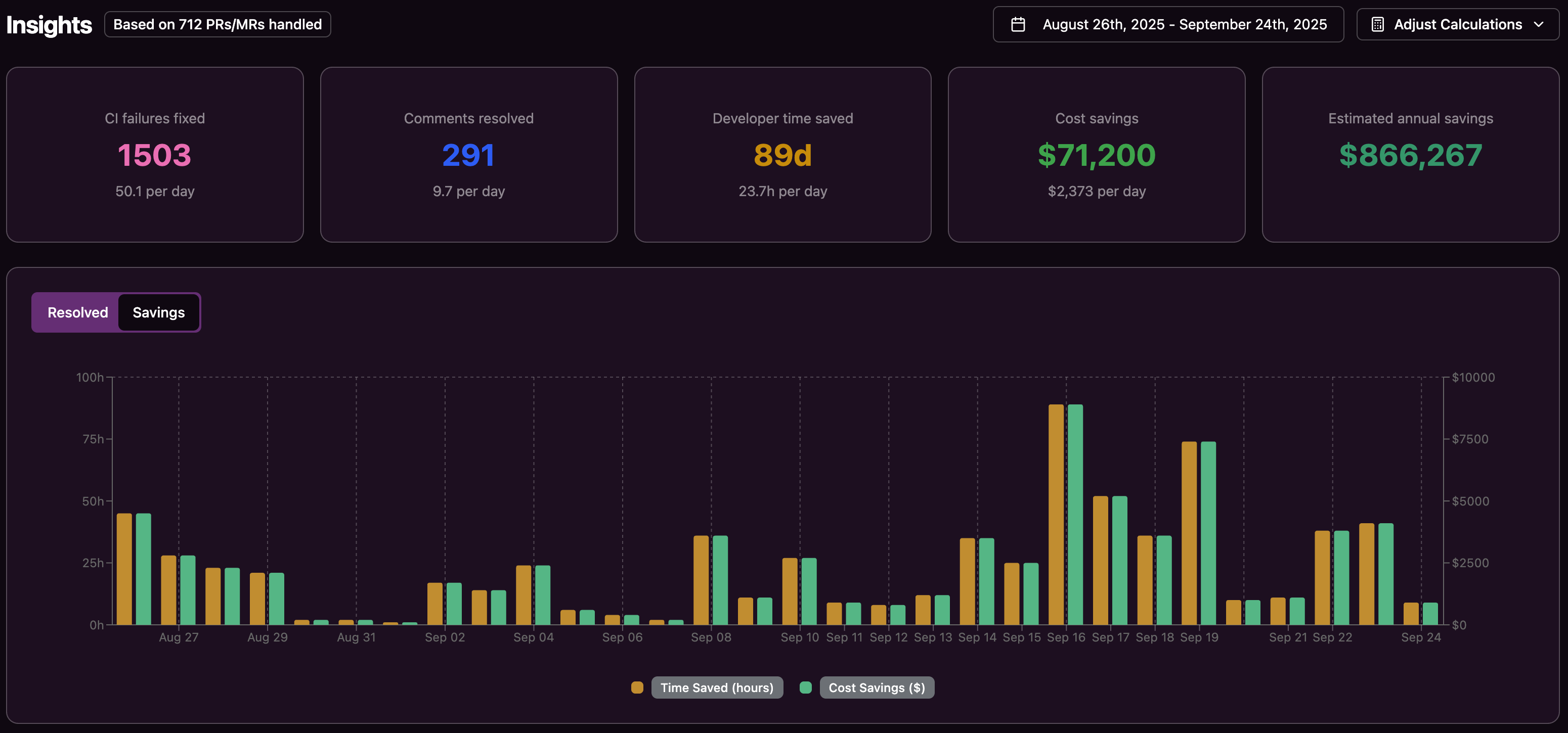
Automation offers more than just quick fixes. Teams using Gitar see gains in productivity, faster releases, and smoother operations, staying ahead of manual delays.
The direction of software delivery is automation, and adopting it now prepares you for increasing challenges. Gitar’s AI agent handles current issues and builds a foundation for future growth.