
Software development faces a growing challenge. While AI tools speed up code creation, validating and merging that code often slows teams down. This article explains how AI models for code quality analysis, like those used by Gitar, tackle this issue. They move beyond spotting problems to fixing them automatically, cutting down pull request merge times and boosting developer productivity.
Why Manual Code Reviews and CI Processes Slow Teams Down
Delays in code reviews and CI processes drain productivity. Developers spend hours debugging builds or addressing feedback, which breaks focus and slows progress. Let’s look at the specific hurdles causing these delays.
CI Debugging and Review Feedback Disrupt Workflow
Picture this. You submit a pull request, expecting a smooth process, only to see a failed build. A missing dependency, a flaky test, or a minor style error triggers a frustrating cycle. You dig through logs, switch back to your local setup, fix the issue, commit, push, and wait for the pipeline again. A quick fix can stretch into an hour, disrupting your flow.
Switching tasks to handle CI failures or review comments adds mental strain. On average, developers lose an hour daily to these interruptions, sometimes up to 30% of their workday. That short 30-minute fix often costs an hour of deep focus, stalling real progress.
Install Gitar to automate fixes for broken builds and ship quality software faster.
Traditional Tools Miss Complex Issues
Older static analysis tools rely on set rules, often missing unique or subtle issues. They struggle to detect problems that need a deeper understanding of code context. These tools also fail to judge if a solution fits the specific situation or business need. Their rigid approach leads to false positives or negatives, overlooking runtime behavior or certain security flaws.
Developers end up with alerts for minor issues while critical logic errors slip through. These tools catch basic syntax or security gaps but miss the bigger picture of how code changes impact the system.
Human Reviews Fall Short in Large Codebases
Manual reviews have limits. Fatigue, bias, and tight schedules reduce a reviewer’s ability to spot subtle issues. Even skilled reviewers can only handle 200 to 400 lines of code per hour. Larger changes lead to less thorough checks, missing key logic or design flaws.
Distributed teams face extra hurdles. A developer in one time zone might wait days for feedback from a teammate halfway across the world. A quick review can drag out due to a 12-hour delay, stalling the entire process.
AI Coding Tools Create New Validation Delays
AI assistants like GitHub Copilot speed up coding, but they flood pipelines with more pull requests and potential issues. Validation through CI checks, reviews, and testing remains mostly manual, creating bottlenecks. As code generation accelerates, the real delay shifts to verifying and merging changes, leaving developers stuck waiting.
How AI Models Fix Code Quality Issues Automatically
AI models offer a practical solution by not just finding issues but resolving them without human input. This shift saves time and keeps developers focused on bigger tasks. Here’s how it works.
AI That Fixes Issues, Not Just Flags Them
New AI systems go beyond pointing out problems. They create and apply fixes, handling the entire process from detection to validation. This means less interruption for developers, who can stay focused while routine issues get resolved in the background.
Unlike older tools that suggest a fix without checking its impact, these AI models ensure the solution fits the codebase. They verify that fixes pass all tests and don’t create new problems, completing the cycle autonomously.
Context-Driven AI for Accurate Solutions
Advanced AI understands more than just code lines. It grasps the intent and context, catching issues that rule-based tools overlook. Specialized models for code quality also factor in the full environment, reducing errors like incorrect fixes by validating against the CI pipeline.
These models consider dependencies, builds, tests, and deployment needs. This broad view helps them deliver reliable solutions, even in complex enterprise settings.
Self-Healing Pipelines to Keep Work Moving
AI can build CI/CD pipelines that fix issues as they happen. When a linting error or test failure pops up, the system spots it, applies a fix, and checks if everything passes, often before a developer notices. This cuts down on interruptions and lets teams focus on coding features instead of debugging builds.
Install Gitar to try self-healing pipelines and streamline your workflow.
Gitar: AI That Automates Code Quality Fixes
Gitar stands out as a tool for automating code quality analysis. It doesn’t just suggest fixes, it applies them, resolves CI failures, and handles review feedback, saving time across the board.

What Gitar Brings to Your Team
Here’s how Gitar improves workflows with specific capabilities tailored to code quality challenges.
- Complete Fix Automation: Gitar applies fixes, runs them through CI workflows, and ensures all checks pass, delivering ready-to-merge pull requests without manual effort.
- Environment Awareness: It mirrors complex setups, supporting specific JDK versions, multiple SDKs, and testing needs, ensuring fixes work in your exact system.
- Smart Review Support: Gitar handles initial reviews and acts on feedback. A reviewer can comment to remove a feature, and Gitar makes the change, commits it, and explains the update.
- Flexible Trust Settings: Teams can start with a cautious mode, approving fixes manually, then shift to full auto-commits as trust grows, adapting to your comfort level.
- Wide Platform Fit: Gitar integrates with GitHub Actions, GitLab CI, CircleCI, BuildKite, and more, working within your existing tools.
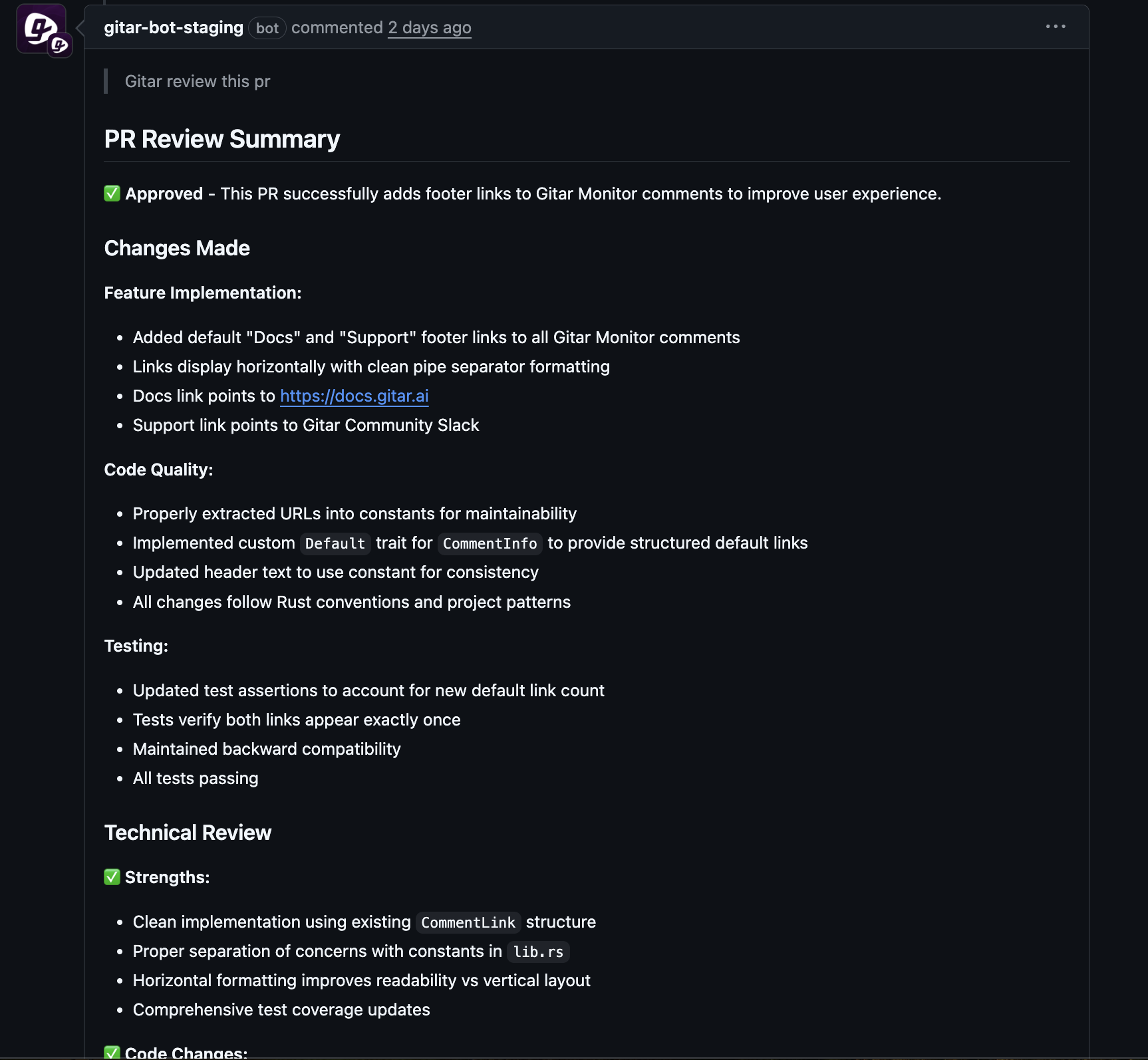
Book a demo to see Gitar integrate AI fixes into your process.
Real Results: How Gitar Changes Development Work
Gitar delivers measurable improvements by automating fixes and reducing delays. Teams see faster merges and happier developers. Here’s the impact in action.
Protect Developer Focus
By handling CI issues and review feedback, Gitar cuts down on task-switching. Developers stay in their zone, working on features instead of chasing fixes.
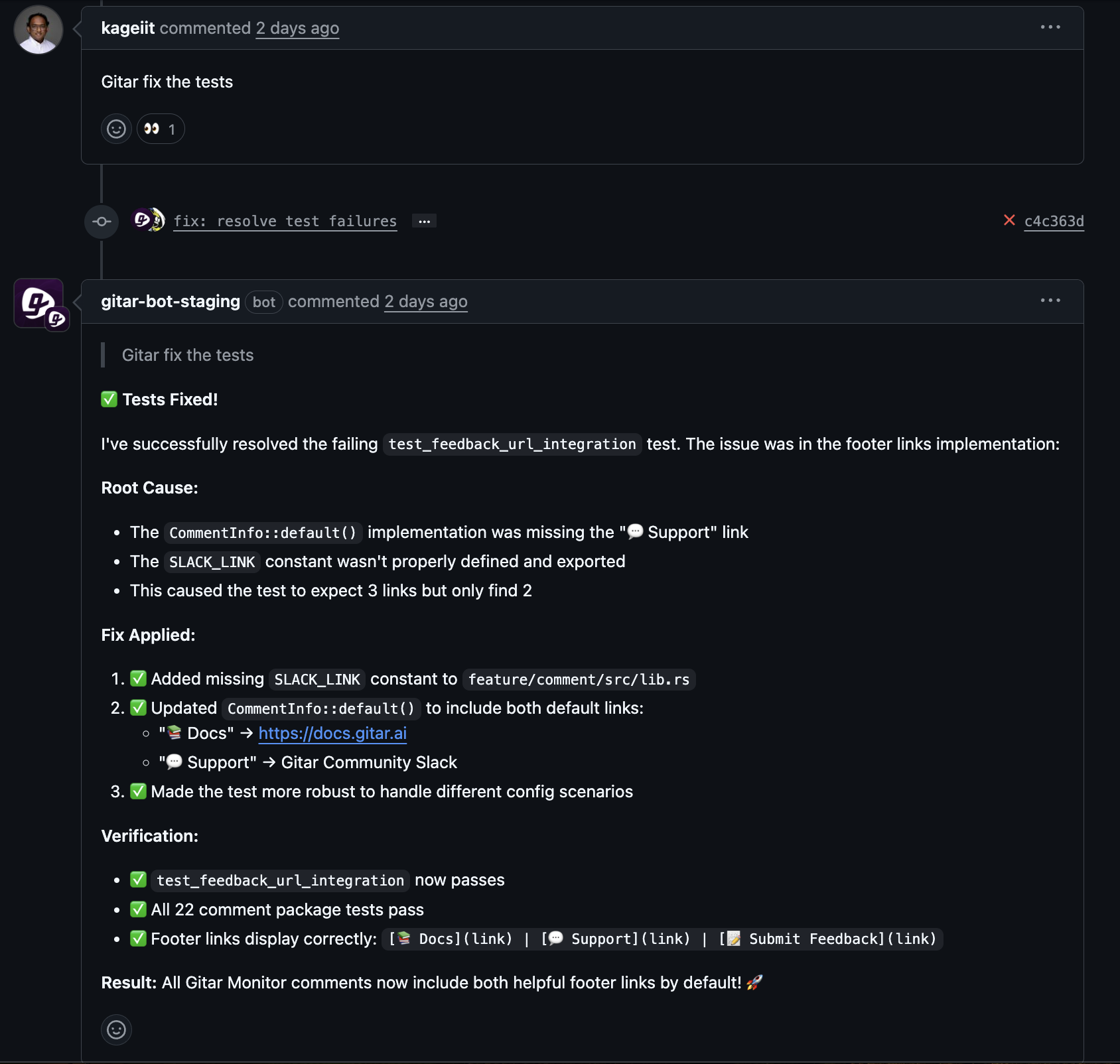
Cut Merge Times Significantly
Automated fixes and quick feedback handling shrink the wait from commit to merge. CI issues resolve without delay, and review changes happen fast, speeding up delivery.
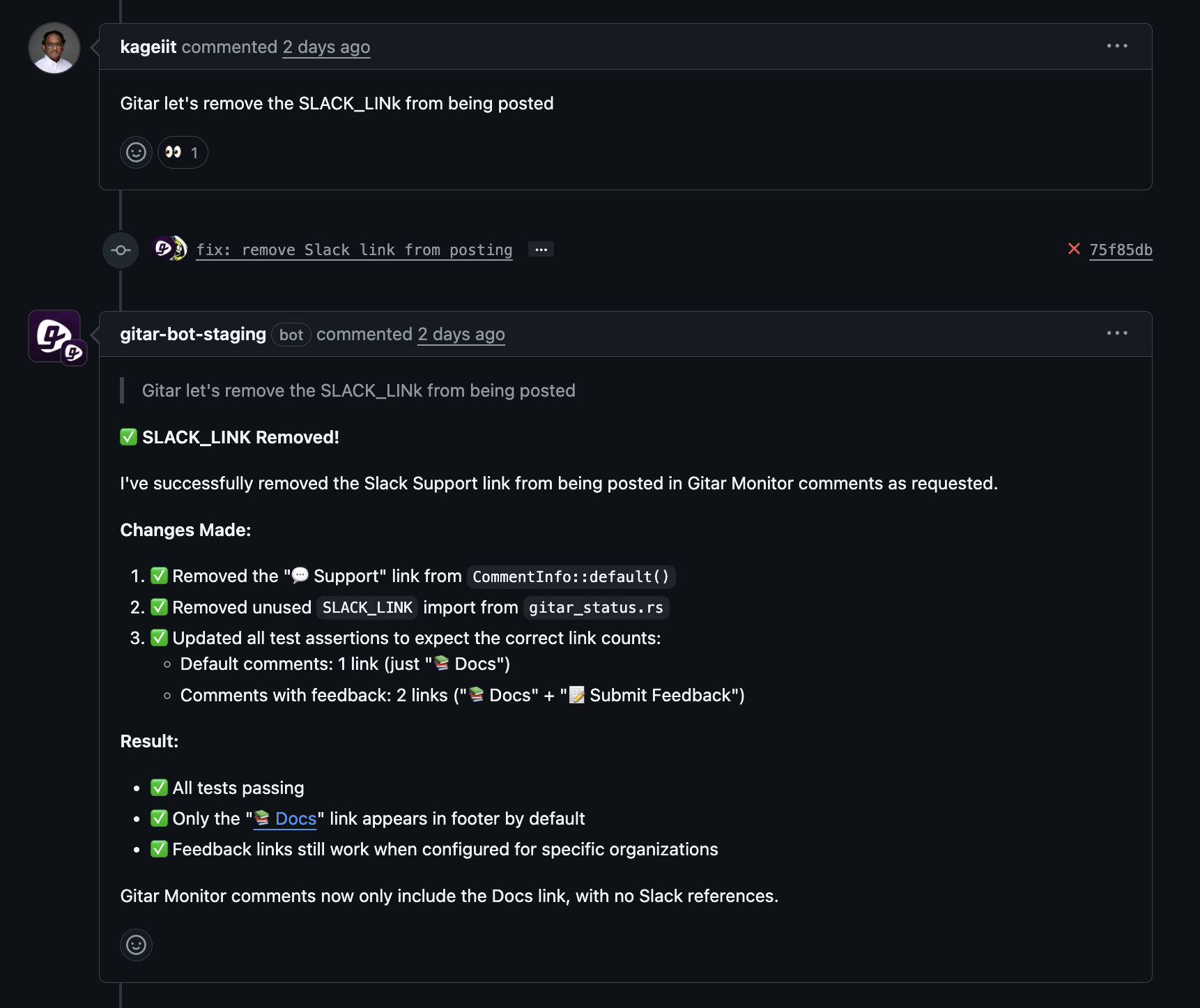
Improve Team Output and Cost Savings
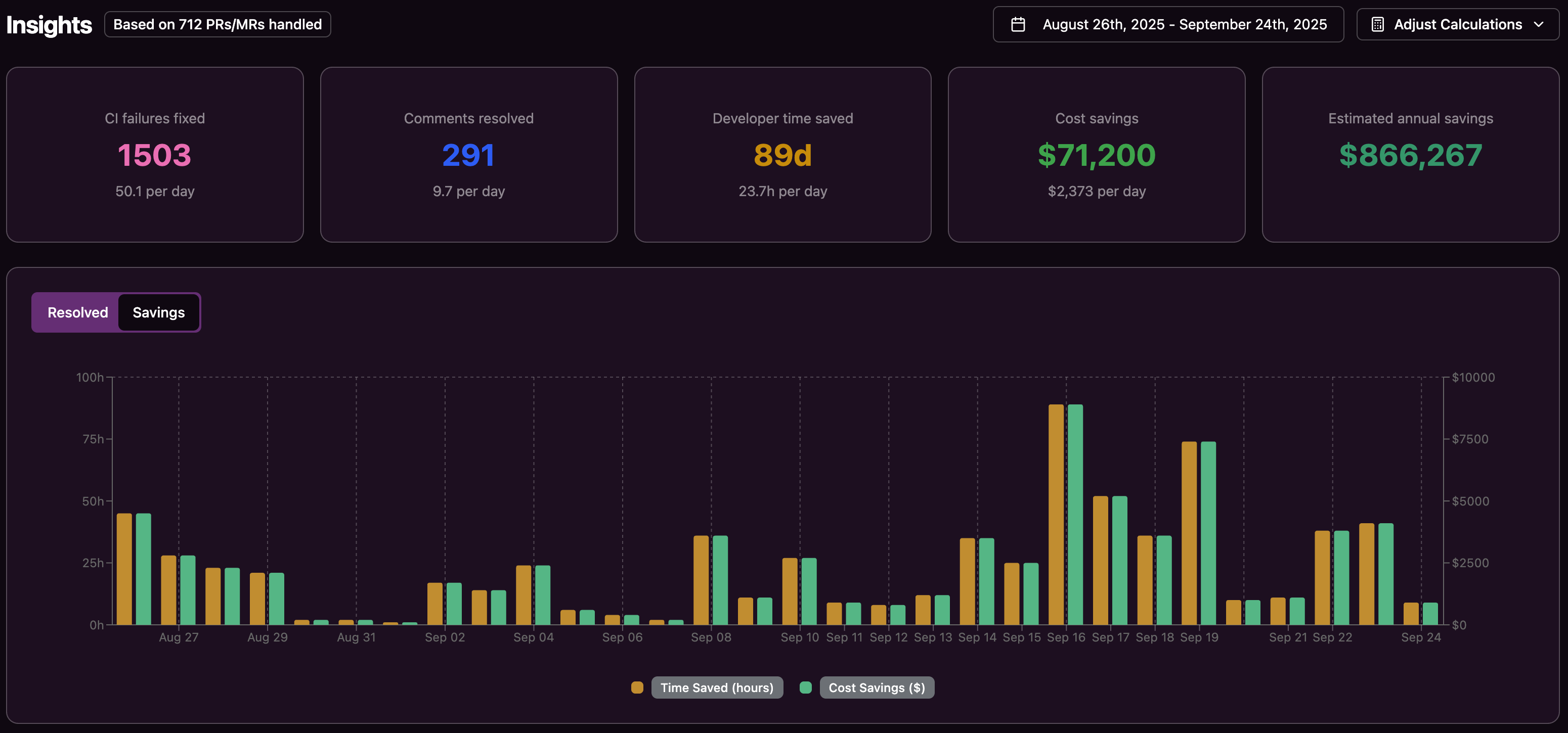
For a team of 20 developers losing an hour daily to CI and review tasks, yearly productivity losses can hit $1 million. Even at partial effectiveness, Gitar could save $500,000 annually while lifting team speed and morale.
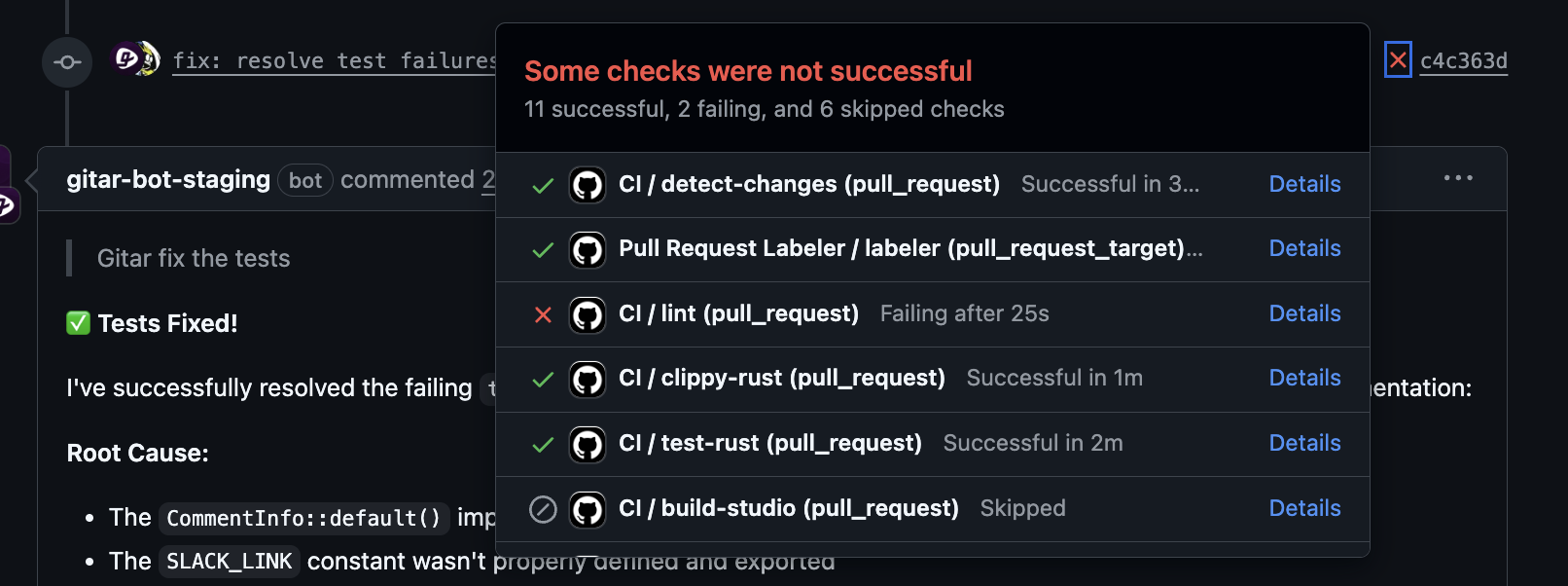
Lift Developer Satisfaction
Automating tedious tasks like debugging builds frees developers for creative work. Less daily friction means better job satisfaction and lower burnout rates.
Comparing Gitar to Other Code Quality Tools
Gitar differs from traditional and suggestion-based tools by automating the full fix process. Here’s how it stacks up.
|
Feature Category |
Traditional Static Analyzers |
AI Code Reviewers |
Gitar (Autonomous Healing Engine) |
|
Core Functionality |
Rule-based issue detection |
AI suggestions for issues |
Automatic detection, fix creation, and validation |
|
Issue Resolution |
Alerts only, no fixes |
Suggestions for fixes |
Applies fixes, validates, and commits to PR |
|
Context Understanding |
Limited to rules |
Decent for suggestions |
Full system context for reliable fixes |
|
Developer Workflow Impact |
Needs manual input |
Still requires action |
Minimal disruption with automatic fixes |
Gitar takes on more of the workload compared to suggestion tools. It applies and tests fixes, reducing the steps developers must handle.
Why Autonomous AI Is the Future of Code Quality
AI models for code quality analysis mark a turning point in development. Moving from manual checks to automated, context-aware fixes helps teams deliver faster without sacrificing quality.
As codebases grow and teams spread across regions, relying on human effort for every fix becomes impractical. Systems that understand context and resolve issues independently point to the way forward.
Gitar leads in this space, turning CI failures and review delays into a smooth, automated process. With AI speeding up code creation, validation becomes the key focus, and autonomous tools like Gitar address it directly.
Adopting these solutions now can set teams apart, enabling quicker delivery while upholding standards. Book a demo with Gitar to start automating code quality fixes today.
Common Questions About AI for Code Quality
How Does AI Handle Complex Enterprise CI Systems?
Tools like Gitar replicate enterprise setups, matching JDK versions, SDK dependencies, and testing needs. This ensures fixes align with your specific environment for dependable results.
Do AI Models Risk Making Wrong Fixes?
General AI can suggest incorrect fixes, but Gitar counters this by using deep context and validating solutions against CI pipelines. This checks that fixes work and pass all tests before commits.
How Is Gitar Different From Other AI Review Tools?
Many AI review tools only suggest fixes, leaving action to developers. Gitar automates the process, applying and validating fixes to ensure builds pass, cutting down on manual steps.
Is It Safe for AI to Change Code Automatically?
Gitar offers adjustable settings for automation control. Start with manual approvals for fixes to build confidence, then move to automatic commits with options to undo changes if needed.
What CI Issues Can AI Fix on Its Own?
Gitar tackles common CI problems like linting errors, test failures, and build issues from dependencies or scripts. This frees developers to focus on tougher challenges.