
Key Takeaways
- Modern CI/CD pipelines must handle many languages and frameworks in a single repo, which increases failures and slows releases.
- Context switching across Python, Java, TypeScript, Go, and more creates a measurable productivity loss for developers.
- Language-specific tools solve narrow problems but add operational overhead and make CI setups harder to manage at scale.
- Autonomous AI that understands your environment, CI logs, and tech stack can consistently fix failures across languages and platforms.
- Teams that install Gitar can offload many CI fixes, reduce merge delays, and free developers to focus on shipping features.
The CI/CD Bottleneck In Multi-Language And Multi-Framework Development
Modern software development now runs in a polyglot ecosystem where teams work with several languages and frameworks in a single project. A typical enterprise application might feature a Python backend for AI and data processing, a React frontend with TypeScript, Go microservices for cloud-native development, and Java for enterprise-scale backend systems. Each layer comes with its own dependencies, build tools, test frameworks, and CI configuration, which increases the number of ways a pipeline can fail.
How Context Switching Slows Developers
Every CI failure forces a context switch, no matter which language caused the problem. A developer focused on a React component may need to debug a failing Python unit test, inspect pip dependency conflicts, or fix Go module versioning. This shift between mental models, syntax, and tools breaks focus and interrupts deep work.
A small linting issue in one language often costs far more than the few minutes needed to type the fix. Time spent reloading local context, reopening files, and regaining flow state multiplies the impact of every failure across the team.
Why Fragmented Tooling Creates Extra Toil
Many teams rely on language-specific tools, such as ESLint for JavaScript, pytest for Python, or Maven for Java builds. This approach spreads knowledge across many narrow tools and often requires specialists to maintain each stack.
Popular frameworks add more layers of complexity. Examples include Spring and Hibernate for Java enterprise applications, TensorFlow and Django for Python AI projects, and Angular for TypeScript front-end development. Each framework introduces distinct build, dependency, and testing patterns that require careful debugging when CI pipelines fail.
Gitar: Autonomous AI Assisted Coding Across Languages And Frameworks
Gitar provides an autonomous AI agent that understands and fixes CI issues across many programming languages and frameworks. Instead of only suggesting snippets, Gitar analyzes failures, generates targeted fixes, and validates those fixes inside your existing CI workflows.
How Gitar Delivers Multi-Language CI Fixes
- End-to-end fixing across stacks. When a pipeline fails because of a Python pytest error, a Java Maven build issue, or a TypeScript lint problem, Gitar reads the logs, identifies the root cause in that language, applies a fix that follows local conventions, and commits the change after CI passes.
- Environment-aware execution. Gitar replicates complex workflows for any language or framework, including specific runtime versions such as Python 3.9, Node.js 18, or JDK 17. It respects framework tools like Maven, Webpack, and Go modules, and works with dependency managers such as npm, pip, and Cargo, plus quality tools like SonarQube or ESLint.
- Cross-platform compatibility. Gitar integrates with GitHub Actions, GitLab CI, CircleCI, and BuildKite while supporting languages such as Python, Go, JavaScript, TypeScript, Java, Rust, Docker, and Terraform. One agent can work across the full stack.
- Configurable trust model. Teams configure behavior per repository and language. A critical Java service can run in suggestion mode with required approval, while a frontend repo can allow automatic formatting and lint fixes.
- Context-aware code review. Gitar responds to review comments in any supported language, such as refactoring a Python function to use list comprehensions or updating a Java method to use the Stream API.
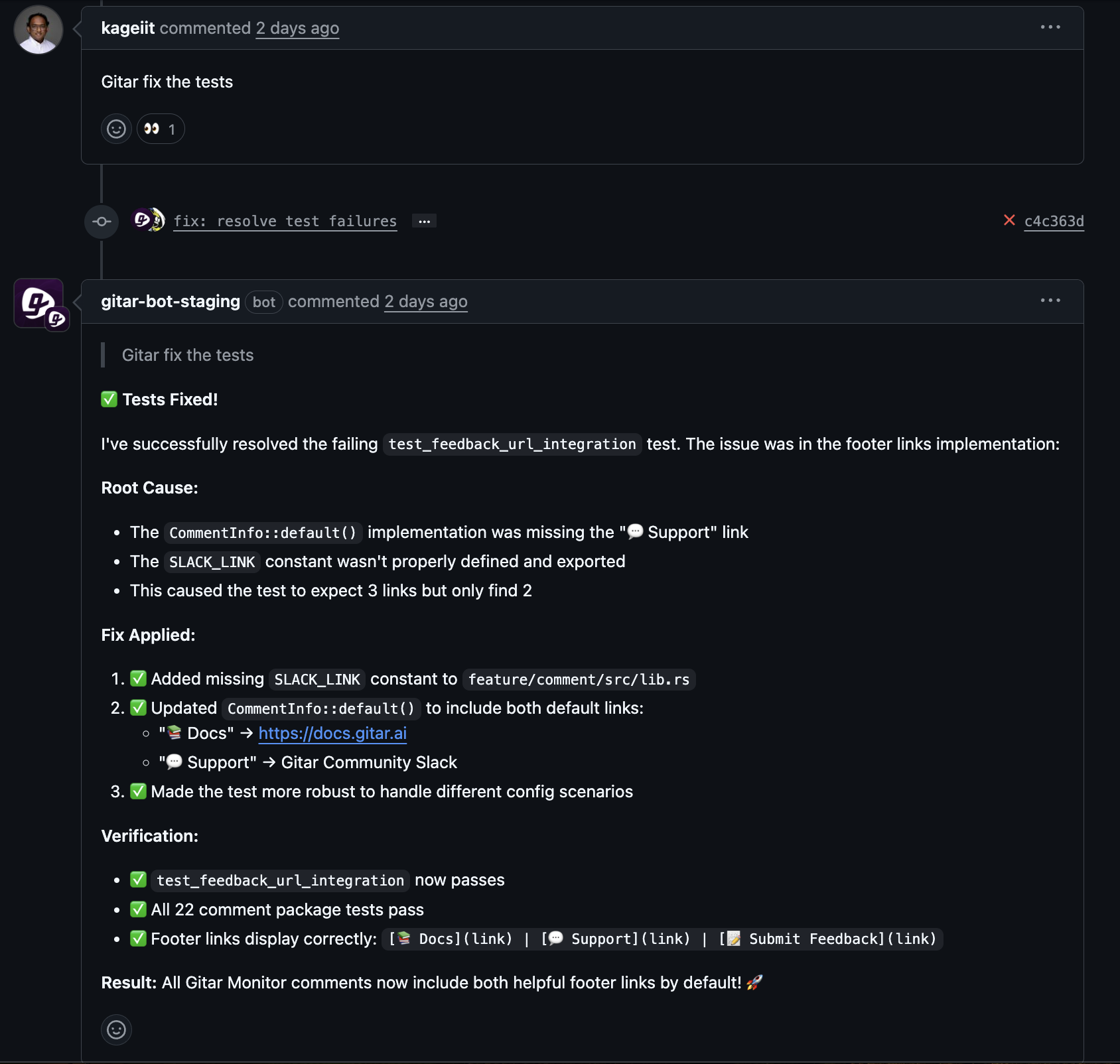
Teams that want to streamline multi-language CI and reduce manual debugging can install Gitar and start fixing broken builds automatically.
Improving Developer Productivity With Broad Compatibility
Cut Language-Specific Toil And Context Switching
Traditional workflows push developers into constant context switching across stacks. A single pull request may involve Python debugging for backend tests, JavaScript toolchain problems for the UI, and Go issues in a microservice. Gitar takes on that language-specific work.
When a TypeScript lint error occurs together with a Python test failure in the same PR, Gitar fixes both with the correct tools and patterns. Developers stay focused on feature work while the agent maintains the health of the pipeline.
Speed Up Merge Times Across Diverse Codebases
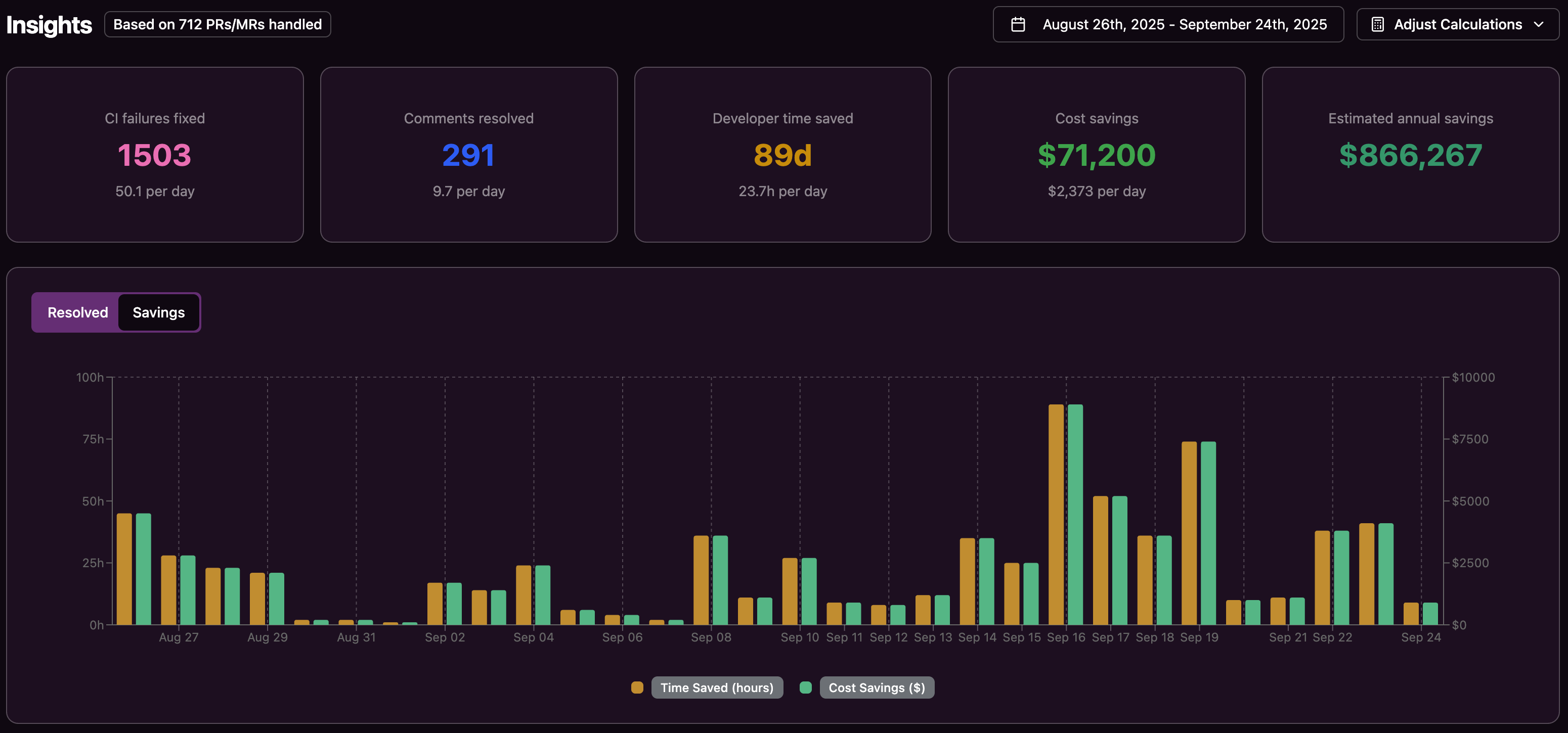
Multi-language projects often experience slow merges because a failure in one language blocks the entire PR. Gitar shortens these delays by fixing issues as soon as they appear, across all languages in the workflow.
A PR that updates React components, Python APIs, and Go services receives coordinated fixes for each failing part. This reduces the push, fail, debug, and retry cycles that extend merge times from hours to days.
Lower CI Operational Costs And Complexity
Teams that manage separate tools for each language carry substantial CI overhead. ESLint, pytest, Maven, Rust Cargo, and other tools all need configuration, monitoring, and maintenance. Gitar consolidates much of this effort into one intelligent agent that understands how these tools behave in context.
Fixes are validated before commit, which avoids repeated failed runs and the cost of trial-and-error changes across large stacks.
|
Feature |
Gitar (Autonomous AI Fixing) |
Traditional/Suggestion-Based AI |
|
Multi-Language Support |
Integrated across many languages |
Often limited or fragmented |
|
Multi-Framework Support |
Unified handling of major frameworks |
Manual and context dependent |
|
Fixes Applied Autonomously |
Yes, validated and committed |
No, suggestions only |
|
CI Platform Compatibility |
Cross-platform (GitHub, GitLab, CircleCI) |
Often tied to a single platform |
Trust And Control In Complex Multi-Tech-Stack Environments
Handle Complex, Unique CI Setups
Many teams worry that their CI environment is too customized for an AI agent. Gitar is built to emulate real-world setups, including specific language versions such as Python 3.9, Java 17, and Node.js 18, framework dependencies like Spring Boot, Angular CLI, and Django, and tools like SonarQube, ESLint, and pytest.
The agent works with configuration files such as Maven POMs, Go modules, npm manifests, and Rust Cargo.toml. Fixes are generated in the context of your actual workflow rather than as generic suggestions.
Control How Automated Fixes Apply To Critical Services
Teams often want different levels of automation for different services. Gitar supports granular control by repository and language. A critical Go microservice can remain in suggestion-only mode with human review, while a TypeScript frontend can receive automatic formatting and lint fixes, and a Python data pipeline can allow more aggressive auto-commits.
This flexibility lets teams introduce automation gradually and increase trust over time.
Teams that want autonomous CI healing across their stack can install Gitar and start reducing CI toil.
Frequently Asked Questions About Multi-Language AI Assisted Coding
How does Gitar handle dependencies and configurations across languages and frameworks?
Gitar mirrors the full CI environment, including runtime versions, framework build tools, and dependency managers. The agent understands details such as Python virtual environments, Java classpaths, and JavaScript module resolution, so generated fixes fit the existing configuration and pass CI before they are committed.
Can Gitar work with niche or proprietary languages and frameworks?
The core models behind Gitar cover common languages such as Python, Java, JavaScript, TypeScript, Go, and Rust. The platform can also adapt to custom or internal frameworks by learning from your codebase and CI behavior, then applying those patterns when generating fixes.
How does Gitar prevent a fix in one language from breaking another part of the system?
Gitar scopes changes to the failing component while still running the full CI pipeline to validate the impact. A targeted fix for a Python service, for example, will still be tested alongside JavaScript, Java, or Go components in the same workflow to ensure nothing else regresses.
Does Gitar support containerization and infrastructure as code?
Gitar treats Docker, Terraform, Kubernetes manifests, and other infrastructure as code as part of the same pipeline. The agent can resolve Dockerfile issues, fix Terraform configuration problems, and adjust deployment manifests so that both application code and infrastructure code continue to pass CI.
How does Gitar manage CI workflows that include several languages in one pipeline?
Many modern pipelines build and test multiple languages in parallel stages. Gitar understands these workflows and can fix failures in each stage, apply changes to the correct modules, and then re-run the pipeline. This approach avoids long chains of sequential manual fixes.
Conclusion: Unify CI/CD Across Languages With Autonomous AI Fixing
Fragmented CI/CD workflows across many languages and frameworks now rank among the most consistent sources of friction for engineering teams. AI-assisted coding speeds up code creation, but it also increases the volume of pull requests and the number of ways pipelines can fail.
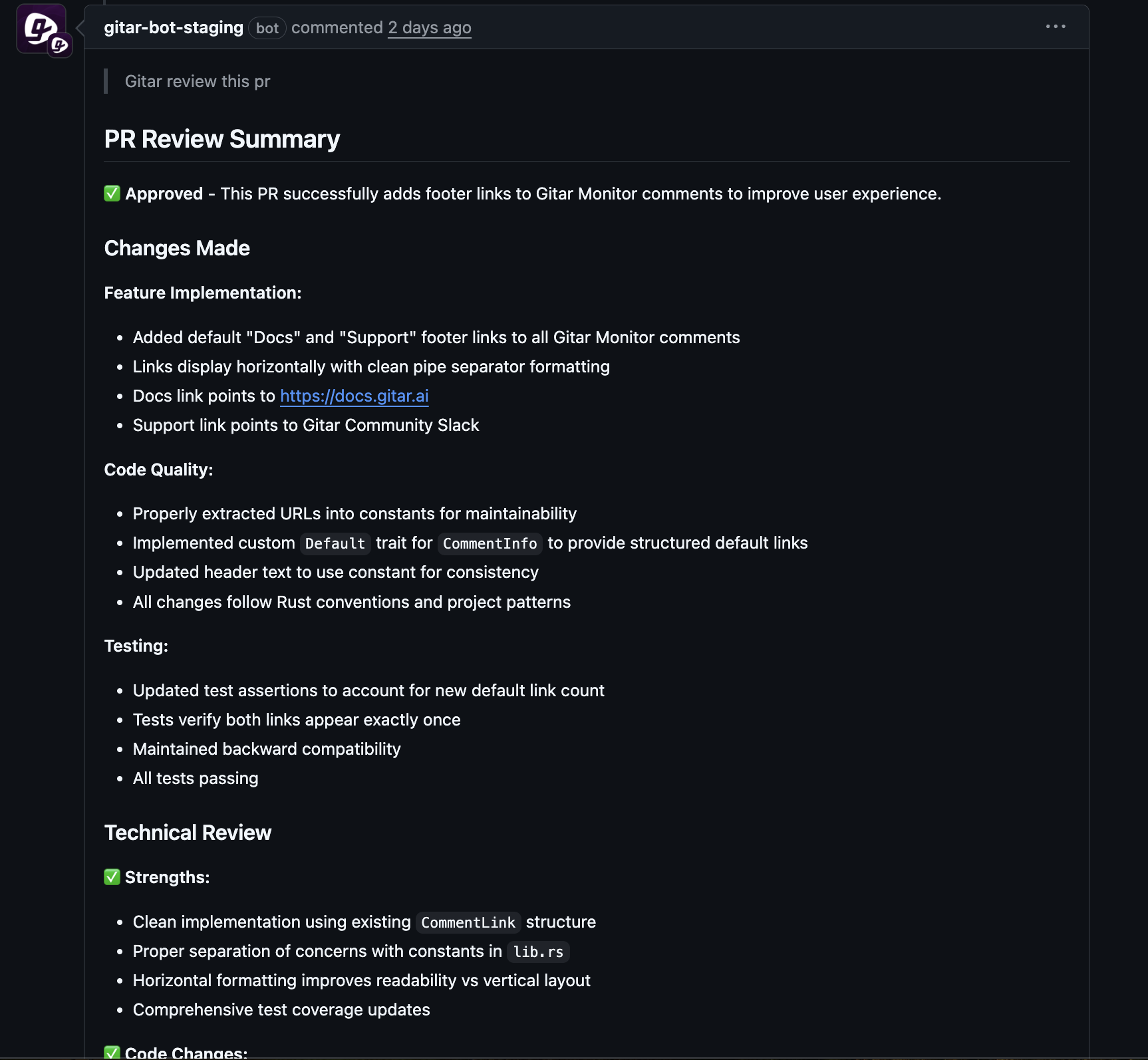
Gitar addresses this problem by acting as an autonomous CI helper that understands your environment, fixes language-specific failures, and validates changes before commit. Teams gain a single way to handle CI issues across Python, Java, JavaScript, TypeScript, Go, Rust, Docker, Terraform, and more.
Engineering leaders who want to reduce context switching, simplify CI operations, and keep pipelines green can install Gitar and start automatically fixing broken builds today.