
CI/CD workflows often hit roadblocks with pipeline failures and manual code reviews, slowing down engineering teams. Gitar, an autonomous AI tool, tackles these issues head-on by automating fixes and streamlining processes, creating a self-healing CI system that saves time and reduces developer frustration.
CI/CD Challenges: Why Pipelines Keep Failing
Even with advanced CI/CD tools, pipeline failures disrupt productivity. Developers spend significant time troubleshooting and fixing issues, which can eat up to 30% of their workday, as highlighted in industry analyses linked to Gitar’s efficiency studies.
Context Switching: A Hidden Cost for Developers
CI failures don’t just demand technical fixes; they force developers to shift focus. This mental interruption, or context switching, often turns a quick fix into a major productivity loss. Here’s what happens:
- Current tasks get paused to revisit the failed pull request.
- CI logs, often unclear, need detailed review to pinpoint issues.
- Developers switch back to their local setup for changes.
- Code updates are made, tested, committed, and pushed.
- Waiting begins for the pipeline to rerun, hoping for success.
A 5-minute fix can stretch into an hour. For a 20-person team, this adds up to roughly $1 million in lost productivity each year, based on average engineering costs outlined in Gitar’s ROI calculations.
Manual Debugging Eats Up Valuable Time
Even with solid CI/CD setups, fixing failures remains a hands-on task. Developers waste hours resolving repetitive issues like:
- Linting errors that could be auto-corrected.
- Test failures from minor updates or assertion mismatches.
- Build issues caused by missing dependencies or setup errors.
This repetitive work pulls senior engineers away from high-value tasks like designing systems or guiding junior team members.
Long Delays in Merging and Deployment
Each CI failure and manual fix adds hours, sometimes days, to the journey from commit to merge. For distributed teams across time zones, a simple PR failure can drag out over multiple days as feedback loops stretch across schedules.
Validation Becomes the New Bottleneck
AI coding tools have sped up code creation, but merging and validation now slow teams down. More code means more pull requests, more CI runs, and inevitably, more failures. The focus has shifted from writing code to getting it through CI and review stages.
Gitar: Your Solution for Self-Healing CI
Gitar changes the game by turning reactive CI failure handling into a proactive, automated process. It integrates with your current workflow, identifying and fixing issues without developer input, making your CI/CD pipeline smarter and more efficient.

How Gitar Enhances Your CI/CD Process
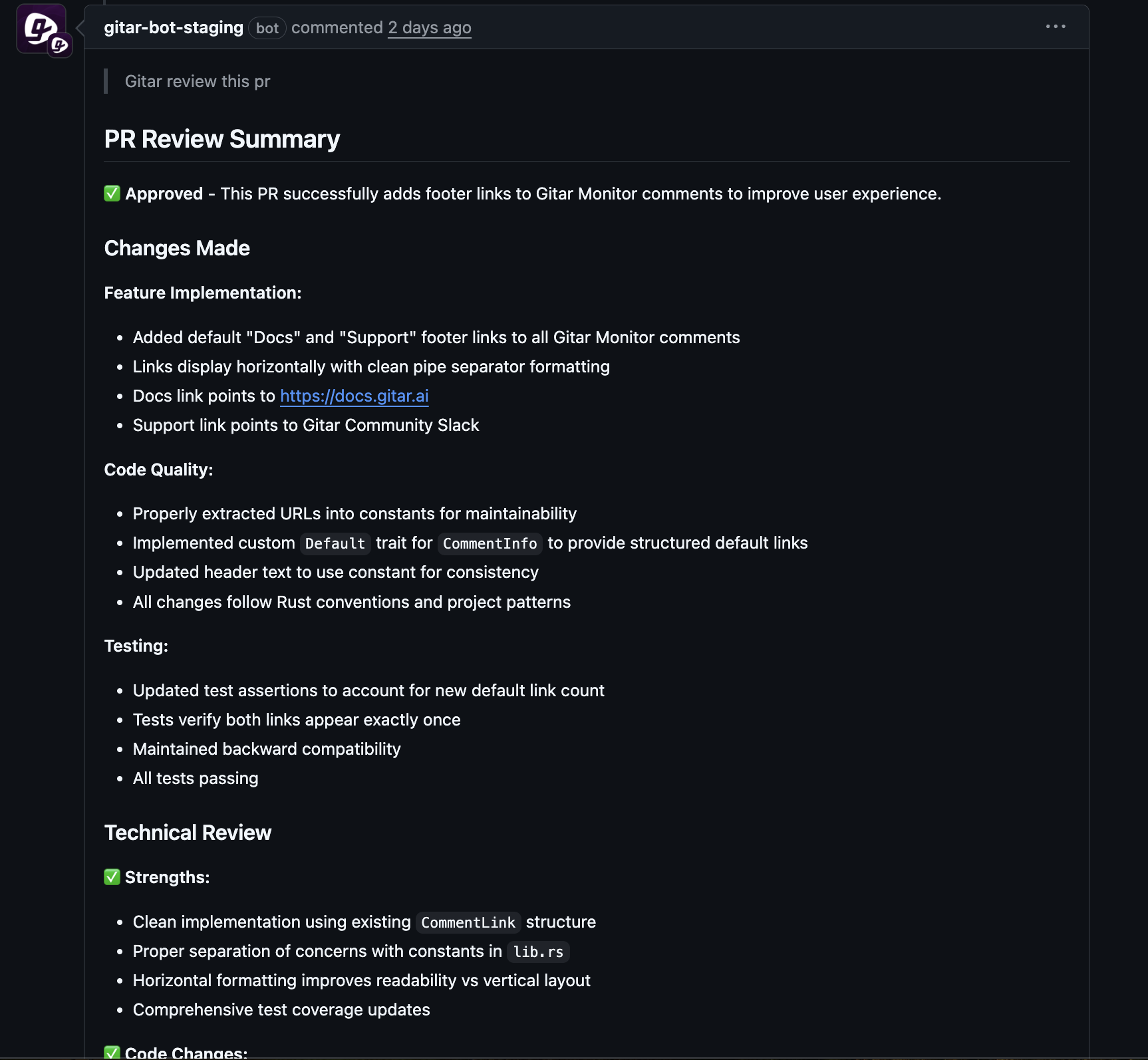
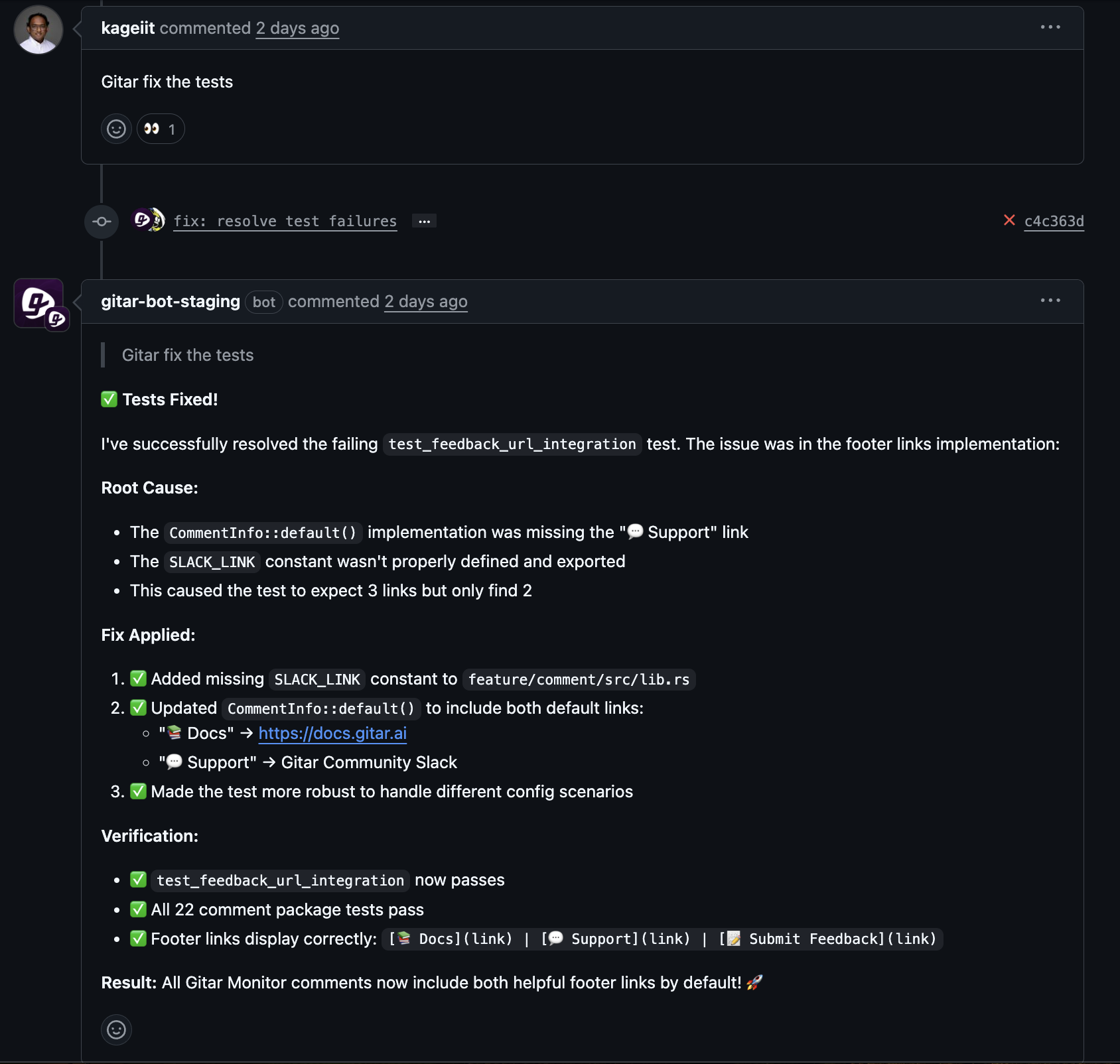
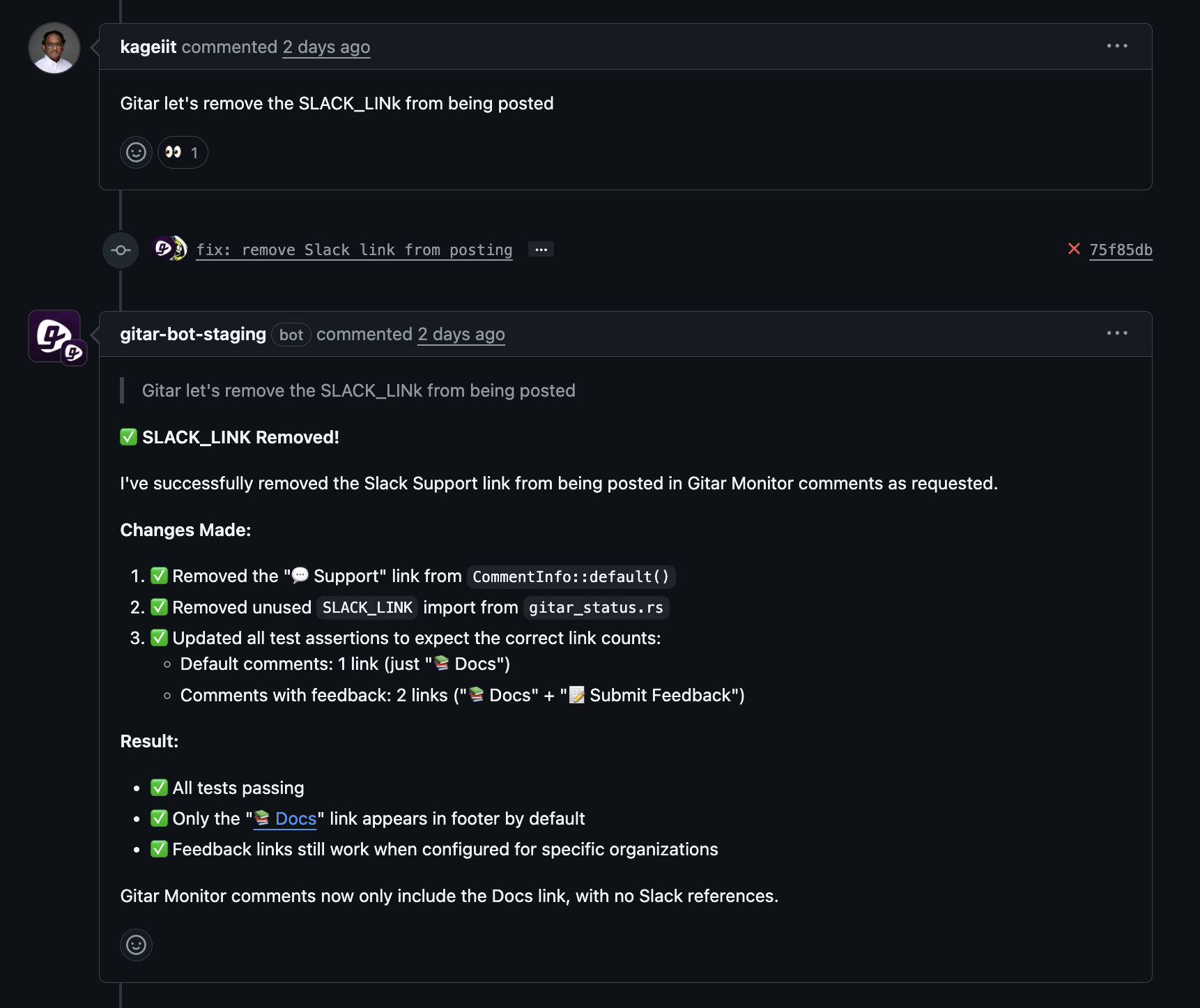
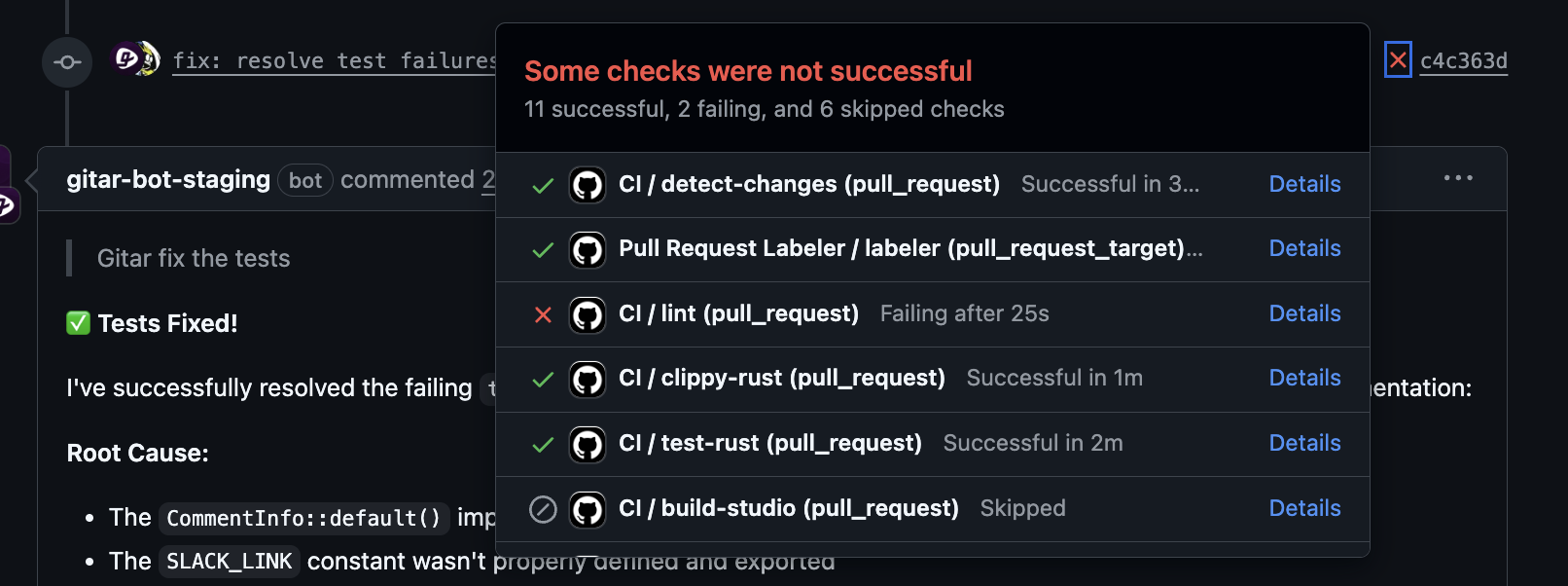
Gitar automates fixes for CI failures, whether from linting errors, test issues, or build problems. It analyzes logs, identifies the root cause, applies a solution, and commits it to your PR branch, often before you notice the failure.
The tool mirrors your full CI environment, including SDK versions, language dependencies, and third-party scans like SonarQube or Snyk. This ensures fixes match your specific setup and pass pipeline checks.
Beyond CI, Gitar handles code review feedback. It interprets reviewer comments, makes the requested changes, and commits them with a clear explanation, cutting out back-and-forth delays.
Gitar offers adjustable automation levels. Start in a mode where fixes need approval, then move to fully autonomous commits as trust grows. Rollback options keep you in control of your repository.
Want to see Gitar in action? Request a demo now and streamline your CI/CD process.
Key Advantages of Using Gitar in CI/CD
Gitar doesn’t replace your CI/CD tools; it enhances them by automating repetitive tasks and resolving bottlenecks in your development cycle.
Speed Up Merges and Deployments
Gitar cuts down time-to-merge by fixing CI failures automatically. Faster merges lead to quicker deployments, shorter feedback loops, and fewer merge conflicts from lingering branches.
Minimize Developer Interruptions
By handling CI issues in the background, Gitar lets developers stay focused. Submit a PR and move to the next task, confident that routine problems will be resolved without pulling you away.
Boost Project Stability
CI failures drain resources. Gitar reduces these by addressing common issues on the first try. Fixes from an AI aware of your environment are often more reliable than hurried manual patches.
Elevate Team Morale and Output
Removing tedious CI tasks improves team spirit. Gitar frees developers to focus on creative work. Senior staff can prioritize strategy, while juniors learn from observing automated fixes.
Manage Complex CI Setups with Ease
Enterprise CI often involves varied dependencies and third-party integrations. Gitar accounts for these, replicating your setup to deliver fixes that work within your specific constraints.
Gitar vs. Traditional Tools: From Suggestions to Action
Gitar stands out by taking action, not just offering advice. Unlike many AI tools that suggest fixes, Gitar applies and validates solutions on its own.
|
Feature |
Manual Workflow |
AI Code Reviewers (e.g., CodeRabbit) |
Gitar (Autonomous AI) |
|
CI Failure Resolution |
Manual diagnosis, coding, re-push |
Identifies issues, sometimes offers fixes |
Automatically diagnoses, applies, validates fixes |
|
Code Review Feedback |
Manual changes based on comments |
Suggests fixes, limited automation |
Autonomously applies feedback, commits changes |
|
Context Switching |
High, frequent interruptions |
Moderate, some manual steps remain |
Minimal, fixes happen automatically |
|
Time-to-Merge Impact |
Significant delays |
Minor speed gains, loops persist |
Notably faster merges |
|
Environmental Awareness |
Relies on human knowledge |
Limited, often generic |
Full setup replication for precise fixes |
This table shows why teams using other AI review tools still face CI delays. Suggestions help, but if someone must still act on them, the core issue persists.
Install Gitar today to fix broken builds and ship quality software faster.
Common Questions About Gitar
How Does Gitar Work with Existing CI/CD Tools?
Gitar connects effortlessly with platforms like GitHub, GitLab, and systems such as GitHub Actions, CircleCI, and BuildKite. It monitors for PRs and failures, applies fixes, and pushes changes to the branch with full transparency. Setup is simple: authorize Gitar as a GitHub App and adjust automation settings via a web dashboard.
Can Gitar Support Complex Enterprise CI Needs?
Yes, Gitar is built for enterprise complexity. It replicates your exact CI environment, including SDK versions, Docker setups, and tools like SonarQube. Fixes are tailored to pass your specific pipeline requirements.
What If I’m Hesitant to Let AI Commit Fixes?
Gitar provides customizable automation levels. Begin with a mode where fixes are suggested for approval. As confidence builds, shift to full automation. Rollback options ensure you retain control over repositories and fix types.
How Does Gitar Differ from Tools Like CodeRabbit?
While tools like CodeRabbit offer suggestions, Gitar focuses on full autonomy. It applies fixes, validates them in your CI environment, and ensures builds pass, reducing manual effort and speeding up merges compared to partially automated tools.
How Does Gitar Help Distributed Teams?
For teams across time zones, Gitar acts instantly on review feedback, applying changes without waiting for the original coder to log in. This cuts out delays that often extend review cycles over days.
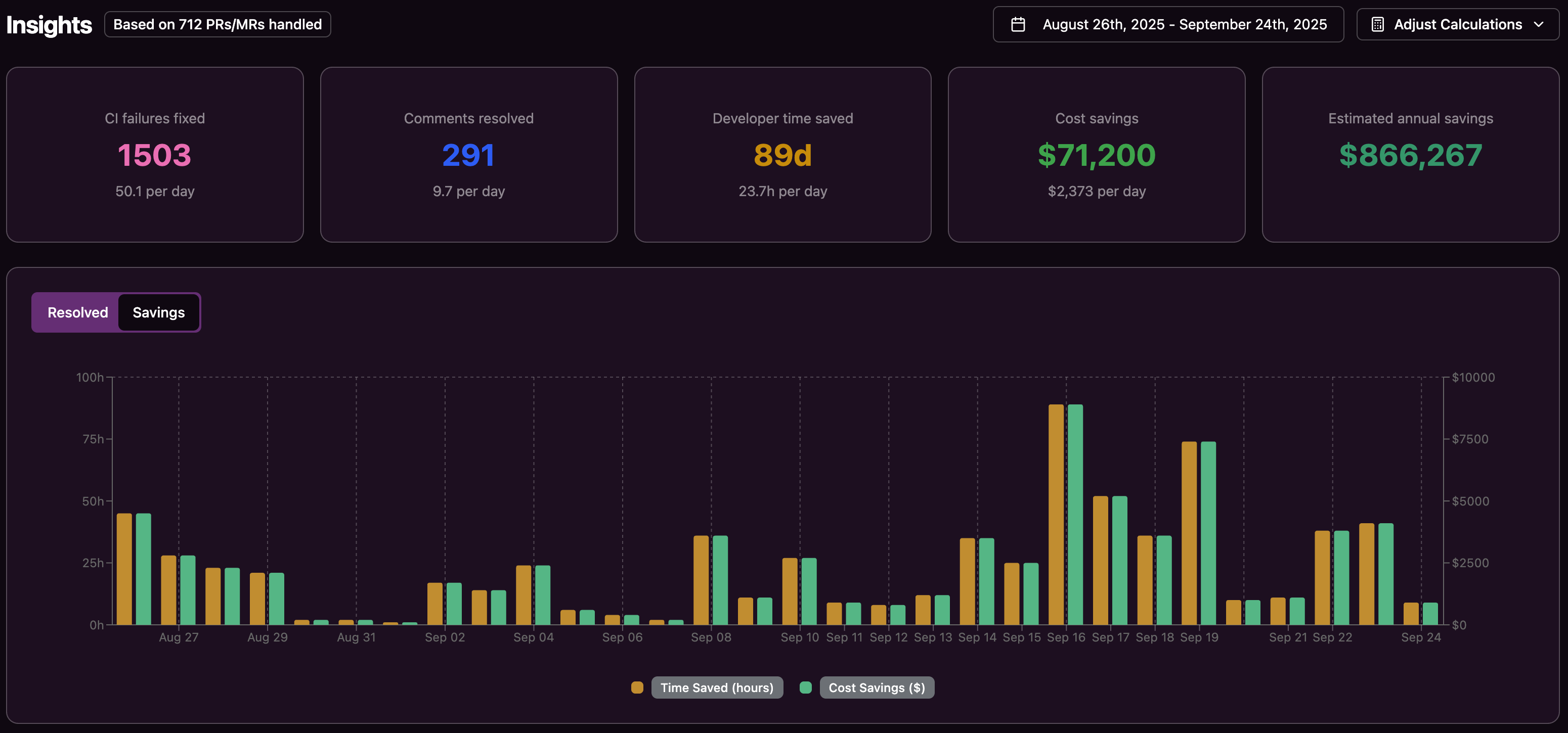
Conclusion: Redefine CI/CD Efficiency with Gitar
CI/CD tools offer visibility, but they don’t fix the core issues of failures and manual reviews that disrupt developer focus and delay merges. Gitar fills this gap as an autonomous AI that turns your pipeline into a self-healing system.
By automating CI fixes and review feedback, Gitar removes manual hurdles, saving time and boosting team morale. Its flexible trust settings let you adopt automation gradually, while its environment replication ensures fixes fit complex setups.
As AI speeds up coding, validation and merging become the real challenges. Gitar directly addresses this, ensuring your CI/CD process drives progress, not delays.
Ready to upgrade your workflow? Book a demo with Gitar now and see how autonomous AI can help your team ship reliable software faster.