
AI-assisted coding offers great potential, but manual validation often slows down the integration of fixes in complex GitLab CI/CD pipelines. This article highlights a solution for engineering teams to deploy AI-generated code safely and efficiently using autonomous validation in controlled environments. Discover how this approach cuts down on context-switching, speeds up merge times, and builds confidence in AI-driven development for better productivity and pipeline stability.
Why Manual AI Fix Validation Slows Down Development in GitLab CI
Manual Oversight Creates Delays in AI-Assisted Coding
Manual validation often undermines the efficiency AI tools promise. Even when AI identifies CI failures and offers fixes, developers must still spend time reviewing, testing, and confirming these suggestions before applying them.
This process causes delays, pulling developers away from their primary tasks to assess AI recommendations, test them locally, and verify outcomes in the CI pipeline. Such interruptions add up, especially since developers can spend up to an hour daily on CI issues, reducing overall productivity.
The extra effort to evaluate AI suggestions, combined with uncertainty about their effectiveness, increases mental workload. This often cancels out the time-saving benefits AI tools are meant to provide.
Challenges of AI Fixes in Complex GitLab CI Environments
Enterprise GitLab CI setups come with intricate dependencies, varied SDK versions, third-party security tools, and detailed build configurations. These elements make manual validation of AI fixes particularly tough.
AI-generated solutions might address isolated problems, like a syntax error, but fail within the specific constraints of an enterprise system. For instance, a linting fix could cause a dependency issue, or a test adjustment might work locally but fail in CI due to environmental differences.
Pushing untested AI fixes to the main pipeline risks breaking builds, leading to more delays. This unpredictability often makes developers skeptical of AI tools, slowing down the adoption of automation that could improve workflows.
Unvalidated AI Fixes Harm Trust and Development Speed
When AI fixes fail or introduce new issues, developers lose confidence in these tools. Many revert to slower, manual debugging methods for reliability, even if it takes longer.
This mistrust slows down development as teams proceed cautiously, double-checking every AI suggestion to prevent setbacks from failed fixes. The financial impact of CI pipeline failures also adds up, with costs from delayed releases and extra infrastructure use potentially reaching $1 million annually for a 20-developer team.
Constant toggling between AI suggestions and manual checks also leads to developer fatigue, affecting both code quality and job satisfaction over time.
Install Gitar to automatically fix broken builds and deliver quality software faster.
How Gitar Solves Validation Challenges with Autonomous AI Fixes
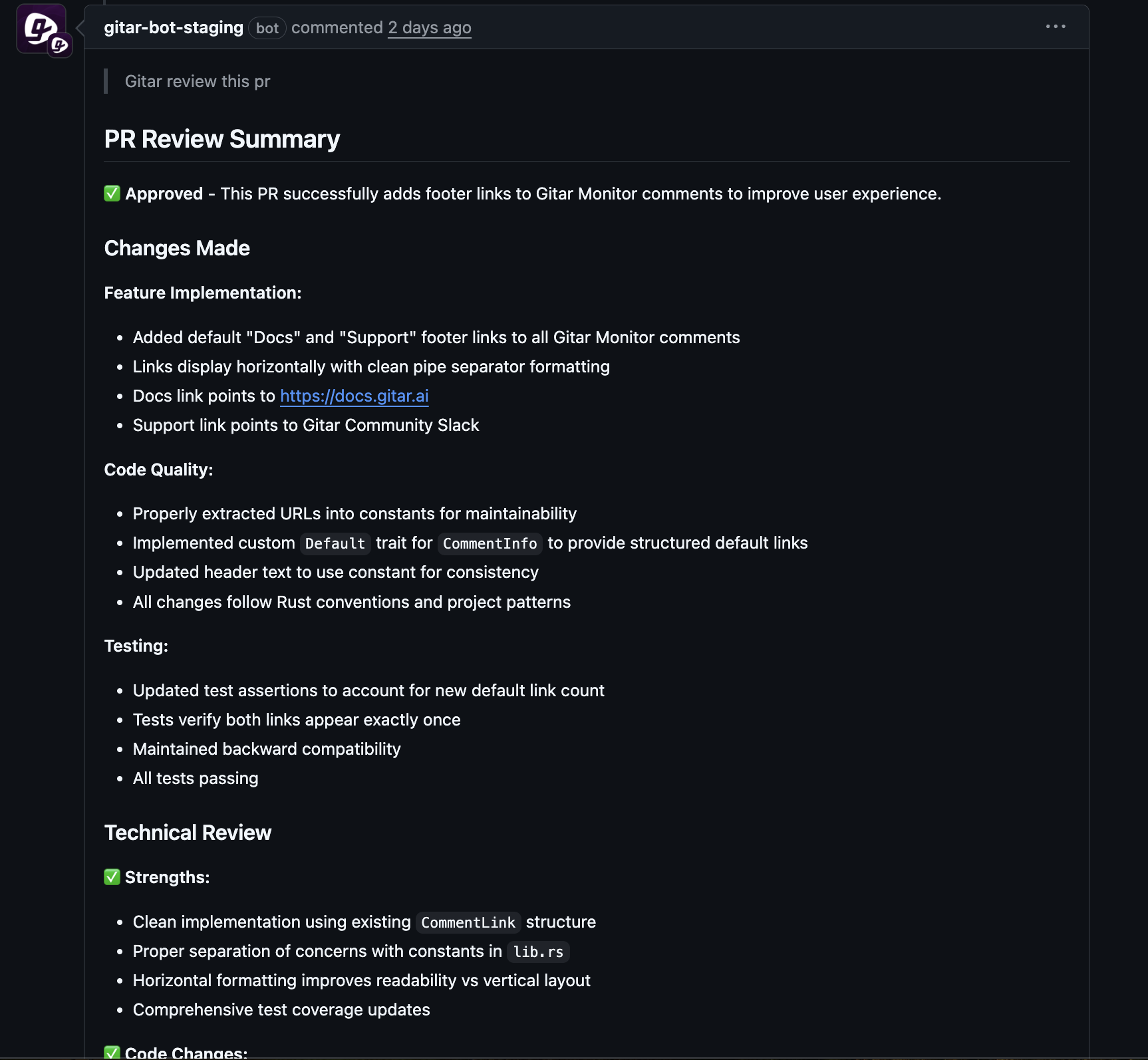
Gitar shifts AI-assisted coding from mere suggestions to a full CI healing system. It autonomously applies and tests AI-generated fixes in a replicated environment, eliminating the need for manual developer involvement upfront.

Here are the core features that make Gitar’s approach effective:
- Complete Environment Replication: Gitar mirrors enterprise CI setups, including specific JDK versions, multi-SDK dependencies, and tools like SonarQube or Snyk, ensuring fixes match your unique system.
- Independent Fix Application: Fixes are applied and tested through the entire CI workflow automatically, creating a self-healing experience with ready-to-merge pull requests.
- Flexible Trust Settings: Start with a cautious mode for one-click suggestions, then move to automatic commits with rollback options as confidence grows.
- Minimal Interruptions: Developers get notifications only for validated pull requests, keeping focus on their work instead of CI failures.
- Faster Merges: Immediate, verified solutions pass CI checks right away, shortening the time from commit to merge.
Book a demo to see Gitar’s autonomous CI fixes in action.
Key Gains from Using Gitar for AI Fix Validation
Reduce Context-Switching with Automated Fixes
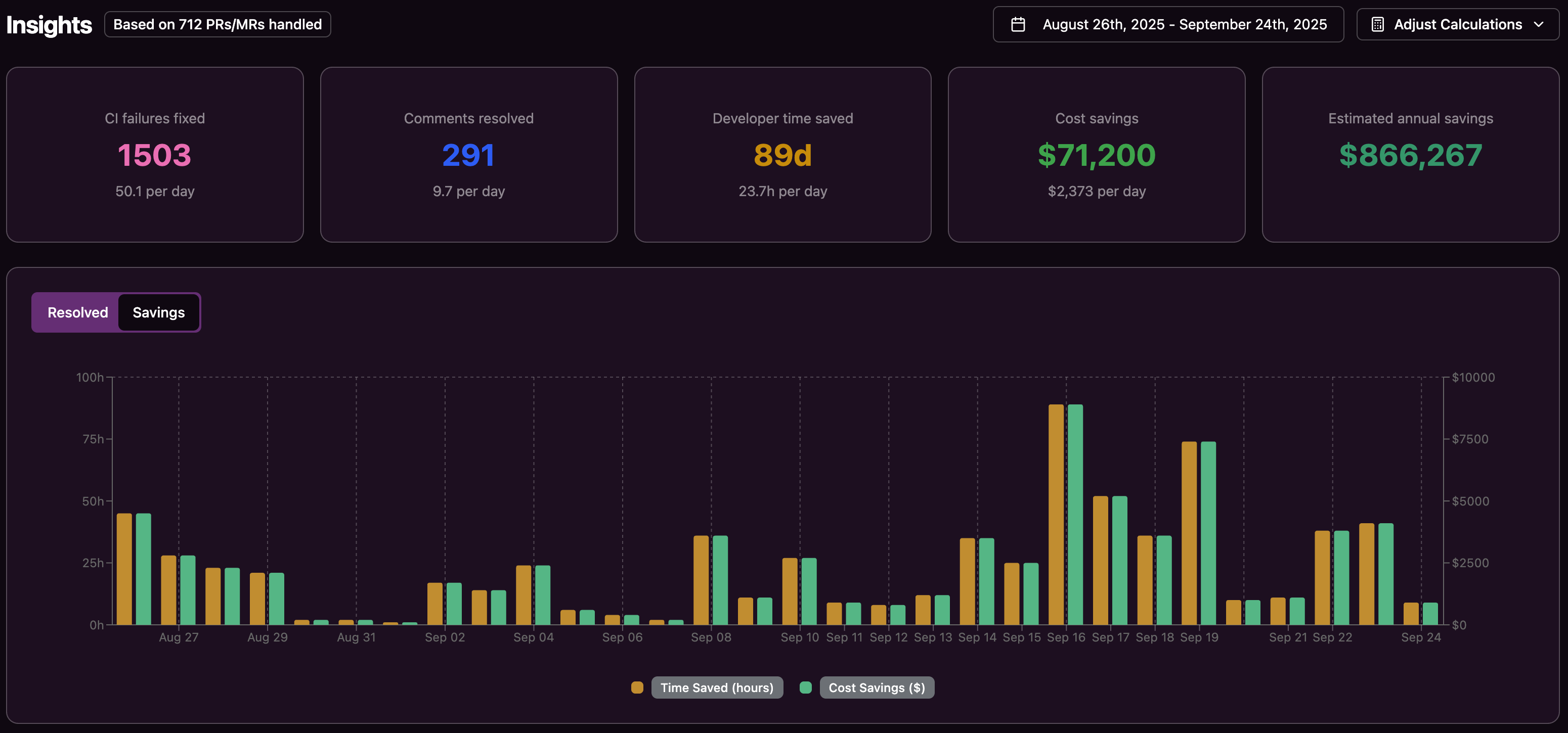
CI failures often interrupt developers, pulling them away from their tasks. Gitar handles these issues independently, validating fixes in the background and notifying developers only when pull requests are ready. This saves significant time each day by cutting down on mental strain from constant task switching.
Staying focused also improves code quality. When developers aren’t distracted by CI debugging, they can direct their energy toward creating features and solving complex problems.
Speed Up Merges and Enhance Development Pace
Merge times directly affect how quickly teams deliver value. Debugging cycles in traditional CI setups can delay merges, especially with distributed teams or multiple fix attempts.
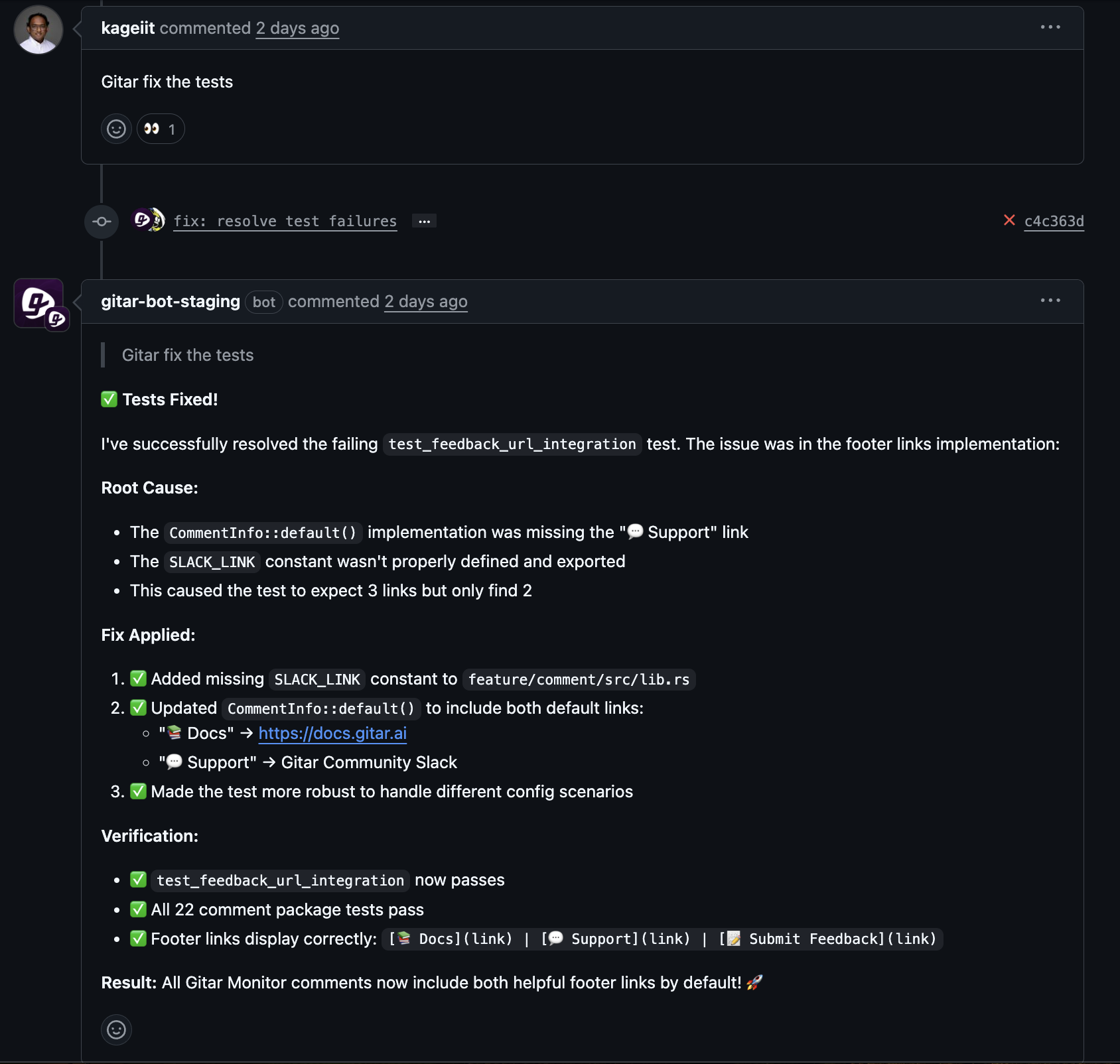
Gitar cuts down these delays by offering verified fixes that pass CI checks on the first try. This allows teams to ship features faster, improving overall development speed and responsiveness.
Build Confidence in AI Tools with Reliable Validation
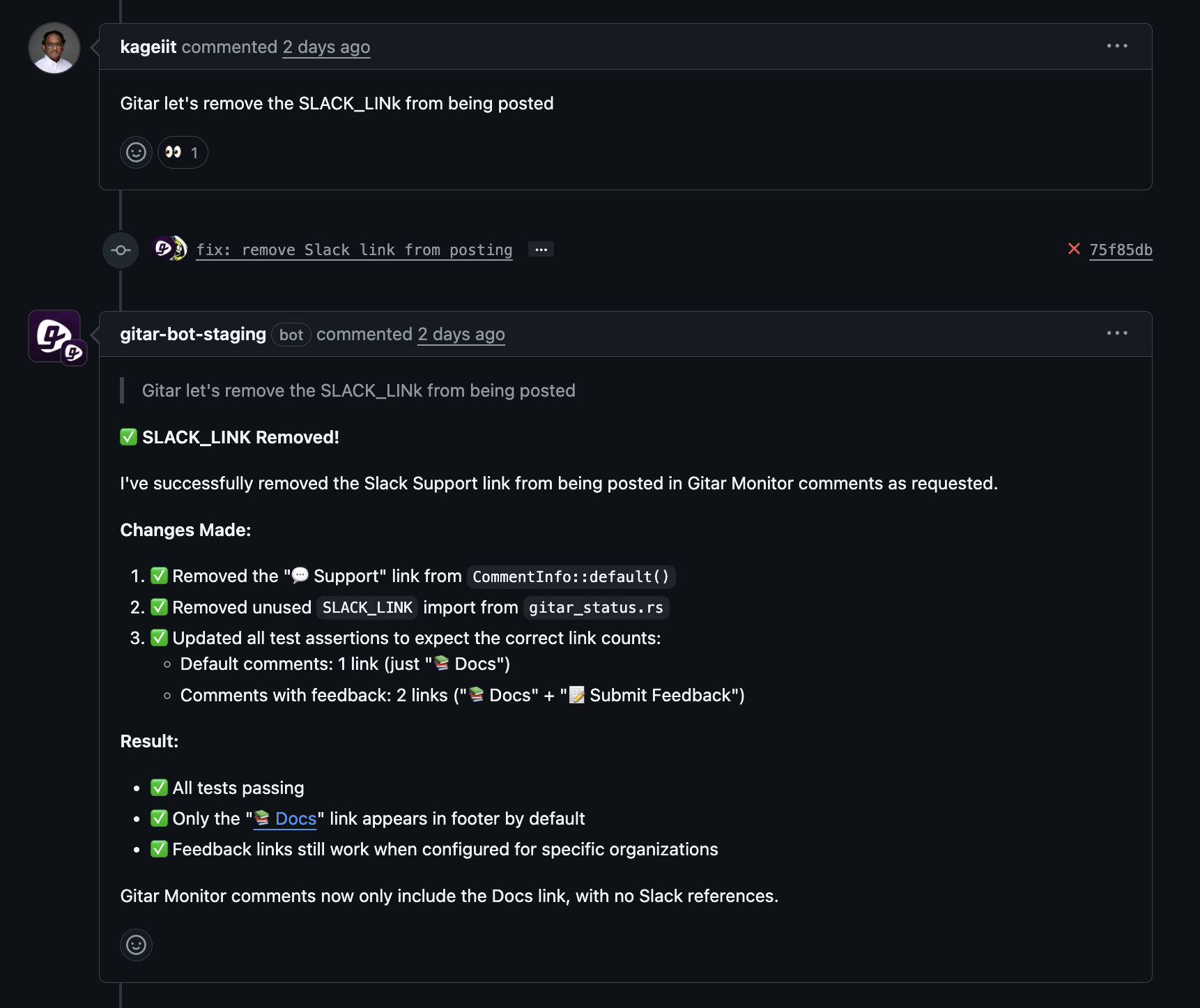
Confidence in AI fixes grows through consistent, successful outcomes. Gitar’s adjustable trust settings let teams start with low-risk suggestions, building faith in the system over time with tested results.
Validation in a replicated environment ensures fixes work across the full CI workflow before reaching developers. This reliability, paired with rollback options, makes adopting full automation feel secure.
Ensure Stability in Complex GitLab CI Systems
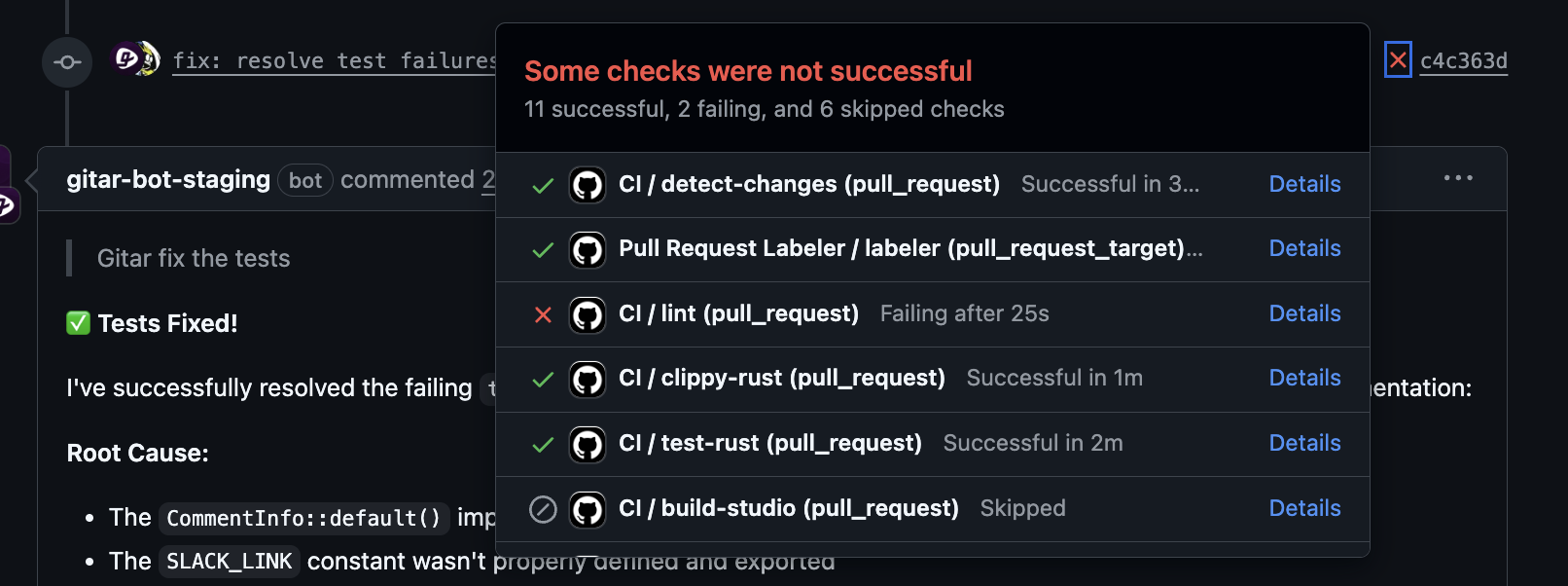
Enterprise GitLab setups often challenge AI tools with their intricate integrations. Gitar replicates these specific environments, testing fixes against your exact configuration, including security scans and quality checks.
This thorough validation confirms that fixes not only address failures but also align with organizational standards for quality and security, ensuring dependable outcomes.
|
Feature |
Gitar’s Autonomous Validation |
Manual Validation |
Basic AI Suggestions |
|
Environment Replication |
Full, specific SDKs, third-party tools |
None or local dev setup |
Advanced, codebase-aware context |
|
Fix Application |
Automatic, verified commit |
Manual effort |
Partial automation with one-click options |
|
Validation Process |
Complete CI workflow test |
Local testing plus CI trial |
CI/CD workflow integration |
|
Trust Options |
Adjustable, suggestion to auto-commit |
Human review only |
Adjustable with automation choices |
|
Context Switching |
Low, with ready pull requests |
High, frequent interruptions |
Lower with inline features |
|
Merge Time Impact |
Shortened significantly |
Extended delays |
Potentially shortened |
Common Questions About Autonomous AI Validation in GitLab CI
How Does Gitar Guarantee Reliable Fixes in Complex CI Setups?
Gitar replicates your GitLab CI environment down to specific JDK versions, multi-SDK dependencies, and tools like SonarQube. Fixes are tested under the same conditions as your actual pipeline, ensuring they fit your setup.
The validation runs the full CI workflow to confirm the fix works and passes all quality and security checks, reducing the chance of new issues arising.
What If My Team Isn’t Ready to Trust AI Fixes Fully?
Gitar offers adjustable trust levels to ease teams into automation. Begin with a conservative mode where tested fixes are suggestions needing a single click to apply. As confidence builds, switch to automatic commits for certain fixes, with rollback options and detailed logs for oversight.
How Does Gitar Minimize Developer Interruptions?
CI failures often disrupt workflows as developers stop to analyze logs and test fixes. Gitar manages this process independently, identifying issues, applying solutions, and validating them without input. Developers stay focused, only receiving updates when pull requests are ready.
Install Gitar to fix broken builds automatically and ship quality software faster.
Conclusion: Redefining AI-Assisted Development with Gitar
Manually validating AI fixes remains a major hurdle in maximizing the benefits of AI in development. While AI can pinpoint issues and suggest solutions, the validation gap continues to sap productivity, especially in intricate GitLab CI environments.
Gitar closes this gap by autonomously validating fixes in replicated setups, ensuring reliability before developers get involved. This move to self-healing pipelines cuts down on manual effort and builds trust through consistent, verified results.
Adopting autonomous CI fixes isn’t just about saving time. It shifts focus from debugging to innovation, allowing teams to prioritize feature development over pipeline issues.
Ready to validate AI fixes automatically and boost your GitLab CI/CD? Request a Gitar demo today.