
Software development moves fast, and CI/CD pipelines need to keep up. Yet, dependency resolution often slows things down. This article dives into how Gitar, an AI-powered tool, automates fixes for dependency issues, creating smoother pipelines that save time and speed up releases.
Why Manual Dependency Resolution Hurts Your CI/CD Pipeline
Dependency conflicts can derail even the best feature branches, turning a quick deployment into hours of debugging. This problem costs teams far more than just time, impacting productivity and morale across entire organizations.
How Context Switching Wastes Developer Time
Developers thrive when focused, solving complex problems efficiently. A CI failure, like a dependency mismatch, breaks that focus. On average, developers spend an hour daily fixing these issues, eating up to 30% of their workday.
The real damage comes from constant interruptions. Switching from coding a feature to debugging a build log drains mental energy. After resolving a 30-minute issue, it can take another hour to regain momentum, doubling the effective cost of each failure.
Install Gitar now to automate fixes and keep builds running smoothly.
Delays in Releases That Slow Your Market Edge
Dependency issues don’t just affect individual developers; they delay entire release cycles. A blocked bug fix or feature can push back product launches or security updates. For 60% of companies, CI failures are a top reason for missed deadlines, directly affecting revenue and growth.
When a team nears a release and a dependency update breaks compatibility, engineers must drop testing to troubleshoot. These delays ripple across departments, stalling frontend teams waiting on backend APIs or QA teams unable to finalize testing, ultimately costing more time and money.
Scaling Challenges with Diverse Build Environments
Enterprise setups complicate dependency issues with varied languages, SDK versions, and third-party tools. Mismatched environments, like different Node.js versions, frequently cause CI/CD failures. This gets trickier in large, complex systems.
A single pipeline might juggle Python microservices, Node.js frontends, Java services, and infrastructure tools, each with unique dependency needs. Local setups often mask issues with cached files or custom configs, but CI’s clean environments expose these conflicts at critical moments, like during deployments.
Meet Gitar: AI That Automatically Fixes CI/CD Pipelines
Manual dependency fixes eat time and demand debugging skills. Gitar changes this by using AI to detect and resolve issues automatically, building pipelines that fix themselves without human input.

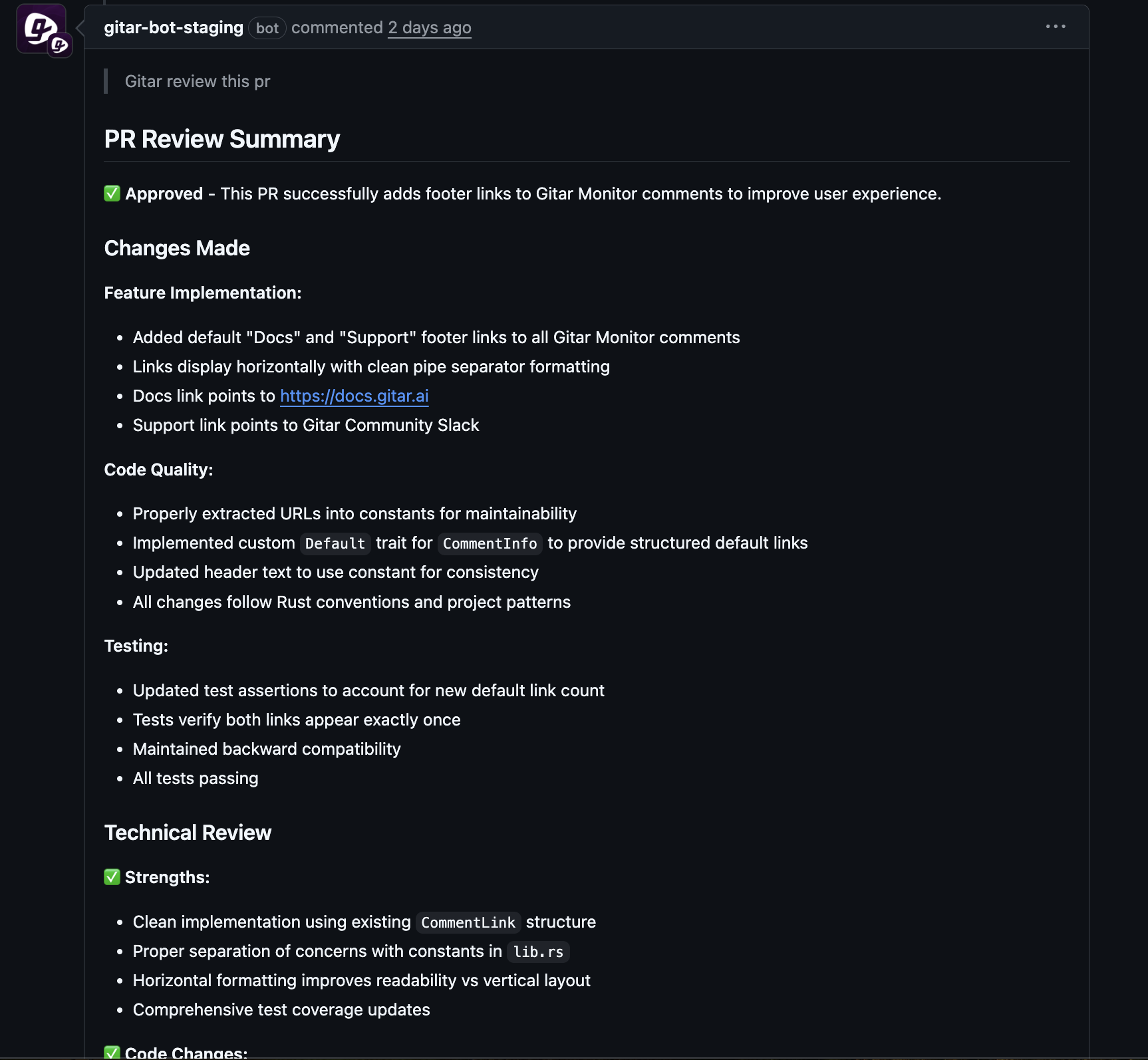
Gitar goes beyond pointing out problems. It identifies the root cause of a CI issue, creates a fix, applies it, and commits the change to your PR branch. This moves dependency resolution from a reactive chore to a hands-off process.
Here’s what sets Gitar apart:
- Complete Fixing Cycle: Gitar doesn’t stop at suggestions. It applies fixes and verifies them against your full CI pipeline for successful builds.
- Accurate Environment Matching: It replicates complex setups, managing specific JDK versions, multiple SDKs, and tools like SonarQube or Snyk, so fixes fit your exact system.
- Wide Platform Support: Gitar works with GitHub Actions, GitLab CI, CircleCI, BuildKite, and more, fitting into varied CI/CD setups without limiting you to one provider.
- Flexible Trust Options: Teams can begin with fixes needing approval and move to full auto-commits as they gain confidence, balancing control with automation.
Book a Gitar demo to see self-fixing CI/CD in action.
How Gitar Improves Dependency Resolution for Your Team
Gitar uses intelligent analysis to tackle CI failures, offering fixes that work across different environments. It handles immediate issues while helping refine your overall CI/CD process.
Finding and Fixing Dependency Conflicts Fast
Manually digging through CI logs to spot dependency problems takes time and focus. Analyzing logs systematically is key to spotting CI/CD issues like syntax or build tool errors. Gitar automates this, scanning logs to pinpoint issues and applying the right fix, such as adjusting version mismatches.
Correcting Build Environment Differences
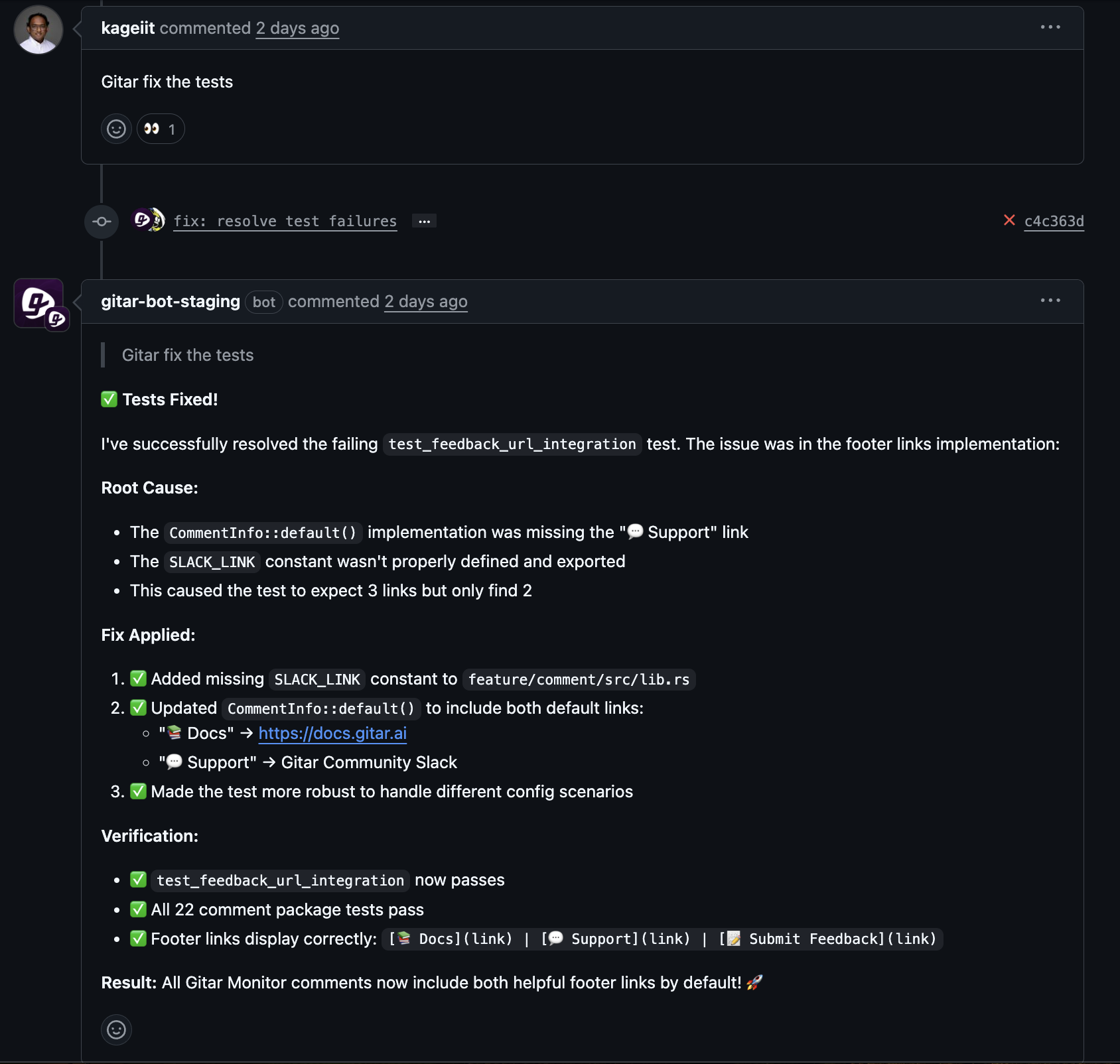
Build issues often hide in local setups but fail in CI due to environment differences. Inconsistent environments, like varying Node.js versions, are a major trigger for CI/CD problems. Gitar solves this by fully understanding your build context, including OS, libraries, and SDK relationships, then validating fixes against your pipeline.
Preventing Configuration File Mistakes
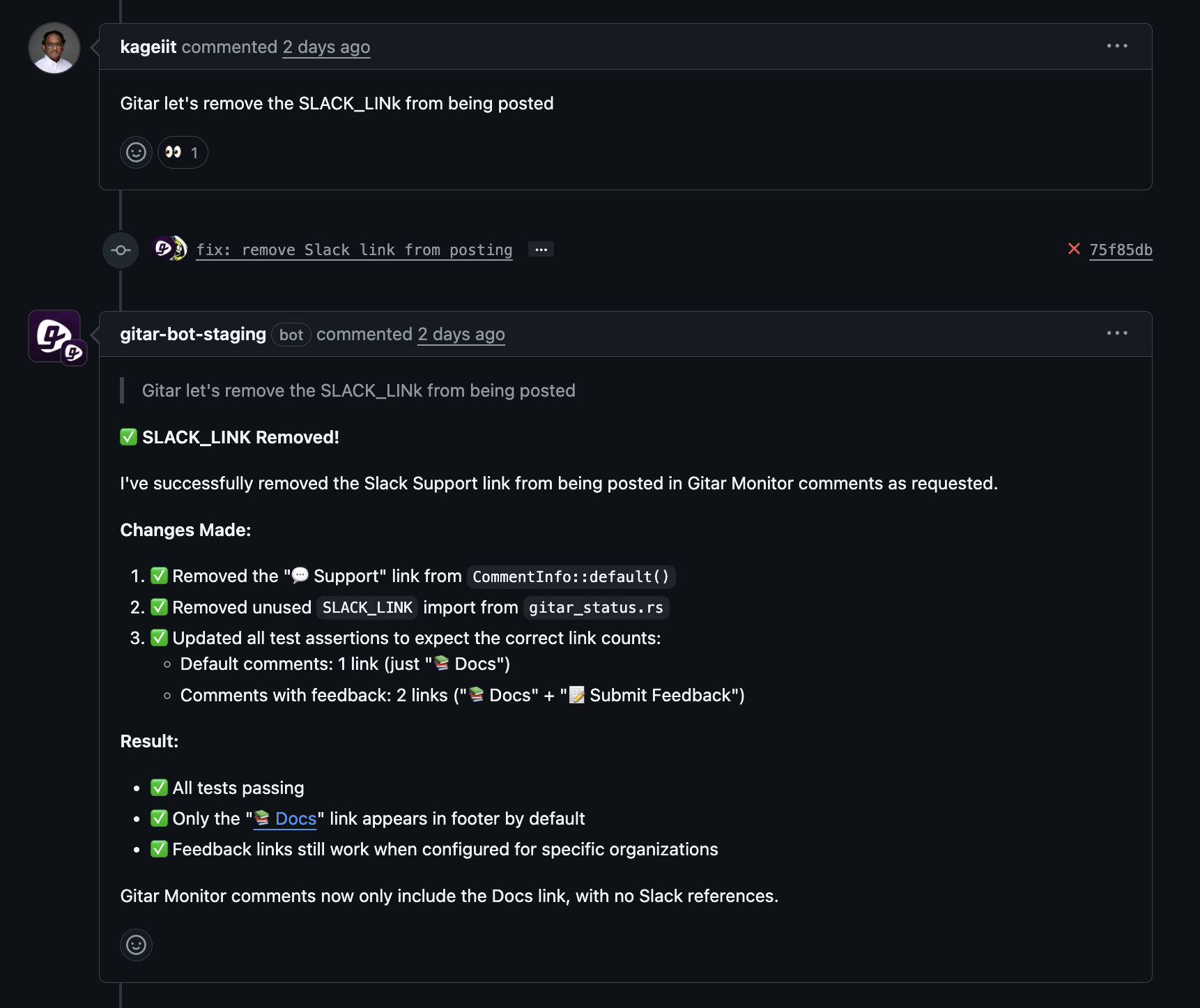
CI/CD config files grow complex with advanced deployment needs. Errors in configuration, like syntax issues or wrong paths, are common but avoidable with proper checks. Gitar scans for conflicts in dependency declarations and spots inconsistencies across files, ensuring fixes maintain system-wide consistency.
Install Gitar now to automate fixes and deliver better software faster.
Gitar Compared to Traditional Tools: Fixing vs. Suggesting
Many CI/CD tools focus on flagging issues or suggesting fixes, leaving the heavy lifting to developers. Gitar stands out by fully automating the process, from diagnosis to validated solutions.
|
Feature / Tool |
Manual Work (Current Standard) |
AI Suggestion Tools (e.g., CodeRabbit) |
Gitar (Fixing Engine) |
|
Core Function |
Human Debugging, Manual Fixes |
Offers analysis and some auto-fixes |
Automatic diagnosis, fix, and validation |
|
Dependency Handling |
Slow analysis, guesswork |
Suggests fixes, some automation |
Fully resolves issues |
|
Context Switching |
High (frequent interruptions) |
Some fixes need developer input |
Minimal (hands-off fixes) |
|
CI/CD Platforms |
Works with all |
Supports many platforms |
Covers major platforms fully |
|
Trust Model |
Full human control |
Adjustable trust for some fixes |
Flexible: approval to auto-commit |
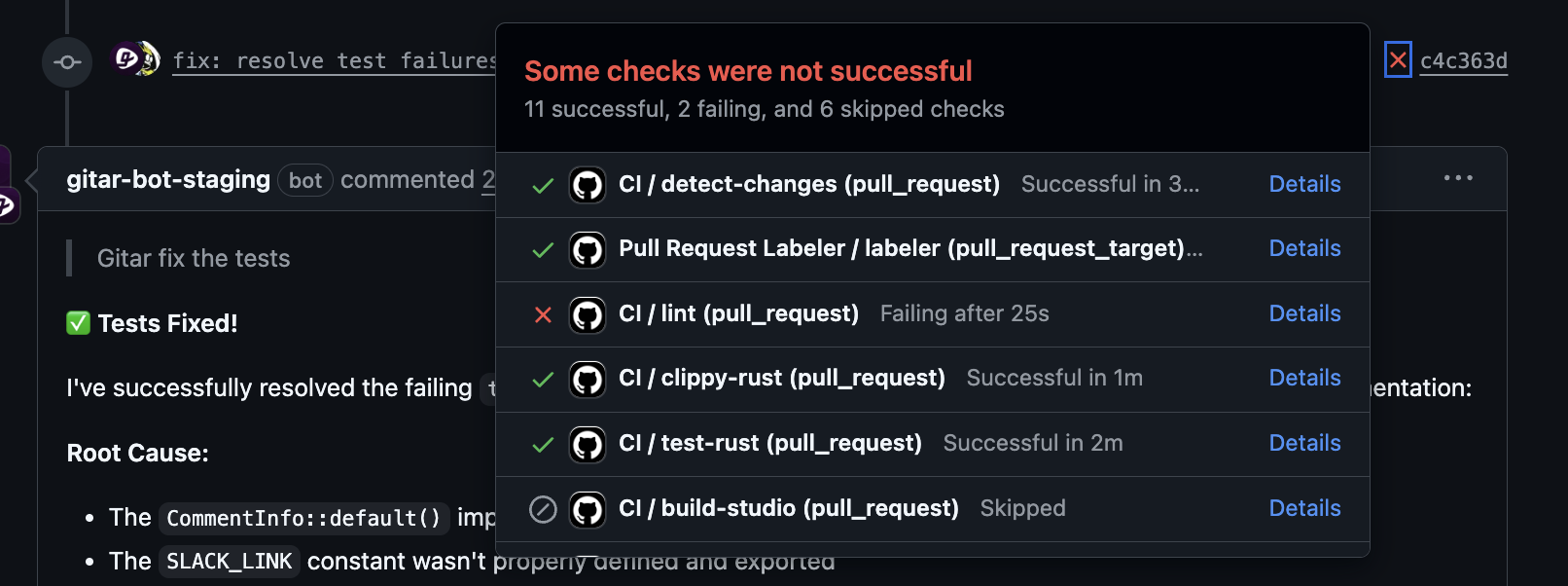
Suggestion tools may still require developer oversight, risking incomplete fixes. Gitar applies solutions and tests them against your CI workflow, ensuring they work before delivery. This shifts the process from trial and error to guaranteed results.
Common Questions About Gitar’s Dependency Fixes
How Does Gitar Improve on Traditional Dependency Tools?
Gitar goes past basic checks by analyzing CI failures and creating tailored, validated fixes. Unlike manual or suggestion-based tools, it handles the entire process, keeping builds green without pulling developers away from their work.
What Dependency Issues Can Gitar Fix Automatically?
Gitar addresses various issues, including version conflicts, environment mismatches, and errors in multi-SDK or third-party tool setups. It uses full context to apply fixes that match your system’s needs.
How Does Gitar Ensure Fixes Don’t Cause New Issues?
Gitar replicates your full CI environment, applies fixes, and runs the entire workflow to validate them. Fixes are only delivered if all jobs pass, often with detailed change explanations. Teams can use rollback options and start with manual approvals before moving to full automation.
Can Gitar Manage Complex Enterprise Systems?
Yes, Gitar handles diverse setups with languages like Python, Java, Go, and Rust. It manages intricate dependencies across SDKs and tools, ensuring fixes work reliably in large, varied environments.
How Does Gitar Fit Into Existing CI/CD Workflows?
Gitar connects easily with platforms like GitHub Actions, GitLab CI, CircleCI, and BuildKite, requiring minimal setup. It monitors failures and applies fixes without altering your current pipeline, offering adjustable automation levels and clear logs for transparency.
Speed Up Releases with Gitar’s AI Dependency Fixes
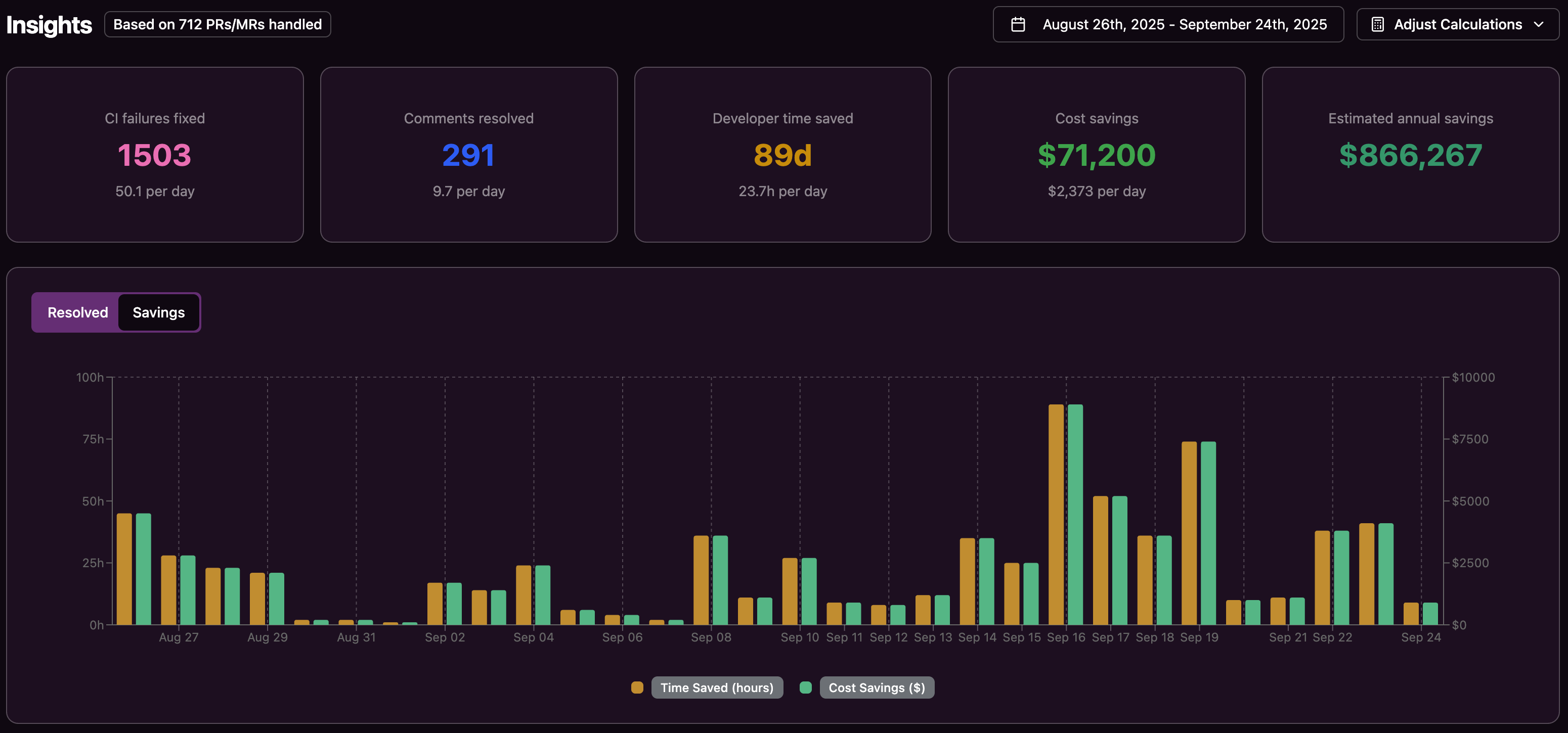
Manually handling CI/CD dependency issues remains a major drag on development speed. While AI tools help write code faster, losing hours to fixable failures is a growing frustration. Gitar changes this by automating fixes, cutting interruptions, and speeding up delivery.
Beyond saving time, Gitar boosts developer morale, eases onboarding, and maintains pace as systems grow complex. It frees teams to focus on creating, not troubleshooting.
Moving from manual debugging to automated fixes marks a key shift in CI/CD reliability. Just as automated testing became vital for code quality, AI-driven dependency resolution is now essential for keeping development on track in today’s intricate applications.