
CI failures often slow down code delivery and frustrate developers. This article explains how autonomous AI agents like Gitar go beyond simple suggestions to fix CI pipeline issues and improve test coverage. You’ll see how this approach cuts down pull request merge times, boosts developer focus, and speeds up software delivery by automating manual tasks.
Why Manual CI Fixes Create Delays
CI failures disrupt workflows when a pull request fails due to a unit test error, linting issue, or build problem. Developers must stop their work, analyze logs, switch to a local environment, apply fixes, commit changes, and wait for the pipeline to rerun. This cycle repeats, wasting time and focus.
Context Switching Harms Productivity
Constant interruptions from CI failures break a developer’s concentration. A quick fix that should take minutes stretches longer due to the mental effort of switching tasks and regaining focus. This disruption limits deep work and delays progress on critical features.
Manual Fixes Slow Down Teams
Even with AI tools that suggest fixes, developers still need to apply and test them. This creates delays, especially for distributed teams across time zones. Feedback from a reviewer in one region might not reach the developer for hours, extending a simple fix over days.
Inefficiency Costs More Than Time
CI issues drain resources beyond just developer hours. Developers can lose up to 30% of their time on CI and code review challenges. For a team of 20, this could mean $1 million in lost productivity each year. The ripple effect includes delayed releases, higher costs, and missed market opportunities.
Install Gitar now to fix broken builds and ship software faster.
How Gitar Automates CI Healing as an AI Agent
Gitar changes CI management by resolving issues automatically instead of waiting for manual fixes. Unlike tools that only highlight problems, Gitar acts as an independent agent, finding issues, applying solutions, and confirming they work, creating a self-healing pipeline.

Fixing Issues Without Developer Input
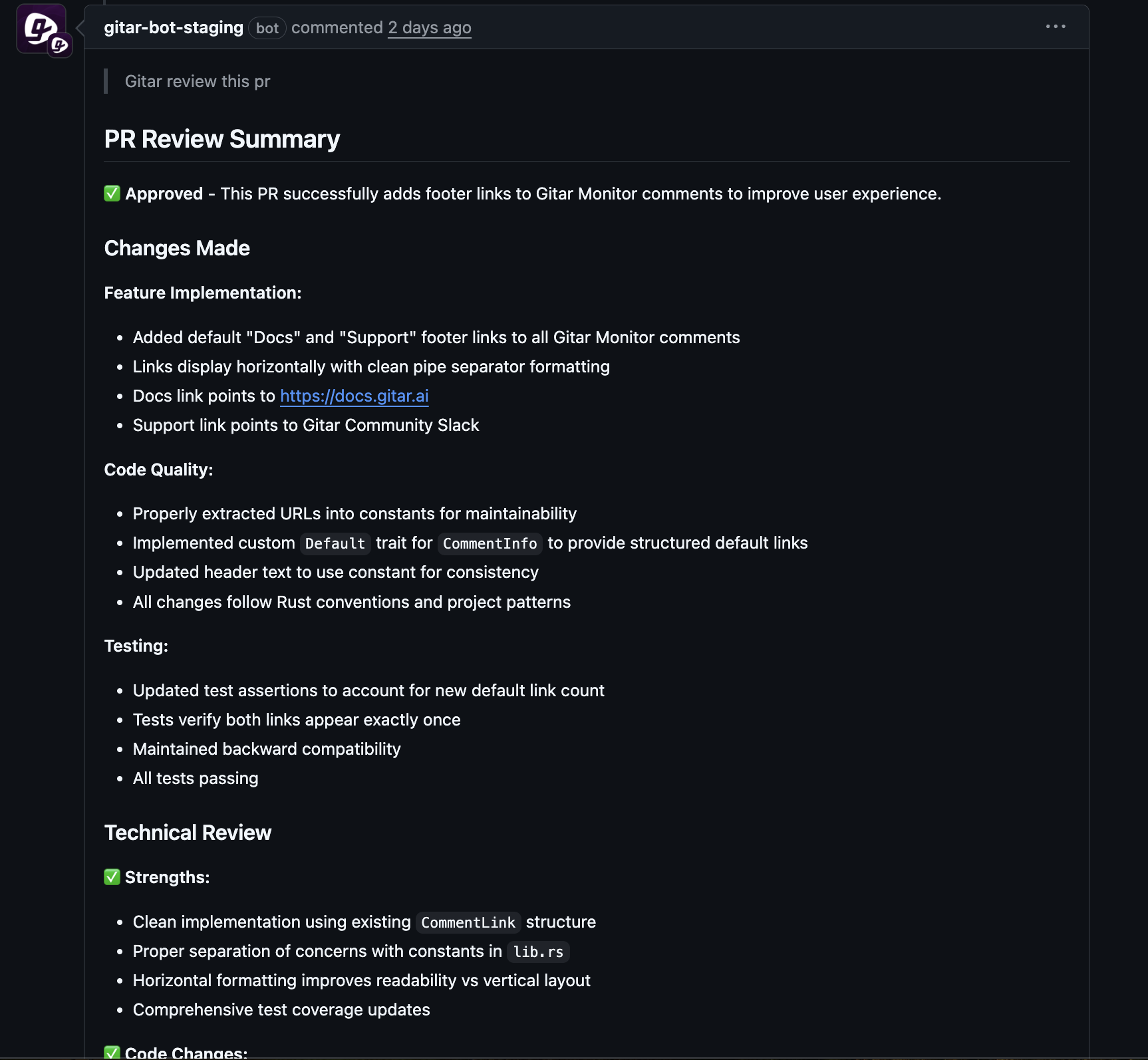
Gitar stands out by handling both issue detection and resolution. When a CI check fails, it identifies the root cause, creates a fix, applies it, and verifies the solution within the full CI setup. This frees developers to focus on coding new features while Gitar manages pipeline issues.
Key Benefits for Quicker Merges
Gitar offers specific features to streamline CI and code reviews. Here’s how it helps:
- Complete Issue Resolution: Gitar applies fixes and tests them against the entire CI process, ensuring pull requests are merge-ready.
- Code and Test Enhancement: It automatically adds tests to improve coverage based on simple prompts, maintaining high quality.
- Accurate Environment Matching: Gitar mirrors complex setups with specific SDKs and dependencies, so fixes work in real conditions.
- Smart Review Support: It handles feedback by applying changes from reviewer comments, speeding up reviews without breaking developer focus.
Book a demo to see Gitar heal your CI pipelines.
How Gitar Speeds Up Merge Times
Gitar tackles both technical CI failures and broader workflow challenges. By automating repetitive tasks, it helps teams maintain quality while delivering code faster.
Resolving CI Failures Automatically
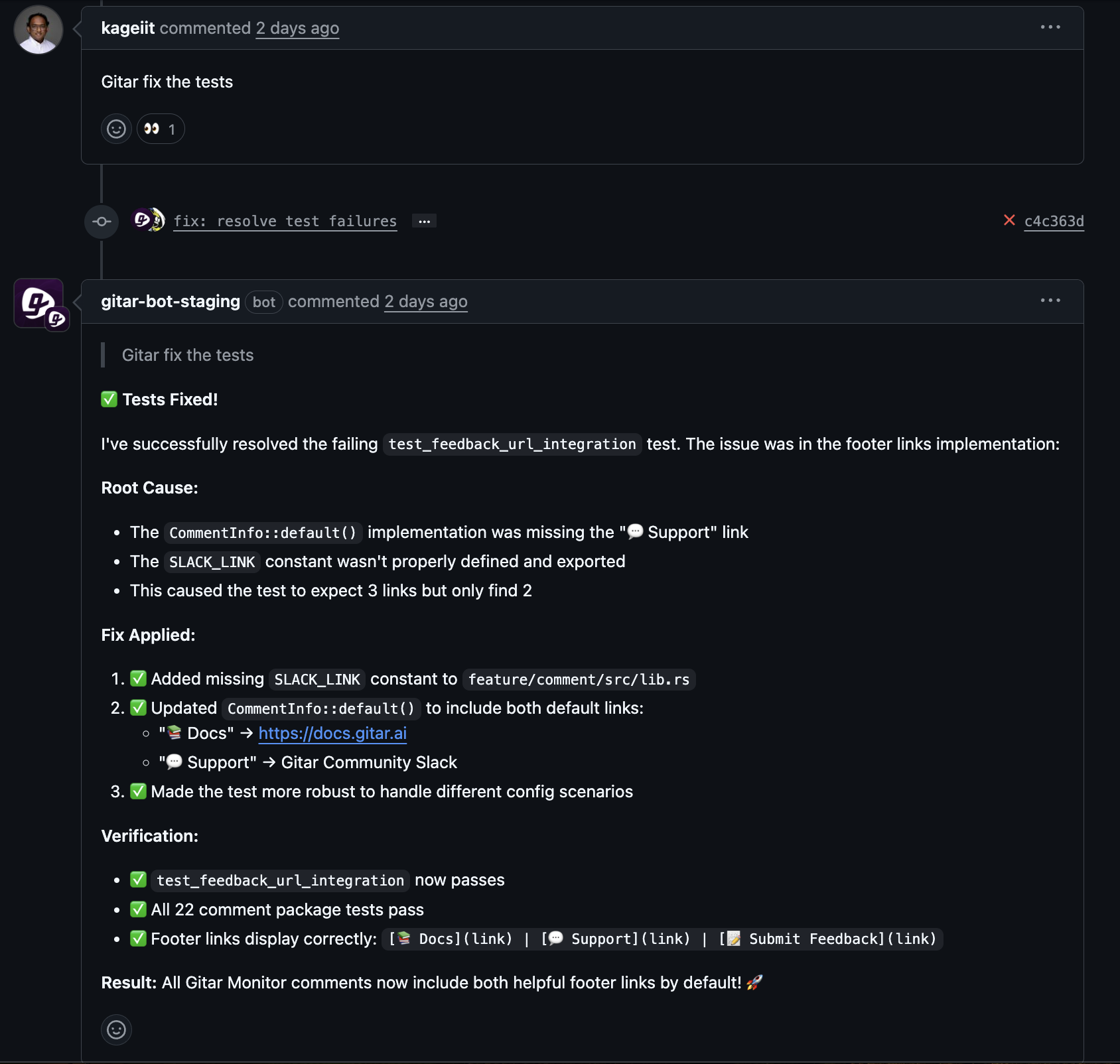
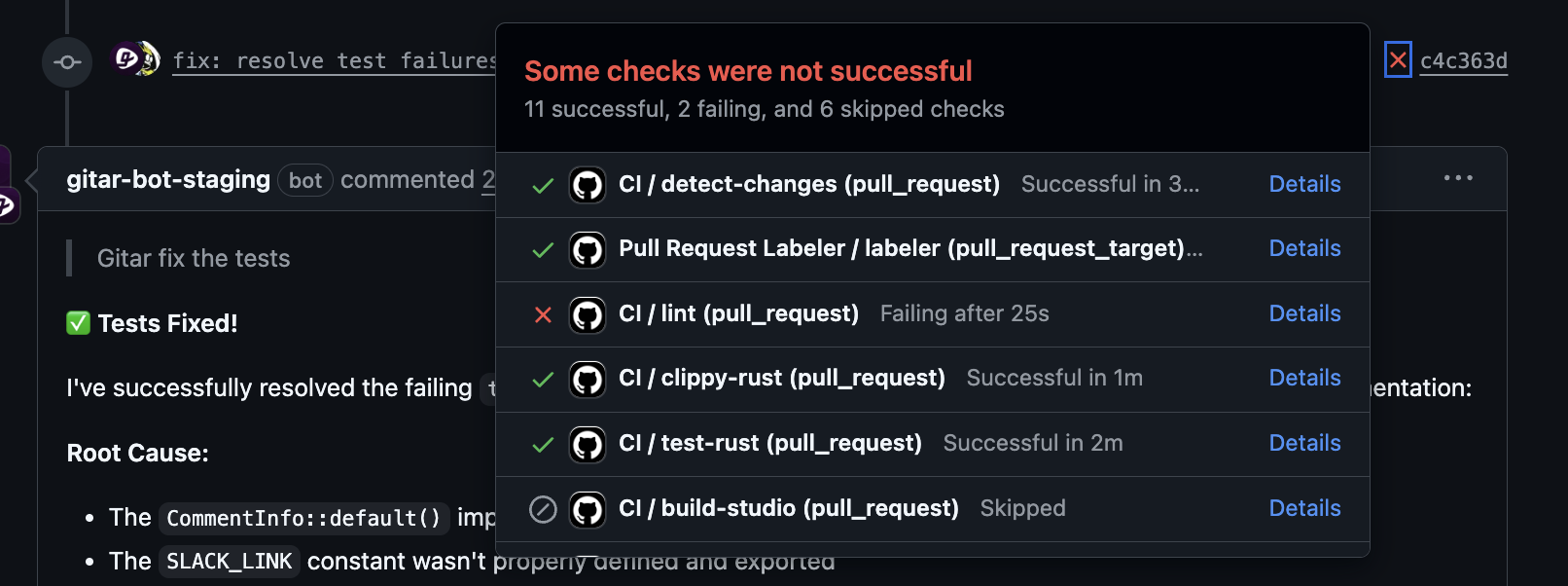
When CI fails, Gitar examines logs, pinpoints the cause, applies a fix, and commits it to the pull request branch. It addresses common issues like linting errors or test failures, providing clear explanations for every change to keep the process transparent.
Simplifying Reviews with Automated Fixes
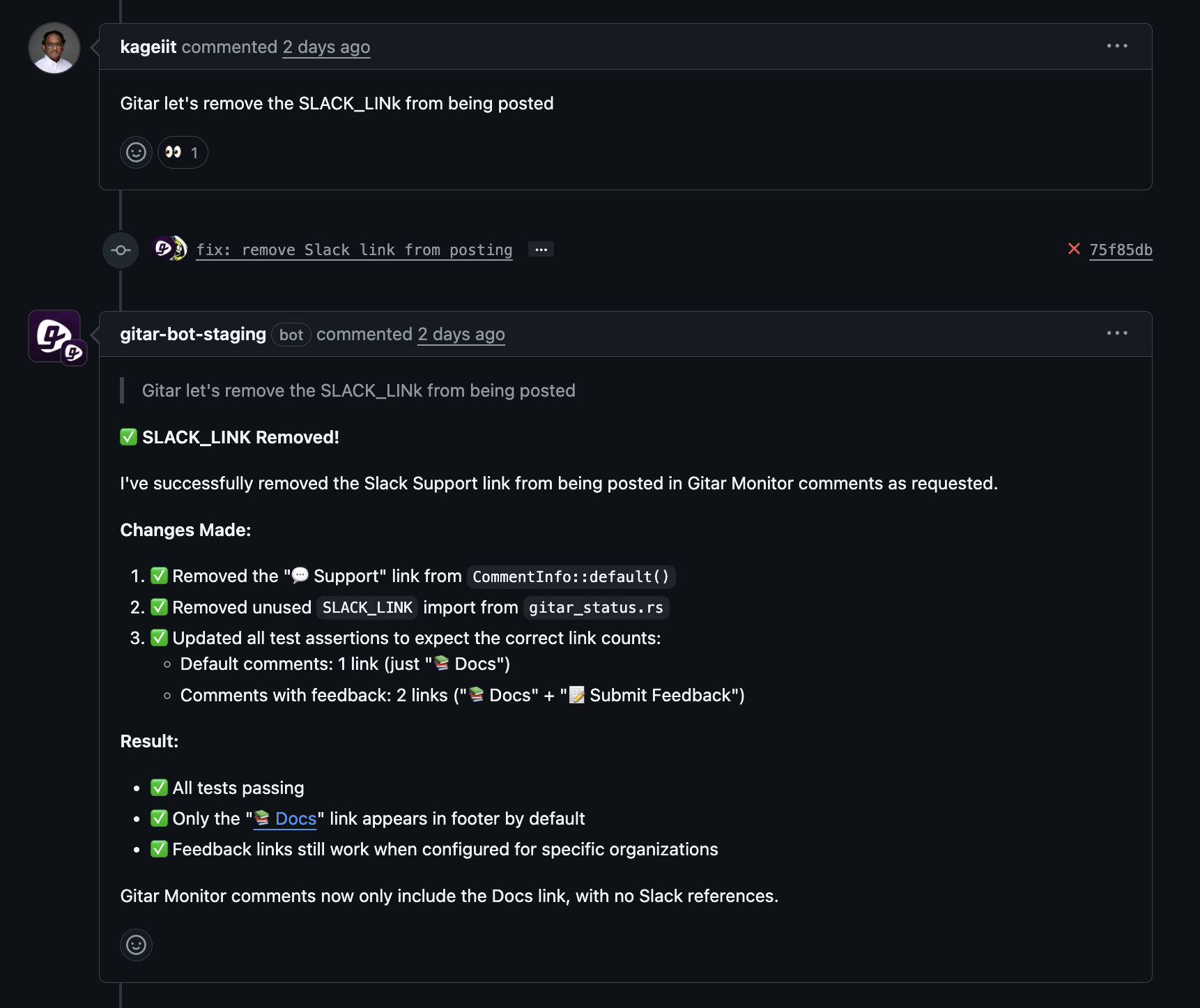
Gitar turns code reviews into a smooth process by acting on reviewer feedback. Reviewers can leave specific instructions, and Gitar applies the changes. This cuts delays for distributed teams, ensuring reviews move forward without waiting across time zones.
Turning Failed Builds into Successes
Gitar fixes a range of CI issues, from linting errors to dependency conflicts. Its automated resolution keeps feedback loops quick, letting developers know right away if changes pass CI checks, reducing wait times.
Gitar Compared to Other Methods
|
Feature |
Manual Work |
AI Suggestion Tools |
Gitar (Autonomous Agent) |
|
CI Failure Resolution |
Manual debugging, slow cycles |
Flags issues, offers fix options |
Detects, fixes, and validates automatically |
|
Time to Merge |
Days or weeks due to manual effort |
Hours or days with some help |
Minutes or hours with full automation |
|
Developer Effort |
High due to constant interruptions |
Moderate with some relief |
Low, preserving focus |
Install Gitar now to fix builds and ship faster.
Common Questions About Autonomous CI Healing
How Does Gitar Ensure Accurate Fixes?
Gitar matches your full CI environment, including specific SDKs and dependencies. This detailed replication ensures fixes align with your codebase and pass pipeline checks, avoiding conflicts or irrelevant solutions.
How Is Gitar Different From Other AI Review Tools?
Most AI review tools suggest fixes but still need manual input. Gitar goes further by detecting CI issues, creating fixes, applying them, validating against the full pipeline, and committing changes, ensuring builds pass without developer effort.
How Does Gitar Affect Delivery Speed and Costs?
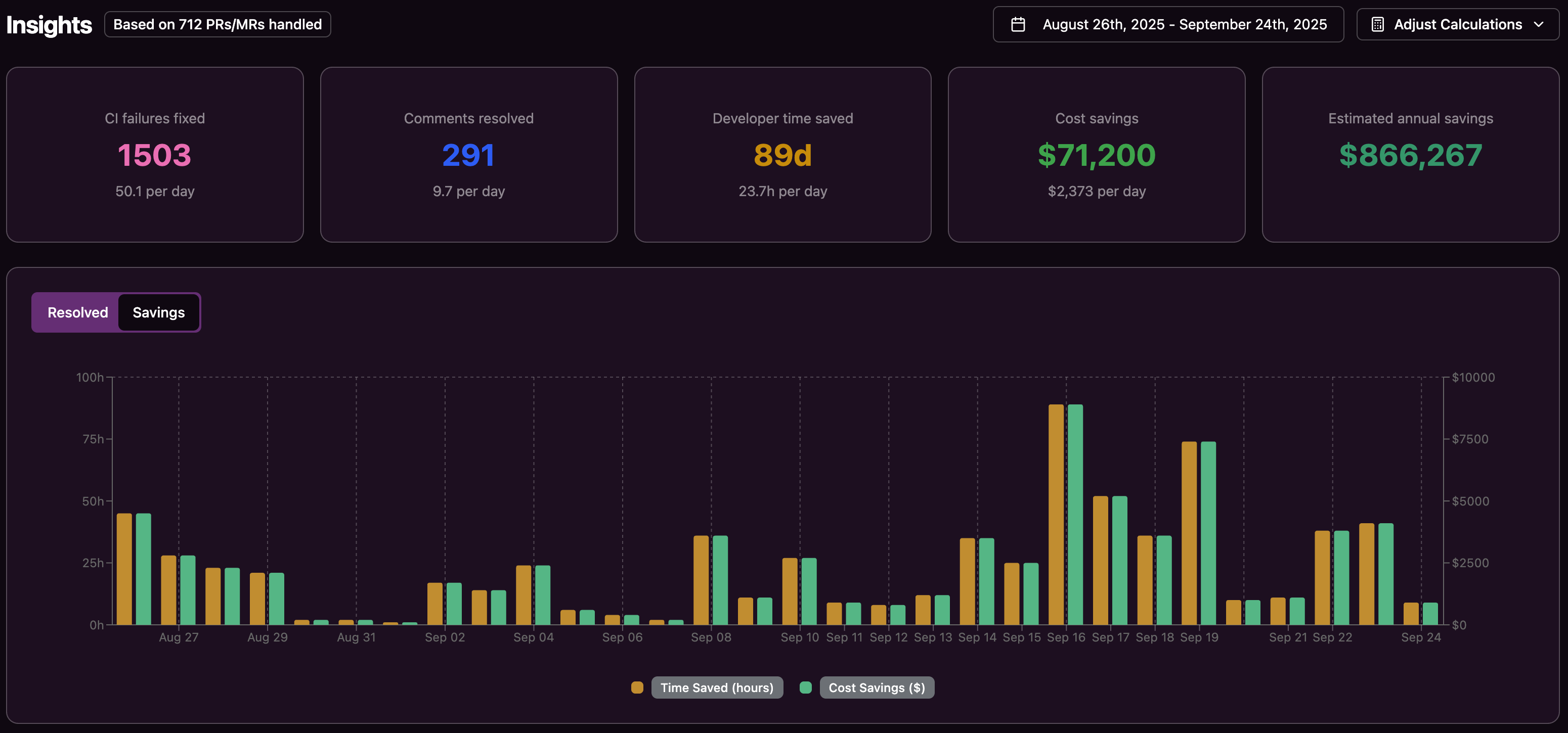
Gitar cuts down time spent on debugging and context switching by automating CI fixes and review feedback. For a 20-developer team, this can save up to $1 million in productivity losses annually, speeding up delivery and reducing engineering expenses.
What If a Fix Doesn’t Work as Expected?
Gitar offers adjustable trust settings and rollback options. Teams can start with fixes as suggestions for review, then move to full automation over time. All changes are logged and can be undone, giving full control over the codebase.
Conclusion: Gain Speed with Autonomous CI Solutions
CI failures and manual fixes slow down software development, turning productive teams into maintenance crews. Gitar shifts this dynamic by automating resolutions, letting developers focus on building value. Teams using Gitar deliver code faster without compromising quality.
Adopting autonomous CI tools provides a clear edge in a fast-paced industry. While others struggle with pipeline delays, Gitar users iterate quickly and stay ahead.
Ready to speed up merges? Book a demo with Gitar to experience self-healing CI.