
Broken CI builds and delayed code reviews can stall even the best engineering teams. You push a pull request, expecting a quick merge, only to hit a wall with linting errors, test failures, or missing dependencies. Fixing these issues often means switching tasks, digging through logs, and waiting for another pipeline run, costing valuable time.
While AI tools like GitHub Copilot help with writing code before commit, they often fall short when it comes to fixing post-commit CI failures. With more code being generated, pull requests pile up, increasing the chances of pipeline issues. The real challenge now is validating and merging code efficiently.
This article compares autonomous CI fixers like Gitar with AI suggestion engines, showing why automatic fixes can be more effective than suggestions alone for speeding up development workflows. Let’s dive into how Gitar handles CI issues from start to finish.
Why Broken Builds and Review Delays Hurt Engineering Teams
CI failures and slow code reviews cost more than just time. For a 20-person engineering team, spending an hour daily on debugging CI issues or addressing feedback adds up to 5,000 hours yearly. At typical developer rates, that’s around $1 million in lost productivity.
Beyond dollars, constant task-switching breaks focus, making complex coding tasks harder. When a developer submits a PR, starts another task, then has to jump back to fix a failure, the mental strain slows down progress significantly.
Distributed teams face even bigger delays. A PR submitted by someone in California might need feedback from a teammate in India, creating a 12-hour wait. If AI tools only offer suggestions that still need manual fixes, a quick exchange can stretch into days.
These delays ripple outward, slowing product releases, giving competitors an edge, and risking customer trust with inconsistent updates. CI pipeline issues contribute to project delays for 60% of companies, directly affecting how fast code moves from commit to merge. Pipeline failures often delay critical projects for most organizations.
Autonomous CI fixers tackle this by cutting out manual steps, directly addressing failures instead of layering on more tasks for developers to handle.
How Gitar Boosts Workflow Speed with Automatic CI Fixes
Gitar shifts the focus from suggesting fixes to automatically resolving issues. Unlike AI tools that help before commit, Gitar steps in after a commit when CI pipelines fail or code reviews need action. It targets the key bottleneck: getting code merged without delays.

Gitar’s strength is its complete handling of issues. If a CI check fails due to linting, tests, or build errors, Gitar identifies the problem, applies a fix to the branch, runs it through the full CI environment, and delivers a passing build. This cuts down on manual intervention compared to tools that only suggest changes.
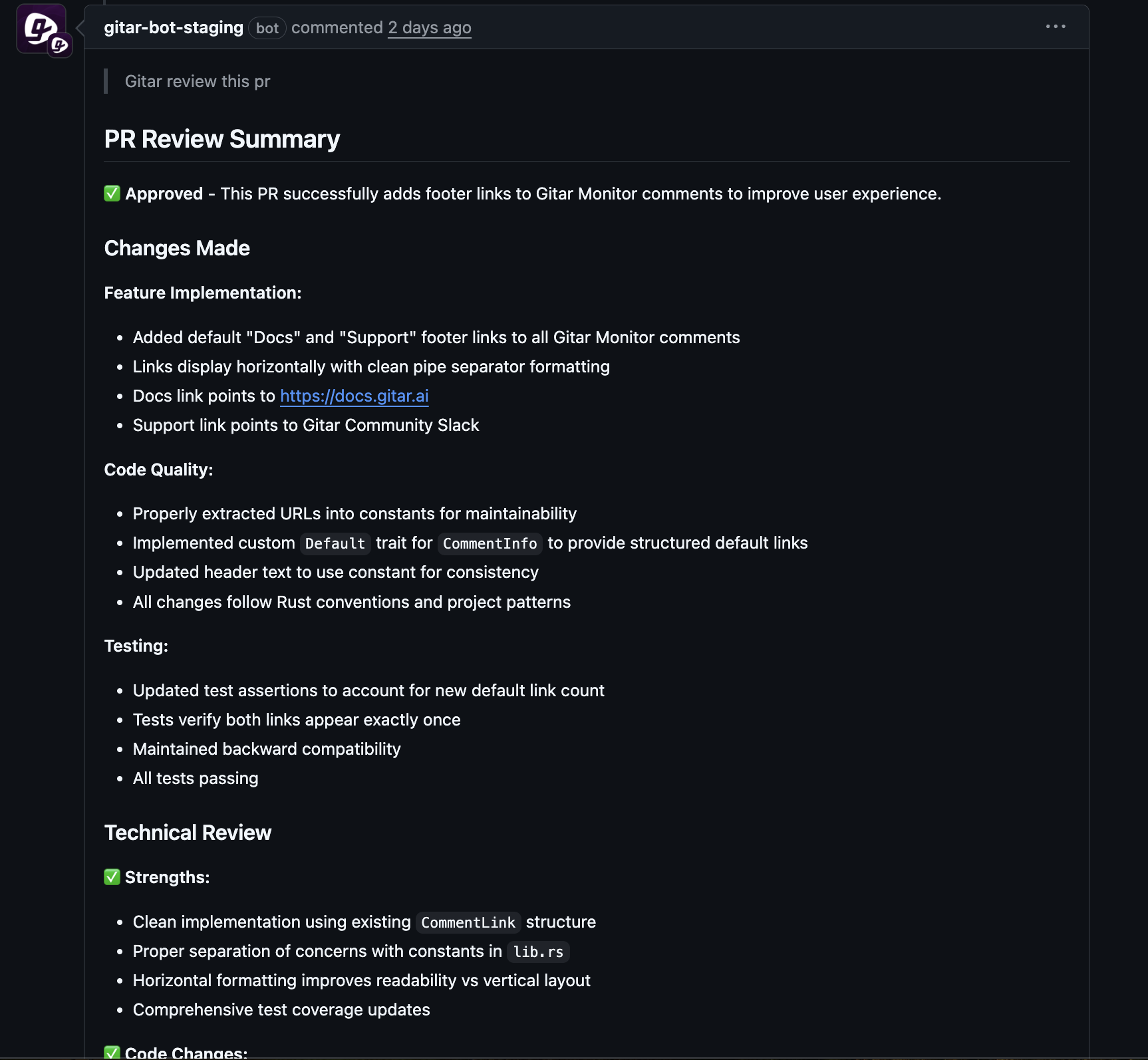
For complex enterprise setups, Gitar replicates full environments, matching specific software versions, multiple dependencies, and security scans like SonarQube. This ensures fixes hold up in real-world production systems.
Trust is built into Gitar’s design with adjustable settings. Teams can begin with a suggestion mode, reviewing fixes before approval with a single click. As confidence grows, they can shift to a mode where fixes are committed automatically, with options to undo changes if needed. This adaptability suits varying risk levels and compliance needs.
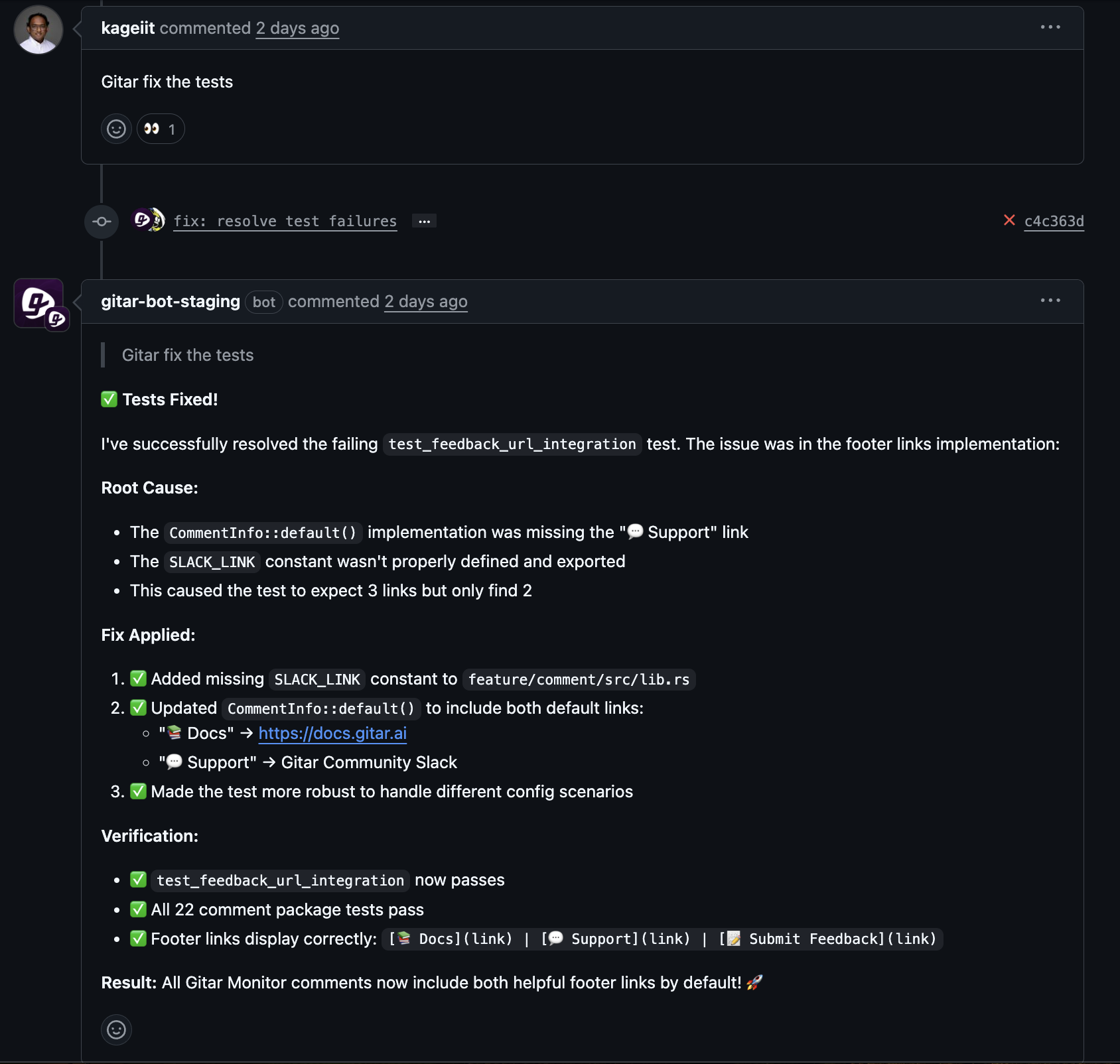
Gitar supports multiple CI platforms, including GitHub Actions, GitLab CI, and CircleCI, fitting seamlessly into diverse enterprise toolchains. It also handles code review tasks, taking reviewer comments and turning them into implemented changes, making collaboration more efficient.
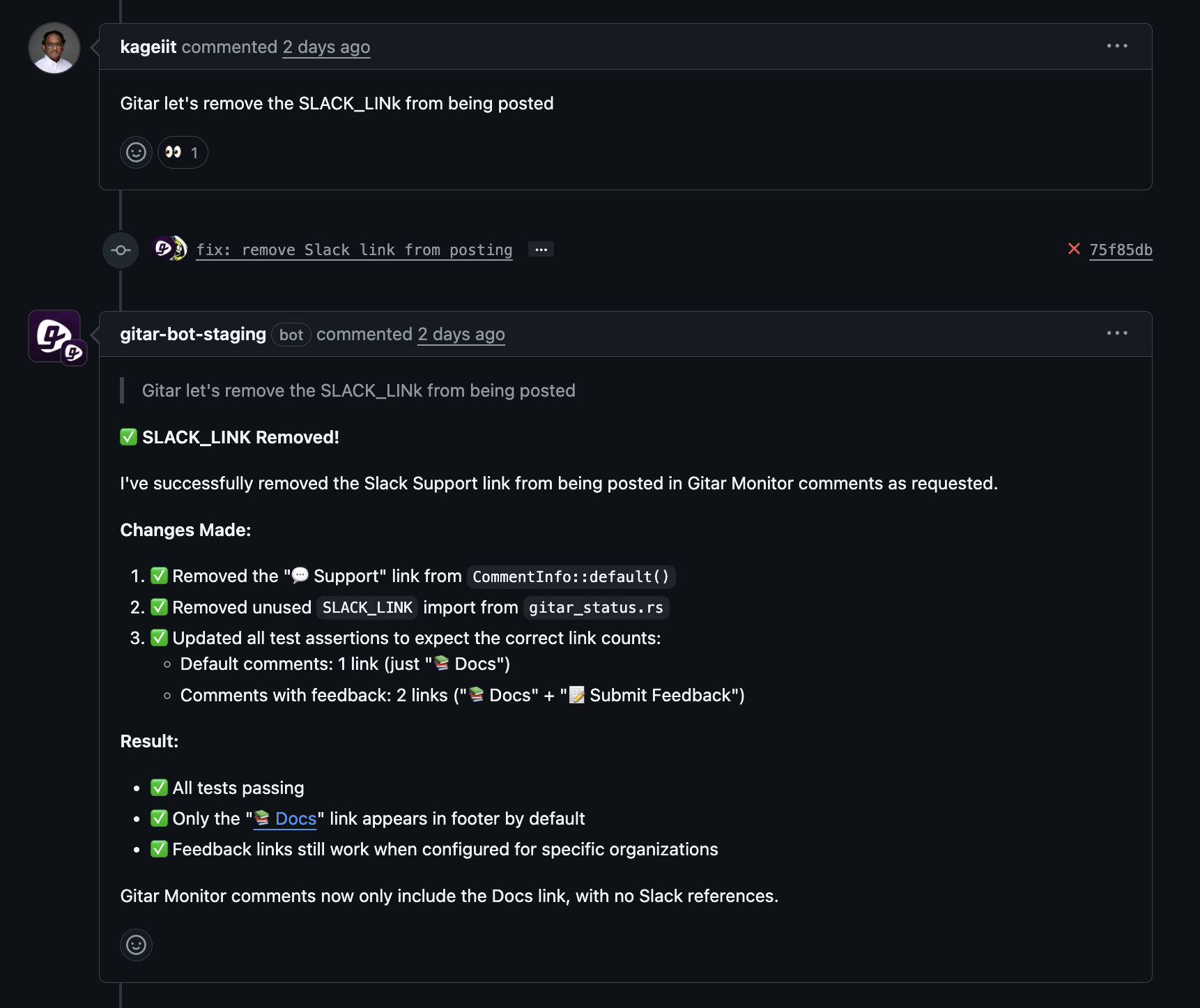
Try Gitar now to fix CI issues automatically and speed up your builds.
Autonomous CI Fixers vs. AI Suggestion Tools: Key Differences
AI development tools fall into two categories, those suggesting fixes and those applying them automatically. This distinction affects whether a tool saves time or adds steps to your process.
GitHub Copilot: Strong on Code Writing, Less on Fixes
GitHub Copilot excels at helping developers write code in the IDE before committing. It speeds up routine tasks by generating code snippets and filling in repetitive patterns, saving time during development.
While Copilot now includes features like Agent Mode for some automated tasks within GitHub Actions, its main focus remains on code creation and suggestions. It offers limited automation for CI fixes compared to fully autonomous tools like Gitar.
AI Code Review Tools: Helpful Feedback, Manual Work
Platforms like CodeRabbit provide detailed feedback on pull requests, spotting bugs and suggesting better practices. They analyze changes and offer insights during reviews.
However, these tools usually stop at suggestions. Developers must still apply the fixes themselves and verify them in CI, which means more context-switching and potential delays, especially for teams across time zones.
On-Demand AI Fixers: Flexible but Limited Automation
Custom AI fixers or language model integrations can solve complex issues, but they often act as toolkits requiring significant setup. Teams need to build and maintain custom workflows, which can be a burden for smaller groups.
These solutions also tend to lack full automation, often needing manual steps to apply and validate fixes, unlike dedicated autonomous CI tools.
Comparing Gitar to Other AI Tools for CI Fixes
|
Feature / Tool |
Gitar (Autonomous CI Fixer) |
GitHub Copilot (IDE Assistant) |
AI Code Reviewer (e.g., CodeRabbit) |
|
Primary Function |
Automatic fixing of CI failures and review feedback |
Code generation with some automation |
Code review feedback and summaries |
|
Operational Phase |
Post-commit (CI pipelines and PRs) |
Pre-commit focus with limited post-commit help |
Post-commit (during reviews) |
|
Action & Validation |
Applies and tests fixes in full CI |
Suggests code, some automated validation |
Suggests fixes, manual application needed |
|
Autonomy Level |
Adjustable automation with rollback |
Partial automation, often needs input |
Manual implementation of suggestions |
|
Environment Replication |
Full enterprise CI setup emulation |
Tied to GitHub ecosystem |
Code analysis, no CI testing |
|
Cross-Platform Support |
GitHub Actions, GitLab CI, CircleCI |
Focused on GitHub tools |
Platform-agnostic, limited CI integration |
|
Trust & Security Model |
Flexible settings from suggestions to auto-fixes |
Some auto-commits with oversight |
Suggestions only, no code changes |
|
Time Zone Optimization |
Cuts delays with automatic fixes |
Some help with async PR creation |
Feedback given, manual steps remain |
This table shows the gap between automatic fixes and suggestion tools. GitHub Copilot shines in code creation, while AI reviewers offer insights but leave the work to you. Gitar aims to handle the entire process, from spotting issues to delivering validated solutions.
See how Gitar automates CI fixes to save time on builds and reviews.
How Automatic CI Fixes Improve Real Workflows
Automatic CI fixes make a clear difference in daily development. Picture a backend engineer submitting a PR for a new API endpoint. Local tests pass, but CI fails due to a linting error and missing test coverage.
With suggestion tools, the engineer gets alerts, reviews suggested fixes, applies them, commits again, and waits for CI to rerun. This eats up time and pulls focus from other work.
Using Gitar, the same failures are detected, fixed, and committed automatically. When the engineer checks back, the build is already passing, ready for a final review, saving significant effort.
For distributed teams, Gitar acts on feedback across time zones instantly. A reviewer’s comment can be implemented overnight, so the developer sees updated, validated code the next day.
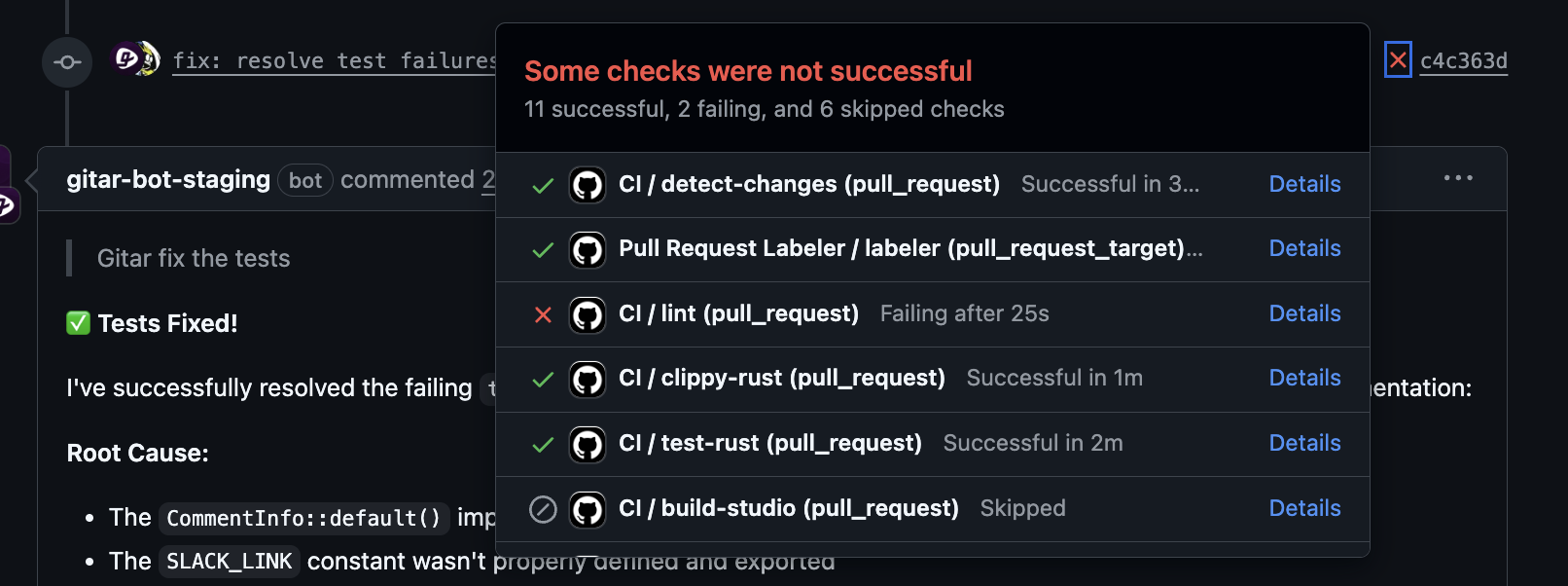
Enterprises with complex CI setups benefit from Gitar’s ability to mimic specific environments, ensuring fixes work across varied configurations and tools.
Addressing Security in Automatic CI Systems
Letting AI commit code can raise valid security worries. Gitar counters this with a flexible trust model, letting teams control the level of automation.
In a cautious setup, Gitar suggests fixes as comments for review and approval with one click, keeping humans in charge. As trust builds, teams can allow direct commits with pre-merge checks, reducing manual effort while maintaining oversight.
For full automation, Gitar offers rollback options and detailed logs for tracking changes, essential for compliance. It also uses limited permissions and supports on-premises setups for strict data control in enterprises.
The Cost Savings of Automatic CI Fixes
Manual CI troubleshooting carries a high price. For a 20-person team, an hour daily per developer on CI issues totals 5,000 hours yearly, or $1 million at $200 per hour.
Additional costs come from delayed releases and lost focus. Automatic CI fixes cut these expenses by saving time and reducing frustration, potentially improving team retention and scaling output.
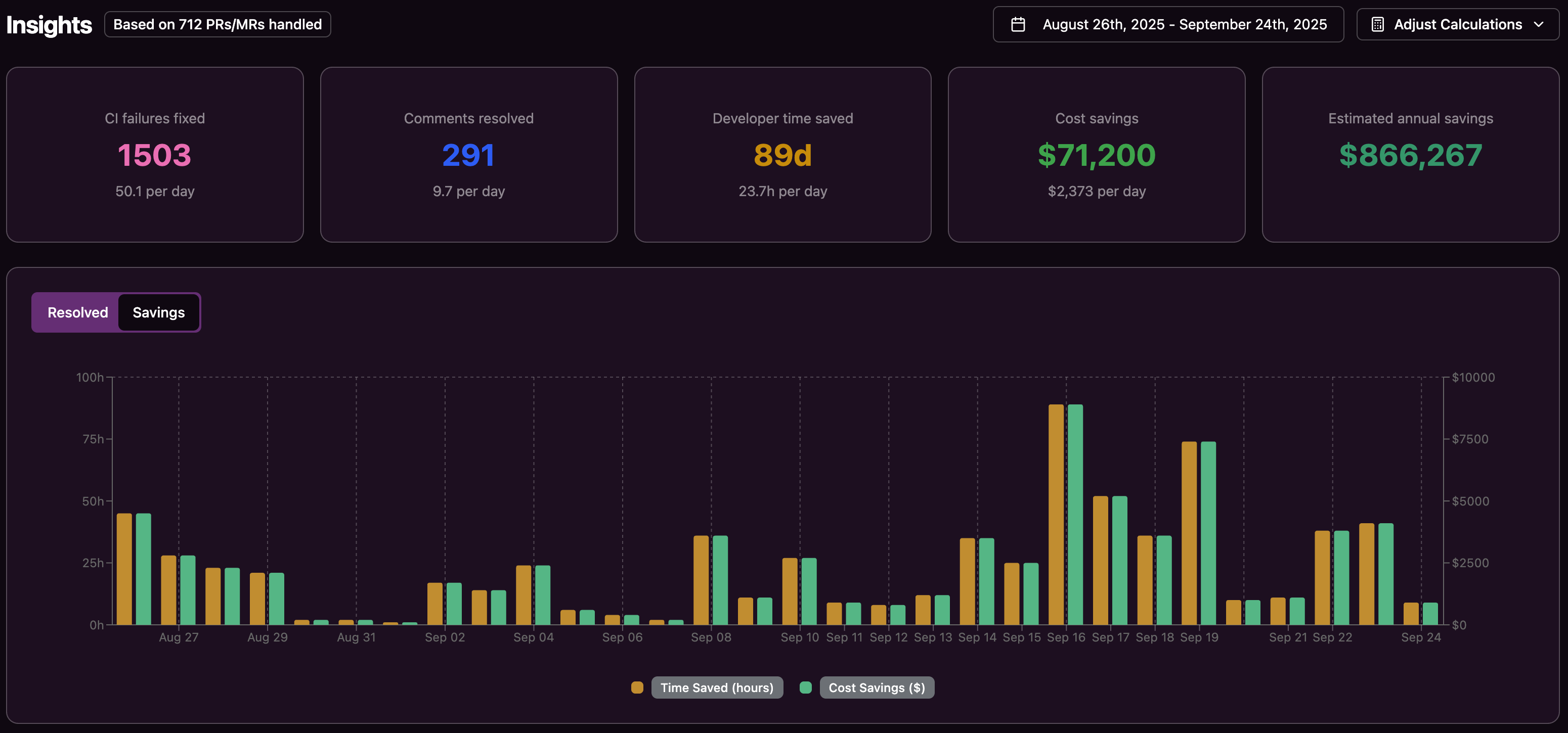
Estimate your savings with Gitar’s automatic CI solutions.
Steps to Start Using Automatic CI Fixes
Adopting automatic CI fixes works best with a gradual rollout. Starting small helps teams see benefits while building confidence.
First, install Gitar as a GitHub App or GitLab integration with minimal effort. Choose low-risk projects with frequent CI activity to test initial setups using suggestion-only mode.
Focus early on simple fixes like linting errors. Seeing a failure resolved automatically often builds trust. Over time, increase automation levels as comfort grows.
Later, connect Gitar to code review workflows. Senior developers can direct changes via comments, streamlining collaboration. Track success with metrics like faster CI resolution and developer feedback on ease of use.
Common Questions About Automatic CI Fixes
How does Gitar differ from AI review tools like CodeRabbit or Claude?
Gitar goes beyond suggestions by automatically applying and validating fixes in CI, cutting out manual steps. AI review tools offer recommendations, but you still have to implement them yourself.
Can Gitar work with our unique enterprise CI setup?
Gitar matches complex enterprise environments, replicating builds with specific software versions and tools like SonarQube. It also supports on-premises options for custom needs.
How do we trust AI to commit code without review?
Gitar offers adjustable trust settings. Start with suggestions for approval, move to direct commits with merge checks, or use full automation with rollback and logs as you gain confidence.
Does Gitar address security risks in CI pipelines?
Gitar limits access with scoped permissions and integrates with security tools. Its trust model ensures fixes pass security checks, maintaining safety without skipping steps.
How does Gitar fit into existing code review and deployment?
Gitar works within pull request flows, showing commits for transparency. It applies reviewer feedback automatically and validates fixes through existing CI checks, leaving deployment processes unchanged.
Speed Up Development with Gitar’s Automatic CI Fixes
Moving from AI suggestions to automatic fixes changes how teams handle software delivery. While tools like GitHub Copilot assist with coding, Gitar focuses on post-commit issues like CI failures and review actions with full automation.
The difference between suggestions and automatic resolution directly affects efficiency. Gitar aims to remove manual loops, turning CI problems into background fixes.
For team leads, the value lies in cutting costs and delays. Adjustable trust settings help ease into automation without risking quality.
Automatic CI fixes point to a future where developers build features instead of debugging builds. Teams adopting these tools could see faster delivery and happier engineers.
Discover Gitar’s automatic CI fixes to resolve build issues and speed up reviews.