
Failing CI pipelines and lengthy code review cycles slow down developers every day. Hours are lost to debugging errors and fixing issues that disrupt focus. What should be automated testing and smooth integration often turns into flaky tests, build errors, and dependency conflicts that consume up to 30% of a developer’s time.
AI-powered code tools like GitHub Copilot speed up writing code, but they often stop at suggestions. Developers are left to implement fixes manually and wait to see if builds pass.
Gitar changes this with an autonomous AI agent built to solve CI/CD bottlenecks. It automatically fixes failing pipelines and addresses code review feedback, saving hours spent on getting changes through CI and review stages.
Maintaining creative focus while ensuring code quality is the goal. Install Gitar today to fix broken builds automatically and ship software faster.
Why CI/CD Bottlenecks Slow Down Engineering Teams
Daily Interruptions Undermine Developer Focus
Constant interruptions define the developer experience. You push a pull request, expecting success, only to face a string of failures. Typical CI issues include inconsistent tests, build errors from script mistakes, and dependency clashes across languages and platforms.
The real damage comes from broken focus. A small linting error or test failure pulls you away from coding, turning a quick fix into a major productivity loss. Developers can lose 30% of their time to these switches, often facing multiple disruptions daily.
AI-generated code adds to the problem. More code means more pull requests, more tests, and more chances for failure. The bottleneck has moved from writing code to validating and merging it quickly.
These disruptions build up. Three CI failures a day don’t just steal small time blocks; they prevent deep, creative work. The result is a fragmented day where fixing issues overshadows building features.
Leadership Faces Rising Costs and Slower Delivery
CI/CD bottlenecks hit business goals hard for engineering leaders. Pipeline failures delay delivery and divert developer time from feature work to debugging. For a team of 20 developers losing one hour daily to CI issues, yearly productivity costs can reach $1 million.
The damage goes beyond money. Poor pipeline health slows delivery speed and raises operational expenses, especially with frequent failures. This delays feature releases, bug fixes, and harms customer trust and market position.
Developer morale suffers too. When engineers spend their days on infrastructure problems instead of coding, job satisfaction drops, and turnover risks rise. Replacing a senior developer can cost over $100,000, making CI efficiency a key focus for retaining talent.
Distributed teams struggle with time zone delays in code reviews, stretching simple feedback into days. This creates delays that impact project schedules and critical releases.
Complex CI/CD Workflows Challenge DevOps Teams
DevOps engineers face hurdles in keeping CI/CD pipelines reliable. Monolithic setups running all tests per commit lead to cascading failures and slow feedback. These designs are costly and prone to breaking.
Enterprise environments add complexity. Build failures from misconfigurations or outdated dependencies stop workflows across platforms. Each new tool or integration increases failure risks.
Environment mismatches create further issues. Differences between dev, test, and production setups cause bugs and deployment failures. This forces time-intensive debugging to resolve configuration or dependency conflicts.
Pipeline success rate, measuring successful CI/CD runs without manual fixes, tracks reliability. Low rates trap teams in constant firefighting, wasting resources and making systems harder to maintain as they grow.
Gitar: Autonomous AI for Self-Healing CI Pipelines
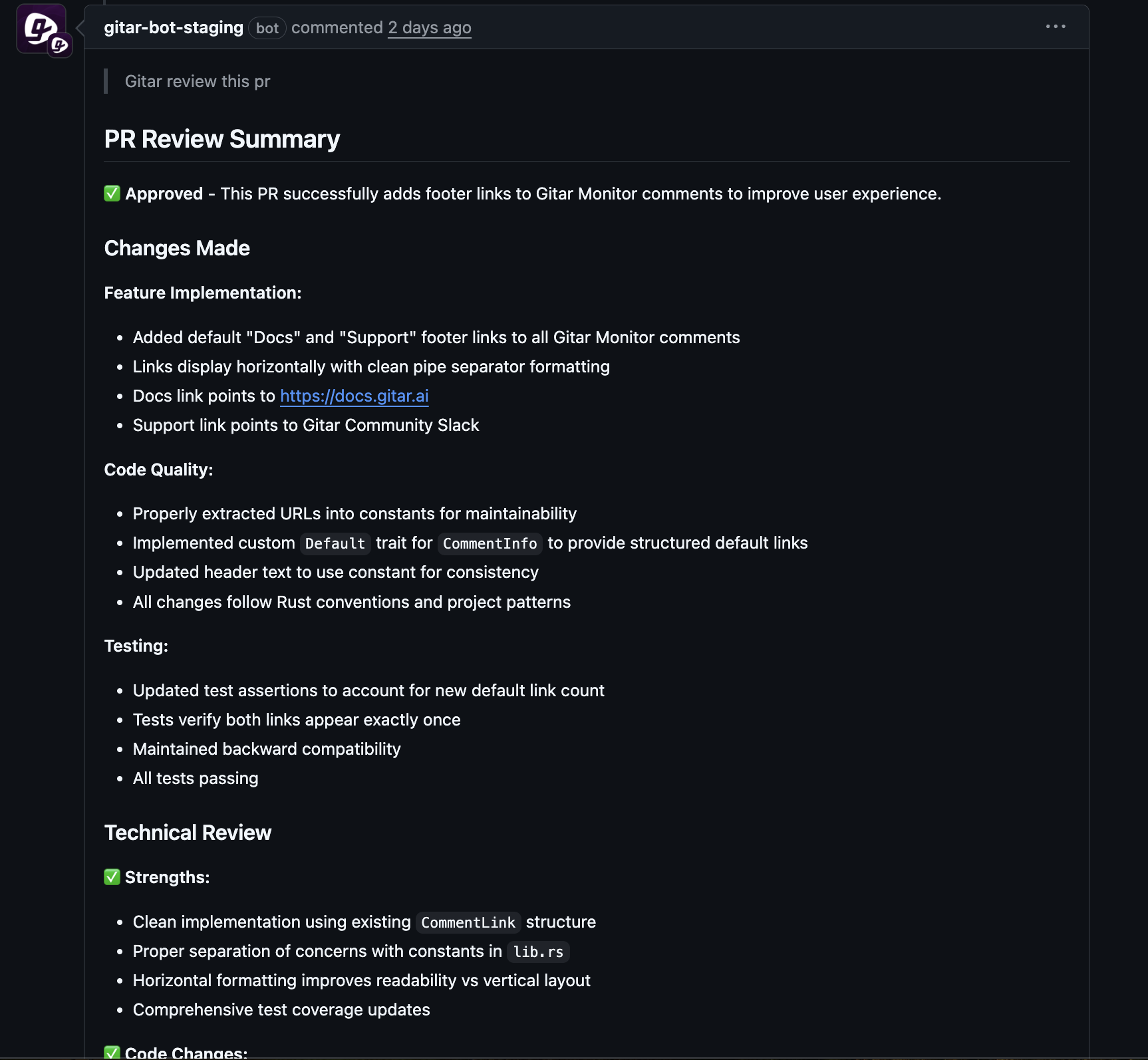
Gitar tackles developer productivity loss by autonomously fixing CI build failures and code review issues. Unlike AI tools that only suggest changes for developers to apply, Gitar acts as a healing engine. It identifies problems, applies fixes, and updates pull requests automatically.
This approach closes the gap between spotting an issue and solving it. Traditional AI might suggest a fix, but developers still need to apply, commit, and validate it. Gitar handles all these steps, ensuring builds pass without manual effort.

How Gitar Detects and Fixes Issues Automatically
Gitar works through automation. When a pull request fails CI checks or gets feedback, it activates via integrations with GitHub, GitLab, and platforms like GitHub Actions, GitLab CI, CircleCI, and BuildKite.
It examines failures with full context, mirroring enterprise setups, including SDK versions, dependencies, and tools like SonarQube or Snyk. Fixes are tailored to fit each organization’s specific environment.
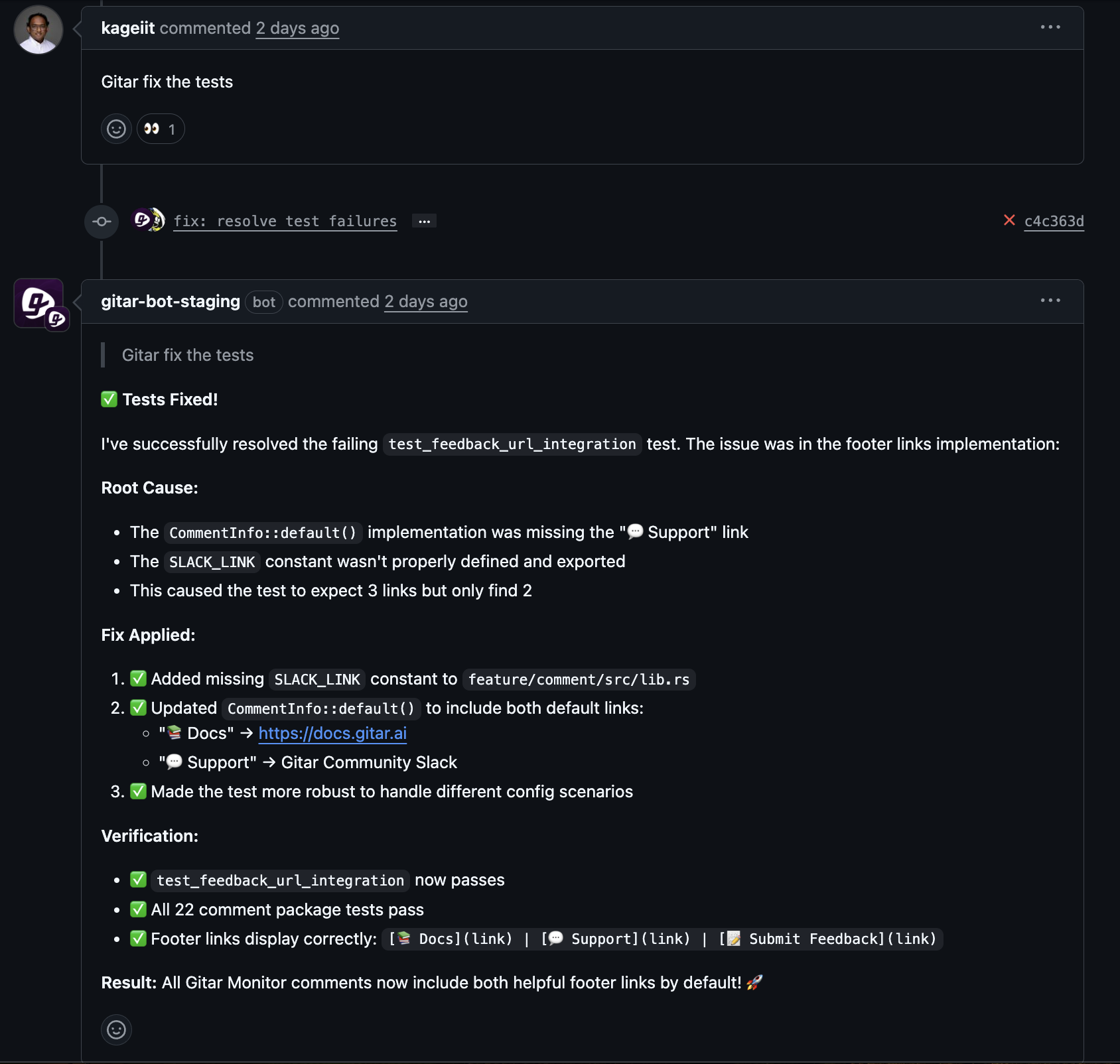
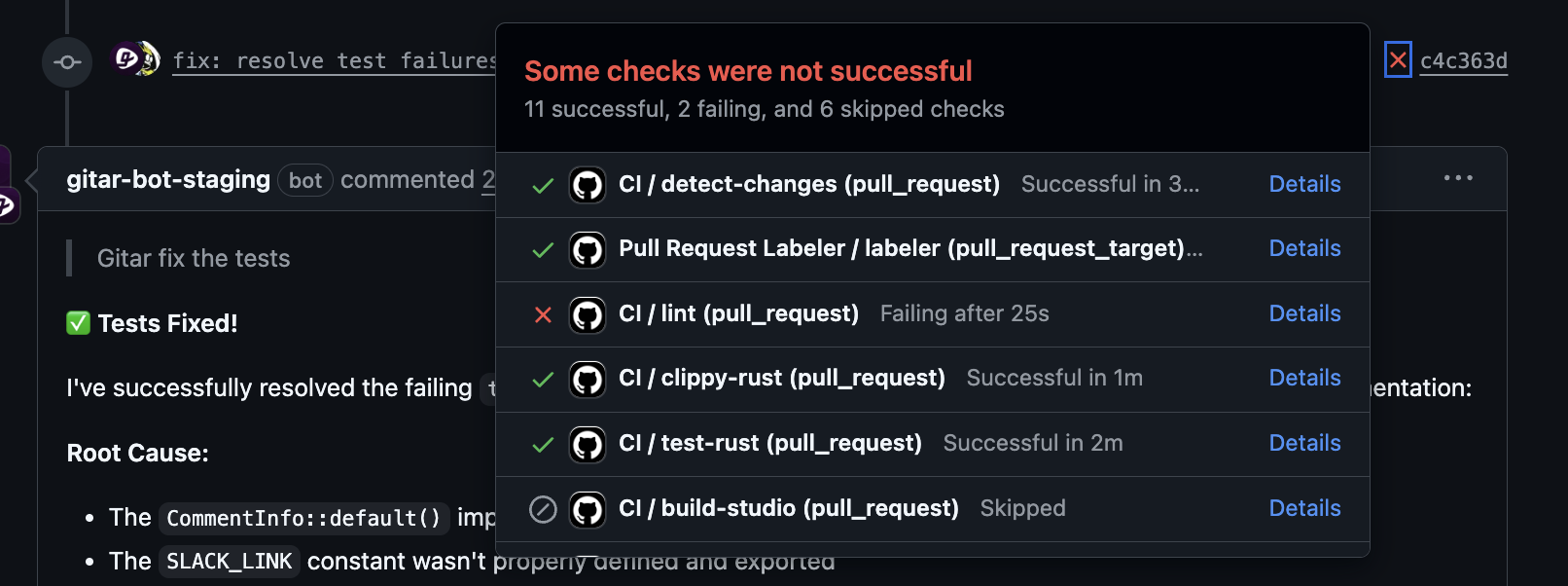
Gitar addresses common CI problems directly. It fixes linting errors, updates failing test snapshots, and resolves build issues from dependencies or scripts. Each fix is tested in the full CI setup to confirm success before updating the pull request.
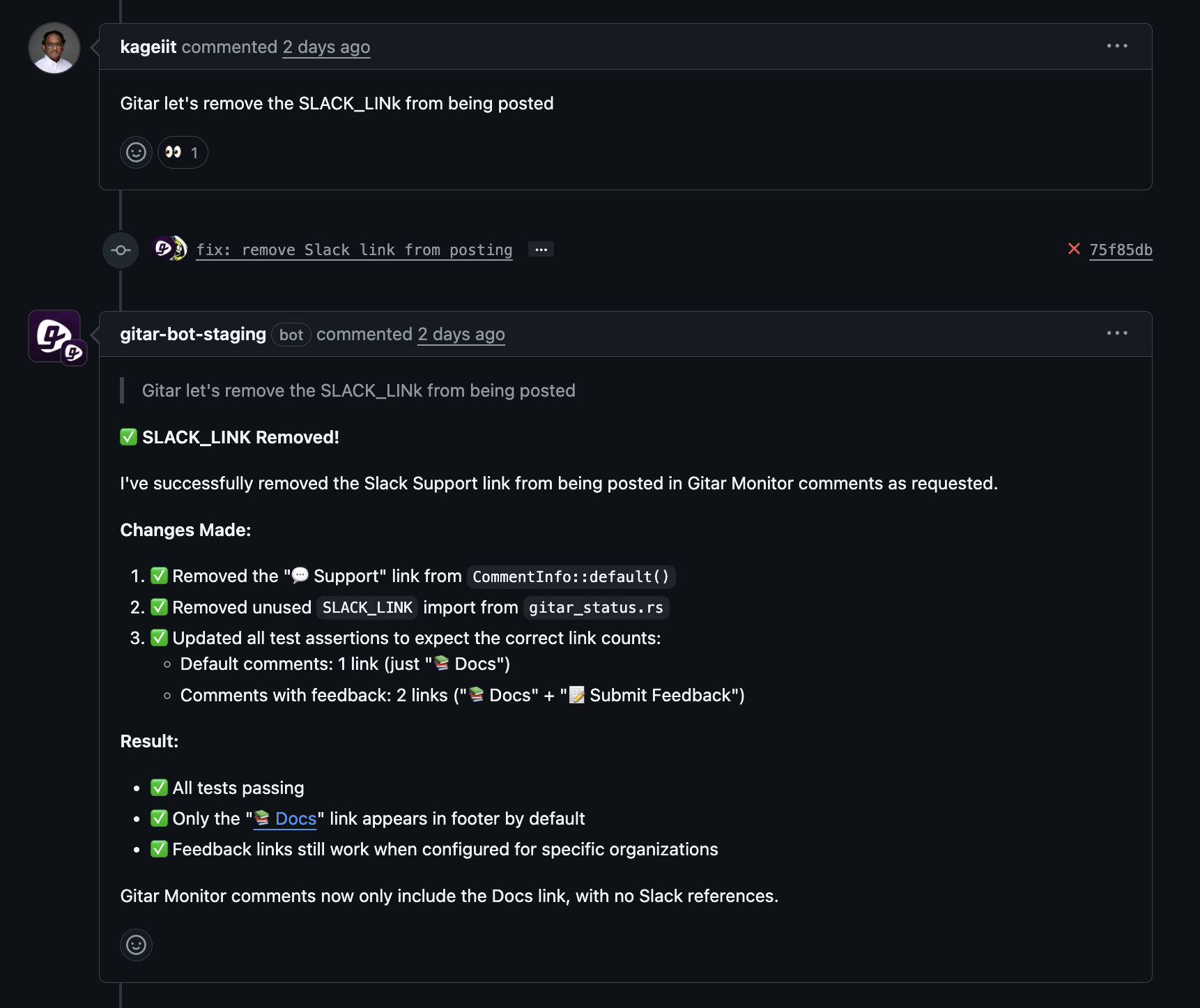
For code reviews, Gitar implements feedback autonomously. If a reviewer requests a change, like removing a feature, Gitar makes the edit and commits it with a clear explanation of the update.
Benefits of Gitar: Boost Productivity and Speed Up Delivery
Gitar saves more than just time. By fixing CI issues automatically, it helps developers stay focused on creative tasks. Engineers can keep coding while Gitar handles pipeline problems in the background.
Productivity gains are substantial. A developer losing an hour daily to CI issues regains that time for meaningful work. For a 20-person team, this could mean 5,000 hours saved yearly, or about $1 million at a $200 hourly rate.
Time-to-merge drops significantly. Gitar delivers tested fixes quickly, cutting down the wait between submitting code and merging it, often reducing cycles from days to hours.
For distributed teams, Gitar minimizes delays from time zone differences. Feedback left by a reviewer in one region gets implemented instantly, ready for the coder to review later.
Pipeline reliability improves as well. Higher success rates enable faster, more reliable delivery. Gitar helps keep pipelines stable by resolving issues without manual input.
Install Gitar now to fix broken builds automatically and ship software faster.
How Gitar Outperforms Traditional CI/CD Solutions
Healing Engine vs. Suggestion Tools: A Clear Difference
Gitar’s healing engine sets it apart from suggestion-based AI tools. This distinction matters for teams choosing AI support for CI/CD workflows.
|
Feature |
Gitar (Healing Engine) |
Traditional AI Reviewers |
On-Demand Fixers |
|
Core Action |
Autonomous Fix & Validate |
Suggestions Only |
Manual Triggering Required |
|
PR Interaction |
Applies, Validates & Commits Fixes |
Provides Feedback/Code Snippets |
Single-Use Fix Attempts |
|
Environmental Context |
Full Environment Replication |
Limited/DIY Context |
Generic/Shallow Context |
|
Trust Model |
Configurable: Suggest to Auto-Commit |
Manual Developer Implementation |
One-Off Manual Validation |
|
Developer Impact |
Maintains Flow State |
Requires Context Switch |
Requires Context Switch |
|
CI Platform Support |
Cross-Platform (GH Actions, GL CI, CircleCI, BuildKite) |
Often GitHub-centric |
Limited Platform Support |
|
Guaranteed Outcome |
Green Builds |
Potential for Further Failures |
Unvalidated Results |
With a healing engine, developers see builds go from failed to fixed without stepping in. This cuts out the uncertainty and effort tied to manual fixes.
Suggestion tools leave work unfinished. Even with accurate advice, developers must switch tasks, apply the fix, and check if it works, often needing multiple tries.
Gitar’s ability to replicate exact CI environments ensures fixes match each team’s unique setup, reducing errors from the start.
Addressing Limits of Current Tools
Many AI development tools help with parts of coding but lack autonomous fixes for modern needs. Manual debugging for CI issues often takes 30 to 60 minutes per incident.
AI reviewers like CodeRabbit offer smart insights but still require developers to apply and test changes, costing time and risking new errors.
On-demand fixers attempt automatic solutions but lack deep context and need manual activation, pulling developers away from their work.
IDE assistants help write code early on but can’t handle post-commit CI or review challenges, sometimes adding to later bottlenecks.
Gitar offers a full, automatic solution. It integrates with existing CI/CD systems, supports multiple platforms, and provides configurable trust options for gradual adoption.
Install Gitar now to fix broken builds automatically and ship software faster.
Common Questions About Self-Healing CI with Gitar
How Does Gitar Differ from AI Reviewers Like CodeRabbit or Claude?
Gitar stands out by autonomously applying and validating fixes within your full CI workflow. Other AI reviewers suggest changes that developers must implement and test themselves. Gitar ensures builds pass before you notice a problem, keeping you focused.
Can Gitar Manage Complex CI Setups with Specific Dependencies?
Gitar handles intricate enterprise CI/CD setups by mirroring full environments, including SDK versions, dependencies, and integrations like SonarQube or Snyk. This ensures fixes fit your exact system, cutting down on errors and supporting compliance.
What if an Automated Fix Causes Issues or We Don’t Trust AI for Key Code?
Gitar offers adjustable trust settings. In Conservative Mode, it suggests fixes for review and approval with one click. In Aggressive Mode, it commits fixes directly with rollback options. Teams can start cautiously and increase automation as confidence grows.
What Cost Savings Can Leaders Expect from Self-Healing CI?
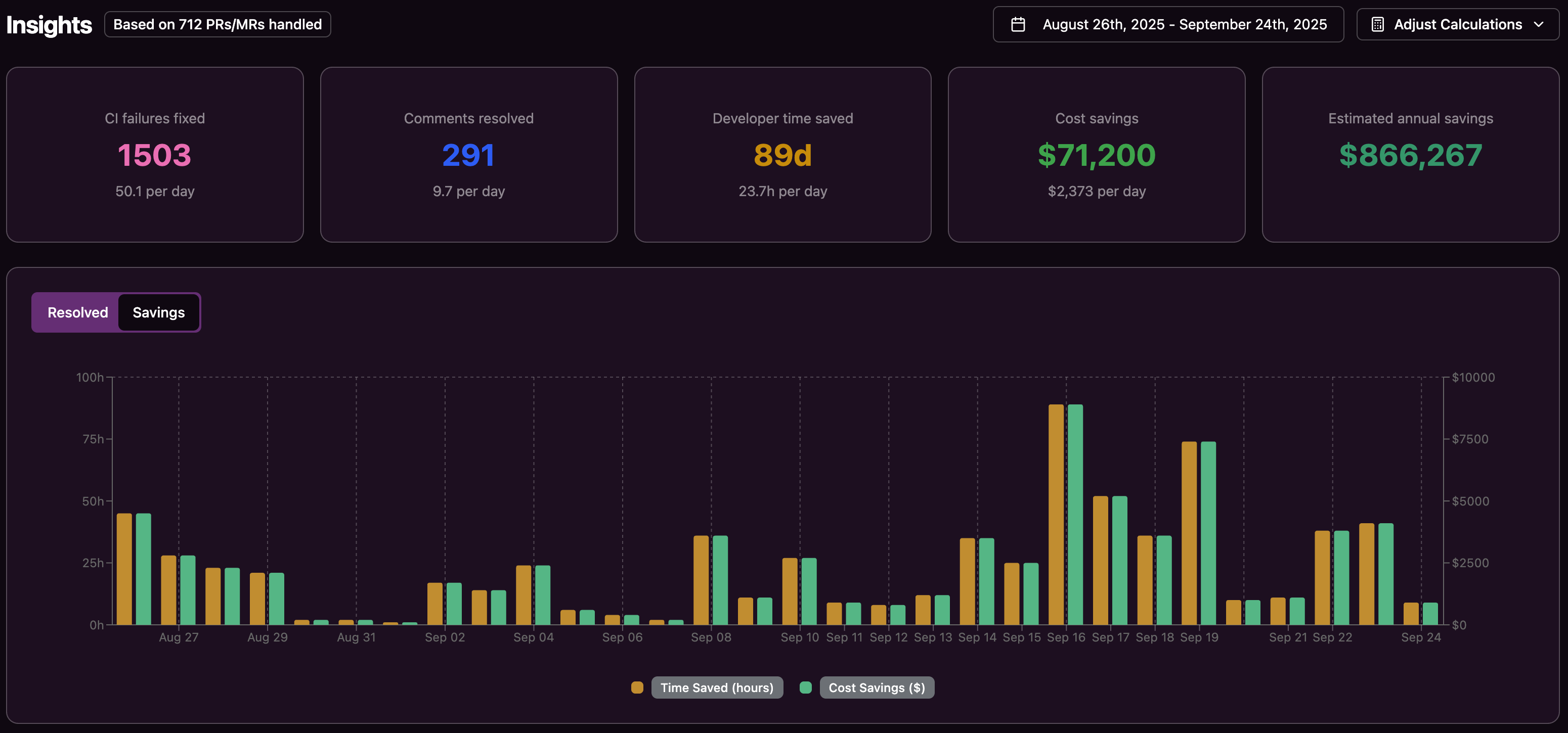
For a 20-developer team losing an hour daily to CI issues, Gitar delivers significant savings. At 5,000 hours yearly and $200 per hour, the loss is $1 million. Even at 50% effectiveness, Gitar saves $500,000 while boosting morale and speed.
How Does Gitar Fit into Existing Workflows and Tools?
Gitar connects easily with GitHub, GitLab, and CI platforms like GitHub Actions, GitLab CI, CircleCI, and BuildKite. Setup happens through a simple web dashboard, starting with suggestion mode before moving to auto-commit as trust builds.
Adopt Autonomous Code Delivery with Gitar
CI/CD bottlenecks waste developer time, slow delivery, and increase costs. Gitar’s autonomous AI creates self-healing CI, turning failed builds into successes without manual effort. This saves hours on debugging and speeds up releases.
Teams using Gitar see immediate gains. The potential savings reach $500,000 yearly for mid-sized teams, alongside better developer morale and quicker delivery. Install Gitar now to fix broken builds automatically and ship software faster. Make autonomous CI your edge today.