
Written by: Ali-Reza Adl-Tabatabai, Founder and CEO, Gitar
Key Takeaways
- AI code review tools scan pull requests automatically, yet most only suggest changes while PR volumes surge with AI adoption.
- Gitar stands out with a healing engine that auto-fixes CI failures and implements review feedback instead of stopping at suggestions.
- CodeRabbit, Greptile, and GitHub Copilot provide inline suggestions but lack Gitar’s single dashboard comment and auto-apply capabilities.
- Gitar delivers more than 75% ROI through shorter review cycles, validated CI fixes, and support for GitHub, GitLab, CircleCI, and other platforms.
- Experience Gitar’s full automation with a 14-day Team Plan trial, which includes no seat limits and instant setup.
How AI Code Review Automation Works Across Your PRs
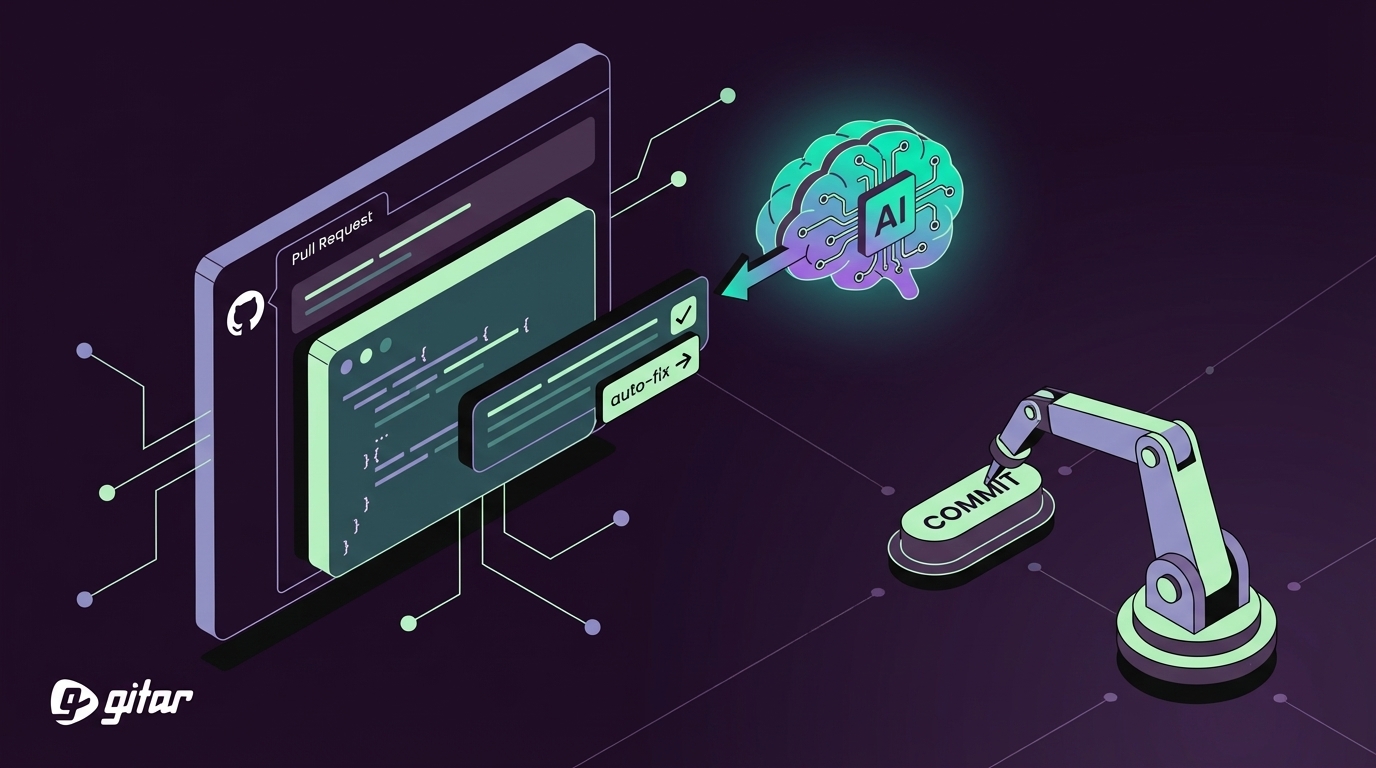
AI code review automation follows a five-step process that reshapes how teams handle pull requests. First, the system detects when a PR opens or updates. It then analyzes the entire codebase context, not just the changed lines, to understand impact. Based on this context, it generates inline comments with specific, actionable suggestions. When CI failures occur, the system detects them and analyzes the root cause. Finally, it generates automated fixes and validates them before committing, which closes the loop from detection to resolution. GitHub Copilot code review surfaces actionable feedback in 71% of pull request reviews, yet most tools stop at the suggestion stage instead of applying and validating fixes.
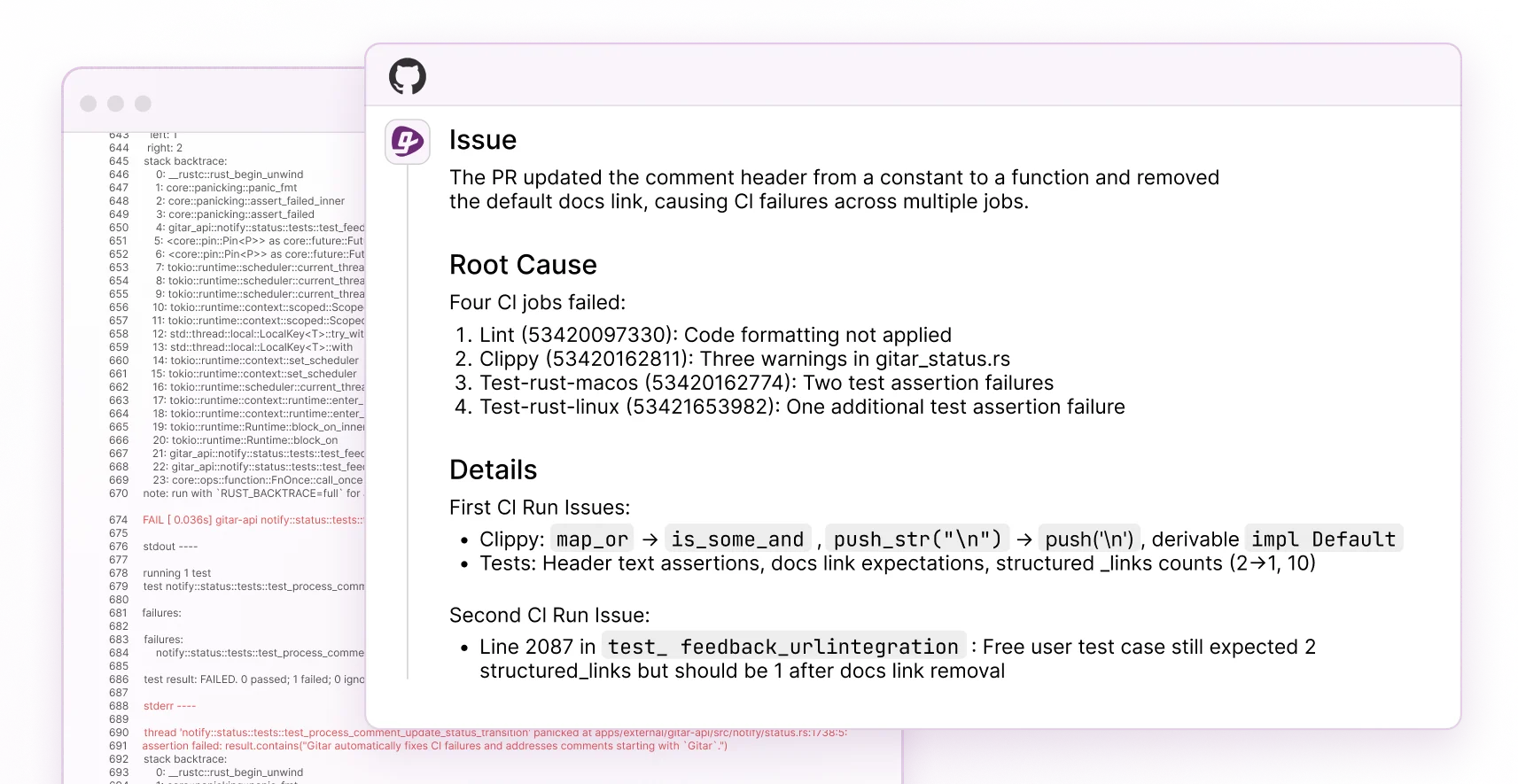
Gitar’s advantage starts with its single dashboard approach instead of notification spam. Competing tools often flood PRs with many inline comments, which distracts reviewers and slows decisions. Gitar launched inline code review comments on January 6, 2026, appearing directly on relevant code lines with verdict badges and collapsible details (see the inline comments documentation), while still offering a clean single-comment experience that no other tool provides. This design keeps the most critical issues visible in context and moves the full analysis into one dashboard comment so reviewers stay focused. Beyond this streamlined experience, the healing engine identifies problems, fixes them automatically, and validates every change against your CI pipeline. See these validated auto-fixes in action with Gitar’s 14-day trial.
7 AI Code Review Tools for Inline PR Suggestions in 2026
1. Gitar delivers automated CI healing and automatic implementation of review feedback. It includes inline PR suggestions, a CI healing engine, a single dashboard comment, a 14-day Team Plan trial with no seat limits, and support for GitHub, GitLab, CircleCI, and Buildkite. Gitar reserves inline comments only for the most critical or actionable lines of code while providing comprehensive analysis in the dashboard. Explore Gitar’s 14-day Team Plan trial to see this workflow in your own repos.
2. CodeRabbit is the most installed AI app on GitHub and GitLab with over 2 million repositories connected. Pricing ranges from $12 to $24 per developer each month. It offers line-by-line suggestions, one-click commits, and integration with more than 40 linters. The main drawback is notification overload because it creates many inline comments per PR.
3. Greptile focuses on deep codebase context through knowledge graphs. Pricing ranges from $20 to $30 per developer each month. Teams report four times faster merges with Greptile’s contextual analysis. The limitation is clear: it only suggests changes and does not apply auto-fixes.
4. Qodo 2.0 targets enterprises at $30 per developer each month. It achieves high F1 scores on code review benchmarks with automatic test case generation. The product emphasizes test coverage but does not resolve CI failures automatically.
5. GitHub Copilot Code Review benefits from native GitHub integration. It reached 1 million users within a month of general availability in April 2025. The tool provides inline suggestions and security scanning through CodeQL. Its scope remains limited to the GitHub platform.
6. Cursor BugBot focuses on high-volume review throughput. It reviews more than 2 million PRs monthly with eight parallel review passes. Pricing is $40 each month plus Cursor’s $20 base fee. It includes a “Fix in Cursor” button, yet still requires manual interaction inside the editor.
7. Graphite Agent specializes in stacked PRs on GitHub. Shopify reported 33% more PRs merged per developer after adoption. It offers one-click fixes but supports a narrow set of platforms.
Gitar vs Competitors: Why Auto-Fix Beats Suggestions
While each tool brings specific strengths, only a few actually resolve problems instead of listing them. The following comparison highlights which capabilities shorten review cycles and which ones add more manual work for your team.
|
Capability |
Gitar |
CodeRabbit |
Greptile |
GitHub Copilot |
|
Inline Suggestions |
Yes |
Yes |
Yes |
Yes |
|
Auto-Apply Fixes |
Yes (Healing Engine) |
Partial |
No |
No |
|
CI Auto-Fix/Validate |
Yes |
No |
No |
No |
|
Single Comment |
Yes |
No |
No |
No |
|
Pricing/Trial |
14-day Team free |
$12-24/dev |
$20-30/dev |
Included with Copilot |
The fundamental difference extends beyond the single-comment approach covered earlier. Gitar’s healing engine validates fixes against your actual CI environment before committing. Gitar added CI failure analysis on October 2, 2025, automatically analyzing failures and providing insights in the dashboard comment (documented in the CI failure analysis guide). This workflow ensures that auto-applied fixes work in your specific setup instead of only passing isolated checks. Start your Gitar trial to see CI-aware auto-fix in practice.
GitHub Setup for AI PR Review in 5 Steps
Step 1: Install the Gitar GitHub App from the marketplace and authorize access to your repositories with one click.
Step 2: Begin your 14-day Gitar Team Plan trial to unlock full auto-fix capabilities with no seat limits.
Step 3: Enable Gitar on target repositories through the dashboard and choose which projects should receive automated review and CI healing.
Step 4: Configure repository rules using natural language in .gitar/rules/*.md files. Example YAML snippet for security rules: — title: “Security Review” when: “PRs modifying authentication or encryption code” actions: “Assign security team and add label” —
Step 5: Test with a sample PR to verify inline suggestions, CI failure detection, and auto-fix behavior. Full documentation is available for GitHub, GitLab, and CircleCI configurations so teams can extend this setup across platforms.
ROI and Real-World Benchmarks for AI Code Review
A 20-developer team that spends one hour daily on CI and review issues incurs roughly $1M each year in productivity loss. Gitar reduces this time to 15 minutes per developer each day, which saves about $750K annually and cuts context switching interruptions. This 75% time reduction aligns with broader industry data. DX’s analysis of more than 135,000 developers found that AI coding tools save an average of 3.6 hours per week per developer, but only when the tools actually fix problems instead of only suggesting solutions. The key point is clear: suggestion-only tools create extra review work, while auto-fix tools remove it.
Customer testimonials reinforce these benchmarks with real-world experience. The Tigris team noted that Gitar’s PR summaries are “more concise than Greptile/Bugbot,” which shortens review time. Collate highlighted the “unrelated failure detection” capability that saves significant debugging time by separating infrastructure issues from code problems. Organizations with high AI adoption rates saw median PR cycle times drop by 24%, but only when they used tools that automatically resolve issues instead of creating more manual steps.
Frequently Asked Questions
Are there free AI code review tools available?
Some open-source options like PR-Agent exist, yet they require significant setup and ongoing maintenance. Gitar includes a comprehensive 14-day Team Plan trial with full auto-fix capabilities and complete platform integration. This trial period lets teams measure real productivity gains before choosing any paid solution.
Is AI code review compatible with GitHub Copilot?
AI code review tools work alongside GitHub Copilot by catching issues in AI-generated code. Gitar focuses on identifying and fixing problems that Copilot’s generation phase might miss, including security vulnerabilities, performance issues, and integration problems that only appear during CI execution.
Can I trust automated commits from AI code review tools?
Gitar provides configurable trust levels so teams can adopt automation gradually. You can start in suggestion mode where you approve every fix. Over time, you can enable auto-commit for specific failure types such as lint errors or test fixes. The healing engine validates all fixes against your actual CI environment before committing, which ensures changes work in your setup instead of only passing theoretical checks.
What integrations does Gitar support beyond GitHub?
Gitar supports a broad set of platforms including GitHub, GitLab, CircleCI, Buildkite, Jira, Slack, and Linear. This cross-platform coverage ensures your entire development workflow benefits from automated review and healing, not just the code repository.
How does Gitar compare to open source AI code review options?
Open source tools like PR-Agent provide basic review features but lack infrastructure for auto-fixes, CI integration, and cross-platform workflows. Gitar’s healing engine, single dashboard comment system, and validated fix application form a complete platform that removes the engineering overhead of building and maintaining custom AI review infrastructure.
Conclusion and Next Steps for Your Team
AI code review automation with inline PR suggestions marks a clear shift away from suggestion-only tools that create more work than they remove. Gitar’s healing engine future-proofs your development workflow by fixing code, validating solutions, and keeping builds green while many competitors charge premium prices for basic commentary.
The 14-day Team Plan trial offers risk-free access to the complete platform so your team can measure productivity gains and ROI before making any financial commitment. Experience the full healing engine with your risk-free trial.