
Written by: Ali-Reza Adl-Tabatabai, Founder and CEO, Gitar
Key Takeaways
- AI coding tools have increased PR review times by 91% in regulated industries facing SOC 2, GDPR, PCI-DSS, and HIPAA audits.
- Code review automation enforces standards like OWASP Top 10 and creates verifiable audit trails that cut manual compliance work.
- Gitar combines an auto-fixing healing engine, SOC 2 Type 2 certification, and a full-featured 14-day Team Plan trial for GitHub and GitLab.
- Competitors such as SonarQube provide strong analysis but lack Gitar’s green build guarantees and production-safe auto-commits.
- Implement Gitar today to automate compliance checks and ship faster, audit-ready releases.
How Code Review Automation Improves Audit Readiness
Code review automation strengthens audit readiness by removing bottlenecks, standardizing checks, and generating reliable evidence.
- Eliminates PR Bottlenecks: Addresses the review delays mentioned above by processing AI-generated code floods without human capacity constraints.
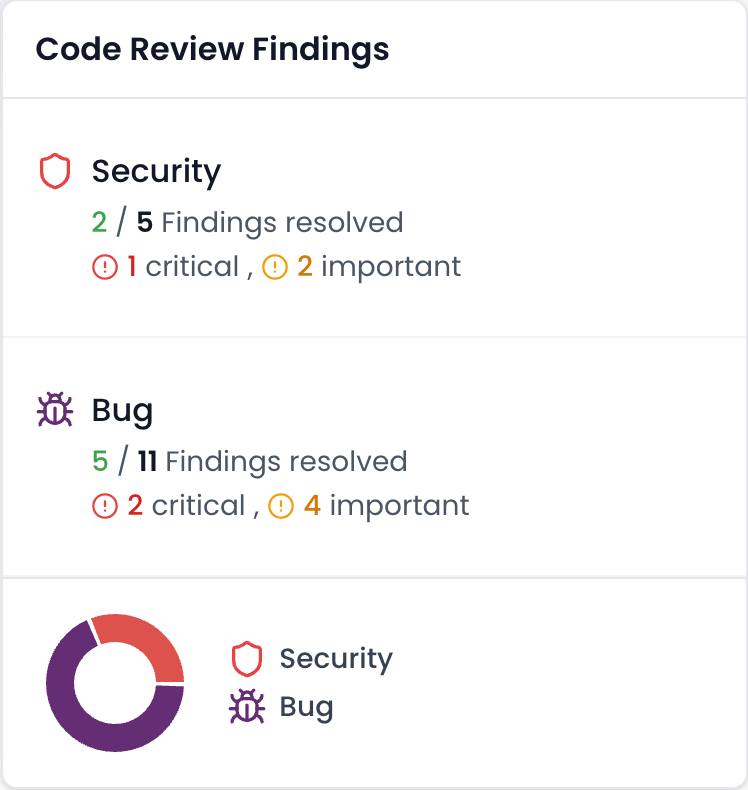
- Creates Audit Trails: Gitar’s GPG-signed commits provide verifiable evidence for compliance auditors. Audit trail capabilities are described in detail in the product documentation.
- Handles AI Code Volume: Manages the 3–5x increase in code generation while keeping review quality consistent.
- Delivers ROI: Organizations report up to 50% reduction in audit preparation time, which can save about $750K annually for a 20-developer team.
Together, these capabilities reduce compliance gates that block releases and replace weeks of manual evidence collection with continuous, automated proof.
With these benefits established, the next step is choosing a platform that delivers true automation, not just suggestions, with a focus on auto-fixing and reliable audit trails.
7 Best Code Review Automation Tools for Compliance & Audit Readiness in 2026
The comparison below highlights differences in auto-fixing, compliance coverage, and integrations. Pay close attention to the Auto-fixes and CI Healing column to see which tools actually repair issues instead of only flagging them.
|
Tool |
Auto-fixes/CI Healing |
Audit Trails/Standards |
Integrations/Pricing |
|
Gitar |
Yes/Yes |
SOC 2 Type 2 |
GitHub/GitLab/CircleCI/Free 14-day Team |
|
SonarQube |
Yes/Partial |
OWASP Top 10, SOC 2 |
CI Integration/~$16K enterprise |
|
CodeRabbit |
No/No |
Limited compliance features |
GitHub/$12/user |
|
Greptile |
No/No |
Basic security scanning |
Limited platforms/$30/user |
|
Snyk Code |
Partial/No |
OWASP, PCI-DSS |
CI Integration/Paid plans |
|
DeepSource |
Partial/No |
OWASP Top 10 |
GitHub/Paid plans |
|
Semgrep |
No/Partial |
OWASP, CWE Top 25 |
CI Integration/Free OSS |
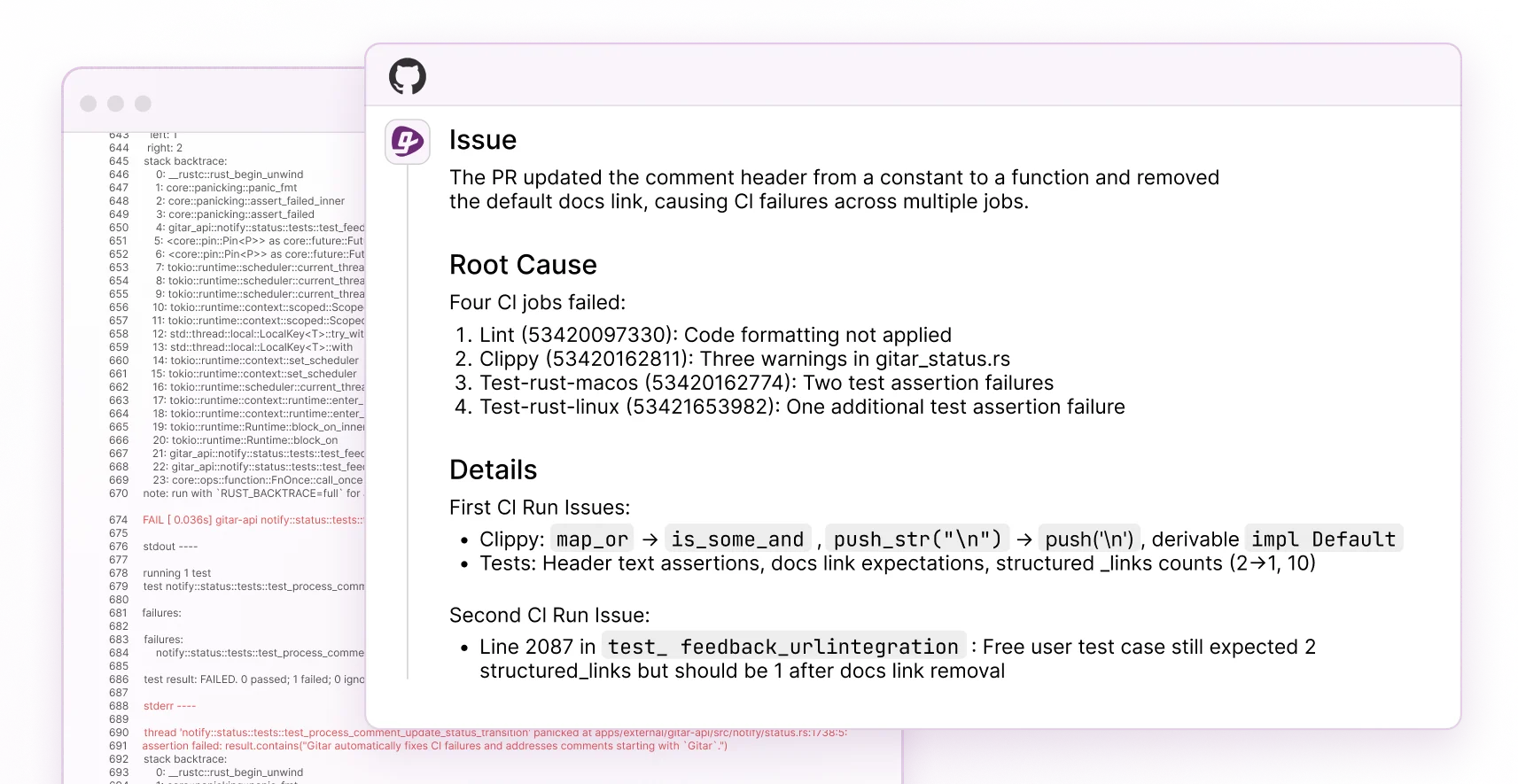
Gitar focuses on healing, not just detection. Its engine automatically resolves CI failures and addresses review feedback so teams keep builds green without constant manual fixes. Natural language rules drive workflow automation without YAML, and a single comment consolidates all findings for each pull request. The full 14-day trial unlocks all auto-fixing features for evaluation.
SonarQube delivers mature static analysis with robust CI/CD integration and quality gates that fail builds when standards are not met. Its AI CodeFix feature suggests fixes and lets developers apply them with one click in supported IDEs.
CodeRabbit offers AI-driven PR reviews with inline suggestions. It functions as a suggestion engine and does not include compliance-focused features or automated fixing.
Greptile, Snyk Code, DeepSource, and Semgrep provide useful security scanning and rules coverage. They still rely on developers to apply fixes manually and do not combine comprehensive auto-fixing with strong audit trail capabilities for regulated teams.
Try Gitar’s healing engine free for 14 days and see how auto-fixing compares to the suggestion-only tools in this list.
Rolling Out Code Review Automation in Your CI/CD Pipeline
A structured rollout helps teams move from manual reviews to reliable, automated checks without disrupting existing workflows.
- Install Platform Integration: Deploy the GitHub or GitLab app in 30 seconds to establish the foundation for automated PR analysis.
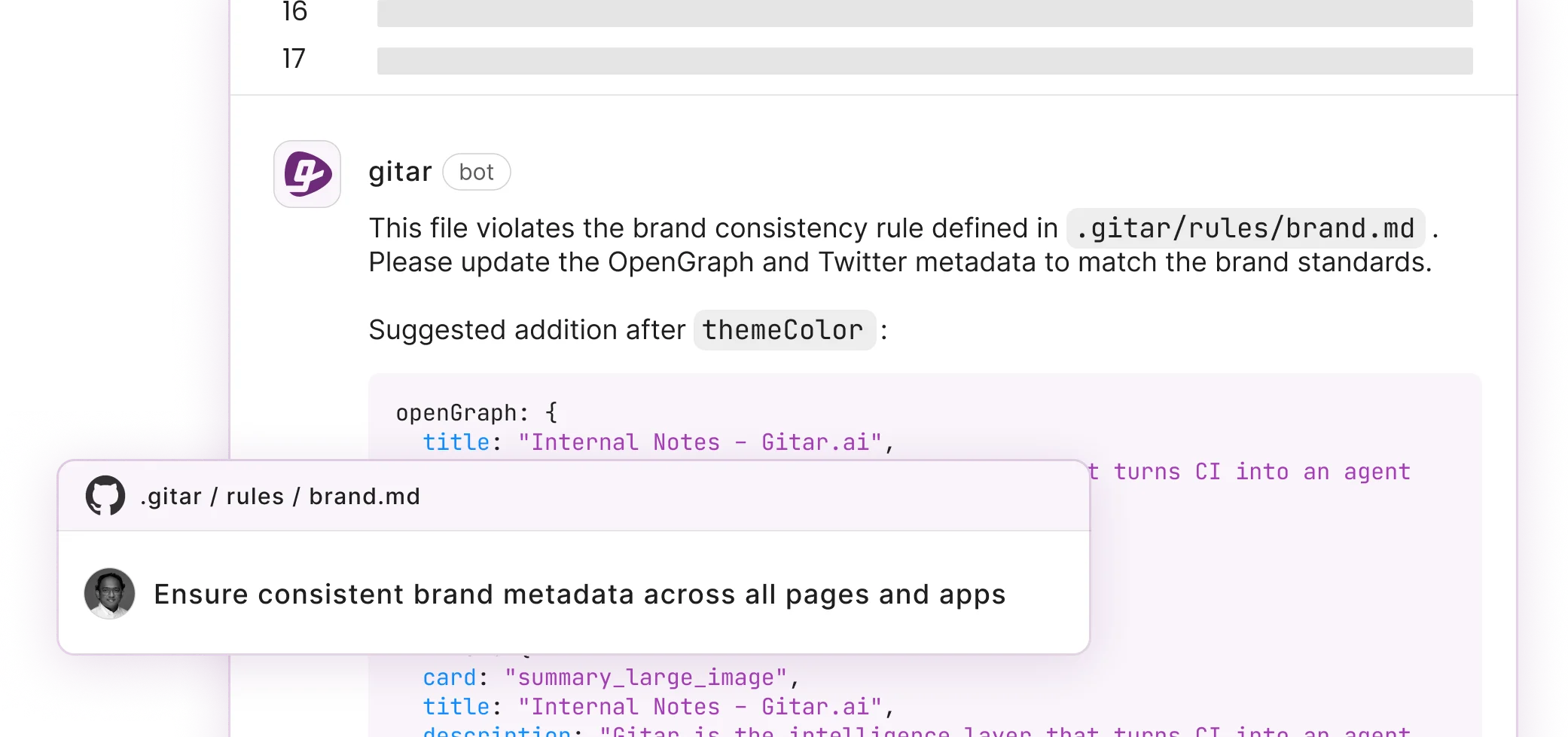
- Define Rules: With the integration active, create natural language rules in .gitar/rules/*.md that describe the standards your team must follow. Configure these rules using the syntax outlined in the documentation so they translate compliance requirements into automated checks.
- Enable Auto-Fixing: After rules are in place, configure the healing engine to resolve CI failures that violate those rules. This step keeps builds green and reduces repetitive fix work for developers.
- Establish Hybrid Reviews: Route novel or high-risk changes to human reviewers while allowing the system to handle routine verification.
- Monitor Analytics: Track CI patterns, failure types, and evidence generation through SOC 2 certified systems so you can refine rules and demonstrate control effectiveness.
This sequence creates a continuous pipeline where automated checks support development, while documentation and evidence accumulate in the background.
Deploy the GitHub app in 30 seconds and let Gitar’s healing engine maintain green builds automatically.
Gitar vs Competitors for Compliance Automation
This head-to-head comparison focuses on four features that matter most for regulated teams. Notice that Gitar is the only platform combining auto-applied fixes with a green build guarantee and strong audit trails.
|
Feature |
Gitar |
CodeRabbit/Greptile |
SonarQube |
|
Auto-apply Fixes |
Yes |
No |
Yes (IDE one-click) |
|
Green Build Guarantee |
Yes |
No |
No |
|
Audit Trails |
Yes (GPG/SOC 2) |
Partial |
Comprehensive |
|
Trial Access |
14-day full Team Plan |
Available |
Community/Enterprise trials |
Gitar’s feature set targets real-world compliance needs rather than only code quality. Validated fixes work safely in production environments, while context memory learns team patterns and reduces noisy suggestions over time. Its SOC 2 Type 2 certification supports enterprise security and compliance reviews.
The healing engine also addresses trust concerns. Teams control where auto-commits apply, and emulated CI environments validate fixes before they land in your repositories. Implementation details and configuration patterns appear throughout the product documentation for teams that want deeper guidance.
Frequently Asked Questions
What compliance standards does code review automation cover?
Modern code review automation tools support standards such as OWASP Top 10 and SOC 2. Gitar holds SOC 2 Type 2 certification and uses natural language rules to enforce security and compliance workflows without complex configuration files.
How do you measure ROI from automated code reviews?
Teams measure ROI by tracking reduced PR review delays, less time spent on CI and review issues, and annual cost savings. Helpful indicators include higher deployment frequency, fewer context switches for senior engineers, and automated evidence generation that shortens audit preparation.
How quickly can Gitar integrate with existing workflows?
Gitar installs in about 30 seconds through a GitHub or GitLab app deployment. The platform begins analyzing pull requests immediately and can start auto-fixing CI failures within minutes, without complex setup.
Are automated commits safe for production environments?
Automated commits remain safe through layered controls. Teams can begin in suggestion mode, then enable auto-commit for specific failure types once they build trust. Gitar validates all fixes in emulated CI environments before applying changes, which protects production systems.
What’s included in the 14-day trial?
The Team Plan trial includes auto-fixing, custom compliance rules, CI healing, audit trails, and all integrations for teams up to 50 users. The trial removes feature restrictions and seat limits so teams can evaluate the full platform.
Conclusion
Gitar leads code review automation for compliance and audit readiness by fixing code automatically and generating reliable audit trails. Competing tools often stop at suggestions, while Gitar delivers autonomous repairs backed by verifiable compliance evidence.
Get started with Gitar’s full Team Plan trial for 14 days of autonomous code fixing and compliance automation, with no feature restrictions and no credit card required.