
Written by: Ali-Reza Adl-Tabatabai, Founder and CEO, Gitar
Key Takeaways
- Most AI code review tools struggle with microservices because they lose cross-repository context and trigger CI failure cascades, which can increase PR review time by 91%.
- Gitar leads this space with a healing engine that auto-fixes CI failures, validates changes, and commits working solutions across service boundaries.
- Top free tools like Qodo and PR-Agent add multi-repo awareness but still lack Gitar’s full CI automation and broad polyglot support.
- Sub-5-minute setup through a GitHub App makes Gitar a strong fit for 10–50 developer teams managing distributed stacks.
- Start your 14-day Gitar Team Plan trial for unlimited auto-fixes and faster microservices development.
How We Evaluated Free AI Code Review Tools for Microservices
Our 2026 evaluation criteria focused on microservices-specific capabilities such as cross-repository context awareness, CI auto-fix validation, polyglot language support across GitHub Actions, GitLab, and CircleCI, and setup time under 5 minutes. We analyzed vendor documentation, Reddit feedback, and GitHub community reports while testing each tool on distributed service architectures. Gitar distinguished itself with a healing engine that auto-commits validated fixes and consolidates all feedback in a single updating comment.
Microservices Code Review Challenges in 2026
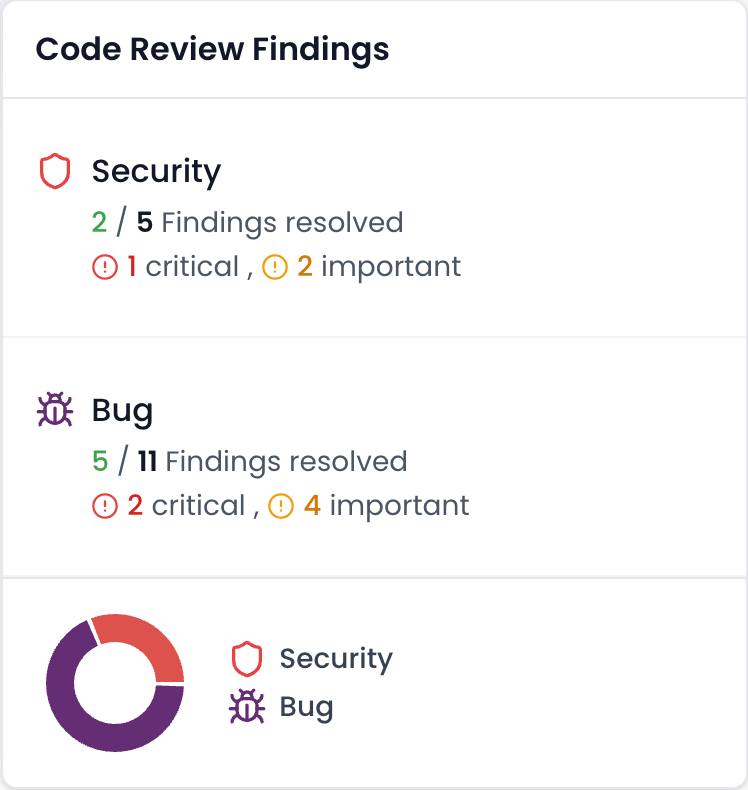
Traditional AI review tools fail at inter-service logic errors, unrelated PR failures, and context loss across repository boundaries. Teams report AI reviews produce “unnecessary verbose comments” and noise rather than actionable insights for distributed systems. The core problem comes from suggestion engines that recommend fixes without validating that they work in CI pipelines. Auto-fix capabilities that guarantee green builds consistently outperform comment-only approaches for microservices velocity. The following nine tools represent the current landscape of free AI code review solutions, evaluated specifically for their microservices capabilities.
Top 9 Free AI Code Review Tools for Microservices Architecture
1. Gitar
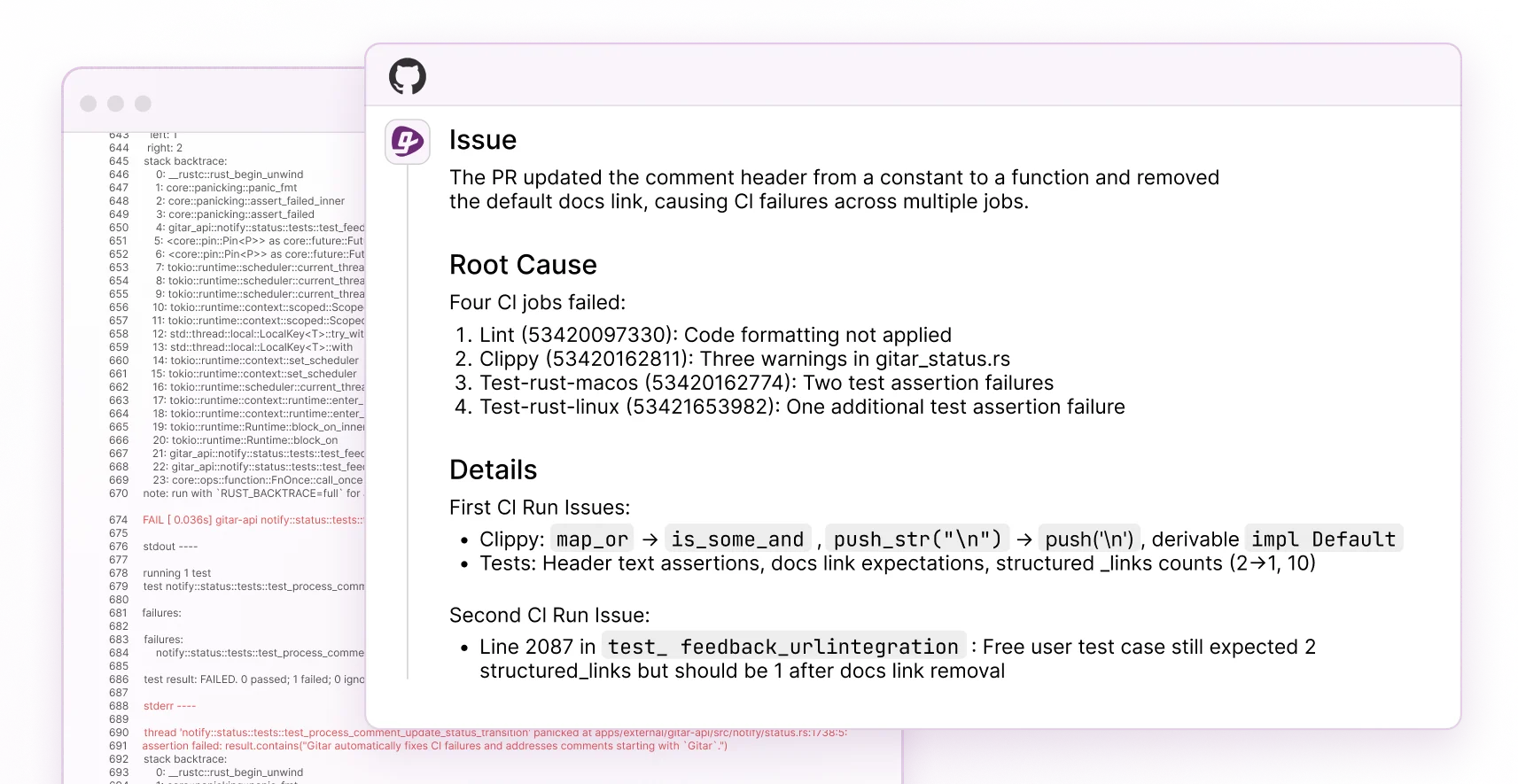
Gitar offers a comprehensive 14-day Team Plan trial with unlimited auto-fix capabilities for CI failures, test errors, and lint issues. Gitar’s healing engine analyzes failure logs, generates validated fixes, and commits them automatically, rather than only suggesting changes. The platform provides cross-repository context through hierarchical memory, natural language workflow rules, and integrations with Jira and Slack for complete development intelligence. These capabilities are available in the trial mentioned above.
Key strengths include healing distributed bugs across service boundaries while consolidating all feedback in a single updating comment to reduce notification spam. This consolidation becomes critical when teams manage polyglot stacks across GitHub Actions and GitLab. The same engine supports Python, Go, JavaScript, TypeScript, Java, Rust, and other common microservices languages in one workflow. This comprehensive automation becomes accessible through a sub-5-minute GitHub App installation, which suits teams with 10–50 developers managing multiple repositories who want immediate impact without lengthy deployment cycles.
Try Gitar’s 14-day Team Plan trial and automatically fix broken builds today.
2. Qodo (formerly Codium)
Qodo provides RAG-based analysis for multi-repository context and automated test generation, with free individual plans and open-source options. The platform understands cross-service dependencies and offers auto-fix capabilities including 1-click issue resolution. Some fixes still require IDE workflow integration, which adds manual steps for developers.
3. PR-Agent
PR-Agent offers self-hosted AI reviews using Ollama for data sovereignty, supporting GitHub and GitLab with custom rules. It requires 8 GB of VRAM and multi-week deployment but provides unlimited usage once installed. The tool focuses on comments and suggestions and does not provide CI healing capabilities.
4. CodeRabbit CLI
CodeRabbit’s command-line interface provides free local analysis with cross-service context awareness and terminal-based diff reviews. It offers comprehensive codebase understanding for developers who prefer local workflows. The tool lacks full auto-commit functionality for CI failures, so teams still need manual intervention to apply fixes.
5. Aikido Security
Aikido’s free developer plan supports 2 users across 10 repositories with security-focused logic analysis and semantic code understanding. It provides valuable security insights for microservices, including AI SAST AutoFixes for certain classes of issues. Comprehensive automatic remediation still varies by workflow and configuration.
Install Gitar now to start shipping higher quality software with automatic CI fixes.
6. Tabby
Tabby enables self-hosted AI assistance with local models for polyglot microservices, supporting multi-repository analysis. It requires significant VRAM resources and infrastructure planning. The platform lacks native CI integration for automated failure resolution, so teams must wire in additional tooling.
7. Kodus AI
Kodus AI provides agent-based GitHub reviews for polyglot stacks with active development. Setup requirements remain unclear from public documentation, which complicates planning. The platform does not offer auto-fix capabilities for CI pipeline failures.
8. Hexmos LiveReview
Hexmos offers free self-hosted reviews using Ollama with git hook integration. It runs as a GitLab-native solution with unlimited usage for teams that prefer self-hosting. The tool provides limited CI integration for microservices automation needs and focuses more on review comments.
9. ThinkReview
ThinkReview provides an open-source Ollama browser extension for 100% local sovereignty. It supports multi-repository environments without API keys, which appeals to security-conscious teams. The extension does not include healing capabilities for distributed system failures and remains focused on local analysis.
AI Code Review Tools for Microservices Compared
This comparison highlights the most critical capabilities for microservices teams: cross-repository context, CI auto-fix, platform support, and setup complexity. Gitar leads across all categories with comprehensive automation that directly addresses CI failures.
|
Tool |
Cross-Repo Context |
Auto-Fix CI |
Platform Support |
Setup/Free Limits |
|
Gitar |
Yes (hierarchical memory) |
Yes (healing engine) |
GitHub/GitLab |
<5 min/14-day unlimited Team trial |
|
Qodo |
Yes |
Yes (1-click/IDE) |
GitHub/GitLab |
Easy/Individual + OS |
|
PR-Agent |
Partial (self-host) |
No |
GitHub/GitLab |
Medium/8GB VRAM unlimited |
|
CodeRabbit CLI |
Yes |
Partial (suggest) |
Multiple Git platforms |
Easy/Unlimited local |
|
Aikido |
Partial |
Yes (AutoFix CI) |
GitHub/GitLab |
Easy/2 users/10 repos |
|
Tabby |
Yes |
No |
GitHub/GitLab |
Medium/VRAM unlimited |
|
Kodus AI |
Yes (full codebase) |
No |
GitHub/GitLab/Bitbucket/Azure |
Unknown/Unlimited |
|
Hexmos |
Partial |
No |
GitLab native |
Medium/Unlimited |
|
ThinkReview |
Partial |
No |
GitHub/GitLab |
Easy/Unlimited local |
For teams ready to implement the leading solution from this comparison, Gitar’s GitHub Actions integration provides a fast path to automated microservices reviews.
GitHub Actions Setup for Microservices Reviews with Gitar
Gitar integrates with GitHub Actions to support multi-repository microservices workflows without complex scripting. The GitHub App installation configures permissions and webhook events automatically, which aligns with the quick setup mentioned earlier. Custom rules can target specific services, such as security reviews on authentication services or performance analysis on API gateways. For step-by-step configuration examples that show how to implement these service-specific rules, see the complete setup instructions in the Gitar documentation.
Frequently Asked Questions
What is the best AI code review tool for microservices architecture?
Gitar’s 14-day Team Plan trial provides the most comprehensive solution for microservices teams. Unlike the comment-only approaches described earlier, Gitar automatically fixes CI failures, validates changes against your pipeline, and maintains cross-repository context through hierarchical memory. The trial includes unlimited users and repositories, which suits distributed development teams.
How does Gitar handle CI failures in distributed systems?
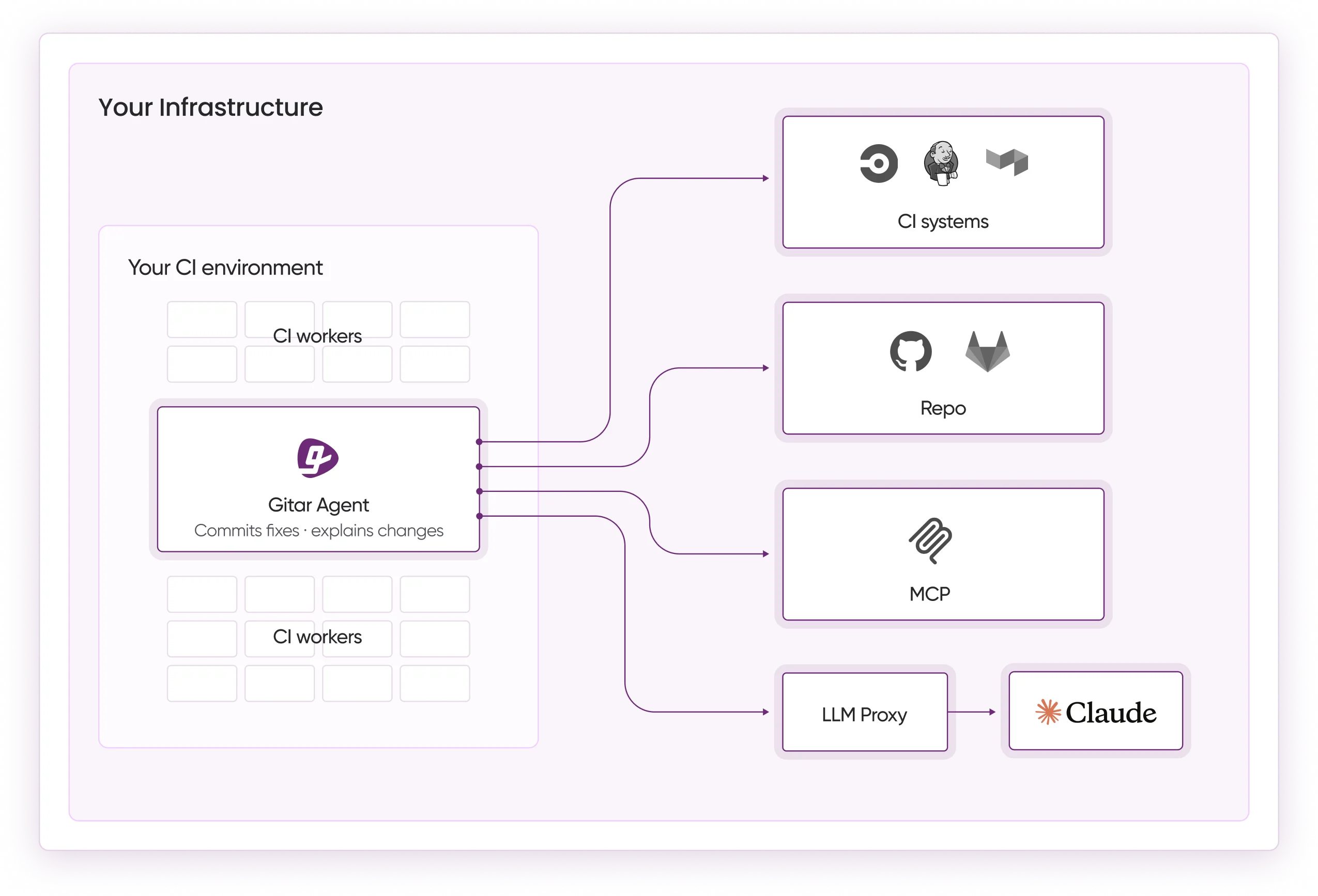
The healing engine described in Gitar’s overview extends across service boundaries, using full codebase context to understand root causes that span multiple repositories. It then applies this context to generate working fixes that respect existing tests and CI checks. The platform integrates with GitHub Actions, GitLab CI, CircleCI, and Buildkite to provide pipeline intelligence that traditional review tools lack.
What are the differences between free and paid AI code review features?
Gitar’s trial provides full Team Plan access, including auto-fix capabilities, custom workflow rules, and unlimited repositories. Most competitors like CodeRabbit charge $15–30 per developer for features that focus on suggestions instead of automated remediation. Free tiers typically limit users or repositories or omit critical automation capabilities that microservices teams need for consistent velocity.
Does Gitar support polyglot microservices environments?
Yes, Gitar supports the major languages used in microservices architectures, as detailed in the overview above, and handles mixed stacks in a single workflow. The platform integrates with all major CI platforms while maintaining context across different technology stacks within the same distributed system.
How long does free AI code review GitHub setup take?
Gitar installation typically finishes in under 5 minutes through a GitHub App installation that configures webhooks and permissions automatically. The platform begins analyzing pull requests as soon as the first workflows run. Most self-hosted alternatives like PR-Agent require multi-week deployments and significant infrastructure setup before teams see similar value.
Conclusion
Microservices teams in 2026 need AI code review tools that move beyond suggestions and actually fix distributed system failures. Gitar’s healing engine addresses this core bottleneck by validating and implementing fixes automatically, which removes a large share of manual CI work for developers.