

Written by: Ali-Reza Adl-Tabatabai, Founder and CEO, Gitar
Key Takeaways
- AI coding tools speed up code generation 3 to 5 times, yet manual reviews and CI fixes still create a $1M annual productivity drag for 20-developer teams.
- Qodo PR-Agent’s /improve and PR Resolver features present suggestions through a checkbox interface, but they still require developer approval, validation, and offer no CI integration.
- Gitar’s healing engine delivers full automation by analyzing CI failures, generating validated fixes, and committing working solutions that keep builds green.
- Gitar replaces Qodo’s interactive workflow with a single dashboard comment and simple @gitar commands that implement reviewer feedback directly.
- Teams using Gitar save about $750K annually; start your free 14-day Team Plan trial to experience full CI automation and measure ROI in your own pipeline.
Configuring Qodo PR-Agent for “Automatic” Fixes on GitHub
Qodo PR-Agent setup exposes how much manual work still sits between suggestions and working code. The process unfolds in several stages.
1. Install the GitHub App: Navigate to the qodo-ai/pr-agent repository and install the GitHub App for your organization or specific repositories. This step grants Qodo access to your pull requests.
2. Configure PR Resolver: After installation, enable the PR Resolver skill in your repository settings. This feature attempts to handle review feedback automatically, although it still depends on developer oversight.
3. Use the /improve Command: With PR Resolver active, comment “/improve” on any pull request to trigger Qodo’s analysis and suggestion generation.
4. Apply Suggestions via Checkboxes: Qodo then presents proposed changes with checkboxes so you can apply them as committable updates and track what changed.
The critical gap appears at this point. Qodo still relies on developers for approval, validation, and final commits. It does not integrate with CI to confirm that fixes actually work, so engineers remain responsible for running tests and verifying that implementations pass.
Qodo /improve and PR Resolver: Workflow and Real Limitations
Qodo’s /improve command analyzes pull requests and generates inline suggestions with checkboxes for direct application as committable changes, while PR Resolver attempts to address reviewer feedback automatically. However, some users report integration challenges, which reveals infrastructure constraints that block seamless automation.
The workflow still depends on several developer actions:
– Qodo posts suggestions with an interactive checkbox interface
– However, developers must still review, select, and apply each suggestion manually
– This manual process is compounded by the lack of CI analysis, so fixes are not validated against your actual build environment
– Steps include evaluating suggestions and re-running checks
These gaps become more serious as AI-generated code volume grows. AI-generated code shows 75% higher logic bug rates, yet Qodo lacks the CI context needed to confirm that fixes resolve issues without introducing new problems. At the same time, only 30% of AI-suggested code gets accepted, which highlights the gap between suggestion streams and reliable, working solutions.
Why Qodo Falls Short for Full Automation and How Gitar Closes the Gap
Qodo PR-Agent represents the “interactive suggestion engine” pattern common in AI code review tools. Systems that require developer interaction to apply fixes add extra steps and keep teams in a manual loop. The following comparison highlights the automation gap between Qodo’s suggestion model and Gitar’s healing engine.
|
Capability |
Qodo PR-Agent |
Gitar |
|
Inline suggestions |
Yes |
Yes |
|
Auto-apply fixes |
Interactive |
Automatic |
|
CI failure analysis |
No |
Yes |
|
Validate & commit fixes |
Interactive |
Yes |
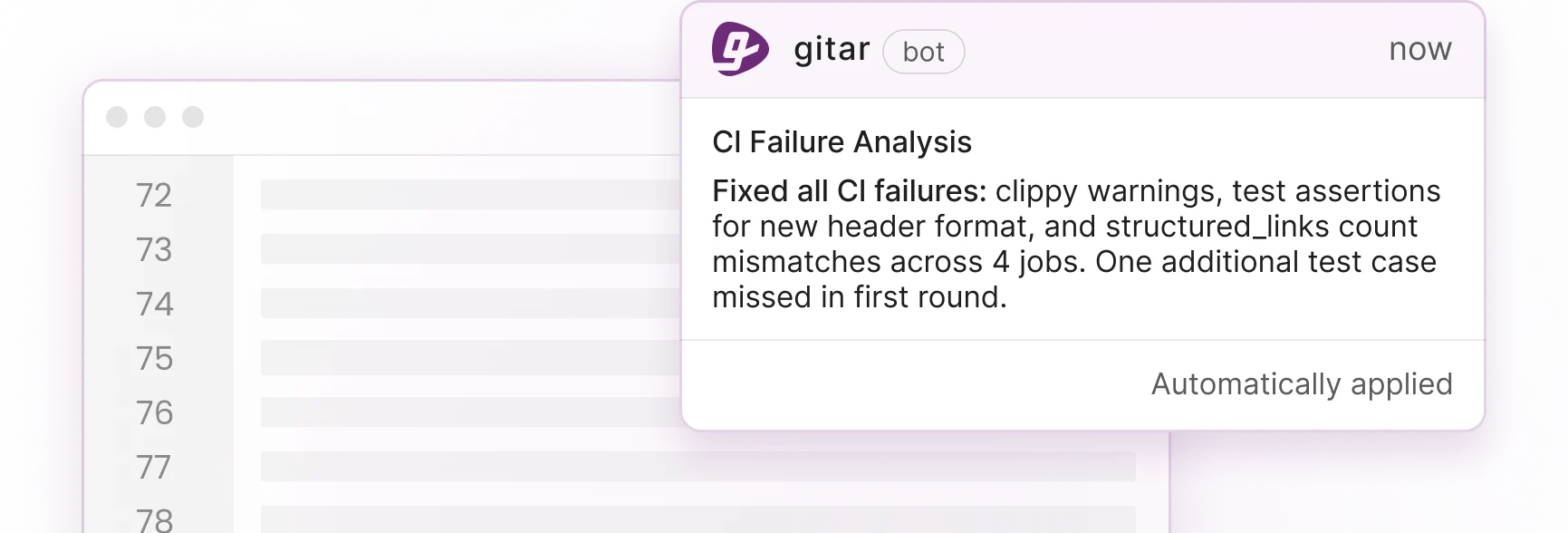
Gitar’s healing engine does more than flag problems. When CI fails because of lint errors, test failures, or build breaks, Gitar analyzes the failure logs, generates fixes with full codebase context, validates them, and then commits working solutions.
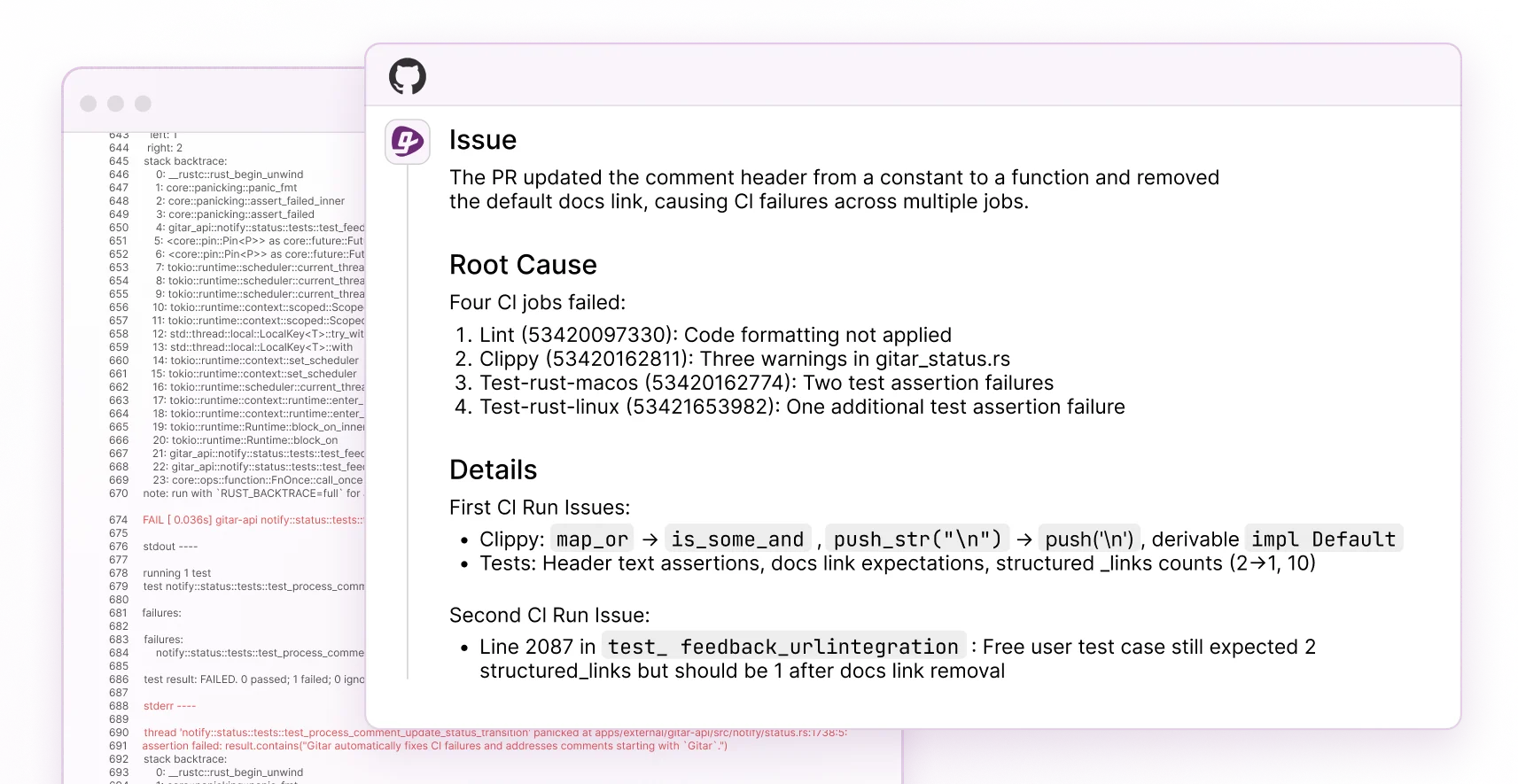
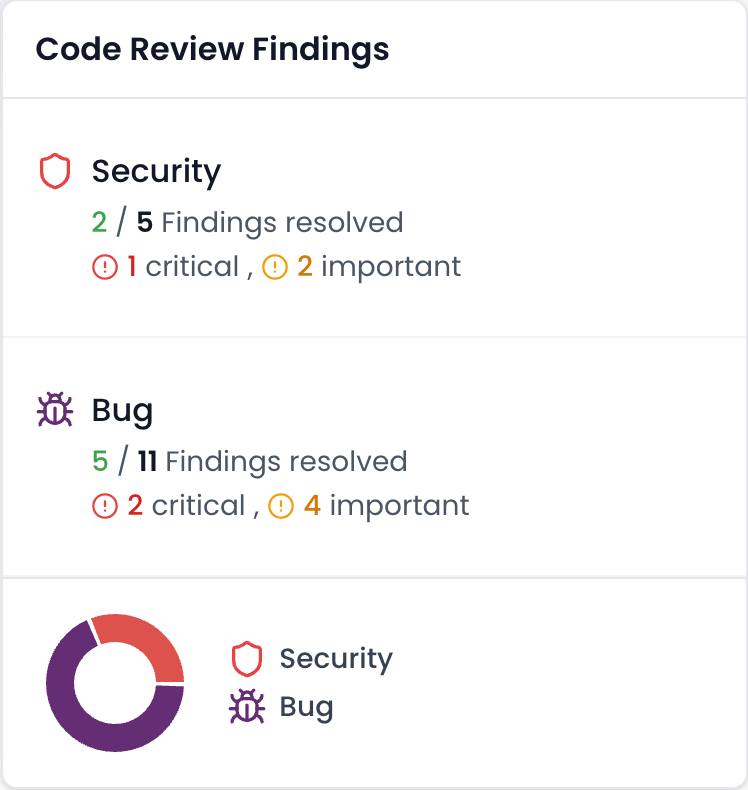
This approach replaces hope-based automation with a system that targets consistently green builds. In practice, Qodo depends on checkbox-based application of suggestions, while Gitar consolidates all findings into a single, continuously updated dashboard comment and handles fixes on its own. See the difference yourself and install Gitar to experience true CI automation.
How to Auto Apply Code Review Fixes with Gitar in 5 Steps
Gitar delivers end-to-end automation for code review fixes through its healing engine. Now that the automation gap is clear, you can follow these steps to bring Gitar into your workflow.
1. Install the Gitar GitHub App: Add Gitar to your repositories and start your 14-day Team Plan trial with no seat limits so every developer can participate.
2. Let Gitar Create the PR Dashboard: For each pull request, Gitar posts a single dashboard comment that centralizes analysis, suggestions, and applied fixes in one place.
3. Enable CI Failure Auto-Resolution: When builds fail, Gitar reads the logs, generates candidate fixes, validates them against your environment, and commits working solutions automatically.
4. Implement Review Feedback with @gitar: Reviewers can comment @gitar refactor this to use async/await, and Gitar applies the requested change directly in the codebase.
5. Rely on Validated Green Builds: Unlike suggestion engines, Gitar validates every fix against your actual CI environment before committing, which ensures that changes pass checks.
The contrast with Qodo stays clear throughout this process. Instead of manual copy and paste cycles and checkbox workflows, Gitar delivers end-to-end automation with CI validation. For detailed setup instructions, visit the Gitar documentation. Ready to implement these steps? Start your 14-day trial and eliminate manual fix cycles.
Gitar vs Qodo and Other Tools: Real-World ROI
True automation delivers measurable productivity gains compared with suggestion engines. A 20-developer team using Gitar saves approximately $750,000 annually by cutting time spent on CI issues from 1 hour per day per developer to just 15 minutes. This $750K savings figure comes from a 75 percent reduction in manual fix cycles and context switching.
Customer feedback reinforces this shift. Tigris engineering reports that Gitar’s PR summaries are “more concise than Greptile/Bugbot,” while Collate highlights the “unrelated PR failure detection” feature that saves “significant time” by separating infrastructure flakiness from real code bugs, context that traditional reviewers rarely provide.
Gitar also extends beyond basic code review. Teams gain repository rules expressed in natural language, deep analytics for CI patterns, and integrations with Jira, Slack, and Linear. While many competitors charge 15 to 30 dollars per developer for suggestion engines, Gitar offers a comprehensive 14-day Team Plan trial so you can prove ROI through actual automation rather than theoretical gains.
Conclusion
Qodo PR-Agent’s promise of automatic code review fixes still depends on a checkbox interface and developer oversight, and it lacks the end-to-end automation described earlier. Qodo provides useful analysis, yet it does not remove the core bottleneck of getting working fixes committed and validated without manual effort.
Gitar’s healing engine changes that equation by delivering automation from CI failure analysis through to validated fix implementation. When you need qodo pr agent automatically apply code review fixes that actually work, Gitar provides that outcome. Install Gitar now and automatically fix broken builds, then start shipping higher quality software faster.
Frequently Asked Questions
Can Qodo PR-Agent automatically apply code review fixes without manual intervention?
No. Qodo PR-Agent requires developer interaction through its checkbox interface to apply suggestions as committable changes. The /improve command and PR Resolver generate suggestions, but developers still need to review and select them. The system does not provide fully automatic application or CI validation of fixes, so it remains an interactive tool rather than an autonomous one.
What are the main limitations of Qodo’s PR Resolver feature?
Qodo’s PR Resolver supports interactive suggestion application but has several constraints. It does not integrate with CI for validating fixes against your environment, it requires developers to apply suggestions manually, and it offers no built-in guarantee that changes will pass your specific build checks. The tool can apply changes from comments, yet it does not independently handle validation and committing.
How does Gitar’s healing engine differ from suggestion-based tools like Qodo?
Gitar’s healing engine delivers full automation by analyzing CI failures, generating fixes with full codebase context, validating them, and committing working solutions. Suggestion engines stop at recommendations, while Gitar runs fixes against your actual CI environment before applying them, which supports consistently green builds. It also consolidates findings into a single updating dashboard comment and implements review feedback through simple @gitar commands.
What kind of ROI can teams expect from automated code review fixes?
Teams that adopt automated fix tools like Gitar typically see large productivity gains. A 20-developer team can save about $750,000 annually by reducing time spent on CI issues from 1 hour per day per developer to 15 minutes. These gains come from removing manual fix implementation, cutting context switching, and ensuring that fixes work the first time through CI validation.
Is there a way to test automated code review tools before committing to a paid plan?
Yes. Gitar provides a 14-day free trial of its Team Plan with no seat limits, so your entire team can experience full automation, including auto-fix capabilities, custom rules, and all integrations. This trial lets you measure the real impact on sprint velocity and developer productivity before making a financial commitment, unlike suggestion-only tools that charge monthly fees while keeping workflows manual.