
Written by: Ali-Reza Adl-Tabatabai, Founder and CEO, Gitar
Key Takeaways
- Dependency update PRs from Dependabot frequently cause CI failures and security risks, with 44-49% containing vulnerabilities and 30-40% of pipelines failing weekly.
- Gitar’s healing engine auto-fixes lint errors, test failures, and build breaks from dependency changes, then validates everything in CI and posts a single summary comment.
- Unlike suggestion-only tools like CodeRabbit, Gitar guarantees green builds and cuts manual toil by 80%, saving about $750K per year for 20-developer teams.
- Setup uses Dependabot YAML, GitHub Actions, the Gitar app, and natural language rules to create a zero-touch dependency management workflow.
- Transform dependency updates into automated success by starting your 14-day free trial with Gitar today.
Modern teams ship code faster than ever, yet dependency update pull requests still slow everything down. Tools like Dependabot and Renovate create a steady stream of PRs that promise security and stability, but they often break CI, introduce vulnerabilities, and demand manual review. Gitar turns those noisy, fragile updates into a predictable, automated workflow that keeps builds green and developers focused on feature work.
The Hidden Cost of Dependency Update PRs
Dependency update PRs look routine, yet they create a constant drag on delivery speed. Each update can break tests, introduce subtle runtime issues, or surface new vulnerabilities that require investigation. Teams lose hours every week triaging failures, rerunning pipelines, and chasing down root causes across services and environments.
As AI-assisted coding increases PR volume, this maintenance burden grows even faster. Suggestion-based tools help you understand problems, but they do not close the loop with working fixes and validated builds. Teams need a solution that treats dependency updates as a fully automated pipeline, not a series of manual firefights.
The Solution: Gitar’s Healing Engine for Dependency PRs
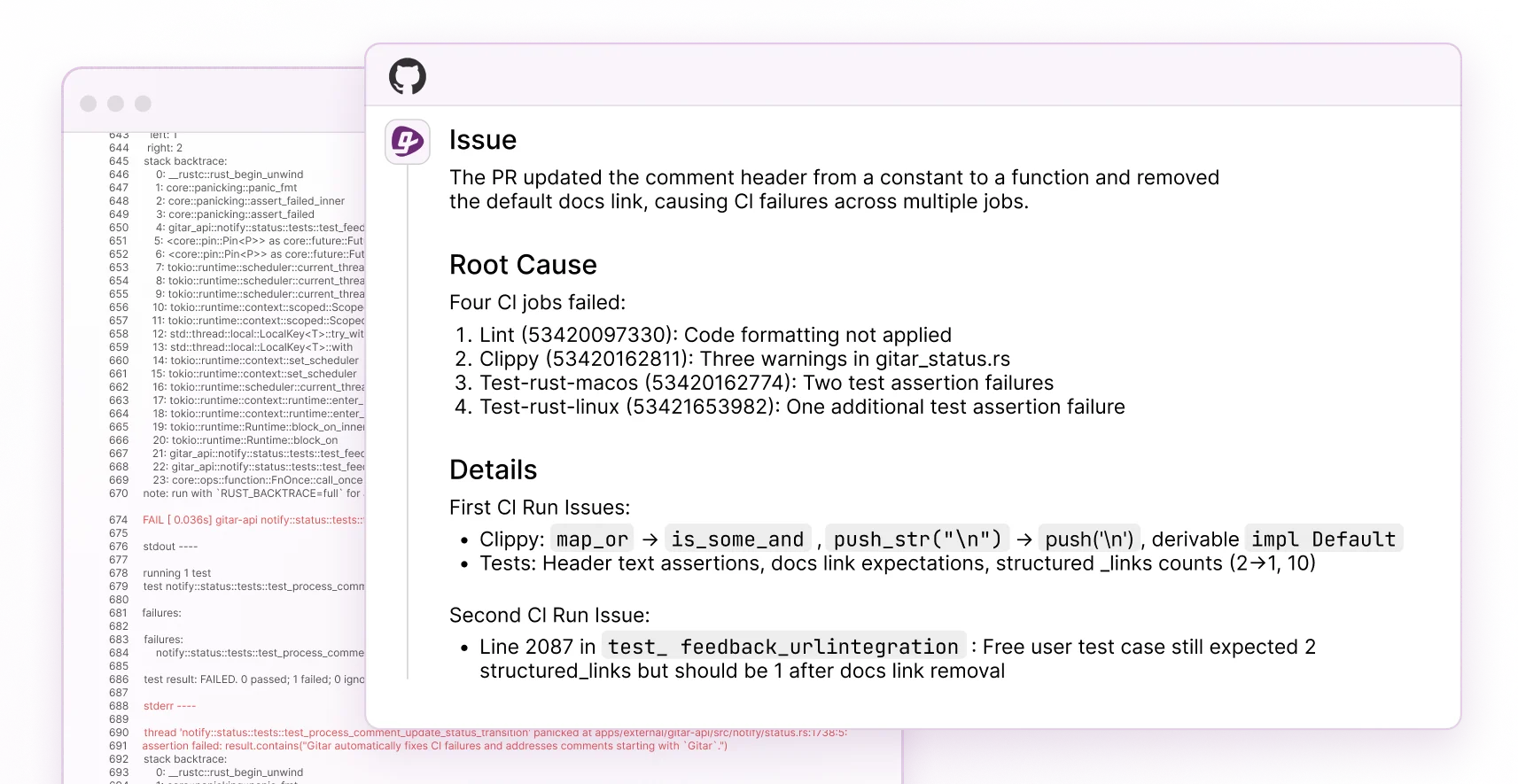
Traditional AI code review tools like CodeRabbit and Greptile charge $15-30 per developer for suggestion-only analysis that still requires manual implementation. Gitar goes beyond suggestions with a healing engine that automatically analyzes and fixes CI failures, including those from dependency issues, and posts a single updating comment instead of notification spam.
Gitar’s approach to automated code review solves the core problems that make dependency updates painful: identifying what broke, fixing it correctly, and confirming the fix in CI. This requires:
- Auto-fix for lint errors, test failures, and build breaks caused by dependency changes
- Unrelated failure detection to distinguish infrastructure issues from code problems
- Concise PR summaries that consolidate all findings in one clean comment
- Green build guarantee through full CI validation before committing fixes
Start your 14-day Gitar Team Plan trial to auto-fix dependency PRs today at Gitar.
Key Tools for Dependabot PR Reviews
To understand where Gitar fits in your dependency workflow, you need to see how it complements existing tools. Effective automated code review for dependency update pull requests combines GitHub-native capabilities with intelligent automation. Dependabot and Renovate handle initial PR creation with semantic versioning rules and security grouping, while GitHub’s Dependency Review Action provides basic vulnerability scanning.
GitHub Copilot Coding Agent can automate DevOps tasks by creating weekly maintenance workflows that schedule dependency updates, but it still requires manual intervention for CI failures and security issues.
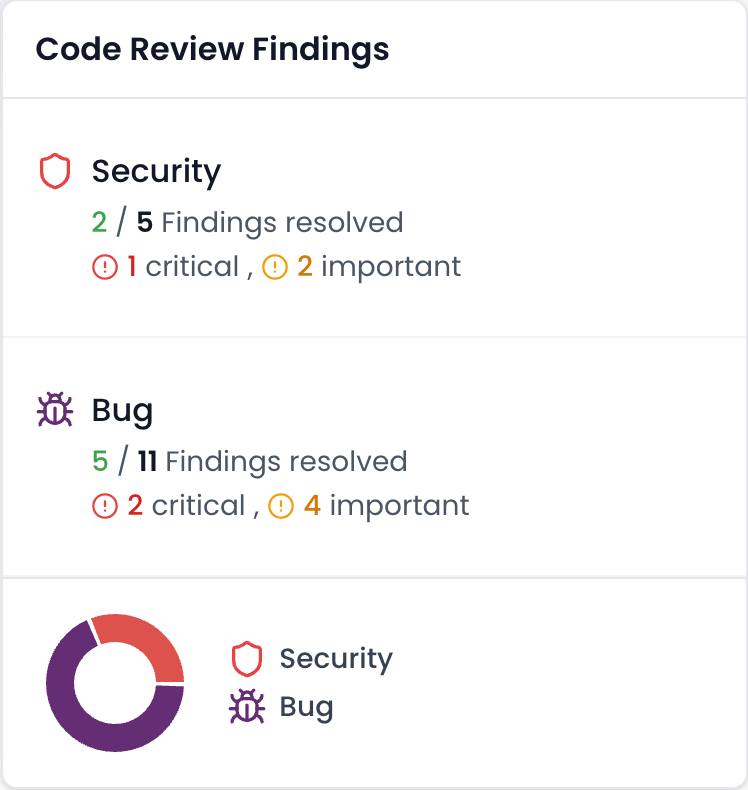
The comparison between suggestion-only tools and Gitar’s healing engine reveals significant capability gaps. The table below shows that traditional tools stop at suggestions, while Gitar delivers end-to-end automation from analysis through fix implementation and green build validation:
|
Capability |
CodeRabbit/Greptile/Copilot |
Gitar |
|
PR summaries |
Yes |
Yes (concise) |
|
Inline suggestions |
Yes |
Yes |
|
Auto-apply fixes |
No |
Yes |
|
CI failure analysis/fix |
No |
Yes |
|
Green build guarantee |
No |
Yes |
|
Single comment vs. spam |
Spam |
Single |
Gitar’s healing engine addresses the fundamental limitation of suggestion-only tools: they identify problems but do not resolve them. Complete documentation and setup guides are available in the Gitar documentation.
Step-by-Step GitHub Workflow Setup for Automated Dependency Reviews
Now that you see how Gitar compares to other tools, you can wire everything together into a practical workflow. Implementing automated code review for dependency update pull requests uses a clear sequence that combines Dependabot configuration, GitHub Actions, and Gitar’s automation:
1. Configure Dependabot YAML
Create .github/dependabot.yml with semantic versioning rules and security-focused grouping. This reduces PR noise while keeping dependencies current.
2. Enable Dependency Review Action
Add GitHub’s Dependency Review Action to your workflow to scan dependency changes for known vulnerabilities and policy violations.
3. Install and Configure Gitar
Install the Gitar GitHub App and enable auto-fix capabilities for CI failures. Gitar then analyzes failure logs, generates fixes, and validates them against your full CI environment.
4. Create Natural Language Rules
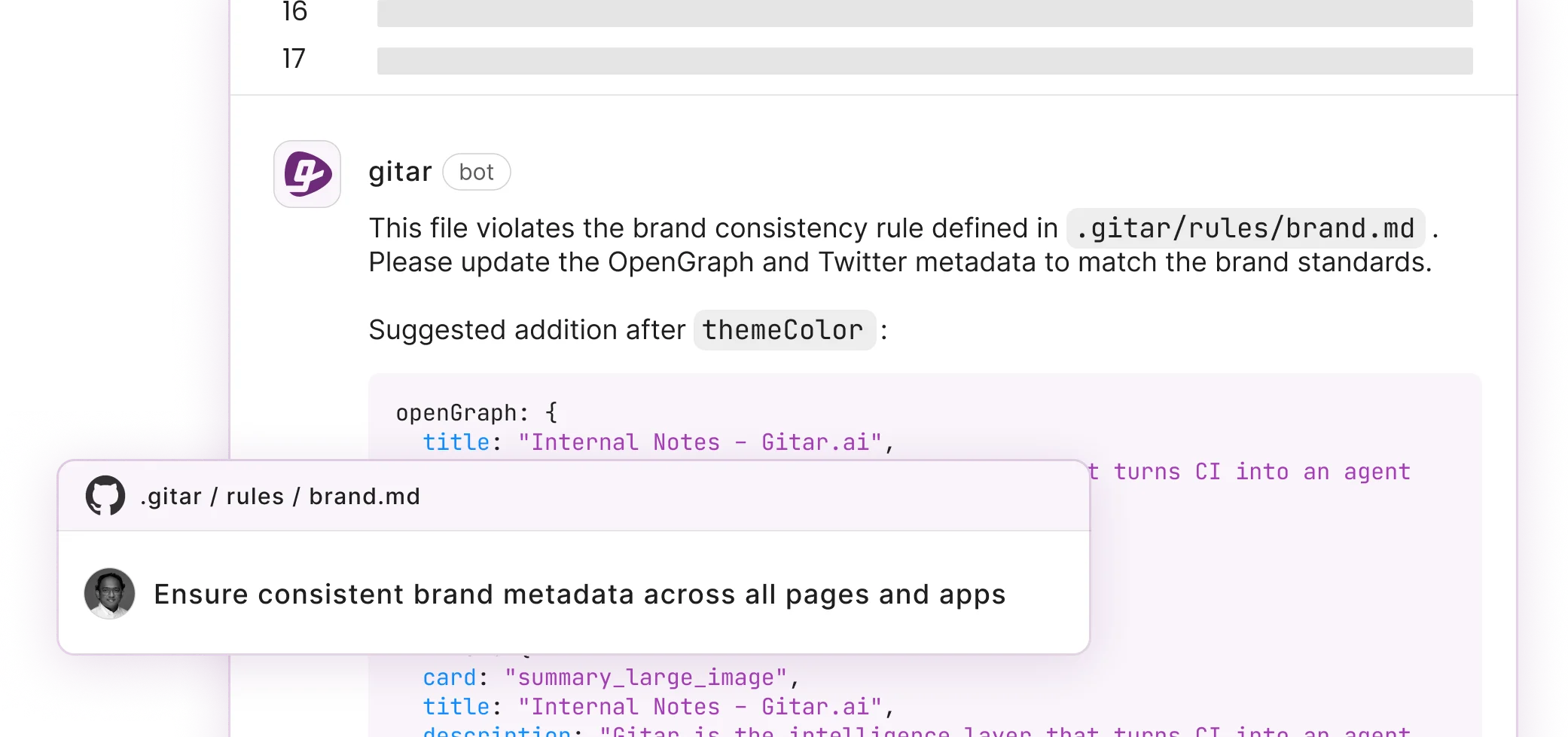
Define repository-specific rules in .gitar/rules/*.md files using natural language. For example: “when: PRs modifying authentication or encryption code, actions: Assign security team and add label”.
5. Monitor and Automate
Use Gitar to automatically resolve CI failures from dependency updates so that safe PRs move to merge with minimal human input.
This workflow ensures that Dependabot opens PRs and Gitar automatically fixes any resulting CI failures.
AI Auto-Fix for Dependency CI Failures
The workflow above relies on Gitar’s most significant advancement in automated code review: the ability to separate infrastructure flakiness from real code issues. Sixty-eight percent of organizations require four or more hours to identify data quality problems in pipelines, yet Gitar’s unrelated failure detection categorizes issues immediately.
When dependency updates cause CI failures, Gitar’s healing engine follows a four-step process that keeps fixes production-ready:
- First, it analyzes failure logs to understand root cause and scope.
- Then, it generates code fixes with full codebase context and dependency relationships.
- Next, it validates fixes against the complete CI environment, not just isolated tests.
- Finally, it commits working solutions and updates the PR with a single, clean summary.
This approach closes a critical gap in current AI code review tools. Roughly half of test-passing PRs from AI agents would not be merged by maintainers due to quality issues and failures in other code. Gitar’s comprehensive validation prevents these problems by confirming that fixes work in the full system context.
The productivity impact matches the ROI outlined earlier, with teams consistently reporting the 80% toil reduction and $750K annual savings mentioned above. Unlike the suggestion-based approach discussed earlier, Gitar’s healing engine delivers deterministic, validated fixes that keep builds green.
Ready to eliminate manual dependency fixes? Install Gitar now to automatically repair broken builds and start shipping higher quality software, faster.
Frequently Asked Questions
How to auto-merge safe dependency updates
Auto-merging safe dependency updates uses risk-tiered rules based on semantic versioning and security analysis. Gitar’s natural language rules in .gitar/rules/*.md can automate workflows for PR events, such as assigning reviewers or adding labels for dependency updates. Patch and minor version updates that pass all CI checks can move quickly with Gitar’s auto-fixes, while major version changes should still require manual review because they can introduce breaking changes.
Dependabot vs. Renovate for code review
Dependabot and Renovate both excel at creating dependency update PRs, yet neither provides intelligent code review or CI failure resolution. Dependabot integrates natively with GitHub and offers simpler configuration. Renovate provides more granular control over update scheduling and grouping.
The choice between them matters less than adding an automated code review system like Gitar that can analyze and fix the PRs they generate. Gitar works with both tools, providing the missing layer of intelligent analysis and automatic problem resolution that turns dependency updates from a manual burden into a zero-touch process.
Does Gitar fix CI failures from dependencies
Gitar’s healing engine specifically analyzes CI failures caused by dependency updates and automatically generates working fixes. When a dependency update breaks lint rules, test suites, or build processes, Gitar examines the failure logs, understands the root cause within your codebase context, and commits validated solutions.
This behavior differs from suggestion-only tools that identify problems but leave implementation to developers. Gitar’s approach is 91% faster than manual fixes because it removes the research, implementation, and validation cycle that usually consumes hours of developer time per failed dependency update.
We use CodeRabbit, why switch
CodeRabbit provides helpful PR analysis and suggestions, yet those suggestions still require manual implementation, testing, and validation. Teams pay $15-30 per developer each month for comments that do not guarantee working solutions. Gitar’s healing engine goes beyond suggestions to fix the code, validate changes against your full CI environment, and guarantee green builds.
The 14-day trial makes this difference clear. Instead of reading suggestions and manually implementing fixes, you watch Gitar automatically resolve CI failures and update PRs with working solutions. The productivity gains and reduced context switching justify the move from suggestion-based to solution-based automation.
Conclusion: Achieve Zero-Touch Dependency Management
Automated code review for dependency update pull requests marks the shift from manual toil to intelligent automation. As only 9.4% of teams achieve lead time for changes in less than one hour according to the DORA 2025 report, the bottleneck has clearly moved from code generation to validation and integration.
The combination of AI-accelerated development and automated dependency updates creates unprecedented PR volume that traditional review processes cannot absorb. Teams need systems that move beyond suggestions to provide real fixes, beyond analysis to provide validation, and beyond individual PRs to provide consistent dependency management.
Gitar’s healing engine transforms dependency updates by automatically fixing broken builds from CI failures and validating changes against full system context. Start your 14-day trial to experience the difference in your own pipelines.
Transform your dependency management workflow today. Start your 14-day Gitar trial to automatically fix broken builds and ship higher quality software, faster.