
Written by: Ali-Reza Adl-Tabatabai, Founder and CEO, Gitar
Key Takeaways
- AI coding tools have increased PR volumes, but review capacity lags, causing 91% longer review times and $1M annual losses for 20-dev teams.
- Code review automation now needs to act as a healing engine that auto-implements fixes and consistently delivers green builds.
- Gitar’s healing engine auto-fixes CI failures, implements review feedback, and consolidates findings in single dashboard comments, outperforming suggestion-only tools.
- Apply 12 best practices like small PRs (<400 LOC), natural language rules, CI gating, and early security scanning to scale automation safely.
- Track metrics like Time-to-Merge and start with Gitar’s 14-day Team Plan trial to cut PR times and guarantee green builds.
The Gitar Healing Engine: From Suggestions to Guaranteed Green Builds
Gitar operates as an AI platform that automatically fixes CI failures and implements review feedback, then rolls everything into single dashboard comments instead of notification spam. Competing tools often charge $15-30 per developer for suggestions only, while Gitar’s healing engine guarantees green builds through autonomous code fixes. See the Gitar documentation for deeper technical details.
|
Capability |
Suggestion Engines |
Gitar |
|
Auto-apply fixes |
No |
Yes (Trial/Team) |
|
CI auto-fix |
No |
Yes |
|
Green build guarantee |
No |
Yes |
|
Single comment interface |
No |
Yes |
Setup starts with installing the GitHub App or GitLab integration and enabling the trial through docs.gitar.ai/setup. The platform then analyzes PRs automatically and posts a consolidated dashboard comment that updates in place as issues are fixed.
Install Gitar now: https://gitar.ai/.
12 Code Review Automation Practices That Guarantee Green Builds
1. Automate Trivial Checks First
Integrate automated linters, security scanners, and test suites into CI/CD pipelines to catch style violations and basic errors before human review. Tools like ESLint, Pylint, and SonarQube should block PR merges when checks fail. Gitar extends this flow by automatically fixing lint errors instead of only flagging them, so developers avoid repetitive manual cleanups.
2. Enforce CI/CD Gating on Every PR
Block PR merges whenever automated checks fail, creating clear gates that keep broken code out of production. Configure repository rulesets to require passing builds, tests, and security scans before merge. Gitar’s CI analysis then diagnoses root causes and applies fixes, turning failed builds into fast feedback loops instead of long-lived blockers.
3. Prioritize Security Scanning Early in the Pipeline
Run automated security scanning before merging to detect secrets and vulnerabilities and pair it with clear response workflows. SAST and SCA tools should trigger immediately when a PR opens. Gitar’s security scanning adds automatic remediation for common vulnerability patterns, which shortens the time between detection and resolution.
4. Enforce Test Coverage Thresholds in CI
Set minimum test coverage requirements through CI gates, such as 80% for critical paths and 60% for overall coverage. Run unit and integration tests automatically on every PR to keep regressions out. Gitar validates test coverage as part of its comprehensive code review, so coverage gaps surface early.
5. Use AI as an Autonomous Fixer, Not Just a Reviewer
Adopt tools that implement fixes automatically instead of only suggesting changes. Gitar applies review feedback on its own and pushes updates back into the PR. This approach shrinks review cycles from hours to minutes, while natural language rules in .gitar/rules/*.md enable custom automation workflows without complex YAML. See the Gitar documentation for more detail on rules configuration.
6. Keep PRs Small and Focused on One Change
Keep PR sizes under 400 lines of code to support thorough review and faster merges. Studies show 66-75% defect detection rates at 200-400 LOC, and review effectiveness drops beyond that range. Gitar handles high PR volumes efficiently, so teams can maintain small, focused PRs even as AI-generated code volume grows.
7. Define Automation with Natural Language Rules
Replace complex YAML configurations with natural language workflow definitions that any engineer can read and update. Gitar’s rule system lets teams describe automation behavior in plain English, which lowers the barrier for CI customization. Non-DevOps engineers can then safely contribute to workflow improvements.
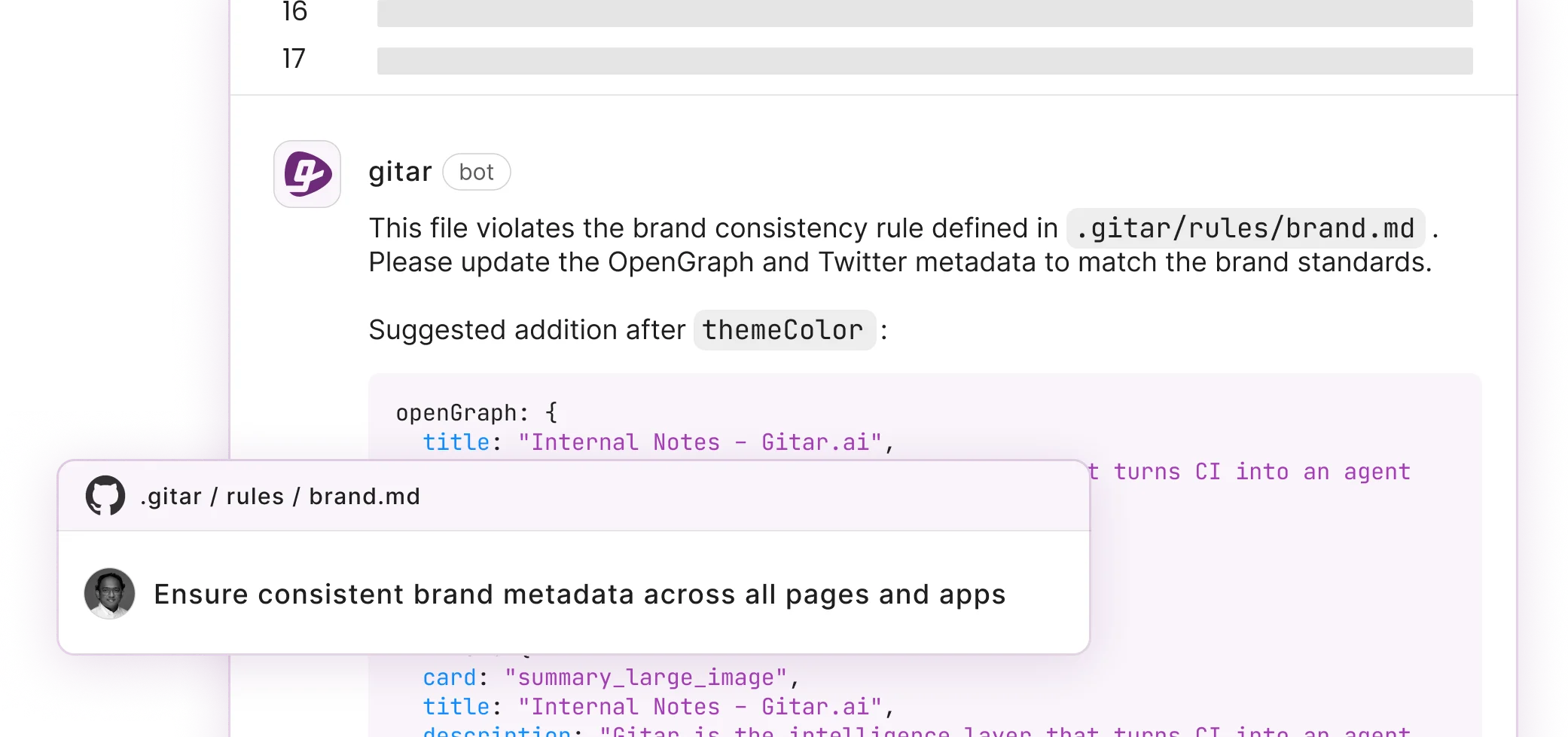
8. Consolidate Feedback into a Single Updating Comment
Reduce notification overload by collecting all review findings into one dashboard comment that updates over time. Traditional tools scatter inline comments across diffs and trigger many notifications per PR. Gitar instead sends one notification and presents findings in a structured interface that collapses resolved items as fixes land.
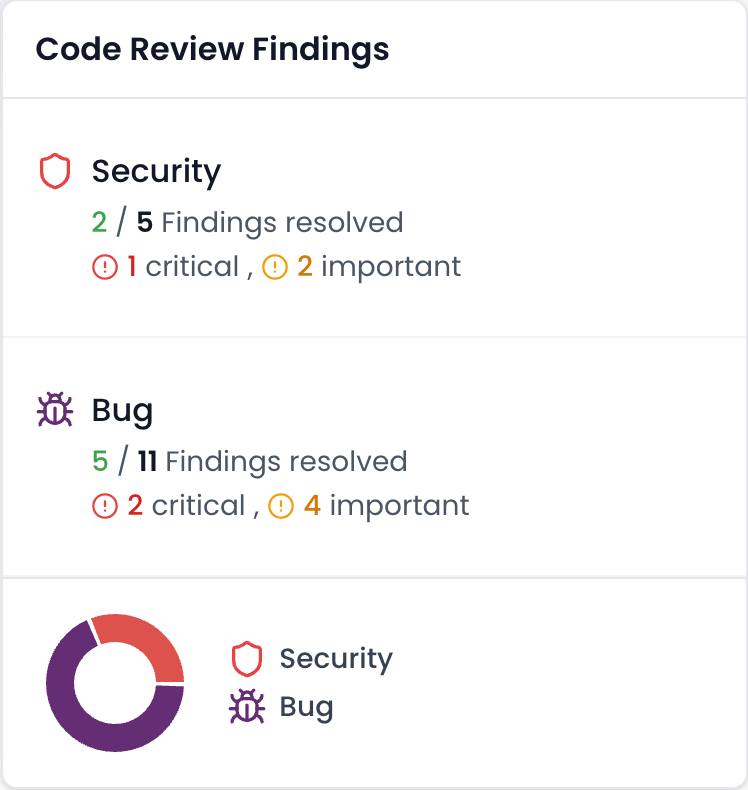
9. Track Review Metrics for Continuous Improvement
Track metrics like Time-to-Merge (under 6 hours for elite teams), PR Pickup Time (under 2 hours), and Change Failure Rate (under 15%). Use these KPIs to spot bottlenecks and measure the impact of automation. Gitar includes analytics that surface these metrics and highlight systematic improvement opportunities.
10. Standardize Automation Across Platforms
Choose automation that works across GitHub, GitLab, CircleCI, and other tools in your stack. Avoid vendor lock-in by preferring solutions that support multiple version control and CI systems. Gitar offers native integrations across major platforms, so teams get consistent automation regardless of their technical stack.
11. Automate Implementation of Review Feedback
Automate the application of reviewer feedback instead of relying on manual edits for every suggestion. Gitar applies reviewer comments automatically and revalidates changes against CI, which removes the usual back-and-forth cycle. Reviewers still control intent, while Gitar handles the mechanical work.
12. Validate Auto-Fixes to Guarantee Green Builds
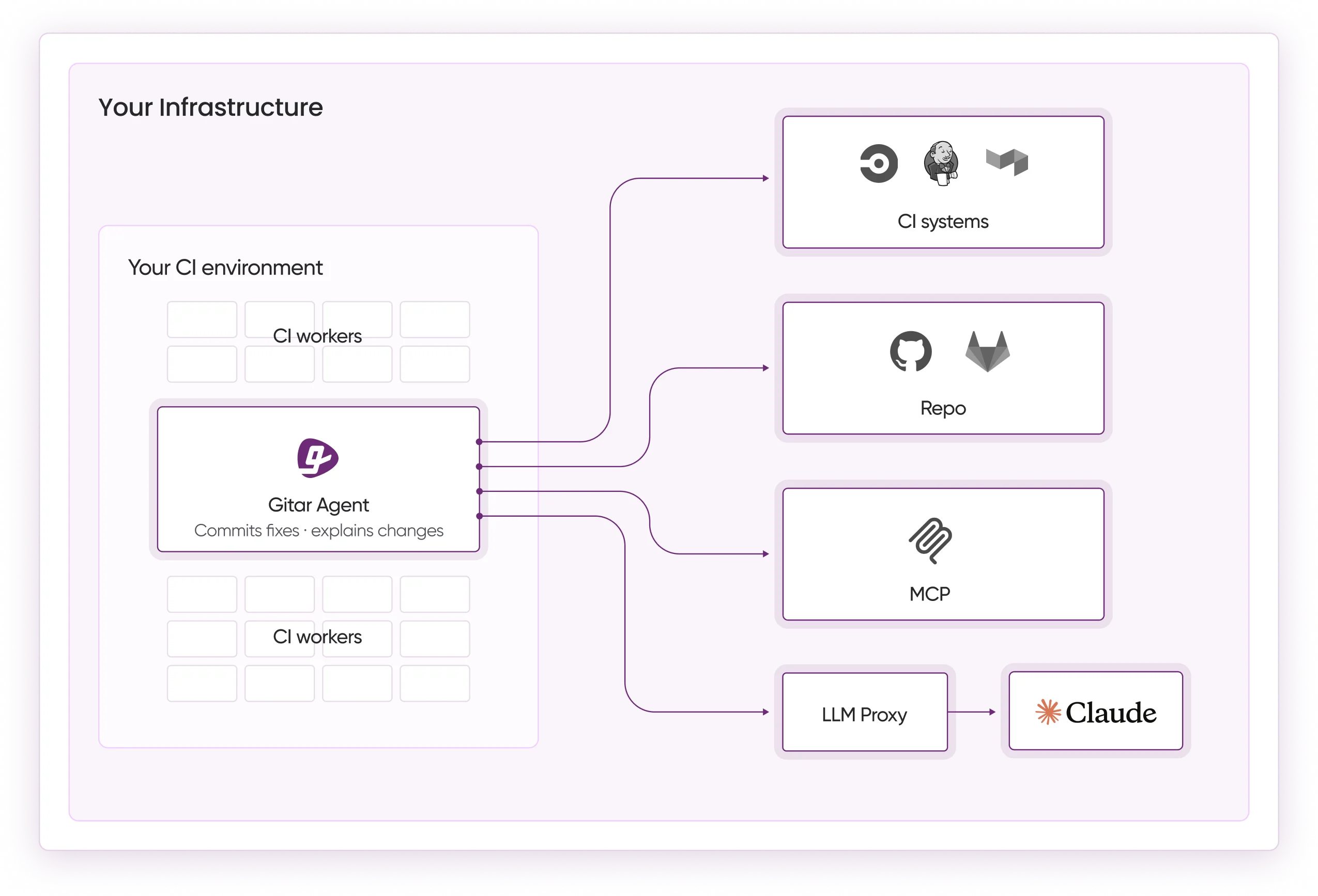
Validate every automated fix against the full CI environment before accepting it. Gitar’s healing engine emulates the complete build environment, including SDK versions and dependencies, to ensure fixes behave correctly under production-like conditions. This validation separates reliable automation from suggestion engines that only hope proposed fixes will work.
Code Review Checklist for Automated Workflows
- Pre-commit: Run linting and security scans locally.
- PR Creation: Trigger automated analysis immediately.
- CI Gates: Require build, test, and security checks to pass.
- Review Assignment: Use automatic assignment based on code ownership.
- Feedback Implementation: Apply reviewer suggestions automatically where safe.
- Final Validation: Confirm a green build before merge.
- Post-merge: Monitor deployment success and roll back if needed.
AI Code Review Tools: Auto-Fix and CI Comparison
|
Feature |
CodeRabbit |
Greptile |
Gitar |
|
Auto-fix capability |
No |
No |
Yes |
|
CI integration |
Limited |
No |
Full |
|
Green build guarantee |
No |
No |
Yes |
|
Pricing per developer |
$15-30 |
$30 |
14-day free trial |
Best Practices for Reviewing Test Automation
AI-assisted workflows should automate PR analysis by scanning diffs immediately upon creation, with special focus on test coverage and test quality. Traditional code review tools often lack CI context, which makes it hard to separate infrastructure flakiness from real code bugs. Gitar’s CI integration supplies that context and helps teams pinpoint genuine test failures.
Frequently Asked Questions About Gitar
Does Gitar replace human review?
Gitar augments human reviewers by handling routine fixes and validation tasks. Human reviewers still own architectural decisions, business logic validation, and complex design discussions. Gitar removes the manual work of obvious fixes so humans can focus on high-value review activities that require judgment and domain expertise.
How do I start with code review automation?
Start with Gitar’s 14-day Team Plan trial, which includes full access to auto-fix capabilities, custom rules, and all integrations. Begin in suggestion mode to build trust, then enable auto-commit for specific failure types as your team gains confidence. The trial supports up to 50 users and unlimited public and private repositories.
What metrics prove ROI from automation?
Track reduced PR review time, fewer context-switching interruptions, and higher developer satisfaction scores. Teams often see Time-to-Merge drop from hours to minutes for routine fixes, with annual productivity savings around $750,000 for a 20-developer team when accounting for fewer manual fixes and faster feedback cycles.
Is automated fixing safe for complex CI environments?
Gitar emulates your complete CI environment, including SDK versions, multi-dependency builds, and third-party integrations. The Enterprise tier runs agents inside your own CI with access to secrets and caches, so fixes are validated in your actual production conditions. All automation remains configurable, and teams can control aggression levels and require approval before fixes apply.
Conclusion: Cut PR Times by Half with Gitar
Proven code review practices combined with Gitar’s healing engine deliver measurable gains in development speed and code quality. Teams that adopt comprehensive code review automation reduce manual toil and ship features faster.
|
Metric |
Before Gitar |
After Gitar |
|
Time on CI/review |
1hr/day/dev |
15min/day/dev |
|
Annual cost (20-dev) |
$1M |
$250K |
|
Context switching |
Multiple/day |
Near-zero |
The AI coding era now requires automation that performs implementation and validation, not just commentary. While competitors charge premium prices for basic suggestions, Gitar delivers a complete platform that guarantees green builds and removes most manual fix cycles.
Install Gitar now, automatically fix broken builds, and start shipping higher quality software faster: https://gitar.ai/