
Written by: Ali-Reza Adl-Tabatabai, Founder and CEO, Gitar
Key Takeaways
- AI coding tools cut writing time 3-5x but increase PR reviews 91%, which can cost 20‑developer teams up to $1M annually.
- Code review automation delivers faster cycles, handles high PR volumes, keeps standards consistent, and saves about $750K despite setup and false positive challenges.
- Gitar’s Healing Engine fixes CI failures and issues automatically instead of only suggesting changes, unlike tools such as CodeRabbit and Greptile.
- Hybrid manual and automated reviews keep mentorship and learning while removing routine fixes, using natural language rules to flag complex changes for humans.
- Start your 14-day free trial with Gitar to target 480% ROI and arrive each morning to green builds.
Code Review Automation Pros and Cons in One View
|
Aspect |
Pros |
Cons |
Mitigation |
|
Speed |
Shorter review cycles |
Setup complexity |
30-second installation, see Gitar docs |
|
Scalability |
Handles PR volume increases |
High false positives |
AI validation reduces noise |
|
Consistency |
Objective rule application |
Reduced mentorship |
Concise summaries enhance learning |
|
Cost |
$750K savings for 20-dev teams |
$15-30/developer monthly fees |
Free 14-day trial proves ROI |
|
Detection |
Early bug identification |
Context limitations |
Hierarchical memory systems |
The hybrid approach combines automation breadth with human expertise for nuanced decisions. Teams that adopt code review automation report strong productivity gains, especially when they choose tools that fix issues instead of only suggesting improvements.
Top Pros of Code Review Automation in 2026
1. Eliminates PR Bottlenecks
A 91% increase in PR review time from AI-generated code volume disappears when automated fixes handle routine problems. Teams stop waiting hours for simple lint errors or test failures to be corrected by hand.
2. Massive Scalability Gains
Developers with the highest AI use merge 60% more PRs than traditional workflows. Automated review systems absorb this extra volume without a matching increase in human reviewer time.
3. Consistent Quality Standards
Automated systems apply the same rules to every change and never get tired. This consistency reduces subjective decisions that quietly add technical debt over time.
4. Exceptional ROI Potential
Organizations using generative AI for code development see 480% ROI with 5.2-month payback periods. Productivity gains from removing CI failure loops compound across teams and projects.
One engineering lead summarized the shift clearly: “Our developers used to spend the first hour each morning fixing overnight CI failures. Now they arrive to green builds and can immediately focus on feature development.”
Key Drawbacks of Automation and How Teams Reduce Them
Setup and Configuration Complexity
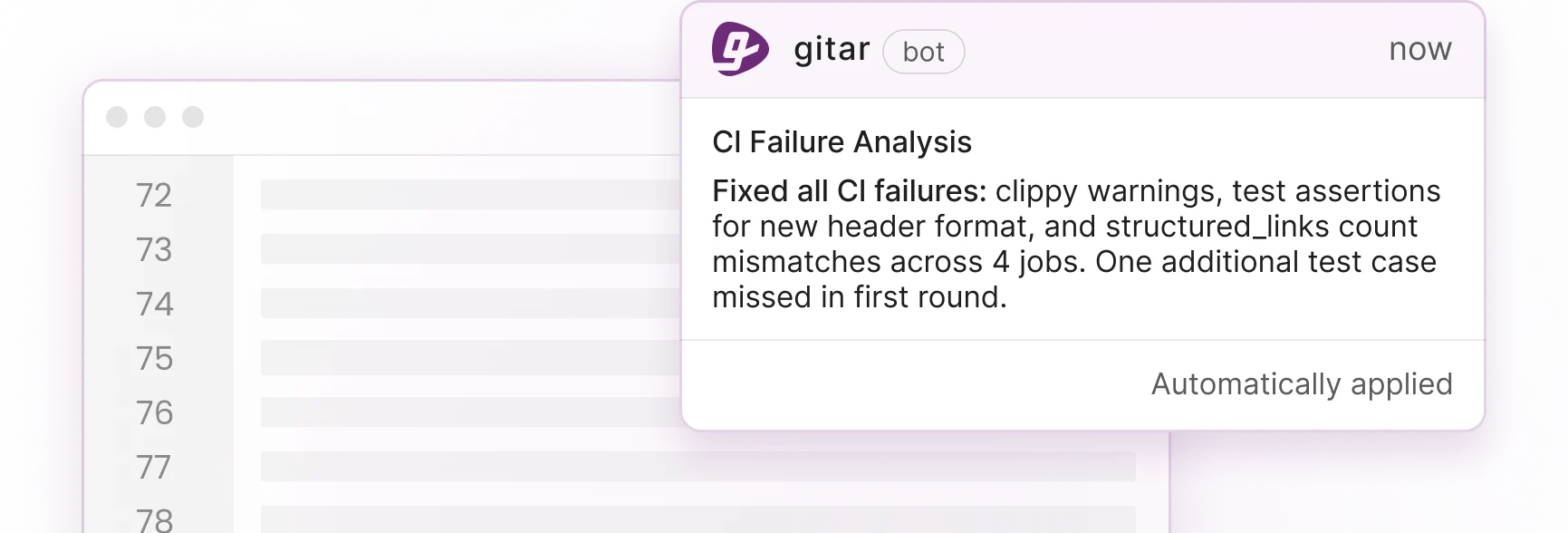
Initial configuration can overwhelm teams without dedicated DevOps support. Gitar’s 30-second installation and natural language rule setup remove traditional YAML barriers and keep onboarding simple. See the Gitar documentation for step-by-step details.
Cost Considerations
Suggestion-only tools charge $15-30 per developer each month and still depend on manual implementation. The real cost shows up as ongoing productivity losses from unresolved CI failures and slow reviews.
Hybrid Manual and Automated Reviews That Actually Work
The most effective approach blends automated efficiency with human insight through a phased rollout. Teams often start in suggestion mode to build trust, then enable auto-commit for safe fix types such as lint errors and formatting issues. You can find configuration examples in the Gitar docs.
Teams define natural language rules in repository settings to specify when human review stays mandatory. Security-sensitive changes, architectural shifts, and complex business logic usually stay under human oversight.
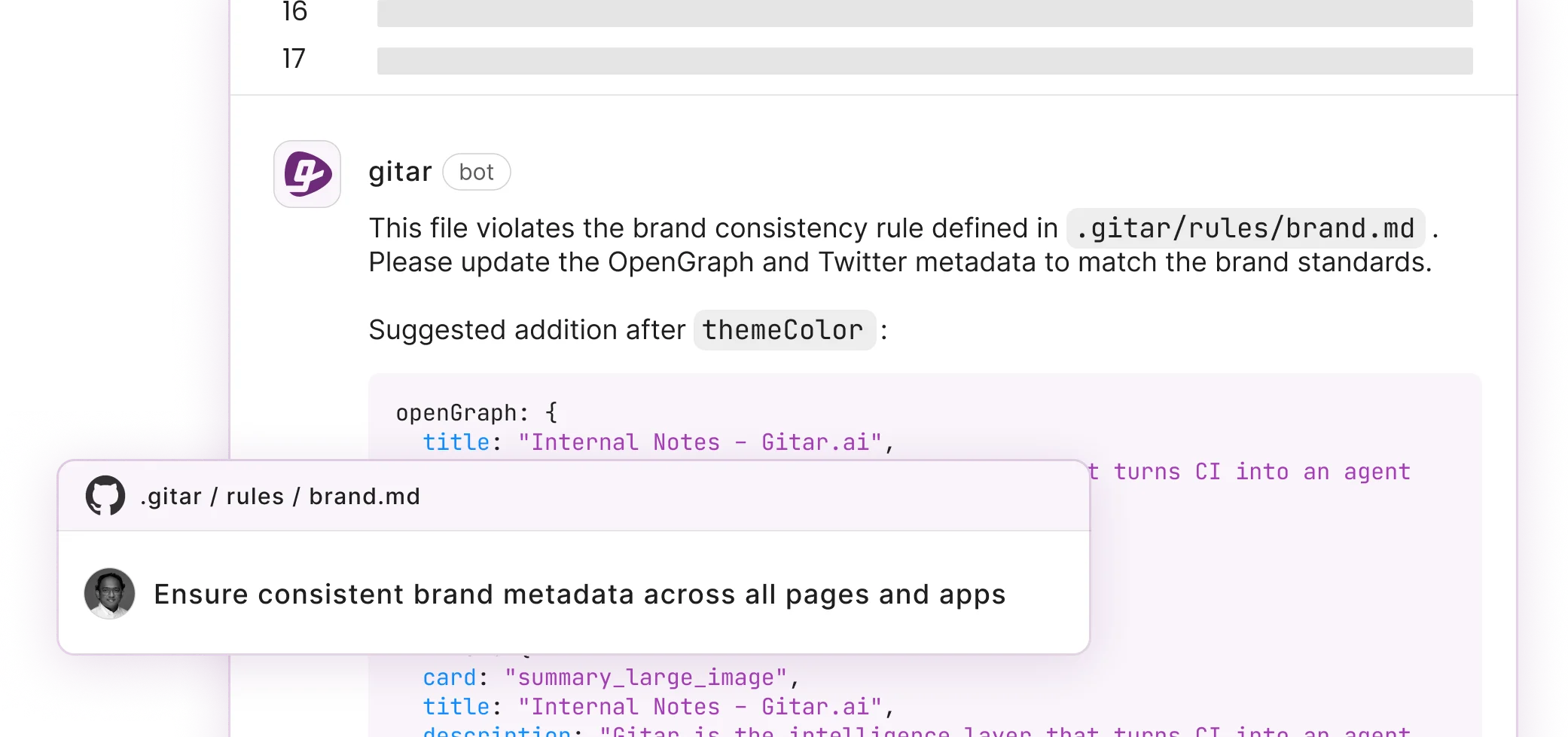
This hybrid model keeps mentorship and code discussions for strategic work while automation handles tactical fixes. Developers spend more time on architecture and business logic and less time on syntax and style. Install Gitar now to try this balanced model during a full 14-day trial.
Suggestion Engines vs True Auto-Fix Healing Platforms
Most code review tools act as suggestion engines. They flag problems and propose changes but leave every implementation step to developers, which keeps the bottleneck in place.
Gitar’s Healing Engine follows a different architecture. When CI failures appear, the system analyzes root causes, generates validated fixes, and commits working solutions automatically. Suggestion engines create more work for teams, while healing engines remove work entirely.
|
Capability |
CodeRabbit/Greptile |
Gitar |
|
PR Summaries |
Yes |
Yes |
|
Auto-Apply Fixes |
No |
Yes |
|
CI Auto-Fix |
No |
Yes |
|
Fix Validation |
No |
Yes |
The first time an engineer watches a build failure resolve itself before they even see the alert, they recognize the gap between suggestions and real solutions.
Gitar vs CodeRabbit vs Greptile in 2026
The 2026 code review automation market splits into expensive suggestion engines and full auto-fix platforms. The comparison below focuses on capabilities that affect day-to-day engineering work.
|
Feature |
Gitar |
CodeRabbit |
Greptile |
|
Autonomous Fixes |
Yes |
No |
No |
|
CI Integration |
Full |
Limited |
Basic |
|
Trial Access |
14-day free |
$15/dev |
$30/dev |
|
Platform Support |
GitHub + GitLab + CircleCI + Buildkite |
GitHub-focused |
GitHub-focused |
ROI analysis for a 20-developer team highlights the impact clearly:
|
Metric |
Before Automation |
After Gitar |
|
Daily CI/Review Time |
1 hour per developer |
15 minutes per developer |
|
Annual Productivity Cost |
$1,000,000 |
$250,000 |
Engineering leaders choose Gitar for faster delivery and measurable productivity gains. DevOps teams value self-healing CI that lowers infrastructure costs and reduces maintenance work. Install Gitar now to use a platform that moves from suggestions to complete solutions.
Frequently Asked Questions
Does code review automation kill learning opportunities for developers?
Modern automation improves learning when teams implement it thoughtfully. Gitar explains every fix in detail so developers can see error patterns and recommended practices. Time saved on routine fixes shifts attention to architecture and design decisions. Junior developers progress faster when they study consistent automated fixes instead of spending hours on basic syntax debugging.
How does automation handle complex CI environments with custom configurations?
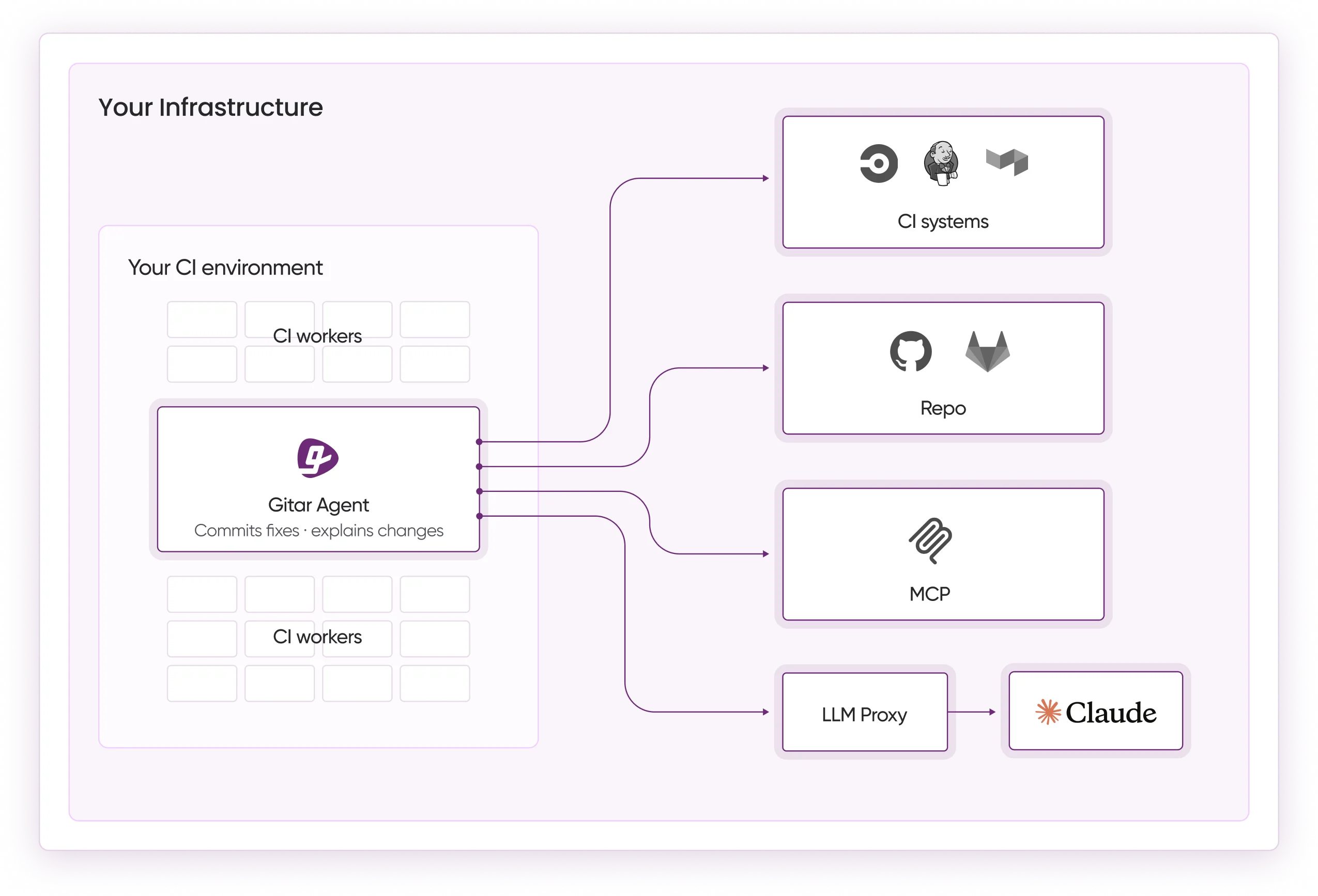
Advanced platforms such as Gitar emulate full development environments, including SDK versions, multi-dependency builds, and third-party integrations. The system validates fixes against real CI conditions instead of isolated tests. Enterprise customers can run agents inside existing pipelines, keeping access to secrets, caches, and custom settings while still ensuring fixes work in production contexts. Learn more in the Gitar documentation.
What are the real costs of AI code review automation in 2026?
Suggestion-only tools cost $15-30 per developer each month and still require manual work. True automation platforms deliver higher ROI by removing productivity losses tied to CI failures and review queues. Organizations that adopt comprehensive AI coding solutions report average returns of 456% within 18 months, with 40% shorter development cycles and major savings from less context switching and faster resolution.
How common are false positives in automated code reviews?
Traditional static analysis tools often produce 80-90% false positives, which creates alert fatigue and resistance. Modern AI-assisted platforms with validation features cut false alarms to near zero through dataflow analysis and runtime checks. Validation makes the difference, because tools that confirm fixes before applying them avoid the false positive problem.
Can automation integrate with existing development workflows and tools?
Comprehensive automation platforms connect to multiple version control systems, CI providers, and project management tools. Gitar integrates with GitHub, GitLab, CircleCI, Buildkite, Jira, Slack, and Linear so teams keep context across workflows. Natural language rule configuration replaces complex YAML files and keeps automation accessible for teams without dedicated DevOps staff. Detailed integration guides live in the Gitar documentation.
Your Code Review Automation Decision Framework
Teams benefit most from automation when they face high PR volumes, frequent CI failures, or clear productivity losses from review queues. The strongest options fix issues directly, validate solutions before applying them, and integrate cleanly with existing tools.
Gitar’s hybrid model removes common automation drawbacks through validated auto-fixes, deep CI integration, and educational summaries that keep learning in place. The 14-day free trial gives you a low-risk way to test autonomous review features that other vendors lock behind paid tiers.
The code review bottleneck needs tools that actually resolve problems instead of only flagging them. Install Gitar now to see the difference between suggestion engines and healing platforms. For rollout guidance and workflow patterns, visit docs.gitar.ai for complete setup documentation and optimization strategies.