
Key Takeaways for Diffray Alternatives
- AI coding tools like Copilot speed up code generation 3 to 5 times but increase PR review time by 91%, so teams now need auto-fixing code review.
- Gitar leads as the top Diffray alternative with a healing engine that analyzes CI failures, generates validated fixes, and auto-commits working solutions for reliably green builds.
- Most alternatives like CodeRabbit, Greptile, and Cursor Bugbot focus on suggestions or narrow fixes and lack full CI integration plus autonomous commit capabilities.
- Gitar supports GitHub, GitLab, CircleCI, and Buildkite with natural language rules, hierarchical memory, and a 14-day Team Plan trial that shows ROI through fewer manual fixes.
- Teams can escape manual fixes and move to autonomous CI healing by starting a free Gitar Team Plan trial today.
How We Ranked Diffray Alternatives for Auto-Fixing Code
Our evaluation criteria prioritize autonomous fixing over suggestion-only features. We assess auto-fix success rates through CI validation and commit behavior, platform support across GitHub, GitLab, and CircleCI, pricing models with clear ROI, integration depth with Jira and Slack, noise reduction through consolidated reporting, and scalability for teams of 20 or more developers.
Rankings incorporate 2026 benchmarks showing F-scores from 41% to 64% across leading tools, hands-on testing of auto-fix workflows, and feedback from engineering teams. The focus stays on tools that actually implement fixes instead of only suggesting them.
7 Best Diffray Alternatives for AI Code Review That Actually Fix Code (2026)
#1 Gitar: Healing Engine for Reliable Green Builds
Gitar stands as the leading Diffray alternative for AI code review that fixes code automatically through its healing engine architecture. The platform analyzes CI failure logs, generates context-aware fixes, validates them against your test suite, and commits working solutions without manual intervention. See the Gitar documentation for a deeper look at the healing engine.
The platform consolidates findings into a single dashboard comment that updates in place, which cuts notification noise. When CI fails from lint errors, test failures, or build breaks, Gitar identifies the issue, implements the fix, validates that it passes tests, and commits the solution before developers even see the failure.
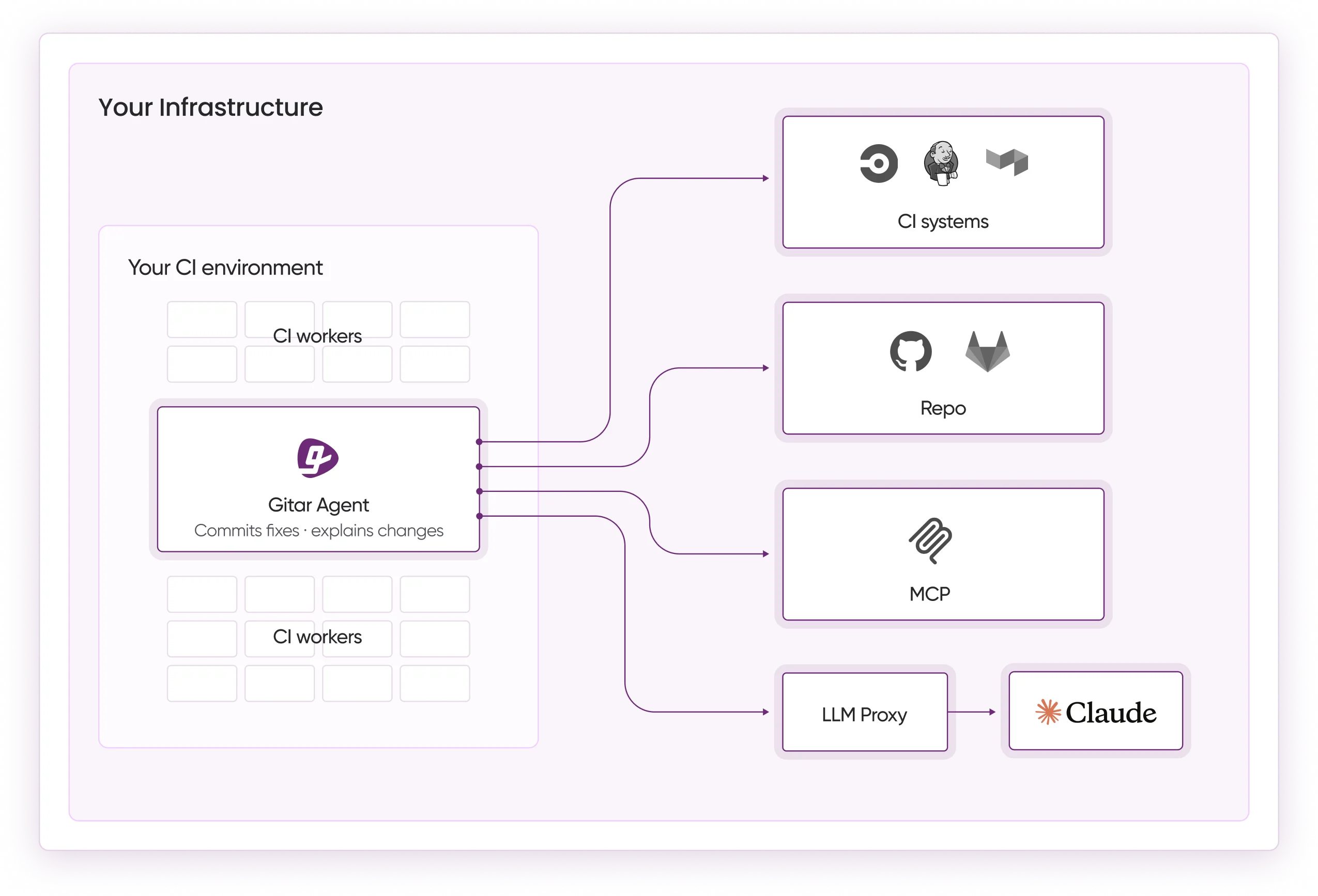
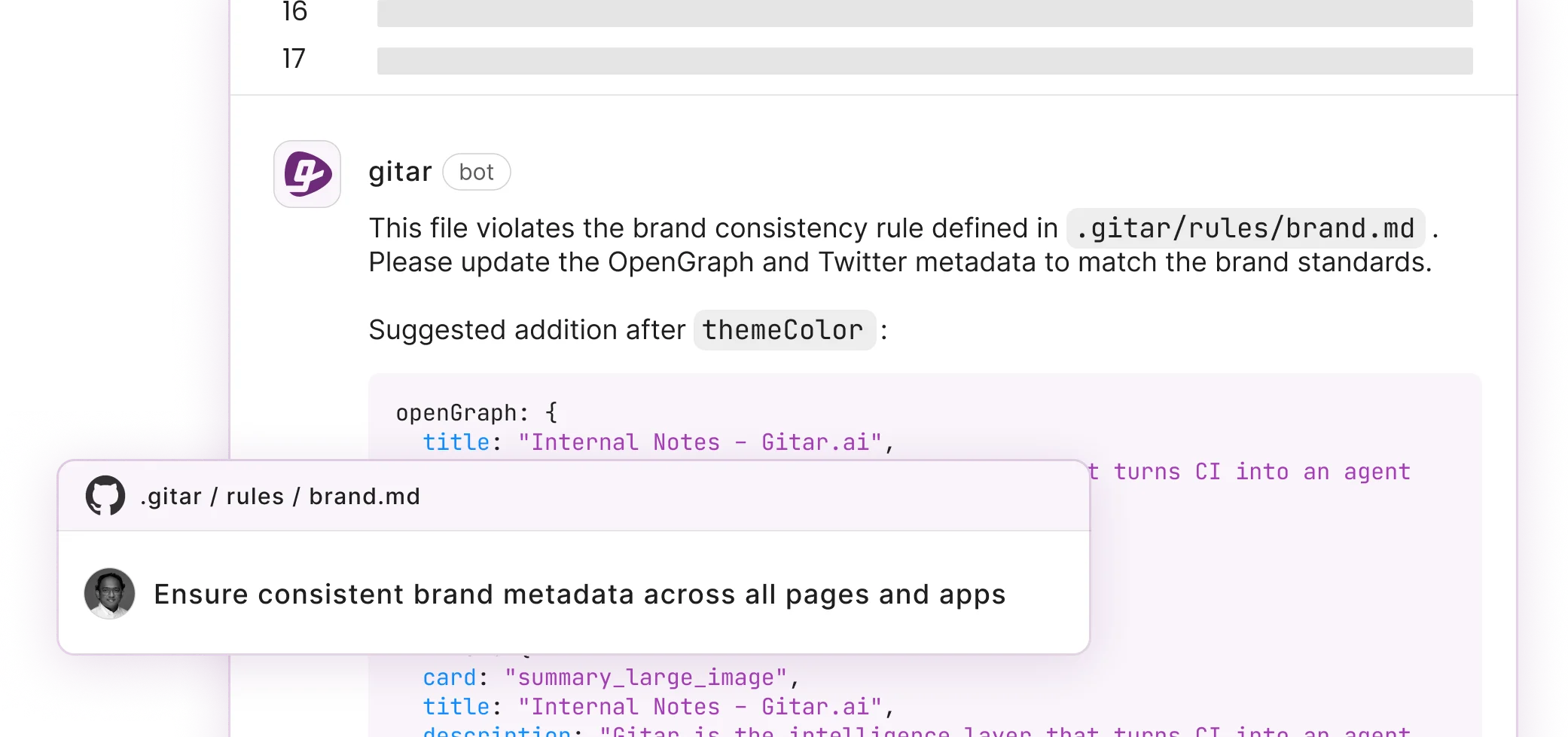
Key differentiators include full CI integration across GitHub Actions, GitLab CI, CircleCI, and Buildkite, natural language workflow rules in .gitar/rules/*.md files that avoid YAML, a hierarchical memory system that learns team patterns, and enterprise deployment options that run agents inside your CI infrastructure. Refer to docs.gitar.ai for integration guides.
Gitar provides a 14-day Team Plan trial with no seat limits, so teams can test auto-fix capabilities, custom rules, and all integrations before paying. This trial helps teams prove ROI with real CI data.
Best for: Engineering teams of 20 or more developers that want autonomous CI failure resolution and consistently green builds with measurable ROI.
Install Gitar now to automatically fix broken builds and ship higher quality software faster.
#2 Macroscope: Architectural Insight with Partial Auto-Fix
Macroscope focuses on deep codebase analysis with architectural pattern recognition and suggests fixes for bugs in PRs, including creating branches and PRs for implementation. The tool offers some automation but does not match the end-to-end CI auto-commit capabilities of fully autonomous platforms.
Pricing starts at $30 per developer each month with GitHub integration. Analysis quality is strong, yet the limited CI auto-commit support can restrict value for teams that want full autonomous code fixing.
Best for: Teams that prioritize architectural analysis and accept partial automation for fixes.
#3 CodeRabbit Alternative Auto Fix: High-Volume Reviews
CodeRabbit has processed over 13 million PRs across 2 million repositories, which proves strong scale but highlights limited auto-fix capabilities. The platform provides detailed PR summaries and inline suggestions, yet developers still implement fixes manually.
Pricing starts at $12 per user each month with GitHub and GitLab integration. CodeRabbit works well for suggestion-based workflows but lacks CI analysis and auto-commit features that autonomous code fixing requires.
Best for: Large teams that prefer suggestion-based reviews and accept manual fix implementation.
#4 Greptile: Deep Context with Higher Noise
Greptile delivers very deep context-aware analysis with a high catch rate and notable false positives in independent evaluations. At $30 per developer each month, it offers unlimited reviews but no auto-commit functionality.
The tool understands complex codebases well but produces noise through false positives, so teams must filter many suggestions manually.
Best for: Teams with capacity to manage false positives in exchange for rich context analysis.
Start your 14-day Gitar Team Plan trial for noise-free auto-fixing with validated commits.
#5 Cursor Bugbot: One-Click Fixes with Narrow Coverage
Cursor Bugbot offers one-click fixes through “Fix in Cursor” and “Fix in Web” buttons, so it provides more automation than pure suggestion tools. Fixes, however, target specific issue types and do not extend to full CI integration.
The tool reaches a 49% F-score with 60% precision and 41% recall in 2026 benchmarks, which indicates moderate effectiveness for detection and fixing.
Best for: Teams using the Cursor IDE that want integrated but limited auto-fix support.
#6 Qodo: Security-First Scanning with Targeted Remediation
Qodo specializes in security vulnerability detection with strong analysis and automated compliance checks. It flags exposed secrets, injection risks, and similar issues in PRs and CI/CD pipelines to enforce remediation. The platform focuses on security automation more than general CI failure auto-fixing.
Pricing follows an enterprise model with custom quotes. Security coverage is broad, yet the specialized focus reduces value for teams that want wide CI/CD automation.
Best for: Security-focused teams that prioritize vulnerability detection and automated compliance.
#7 Bito: AI Coding Assistant with Basic Automation
Bito acts as an AI coding assistant with basic code review and CI/CD integration but minimal auto-fix capability. The tool offers suggestions and explanations while leaving most fixing work to developers.
Pricing starts at $15 per user each month with standard integrations. Bito supports learning and explanation but does not solve the main need of automated CI failure resolution.
Best for: Individual developers who want AI help rather than team-level automation.
Install Gitar now to automatically fix broken builds and ship higher quality software faster.
Diffray Alternatives Comparison: Auto-Fix Capabilities
|
Tool |
Auto-Fix CI Failures |
Platforms |
Pricing/ROI |
|
Gitar |
Yes, analyzes, validates, commits |
GitHub, GitLab, CircleCI, Buildkite |
14-day free trial |
|
CodeRabbit |
No, suggestions only |
GitHub, GitLab |
$24-30 per user each month |
|
Greptile |
No, analysis only |
GitHub, GitLab |
$30 per user each month |
|
Cursor Bugbot |
Limited, one-click fixes |
GitHub |
Bundled with Cursor |
Best AI for Fixing Code in CI
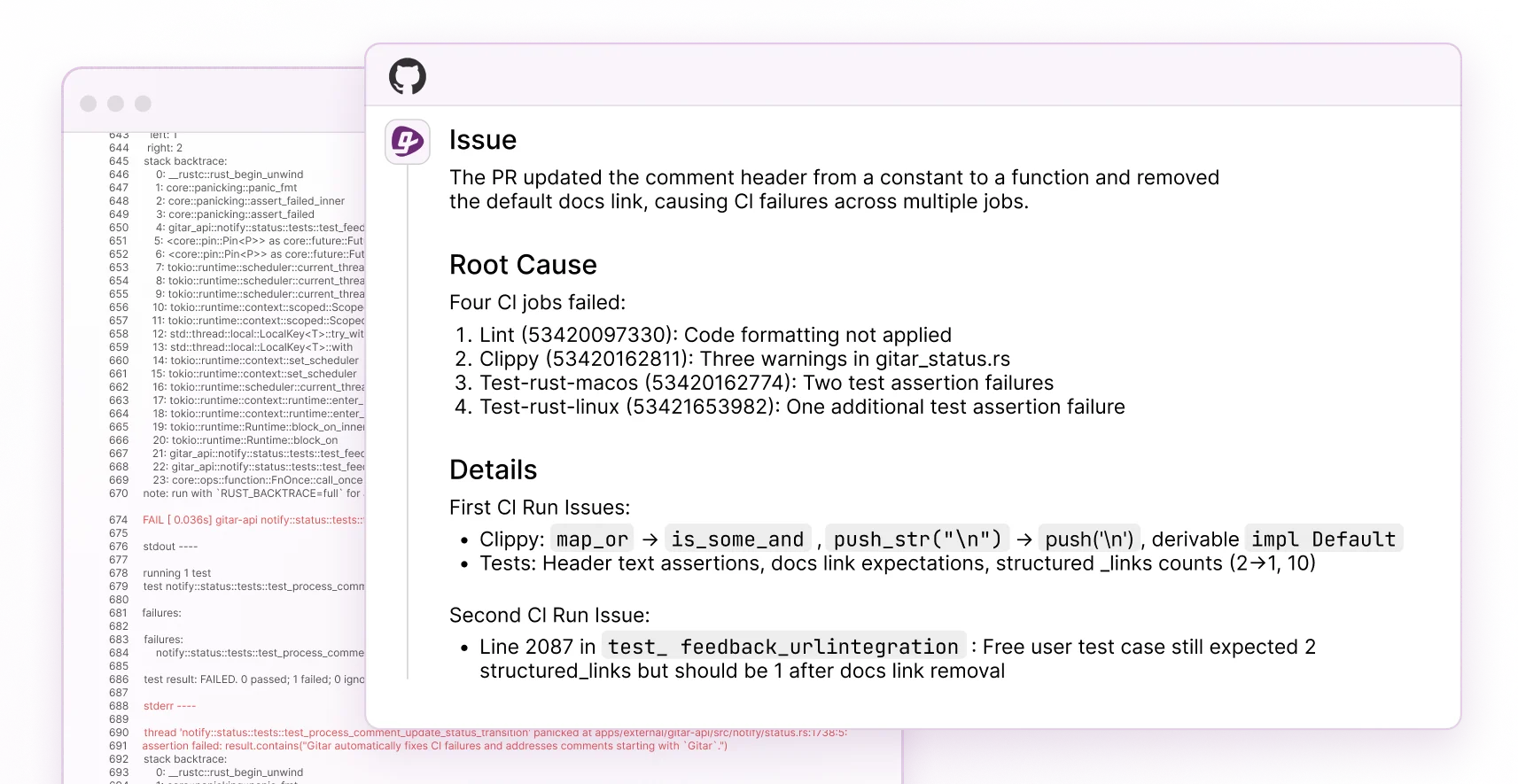
Gitar stands out as the best AI for fixing code through its healing engine that analyzes CI failures, generates validated fixes, and commits working solutions automatically. The platform guarantees green builds by validating fixes in your real CI environment before any commit.
This autonomous approach removes the 91% increase in PR review time that many teams see with AI coding tools and delivers clear ROI through less manual work and faster deployments.
Definition of AI Auto Code Review
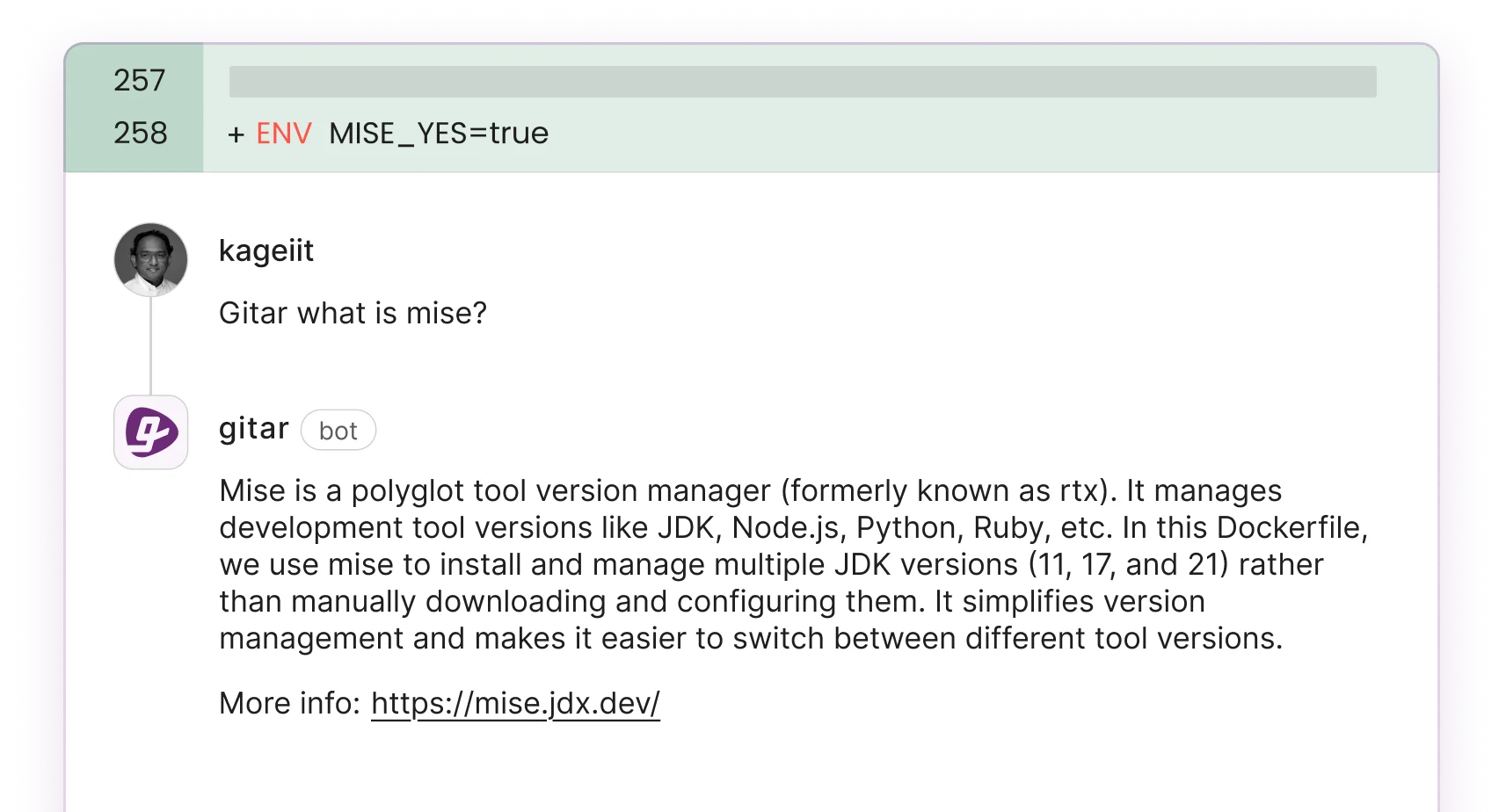
AI auto code review analyzes pull requests with machine learning to find bugs, security issues, and code quality problems, then implements fixes instead of only suggesting them. Gitar follows this model by detecting problems, generating solutions, validating them, and committing changes that pass CI checks.
Many tools stop at suggestions that require manual work, while true auto code review platforms manage the full fix lifecycle from detection through deployment.
CodeRabbit Alternative Auto Fix with Gitar
Gitar surpasses CodeRabbit as an alternative because it provides real auto-fix capabilities instead of suggestions alone. While CodeRabbit has processed over 13 million PRs, teams still need to implement its suggestions manually.
Gitar’s healing engine resolves CI failures automatically, validates fixes against your test suites, and commits working solutions, which removes the manual bottleneck that suggestion-only platforms keep in place.
Escape Manual Fixes with the #1 Diffray Alternative
The move from suggestion-based tools to autonomous AI code fixing marks the next stage of developer tooling. The 2026 shift to agentic coding shows AI taking on implementation, testing, and maintenance while engineers focus on architecture and design.
Gitar reshapes development workflows as the most advanced Diffray alternative for AI code review that fixes code automatically. The 14-day Team Plan trial demonstrates ROI through fewer CI failures, shorter PR review cycles, and less manual intervention.
Start your 14-day Gitar Team Plan trial and experience autonomous code fixing that keeps builds green while competitors stay stuck in suggestion-only workflows.
Frequently Asked Questions
How does Gitar’s auto-fix capability differ from traditional code review tools?
Gitar works as a healing engine that analyzes CI failure logs, generates context-aware fixes, validates them against your test suite, and commits working solutions automatically. Many tools such as Diffray and CodeRabbit only provide suggestions that developers must apply manually. Gitar removes that manual bottleneck by validating fixes before committing them, which delivers reliably green builds instead of guesswork.
What types of CI failures can Gitar automatically fix?
Gitar automatically resolves lint errors, test failures, build breaks, dependency conflicts, and security vulnerabilities detected during CI runs. The platform analyzes failure logs across GitHub Actions, GitLab CI, CircleCI, and Buildkite to understand root causes, then generates fixes with full codebase context. Each fix runs through your CI environment before commit, so solutions match your configuration instead of a generic template.
How does Gitar’s pricing model compare to CodeRabbit and Greptile?
Gitar offers a 14-day Team Plan trial with no seat limits and full access to auto-fix features, custom rules, and integrations without upfront cost. CodeRabbit pricing starts at $12 per user each month, and Greptile charges $30 per user each month for suggestion-only or analysis-focused tools.
Can Gitar integrate with existing development workflows and tools?
Gitar integrates with major version control platforms such as GitHub and GitLab, CI systems such as GitHub Actions, GitLab CI, CircleCI, and Buildkite, and project tools such as Jira, Linear, and Slack. The platform uses natural language workflow rules in .gitar/rules/*.md files, which removes the need for complex YAML. See the Gitar documentation for setup details. Enterprise deployments can run Gitar agents inside your CI infrastructure so code never leaves your environment.
What security measures does Gitar use for autonomous code commits?
Gitar supports configurable security levels and starts in suggestion mode so teams can review fixes before enabling full autonomy. The platform validates every fix against your test suite and CI environment before committing, which protects existing functionality. Enterprise deployments run agents inside your infrastructure with SOC 2 Type II and ISO 27001 certification, so teams keep strict control over code access and commit permissions while still gaining autonomous fixing. More information appears in the Gitar documentation.