
Written by: Ali-Reza Adl-Tabatabai, Founder and CEO, Gitar
Key Takeaways
- AI code review tools now move beyond suggestions and can auto-fix CI failures, helping offset the 91% spike in PR review times for open source projects.
- Gitar leads with its Healing Engine, which validates fixes against CI and commits working solutions, so teams consistently ship green builds.
- Free tools like GitHub Copilot, SonarCloud, and PR-Agent provide analysis and suggestions but do not automatically fix failing pipelines.
- This comparison prioritizes OSS-friendly free tiers, GitHub and GitLab integration, and tools that cut manual work for maintainers.
- Start with Gitar’s 14-day Team Plan trial for unlimited repos and full auto-fix features to ship higher quality OSS faster.
Top Free AI Code Review Tools for Open Source in 2026
|
Tool |
Free for OSS? |
Auto-Fix CI Failures? |
GitHub/GitLab Support |
Key Edge |
|
Gitar |
14-day full Team Plan trial |
Yes (Healing Engine) |
Yes |
Commits fixes that keep builds green |
|
GitHub Copilot |
OSS free tier |
No |
Yes (GitHub only) |
Inline code suggestions |
|
SonarCloud |
Free scans |
No |
Yes |
Static analysis without AI fixes |
|
PR-Agent |
Self-host |
No |
Yes |
Lightweight AI suggestions |
How We Compared Free AI Code Review Tools
We focused on tools that actually fix code instead of only suggesting improvements. We evaluated OSS-specific free tiers, auto-fix capabilities that commit working solutions, and how easily each tool fits into GitHub and GitLab workflows. We also considered setup complexity for solo maintainers who lack dedicated DevOps support.
Vendor documentation such as Gitar’s technical docs, community feedback from GitHub stars and Reddit threads, and deep-dive reviews like AugmentCode’s 10 open source tools review and Cubic’s 2026 maintainer guide shaped this analysis. The main differentiator is simple: tools either validate fixes against CI and commit working solutions or leave maintainers with more manual work.
Best Free AI Code Review Tools for Open Source in 2026
1. Gitar – Auto-Fixes CI Failures and Reviewer Feedback
Gitar focuses on automatically resolving CI failures and applying reviewer feedback from a single comment thread. The platform includes unlimited public and private repositories during its 14-day Team Plan trial and supports GitHub, GitLab, CircleCI, Buildkite, and other CI providers.
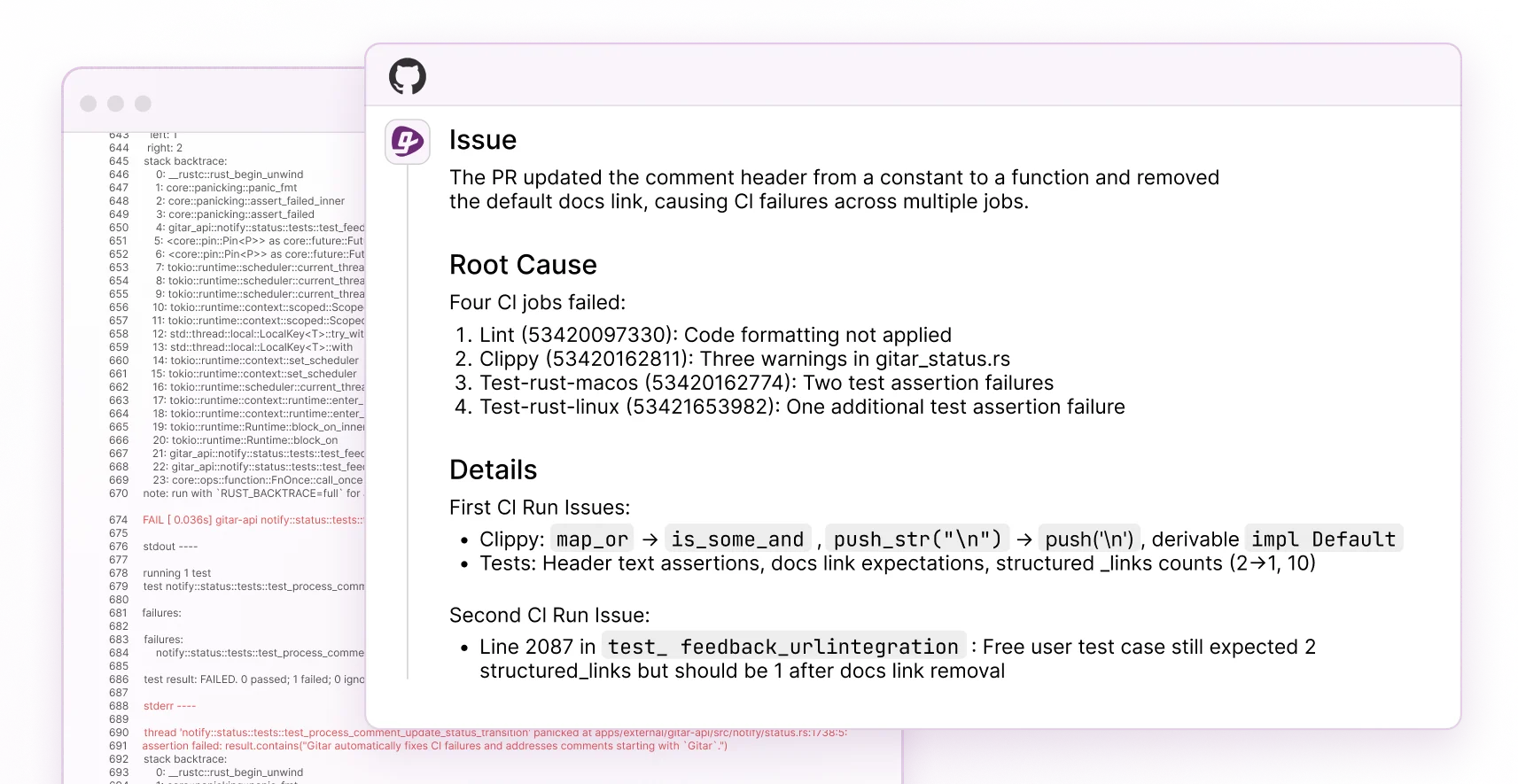
Unlike suggestion-only tools, Gitar’s Healing Engine reads failure logs, generates fixes, validates them in your CI, and then commits working changes. Setup takes about 30 seconds through the GitHub App, and every fix runs against your real pipeline before it lands in the repo. See the Gitar documentation for step-by-step setup. Start your 14-day Team Plan trial at gitar.ai to see auto-fixing that keeps builds green.
2. GitHub Copilot – Free OSS Tier with AI Suggestions
GitHub Copilot offers a free tier for open source projects and provides AI-powered code suggestions and basic PR summaries. It runs directly inside GitHub’s interface and surfaces contextual completions and review comments as you work.
Copilot focuses on suggestions, so maintainers still apply changes manually. Setup involves enabling the GitHub App and configuring YAML workflows if you want automated review runs on pull requests.
3. SonarCloud – Free Static Analysis for Public Repos
SonarCloud delivers free static analysis for public repositories and supports more than 40 programming languages with native GitHub integration. It highlights code smells, security vulnerabilities, and maintainability issues using rule-based checks.
SonarCloud does not generate AI fixes, but it enforces quality gates and allows custom rules, which helps keep large open source projects consistent and secure.
4. PR-Agent – Self-Hosted AI Review Assistant
PR-Agent offers self-hosted AI code review with GitHub and GitLab integration and supports local models through Ollama for teams that need data sovereignty. The tool provides AI-powered analysis with contextual understanding and highlights potential issues in pull requests.
PR-Agent focuses on suggestions instead of automated fixes. Setup requires your own infrastructure and configuration of webhooks and workflows.
5. Cubic – Unlimited Free Reviews for Public Repos
Cubic gives maintainers unlimited free reviews for public repositories with one-click GitHub integration and context-aware analysis. The platform learns from reviewer feedback and runs continuous automated scans across major programming languages.
Cubic combines strong analysis with one-click auto-fixing features, including actionable diff suggestions and inline fixes that maintainers can apply quickly.
6. Aider – AI Code Editor with Auto-Commits
Aider stands out as a free open-source tool with deep git integration where every AI edit gets auto-committed. It supports more than 100 languages and builds a map of your codebase for better context.
Aider behaves more like an AI pair programmer than a pure reviewer. It can auto-fix code through AI-generated edits that appear as standard git commits, which helps maintainers track and revert changes.
7. Sourcery – Python-Focused Free OSS Reviews
Sourcery targets open-source Python projects and offers free unlimited reviews for that ecosystem. It suggests idiomatic improvements and applies deep Python knowledge to highlight cleaner patterns.
The tool integrates with GitHub workflows and focuses on code quality suggestions. It does not automatically apply fixes, so maintainers still control each change.
8. Tabby – Self-Hosted AI with Local Models
Tabby provides self-hosted AI code review with GitHub and GitLab integration and supports local models for full data privacy. The platform enables data sovereignty through on-prem or private cloud deployment.
Tabby offers AI-powered analysis and suggestions, which suits teams that want AI help but must keep code inside their own infrastructure.
9. Continue.dev – Free Completion and Chat for Developers
Continue.dev delivers free code completion, chat assistance, and natural language edits with diff visualization. The tool supports natural language edits that developers can review and apply.
Continue.dev focuses on day-to-day development help rather than full pipeline automation, so it works best as an assistant alongside existing review processes.
10. Villesau/AI-CodeReviewer – Lightweight GitHub Action
This lightweight GitHub-integrated tool offers OpenAI-powered analysis with contextual understanding and logic error detection. It runs as a GitHub Action and posts comments directly on pull requests.
The project provides basic AI review capabilities but does not include advanced auto-fixing or CI-aware validation.
Install Gitar now to move from suggestions to automatic fixes with a 14-day Team Plan trial.
Why Gitar Leads AI Code Review for Open Source
Gitar’s Healing Engine shifts code review from suggestions to autonomous fixing. Competing tools usually leave comments that require manual edits, while Gitar reads CI failures, generates fixes, validates them, and commits working code.
For technical details, review the Gitar documentation.
|
Capability |
Gitar |
Competitors |
|
Auto-fixes CI failures |
Yes |
No |
|
Validates fixes against CI |
Yes |
No |
|
Keeps builds green |
Yes |
No |
|
Single updating comment |
Yes |
No |
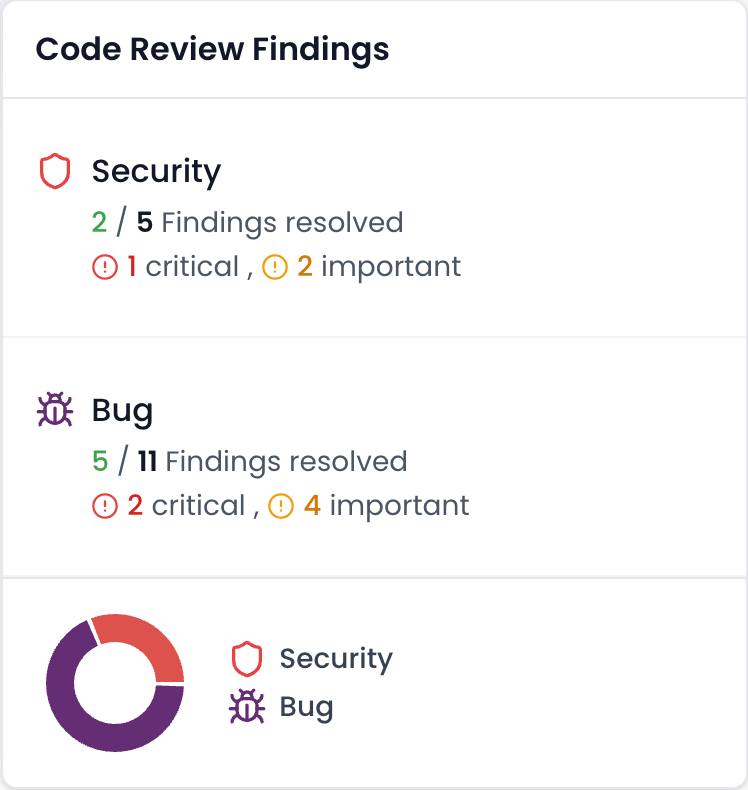
For GitHub Actions, Gitar needs only minimal YAML configuration and handles webhook setup automatically. The platform catches bugs that other AI tools miss, including security issues in AI-generated code, while reducing review time by up to 75%.
Free vs Paid AI Code Review for OSS Maintainers
Solo developers benefit from tools with fast setup and immediate value, so Gitar’s trial works well for testing auto-fix workflows without long-term contracts. Open source maintainers who manage heavy PR traffic need CI integration and automated fixes to keep up with contributor volume.
Traditional linters catch syntax and style issues but often miss deeper logic problems. AI tools such as Gitar’s trial provide broader analysis and can resolve many issues automatically. Total cost of ownership favors platforms that remove manual fix implementation and can save large projects hundreds of thousands of dollars in developer time each year.
Start Using Free AI Code Review on Your Repo
Free AI code review for open source now extends beyond suggestion engines to platforms that actually fix code. Gitar leads this shift with a Healing Engine that keeps builds green by resolving CI failures and applying reviewer feedback automatically.
Claim your 14-day Gitar Team Plan trial at gitar.ai to fix OSS code automatically and feel the difference between simple suggestions and end-to-end solutions.
FAQs: Free AI Code Review for Open Source
What is the best free AI code review option for open source in 2026?
Gitar offers a comprehensive 14-day Team Plan trial with unlimited public and private repositories, auto-fix capabilities, and CI integration. Gitar’s Healing Engine fixes code and keeps builds green, which suits maintainers who want automation instead of more manual review work.
How can I integrate free AI code review with GitHub?
Most tools integrate through a GitHub App. Gitar provides a 30-second setup through its GitHub App and configures webhooks automatically. PR-Agent usually needs manual YAML workflow setup, and SonarCloud requires repository-level configuration for public repo analysis.
Are AI auto-fixes safe for open source projects?
Auto-fix safety depends on how each tool validates changes. Gitar validates every fix against your CI environment before committing, so changes match your tests and constraints. Suggestion-only tools avoid direct commits and rely on maintainers to apply edits, which reduces automation but also limits risk.
Start with approval-required modes in any auto-fix tool to build confidence before enabling full automation.
Which free AI code review tools does Reddit often recommend?
Reddit users frequently mention PR-Agent for self-hosting, Aider for its git integration and auto-commits, and GitHub Copilot’s free tier for everyday suggestions. Many maintainers now look for tools that fix code directly, which increases interest in platforms like Gitar that provide deeper automation.
What changed in free AI code review tools for 2026?
In 2026, auto-fixing matured significantly, and tools like Gitar introduced Healing Engines that validate fixes against CI environments. This shift from suggestion-only tools to autonomous fixing helps teams handle the surge in AI-generated code.
Integration also improved, with broader support for CI platforms beyond GitHub Actions, including GitLab CI and CircleCI.