
Written by: Ali-Reza Adl-Tabatabai, Founder and CEO, Gitar
Key Takeaways
- AI code generation speeds up individual coding but increases PR review times by 91%, creating a productivity paradox for teams.
- AI-generated PRs contain more issues, larger sizes, and more incidents, which forces human reviewers into longer review cycles.
- Gitar auto-fixes CI failures, implements review feedback, and guarantees green builds, while suggestion-only tools stop at comments.
- Seven strategies, including small stacked PRs, AI summaries, natural language rules, and analytics, can cut review time.
- Teams using Gitar report strong ROI with high satisfaction; install Gitar’s 14-day Team Plan trial to remove PR bottlenecks and ship faster.
The PR Review Crisis Created by AI Code Generation
AI-generated code has created a measurable PR review crisis. AI adoption increases PR size by 18% and incidents per PR by 24%, which shifts a heavy burden to human reviewers.
The productivity impact hits engineering budgets directly. On a 20-developer team, engineers lose about 1 hour every day to CI failures, review cycles, and context switching. That loss equals roughly $1 million per year in wasted productivity. Senior engineers spend 4.3 minutes reviewing AI suggestions versus 1.2 minutes for human code, while teams see PR volume rise by 98%.
Suggestion-only tools often make this worse. They generate notification noise without fixing root problems. Developers still read comments, apply fixes by hand, push new commits, and wait for CI, which creates multiple review cycles for issues that automation could resolve.
Gitar’s Auto-Fixing Engine for Reliable Green Builds
Gitar replaces suggestion-only workflows with autonomous healing. When CI fails, Gitar analyzes failure logs, generates contextual fixes, validates solutions against your full environment, and commits working code automatically. This healing engine focuses on delivering green builds instead of hoping manual fixes succeed.
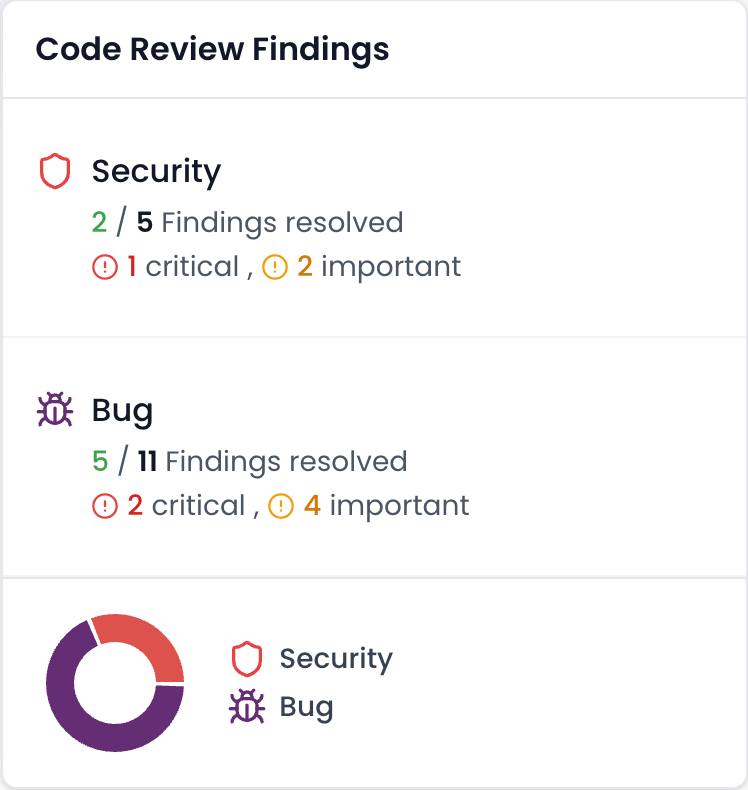
Gitar consolidates all findings into a single updating dashboard comment. This approach removes notification spam and keeps analysis in one place. Teams report that Gitar summaries are “more concise than Greptile/Bugbot” because they emphasize actionable insights instead of long commentary.
|
Capability |
CodeRabbit/Greptile |
Gitar |
|
Auto-apply fixes |
No |
Yes |
|
CI auto-fix |
No |
Yes |
|
Green builds guarantee |
No |
Yes |
|
Multi-CI support |
Limited |
Yes |
Gitar also supports natural language workflow automation, CI pattern analytics, and native integrations with Jira, Slack, and Linear. The 14-day Team Plan trial includes full auto-fix features, custom rules, and unlimited repositories, so teams can prove ROI before paying.
See the impact of moving from suggestions to solutions. Install Gitar now, automatically fix broken builds, and ship higher quality software faster.
7 Practical Steps to Cut Pull Request Review Time with AI
1. Use Small, Stacked Pull Requests
Keep each pull request under 400 lines of code to support scalable reviews. Large PRs overload reviewers and encourage superficial “lazy LGTM” approvals. Break complex features into stacked PRs so each step builds on the last. This approach reduces merge conflicts and enables parallel review workflows.
2. Run Automated First-Pass Reviews with AI Summaries
AI tools can handle the first pass on every PR. AI-generated PR descriptions from diffs and commit messages improve consistency, clarity, and speed. These summaries surface key changes and likely impacts. Reviewers then focus on architecture and tradeoffs instead of decoding basic functionality.
3. Install Gitar for Automatic CI Fixes
Install the Gitar GitHub App and start the 14-day Team Plan trial to begin auto-fixing immediately. Gitar heals CI failures as they appear. When lint errors, test failures, or build breaks occur, Gitar reads the logs, generates fixes with full codebase context, validates them, and commits working code. This workflow removes the manual loop of reading suggestions, applying changes, and hoping CI passes.
4. Define Natural Language Rules for Reviews
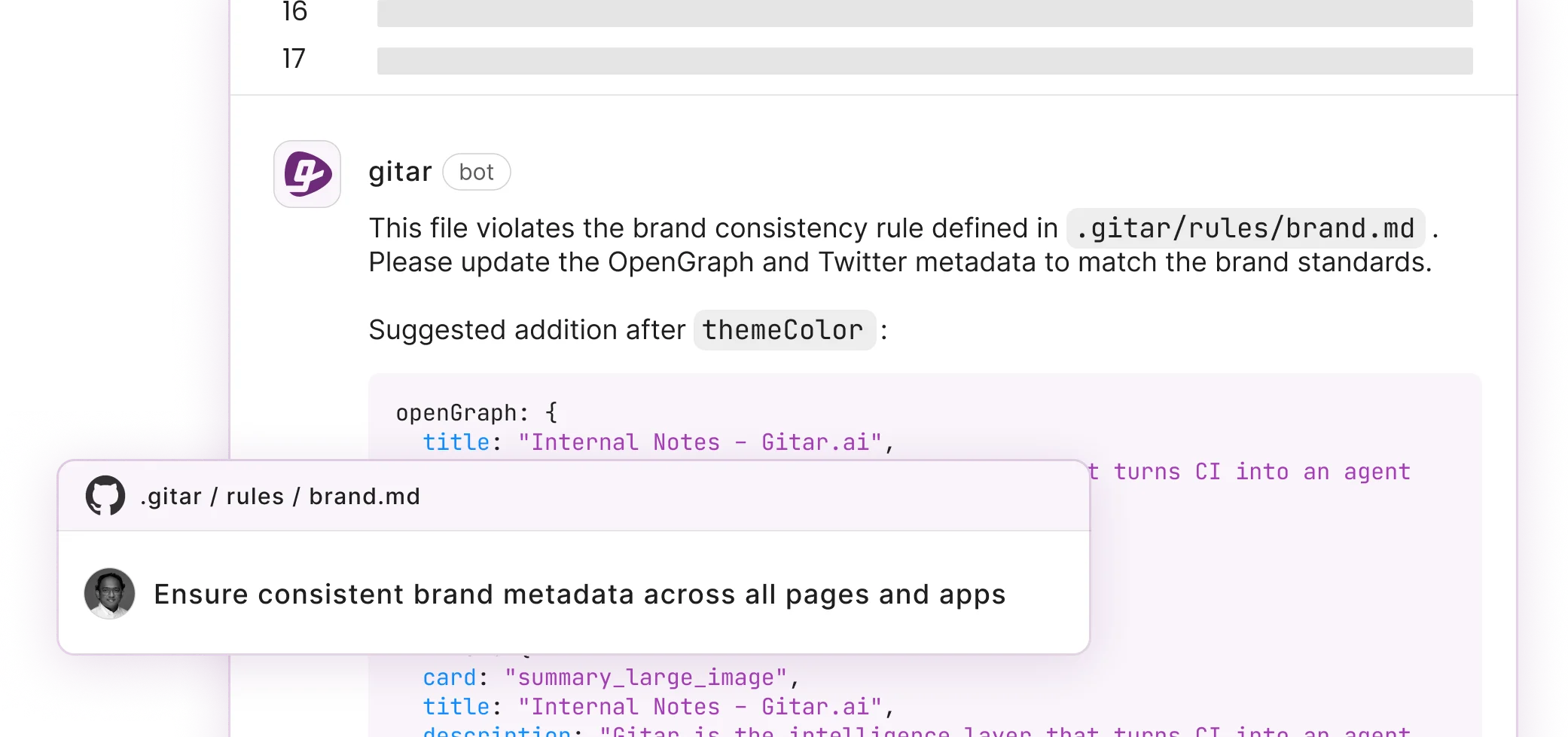
Gitar’s natural language rules system lets you encode workflow policies in plain text. Create repository rules in .gitar/rules/*.md files without complex YAML. For example:
—
title: “Security Review”
when: “PRs modifying authentication or encryption code”
actions: “Assign security team and add label”
—
These rules automatically assign reviewers, apply labels, and send notifications based on code changes. Critical modifications receive consistent oversight without manual triage.
5. Connect Jira and Slack for Context-Rich Reviews
Integrating Gitar with Jira and Slack keeps context attached to every PR. Jira links provide product and requirement background, which clarifies the purpose behind each change. Slack notifications keep teams updated in real time without overflowing inboxes. This shared context reduces back-and-forth questions during review.
6. Use Analytics to Spot CI and Review Patterns
Gitar’s analytics dashboard highlights recurring CI failures and infrastructure issues. Teams report major time savings from “unrelated PR failure detection,” which separates flaky infrastructure from real code bugs. This insight prevents developers from chasing issues that sit outside their control.
7. Deploy Gitar at Enterprise Scale
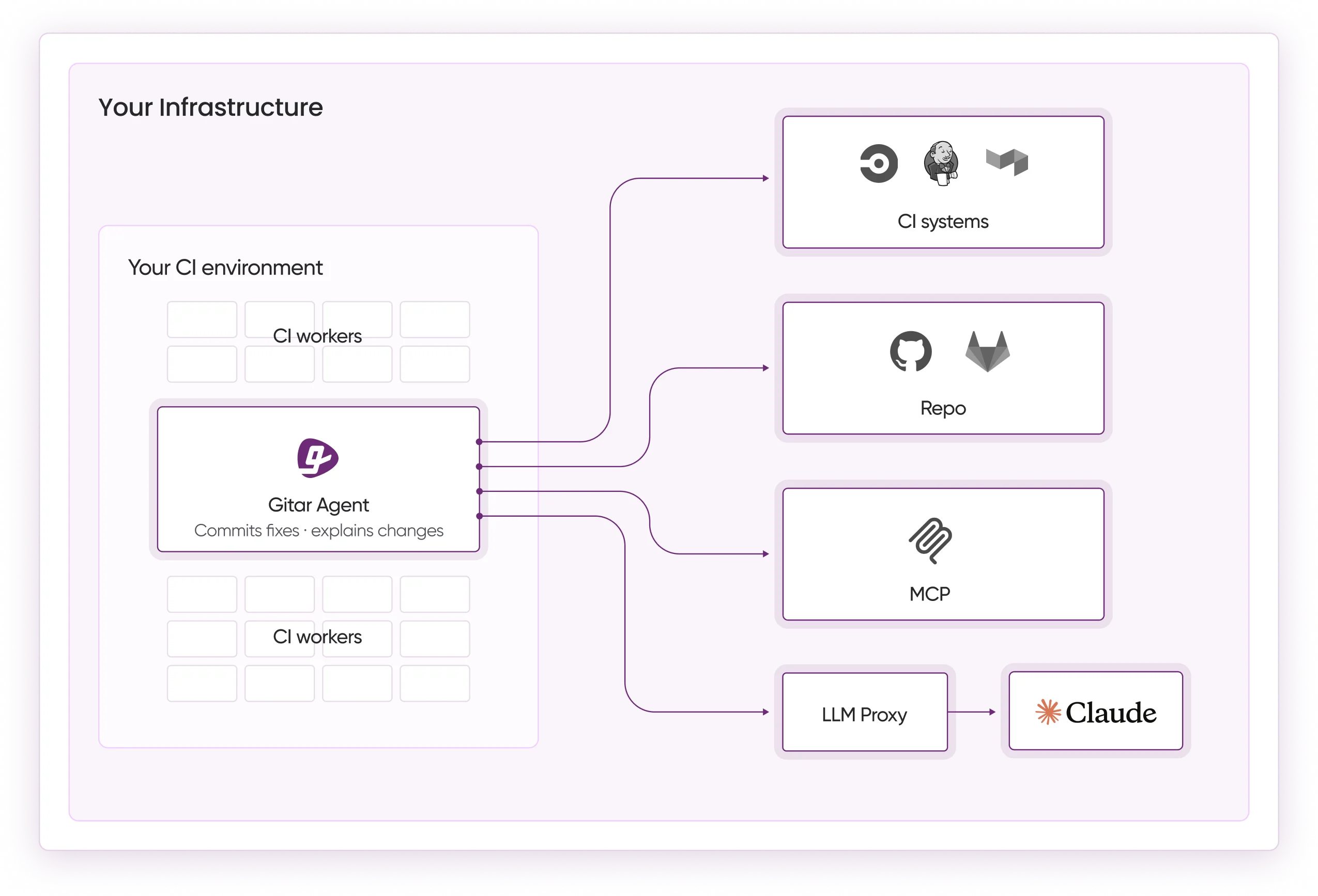
Gitar’s enterprise agent runs inside your CI pipeline for maximum context and security. The agent accesses configurations, secrets, and caches, so fixes match your real environment. Teams can start in suggestion-only mode and gradually increase automation as confidence grows.
|
Metric |
Before Gitar |
After Gitar |
|
Time on CI/review/dev |
1hr/day |
15min/day |
|
Annual cost (20-dev) |
$1M |
$250K |
|
Context switching |
Multiple/day |
Near-zero |
Real-World ROI and Team Feedback in 2026
Engineering teams report strong gains after adopting AI review automation. The Tigris team shared that Gitar PR summaries are “more concise than Greptile/Bugbot.” Collate’s engineering lead praised the “unrelated PR failure detection” for saving “significant time” by separating infrastructure flakiness from real defects.
Install Gitar now, automatically fix broken builds, and ship higher quality software faster.
FAQ: AI and Gitar for Pull Request Reviews
How to use AI to review a pull request
Modern AI PR review combines suggestion-based tools with auto-fixing platforms. Suggestion-based tools such as CodeRabbit analyze code and leave comments that still require manual changes. Auto-fixing platforms such as Gitar go further by resolving CI failures, applying review feedback, and validating fixes in your environment. The most effective setup pairs AI-generated summaries for human reviewers with automated handling of routine issues like lint errors, test failures, and formatting. This hybrid model reduces cognitive load while keeping humans in charge of architecture.
Choosing the right AI for pull request reviews
The right AI PR review tool depends on whether your team wants advice or working fixes. Teams that want automated resolution use Gitar for CI auto-fixing, green build guarantees, and natural language workflow automation. Suggestion-only tools such as CodeRabbit or Greptile suit teams that prefer manual implementation of recommendations. Given the 91% increase in PR review time with AI-generated code, auto-fixing platforms deliver stronger ROI by removing the manual suggestion and implementation loop.
How Gitar differs from CodeRabbit
CodeRabbit focuses on suggestions that still require manual work, while Gitar fixes issues and validates solutions automatically. With CodeRabbit, teams pay $15-30 per developer for comments, then still read suggestions, implement changes, push commits, and wait for CI. Gitar’s healing engine analyzes CI failures, generates contextual fixes, validates them in your environment, and commits working code. The 14-day Team Plan trial shows the difference between paying for suggestions and paying for solutions that guarantee green builds.
How Gitar handles complex or unique CI environments
Gitar supports complex CI environments by emulating your full setup, including SDK versions, multi-dependency builds, and third-party security scans. The enterprise tier runs the agent inside your CI with access to secrets, caches, and configurations that external tools cannot reach. This design ensures fixes succeed in production, not only in isolation. Gitar supports GitHub Actions, GitLab CI, CircleCI, Buildkite, and other major CI systems, so it adapts to your infrastructure instead of forcing workflow changes.
Conclusion: Restore Engineering Velocity with Gitar
AI coding created a PR review bottleneck, but teams do not need to accept slower velocity. By applying these seven strategies, from small PRs to auto-fixing platforms, engineering organizations routinely cut review time while improving code quality. The shift comes from moving beyond suggestion-only tools to platforms that resolve issues automatically.
Turn your PR workflow from bottleneck into a competitive advantage. Start your 14-day Gitar Team Plan trial now and experience the difference between AI suggestions and AI solutions.