
Written by: Ali-Reza Adl-Tabatabai, Founder and CEO, Gitar
Key Takeaways
- AI coding tools like Copilot now generate code 3-5x faster, while PR review bottlenecks have grown 91% because review capacity has not scaled.
- Gitar stands out as the leading Qodo alternative with a healing engine that fixes CI failures, validates solutions, and commits working code.
- Competitors like CodeRabbit ($24/dev/mo) and Greptile ($30/dev/mo) only suggest fixes that developers must apply manually, unlike Gitar’s full autofix automation.
- Free and open-source tools like PR-Agent lack enterprise features and CI healing, while Gitar offers a risk-free 14-day Team Plan trial with unlimited users.
- Teams increase PR velocity and software quality with Gitar. Install Gitar’s free trial today to automate fixes and ship faster.
How We Evaluated the Strongest Qodo Alternatives
Our evaluation focused on autofix capabilities, CI integration depth, pricing clarity, platform coverage, and noise reduction through consolidated notifications. We reviewed developer forum discussions and 2026 benchmarks, including GitClear’s code duplication analysis. Tools that only suggest fixes without validation ranked lower than healing engines that consistently deliver working solutions.
Snapshot: 12 Leading Qodo PR Agent Alternatives
Top AI PR review tools: Gitar leads with full autofix capabilities and a 14-day free Team trial. CodeRabbit offers context-aware suggestions at $24 per developer each month. Greptile delivers deep repository analysis at $30 per developer each month.
Free and open-source options: PR-Agent offers open-source flexibility. Bito and Snarktank give budget-conscious teams basic review features with lighter automation.
CI-focused healers and workflow tools: Collate, Bugbot, and similar tools address specific workflow automation needs but do not match Gitar’s end-to-end healing approach.
Gitar and Other Top AI PR Review Tools
#1 Gitar: Autofix Healing Engine With 14-Day Team Trial
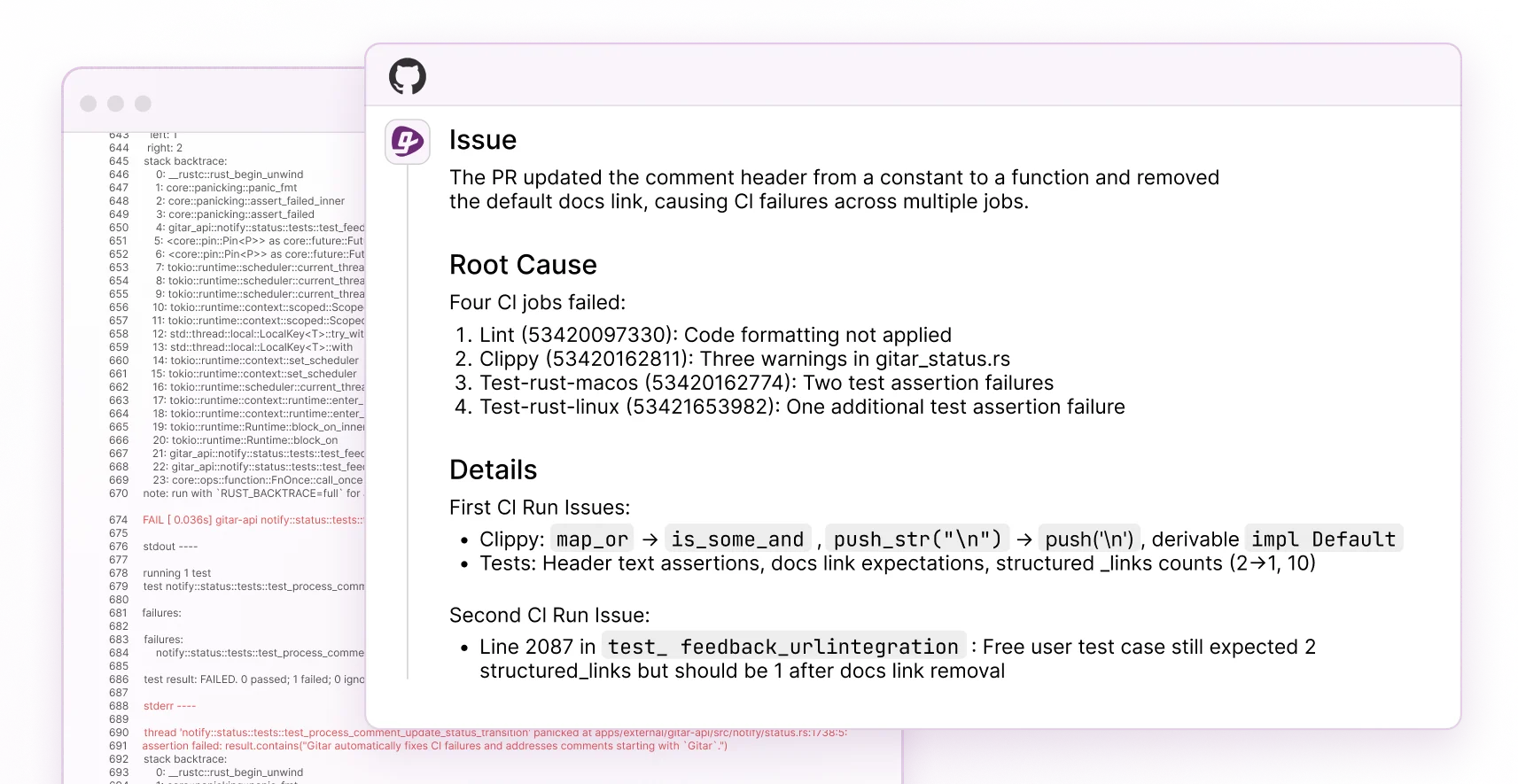
Gitar turns the post-Copilot PR surge into a competitive advantage through its healing engine architecture. When CI fails with lint errors, test failures, or build breaks, Gitar analyzes failure logs, generates contextual fixes, validates solutions against your full environment, and commits working code, then summarizes activity in a single clean dashboard comment.
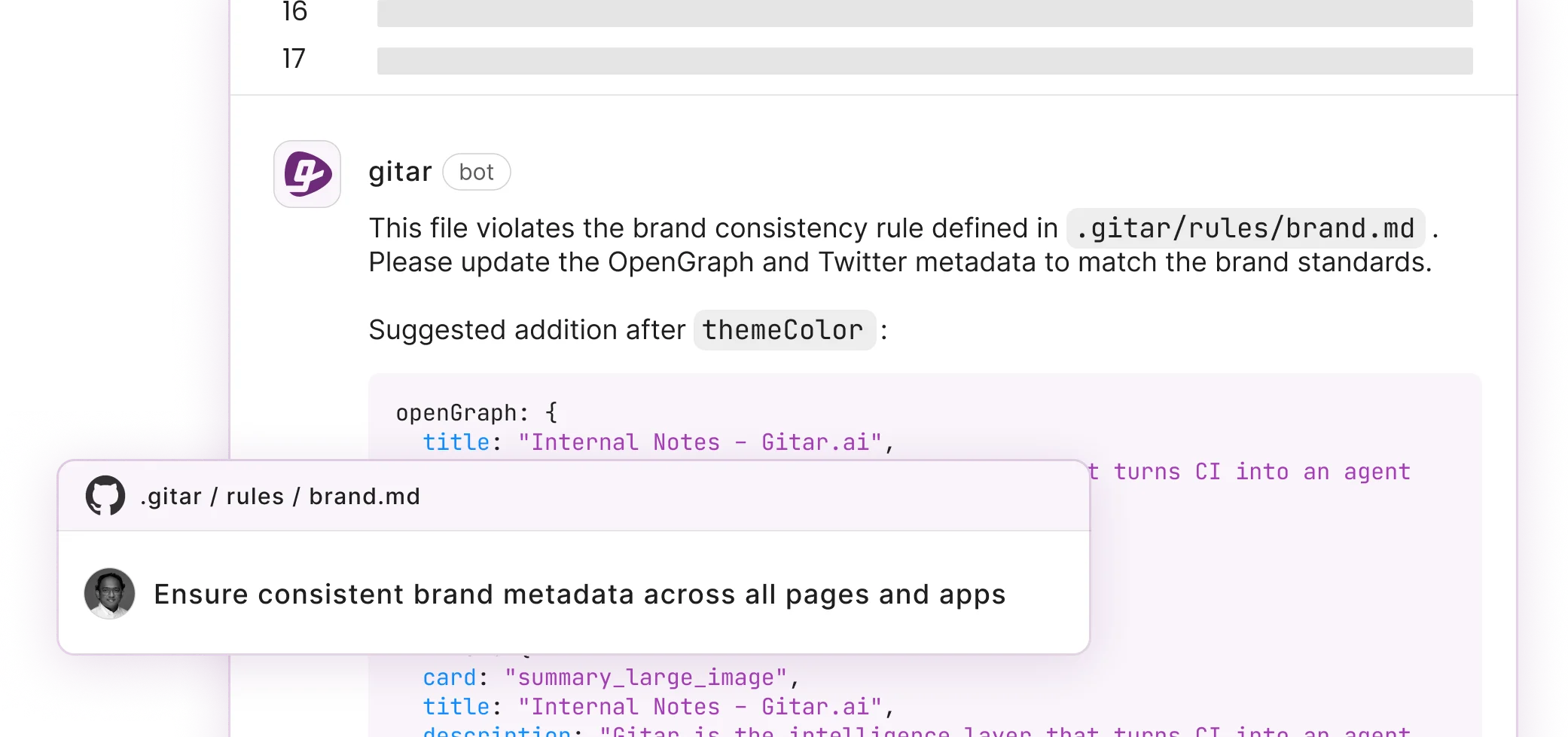
The platform extends beyond basic review through hierarchical memory that tracks context per line, per PR, and per repository. Natural language rules in .gitar/rules/*.md files automate workflows without YAML complexity. Integration layers connect Jira tickets and Slack notifications so teams keep context in one place. See the Gitar documentation for detailed rules and integration examples.
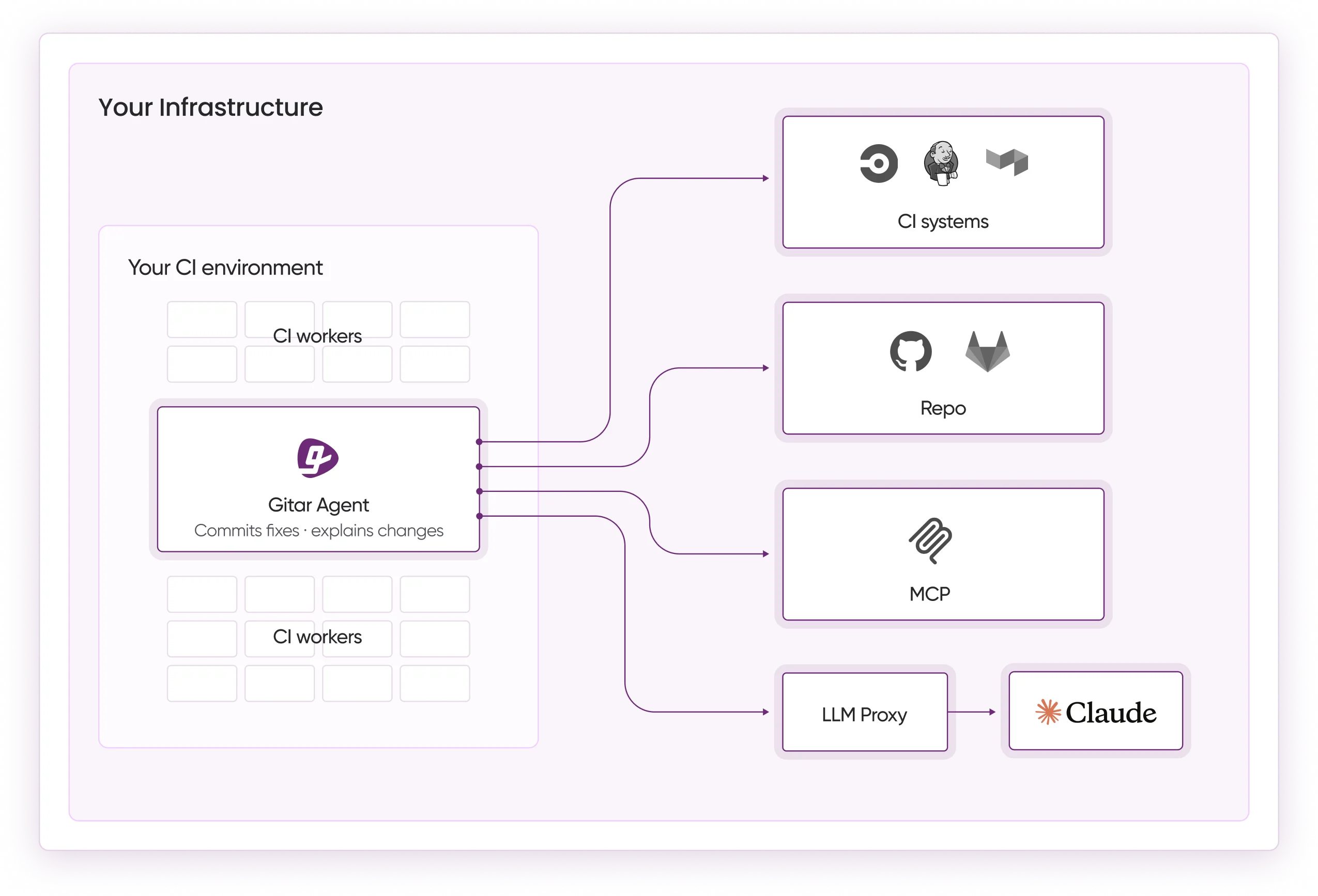
Key differentiators include cross-platform support for GitHub, GitLab, CircleCI, and Buildkite, plus zero-setup installation through a GitHub App. Teams can configure automation from suggestion-only to full auto-commit. The documentation also explains enterprise deployment options where agents run inside your CI pipeline for stronger security. Refer to https://docs.gitar.ai/ for installation and deployment guides.
Pricing centers on a risk-free 14-day Team Plan trial with unlimited users and full feature access. This model reflects Gitar’s vision that code review is the baseline, while real value comes from automated workflows, deep analytics, and CI-as-agent-platform capabilities.
#2 CodeRabbit: Context-Aware Suggestions Without Autofix
CodeRabbit provides context-aware PR analysis across more than 40 programming languages with $24 per developer monthly pricing for Pro plans. The platform includes 14-day trials and free tiers for public repositories and supports GitHub, GitLab, Azure DevOps, and Bitbucket.
Its strengths include deep repository context, one-click fix suggestions, and 46% accuracy in detecting real-world runtime bugs through AST evaluation and SAST analysis. CodeRabbit still operates as a suggestion engine that requires manual implementation, increases notification noise through scattered inline comments, and does not resolve CI failures automatically.
#3 Greptile: Deep Context at a Premium Price
Greptile excels in deep repository context and cross-file reasoning with $30 per developer monthly Cloud pricing and 14-day trials. The platform builds detailed codebase graphs that improve context awareness during PR reviews.
Greptile offers stronger contextual understanding than many basic AI reviewers and integrates with GitHub and GitLab. It still lacks auto-apply functionality, so teams pay premium prices for advanced analysis that developers must translate into manual fixes.
Free and Open-Source Qodo Alternatives
#4 PR-Agent: Open-Source PR Summaries and Reviews
PR-Agent gives teams open-source flexibility when they prefer self-hosted solutions. Built on the same foundation as Qodo Merge, it generates PR summaries, reviews code changes, and responds to commands like /review, /describe, and /improve through PR comments.
The tool supports GitHub Apps, Actions, and webhook integrations across multiple git providers. Open-source deployment still requires infrastructure management and does not include the enterprise-grade features found in commercial platforms.
#5 Bito: Budget-Friendly AI Review
Bito offers AI-powered code review with pricing that suits smaller teams. The platform delivers basic PR analysis and suggestion generation for teams that want to explore AI code review without large upfront costs.
Its limitations include reduced context awareness compared to premium tools, although it supports CI integrations such as GitHub Actions and GitLab CI.
#6 Snarktank: Lightweight GitHub Actions Workflow
Snarktank focuses on lightweight code review automation with simple deployment as a GitHub Actions workflow. The tool provides essential PR analysis with configurable triggers and review behaviors.
Snarktank works best for teams that want streamlined review automation, especially those already using Anthropic’s ecosystem.
CI-Focused Healers and Other Notable Qodo Alternatives
#7 Collate: Detects Unrelated PR Failures
Collate specializes in identifying unrelated PR failures so teams can separate infrastructure flakiness from real code bugs. This capability saves debugging time for platform teams that manage complex CI environments.
#8 Bugbot: Parallel Subagents for PR Review
Bugbot integrates with Cursor’s 2026 release to provide automated PR-level code review through parallel subagents. Salesforce reported 30% or greater velocity gains after rolling out similar automation across 20,000 developers.
#9 Cubic: Targeted CI Workflow Automation
Cubic focuses on specialized workflow automation for development teams that want targeted CI improvements without adopting a full platform.
#10 Korbit: Maintainability and Technical Debt Insights
Korbit delivers code quality analysis with an emphasis on maintainability metrics and technical debt identification.
#11 Aikido: Security-First Code Review
Aikido centers on security-focused code review with vulnerability detection and compliance reporting features.
#12 Sonar: Static Analysis Without Autofix
SonarQube integration provides static analysis and code quality gates but does not offer autofix for identified issues.
Side-by-Side Comparison of Qodo Alternatives
|
Tool |
Auto-Fixes CI? |
Price |
Platforms |
Notification Style |
|
Gitar |
Yes |
Free 14-day trial |
GitHub/GitLab/CircleCI/Buildkite |
Single clean comment |
|
CodeRabbit |
No |
$24/dev/month |
GitHub/GitLab/Azure/Bitbucket |
Multiple inline comments |
|
Greptile |
No |
$30/dev/month |
GitHub/GitLab |
Contextual suggestions |
|
Qodo |
No |
$30/dev/month |
GitHub/GitLab/Bitbucket |
Command-based responses |
|
PR-Agent |
No |
Free (self-hosted) |
Multiple git providers |
PR comments |
How to Choose a Qodo PR Agent Alternative
Developers look for low-noise tools that cut context switching and reduce notification fatigue. Engineering leaders care about ROI metrics and measurable velocity improvements that justify new tools. Platform engineers value YAML-free configuration and lower CI maintenance overhead.
The core tradeoff sits between suggestion engines that need manual implementation and healing engines that deliver working fixes. Per-seat pricing can exceed $500 each month for mid-sized teams, so a trial-based evaluation becomes essential. Gitar’s 30-second installation keeps migration friction low compared to complex enterprise deployments.
FAQ: Qodo PR Agent Alternatives
Best free Qodo alternative
Gitar delivers the most complete free experience through its 14-day Team Plan trial with unlimited users and full autofix capabilities. Unlike limited free tiers from competitors, this trial unlocks the entire platform so teams can measure ROI before committing to paid plans.
Comparison of Qodo, CodeRabbit, and Gitar
Qodo and CodeRabbit charge $30 and $24 per developer monthly for suggestion-only tools that still require manual fixes. Gitar’s healing engine resolves CI failures and implements review feedback automatically, with pricing tied to proven value through comprehensive trials instead of strict per-seat charges.
Availability of open-source PR agents
PR-Agent offers open-source flexibility with self-hosting options, although it demands infrastructure management and lacks many enterprise capabilities. Gitar combines the accessibility of open-source tools with enterprise-grade automation, support, and CI healing.
Tools that actually fix CI failures
Gitar stands out by providing full CI failure resolution through automated analysis, fix generation, validation, and commit workflows. Competing tools focus on suggestions that developers must apply manually and do not guarantee working solutions.
Pricing trends for AI code review in 2026
Current pricing trends show rising per-seat costs from $15 to $30 each month, with enterprise tiers reaching $40 or more per developer. Trial-based models like Gitar’s approach give teams clearer ROI before they commit to long-term subscriptions.
Conclusion: Choose Autofix Platforms Like Gitar for 2026 PR Velocity
The code review bottleneck now requires tools that heal rather than only comment. Qodo, CodeRabbit, and Greptile charge premium prices for suggestions that still demand manual work, while autofix platforms like Gitar prove value by delivering working solutions. High-performing teams using AI code review tools report 42-48% better bug detection accuracy, especially when tools implement fixes instead of leaving suggestions behind.
The 14-day Team Plan trial removes risk and highlights the productivity gap between suggestion engines and healing platforms. Start with Gitar’s end-to-end automation to experience the next stage of autonomous code review.