Written by: Ali-Reza Adl-Tabatabai, Founder and CEO, Gitar
Key Takeaways
- AI coding tools generate code 3 to 5 times faster, while PR review bottlenecks have increased 91% because review capacity has not scaled.
- DeepSource Autofix handles static issues, while top alternatives deliver deeper CI healing and broader autonomous fixing across failure types.
- Gitar leads as the best overall option with a 14-day unlimited trial, automatic CI fixes, and green build guarantees through GitHub integration.
- Most alternatives like CodeRabbit and SonarQube provide suggestions only and still require manual implementation instead of true autofix.
- Teams ship faster and improve quality by using Gitar to automatically fix broken builds during evaluation.
How We Ranked These Free AI Code Review Tools for Autofix
Our evaluation criteria focus on autofix depth rather than the volume of suggestions. We tested auto-apply behavior, CI failure healing, GitHub setup speed, free tier limits, and integration coverage. Sources include 2026 AI adoption benchmarks showing 80-85% developer usage, Reddit developer discussions, Gitar’s comprehensive docs, and hands-on testing across Python, JavaScript, and Go repositories.
We highlight platforms that validate fixes against CI instead of hoping suggestions work. True autofix means automatic code application with green build guarantees, not comment-based recommendations that engineers must apply by hand.
Top 9 Free DeepSource Autofix Alternatives
1. Gitar: Best Overall Free Trial for Autofix and CI Healing
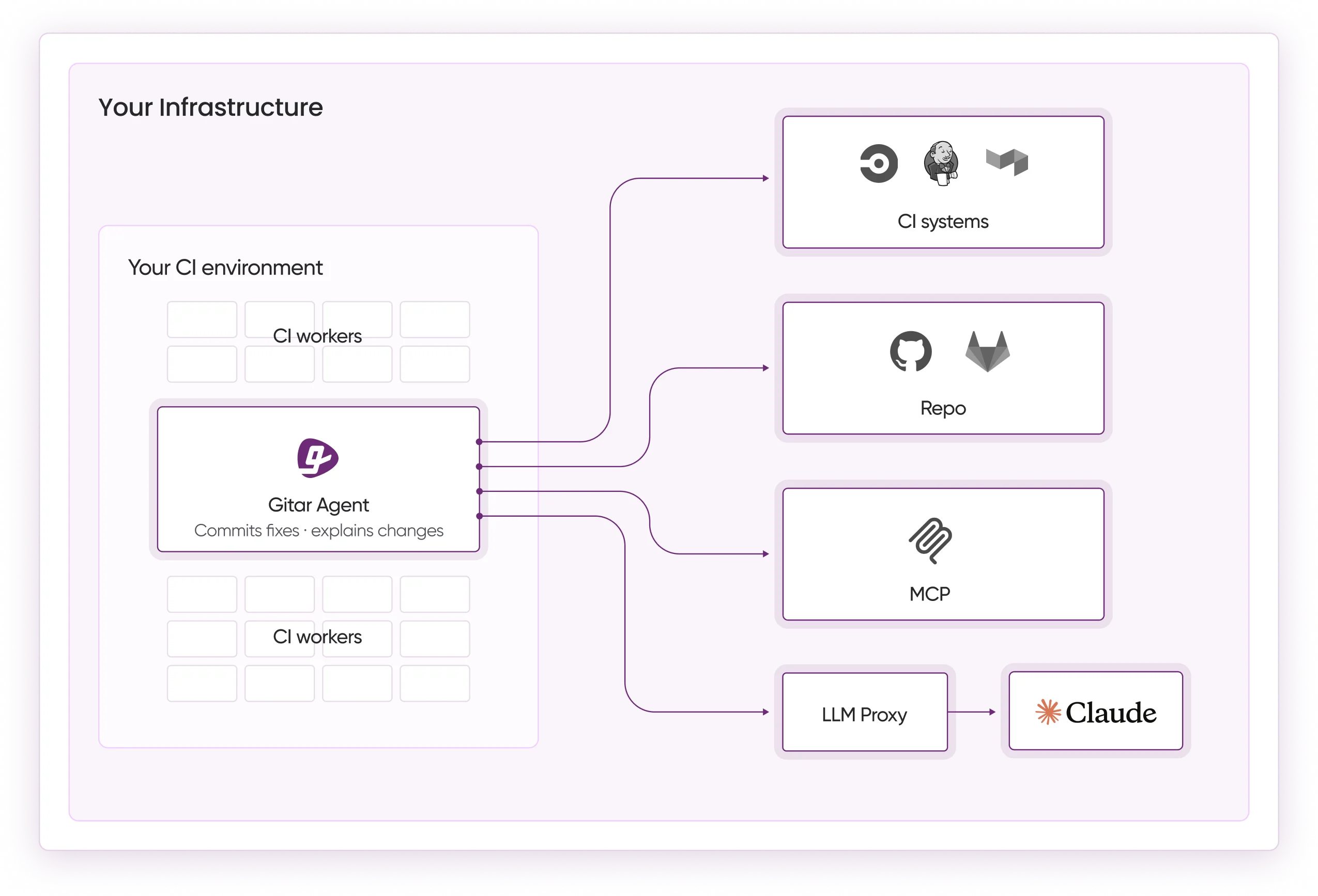
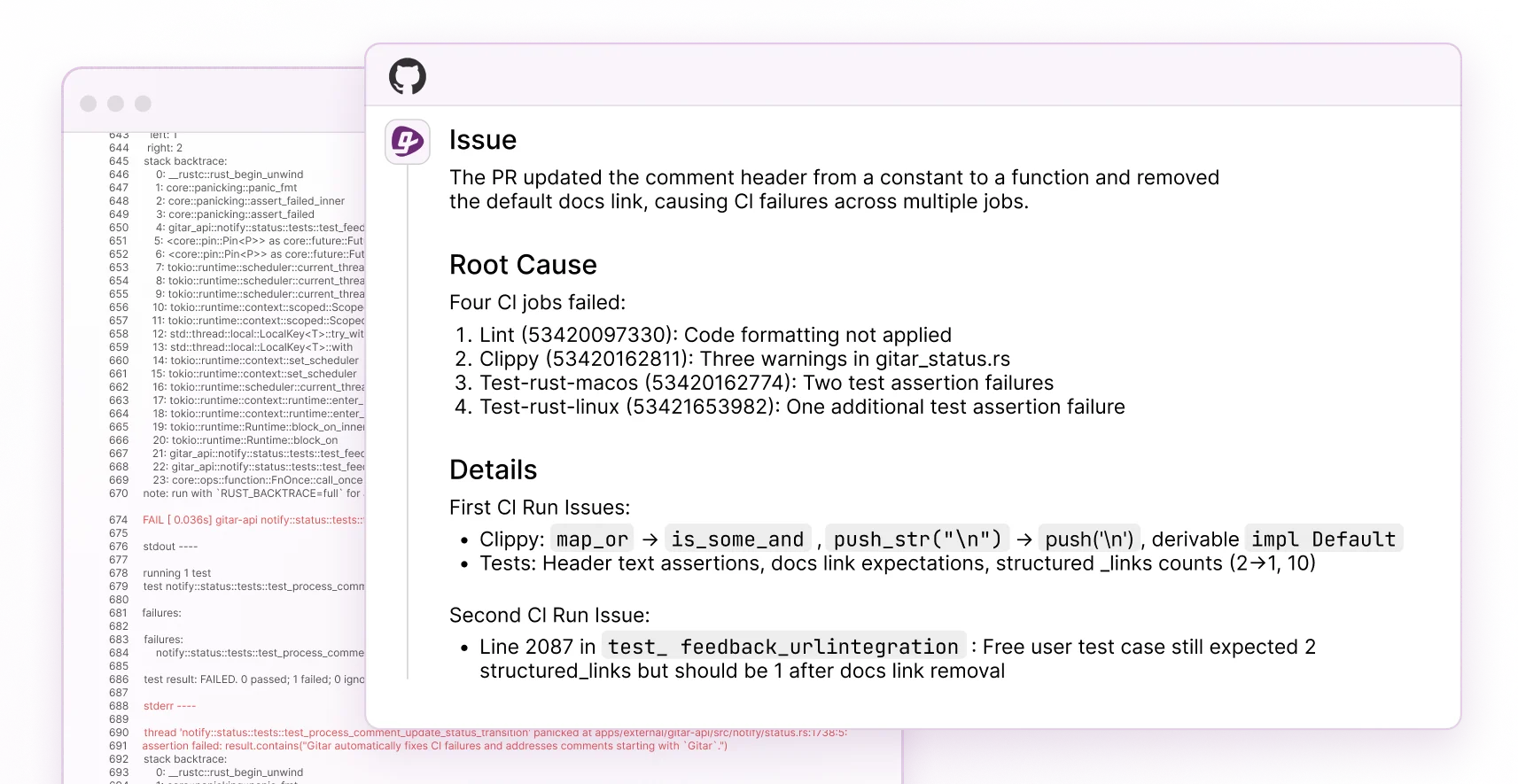
Gitar’s healing engine automatically fixes CI failures, test breaks, lint errors, and implements review feedback through natural language commands. Competing tools often leave suggestions in comments, while Gitar analyzes failure logs, generates validated fixes, and commits them directly to your PR from a single dashboard comment.
The 14-day Team Plan trial includes unlimited seats and repositories, full autofix capabilities, Jira and Slack integrations, and CI healing across GitHub Actions, GitLab CI, CircleCI, and Buildkite. Setup takes about 30 seconds through the GitHub Marketplace, where you install the app, start your trial, and let Gitar fix your first CI failure automatically.
Key strengths include fix validation against your actual CI environment, a single updating comment instead of notification spam, and natural language workflow rules in .gitar/rules/*.md files. Gitar tests fixes before applying them and guarantees green builds, which removes the guesswork that suggestion-only tools create.
2. CodeRabbit: Fast PR Feedback with Manual Fixes
CodeRabbit provides instant feedback on GitHub pull requests with line-by-line comments, PR summaries, and one-click commit suggestions. The free tier covers open-source projects with unlimited reviews, and paid plans start at $12 to $30 per user each month for private repositories.
GitHub integration feels straightforward because you install via GitHub Apps, configure repository access, and let CodeRabbit analyze PRs immediately. The platform catches logic bugs, readability issues, and best practice violations through contextual AI conversations in comment threads.
Main limitations involve suggestion-only behavior without automatic application or CI healing. CodeRabbit identifies issues but still requires manual implementation, which makes it an incremental upgrade over human review instead of a fully automated solution.
3. SonarQube: Open-Source Static Analysis with AI CodeFix
SonarQube Community Edition delivers free static analysis with AI CodeFix features, including AI-generated fixes in IDEs like VS Code and IntelliJ, plus BYO LLM support. The platform provides pipeline integration with native AI autofix features that have been available since 2025.
Setup requires downloading the Community Edition, configuring GitHub Actions or GitLab CI integration, and defining quality gates. SonarQube excels at broad code analysis across more than 25 languages and exposes detailed technical debt metrics.
The platform focuses on detection and AI-assisted fixing instead of fully autonomous PR application. Teams that want deep analysis with guided remediation workflows benefit most from SonarQube.
4. Codemind AI: Unlimited Free Reviews with CI Support
Codemind AI offers unlimited free code reviews with PR feedback, GitHub integration, and CI and CD pipeline support. The platform analyzes code changes for potential bugs, security issues, and performance problems through AI-powered checks.
GitHub setup involves installing the Codemind app and granting repository permissions. The tool then generates detailed PR comments with improvement suggestions and code quality scores.
Codemind supports CI and CD integration alongside its review capabilities, although automatic fix application depth varies. Reviews cover many issues but often still require manual implementation of recommended changes.
5. Kodus: Open-Source AI Agent for Standards Enforcement
Kodus works as an open-source AI agent for code review with codebase standards enforcement and GitHub app integration. The platform learns team patterns and provides contextual feedback on PRs that drift from those patterns.
Installation involves adding the Kodus GitHub app and configuring review rules. The agent analyzes code against established patterns and suggests improvements that align with team standards.
Autofix capabilities remain limited because Kodus identifies inconsistencies but does not automatically implement fixes or heal CI failures. Teams that want pattern enforcement with manual correction workflows gain the most value.
6. Greptile: Context-Aware Reviews without CI Autofix
Greptile provides a generous trial with context-aware code reviews and GitHub integration. The platform builds an understanding of your codebase to deliver relevant feedback on each change.
Setup requires GitHub app installation and repository indexing. Greptile then analyzes PRs against codebase context to highlight potential issues and improvement opportunities.
The platform does not include CI auto-fix capabilities and focuses on review feedback instead of autonomous problem resolution. Pricing starts at $30 per user each month after the trial ends.
7. Aikido Security: Targeted Security Autofix
Aikido offers AI AutoFix capabilities for security vulnerabilities along with SAST, SCA, and container security scanning. The free tier includes basic vulnerability detection with AI-powered Autofix previews in pull requests.
GitHub integration enables automatic PR scanning for security issues with suggested patches. Aikido specializes in identifying and fixing security vulnerabilities but offers limited support for general code quality fixes.
The platform centers on security-specific autofix rather than comprehensive CI healing or broad code improvements. Teams that prioritize security automation over wider quality concerns benefit most.
8. Qodo (Codium): Agentic Reviews with Heavier Setup
Qodo Merge supports GitHub, GitLab, and Bitbucket with agentic code reviews and integrity checks. The platform includes open-source options with setup times that typically range from 15 to 30 minutes.
Installation involves connecting your repository and configuring review preferences. Qodo then analyzes PRs for potential issues and provides detailed feedback with suggested improvements.
The platform emphasizes review depth over autofix automation and still requires manual implementation of suggestions. Setup complexity runs higher than GitHub-native alternatives like Gitar.
9. Codiga: Basic Autofix Previews for Common Issues
Codiga offers a free tier with autofix previews, GitHub integration, and basic code quality analysis. The platform supports limited automatic fixes for common issues such as formatting and simple logic problems.
GitHub setup involves installing the Codiga app and configuring analysis rules. The platform then generates fix suggestions with preview capabilities for select issue types.
Autofix depth stays shallow compared with comprehensive CI healing platforms. Codiga handles basic fixes but lacks advanced failure analysis and validation features.
Reddit’s Top Free Picks for AI Code Review Tools
Reddit developers frequently mention “suggestions only” when they evaluate AI code review tools. Common pain points include “DeepSource free alt” and “tools that actually fix code” across r/MachineLearning and r/devops threads.
Popular Reddit recommendations highlight CodeRabbit for quick setup and thorough analysis, while users consistently note the limitation of manual fix implementation. SonarQube earns praise for comprehensive analysis but receives criticism for the lack of autofix. Developers want platforms that “commit fixes automatically” instead of “leave more comments to ignore.”
Community consensus favors tools like Gitar that move from suggestion engines to actual fixing platforms and remove the core frustration of manual implementation bottlenecks.
Free DeepSource Autofix Alternatives Side by Side
|
Tool |
Autofix Auto-Apply |
CI Healing |
Free Access |
|
Gitar |
Yes |
Yes |
14-day unlimited |
|
CodeRabbit |
Suggestions only |
No |
OSS limited |
|
SonarQube |
No |
No |
OSS forever |
|
Aikido Security |
Security only |
No |
Basic tier |
Free Autofix Tradeoffs for Indie Devs and Teams
Open-source solutions like SonarQube provide forever-free analysis but lack deep AI autofix capabilities. Trial-based platforms like Gitar deliver full automation during evaluation periods so teams can measure ROI before they commit to paid plans.
DeepSource migration stays simple through GitHub Apps that require only minor configuration changes, which reduces friction when teams switch to a new autofix platform.
FAQs
What free AI code review tools offer autofix beyond open-source static analysis?
Gitar provides a 14-day Team Plan trial with full autofix capabilities, CI healing, and unlimited seats. Unlike open-source tools that only detect issues, Gitar automatically implements fixes and validates them against your CI environment. Aikido Security offers limited autofix for security vulnerabilities in its free tier, while most other platforms still operate as suggestion-only tools.
How does Gitar compare to CodeRabbit for actual code fixing?
CodeRabbit delivers thorough analysis and detailed suggestions but requires manual implementation of all fixes. Gitar’s healing engine automatically applies fixes, validates them against CI, and guarantees green builds. CodeRabbit leaves comments, while Gitar commits working code, which creates a clear gap between autonomous fixing and assisted reviewing.
How easy is GitHub setup for these autofix platforms?
Most platforms install through GitHub Apps in under five minutes. Gitar’s setup usually takes about 30 seconds, where you install from GitHub Marketplace, start your trial, and begin receiving automatic fixes immediately. CodeRabbit and similar tools follow a comparable installation flow but often require extra configuration for fix preferences and team settings.
What ROI can teams expect from autofix tools for PR velocity?
Teams report strong velocity gains when they move from suggestion-only platforms to autofix tools. CodeRabbit customers report a 50% or greater reduction in manual review effort, while Gitar users remove CI failure delays through automatic healing. The 91% PR review time increase from AI adoption gets reversed when teams adopt autonomous fixing.
What is the best free DeepSource autofix alternative in 2026?
Gitar leads for teams that want true autofix capabilities through its 14-day unlimited trial of the Team Plan. For permanent free access, SonarQube Community Edition delivers comprehensive analysis without AI autofix. CodeRabbit offers a strong suggestion-only experience for OSS projects. Teams should choose based on whether they need autonomous fixing or can support manual implementation.
Pick Gitar for Autonomous Fixes That Ship Faster
Suggestion engines often charge $15 to $30 per developer for comments that still require manual work. Gitar’s healing engine automatically fixes CI failures, implements review feedback, and guarantees green builds during the 14-day trial. Teams experience a clear difference between platforms that only suggest and platforms that actually fix.