
Written by: Ali-Reza Adl-Tabatabai, Founder and CEO, Gitar
Key Takeaways
- AI coding tools generate code 3-5x faster, yet PR review times have increased 91%, slowing sprint velocity.
- Top open source tools like Tabby (21K+ stars), Aider (39K+ stars), and Cline support privacy and self-hosting but do not apply fixes automatically.
- Most tools stop at analysis and suggestions, so developers still implement changes manually, unlike production-ready autofix platforms.
- Teams frequently struggle with setup complexity, noisy outputs, and limited CI or language support across mixed tech stacks.
- Gitar stands out with free comprehensive code review, validated autofix, and zero-config integration for GitHub and GitLab CI—install now to ship higher quality software faster.
How We Evaluated Open Source AI Code Review Tools in 2026
Our 2026 evaluation scored each tool across five dimensions: PR analysis accuracy, autofix potential, setup complexity, language and CI support, and privacy. We reviewed GitHub stars and forks as of March 2026, checked Docker deployment options, and tested GitHub Actions and CircleCI integrations. We also validated support for Python, JavaScript, and other major languages through hands-on benchmarking. Sources include direct GitHub repository analysis and live tests. Gitar leads in autofix capabilities while remaining completely free for core code review.
Top 10 Open Source AI Code Review Tools for 2026
1. Tabby: Self-Hosted Code Intelligence Platform
Tabby operates as a self-hosted AI coding platform that supports open-source models like StarCoder, CodeLlama, and Qwen. With over 21,000 GitHub stars, Tabby offers autocomplete, inline chat for code edits, and repository indexing through a local server. Setup uses docker run tabbyml/tabby serve --model StarCoder-1B --chat-model Qwen2-1.5B-Instruct --device cuda and usually finishes within minutes. Pros include strong data privacy, flexible model selection, and VS Code integration. Cons include the lack of automated fix application. Install Gitar now, automatically fix broken builds, start shipping higher quality software, faster.
2. Aider: CLI-First Code Review and Coding Agent
Aider processes over 15 billion tokens each week and holds 39,000+ GitHub stars as a mature open source coding assistant. Recent 2026 benchmarks rank Aider among the top AI coding CLI tools with automatic git integration and multi-language project support. Installation uses pip install aider-chat and fits easily into existing workflows. Pros include proven reliability, broad LLM support, and tight git workflow integration. Cons include a command-line learning curve and limited PR-specific review features.
3. Cline: Editor-Native Autonomous Coding Agent
Cline operates as a fully open-source coding agent with local execution and flexible model support across Anthropic, OpenAI, and Ollama. It offers safe terminal operations and CLI support for CI/CD. Cline shines inside VS Code, guiding workflows from planning through PR creation. Setup involves installing the VS Code extension or CLI and configuring API keys. Pros include strong autonomy with safety guardrails, low setup friction, and detailed observability. Cons include limited options for standalone deployment outside the editor.
4. AI-CodeReviewer: Lightweight GitHub Action
AI-CodeReviewer functions as a lightweight GitHub Action that focuses on automated PR reviews. It plugs directly into GitHub workflows through a .github/workflows/ai-review.yml configuration file. Features include PR summarization, line-by-line suggestions, security scanning, and basic test generation. Pros include minimal setup effort, GitHub-native integration, and an active community. Cons include reliance on GitHub Actions infrastructure.
5. Qodo PR-Agent Forks: Community-Driven Variants
Community forks of Qodo’s PR-Agent provide open source alternatives to the commercial product. These forks usually support PR summarization, inline comments, and basic security checks. Setup varies by fork but often uses a GitHub App or webhook configuration. Pros include a familiar interface for Qodo users and well-known PR workflows. Cons include inconsistent maintenance, limited autofix support, and fragmented features across forks. Install Gitar now, automatically fix broken builds, start shipping higher quality software, faster.
6. SonarQube Community Edition with AI Plugins
SonarQube Community Edition supports AI-enhanced code quality checks through community plugins. The platform delivers static analysis, security vulnerability detection, and code smell identification. Docker deployment uses docker run -d --name sonarqube -p 9000:9000 sonarqube:community. Pros include enterprise-grade analysis, broad language coverage, and a mature ecosystem. Cons include heavier resource usage and limited native AI features.
7. Ollama-Based Local LLM Implementations
Custom setups using Ollama for local LLM hosting give teams maximum privacy and control. These implementations often pair Ollama’s model serving with scripts that handle PR analysis. Setup starts with ollama pull codellama and continues with custom integration work. Pros include full data sovereignty, predictable costs, and deep customization. Cons include high development effort, ongoing maintenance, and a lack of ready-made integrations.
8. Refine: React Framework with AI Support
Refine now includes native AI features for React-based development, such as AI-generated layouts and code structures. The framework primarily targets admin dashboards, CRM, CMS, and enterprise portals. Its AI features can support code review scenarios for React applications. Pros include tight React ecosystem alignment and AI-assisted code generation. Cons include a focus on React that limits broader applicability.
9. Appsmith: Low-Code Platform with AI Actions
Appsmith’s low-code platform now offers AI-driven actions that connect to OpenAI, Google AI, and Anthropic for text analysis and semantic search. Teams can build custom workflows that inspect code changes and surface review insights. Pros include a visual workflow builder and multiple LLM integrations. Cons include low-code platform overhead and indirect support for code review.
10. Custom GitHub Actions with OpenAI
DIY GitHub Actions that call the OpenAI API provide basic automated review features. These workflows usually send code snippets to external APIs and post comments back on PRs. Setup requires API key management and custom action development. Pros include full control over behavior and direct GitHub integration. Cons include development complexity, ongoing maintenance, and API usage costs.
Benchmarking Gitar, Qodo, and Leading Open Source Tools
| Tool | GitHub Stars (2026) | Autofix Capability | CI Integration |
|---|---|---|---|
| Tabby | 21,000+ | Suggestions Only | Limited |
| Aider | 39,000+ | CLI-based | Git Integration |
| Cline | 8,500+ | Editor-based | CLI & VS Code |
| Qodo PR-Agent | Commercial | Available | GitHub/GitLab |
| Gitar | Free Platform | 14-day Free Trial | GitHub Actions, GitLab CI, CircleCI, Buildkite |
Install Gitar now, automatically fix broken builds, start shipping higher quality software, faster.
Developer Pain Points with Open Source AI Review Tools
Developer communities highlight three recurring challenges with open source AI review tools. Setup often feels painful because of Docker issues, API key management, and CI integration hurdles. Noisy output creates the next problem, as tools flood PRs with low-value comments that slow reviewers. Language coverage gaps cause further friction for teams using mixed stacks or newer languages. Gitar tackles these issues with zero-setup installation, single consolidated comments, and broad language support backed by validated fixes that resolve real failures.
Why Gitar Outperforms Open Source-Only Options
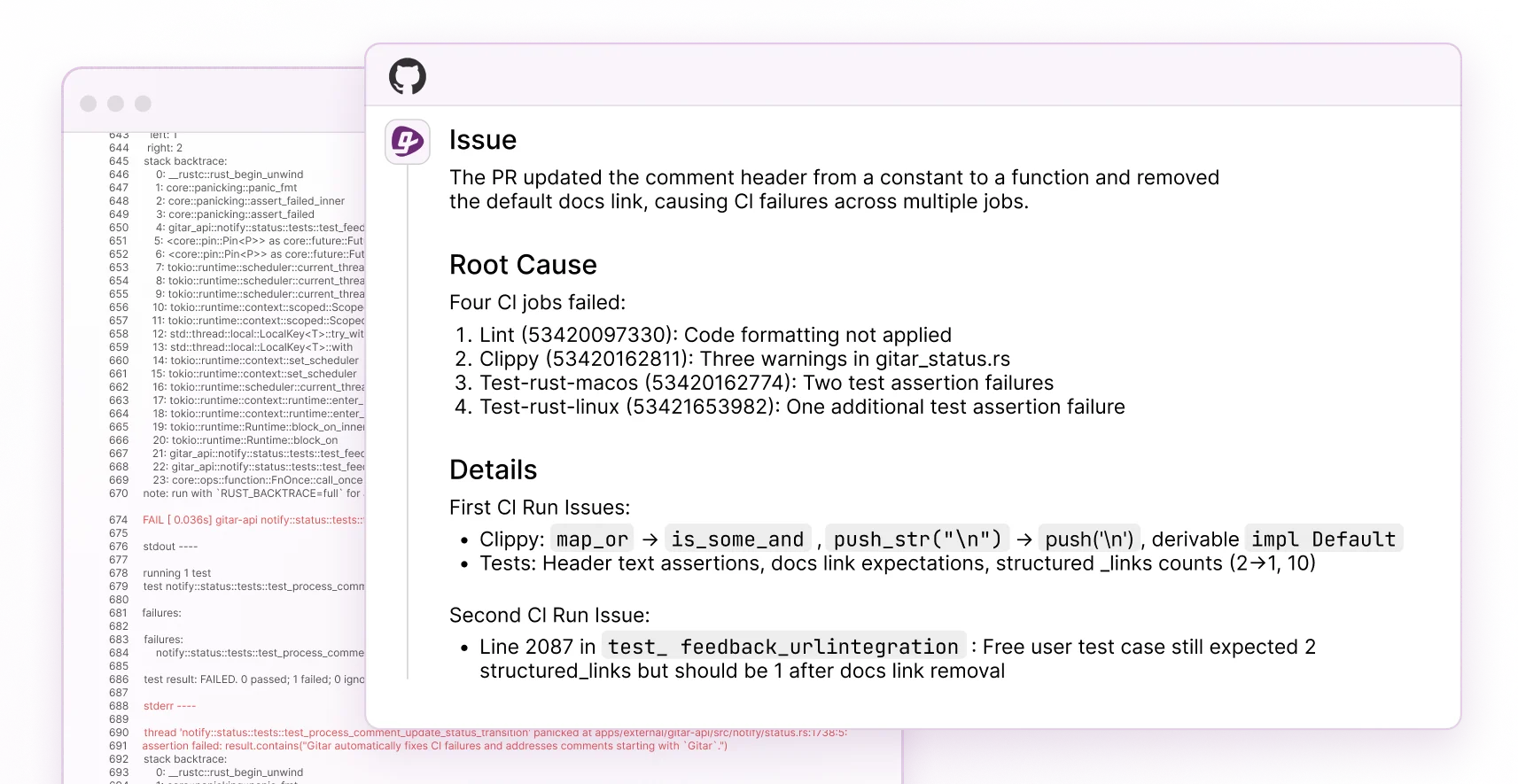
Gitar blends the privacy and cost benefits of open source tools with production-ready autofix capabilities that others do not provide. Tools like Tabby and Aider deliver strong analysis but stop at suggestions, so developers still implement and test fixes manually. Gitar’s healing engine analyzes CI failures, generates validated fixes, and commits working changes directly to PRs.
The economic impact can be significant. A 20-developer team can save roughly $1 million per year by removing the daily hour lost to CI and review issues. Gitar offers full code review for free with unlimited repositories and users. Autofix features include a 14-day free trial, and enterprise plans support deployment inside existing CI infrastructure for stronger security.
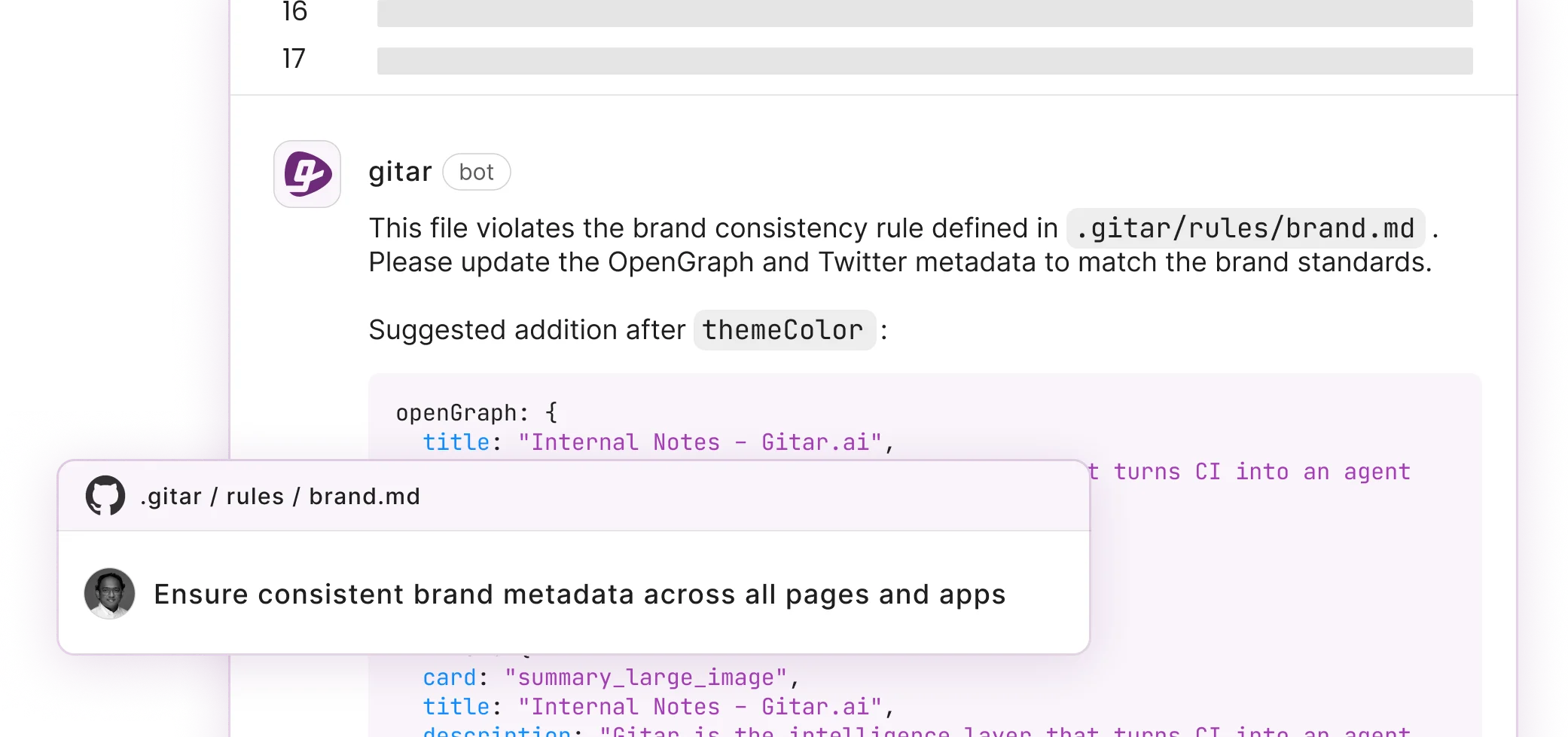
Gitar’s documentation details support for GitHub Actions, GitLab CI, CircleCI, and Buildkite. Natural language rules replace complex YAML, which simplifies configuration. Review the Gitar documentation for full setup guidance. Install Gitar now, automatically fix broken builds, start shipping higher quality software, faster.
Frequently Asked Questions
Best Free Open Source AI Code Review Tool for 2026
Tabby leads pure open source options with strong self-hosting and flexible model choices, although it requires more setup work. Teams that want production-ready fixes instead of suggestions gain more value from Gitar. Gitar combines free comprehensive code review, validated autofix, and zero configuration.
Alternatives to Qodo PR-Agent without Monthly Fees
Several tools provide alternatives to Qodo PR-Agent without subscriptions. Aider offers CLI-based assistance with 39,000+ GitHub stars and automatic git integration. Cline delivers editor-native autonomous workflows with safety guardrails. These tools focus on code generation and assistance rather than complete PR review. Gitar covers the full PR lifecycle with analysis, security scanning, and automatic fixes at no per-seat subscription cost.
Main Challenges with Self-Hosting AI Code Review
Self-hosting usually involves complex Docker setups, model downloads, API wiring, and continuous maintenance. Teams must manage security patches, scaling, and troubleshooting without vendor help. Larger codebases often demand substantial compute resources. Gitar removes these burdens through managed infrastructure while still supporting privacy controls and optional on-premises deployment for enterprises.
AI Code Review Tools That Work Well with CI Systems
Many open source tools need custom GitHub Actions or webhooks before they integrate cleanly. AI-CodeReviewer offers native GitHub Actions support with strong PR analysis. SonarQube integrates with many CI systems and suits small to mid-sized teams. Gitar provides built-in integration with GitHub Actions, GitLab CI, CircleCI, and Buildkite, then automatically detects CI failures and applies fixes across these platforms.
Accuracy and Features: Open Source vs Paid Tools
Open source tools often match paid tools on basic analysis but rarely include automated fixes, CI failure healing, or deep security scanning. Paid tools like CodeRabbit charge $15-30 per developer for suggestion-only features that still require manual work. Gitar closes this gap by offering validated autofix, broad CI integration, and advanced analytics while keeping core functionality free.
Conclusion: Moving from Suggestions to Automatic Fixes
Open source AI code review tools provide strong alternatives to expensive proprietary platforms, with Tabby, Aider, and Cline leading key categories. Most tools, however, stop at suggestions and leave teams to implement changes by hand. Teams that want to move beyond manual follow-through can adopt Gitar for production-ready healing that keeps builds green while preserving the cost and privacy advantages of open source ecosystems.
Install Gitar now, automatically fix broken builds, start shipping higher quality software, faster.