
Slow code reviews, constant interruptions, and critical changes buried under minor comments can frustrate any team. This article explores how to streamline asynchronous code reviews, especially for distributed teams, by focusing on essential feedback and using AI tools to cut merge times while improving developer efficiency. Let’s dive into practical ways to handle feedback better.
Why Traditional Asynchronous Code Reviews Slow Teams Down
Context Switching Drains Productivity
Getting pulled out of deep work to fix a minor CI issue or respond to feedback disrupts focus. This isn’t just annoying. It costs teams significant time and money every year.
The numbers show the impact. Developers often spend 1.5 to 5 hours per pull request addressing comments. Each interruption adds mental strain, as it can take 20 to 30 minutes to regain full focus after a 15-minute fix. This cycle discourages deep problem-solving, as developers brace for constant disruptions.
Critical Feedback Gets Overlooked
Important feedback often drowns in a flood of minor notes. Key areas like business logic, architecture, security, and test coverage demand attention. Yet, these points compete with comments on formatting or naming conventions in a typical pull request.
Picture a pull request with 20 comments. Most might cover small style issues, easily handled by tools. But two could highlight a security flaw or an architectural mismatch, critical to address. When reviewers waste energy on trivial details, they miss the bigger risks. Automating minor feedback frees up focus for high-value insights.
Distributed Teams Face Extra Delays
Time zones stretch feedback loops for distributed teams. A developer in one region might wait 12 hours or more for a review from a teammate halfway across the world. A quick change can drag into days.
Time zone differences and team structures make pull requests stale without prioritized strategies. Each feedback round adds another delay. Developers lose momentum waiting, and reviewers in key zones can become bottlenecks, leading to rushed or late input.
Financial and Morale Hits from Slow Reviews
Inefficient reviews cost more than just time. Developers can lose up to 30% of their workday on CI and review issues. For a 20-person team with an average annual cost of $200,000 per developer, that’s $1.2 million in lost productivity yearly.
Beyond dollars, morale suffers. Developers want to build and solve problems, not fix small style errors or decode CI logs. Frustration grows, impacting retention. Replacing a senior engineer can cost $300,000 when you factor in hiring and onboarding. Skipping thorough reviews on major changes also leads to more defects and longer fixes later.
Ready to stop these delays? Try Gitar to fix CI issues automatically and speed up your reviews.
How to Focus on High-Impact Feedback for Better Asynchronous Reviews
Spotting Changes That Matter Most
Improving reviews starts with separating changes needing human insight from those tools can handle. High-impact areas include business logic, security risks, performance concerns, error handling, and test quality. These need experienced eyes due to their effect on system stability.
Key categories of critical changes include:
- Business Logic: Code affecting core workflows or data processing needs reviewers who grasp both tech and business needs to avoid bugs or compliance issues.
- Architecture: Updates to system design or APIs have long-term effects on scalability and maintenance, requiring strategic review.
- Security: Authentication or data handling code must be checked for vulnerabilities to prevent major breaches.
- Performance: Changes to queries or algorithms need analysis for potential slowdowns in high-traffic areas.
- Integrations: Code touching external systems must ensure proper error handling and reliability.
Sorting changes this way lets senior team members tackle complex areas while tools manage routine tasks.
Using Checklists to Prioritize Feedback
Structured approaches help reviewers target critical issues. Teams benefit from checklists and metrics like inspection rate or defect density to focus feedback. A clear framework ensures consistent quality.
A typical checklist might break down like this:
- Critical (Senior Review): Security flaws, business logic accuracy, architectural fit, performance risks, data integrity.
- Important (Any Reviewer): Test coverage, code clarity, documentation, API design.
- Automated (Tools): Formatting, linting errors, basic refactoring, documentation style.
Tracking metrics like lead time or defect escape rate shows if prioritization works. Useful measures include time to review, coverage of key modules, and DORA metrics.
Automating Minor Feedback to Save Time
Cutting human effort on routine checks offers quick wins. Automating style and linting reduces context switching, letting reviewers focus on logic and structure. This shifts discussions to meaningful topics.
Automation can cover:
- Formatting: Tools like Prettier or gofmt enforce style rules via CI pipelines, skipping manual debates.
- Linting: ESLint or RuboCop catch basic errors and enforce quality without reviewer input.
- Security Scans: Automated tools flag common vulnerabilities for quick fixes or deeper checks.
- Documentation: Auto-generated docs from code comments stay updated without extra effort.
Fast feedback through CI integration lets developers fix issues while the code is fresh, minimizing disruption.
AI as a First Step in Reviews
AI tools can do more than automate basics, offering a first pass at reviews. AI handles routine steps, freeing reviewers for deeper analysis and boosting code quality. It acts as a guide, not a replacement for human judgment.
AI strengths include:
- Pattern Spotting: Identifying error-prone code or inconsistencies faster than manual scans.
- Complexity Flags: Highlighting dense code likely to hide bugs.
- Impact Analysis: Pointing out affected areas or tests needing review.
- History Insights: Using past data to predict problem spots.
AI works best when it flags issues without overloading teams with false alerts, setting up human reviewers for focused input.
Want to improve your process? Get started with Gitar to automate fixes and speed up reviews.
Meet Gitar: Your Solution for Asynchronous Code Reviews with AI
Many review tools suggest fixes but still need human effort to apply them. Gitar changes the game by acting on feedback and fixing issues automatically. It turns slow reviews into a smooth, self-correcting process, saving time for everyone.

Automatic Fixes from Feedback
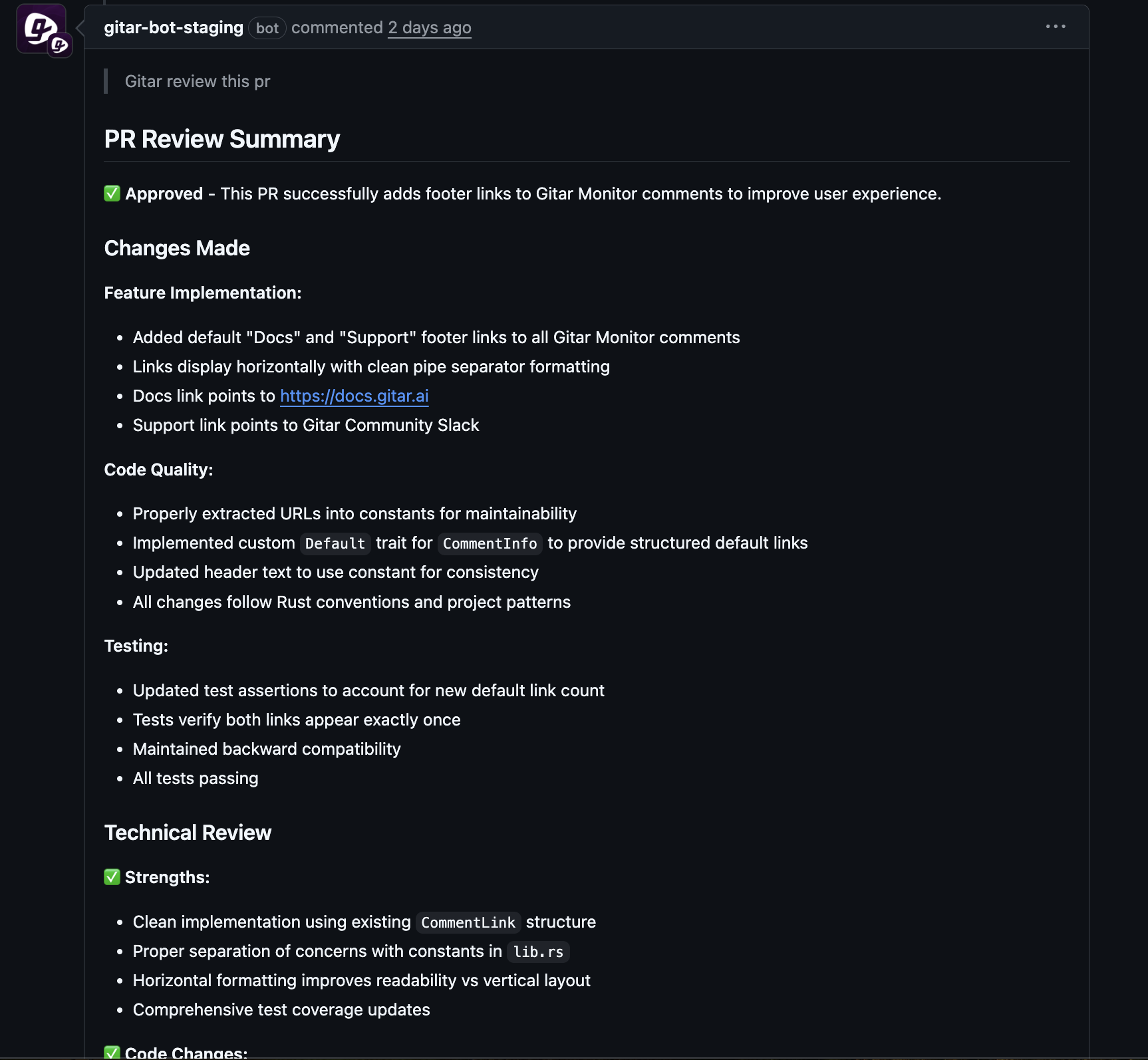
Gitar stands out by implementing changes itself. If a reviewer comments to remove a feature or adjust code, Gitar analyzes the request, makes the update, and commits it to the pull request with a clear explanation. Every fix aligns with team standards and passes CI checks before applying.
No More Time Zone Waits
For teams spread across regions, Gitar acts instantly on feedback. A reviewer in one time zone can leave a comment, and by the time the developer in another zone logs in, the change is done and ready for approval. This cuts out the usual back-and-forth delays.
Fixing CI Issues Without Effort
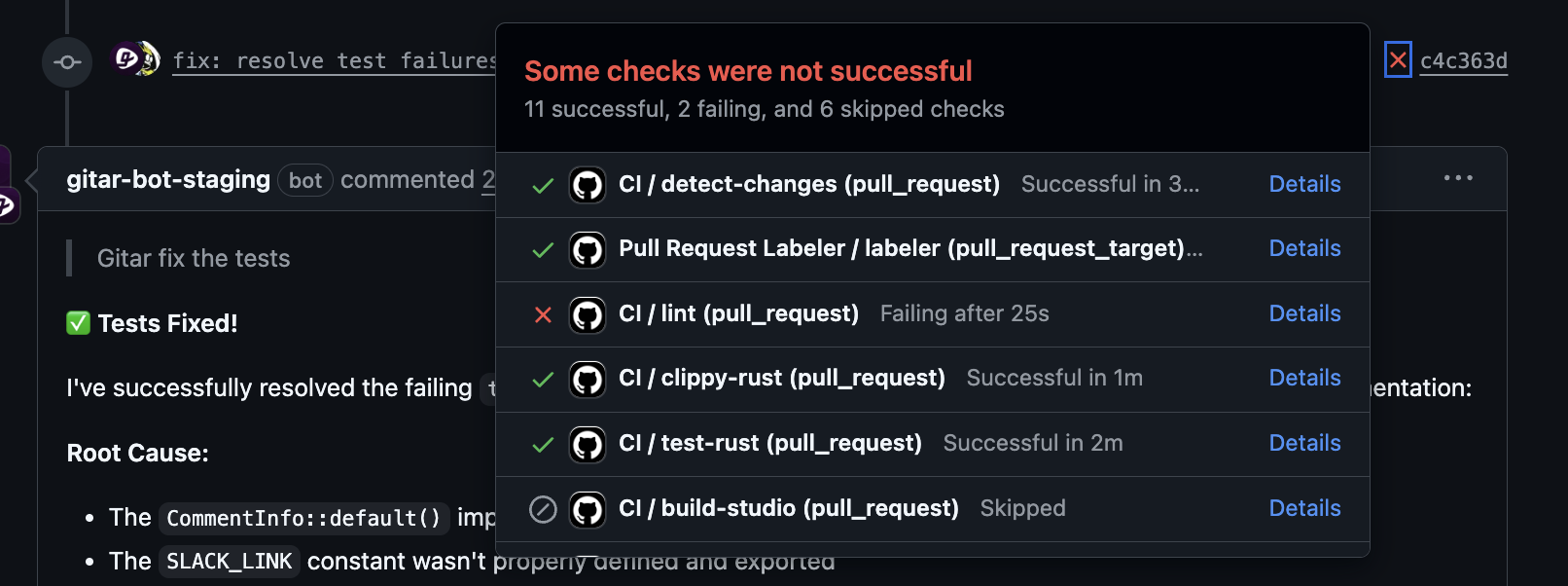
Gitar also tackles CI failures that break your flow. When a check like linting or testing fails, it digs into the logs, creates a fix, and commits it to the pull request. It matches your exact CI setup to ensure compatibility, keeping builds green without manual fixes.
Control How Much Gitar Does
Teams can customize Gitar’s level of action. Start with Conservative Mode, where it suggests fixes for review and approval with one click. As trust builds, switch to Aggressive Mode for automatic commits with rollback options. This lets you ease into automation at your pace.
Ready to simplify reviews? Install Gitar to handle CI failures and boost your review speed.
How Gitar Compares to Other Methods
|
Feature / Tool |
Manual Practices |
AI Reviewers (e.g., CodeRabbit) |
Gitar (Autonomous AI) |
|
Feedback Handling |
Manual fixes |
Suggestions only |
Automatic fix and commit |
|
CI Validation |
Human-checked |
Partial in some tools |
Full CI pipeline validation |
|
Context Switching |
Frequent |
Still occurs often |
Almost eliminated |
|
Time Zone Delays |
Common delays |
Delays if manual steps needed |
No delays with instant action |
Gitar goes beyond suggestions. It acts, validates, and keeps builds green, reshaping how teams handle feedback.
Top Advantages of Using AI for Asynchronous Reviews
Faster Merges with Less Waiting
Automated fixes cut down time to merge noticeably. Teams reviewing priority pull requests within a day often see better speed and stability. Gitar removes delays by applying changes and running CI checks, turning days-long cycles into hours.
Better Focus and Happier Developers
Stopping constant interruptions lifts team spirits. Clear, useful feedback boosts productivity when developers aren’t bogged down by small tasks. Gitar automates tedious fixes, letting coders stick to meaningful work and feel progress as reviews flow smoothly.
Stronger Code Through Focused Reviews
Automating small tasks lets reviewers zero in on complex issues, improving quality. Addressing critical changes first lowers the chance of bugs reaching production. Gitar ensures automated fixes pass CI tests, freeing humans to check logic and design decisions.
Cost Savings for Leaders
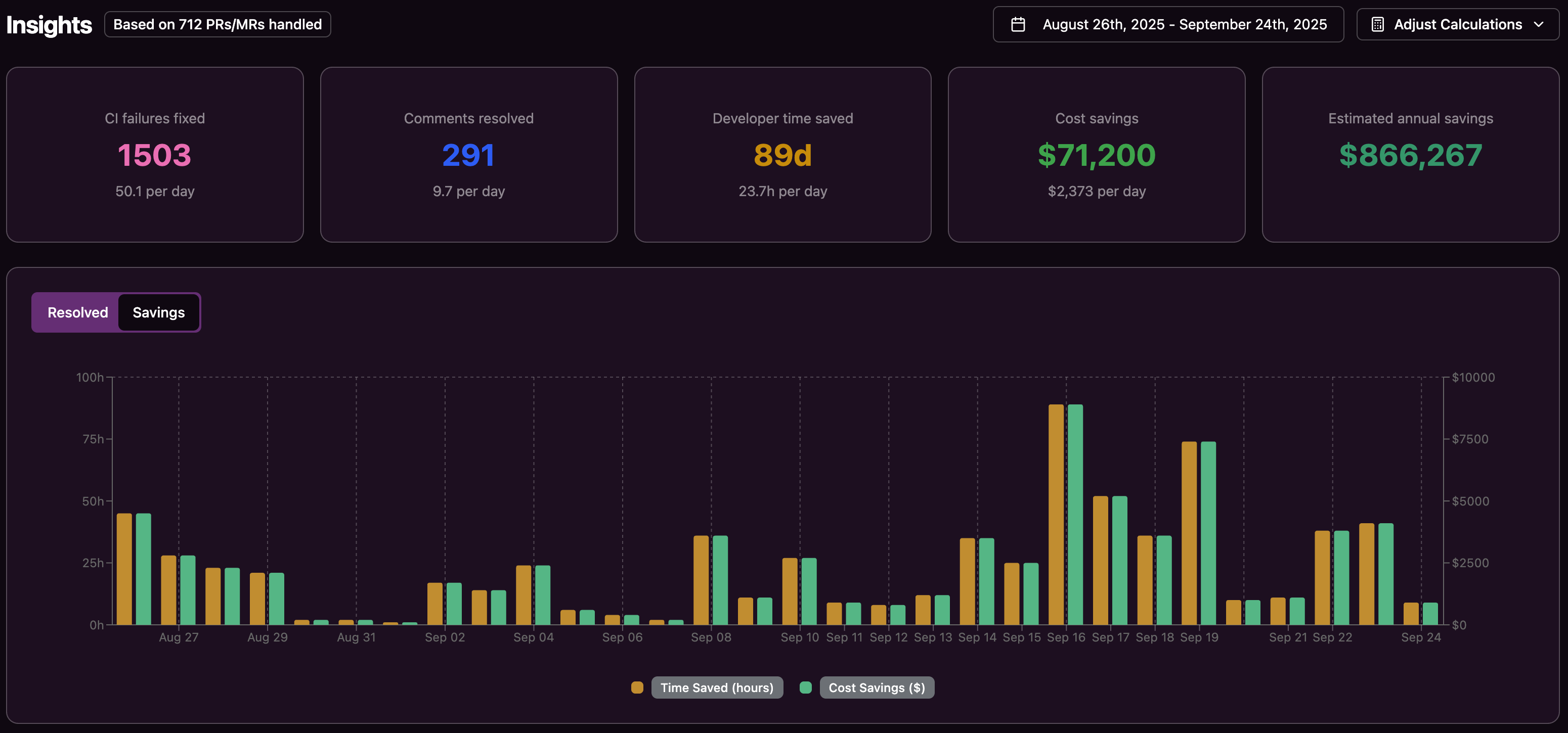
For managers, the numbers add up. On a 20-developer team, Gitar could save $500,000 yearly in productivity losses, even at partial effectiveness. Plus, faster reviews and happier teams mean better output without extra hires.
Easier Work for DevOps Teams
DevOps benefits from Gitar’s self-fixing CI features. It reduces the load of managing tricky pipelines, keeps builds stable, and helps new team members get up to speed without constant help.
Common Questions About Gitar
How Does Gitar Differ from Tools Like CodeRabbit?
Unlike suggestion-based tools like CodeRabbit, which need manual action, Gitar works independently. It applies fixes, tests them against your CI setup, and commits solutions, cutting delays in asynchronous workflows.
Can Gitar Work with Complex CI Setups?
Yes, Gitar matches your specific environment, including SDK versions, dependencies, and tools like SonarQube. Fixes are tested against your full CI pipeline to ensure they fit your setup perfectly.
How Does Gitar Build Trust for Automated Fixes?
Gitar offers adjustable settings for automation. Start with suggestions you review and approve. As confidence grows, let it commit fixes automatically with rollback options, balancing speed and control.
How Does Gitar Help Distributed Teams?
Gitar removes time zone barriers. Feedback from one region gets acted on instantly, so developers elsewhere see updates ready for review when they start their day, keeping projects moving.
What if Gitar Makes an Error?
Gitar tests every fix against your CI pipeline before committing. Detailed commit notes explain changes, and you can undo anything instantly. Teams can also set approval steps for added oversight.
Wrap-Up: Improve Asynchronous Reviews with Gitar
Slow reviews, interruptions, and buried feedback cost teams time, money, and morale. Prioritizing key changes, automating small tasks, and using AI like Gitar offers a clear fix. It handles CI issues, applies feedback, and keeps builds green without manual work, slashing delays across time zones.
The gains go beyond speed. Teams see better code, happier developers, and lower costs with faster delivery. Don’t let inefficient reviews hold you back. Install Gitar now to automate CI fixes and speed up your process.